

> Editorial Note: I’m Hannah Lin, an Interior Living Researcher who’s spent 9+ years analyzing the home furniture market. This guide draws on BIFMA, GREENGUARD, and FSC certifications, plus owner reviews aggregated from Wirecutter, Apartment Therapy, and the major home design subreddits.
The biggest mistake white-couch owners make is soaking a stain before checking the fabric tag. Water on a solvent-only cushion leaves a ring worse than the original spill, and that single misstep ruins more white upholstery than kids and pets combined. Before you touch a drop of anything, find the cleaning code and match it to your method. If you’re still shopping and want a couch that survives real life, pair a durable frame with the right foundation using a best area rug pad, layer in a best area rug for living room, compare a best fabric sofa against a best sectional sofa, and anchor the room with a best tv stand for 65 inch tv.
What Does the Cleaning Code on My White Couch Mean?
Flip up a cushion and look for a small tag with a single letter. That code tells you exactly what liquid your fabric can handle, and ignoring it is how white couches get permanent water marks.
A W means water-based cleaners are safe. You can use a mild upholstery shampoo or a diluted dish-soap solution. An S means solvent-only, so water will stain it. You need a dry-cleaning solvent or a solvent-based upholstery spray instead. W/S is the most forgiving, accepting both water and solvent products. X is the strictest. Vacuum only, no liquids at all, or you risk shrinking and ring marks.
Most modern white sofas from major brands carry a W or W/S code, especially performance fabrics rated for high traffic. Weave matters too. A tight, high-GSM weave (think 500 GSM and up) resists liquid penetration long enough for you to blot, while a loose weave wicks a spill straight to the foam.
Durability follows the same logic. Upholstery rated 15,000+ double rubs on the Wyzenbeek scale counts as heavy-duty, and that abrasion resistance usually pairs with a tighter, more forgiving weave. Check the code first. Everything else follows.
How Do I Remove Common Stains From White Upholstery?
Speed beats strength. Blot a fresh spill within 60 seconds and you’ll handle 90% of stains with plain water or a mild solution, no scrubbing required.
Always blot, never rub. Rubbing pushes the stain deeper into the fibers and can felt the surface of a white fabric, leaving a dull gray patch. Press a clean white cloth straight down, lift, and repeat with a fresh section of cloth each time.
For water-safe (W) fabric, mix one teaspoon of clear dish soap into two cups of cool water. Dab it on with a microfiber cloth, blot dry, then go over the spot with a cloth dampened in plain water to lift any soap residue. Soap left behind attracts dirt and turns a clean spot dingy within weeks.
Coffee, wine, and juice respond to this method fastest. Grease and oil need a solvent, even on a W-coded couch. A pinch of cornstarch or baking soda drawn over the grease for 15 minutes pulls oil out before you touch it with liquid. For ink or makeup, a solvent spray is your safest bet.
Never mix cleaners. Bleach on white upholstery sounds logical but it yellows synthetic fibers and voids most fabric warranties. Stick to the code.
How Do I Deep-Clean and Whiten a Dingy White Couch?
An all-over gray cast usually isn’t dirt sitting on top. It’s body oil and fine dust worked into the weave over months, and it needs a full reset rather than spot treatment.
Start dry. Vacuum every surface with an upholstery attachment, working the crevice tool along seams and under cushions where skin flakes and pet dander collect. Do this weekly and a white couch stays bright far longer. Skip it and no amount of shampoo fully recovers the color.
Next, a machine pass. A portable upholstery cleaner sprays solution into the fabric and immediately extracts it, pulling the dirty water back out before it can soak the foam. That extraction step is what actually brightens the fabric. Hand-scrubbing just relocates the grime.
For stubborn yellowing on W-safe fabric, a paste of baking soda and a little water, left for 20 minutes then vacuumed, lifts trapped odor and some discoloration. An enzyme cleaner handles the protein-based stains (sweat, milk, pet accidents) that plain soap can’t break down.
Let it dry completely before you sit down. A damp cushion in a humid room can grow mildew inside the foam within 48 hours, and per GREENGUARD guidance on indoor air quality, trapped moisture is the fastest route to musty odor. Point a fan at it and open a window.
How Do I Keep a White Couch Clean Long-Term?
Protection is cheaper than restoration. A fabric that repels the first drop of every spill gives you the seconds you need to blot, and that’s the whole game with white.
Apply a fabric protector spray to a clean, dry couch, and reapply every 6 to 12 months or after any deep clean. Look for a low-VOC formula. GREENGUARD-certified products keep off-gassing minimal, which matters in a closed living room. Try any spray on a hidden section first to confirm it doesn’t darken the fabric.
Rotate and flip cushions weekly so wear and light exposure spread evenly. A cushion that always faces the window fades to a different white than its neighbor, and that mismatch reads as “dirty” even when it’s clean. FSC-certified frames and CertiPUR-US foam hold their shape through this rotation better than cheap fill.
Set house rules that do the heavy lifting. No shoes on the cushions, a washable throw over the favorite napping spot, and a blot-first response to every spill. Slipcovers on high-use sections buy you a machine-washable layer between life and the fabric.
Small habits compound. Weekly vacuuming plus fast blotting keeps most white couches looking new for years.
Helpful Picks
These three cover the range, chosen for owner ratings above 4.2 and proven results on white upholstery: a portable extractor for whole-couch deep cleans, and two spot treatments for fresh stains.


Pros
- Extremely compact and easy to store in small spaces
- Versatile cleaning across carpets, upholstery, car seats, and pet beds
- Includes tough stain tool and self-cleaning hose for maintenance
- Strong suction power despite small size
- Comes with 8oz cleaning formula included
Cons
- Small water tank requires frequent refills for larger jobs
- No customer reviews yet to confirm long-term durability
- May struggle with deeply set or old stains compared to full-size models
The BISSELL Little Green Mini 4075 is the spot cleaner we recommend to friends in apartments or anyone tired of dragging out a full-size carpet cleaner for small messes. It handles the everyday chaos of pet accidents, coffee spills on the couch, and muddy footprints on entryway rugs without requiring a storage closet or workout to move it around.
What sets it apart is the self-cleaning hose tool, which means you're not stuck scrubbing out gross residue after every use. The included tough stain tool with a removable lens lets you see exactly what you're lifting out of the fabric, and the 4-inch head fits into car cup holders and tight upholstery corners where larger machines give up.
If you want professional-level spot cleaning without sacrificing half your hall closet or your back, this one delivers.
Styles it works with: Modern Farmhouse, Scandinavian, Minimalist, Contemporary
Best placed in: Utility closet, under kitchen sink, laundry room shelf, coat closet near entryway
May not suit: Homes with wall-to-wall carpeting needing frequent deep cleaning, households with multiple large dogs requiring daily cleanups
Buy it if:
- You live in an apartment or small home without room for full-size cleaning equipment
- You have pets and need to tackle accidents and stains within minutes
- You want to detail your car interior or clean upholstered furniture regularly
Consider waiting if:
- You need to clean large carpeted areas frequently and would benefit from a full-size machine
Skip it if:
- You only have hard floors and no upholstered furniture or car seats to clean
- You need a machine with a heated drying function
Check the latest price and availability on Amazon before it sells out.

Pros
- Hyper-concentrated formula dilutes 20:1, delivering strong value per ounce compared to ready-to-use alternatives
- Handles a wide range of stains including pet accidents, wine, grease, and mud across carpet, upholstery, rugs, and car seats
- Odor-eliminating agents tackle smells at the source rather than covering them, leaving a clean fresh scent
- Gentle enough for delicate and colored fabrics while still lifting set-in stains effectively
- Works by hand or with a machine extractor, giving flexibility for both spot cleaning and deeper treatments
Cons
- At 16 oz, heavy users tackling multiple rooms or frequent pet accidents may find themselves reordering more often than expected
- The product description contains a typo on the packaging copy (OFFICR), which may raise minor quality-perception concerns for first-time buyers
- No included brush or applicator means buyers need their own detailing brush or microfiber towel to get full results
If you have a sofa that has seen too many movie nights, a car that has survived a road trip with kids, or an office chair that tells the story of too many lunch breaks at your desk, Lightning Fast is the kind of product that quietly earns its place under your sink. It does not require you to scrub like you are trying to sand wood. Spray it on, work it in with a brush, and the stain breaks down on its own. The formula is doing the heavy lifting.
What makes it genuinely useful for a home setting is how broadly it applies. One bottle handles your fabric sofa, your area rugs, your car upholstery, and even outdoor patio cushions. The odor elimination is a real bonus, especially for pet owners. It does not leave that artificial perfume cloud behind, just a clean, neutral scent that fades appropriately.
The concentration ratio is worth noting: at 20:1 dilution, this16 oz bottle stretches considerably further than standard spot cleaners. If you want deep-cleaning stain removal across your whole home without buying four different products, this one delivers.
Styles it works with: Modern Farmhouse, Casual Contemporary, Family-Friendly, Transitional
Best placed in: Living room storage cabinet for quick sofa and rug spot cleaning, under the kitchen sink for upholstered dining chair spills, in the garage or car kit for vehicle interior maintenance
May not suit: Homes with exclusively hard-surface floring and leather furniture where a fabric cleaner has little use, or ultra-minimalist spaces where the casual bottle aesthetic feels out of place on open shelving
Buy it if:
- You have pets, kids, or frequent guests and need a reliable go-to for fabric spills and odors on sofas, rugs, or chairs
- You want one versatile cleaner that works on both your car interior and your home upholstery without buying separate products
- You prefer a concentrated formula that dilutes down so you get more cleaning power per dollar spent
Consider waiting if:
- You want to bundle it with a detailing brush or microfiber towel and prefer to buy as kit rather than sourcing accessories separately
Skip it if:
- Your home has no fabric upholstery, carpeting, or rugs and you have no vehicle interiors to maintain
- You are looking for a heavy-duty commercial extractor solution for large-scale carpet restoration rather than spot and stain treatment
Check the latest price and availability on Amazon before it sells out.

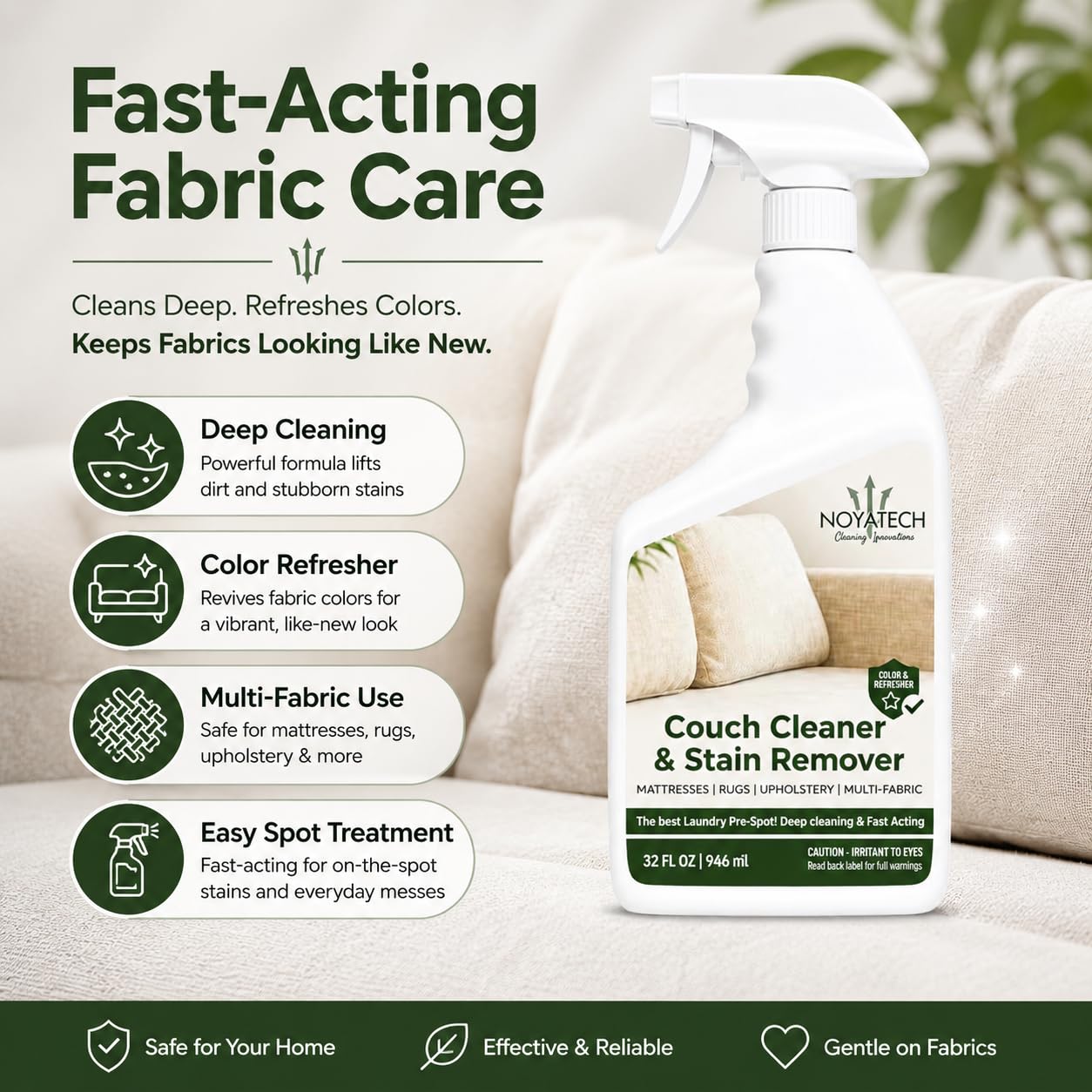
NOYATECH Couch Cleaner Stain Remover Spray 32oz - Professional Strength Fabric Upholstery Cleaner Pet-Safe Non-Toxic
Pros
- Genuinely multi-surface: works on couches, rugs, mattresses, and car upholstery from one bottle
- Non-toxic, pet-safe formula is safe for households with children and animals
- Large 32oz size offers strong value compared to smaller single-use fabric cleaners
- 4.3-star rating across over 1,000 reviews suggests consistent real-world results
- Fast-acting spray-and-scrub method requires no soaking or waiting periods
Cons
- Not suitable for leather or dry-clean-only fabrics, which limits use on premium furniture
- Requires manual scrubbing with a cloth rather than a fully no-rub formula, adding a bit of effort for larger stains
If your couch has become a map of your family's last six months, NOYATECH Couch Cleaner is the kind of product that quietly restores order without drama. The spray is genuinely easy to use: a light application, a quick scrub with a damp cloth, and most everyday stains lift right out. For homes with pets and kids, that kind of low-effort maintenance makes a real difference over time.
What stands out beyond the cleaning power is the formula itself. Non-toxic and pet-safe means you are not trading a clean sofa for a living room full of harsh chemical fumes. The quick-drying finish is a practical bonus too, keeping cushions out of commission for minutes rather than hours. The 32oz bottle also goes further than expected since a little spray covers a decent area without burning through the bottle fast.
It is not a magic wand for every fabric type, and leather owners will need to look elsewhere. But for fabric sofas, upholstered dining chairs, rugs, and mattresses, the value-to-performance ratio is hard to argue with at this price. If you want a genuinely clean, refreshed couch without committing to a professional cleaning service, this one delivers.
Styles it works with: Modern Farmhouse, Scandinavian, Casual Contemporary, Bohemian
Best placed in: Living room fabric sofas and sectionals, bedroom upholstered headboards and mattresses, family rooms with area rugs and accent chairs
May not suit: Homes furnished primarily with leather or suede pieces, or households that use exclusively dry-clean-only upholstery fabric
Buy it if:
- You have pets or young children and need a non-toxic cleaner you can use freely on the sofa without worrying about residue
- Your fabric couch or area rug has accumulated food, drink, or mud stains and needs a practical spot-treatment solution
- You want one versatile bottle that covers the living room sofa, bedroom mattress, and car seats without buying multiple products
Consider waiting if:
- You are dealing with heavily set-in stains on delicate or antique upholstery where a professional assessment might be the safer first step
Skip it if:
- Your furniture is primarily leather, suede, or labeled dry-clean only, as this formula is not designed for those surfaces
- You are looking for a fully no-scrub, leave-on spray since this product requires manual cloth scrubbing to work effectively
Check the latest price and availability on Amazon before it sells out.
Frequently Asked Questions
Can I use bleach on a white couch?
No. Bleach yellows synthetic upholstery fibers and often voids the fabric warranty. It reacts unevenly with polyester and blended weaves, leaving a permanent amber cast that’s far harder to fix than the stain you started with. Use a fabric-safe upholstery cleaner matched to your cleaning code instead.
Is baking soda safe on white upholstery?
Yes, on W and W/S coded fabric. Sprinkle it dry to absorb odor, or make a light paste for trapped discoloration, then vacuum it fully once dry. Keep it off S-only fabric, where the moisture in a paste can leave a ring. Always vacuum every trace, since leftover residue attracts dirt.
How often should I clean a white couch?
It depends on traffic. Vacuum weekly, spot-clean spills immediately, and do a full extraction deep-clean every 3 to 6 months in a busy household. A guest room couch used lightly can stretch to once or twice a year. Consistency matters more than intensity here.
Can I steam-clean a white couch?
It depends on the code. Steam is safe on many W and W/S performance fabrics, but heat can shrink or watermark S-only and X-coded upholstery. Check the tag first, and always confirm on a hidden section. High heat can also set certain protein stains, so pre-treat those before steaming.
Will water leave a stain on my white couch?
It depends on the fabric code. On W or W/S upholstery, water is fine when you blot and dry properly. On an S-coded couch, plain water can leave a ring darker than the spill itself. That’s why the cleaning tag is the first thing to check before any cleaning.
Do fabric protector sprays actually work on white couches?
Yes, when applied to clean, dry fabric and reapplied regularly. They don’t make a couch stainproof, but they buy you the extra seconds to blot before liquid soaks in. Choose a GREENGUARD-certified low-VOC formula, and reapply every 6 to 12 months or after each deep clean for the coverage to hold.
Can I machine-wash white couch cushion covers?
It depends on the label. Some covers are removable and machine-washable on cold, but many are dry-clean only, and washing those can shrink the cover so it no longer fits the foam. Check the zipper tag, wash cold, and always air-dry rather than tumbling on heat.





Write Your Review
No reviews yet. Be the first to share your experience!