

> Editorial Note: “I’m Liam Wright, an outdoor and garden editor. I grew up in my family’s landscaping business and now cover what actually survives a season of UV, rain, and freeze-thaw cycles. The picks here are evaluated against ASTM weatherability standards and manufacturer durability ratings.”
The biggest smoker-cleaning mistake is treating the inside like a kitchen oven. A smoker needs grease, ash, and flaky creosote removed, but it doesn’t need to be stripped to bare metal after every brisket. If you’re building out an outdoor cooking setup, keep this routine alongside best pellet grill, outdoor kitchen ideas, patio furniture for small spaces, best grill gazebo, and backyard lighting ideas.
How Often Should You Clean a Smoker?
Clean the parts that touch food after every cook, empty ash on a schedule, and deep clean only when buildup starts changing how the smoker runs. That’s the simple rule.
For pellet smokers, empty the burn pot and ash area every 2–3 cooks once the unit is fully cool. If you cook long pork shoulders or briskets, check sooner because 10–12 hours of pellets can leave enough ash to affect ignition. Deep clean the chamber every 20–50 cooking hours, depending on how greasy your cooks are. Ribs and chicken thighs usually leave more residue than turkey breast.
A quick 10-minute burn-off after cooking helps loosen grease on grates before it hardens. Then brush the grates, scrape the drip tray, and leave the smoker dry with the lid slightly open only if your owner’s manual allows it. Manufacturer care guidance from Traeger, Weber, and Pit Boss all points to the same principle: remove loose residue and grease, but don’t scour away the dark interior seasoning layer that protects steel.
Clean, not shiny. That’s the goal.
What Should You Remove Before Cleaning?
Start by unplugging the smoker or shutting off fuel, then let it cool until the metal is safe to touch. Remove the cooking grates, upper racks, drip pan, water pan, heat diffuser, and any foil liners. If it’s a pellet smoker, open the hopper and check for swollen pellets or sawdust before you vacuum ash.
Don’t pour water into the fire pot or pellet hopper. Wet pellets swell, crumble, and can jam the auger. If pellets feel soft or look puffy, scoop them out and wipe the hopper with a dry cloth. A shop vacuum works well for cooled ash, but only after you’re certain there are no warm embers. Ash can hold heat longer than the outside of the smoker suggests.
Take a photo before pulling parts if your smoker has several heat shields or baffles. Reinstalling one plate backward can create a hot spot that burns food on one side and undercooks the other. One photo saves the whole cook.
How Do You Clean Smoker Grates?
Brush the grates while they’re warm, not scorching. Heat loosens fat, but too much heat bakes carbon onto the metal. After a 10-minute burn-off, use a bristle-free scraper or coil brush, then wipe the grates with a damp cloth.
Cast iron grates need less water and more patience. Scrape first, wipe with a barely damp cloth, dry right away, and add a thin coat of cooking oil if the manufacturer recommends seasoning. Stainless steel grates can handle a degreasing spray more often, but they still need a rinse-wipe afterward so cleaner residue doesn’t meet food.
Avoid wire brushes with loose bristles if the brush is worn. Wire fragments can stick to grates, and grill-safety guidance from many manufacturers warns against using damaged bristle brushes. Apartment Therapy’s outdoor cleaning coverage makes the same practical point: worn tools cause more trouble than the grime they’re supposed to remove.
If residue won’t move, soak removable grates in warm water with dish soap for 20–30 minutes. Don’t soak cast iron unless the manual says it’s safe. Short contact. Fast drying.
How Do You Clean the Inside Without Removing the Seasoning?
Leave the smooth, dark seasoning layer alone. Remove flakes, grease pools, and tar-like creosote. Those are different things.
Seasoning is a thin, bonded layer formed by smoke, oil, and heat. It helps protect the interior and can reduce raw-metal exposure. Greasy creosote is sticky, bitter, and often collects near the lid, exhaust, corners, and top of the cook chamber. If it flakes onto food or feels tacky under a scraper, it needs to go.
Use a plastic putty knife or grill scraper on loose carbon. Work from the top down so debris falls toward the bottom, then vacuum or wipe it out. Skip oven cleaner unless the smoker maker explicitly approves it. Many oven cleaners are too aggressive for painted steel, gasket material, probes, and aluminum drip parts.
ASTM corrosion and weatherability standards are written for materials, not backyard cleanup routines, but the takeaway is still useful: repeated moisture, harsh chemicals, and scratched coatings shorten metal life outdoors. That’s why a smoker should be wiped clean, dried, and protected from standing grease rather than washed like a stockpot.
How Do You Clean the Drip Pan, Water Pan, and Grease Bucket?
The drip system is where most smoker odors begin. Grease turns rancid, ash sticks to it, and the mix can smoke bitter during the next cook.
For a drip pan, scrape heavy grease into the trash first. Then wash removable parts with warm water and dish soap. If your smoker uses foil liners, replace them when grease becomes thick enough to slide or pool. Don’t wait for overflow; grease fires often start with a neglected drip route.
The water pan needs a full empty and wash after each cook. Water pans collect fat, smoke particles, and seasoning rub. If that sits for a week, it smells worse than the grates. Dry the pan before storing it inside the smoker because trapped moisture raises corrosion risk.
Grease buckets should be emptied after long cooks and anytime they’re more than half full. Line the bucket if your model allows it, but don’t use plastic liners near heat. Simple, boring maintenance. It works.
What Is Different About Cleaning a Pellet Smoker?
Pellet smokers add three jobs: ash removal, hopper care, and probe care. Ignore those, and the smoker can misfire even if the chamber looks clean.
Vacuum cooled ash from the burn pot every 2–3 cooks. A clogged burn pot can cause slow ignition, uneven flame, or a flameout during a long cook. Keep the vacuum nozzle gentle around igniter rods and sensors. You’re removing ash, not rearranging the fire box.
Check the pellet hopper for dust and moisture. Pellet dust can feed unevenly, and wet pellets can swell inside the auger. If the smoker sits outside, store pellets indoors in a sealed bin instead of leaving a full hopper exposed through rain and humidity.
Wipe temperature probes with a damp cloth, not an abrasive pad. A greasy probe can read inaccurately, which may make the controller feed too many or too few pellets. Don’t yank probe wires, and don’t spray cleaner directly onto the controller, display, or plug. Electronics hate enthusiasm.
What Cleaning Products Are Safe for Smokers?
Use mild dish soap, warm water, plastic scrapers, bristle-free grill brushes, damp cloths, and smoker-safe degreasers. Avoid bleach, oven cleaner, pressure washers, and anything with a strong solvent smell unless the manual approves it.
Food-contact parts need the most caution. If a cleaner touches grates, racks, or a water pan, wipe and rinse according to the label before cooking again. For the cook chamber, a dry scrape plus a damp wipe is usually enough. Heavy degreasers belong on removable grates and trays more than on interior walls.
Wirecutter’s grill-care advice favors simple tools, frequent grease removal, and avoiding harsh chemicals on surfaces that touch food. That’s the right mindset for smokers, too. The smoke flavor should come from wood, not cleaner residue.
After any wet cleaning, run the smoker empty for about 10 minutes at a moderate temperature to dry the chamber and clear light odors. Then let it cool before covering. Moisture under a cover is still moisture.
Frequently Asked Questions
Should I clean my smoker after every use?
Yes. Clean grates and empty the water pan after every use. Ash removal and full chamber cleaning can follow the 2–3 cook and 20–50 hour schedule.
Should I scrape the inside of my smoker to shiny metal?
No. Remove flakes, sticky creosote, and grease pools, but keep the smooth dark seasoning layer. Bare metal is not the goal.
Can I use oven cleaner inside a smoker?
Almost never. Oven cleaner can damage coatings, gaskets, aluminum parts, and probe wiring. Use it only if your smoker’s manual specifically allows it.
How do I know if creosote buildup is too heavy?
It depends on texture. A dry dark coating is normal; shiny, sticky, bitter-smelling buildup or flakes near the lid and exhaust should be scraped away.
Can I hose out a smoker?
No for most pellet and electric smokers. Water can damage electronics, swell pellets, and settle into seams. Use damp cloths instead.
Why does my smoker smell sour after cleaning?
Usually, grease or dirty water sat too long in the drip pan, bucket, or water pan. Wash those parts, dry them, and run a 10-minute empty burn.
Should I oil smoker grates after cleaning?
Yes for cast iron if the maker recommends it. Stainless steel usually doesn’t need oil, but it does need a clean, dry surface before storage.
Helpful Products
A good smoker-cleaning kit doesn’t need to be complicated: one scraper or grill tool for stuck carbon, one bristle-free brush for grates, and one grill-safe degreaser for removable racks and trays. Start with the scraper if your smoker has flaky lid buildup. Use the spray only where the label and your smoker manual agree.

Pit Boss 67290 Grill and Smoker Cleaner Degreaser Spray - Fast-Acting Stainless Steel & Enamel Surface Cleaning Solution
Pros
- Effectively removes tough, burnt-on grease and charred debris
- Versatile use across grills, smokers, ovens, and microwaves
- Safe on stainless steel and enameled surfaces
- Affordable price point for routine grill maintenance
- High customer satisfaction with 4.6-star average across 739 reviews
Cons
- May require multiple applications on extremely heavy buildup that has gone months without cleaning
- Not designed for cast iron grates or uncoated surfaces
- Spray bottle size may run out quickly for those with multiple large grills
If you take your grilling seriously, you know that a clean cook surface is the difference between food that tastes amazing and food that carries last month's burnt residue. The Pit Boss 67290 Cleaner makes maintenance painless with a spray-on formula that does the hard work for you, dissolving layers of chared grease so you can wipe them away instead of scrubbing endlessly.
What stands out here is the versatility. This is not just a grill cleaner. It works on your smoker, oven, and microwave too, which means one bottle handles your entire outdoor and indoor cooking cleanup. The formula is safe on stainless steel and enamel, so you can use it confidently on high-end equipment without worrying about surface damage.
If you want a spotless grill that delivers clean, fresh flavor without spending your whole afternoon scrubbing, this one delivers.
Styles it works with: Outdoor Kitchen Setups, Backyard Entertaining Spaces, Modern Patio Grilling Stations, Rustic BBQ Areas
Best placed in: Garage storage shelf near grilling supplies, outdoor kitchen cabinet, utility closet with cleaning products
May not suit: Households that only grill once or twice a year and do not need routine maintenance, or those exclusively using cast iron cooking surfaces that require different care
Buy it if:
- You grill regularly and want to maintain peak flavor without heavy scrubbing after every session
- You own a stainless steel or enameled grill or smoker that needs periodic deep cleaning
- You want one affordable cleaner that works across your grill, smoker, oven, and microwave
Consider waiting if:
- You just deep-cleaned your grill and will not need another cleaning cycle for several weeks
Skip it if:
- You exclusively use cast iron or uncoated surfaces that require specialized seasoning-safe cleaners
- You rarely grill and a simple wire brush wipe-down handles your minimal buildup
Check the latest price and availability on Amazon before it sells out.

MEKER Bristle-Free Grill Brush with 5 Replacement Heads, Built-In Scraper for Cast Iron & Stainless Steel Grates
Pros
- Bristle-free design removes the top safety concern associated with traditional wire grill brushes
- Five replacement pads included deliver exceptional value compared to single-head competitors
- Screw-locked pad attachment prevents the head from loosening mid-clean, a common complaint with rival models
- Built-in scraper handles thick grease deposits without needing a separate tool
- Dishwasher-safe pads simplify maintenance and extend the usable life of the brush
Cons
- The grill must be preheated to at least 400F before cleaning, which adds 15 minutes to your post-cook routine
- Replacement pads must fully cool before removal, so you cannot swap heads quickly between uses
- The steel fiber pad may wear faster on heavily textured cast iron grates compared to smoother stainless steel surfaces
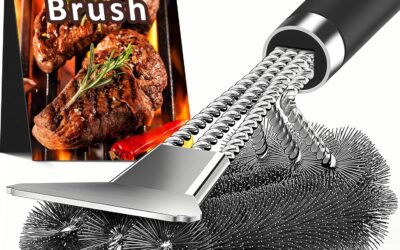
Most grill brushes ask you to choose between cleaning power and safety. The MEKER flips that trade-off by replacing loose metal bristles with a tightly woven steel fiber pad that clings to grime without leaving behind wire fragments that could end up in your food. That alone makes it stand out on a crowded shelf of BBQ accessories.
Beyond safety, the five included replacement heads are a genuinely practical touch. Rather than buying a new brush every season, you simply swap the pad when it wears out, which keeps the per-use cost remarkably low. The 8-point screw-lock system means the head stays put during vigorous scrubbing, and the built-in scraper is sharp enough to handle the kind of carbonized buildup that accumulates after a summer of weekend grilling.
If you want a safer, longer-lasting grill brush without sacrificing the scrubbing power that actually gets your grates clean, this one delivers.
Styles it works with: Outdoor Modern, Rustic Backyard, Industrial Patio, Classic American BBQ setups
Best placed in: Beside a freestanding gas or charcoal grill, hung on an outdoor kitchen pegboard, stored in a grill tool caddy on a deck or patio
May not suit: Apartment dwellers with small indoor grills or grill pans, as the steam-clean method requires an open outdoor setup and high heat; households looking for a quick cold-clean solution without a preheat step
Buy it if:
- You grill frequently and want to stop worrying about metal bristles ending up in your food
- You are tired of replacing cheap wire brushes every season and want a multi-pad kit that lasts
- You own a cast iron or stainless steel grate and need a brush that works safely on both surfaces
Consider waiting if:
- You prefer a brush that works on a cold grill, since this one requires a 400F preheat before use
Skip it if:
- You exclusively use a small indoor grill pan where high-heat outdoor cleaning is not practical
- You want a single lightweight scraper with no replaceable parts to manage
Check the latest price and availability on Amazon before it sells out.
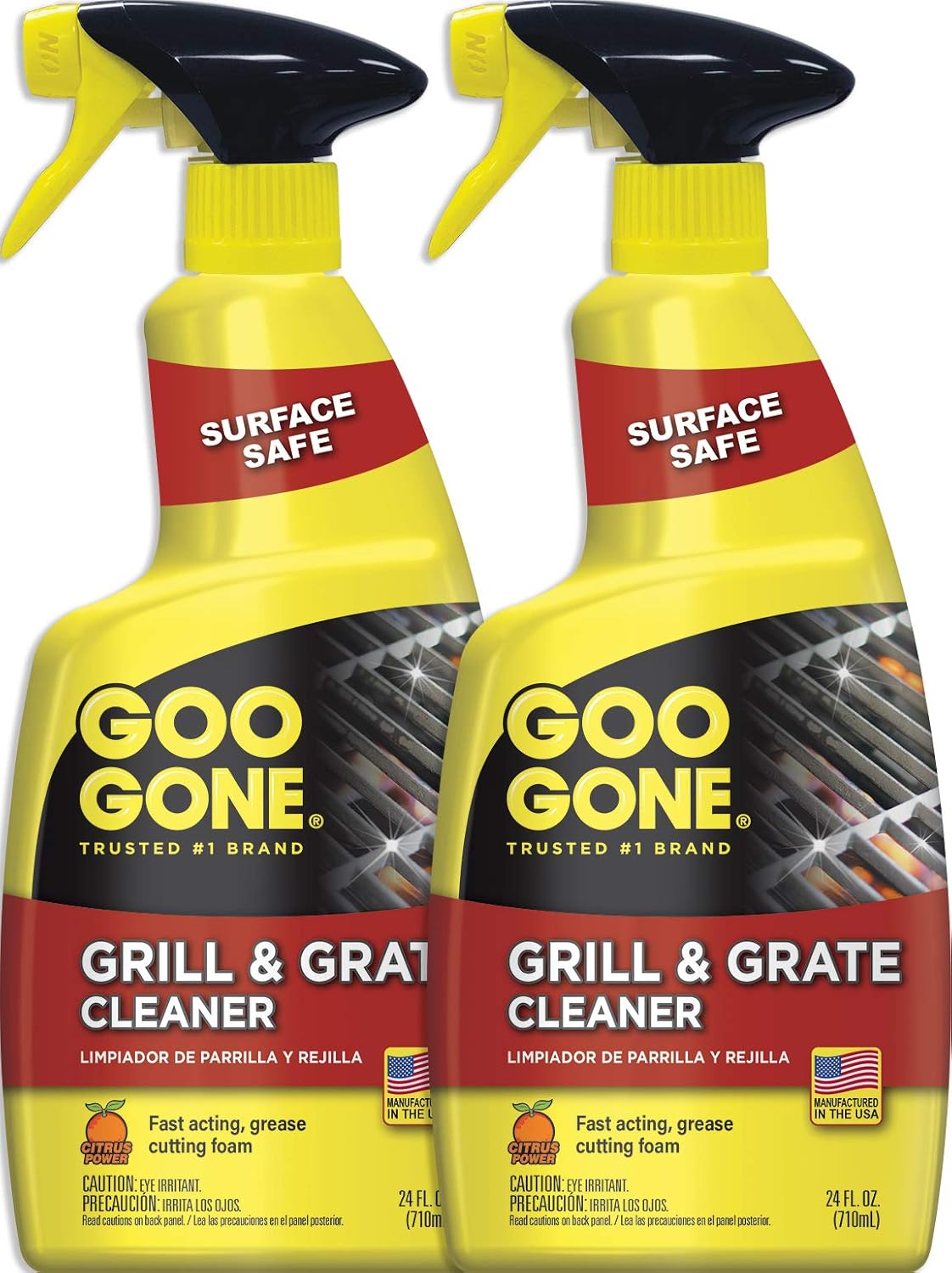
Goo Gone Grill and Grate Cleaner Spray2-Pack 24oz | Degreaser for BBQ Grates, Pellet and Electric Smokers
Pros
- Drip-free foam clings to vertical grill grate surfaces so the cleaner stays where you spray it
- Handles tough baked-on carbon and grease that basic dish soap and scrubing cannot remove
- Compatible with pelet and electric smokers which many competing grill cleaners do not specifically support
- Two-pack value format means you always have a backup bottle ready without reordering immediately
Cons
- Requires removing the grate and rinsing thoroughly after use which adds steps compared to wipe-only cleaners
- Foam formula may be more product than needed for lightly soiled grates making it better suited for heavy-use grills
- No included brush or scrubbing tool means you still need separate cleaning accessories for stuck-on residue
If you have ever put off cleaning your grill because it feels like a battle against carbonized grease, Goo Gone Grill and Grate Cleaner changes that dynamic entirely. The foaming formula sticks to grates instead of dripping off, which means it actually has time to break down the grime before you wipe it away. That alone makes a real difference in how much effort you put in.
Beyond the formula itself, the two-pack format is genuinely useful for anyone who grills regularly through spring and summer. You are not rationing product or making an extra run to the store mid-season. Both bottles are generously sized at 24 ounces each, and the spray application keeps things controlled without waste.
For households with a pelet smoker or electric smoker alongside a standard gas grill, this cleaner covers all of them, which simplifies what you keep under the patio sink. If you want a cleaner that tackles serious grease buildup without spending an hour scrubbing, this one delivers.
Styles it works with: Outdoor entertaining setups, backyard patios, covered pergola kitchens, and utility-focused garage or shed storage areas
Best placed in: Outdoor kitchen cabinet or drawer, under a patio utility sink, or alongside grilling tools in a dedicated BBQ station
May not suit: Apartment dwellers with no outdoor grill access, or households that only grill once or twice per year where a smaller single bottle would be more appropriate
Buy it if:
- You grill multiple times per week and deal with heavy carbon and grease buildup that basic cleaning cannot handle
- You own a pellet or electric smoker and want a cleaner specifically formulated to be safe on those surfaces
- You want to stock up for the full grilling season without reordering partway through summer
Consider waiting if:
- You only grill occasionally and a smaller single-bottle option would be a better fit for your usage level
Skip it if:
- You prefer an all-in-one cleaning kit that includes brushes and scrubbers rather than a standalone spray
- You are looking for a cleaner safe for cast iron grates without additional seasoning steps afterward
Check the latest price and availability on Amazon before it sells out.



Write Your Review
No reviews yet. Be the first to share your experience!