

> Editorial Note: I’m Hannah Lin, an Interior Living Researcher who’s spent 9+ years analyzing the home furniture market. This guide draws on BIFMA, GREENGUARD, and FSC certifications, plus owner reviews aggregated from Wirecutter, Apartment Therapy, and the major home design subreddits.
The streaks aren’t from your cleaner. They’re from the paper towel you’re wiping with, which sheds lint and drags residue across the glass instead of lifting it. Fix the cloth and half the problem disappears before you spray a single thing. A clean mirror does the same visual work as good art, which is why it lands in so many of the same rooms as your best gallery wall frames, your best console table for entryway, your best large floor mirror, your best wall mirror for living room, and your best table lamp for living room. Here’s how to get it spotless and keep it that way.
Why Does My Mirror Streak No Matter What I Use?
Streaks come from three sources, and paper towels cause two of them. First, they leave behind cellulose lint that scatters light. Second, they smear a thin film of cleaner rather than absorbing it, so whatever you spray just redistributes into cloudy arcs.
The third source is the cleaner itself. Spray too much and the excess pools, dries unevenly, and leaves a haze wherever the liquid evaporated last. Most people over-apply by a factor of two or three, then chase the streaks with more product, which makes it worse.
Ammonia-based formulas dry fast, which is why glass cleaners have used them for decades. But fast-drying also means a narrow working window. If you spray a whole mirror and wipe slowly, the top edge is already flashing dry while you’re still at the bottom. That drying line is a streak.
The fix is boring but reliable. Use a lint-free microfiber cloth, apply cleaner sparingly, and work in a consistent direction so you never overlap a wet edge with a drying one. Wirecutter’s glass-cleaning coverage lands on the same conclusion after evaluating dozens of formulas: technique beats product almost every time.
What Cloth Actually Cleans Glass Without Lint?
Microfiber. Not cotton, not newspaper, not a paper towel. A quality glass-weight microfiber cloth runs around 300 GSM (grams per square meter) with a tight, flat weave that traps residue in the fibers instead of pushing it around.
Skip the plush, terry-style microfiber sold for cars. Those thick pile cloths are built to hold wax and water, and they’ll leave faint fiber trails on a mirror. You want the thin, almost slick “glass” or “polishing” variety, usually a 16×16 inch square with a diagonal or waffle weave.
Keep two cloths in rotation. One damp cloth to clean, one bone-dry cloth to buff. The two-cloth method is the single biggest upgrade most people can make, and it costs nothing once you own the cloths. Apartment Therapy’s cleaning guides push the same two-step system for exactly this reason.
Wash them separately from towels and never with fabric softener, which coats the fibers and kills their grab. Skip the dryer sheet too. Air-dry or tumble low. A softener-coated microfiber cloth smears worse than the paper towel you replaced. Done right, one set of cloths lasts years.
What’s the Best Cleaner: Store-Bought or DIY?
It depends on how often you clean and how much you care about ingredients. A ready-to-use glass spray is faster and more consistent. A homemade mix is cheaper and lets you control what touches the surface.
For DIY, the reliable recipe is 50/50 distilled water and white vinegar in a spray bottle, with one drop of dish soap to cut any oily film. Distilled matters here. Tap water carries minerals that dry into their own faint spots, especially if your area runs above 120 ppm hardness.
Vinegar’s acidity dissolves the light oils and fingerprints that make mirrors look grimy, and it flashes off without residue when applied thin. If the smell bothers you, cut it to a 1:3 vinegar-to-water ratio. It still works, just slower on stubborn spots.
Store-bought formulas earn their place on convenience. The foaming aerosol types cling to vertical glass instead of running down, which gives you a longer working window on a big mirror. Look for ammonia-free if the mirror sits near anything you breathe on daily, since GREENGUARD-style low-emission thinking applies to cleaners in tight bathrooms too. Both routes work. Pick the one you’ll actually keep up with.
What’s the Correct Order and Technique?
Start dry. Wipe the whole mirror with your dry microfiber cloth first to knock off dust and loose lint, so your cleaner isn’t turning that grit into mud. Skip this and you’re just making slurry.
Spray the cloth, not the glass, for anything smaller than a full-length mirror. This controls the amount, keeps overspray off your frame and wall, and stops liquid from seeping behind the glass at the edges, where it can damage the silvering over time.
Wipe in one direction. Top to bottom in slightly overlapping passes, or an S-pattern if that’s easier to track. The point is never to cross back over an area that’s already flashing dry. Then flip to your dry cloth and buff the same way while the surface is still barely damp.
For a large floor or full-length mirror, spray the glass directly in sections rather than trying to coat the whole thing at once. Work a two-foot band, buff it, move down. Catch corners and edges with a folded cloth corner. That’s where film hides.
Helpful Picks
These three clear a 4.8 owner rating and lean on ammonia-free, streakless formulas that dry fast without hazing. Reach for a foaming aerosol on big vertical mirrors where cling matters; the pump spray is fine for quick bathroom touch-ups.
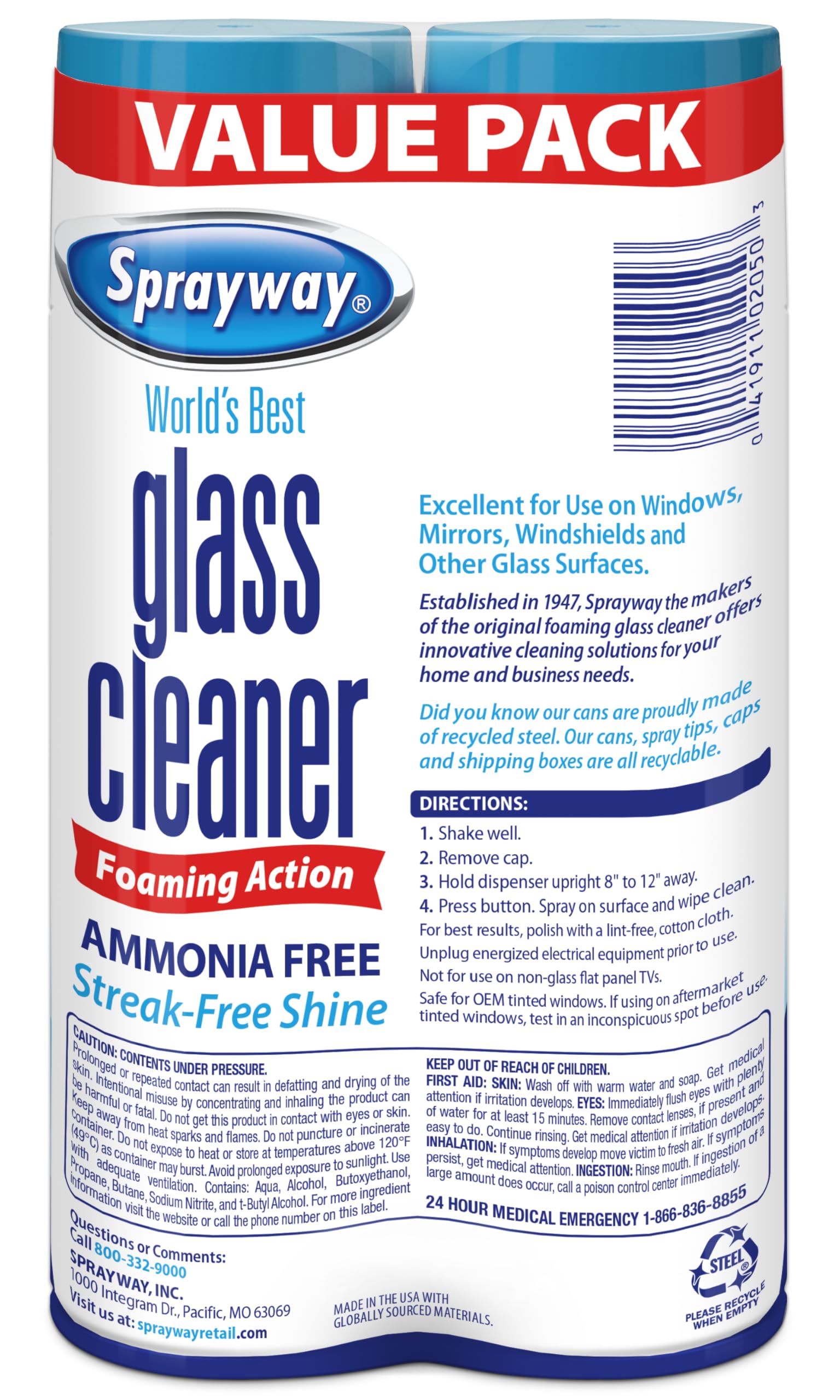

Sprayway Ammonia-Free Foaming Glass Cleaner Aerosol 19oz Pack of 2 | Streak-Free, Fast-Drying, Fresh Scent
Pros
- Ammonia-free formula is safe for tinted windows, framed mirrors, and specialty glass decor without risk of damage.
- True streak-free finish even on large mirror surfaces, confirmed by thousands of verified buyers.
- Fast-acting foam requires minimal scrubbing, making glass cleaning quick and effortless.
- Versatile enough for mirrors, windows, glass tabletops, shower doors, and decorative glass accents.
- Excellent value per ounce in the Pack of 2 format compared to single-can alternatives.
Cons
- Aerosol format is not ideal for eco-conscious shoppers who prefer refillable or low-waste packaging.
- Fresh scent, while mild, may not suit buyers who are sensitive to any added fragrance in cleaning products.
- Aerosol cans are not TSA-friendly and cannot be stored in temperature-extreme spaces like garages in summer.
There is something satisfying about a truly streak-free mirror, and Sprayway Glass Cleaner is the product that actually delivers on that promise. The thick foaming spray clings exactly where you aim it, lifts fingerprints and dust in one wipe, and dries fast without the cloudy residue that cheaper sprays leave behind. For anyone who has decorative mirrors, glass-fronted cabinets, or picture frames with glass, this becomes a non-negotiable part of the cleaning routine.
What sets Sprayway apart in a crowded category is the ammonia-free formula. That means you can safely use it on tinted windows, UV-coated glass, and framed mirrors without worrying about long-term damage to finishes or coatings. The fresh scent is subtle enough that it does not linger aggressively, which matters in a bedroom or bathroom setting where harsh chemical smells are unwelcome.
The Pack of 2 format is genuinely practical for households that use glass cleaner regularly across multiple rooms. If you want spotless, polished glass surfaces throughout your home without dealing with streaks or strong ammonia fumes, this one delivers.
Styles it works with: Modern Farmhouse, Minimalist, Scandinavian, Traditional
Best placed in: Bathroom vanity cabinet for daily mirror maintenance, living room sideboard for glass tabletop and picture frame care, entryway console area to keep decorative mirrors gleaming
May not suit: Households looking strictly for zero-waste or refillable cleaning solutions; renters in small apartments with limited storage space may find two aerosol cans bulky to keep on hand
Buy it if:
- You have large decorative mirrors, glass cabinet doors, or framed art throughout your home and want a reliable daily cleaner that never leaves streaks.
- You are switching away from ammonia-based cleaners to protect tinted windows, specialty coatings, or antique mirror finishes.
- You want a fast, low-effort cleaning routine where one or two sprays and a single wipe leaves glass surfaces spotless.
Consider waiting if:
- You prefer a scent-free or fragrance-sensitive formula, as a fragrance-free variant may better suit your needs.
Skip it if:
- You are committed to plastic-free or aerosol-free household products and only use refillable or concentrate-based cleaners.
- You only have one small mirror to clean occasionally and do not need the volume of a Pack of 2.
Check the latest price and availability on Amazon before it sells out.

Windex Original Glass Cleaner Spray 23 Fl Oz - Streak-Free Shine for Windows, Mirrors & Glass Surfaces
Pros
- Genuinely streak-free results confirmed by thousands of verified buyers across windows, mirrors, and glass decor
- Outstanding value at under $4 for a 23 oz bottle that lasts weeks with regular household use
- Pre-treatment formula starts lifting grime on contact, so one wipe is usually all it takes
- Eco-friendly bottle made from 100% recovered coastal plastic with a compatible refill option available
- Versatile enough to handle every glass surface in the home from shower doors to glass-top dining tables
Cons
- Contains ammonia, which means it should not be used on tinted windows, anti-glare screen coatings, or certain stone surfaces without checking compatibility first
- The 23 oz bottle may run out quickly in larger homes with many windows, making the refill bottle a near-necessity for heavy users
- The spray trigger has been noted by some buyers to clog or lose pressure over time with heavy use
Windex Original is one of those rare products that has earned its place under the kitchen sink not through marketing, but through decades of actually working. There is something deeply satisfying about spraying it on a grimy window and watching the dirt loosen before your cloth even touches the glass. It is not a gimmick; the formula genuinely pre-treats on contact, which means less scrubbing and faster results.
For home decor lovers, clean glass is not a chore, it is a design decision. Dirty mirrors visually shrink a room. Smudged windows block the natural light that makes your carefully chosen paint colors and furniture look their best. Windex Original removes that barrier and lets your interior do what it was designed to do. The Original Blue Scent is familiar and clean without being overpowering, so your home smells maintained rather than medicinal.
The eco-conscious packaging is a genuine bonus rather than a token gesture: the bottle is made from 100% recovered coastal plastic collected near oceans, and a large refill option means you can commit to the same bottle for months. If you want sparkling, streak-free glass throughout your home without switching between multiple specialty products, this one delivers.
Styles it works with: Modern Farmhouse, Scandinavian Minimalist, Contemporary, Traditional
Best used on: Large living room windows and sliding glass doors, bathroom mirrors and shower enclosures, kitchen glass cabinet doors and glass stovetops, glass-top coffee or dining tables, entryway mirrors and picture frame glass
May not suit: Homes with tinted privacy windows or anti-reflective coated glass, since ammonia-based formulas can degrade those coatings over time; households seeking a fully fragrance-free cleaning routine may find the Original Blue Scent a minor drawback
Buy it if:
- You want a reliable, no-guesswork glass cleaner that handles everything from bathroom mirrors to large living room windows in a single product
- You care about sustainability and want a cleaner that comes in a bottle made from recovered coastal plastic with a refill option to reduce waste
- You are refreshing your home decor and want your glass surfaces, mirrors, and windows to look their sharpest so your interior design actually shows up as intended
Consider waiting if:
- You want to buy the larger 67.6 oz refill bottle first to determine how often you use it before committing to the spray bottle separately
Skip it if:
- Your home has tinted windows, specialty coated glass, or anti-glare screen surfaces that are incompatible with ammonia-based formulas
- You need a strictly ammonia-free formula, in which case the Windex Ammonia-Free or Windex Vinegar versions are better fits
Check the latest price and availability on Amazon before it sells out.

Pros
- Consistently streak-free results on mirrors, windows, and glass tabletops
- Ammonia-free formula eliminates harsh fumes during indoor cleaning
- Foaming action clings to glass and prevents dripping onto frames or sills
- Bulk 6-pack provides long-lasting supply for whole-home maintenance
- Works effectively on smoke film, fingerprints, and stuborn dust
Cons
- Aerosol cans are not refillable or eco-friendly packaging
- Foam can overspray onto surrounding surfaces if not applied carefully
- Not ideal for non-glass surfaces like acrylic or plexiglass displays
If you have mirrors, glass-top tables, or large windows as part of your decor, you already know how quickly fingerprints and dust can dull the look of an entire room. Sprayway Glass Cleaner is the go-to solution that professional cleaners have trusted for years, and it works just as well for a quick touch-up before guests arrive as it does for a deep weekend clean.
The foaming formula sticks to glass rather than running down the surface, which means less mess on your window frames, mirror edges, and furniture. It dries fast, leaves zero streaks, and the fresh scent is subtle enough that it will not compete with your candles or diffusers. Your entryway mirror, bathroom vanity, and glass shelving will all look showroom-ready in seconds.
If you want crystal-clear glass surfaces throughout your home without dealing with harsh ammonia fumes or stuborn streaks, this one delivers.
Styles it works with: Modern Minimalist, Glam, Mid-Century Modern, Transitional
Best placed in: Entryway console with a statement mirror, living room with glass coffee tables or display shelves, bathroom vanity area
May not suit: Homes that exclusively use acrylic or plexiglass decor pieces, or households looking for zero-waste cleaning solutions
Buy it if:
- You have multiple mirrors, glass tables, or window-heavy rooms that need regular upkeep
- You want an ammonia-free option safe to use around children and pets
- You prefer buying in bulk so you always have a can ready in each room
Consider waiting if:
- You only need a single can and prefer not to store extras
Skip it if:
- You need a cleaner specifically formulated for acrylic, plexiglass, or coated surfaces
- You are committed to zero-waste products and want a refillable spray bottle system
Check the latest price and availability on Amazon before it sells out.
Frequently Asked Questions
Can I use paper towels if I don’t have microfiber?
No. Paper towels shed cellulose lint and smear cleaner rather than absorbing it, which is the exact cause of most streaks. If you’re truly stuck, a flat-woven cotton flour-sack cloth or crumpled black-and-white newspaper does better than a paper towel. But microfiber is worth the few dollars.
Is vinegar safe for all mirrors?
It depends on the edges. Vinegar is safe on the glass face of a standard mirror, but keep it off exposed edges and backing, since acid can attack the silvering and frame over time. Spray the cloth, not the glass, and never let liquid pool at the bottom rail. Antique or beveled mirrors with worn edges deserve plain distilled water instead.

Why does my mirror fog or streak right after I clean it?
Almost always over-application. Too much cleaner dries unevenly and leaves a haze wherever the liquid evaporated last, so a light coat and a dry buff usually solves it. Humidity plays a role too. Clean bathroom mirrors after a shower, not during, when steam fights you the whole time.
Does the direction I wipe really matter?
Yes. Wiping in one consistent direction, then buffing dry the same way, stops you from overlapping a drying edge with a wet one, which is what forms a visible streak line. Some people wipe the first cloth horizontally and the dry cloth vertically so any remaining streak is easy to spot and its direction tells you which pass left it.
How often should I clean a mirror?
It depends on location. A bathroom mirror hit with splashes and toothpaste needs a wipe every few days, while a living-room or bedroom mirror stays clear for two to three weeks. Dust the dry surface weekly regardless. Letting film build up means you’re scrubbing later instead of wiping now.
Will a foaming aerosol work better than a liquid spray?
It depends on the mirror size and angle. Foaming aerosols cling to vertical glass and give you a longer working window on large mirrors, so they shine on full-length and floor mirrors. For a small bathroom mirror, a pump-spray liquid is faster and easier to control. Both leave a clean finish when applied thin.
Can I clean a mirror without any cleaner at all?
Yes, for light dust and smudges. A microfiber cloth dampened with plain distilled water lifts fingerprints and everyday film without any chemical, and it’s the safest option for antique or edge-worn mirrors. For greasy kitchen film or hairspray buildup, you’ll want the vinegar mix or a dedicated glass spray to break it down.






Write Your Review
No reviews yet. Be the first to share your experience!