

> Editorial Note: I’m Hannah Lin, an Interior Living Researcher who’s spent 9+ years analyzing the home furniture market. This guide draws on BIFMA, GREENGUARD, and FSC certifications, plus owner reviews aggregated from Wirecutter, Apartment Therapy, and the major home design subreddits.
The most common mistake isn’t dirty water or the wrong mop. It’s soap. People pour a heavy squirt of dish detergent into the bucket, and that sticky film never fully rinses away, so the floor looks hazy a day later and traps dirt faster than before. A neutral-pH cleaner and a barely-damp mop fix most of it, and the same rooms that hold ceramic tile usually deserve a design refresh too, so browse the best gallery wall frames, a best console table for entryway, the best large floor mirror, a best wall mirror for living room, and the best table lamp for living room once the floors are gleaming.
How Do You Clean Ceramic Tile Without Leaving a Film?
Start with pH. Ceramic tile itself doesn’t care much, but the glaze and the grout do, and residue is almost always the culprit behind that dull, streaky look. A neutral cleaner sits around pH 7, which rinses clean and leaves nothing behind for dirt to cling to. Skip oil-based soaps, wax formulas, and anything labeled “mop and shine” on sealed ceramic. Those build a layer that yellows over months.
Sweep or dry-vacuum first. Grit is the enemy here. Dragging a wet mop over loose sand grinds fine scratches into the glaze, and on high-traffic entry tile you’ll see the wear pattern within a year.
Then work in sections. Fill one bucket with warm water and cleaner, and a second with plain rinse water. Wring the mop until it’s damp, not dripping, because standing water seeps into grout lines and loosens them over time. Mop a 4×4 foot area, rinse the mop, and move on. Change the wash water the moment it turns gray, which on a full kitchen usually means every 150 square feet or so.
Dry with a microfiber cloth or a fan if you want zero water spots. That last step is what separates a floor that looks professionally done from one that looks “recently mopped.”
What’s the Right Way to Deep-Clean Grout Lines?
Grout is porous, so it soaks up spills, mop water, and every cleaner you’ve ever used. That’s why the lines darken while the tile stays bright. A surface mop can’t reach into that texture, and this is the single job most people skip.
Mix a paste of baking soda and water, roughly a 3-to-1 ratio, and spread it along the discolored lines. Let it sit 10 to 15 minutes so it can lift the embedded grime. For stubborn lines, a hydrogen peroxide solution at 3% works on organic stains without the fumes of bleach. Scrub with a stiff nylon brush or a grout brush, moving along the line rather than across it.
Rinse thoroughly. Baking soda residue attracts dirt just like soap does, so a plain-water pass afterward matters.
Skip metal brushes and undiluted bleach. Bleach can discolor colored grout and, over repeated use, weaken the binder. If your grout is sealed, a mild cleaner is enough for routine work. Reseal every one to two years in wet zones like bathrooms and entryways, per most manufacturer guidance and echoed across Apartment Therapy’s maintenance coverage. A fresh seal is the difference between grout you wipe and grout you scrub.
How Often Should You Mop Ceramic Tile Floors?
Match the schedule to the traffic, not the calendar. A rarely-used guest bath and a mudroom that catches every rainy boot need very different rhythms, and over-mopping a low-traffic room just wears the glaze faster.
For high-traffic zones, kitchens, entryways, main hallways, plan a damp mop once a week and a quick spot-clean for spills the same day they happen. Sugary or acidic spills like juice and wine should come up within the hour so they don’t stain grout. A dry sweep or vacuum every two or three days handles the grit that causes long-term scratching.
Low-traffic rooms can stretch to every two or three weeks. Bathrooms are the exception. Humidity and product residue build up fast, so a weekly wipe keeps soap scum from setting into the grout.
Here’s the coach rule. Sweep often, mop rarely, dry always. Frequent light dusting protects the surface far more than an aggressive monthly deep clean does. Wirecutter’s floor-care reviewers make the same point about hard-surface floors: consistent small maintenance beats infrequent heavy scrubbing every time. Your knees will thank you too.
Which Mop and Tools Actually Work on Tile?
Flat microfiber beats string mops on ceramic. String holds too much water and pushes dirty gray film into grout, while a flat microfiber pad glides, absorbs, and wrings out clean. Look for pads you can machine-wash at least 100 times, since disposable-pad systems get expensive fast.
Spray mops are the sweet spot for daily upkeep. You control exactly how much liquid hits the floor, which solves the standing-water problem. For weekly work, a flat mop with a wringable bucket gives you more scrubbing power on set-in spots.
For grout and edges, keep a stiff nylon brush and an old toothbrush on hand. Corners and baseboints collect the darkest buildup, and no mop reaches them.
A word on steam mops. They work on well-sealed ceramic, but heat can degrade grout sealer over time and force moisture into any hairline cracks. If your grout is old or unsealed, steam is a gamble. Materials guidance from ASTM-rated flooring sources leans toward damp-mopping over steam for longevity on tile-and-grout systems. When in doubt, stick with a microfiber pad and neutral cleaner.
Helpful Picks
These three cleaners all clear a 4.3 owner rating and share one trait that matters most on ceramic: a neutral or near-neutral formula that rinses without film. Start with the first for everyday spray-mop use, and reach for the concentrate if you’re cleaning large floors on a budget.

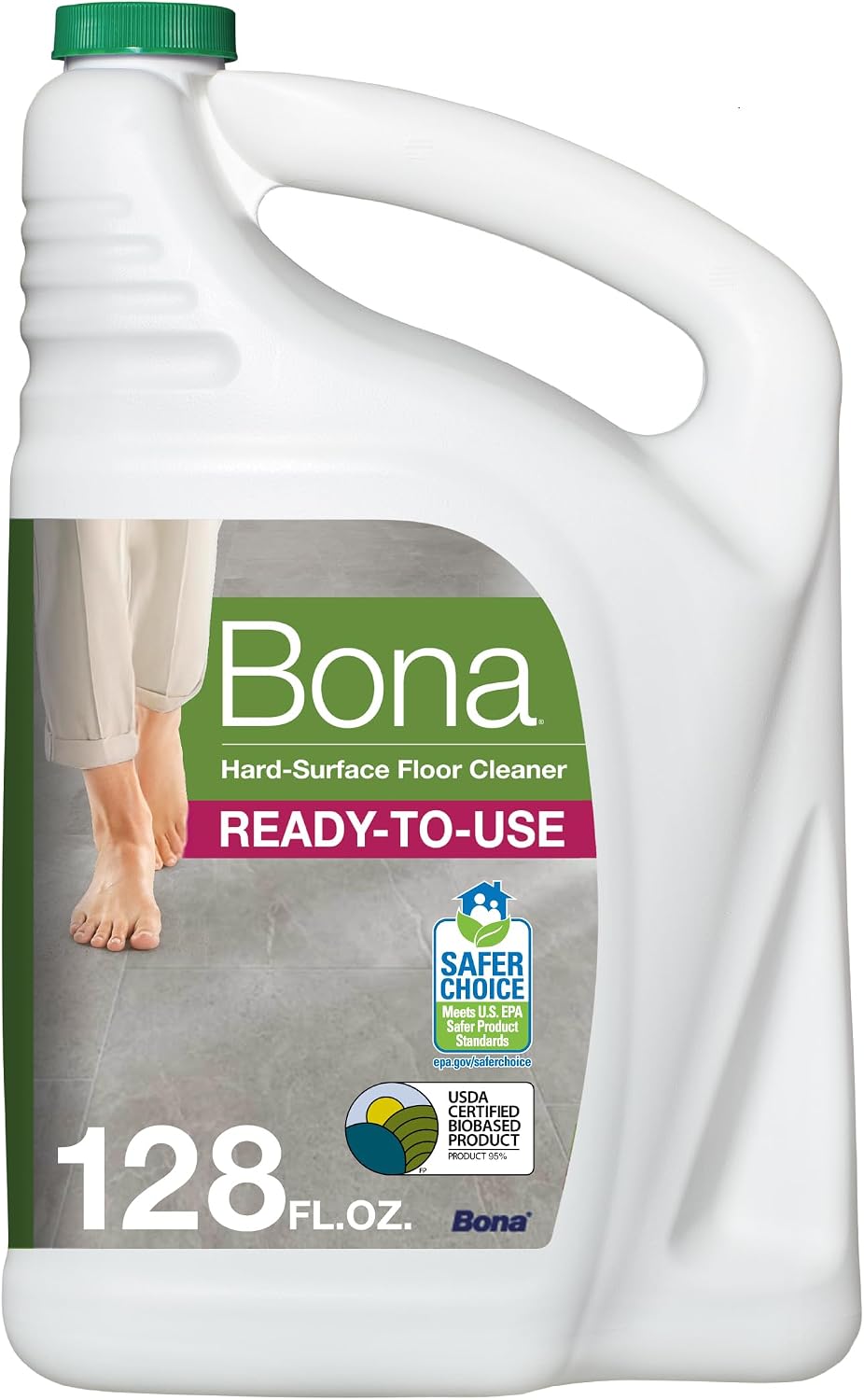
Bona Multi-Surface Floor Cleaner Refill 128 oz - Residue-Free Formula for Stone, Tile, Laminate & Vinyl
Pros
- Massive 128 oz size offers excellent long-term value
- Residue-free and streak-free finish on multiple hard floor types
- EPA Safer Choice Certified and mostly biobased ingredients
- Wide handle and splashless pour design make refilling easy
- Compatible with existing Bona mop systems without extra purchases
Cons
- Only works as a refill; requires a Bona mop or spray bottle to use
- Unscented formula may disappoint buyers who prefer a fresh fragrance after cleaning
- Large bottle is heavy and may be awkward to store in small spaces
Keeping hard-surface floors looking their best is one of those invisible tasks that makes a huge difference in how your home feels. The Bona Multi-Surface Refill takes the friction out of that routine with a simple, effective formula that leaves zero residue on stone, tile, laminate, and vinyl. You just pour, mop, and move on with your day.
What stands out is the combination of performance and peace of mind. The formula is pH-neutral, water-based, and carries both EPA Safer Choice and USDA biobased certifications. That means you can mop around kids, pets, and bare feet without a second thought. The splashless pour design is a small detail that makes a real difference when you are refilling over a sink or counter.
If you want spotless hard floors without worying about chemical residue or streaky buildup, this one delivers.
Styles it works with: Modern Farmhouse, Scandinavian, Contemporary, Coastal
Best placed in: Kitchen pantry or cleaning closet, laundry room shelf, garage storage area
May not suit: Homes with only hardwood floors (Bona makes a separate hardwood-specific formula), or buyers who lack a Bona spray mop or compatible spray bottle
Buy it if:
- You already own a Bona spray mop and want the most economical way to keep it loaded
- You have multiple rooms with stone, tile, laminate, or vinyl floring
- You prefer eco-friendly cleaning products that are safe around children and pets
Consider waiting if:
- You are unsure whether your floors are sealed hard-surface or unsealed hardwood, which needs a different formula
Skip it if:
- You only have hardwood floors and need Bona's wood-specific cleaner instead
- You want a scented cleaner that leaves a noticeable fragrance after mopping
Check the latest price and availability on Amazon before it sells out.

Zep Neutral pH Floor Cleaner 1 Gallon Concentrated All-Purpose Safe for Hardwood Tile Laminate Floors
Pros
- Extremely economical at pennies per use when diluted properly
- Safe on virtually all sealed hard floor types including expensive hardwood
- No rinsing required which cuts cleaning time in half
- Trusted professional brand with nearly 8000 positive reviews
- Versatile dilution ratios let you adjust strength for light or heavy cleaning
Cons
- Requires dilution before use so it is not a grab-and-go spray bottle product
- May not remove heavy grease or built-up grime without pre-treatment
- Galon jug is bulky to store under a standard kitchen sink
If you have invested in beautiful hardwood floors or quality tile, the last thing you want is a harsh cleaner slowly stripping away the finish. Zep Neutral pH is the same formula professional cleaning crews use in office buildings and hospitals, and it treats your floors with respect. It cleans thoroughly without leaving residue, film, or streaks behind.
What stands out here is the sheer value. A single gallon of concentrate lasts most households three to six months of regular mopping. You mix a few ounces into your mop bucket, and the result is floors that look freshly installed without that sticky-clean feeling cheaper products leave behind.
If you want professional-level floor care without spending professional-level money or worying about damaging your surfaces, this one delivers.
Styles it works with: Modern Farmhouse, Scandinavian, Traditional Contemporary. Works with any interior style since it is a maintenance product that preserves the look of your existing floors.
Best placed in: Utility closet, laundry room shelf, or garage storage area. Use it throughout your home on kitchen tile, living room hardwood, hallway laminate, and bathroom floors.
May not suit: Homes with only unsealed natural stone floors (requires a stone-specific cleaner), or households that prefer a ready-to-use spray product with zero preparation.
Buy it if:
- You have multiple floor types in your home and want one cleaner that handles them all safely
- You mop weekly and want a product that lasts months instead of weeks
- You are tired of sticky residue or streaks left by grocery store floor cleaners
Consider waiting if:
- You prefer a ready-to-use spray and do not want to mix concentrate
Skip it if:
- Your floors are unsealed or waxed and require specialty products
- You only need to spot-clean small areas and galon would go to waste
Check the latest price and availability on Amazon before it sells out.

Pros
- Extremely concentrated formula delivers excellent cost-per-use value at under $30 for months of cleaning
- Streak-free results on polished marble and granite without buffing or extra steps
- Versatile enough for ceramic, porcelain, vinyl, and natural stone so one bottle covers the whole house
- pH-neutral formulation specifically designed to preserve stone sealers and surface finish
- Non-toxic and safe for households with children and pets
Cons
- Galon jug is heavy and awkward to pour precisely without a measuring cup or pump
- May not cut through heavy grease or sticky spills without pre-treatment or extra scrubbing
- Unscented or lightly scented formula may disappoint buyers who expect a fresh fragrance after mopping
If you have invested in natural stone floors, you know the anxiety of choosing a cleaner that could etch or dull your marble. Black Diamond Stoneworks takes that worry off the table with a pH-neutral formula specifically designed to preserve stone beauty while actually getting floors clean. It works quietly and effectively, leaving behind nothing but a natural shine.
In daily use, this cleaner fits seamlessly into a quick-mop routine. There is no rinsing step, no sticky residue to attract dirt later, and no harsh chemical smell filling the room. The concentrate ratio means you barely use any product per session, so the galon lasts far longer than you would expect.
If you want genuinely clean natural stone and tile floors without risking damage or spending extra time rinsing, this one delivers.
Styles it works with: Modern Minimalist, Traditional Elegance, Mediterranean, Contemporary Farmhouse
Best placed in: Kitchen and dining areas with stone or tile floors, marble-tiled bathrooms, entryway and mudroom tile surfaces
May not suit: Homes with only hardwood or laminate floring (not designed for wood), households looking for a heavy-duty degreaser for garage or workshop tile
Buy it if:
- You have marble, granite, or travertine floors and want a cleaner that will not damage the finish over time
- You prefer a single all-purpose floor cleaner for every hard surface in your home
- You want a non-toxic option safe for daily mopping around kids and pets
Consider waiting if:
- You only need a small amount and would prefer a quart-size bottle to test before committing to a gallon
Skip it if:
- Your floors are exclusively hardwood or laminate, which need a different formula
- You need a heavy-duty degreaser for industrial or commercial kitchen floors
Check the latest price and availability on Amazon before it sells out.
Frequently Asked Questions
Can I use vinegar to clean ceramic tile floors?
It depends. Diluted vinegar is fine on glazed ceramic tile itself, but it’s acidic, so repeated use can etch and erode grout over time. If you go this route, keep it well diluted, roughly half a cup per gallon, and rinse afterward. On natural stone, skip vinegar entirely.
Do I need to seal ceramic tile?
No. Glazed ceramic tile has a baked-on protective surface and doesn’t need sealing. The grout between tiles is what needs it, since grout is porous and stains easily. Reseal grout every one to two years in wet or high-traffic areas.

Will bleach damage my tile or grout?
Yes, over time. Bleach can discolor colored grout and weaken the binder with repeated use. Reserve it for occasional mold spots on white grout, always diluted, and rinse thoroughly. For routine cleaning, a neutral-pH cleaner is safer and just as effective.
Why does my tile floor look hazy after mopping?
Almost always leftover cleaner. Too much soap or a non-rinsing formula leaves a film that dulls the glaze and grabs dust. Rerinse with plain warm water, dry with microfiber, and switch to a neutral cleaner going forward.
Is a steam mop safe on ceramic tile?
It depends on your grout. Well-sealed grout usually handles steam fine, but heat can break down old sealer and push moisture into cracks. If your grout is unsealed or aging, a damp microfiber mop is the safer daily choice.
How do I get grout white again without harsh chemicals?
Yes, this works: a baking soda paste at a 3-to-1 ratio plus 3% hydrogen peroxide. Spread it, wait 10 to 15 minutes, scrub with a nylon brush, and rinse. For deep discoloration you may need two passes, then a fresh seal to keep it bright.
How much water should I use when mopping tile?
Less than you think. The mop should be damp, not dripping, since standing water seeps into grout and loosens it. Wring thoroughly, work in small sections, and dry the floor afterward for a spotless, streak-free finish.



Write Your Review
No reviews yet. Be the first to share your experience!