

> Editorial Note: Our guidance synthesizes recommendations from Apartment Therapy, House Beautiful, Wirecutter’s curtain coverage, and r/InteriorDesign. We are not interior designers or contractors. Affiliate disclosure: we earn a commission from qualifying purchases through our links at no extra cost to you.
The right curtain for a living room comes down to three things: how much light you want to control, how tall you want the space to feel, and whether the fabric’s texture or pattern will work with — not against — your existing upholstery and walls. Get those three variables sorted before you look at a single product listing, and the decision becomes a lot simpler.
Explore more room-by-room picks: best linen curtains for living room, best velvet curtains for bedroom, best area rug for living room, best throw pillows for couch.
Decide on Light Control First
Light control is where most people start, and for good reason. There are four tiers worth knowing:
Sheer panels filter and diffuse sunlight without blocking it. You’ll still see silhouettes from outside at night, and the room glows warmly during the day. Great for living rooms that face north or east and don’t get harsh afternoon sun.
Light-filtering curtains cut glare and soften the light, but the room stays bright. This is the most popular choice for living rooms — you keep the sense of openness while reducing the eye-strain that comes with a south-facing window in summer.
Room-darkening curtains block roughly 85–95% of incoming light. They’re lined or tightly woven, and they make a real difference in afternoon nap potential or for anyone who works from home on video calls. Still not fully dark, but noticeably dimmer.
Blackout panels block 99% or more. Honest answer: blackout is usually overkill for a living room unless you’ve got a home theater setup or a west-facing window that turns your sofa into a sun-baked disaster every evening. They’re excellent for bedrooms. In the living room, they can feel heavy and cave-like during the day if you’re not careful.
Your window’s orientation matters more than most guides admit. A north-facing living room barely gets direct sun — sheers work beautifully there. A south- or west-facing room with afternoon glare is a different calculation; light-filtering or room-darkening makes the space livable without making it dark.
Measure Before You Buy
Wrong measurements are responsible for more curtain regrets than bad taste. Two numbers matter: where the rod goes and how wide the panels are.
Rod placement is the biggest visual lever you have. Hanging the rod 4–6 inches above the window frame is the standard recommendation, but if you’ve got ceiling height to spare, positioning the rod 2 inches below the ceiling creates an illusion of height that genuinely works. A 9-foot ceiling with rods mounted at 8.5 feet reads significantly taller than the same room with rods at 6.5 feet.
Panel width is where people consistently under-buy. A single panel that matches the exact window width looks flat and institutional. The standard for a gathered, full look is 2 to 2.5 times the window width split across however many panels you’re hanging. For a 48-inch window, you want at least 96 inches of total panel fabric — two 54-inch panels would do it.
Length is partly functional, partly aesthetic. Floor-length (just grazing the floor) is the most versatile. Sill-length reads more casual and works in kitchens or small spaces. A deliberate puddle — letting 3–6 inches pool on the floor — adds formality and drama, but it’s a dust and pet-hair trap. Pick your priority.
The most common mistake: buying panels that match the window width exactly. They’ll look narrow and thin when opened, and they won’t have enough fabric to look full when closed.
Choose the Right Header Style
The header — the top of the panel — determines how the curtain hangs, how easily it moves, and what aesthetic it signals.
Grommet headers have metal rings punched through the fabric that slide directly onto the rod. They hang in uniform ripples, they’re easy to open and close, and they read as casual to contemporary. If someone in your house will be opening and closing curtains multiple times a day, grommets are the low-friction option.
Rod pocket headers have a sewn channel that the rod threads through. They look romantic and traditional, gather more softly, but they’re genuinely hard to slide open — the fabric bunches against the rod. Better for decorative panels that stay put.
Back tab headers attach via fabric loops sewn to the back of the panel, so the rod doesn’t show. Clean, tailored, and popular in modern spaces. Similar ease of movement to grommets, slightly more structured silhouette.
Pinch pleat headers are sewn into formal pleats that fan out from a pinched base. They look expensive and intentional. They also require specific pinch pleat hooks and a compatible rod or track system — not a good impulse purchase.
For most living rooms, grommet or back tab is the practical call. Rod pocket is fine if the curtains are decorative and you don’t mind the extra effort on the rare occasion you adjust them.
Match Fabric to Room Function
Fabric affects how a curtain moves, how it insulates, how it wears, and how much it costs to clean.
Linen is breathable, textural, and relaxed. It wrinkles — that’s part of its character, not a defect. Real linen (not faux linen polyester) has a GSM weight typically between 180–250 and will list flax fiber content on the label. Faux linen blends are often 100% polyester woven to mimic the texture. Both can look good; real linen ages more gracefully.
Velvet is heavy, formal, and thermally excellent. It’s genuinely good at blocking drafts and reducing noise. It’s also hard to clean and can crush in ways that are permanent. Worth it in a formal living room with low foot traffic. A velvet panel in a house with kids and dogs is a slow-motion regret.
Polyester is durable, machine-washable, and available in colors that linen and cotton can’t match. Most blackout curtains are polyester or polyester-blend because the tight weave and backing coatings require it. The trade-off is that polyester can look synthetic in bright light.
Cotton blend sits between linen and polyester. It’s washable, it drapes well, and it doesn’t look obviously cheap. A family-friendly default.
Color and Pattern Strategy
Neutral solids let your furniture and rugs do the talking. If you’ve got a patterned sofa, a patterned rug, or any other fabric focal point in the room, solid curtains almost always read better.
The “one pattern per room” rule isn’t absolute, but it’s a useful guardrail. If you’re mixing patterns, they need to differ in scale — a large geometric on curtains can work with a small-repeat pattern on throw pillows, but two medium-scale patterns fighting for attention is a headache.
Dark curtains making rooms feel smaller: true in some cases, not all. Dark curtains on a wall with low ceilings and no contrast = cave. Dark curtains on a high-contrast white wall with tall rods = dramatic and deliberate. The ceiling height matters more than the curtain color.
Frequently Asked Questions
What length curtains should I use for a living room?
Floor-length is the standard — typically 96 or 108 inches, depending on ceiling height and rod placement. The goal is for the panel to just graze or break slightly on the floor. Measure from the rod to the floor before ordering; don’t assume a standard length will fit your room.
Should curtains be lighter or darker than walls?
There’s no rule, but a common approach is to go one or two shades lighter or darker than the wall, rather than matching exactly (which can look flat) or going dramatically different (which draws too much attention to the curtains). Tone-on-tone is forgiving.
Do curtains have to touch the floor?
No. Sill-length curtains look intentional in the right context — casual rooms, small windows, spaces with radiators under the sill. What you want to avoid is the accidental in-between: panels that are almost floor-length but stop 4–8 inches short. That reads as a measuring mistake, not a design choice.
How wide should curtains be relative to the window?
Plan for 2 to 2.5 times the window width in total fabric. A 48-inch window needs roughly 96–120 inches of panel width total to look full. Err on the higher side if you want a lush, gathered look when closed.
Can I mix curtain colors and patterns in one room?
You can, but it requires intention. Mixing works when the colors are drawn from the same palette and the patterns differ in scale. What doesn’t work: two similarly sized patterns in clashing colors competing for the same visual weight.
What’s the difference between room-darkening and blackout curtains?
Room-darkening blocks 85–95% of light — you’ll still see some glow around the edges in direct sun. Blackout is 99%+, usually achieved with a dense foam or coated backing. The difference matters most in bedrooms and media rooms. For a typical living room, room-darkening is usually enough.
Are grommet or rod pocket curtains better for a living room?
Grommet panels slide more easily and hold their shape better with daily use. Rod pocket panels look fuller and more romantic but are genuinely harder to open and close — the fabric grips the rod. If the curtains will be moved regularly, grommets win on function. If they’re mostly decorative, rod pocket is fine.
Curtains as a Reference Point
Three popular picks frequently cited in living room curtain discussions — spanning blackout performance, linen texture, and layered sheer-over-blackout looks:

Pros
- Excellent light blocking performance, especially in darker colors
- Energy-efficient thermal insulation keeps rooms comfortable
- Durable 225GSM polyester fabric with triple-layer construction
- Very affordable for a 2-panel blackout set
- Easy care with machine wash capability
Cons
- Light blocking drops to 60% in lighter colors like white
- No customer reviews yet to confirm real-world performance
- May require steaming or ironing out of package
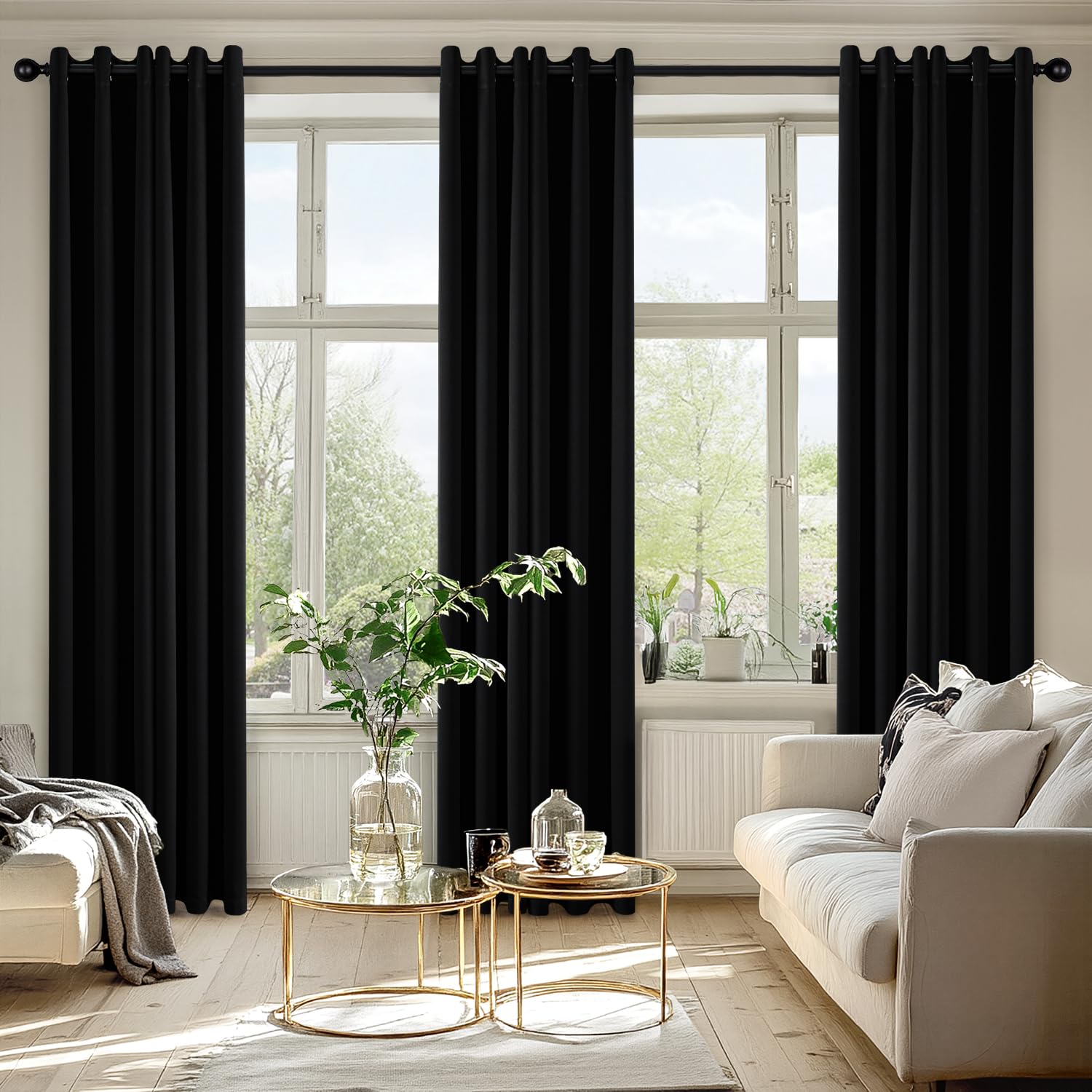
These MIULEE blackout curtains punch well above their price point. The triple-layer weaving with a black yarn middle gives you legitimate room-darkening power, not just a dim filter. In black, you get up to 95% light blocking, which means actual darkness for shift workers, nurseries, or anyone who values quality sleep.
The thermal insulation is a bonus you will notice on your energy bill. These curtains create a barrier against summer heat and winter cold, so your HVAC does not work overtime. The fabric feels substantial without being stiff, and the grommet rings slide smoothly on most rods.
If you want reliable blackout performance and year-round comfort without spending $50+ per panel, this one delivers.
Styles it works with: Modern, Minimalist, Contemporary, Scandinavian
Best placed in: Bedrooms for sleep quality, living rooms for movie watching, home offices to reduce screen glare, nurseries for nap time
May not suit: Rooms where you prefer sheer or light-filtering curtains, spaces with vintage or ornate decor that need patterned fabric, windows wider than 80 inches unless you buy multiple sets
Buy it if:
- You need effective blackout curtains for better sleep or daytime rest
- You want to lower energy bills with thermal insulation
- You are looking for solid quality at a budget-friendly price
- You prefer darker colors like black, navy, or charcoal for maximum light blocking
Consider waiting if:
- You want to see verified customer reviews before purchasing
- You need a lighter color and expect the same 95% blackout performance
Skip it if:
- You need curtains wider than 40 inches per panel without buying multiple sets
- You prefer lined curtains with separate blackout liners instead of woven-in blocking
Check the latest price and availability on Amazon before it sells out.

MIULEE 100% Blackout Linen Curtains 52x84 Natural Beige - Triple Weave Thermal Insulated Drapes for Bedroom (2 Panels)
Pros
- Complete light blocking for shift workers, parents with young children, or anyone sensitive to morning sun
- Thermal insulation helps maintain comfortable room temperature year-round
- Neutral beige color works with most bedroom color schemes and furniture styles
- Quality faux linen fabric looks high-end without the price tag
- Wide range of sizes available to fit different window dimensions
Cons
- May arrive wrinkled and require steaming or ironing before hanging
- Color may appear slightly different than photos due to screen variations
- No reviews yet to confirm long-term durability
These curtains deliver on the promise of true blackout coverage, which is surprisingly hard to find at this price. The triple weave construction does double duty by blocking every bit of light while also creating a noticeable barrier against temperature swings. If your bedroom gets too hot in summer or drafty in winter, you will feel the difference within days of hanging these.
The natural beige linen texture gives them a more elevated look than typical blackout curtains, which often come in flat, plasticky fabrics. They have enough visual weight to anchor a bedroom without feeling heavy or dated. The grommet installation is straightforward, and the panels hang nicely without constant adjusting.
If you want uninterrupted sleep and lower heating bills without sacrificing style, this one delivers.
Styles it works with: Modern Farmhouse, Scandinavian, Minimalist, Transitional
Best placed in: Master bedroom windows, nursery or kids' rooms where nap time matters, home office where screen glare is an issue
May not suit: Rooms where you prefer sheer or filtered natural light, very small windows under 48 inches wide where two panels may look bunched, homes with pets that scratch fabric
Buy it if:
- You work night shifts or need to sleep during daylight hours
- Your bedroom faces east and gets harsh morning sun
- You are tired of flimsy curtains that let light leak through the edges
- You want to reduce your heating or cooling costs with better insulation
- You need a neutral curtain that works with changing decor
Consider waiting if:
- You need a different color and want to see if other shades go on sale
- You prefer curtains with a pattern or texture beyond solid linen
Skip it if:
- You prefer sheer or light-filtering curtains that let some daylight through
- Your windows are narrower than 48 inches and need single panel coverage
Check the latest price and availability on Amazon before it sells out.

Pros
- Versatile light control with both blackout and sheer layers in one curtain
- Energy-efficient insulation helps reduce heating and cooling costs
- Easy maintenance with machine-washable fabric
- Grommet installation takes minutes on any standard curtain rod
- Smooth polyester drapes well without stiffness or chemical smell
Cons
- No customer reviews yet to verify long-term durability or washing performance
- Single beige color option limits choices for specific decor palettes
- May require two panels per window for full coverage depending on window width
What sets these curtains apart is the dual-layer design that actually makes sense for how people live. You get a blackout panel for sleeping in or movie watching, plus a sheer overlay for daytime privacy without living in the dark. No more juggling two sets of curtains or compromising on either function.
The insulation benefit is real. That double layer creates an air pocket that keeps your room temperature stable, which means less money spent on heating and cooling. The beige tone is deliberately neutral, so it works whether your style leans modern minimalist or cozy farmhouse.
If you want bedroom-level darkness at night and soft filtered light during the day without buying separate curtains, this one delivers.
Styles it works with: Modern Farmhouse, Transitional, Coastal, Scandinavian
Best placed in: Master bedrooms for sleep quality, nurseries for nap time control, living rooms with afternoon sun glare
May not suit: Small rooms where heavy curtains make the space feel closed in, homes needing bold color statements rather than neutral tones, windows wider than 52 inches unless you buy multiple panels
Buy it if:
- You need flexibility to control light throughout the day without changing curtains
- Your bedroom gets too much morning sun but you still want natural light in the afternoon
- You're looking for energy savings from insulated window treatments that actually look good
Consider waiting if:
- You need to see customer photos or long-term reviews before committing since this is a newer product
Skip it if:
- Your decor requires a specific bold color and beige won't work
- You have extra-wide windows and don't want to buy multiple panels
Check the latest price and availability on Amazon before it sells out.


Write Your Review
No reviews yet. Be the first to share your experience!