

> Editorial Note: I’m Hannah Lin, an Interior Living Researcher who’s spent 9+ years analyzing the home furniture market. This guide draws on BIFMA, GREENGUARD, and FSC certifications, plus owner reviews aggregated from Wirecutter, Apartment Therapy, and the major home design subreddits.
The table is too deep. That’s the mistake almost everyone makes first, and it’s why an entryway table that looked perfect online ends up clipping hips and blocking the door swing at home. Get the depth and height right, then everything else is easy. Once the console is sorted, it plays well with the pieces around it: best console table for entryway, best gallery wall frames, best large floor mirror, best table lamp for living room, and best runner rug for hallway.
What Size Entryway Table Do You Need?
Start with the wall and the walkway, not the table. Measure the clear space first, then shop.
Depth is the spec that sinks most entry tables. A hallway needs a slim piece, ideally 10 to 14 inches deep, so two people can pass without turning sideways. A roomy foyer can handle 16 to 18 inches. Apartment Therapy flags depth as the top return reason for entry furniture, and the fix is a tape measure, not a guess.
Height should land near 30 to 34 inches, close to standard desk height, so it’s comfortable to drop keys without stooping. Length depends on the wall: a narrow foyer suits a 30 to 42-inch table, while a wide hall or a spot behind a sofa can carry a 60-inch piece. The Huuger sofa table stretches from 86.6 to 110.2 inches, which is a behind-the-couch length, not a tight-foyer fit.
Leave at least 30 inches of clear floor in front for the door to swing and people to stand. Map that path before you commit.
Which Material Actually Holds Up in an Entry?
Solid wood wins on longevity near a busy door. It costs more and weighs more, so it’s a trade, not a default.
An entry takes daily abuse: wet umbrellas, dropped keys, grocery bags set down hard. Solid wood shrugs it off and refinishes if it scratches. Look for FSC certification, which confirms the wood came from responsibly managed forests, and a GREENGUARD label for low chemical emissions where the whole household passes through.
Engineered wood and MDF cost less and stay flat, but they swell if water sits on an unsealed edge overnight. Keep them out of humid entries and wipe spills fast. Metal frames earn their place on strength: powder-coated steel resists rust and gives a slim table real stability without visual bulk. The furniture strength standards from BIFMA are written for offices, but the logic carries home, welded joints and a wide footprint beat thin wobbly legs. Give any table a firm shove in the store. It shouldn’t rock.
How Much Storage Do You Really Need?
Match storage to the traffic, not to the showroom photo. An entry is a drop zone first and a display second.
If your household dumps keys, mail, sunglasses, and dog leashes by the door, closed storage saves the room from looking messy. Drawers hide the small clutter; the OKD console with drawers handles exactly that. A lower shelf holds baskets, a folded throw, or a pair of shoes and roughly doubles a table’s usefulness.
If the entry stays tidy or space is tight, an open table with a single tray on top is enough. The LITTLE TREE compact table suits a snug foyer where a full storage piece would crowd the door. Think about power too: the Huuger table adds outlets and a USB-C port, useful behind a couch where phones charge but overkill for a pure landing spot.
Weight capacity is the spec people ignore until a shelf bows under a stack of books. Center heavy objects over the legs and check the listed load rating.
What Mistakes Should You Avoid When Buying?
Buying deep, buying tall, and skipping the tape measure. Those three cause most returns.
A table deeper than the walkway allows turns a hallway into an obstacle course. A table taller than 34 inches feels like a bar, not an entry piece. And guessing the fit instead of measuring is why so many consoles get shipped back. Measure width, depth, and the clear floor in front before you order.
Skipping stability is the other trap. A pretty table that rocks on four thin legs gets annoying fast near a door people slam. Rounded corners are safer in a spot where everyone brushes past. Felt or adjustable floor pads protect hardwood and let you level a table on an uneven floor.
Finally, don’t overbuy features. A wall of drawers and outlets is wasted in a two-foot foyer. Wirecutter’s furniture editors call entry consoles the most over-bought category, meaning shoppers grab something too big for the space. Buy for the entry you have.
Helpful Products
These three cleared a 4.4-plus owner rating and cover the range from a compact foyer fit to a long behind-the-sofa table. Start with the first for a tight entry; jump to the second if you need real length and outlets.

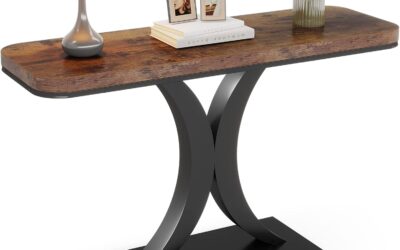
LITTLE TREE Industrial Entryway Console Table, 39.4" Retro Brown Hallway Accent Table for Small Spaces
Pros
- Narrow 11.8-inch depth fits tight spaces and high-traffic walkways
- Industrial geometric base looks more expensive than the sub-$100 price suggests
- Adjustable leg pads handle uneven floors and protect hard flooring from scratches
- Fast assembly with numbered parts, clear instructions, and included tools
Cons
- Particle board top is less durable than solid wood and can chip at the edges over time
- Zero verified customer reviews make long-term durability hard to judge
- 24-pound lightweight frame may feel tip-prone in homes with active kids or pets
If your entryway has been that awkward blank wall you walk past every day, this little console table is the fix you have been looking for. The geometric black metal base gives it a modern industrial edge, while the retro brown wood grain top adds just enough warmth to keep it from feeling cold or sterile.
At just under 40 inches wide and 12 inches deep, it slips neatly into tight hallways and behind small sofas without eating into your walking space. Style it with a stack of books, a small vase, and a framed print, and suddenly that forgotten corner becomes the prettiest spot in the house.
If you want a stylish entryway accent without sacrificing precious floor space, this one delivers.
Styles it works with: Industrial, Modern Farmhouse, Rustic, Minimalist
Best placed in: entryway wall, hallway, behind a small sofa in the living room
May not suit: homes with young children or pets, since the lightweight frame can tip, and spaces needing a table shorter than 32 inches tall
Buy it if:
- You need a narrow table for a tight entryway or hallway under 12 inches deep
- You love the industrial look but do not want to spend over $100
- You want a quick DIY assembly you can finish in under an hour
Consider waiting if:
- You prefer a finish other than retro brown, since color options are limited
Skip it if:
- You need a heavy, solid-wood console for a high-traffic family space
- Your space requires a table shorter than 32 inches or deeper than 12 inches for storage
Check the latest price and availability on Anthropic before it sells out.

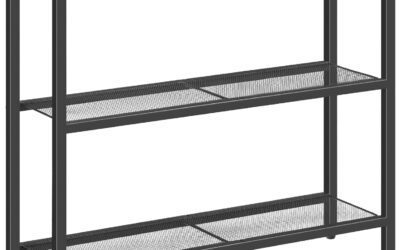
Huuger Narrow Sofa Table with 2 Power Outlets & USB-C, 86.6-110.2 Inch Adjustable Behind Couch Console Table, Rustic Brown
Pros
- Stepless length adjustment fits a wide range of sofa sizes
- Integrated power outlets and USB-C eliminate the need for a separate charging strip
- Narrow footprint uses otherwise wasted space behind the couch
- Versatile enough to work as a console or entryway table
- Anti-tip hardware included for safety
Cons
- Built from P2 particle board rather than solid wood, so it is less durable under heavy weight
- Long extended length needs a wide wall or sofa to look balanced and may overwhelm small rooms
- Currently has no customer reviews, so long-term reliability of the outlets is unproven
The first thing that wins you over is how this table solves the two annoyances of living-room layouts at once. It slides to exactly your sofa length thanks to the stepless adjustment, and it brings power right to where you sit. No more crawling behind furniture to find an outlet or leaving phones to die across the room.
In a real space it reads as a clean, slim ledge in rustic brown that hugs the back of the couch. It gives you a spot for a lamp, a coffee mug, a stack of books, or a couple of framed photos, all within arm's reach. The built-in USB-C and AC outlets quietly do the heavy lifting while looking like a normal console.
If you want a tidy charging station and extra surface behind your sofa without running cords across the floor, this one delivers.
Styles it works with: Modern Farmhouse, Rustic, Transitional, Industrial
Best placed in: behind a living room sofa, along an entryway wall, or under a long hallway window
May not suit: small apartments where the extended length crowds the floor, or buyers who want a solid hardwood piece rather than particle board
Buy it if:
- You have a large or sectional sofa and want a table that lines up flush with its back
- You are tired of reaching for distant outlets and want USB-C charging at the couch
- You want to turn the wasted space behind your sofa into usable surface area
Consider waiting if:
- You need a finish other than rustic brown or want to see customer reviews accumulate first
Skip it if:
- You have a small space where a 7-foot-plus table would dominate the room
- You require solid wood construction for heavy items or daily wear
Check the latest price and availability on Amazon before it sells out.

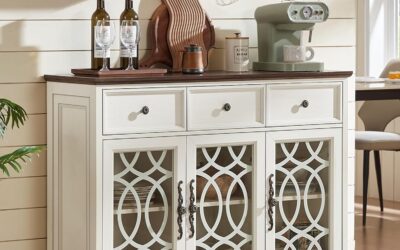
OKD 63" Console Table with Drawers, Modern Light Knotty Oak Entryway and Sofa Table for Living Room, Hallway
Pros
- Two large drawers offer more concealed storage than most console tables in this price range
- 200 lb weight capacity and one-piece leg base provide solid stability
- Light Knotty Oak finish works across modern, rustic, and transitional decor
- 63-inch length fits well behind sectionals or along entryway walls
- Quick assembly with labeled parts and clear instructions
Cons
- 34-inch height may sit above the back of some low-profile sofas
- Light Knotty Oak is the only finish available for this 63-inch model
- Assembly calls for two people, making solo setup more difficult
If you have been hunting for a console table that actually holds things instead of just looking pretty, this OKD piece is a refreshing find. The thick wood top gives it real presence in a room, and the two oversized drawers swallow up the keys, mail, charging cables, and random clutter that usually ends up piled on every flat surface near your front door.
In person, the Light Knotty Oak finish reads warm and natural without feeling overly rustic, so it plays nicely with both clean modern spaces and cozier farmhouse-inspired rooms. The one-piece leg base keeps it sturdy, which matters when you are styling it with a heavy lamp or a stack of coffee table books.
If you want hidden storage without sacrificing the clean, modern look of your entryway or living room, this one delivers.
Styles it works with: Modern Farmhouse, Scandinavian, Rustic Modern, Transitional
Best placed in: entryway wall, behind a sofa or sectional, hallway vignette
May not suit: small apartments with narrow entryways under 60 inches of wall space, or homes with very low-backed couches where the 34-inch height may feel visually heavy
Buy it if:
- You need concealed storage for keys, mail, and daily essentials near your entry
- You want a console table long enough to sit behind a sectional without looking lost
- You are pairing it with the matching OKD TV stand for a coordinated living room
Consider waiting if:
- You need a finish other than Light Knotty Oak to match existing furniture
- You want a charging station built in, since this model does not include one
Skip it if:
- Your space requires a console under 60 inches wide
- You need a lower profile table under 32 inches to clear a low window sill
Check the latest price and availability on Anthropic before it sells out.
Frequently Asked Questions
How deep should an entryway table be?
It depends on the walkway, but stay 10 to 14 inches deep in a hallway. That keeps a clear path so two people can pass without clipping a hip. A wide foyer can handle 16 to 18 inches, where clearance isn’t the concern.
How tall should an entryway table be?
Almost always around 30 to 34 inches, close to standard desk height. That lets you drop keys and mail without stooping. Much taller reads like a bar; much shorter feels lost against the wall and any mirror hung above it.
Is solid wood worth it over MDF for an entry table?
Yes, if the table sits near a busy door or you want it to last decades. Solid wood resists moisture and daily knocks far better than MDF, which swells at unsealed edges. For a low-traffic corner, engineered wood is a fair budget pick.
Does an entryway table need drawers or a shelf?
No, storage isn’t required, but it helps if your entry collects clutter. Drawers hide keys and mail; a lower shelf holds baskets and shoes. If the space stays tidy, an open table with a top tray keeps the surface from looking messy.
What size table fits a narrow hallway?
It depends on the wall, but a slim 30 to 42-inch table under 14 inches deep works in most halls. Leave at least 30 inches of clear floor for the door swing. Rounded corners are worth it where everyone brushes past.
Can I use a console table behind a sofa as an entry piece?
Yes, a long console works in both spots if the proportions fit. Behind a sofa you want length near two-thirds of the couch width; in an entry you want depth under 14 inches. A 60-inch-plus table suits a sofa, not a tight foyer.
How do I keep an entryway table from wobbling?
It depends on the floor and the frame, but adjustable or felt floor pads fix most wobble on uneven surfaces. Choose a table with welded metal joints or solid wood legs and a wide footprint. Give it a firm push before buying; a stable one won’t rock.



Write Your Review
No reviews yet. Be the first to share your experience!