

> Editorial Note: I’m Hannah Lin, an Interior Living Researcher who’s spent 9+ years analyzing the home furniture market. This guide draws on BIFMA, GREENGUARD, and FSC certifications, plus owner reviews aggregated from Wirecutter, Apartment Therapy, and the major home design subreddits.
The most common sofa mistake isn’t the fabric or the color. It’s buying a piece that fits the showroom and not the room it’s going home to. People measure the wall and forget the doorway, the walkways, and the seat depth their body actually wants. Get the size right and the room breathes. Get it wrong and you’re living around a couch that’s too big or perched on one that’s too shallow. If you’re building out the space, pair your sofa decision with the best fabric sofa, a best sectional sofa layout, the right best area rug for living room, a best area rug pad, and a matching best tv stand for 65 inch tv.
How Big Should a Sofa Be for Your Room?
Start with the wall, then subtract. A sofa should take up no more than two-thirds of the wall it sits against, which leaves breathing room on either side and stops the piece from swallowing the space. For a 12-foot wall, that’s roughly a 96-inch sofa at most, not the 108-inch one that looked reasonable in a 40,000-square-foot warehouse.
Measure the open floor, not just the wall length. A standard three-seat sofa runs 78 to 88 inches wide and 38 inches deep. You need at least 30 to 36 inches of walkway around it so people aren’t shuffling sideways past the arms. Apartment Therapy’s layout guides land on the same clearance range, and owner reviews flag anything tighter as the first thing people regret.
Ceiling height and sightlines matter too. Low-back sofas keep a small or open-plan room feeling airy, while a high back can wall off a space. Tape the full footprint on the floor with painter’s tape before you buy. That five-minute step catches the too-big sofa before the delivery truck does.
Sectional or Standard Sofa: Which Fits Better?
It depends on your room shape and how you actually sit. A standard sofa is the flexible pick for rectangular rooms and anyone who rearranges often. A sectional wins when you have a defined corner to fill or a household that sprawls out to watch a movie.
Sectionals need real space. An L-shape typically eats a 95-by-95-inch corner, and a U-shape or curved “cloud” style can span 110 inches or more across the front. Measure both directions of your corner and confirm you still keep a 30-inch walkway. In a room under about 12 by 12 feet, a standard sofa plus a chair usually reads less cramped than a full sectional.
Think about traffic flow before you commit to the shape. A sectional’s long return can block a natural path to a doorway or window. If your room has two entry points, a standard sofa keeps both open. If it has one clear focal wall, a sectional can define the whole seating zone without a single extra chair.
What Seat Depth Do You Actually Want?
Match the depth to your height and how you like to sit. Standard seat depth runs 21 to 24 inches, which suits upright sitting and most people between 5-foot-4 and 5-foot-10. Deep-seat and “cloud” sofas push to 26 inches or more, built for lounging, curling up, and taller bodies.
Here’s the trade-off nobody mentions on the tag. A deep 28-inch seat feels incredible for stretching out, but if you’re shorter than about 5-foot-6, your feet dangle and your lower back loses support. You end up propping cushions behind you. A shallower 21-inch seat keeps your feet flat and your spine aligned, which is why upright sitters and smaller frames prefer it.
Seat height plays into the same decision. Most sofas sit 17 to 19 inches off the floor, close to a dining chair, so you rise easily. Lower lounge sofas sit around 15 inches, cozy but harder on knees. If comfort ranks first, sit before you buy. If you’re ordering online, cross-check owner reviews for real body-height notes rather than the marketing copy.
How Do You Measure for Doorways and Delivery?
Measure the path in, not just the room. This is the step that turns a great sofa into a returned one. Before you order, check every doorway, hallway, stairwell turn, and elevator the piece has to clear. A 38-inch-deep sofa won’t fit through a standard 32-inch door face-on, so it has to angle or come apart.
Use the diagonal-depth rule. Measure the sofa’s diagonal (from the top back corner to the front of the seat), because that’s the tightest dimension movers pivot through a doorway. Compare it to your door’s clear opening with the door removed if needed. Also measure hallway width and any 90-degree turn, since a long standard sofa can get stuck cornering even when it clears the door.
This is where modular pieces earn their keep. A sectional that ships in separate seats walks through a tight apartment door one cushion at a time, while a solid 90-inch sofa can dead-end in a stairwell. If your entry is narrow or your building has tight turns, prioritize a knock-down or modular design and confirm the box dimensions before checkout.
Does Sofa Size Change the Materials You Should Pick?
Yes, and it’s easy to overlook. A bigger sofa is a bigger commitment, so the frame and fabric specs matter more the larger you go. Larger seats span more unsupported distance, which means frame quality and cushion density decide whether the piece holds its shape or sags in the middle within a year.
Look at the bones first. A kiln-dried hardwood frame resists warping better than particleboard, and BIFMA publishes the durability standards worth checking if a listing cites them. For the cushions, foam density in the 1.8 to 2.5 pound-per-cubic-foot range holds up to daily use; lower than that and a wide seat flattens fast. On oversized sofas, confirm there’s center leg support, because an unsupported 110-inch span is where cheap builds fail.
Fabric scales with size too. A large sofa shows wear across more surface, so a durable weave rated 15,000-plus double rubs pays off, and mid-tone or textured covers hide daily mess better than a flat dark solid. GREENGUARD or FSC certifications signal lower-emission finishes and responsibly sourced wood, which is worth a look on any piece you’ll keep for a decade.
Helpful Products
These three curved sectionals were filtered by owner rating and seat depth, so you can compare footprints before you measure your corner. Start with the EASE MOOSE U-shape (4.8 stars) if you have a wide wall to fill, step to the DAMAIFROMFURNITURE 4-seater (4.7 stars) for a deep-seat cloud look, and consider the Vesgantti 110-inch L-shape (4.6 stars) for a corner that needs an oversized anchor.


Pros
- Exceptionally deep seats and tall backrests provide genuine lounging comfort for taller adults
- Every cover is removable and washable, making pet hair and spills a non-issue
- Modular design offers real flexibility to switch between configurations as your space changes
- High-density foam holds its shape over time without sagging
- Corduroy fabric resists pilling and feels soft without overheating
Cons
- U-shape configuration requires a large living room footprint, not ideal for spaces under 12x14 feet
- Corduroy texture may attract lint and dust more visibly on the black colorway
- At roughly1,100 dollars it is a significant investment compared to non-modular alternatives
This is the kind of sofa that turns your living room into the place everyone gravitates toward. The EASE MOSE U-shape sectional has genuinely deep seats that let you sit cross-legged or stretch out without feeling like you are falling off the edge. The corduroy fabric has a rich texture that photographs beautifully and feels cozy under your hands without looking dated.
What sets it apart from similarly priced modular options is the combination of practicality and comfort. Every single cover comes off for washing, the modules stay put thanks to anti-slip bases, and you can reconfigure the whole thing on a whim without hunting for an Allen wrench. It feels like a premium cloud couch without the premium markup.
If you want a spacious family sofa that handles everyday life gracefully without sacrificing style, this one delivers.
Styles it works with: Modern Minimalist, Contemporary, Scandinavian, Urban Loft
Best placed in: Open-concept living room center, large family room facing a media wall, finished basement entertainment area
May not suit: Compact apartments or living rooms narrower than 12 feet, traditional or farmhouse-style interiors where corduroy and modular lines may feel out of place
Buy it if:
- You have a large living room and want seating for 6+ people without buying separate pieces
- You have kids or pets and need covers you can toss in the wash regularly
- You love rearranging your space and want a sofa that adapts with you
Consider waiting if:
- You want a lighter color option and the black does not match your current palette
- You are moving soon and are unsure of your next living room dimensions
Skip it if:
- Your living room is under 12 feet wide since the U-shape will overwhelm the space
- You prefer firm, structured seating over deep sink-in cushions
Check the latest price and availability on Amazon before it sells out.
Pros
- Deep 25.2-inch seats offer genuine lounging comfort for tall adults
- No assembly saves time and frustration compared to typical sectionals
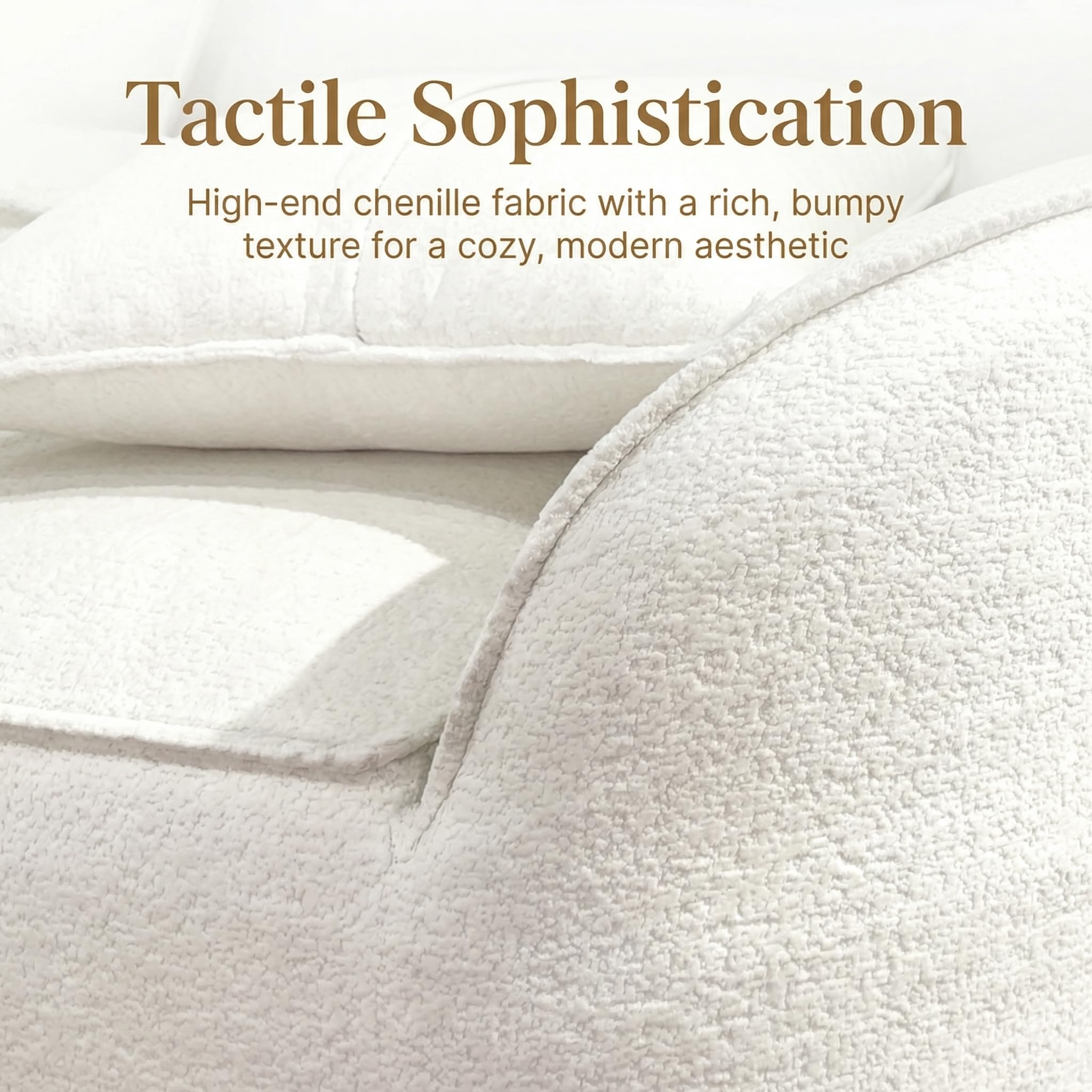
- Chenille fabric is soft to touch and holds up well to daily use
- 4.7-star rating across 121 reviews signals consistent buyer satisfaction
- Curved design works as a centerpiece without needing corner placement
Cons
- Cream white shows stains and pet hair more visibly than darker upholstery
- Compressed shipping means cushions need up to 72 hours to fully plump up
- Oversized footprint may overwhelm small apartments or tight living rooms
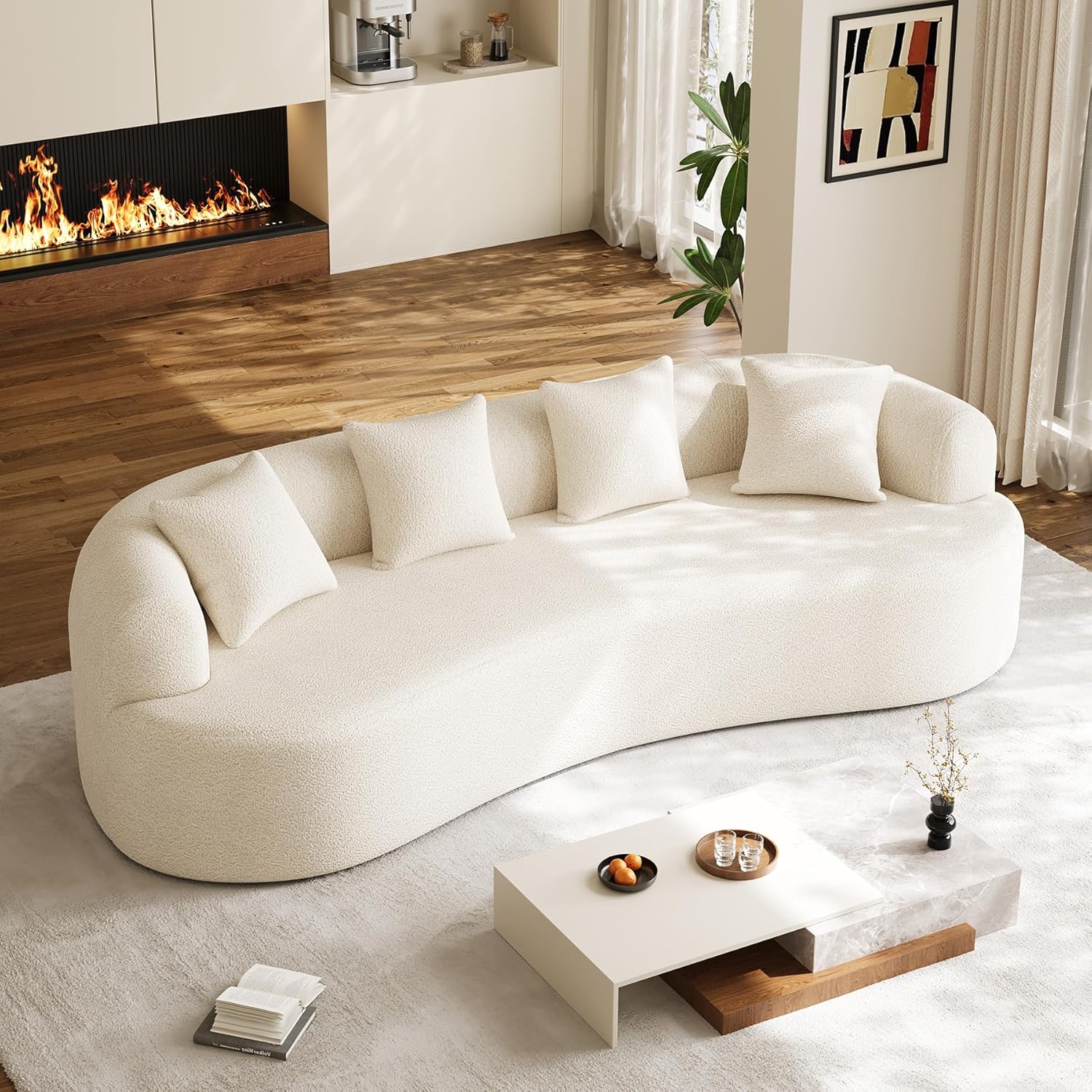
There is something instantly inviting about a curved sofa, and this DAMAIFROM cloud couch nails that cozy-yet-modern look. The cream white chenille has a soft, brushed feel that reads more expensive than the price suggests, and the curved silhouette breaks up the boxy look that most sectionals bring to a room. It feels less like furniture and more like a styled centerpiece the moment you set it down.
In everyday use, the 25.2-inch deep seats are the real star. You can curl up with a blanket, stretch out fully, or fit four adults without anyone feeling cramped. The four included throw pillows save you a shopping trip and help anchor the look, so the sofa feels photo-ready straight out of the box with zero assembly.
If you want a plush, sink-in sofa that still looks modern and curated, this one delivers.
Styles it works with: Modern Farmhouse, Scandinavian, Boho, Minimalist
Best placed in: living room centerpiece, large master bedroom seating area, open-concept apartment lounge
May not suit: small studios under 200 square feet, homes with young children or pets where cream white upholstery is tough to keep clean
Buy it if:
- You want a plush, oversized sofa that seats four without paying luxury price tags
- You hate assembling furniture and want a ready-to-use couch out of the box
- Your living room leans modern, boho, or farmhouse and needs a cream white statement piece
Consider waiting if:
- You need a darker color option to hide pet hair or kid stains
- Your space is tight and you are unsure whether the oversized footprint will fit
Skip it if:
- You need a sleeper sofa or hidden storage functionality
- Your room is too small for a curved sectional footprint
Check the latest price and availability on Anthropic before it sells out.

Pros
- Ultra-dense 510g chenille reads as premium and resists the flattening common to budget cloud couches
- Double support system of pocket springs and foam prevents the sagging that develops in pure-foam seats
- Curved, boneless shape looks like a high-end statement piece rather than a standard L-shaped sectional
- Two-box delivery and tool-free assembly solve the classic fit-through-the-door problem for apartments
- Extra-deep seat accommodates curling up, full stretching out, and overnight guests
Cons
- Snow white chenille will show stains, spills, and pet hair, requiring more upkeep in busy homes
- Only 29 reviews so far, so long-term durability beyond the first season is still unproven
- Boneless, low-structure silhouette may feel too casual and slouchy for formal living rooms
There is something instantly inviting about a curved sofa, and the Vesgantti Lunar Light leans all the way into that feeling. The flowing armrests and backrest give it a sculptural, organic shape that softens a room in a way boxy sectionals simply cannot, and the snow white chenille reads as luxe rather than flat or cheap.
In a real living room, the extra-deep seat is the feature you keep coming back to. You can curl up with a throw blanket, stretch out for a movie, or sink in without feeling like you are perching on a firm cushion. The pocket-spring and foam support also holds up better than the pure-foam cloud couches that flatten after a single season.
Everyday livability matters too, and this one ships in two compact boxes that actually fit through apartment hallways, then assembles without tools. If you want the sink-in comfort of a cloud couch without the four-figure price tag, this one delivers.
Styles it works with: Organic Modern, Minimalist, Scandinavian, Soft Contemporary
Best placed in: living room corner as a centerpiece, open-concept living area, large primary bedroom sitting zone
May not suit: small apartments under roughly 120 sq ft where a 110-inch sectional overwhelms the floor plan, or households with pets and young kids where snow white chenille will be a magnet for stains and fur
Buy it if:
- You want a statement curved sofa that reads as high-end for under $600
- You live in an apartment or townhouse with narrow hallways and need box delivery that actually fits
- You love a deep, sink-in seat for lounging, naps, and movie nights
Consider waiting if:
- You need a darker colorway to hide pet hair and everyday spills
- You want a proven track record with hundreds of long-term durability reviews
Skip it if:
- Your room cannot comfortably fit a 110-inch L-shaped sectional
- You prefer a firm, upright seat for formal entertaining or ongoing back support
Check the latest price and availability on Anthropic before it sells out.
Frequently Asked Questions
How much space should be left around a sofa?
It depends on the room, but leave 30 to 36 inches of walkway on any side people pass. That’s enough to walk through without turning sideways. In front of the sofa, keep 14 to 18 inches to a coffee table so you can reach a mug without leaning. Tighter than 30 inches on a main path and the room starts to feel cramped.
Is a sectional too big for a small living room?
It depends on the room’s shape. A compact L-shape can work in a room as small as 11 by 11 feet if it fits a corner and you keep a 30-inch walkway. But in a narrow or high-traffic room, a standard sofa plus an accent chair usually reads roomier. Tape the sectional’s full footprint on the floor before you decide.
What is a good sofa depth for tall people?
Almost always a deeper seat. For anyone over about 5-foot-10, a 24-to-27-inch seat depth lets you sit back fully with supported thighs instead of perching on the edge. Shorter sitters do better around 21 inches so their feet stay flat. If a couple has a big height gap, a mid-depth 23-inch seat splits the difference best.
How do I know if a sofa will fit through my door?
Measure the sofa’s diagonal depth and compare it to your door’s clear opening. Standard interior doors give about 30 to 32 inches of clearance, and most sofas are 38 inches deep, so they usually go through angled. Also check hallway width and any 90-degree turns. If clearance is tight, a modular sofa that ships in pieces is the safe call.
What size sofa fits a 12-foot wall?
It depends on the layout, but aim for a sofa no wider than about 96 inches on a 12-foot wall. That keeps the piece at roughly two-thirds of the wall and leaves space for a side table or lamp at each end. A 78-to-88-inch three-seater is the comfortable, flexible range for most 12-foot walls.
Are deep-seat sofas worth it?
Yes, if you lounge more than you sit upright. A 26-inch-plus seat is built for stretching out, napping, and curling up, and taller bodies love it. The catch is that shorter people lose back support and end up stacking pillows. If your household mixes heights, or you sit upright to read and work, a standard 22-inch depth is the safer buy.
How many seats do I need for a family sofa?
It depends on the household. A standard three-seat sofa (78 to 88 inches) covers most families of three or four for daily use. If you regularly host or have older kids who sprawl, a sectional or four-seater adds real capacity without cramming. Count the people who actually sit at once on a typical evening, not the max you host twice a year.

Write Your Review
No reviews yet. Be the first to share your experience!