

> Editorial Note: I’m Hannah Lin, an Interior Living Researcher who’s spent 9+ years analyzing the home furniture market. This guide draws on BIFMA, GREENGUARD, and FSC certifications, plus owner reviews aggregated from Wirecutter, Apartment Therapy, and the major home design subreddits.
Most people buy a recliner for the look and discover too late that it doesn’t fit the room, the mechanism creaks by year two, or their feet dangle off the footrest. The reclining action, the frame, and the wall clearance do the real work here. So before you plan the seat around your best fabric sofa or best sectional sofa, size up the best area rug for living room, slide a best area rug pad underneath, or line it up with your best tv stand for 65 inch tv, you need to read a recliner’s specs the way an owner would after a year of daily use.
What Recliner Mechanism Should You Choose?
Start with how the chair actually reclines, because that decides comfort and longevity. Manual recliners use a lever or a push-back body weight action, cost less, and have fewer parts to fail. Power recliners run on a motor, stop at any angle, and add lift or lumbar adjustment, but they need an outlet nearby and a working motor to recline at all.
Manual push-back models are the simplest and often the most reliable, since there’s no side lever or motor to break. Lever-operated manual recliners give a firmer, more deliberate stop. Power units win if you want infinite positions or plan to nap upright, and a battery backup pack keeps them usable in an outage.
Check the recline range. A basic chair leans back around 40 degrees; a full lay-flat model reaches close to 170 degrees for actual sleeping. Glider and swivel bases, like the Korser swivel rocking recliner at 4.3 stars, add motion that suits a nursery or a reading corner. Match the mechanism to how you’ll sit, not to the showroom demo.
Does the Frame and Fill Determine Durability?
Yes, and it’s the spec most shoppers skip. The frame decides whether the recliner still feels solid in year five. Kiln-dried hardwood frames, ideally carrying an FSC certification for responsible sourcing, resist warping far better than particleboard or softwood. Reinforced joints and a steel reclining mechanism outlast stapled plywood every time.
Fill is where comfort lives. High-density foam rated at 1.8 lb/ft or higher holds its shape, while softer foam bottoms out and flattens within a year. A good recliner pairs that foam with a sinuous-spring or coil seat base, not a webbed strap that sags under regular use. Press the seat edge: it should compress and rebound, not thud.
BIFMA-rated frames carry a stated weight rating, usually 250 to 330 lbs, and that number is your durability shortcut. The Benchmaster Newport swivel recliner at 4.3 stars pairs a faux-leather wrap with a manual mechanism for easy wipe-down. No stated rating usually signals a corner was cut somewhere you can’t see.
What Size and Clearance Do You Need?
Measure before you fall for a silhouette. A recliner needs room to open, and the number people forget is rear clearance. Standard recliners need 12 to 18 inches behind them to fully recline; wall-hugger models drop that to 4 to 6 inches by sliding forward instead of tipping back.
Scale the chair to your body. Seat height around 18 to 20 inches lets most adults plant their feet flat when upright, and a footrest that reaches the heels keeps calves supported when reclined. Taller sitters over six feet should look for a listed extended footrest or a high back.
Leave at least 30 inches for a main traffic path around the chair. In a tight room, a wall-hugger with a compact footprint keeps sightlines open and the space feeling larger than a bulky overstuffed model.
How Much Care and Assembly Should You Expect?
It depends on the upholstery and the mechanism, but plan for both. Faux-leather and PU-leather recliners wipe clean with a damp cloth weekly and need conditioning twice a year to stop cracking in dry indoor air. Fabric models need vacuuming with an upholstery attachment and a check of the cleaning code: W for water-based cleaner, S for solvent, W/S for both, X for vacuum only.
Assembly is usually light. Most recliners ship in two or three pieces, and clicking the back onto the seat base takes 15 to 20 minutes. Power models add a cable connection and a wall adapter. Because recliners are heavy, confirm delivery access if you’re on an upper floor without an elevator.
For low-emission peace of mind, look for GREENGUARD Gold or CertiPUR-US foam, both of which cap chemical emissions. That matters most if the recliner lands in a bedroom or a small enclosed den.
Helpful Picks
These three cover the main recliner decisions vetted against owner reviews: a swivel faux-leather manual model, a compact swivel glider for smaller rooms, plus a lumbar support cushion to fine-tune any chair. Start with the first if you want easy wipe-clean upholstery; add the third if your current recliner needs more lower-back support.

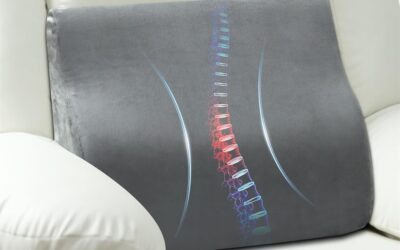
AHUAWA Memory Foam Lumbar Support Pillow for Recliner and Couch, Velvet Back Cushion for Lower Back Pain Relief, 19x15x4
Pros
- Dual-layer foam holds its shape better than single-foam cushions
- Velvet cover is soft, breathable, and fully machine washable
- Ergonomic design provides targeted lower back and waist support
- Versatile sizing works across recliners, couches, and armchairs
- Strong value for an orthopedic-grade cushion at this price point
Cons
- 4.3-star rating suggests some buyers found the firmness either too soft or too firm
- Velvet cover may attract pet hair and lint
- No strap or handle to keep it firmly anchored on smooth leather recliners
What makes this AHUAWA lumbar pillow stand out is how it balances comfort and structure. The gel memory foam top gives that sink-in softness you want for a Netflix marathon, while the high-density foam base keeps your lower back from collapsing after an hour or two. It actually holds its shape, which is more than I can say for most budget cushions.
In a real room, the velvet cover looks more expensive than it is. It adds a soft, textured finish that blends nicely with a recliner or sofa without looking clinical or bulky. The 19x15x4 size is big enough to support your whole lower back and waist, but not so thick that it pushes you forward in the chair.
For everyday living, this is the kind of pillow that quietly improves your routine. Reading, gaming, working on a laptop in the recliner, or recovering from surgery all feel noticeably better. The washable cover is a bonus for homes with pets, kids, or snack spills. If you want real lower back relief without giving up the cozy feel of your favorite chair, this one delivers.
Styles it works with: Modern Farmhouse, Transitional, Cozy Minimalist, Classic
Best placed in: living room recliner, family room sofa, reading nook armchair
May not suit: ultra-modern or industrial spaces with sleek leather furniture, since the velvet texture can read as traditional, or homes with heavy-shedding pets where velvet tends to trap hair
Buy it if:
- You spend an hour or more each day in a recliner or on the couch and deal with lower back stiffness
- You want orthopedic support but do not want a clinical-looking cushion ruining your living room decor
- You are shopping for an elderly parent, pregnant partner, or anyone recovering from surgery who needs comfortable seated support
Consider waiting if:
- You need a specific color to match your furniture and the current options do not fit your palette
- You want a cushion with an adjustable strap to lock it firmly in place on a leather recliner
Skip it if:
- You need a lumbar pillow for an office chair or car seat, since this size is built for larger furniture
- You prefer a very firm cushion, as the gel foam top leans toward the softer side
Check the latest price and availability on Anthropic before it sells out.

Benchmaster Newport Taupe Swivel Faux Leather Recliner Chair with Ottoman - Walnut Base, 360-Degree Swivel
Pros
- Slek, low-profile design that does not dominate a room like oversized recliners
- Waterproof bonded leather surface is practical for everyday use and easy maintenance
- Solid wood walnut base gives it a premium furniture look at a moderate price point
- Swivel and recline functions work without electric power or wall outlet access
- CA fire retardant foam meets strict safety standards
Cons
- 220 lb weight capacity is significantly lower than most recliners, limiting who can use it comfortably
- Bonded leather tends to peel and crack over time compared to genuine or top-grain leather
- Assembly is required out of the box, and instructions may vary in clarity
The Benchmaster Newport solves a common problem: you want a recliner for your living room or bedroom, but most options look like they belong in a man cave. This one actually looks like intentional furniture, with its walnut wood base and clean taupe upholstery giving it a mid-century vibe that works in styled spaces.
In person, it reads more like a lounge chair than a recliner. The 30-inch width keeps it compact enough for a bedroom corner or beside a bookshelf, and the matching ottoman adds a pulled-together look. The swivel is smooth and the recline is just enough to feel relaxed without going fully flat.
If you want a stylish reclining chair that fits smaller spaces without sacrificing comfort for reading or unwinding after work, this one delivers.
Styles it works with: Mid-Century Modern, Transitional, Contemporary, Minimalist
Best placed in: Living room reading corner, bedroom beside a window, home office as an alternative seating option
May not suit: Households where multiple family members over 200 lbs will use it regularly, or very traditional or rustic-styled rooms where the slek profile may look out of place
Buy it if:
- You need a recliner that fits a smaller room without overwhelming the space
- You want something that looks like a designer lounge chair but still reclines for comfort
- You prioritize easy-clean upholstery for a pet-friendly or low-maintenance home
Consider waiting if:
- You prefer genuine leather and want to save up for a higher-end option that will age better over years of use
Skip it if:
- You weigh over 220 lbs or want a chair that accommodates larger body types
- You need deep, full-flat recline for napping or a zero-gravity position
Check the latest price and availability on Amazon before it sells out.

Korser Swivel Rocking Recliner Chair - Chenille Nursery Glider for Small Spaces,360° Swivel, 165° Recline, Beige
Pros
- Multi-function design combines swivel, rock, glide, and recline in one seat
- Chenille upholstery with high-density foam stays comfortable during extended sitting
- Compact footprint works in small spaces, RVs, and nurseries
- Very fast assembly with minimal tools required
- Built-in side pocket adds everyday convenience
Cons
- Only available in beige, limiting options for darker color schemes
- Manual lever mechanism requires some physical effort compared to power recliners
- At 165 degrees max recline, it does not lay fully flat for sleeping
The Korser recliner punches above its price class by packing four comfort modes into one compact frame. You get a full360-degree swivel for scanning the room, a gentle rocking motion for winding down, a glider function that is ideal for soothing a baby, and a 165-degree recline when you just want to melt into the cushion. The beige chenille fabric gives it a soft, textured look that blends into most neutral living spaces without screaming "recliner."
In a real room, this chair feels right-sized. It does not dominate a corner the way oversized recliners tend to, yet it still delivers genuine full-body comfort thanks to the high-density foam padding and auto-extending footrest. For new parents pulling midnight shifts in the nursery, or anyone who wants a cozy reading nook without dedicating half their living room to furniture, it fills the gap nicely.
If you want swivel-rocker-recliner versatility without the bulk or the high price tag of premium brands, this one delivers.
Styles it works with: Modern Farmhouse, Scandinavian, Coastal Casual, Transitional
Best placed in: Living room reading corner, nursery beside the crib, small home office nook, RV or camper lounge area
May not suit: Rooms with a bold or dark color palette where beige feels too neutral, or buyers who need a chair that fully reclines flat for napping
Buy it if:
- You need a nursery glider that also works as a living room recliner after the baby stage
- Your space is too small for a traditional oversized recliner but you still want full recline and footrest
- You value quick, tool-minimal assembly and want to use the chair the same day it arrives
Consider waiting if:
- You strongly prefer a color other than beige and want to see if additional options become available
Skip it if:
- You need a power recliner with electric controls for limited mobility or medical reasons
- You require a fully flat180-degree recline for sleeping in the chair overnight
Check the latest price and availability on Amazon before it sells out.
Frequently Asked Questions
Is a power recliner better than a manual one?
It depends on your priorities. Power recliners stop at any angle and add lift or lumbar features, but they need an outlet and a motor that can fail. Manual recliners cost less, have fewer parts to break, and still recline in a power outage. For simple reliability, manual usually wins.
How much space do I need behind a recliner?
It depends on the type. Standard recliners need 12 to 18 inches of rear clearance to fully open. Wall-hugger models need only 4 to 6 inches because they glide forward as they recline, which makes them the better pick for apartments or rooms where the chair sits near a wall.
Are faux leather and PU leather the same thing?
No. PU leather is one kind of faux leather made with a polyurethane coating, while “faux leather” is the umbrella term that also covers vinyl. PU feels softer and breathes a little better, though both wipe clean fast and cost far less than genuine hide.
Will a recliner work in a small living room?
Yes, if you size it right. Choose a wall-hugger under 32 inches wide that needs only a few inches of rear clearance, and leave about 18 inches around it. A compact swivel glider adds a seat without eating the floor space a large overstuffed recliner would.
How long should a good recliner last?
It depends on the frame and mechanism, but a kiln-dried hardwood frame with a steel reclining system and 1.8 lb/ft foam should give 7 to 10 years of regular use. Particleboard frames and low-density foam often loosen or flatten inside two years. The BIFMA weight rating is your best durability signal before buying.
Should I worry about off-gassing from a new recliner?
It depends on the materials. New foam and coatings can give off a faint odor for a few days that usually airs out. For low-emission assurance, look for CertiPUR-US foam or GREENGUARD Gold certification, both of which cap chemical emissions and are worth checking for a bedroom or enclosed den.
Do recliners come fully assembled?
Almost always partly. Most ship in two or three pieces, and attaching the back to the seat base takes 15 to 20 minutes with no tools on many models. Power recliners add a cable to connect and an adapter to plug in. Confirm doorway and stairway access first, since recliners are bulky and heavy.





Write Your Review
No reviews yet. Be the first to share your experience!