

> Editorial Note: I’m Hannah Lin, an Interior Living Researcher who’s spent 9+ years analyzing the home furniture market. This guide draws on BIFMA, GREENGUARD, and FSC certifications, plus owner reviews aggregated from Wirecutter, Apartment Therapy, and the major home design subreddits.
A lift-top coffee table is really two pieces of furniture wearing one silhouette: a low table for lounging and a raised desk for working or eating on the couch. The whole value hinges on the lift mechanism, so that hardware deserves more attention than the finish. If you’re building out the living room, line up your choice with a best coffee table shortlist, a best fabric sofa or best sectional sofa to face it, plus the right best area rug for living room and a best area rug pad to anchor the setup.
What Does a Lift-Top Actually Do for You?
Start with the use case. A lift-top raises the surface toward you, usually 4 to 8 inches, turning the table into a laptop desk or a dinner tray without hunching over. If your living room doubles as a home office or a dining spot, that raised height is the whole point.
The raised surface typically lands around 22 to 26 inches, close enough to a proper desk for an hour or two of work. That’s the number that separates a genuinely useful lift-top from a gimmick, so check the raised height before you buy.
Many lift-tops hide a compartment under the top for laptops, chargers, and remotes, plus a lower shelf or drawers for everything else. That storage is why a lift-top suits small apartments where the coffee table has to earn its footprint.
Skip the lift entirely if the room is purely for lounging. A plain table with a shelf costs less and has nothing to loosen. The lift only pays off if you regularly work or eat from the couch.
Which Lift Mechanism Holds Up?
It depends on the design, but the mechanism is where corners get cut, so it’s the first thing to vet. Most lift-tops use a spring-assisted X-frame or a gas-strut hinge. A spring or gas-assist means the top glides up with light effort and holds its position, while a bare friction hinge fights you and can slam down.
Weight rating on the raised top matters more than people think. A top rated for at least 20 lbs handles a laptop, a plate, and a mug without sagging. Owner reviews on Apartment Therapy flag a wobbly raised top as the most common complaint, usually on models with a single central hinge instead of a dual-arm frame.
Listen for the return. A quality mechanism lowers smoothly and latches flush; a cheap one drops the last inch with a bang that loosens the hardware over time. Dual gas struts give the most controlled descent.
Check the hinge hardware itself. Steel arms and metal brackets outlast plastic joints, and a stated warranty on the mechanism is a good sign the maker trusts it past year one.
What Size and Height Fit Your Room?
Height comes first, because a lift-top has two of them. Lowered, aim for a top within 1 to 2 inches of the sofa seat cushion, which usually means 16 to 18 inches since most sofa seats sit 17 to 19 inches high. Raised, confirm the 22 to 26 inch working height suits your posture on the couch.
Match the footprint to the sofa. The table should run roughly two-thirds the sofa length, so an 84-inch sofa pairs with a table around 48 to 54 inches. A common lift-top size is 36 to 40 inches square, which suits a loveseat or a compact sectional.
Leave 14 to 18 inches between the sofa edge and the table so the top can lift toward you without pinning your knees. This clearance matters more on a lift-top than a plain table, because the raised surface travels into your lap space.
Tape the footprint on the floor and mime lifting the top before you buy. That five-minute check confirms the raised surface won’t collide with your knees or a nearby chair.
Which Material and Finish Should You Pick?
It depends on how hard the room gets used, but engineered wood dominates lift-tops because the mechanism adds weight and cost, and a laminate top keeps the price sane while shrugging off water rings. Solid-wood lift-tops exist and resist dents better, though they run heavier and pricier.
A laminate or melamine surface wipes clean and handles the spills that come with eating at the table, which is exactly what a lift-top invites. A deep gouge in laminate can’t be repaired, so a textured woodgrain finish hides daily wear better than a high-gloss one.
Look for GREENGUARD certification on the finished table if indoor air quality matters, since it caps chemical emissions from the adhesives that engineered wood relies on. FSC certification signals responsible sourcing if that’s a priority.
Match the finish to the room’s other wood without matching it exactly. Two or three complementary tones read more deliberate than a single flat match, and a mid-tone woodgrain hides fingerprints and crumbs better than black or white.
Helpful Picks
These three cover the range most lift-top buyers land in: a split-top design with two-tone storage, a farmhouse square with a large hidden compartment, and a wider top for anyone who works from the couch. All three clear a 4.6 owner rating.

Pros
- Split lift-top design is both a workspace extender and a storage lid, two functions in one clean mechanism
- Distressed finish naturally hides minor scuffs and everyday wear, keeping it looking good with regular use
- Square shape and neutral two-tone palette integrate easily into farmhouse, transitional, and even industrial-style living rooms
- Highly rated by a large pool of verified buyers, indicating consistent build quality across production runs
- Includes all tools needed for assembly, which buyers consistently mention as a pleasant surprise
Cons
- Engineered wood and pine veneer construction means it is not solid hardwood, so very heavy loads or rough use over time may show wear at edges
- At 36 inches square it may feel oversized in smaller living rooms or tight apartment layouts where a rectangular table would be more proportional
- Assembly is required and some buyers note the process takes 45 to 60 minutes, which may be a consideration if you need it set up quickly
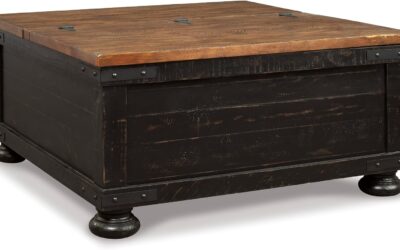
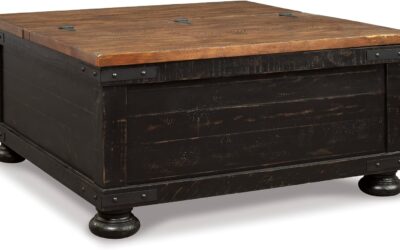
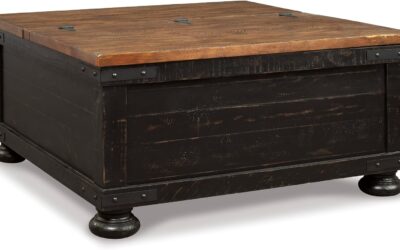
The Valebeck earns its place in a living room because it solves two problems at once without looking like a piece of furniture designed by a committee. The lift-top mechanism is smooth and genuinely useful, whether you are eating dinner on the couch, working from home on a lazy afternoon, or helping a kid with homework. It does not feel like a gimmick after the first week.
Visually, the two-tone distressed finish is the kind of detail that makes a room feel intentional. The contrast between the warm brown plank-effect surface and the black base, accented with industrial metal brackets, gives it a farmhouse character that photographs well and looks even better in person. It does not read as a budget piece when guests see it.
Day to day, the hidden storage compartment is where this table earns its keep. Remotes, charging cables, coasters, a spare throw blanket folded small -- all of it disappears when the lid is down and your living room looks effortlessly tidy. If you want genuine storage and a stylish lift-top surface without paying premium furniture-store prices, this one delivers.
Styles it works with: Modern Farmhouse, Rustic Industrial, Transitional, Coastal Casual
Best placed in: Center of a living room in front of a sofa or sectional, family room as the main cocktail table, media room where a lap-height work surface gets regular use
May not suit: Minimalist or contemporary interiors where clean lines and light finishes dominate, and very small living rooms under 12 feet wide where the 36-inch square footprint may leave limited walking clearance around the table
Buy it if:
- You want a coffee table that doubles as a hidden storage solution and your living room regularly accumulates remote controls, magazines, or charging cables
- You work or eat from the couch and need a surface that rises to a comfortable height without buying a separate lap desk or tray table
- Your living room leans farmhouse, rustic, or transitional and you want a centerpiece with real visual character at a mid-range price
Consider waiting if:
- You are still finalizing your sofa or sectional purchase, since the square shape and size are best confirmed against your seating layout before ordering
Skip it if:
- You need a solid hardwood table built to withstand very heavy use or a household with young children who will climb or hang on furniture regularly
- Your room calls for a rectangular table under 48 inches long, since this model only comes in the 36-inch square configuration
Check the latest price and availability on Amazon before it sells out.

SEDETA 31.5" Lift Top Coffee Table with Hidden Storage & Adjustable Shelves - Farmhouse Square Design for Living Room, Black
Pros
- Generous hidden storage compartment (27" x 14.5" x 16.1") holds plenty of everyday items
- High-quality gas strut system lifts smoothly and stays in place at working height
- Adjustable shelves in four compartments provide flexible organization options
- Scratch-resistant and waterproof surface handles real-world living room use
- Strong customer rating of 4.7 stars across 949 reviews shows consistent satisfaction
Cons
- Assembly required with multiple components, though instructions are reportedly clear
- Black finish may show dust more readily than lighter wood tones
- Square shape takes up more floor space than rectangular alternatives in narrow rooms
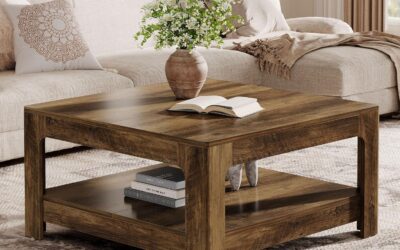
This coffee table solves the biggest living room dilemma: you need storage, but you do not want your space to look cluttered or feel cramped. The lift top mechanism is genuinely useful for anyone who works from the couch, eats dinner in front of the TV, or needs a stable surface for puzzles and crafts. It raises smoothly to a comfortable height without the wobbly feel of cheaper alternatives.
The farmhouse aesthetic works beautifully in modern, transitional, and rustic spaces. The sliding barn doors are not just decorative; they actually make accessing the four storage compartments quick and convenient. The adjustable shelves mean you can store everything from tall vases to stacked board games without wasting vertical space. At under $150, the build quality and storage capacity punch well above the price point.
If you want a coffee table that genuinely earns its spot in your living room by working as hard as it looks good, this one delivers.
Styles it works with: Modern Farmhouse, Rustic, Industrial, Transitional
Best placed in: Center of a living room seating area, in front of a sectional sofa, small apartment living spaces where storage is limited
May not suit: Very narrow rooms where a rectangular table would fit better, ultra-modern minimalist spaces that avoid barn door or farmhouse details, homes needing a purely low-profile table without lift functionality
Buy it if:
- You regularly work, eat, or do hobbies from your couch and need a stable elevated surface
- You are short on living room storage and need hidden space for throws, remotes, magazines, and games
- You want farmhouse or rustic style with modern functionality at a mid-range price
- You have a square or spacious seating arrangement that can anchor a 31.5-inch square table
Consider waiting if:
- You prefer a lighter wood tone or white finish and want to see if other color options become available
- You are hoping for a holiday discount and can wait a few weeks
Skip it if:
- Your living room is very narrow and a rectangular table would be a better spatial fit
- You need a glass-top or ultra-modern design without farmhouse elements
Check the latest price and availability on Amazon before it sells out.

Itaar 39.4" Lift Top Coffee Table with Storage, Farmhouse Square Design, Hidden Compartment & Drawers, Black+Walnut
Pros
- Gas-strut lift mechanism feels smooth and controlled, not flimsy
- Generous hidden compartment fits bulky items like throw pillows
- Barn door sliding drawers add visual interest and practical storage
- Sturdy engineered wood with reinforced base resists wobbling
- Numbered parts and clear instructions simplify assembly
Cons
- At 39.4 x 31.5 inches, it takes up significant floor space in smaller rooms
- 110 lb weight capacity may limit use as a seat or heavy display surface
- Black and walnut is the only color option, limiting match with lighter decor schemes
This Itaar coffee table solves the eternal living room problem: you want a table that looks good, stores your stuff, and actually works when you need to eat or use a laptop on the couch. The lift-top with gas struts raises smoothly to a comfortable24.8 inches, turning your sofa into a casual workspace or dining spot without any awkward balancing acts.
The farmhouse barn door details in black and walnut give it a grounded, collected look that works in rooms that mix rustic and modern pieces. It feels intentional rather than trendy, and the square silhouette anchors a seating area without visually crowding it. The hidden compartment underneath the top is genuinely large enough for throw pillows or a small blanket, which means your living room stays tidy with zero effort.
If you want a coffee table that pulls triple duty as storage, workspace, and style anchor without looking like a bulky utility piece, this one delivers.
Styles it works with: Modern Farmhouse, Industrial Rustic, Transitional, Country Cottage
Best placed in: Center of a living room seating arrangement, in front of an L-shaped sectional, or as the main table in an open-concept family room
May not suit: Very small apartments where39.4 x 31.5 inches would dominate the floor plan, or ultra-minimalist spaces where the barn door detailing feels too ornate
Buy it if:
- You regularly eat, work, or use a laptop on the couch and want an ergonomic lift surface
- Your living room needs hidden storage for blankets, remotes, games, or magazines
- You love farmhouse style but want something functional, not just decorative
Consider waiting if:
- You need a lighter finish like white or natural oak to match your existing furniture
Skip it if:
- Your space cannot accommodate a 39-inch square footprint with room to walk around it
- You need a table rated for more than 110 lbs of weight on top
Check the latest price and availability on Amazon before it sells out.
Frequently Asked Questions
Is a lift-top coffee table worth it?
Yes, if you work, eat, or use a laptop on the couch. The surface rises 4 to 8 inches to a 22 to 26 inch working height that saves your back and doubles as a desk or dining tray. Skip it if the room is purely for lounging, since the lift hinge is one more part that can loosen.
How high does a lift-top coffee table raise?
It depends on the model, but most lift-tops raise the surface 4 to 8 inches, landing at a working height of about 22 to 26 inches. That’s close to a proper desk for an hour or two. Check the raised height on the listing, since a shallow lift is less useful for real work.
Do lift-top coffee tables break easily?
Almost never if the mechanism is right. A spring-assisted or gas-strut hinge with steel arms and a top rated for at least 20 lbs holds up for years. Single-hinge budget models are the ones that wobble or slam, so check for a dual-arm frame and a stated warranty.
What size lift-top coffee table should I get?
It depends on your sofa, but aim for a table roughly two-thirds the sofa length, often 36 to 54 inches. A 36 to 40 inch square suits a loveseat or compact sectional. Leave 14 to 18 inches of clearance so the raised top doesn’t pin your knees when it lifts.
Can you eat dinner on a lift-top coffee table?
Yes, that’s a main reason to buy one. The raised 22 to 26 inch surface works as a casual dining height from the couch, and a wipe-clean laminate top handles spills. It’s not a substitute for a dining table for long meals, but it’s ideal for dinner in front of the TV.
Do lift-top tables have storage?
Yes, most do. The raised top reveals a hidden compartment for laptops and remotes, and many models add a lower shelf or drawers. That double storage is why a lift-top suits small apartments, where a coffee table has to hide clutter as well as hold your coffee.
Are lift-top coffee tables heavy?
It depends on the material, but they run heavier than plain tables because the mechanism adds weight. Engineered-wood models stay manageable for one person to position, while solid-wood versions can need two. Factor delivery access if you’re on an upper-floor walk-up, since the boxes are dense.


Write Your Review
No reviews yet. Be the first to share your experience!