

> Editorial Note: I’m Hannah Lin, an Interior Living Researcher who’s spent 9+ years analyzing the home furniture market. This guide draws on BIFMA, GREENGUARD, and FSC certifications, plus owner reviews aggregated from Wirecutter, Apartment Therapy, and the major home design subreddits.
The shape of a coffee table isn’t a style choice first. It’s a traffic-flow decision that happens to look like one. The right shape follows your sofa’s line and your room’s walkways, so before you fall for a finish, you need to match the silhouette to how people actually move through the space. If you’re building out the living room, line up your table choice with a best coffee table shortlist, a best fabric sofa or best sectional sofa it will face, plus the right best area rug for living room and a best area rug pad to anchor it.
Which Shape Suits Your Sofa Layout?
Start with the seating. A rectangular table mirrors a standard sofa’s line and gives the most usable surface, which is why it’s the safe default for long, narrow rooms. It reads calm and orderly, and that’s not an insult.
A square table pairs well with a sectional or a large square seating group, where a rectangle would leave an awkward reach on one side. Aim for a footprint that echoes the seating shape and you rarely go wrong.
Round and oval tables suit conversational layouts where seats face each other, and they soften a room full of straight lines. An oval works like a rectangle with the corners eased off, so it fits a three-seat sofa while staying friendlier to a walkway.
Match the table’s longest dimension to roughly two-thirds the sofa length. For an 84-inch sofa, that’s a table around 48 to 54 inches. Apartment Therapy’s layout guides land on the same ratio, and owner reviews consistently flag oversized tables as the reason a room feels crowded.
Do Round Tables Really Work Better in Small or Busy Rooms?
Yes, in two specific situations: tight rooms with heavy foot traffic, and homes with young kids. A round table has no corners to catch a hip or bruise a shin, so it opens up the walking lanes and keeps a crawling zone safer.
The missing corners also buy visual space. A 36-inch round table occupies less floor than a 36-inch square because the edges curve away, which makes a small living room breathe. That’s the counterintuitive part: a round table can seat the same drinks while feeling smaller.
Round tables also solve the corner-sectional problem. When seating wraps around a corner, a single round or oval table sits within reach of every seat, while a rectangle strands one end. Reach is the quiet signal of whether a shape works.
The trade-off is surface geometry. A round top wastes a little usable area for books and trays compared to a rectangle of the same width, so if you spread out a lot of stuff, weigh that against the safety and flow gains.
What Height and Proportion Should the Shape Hold?
Height comes before shape in practice. Aim for a tabletop within 1 to 2 inches of the sofa seat cushion, which usually means a table in the 16 to 18 inch range since most sofa seats sit 17 to 19 inches high. A table far below the seat makes people stoop; far above looks bulky.
Leave 14 to 18 inches between the sofa edge and the table on every seated side. That gap is close enough to set down a mug without leaning and wide enough to walk past without turning sideways. Owner reviews flag anything under 12 inches as cramped.
Proportion ties back to shape. A round or square table wants to sit centered in the seating group, so measure clearance on all sides, not just the front. A rectangle can push a little closer to one sofa and leave room behind it.
Nesting and multi-piece sets add flexibility here. A pair of round nesting tables slides apart for guests and tucks together to reclaim floor space, which suits a small or shape-shifting room better than one fixed slab.
Which Material and Finish Suit the Shape You Pick?
It depends on how hard the room gets used, but solid wood and engineered wood dominate this category for good reason. Solid wood (oak, acacia, walnut) resists dents and can be refinished, while engineered wood with a laminate top costs less and shrugs off water rings, though a deep gouge can’t be repaired.
Round drum and pedestal shapes lean warm and organic, so a fluted wood or a matte finish suits them. Rectangles carry a glass or metal-and-wood mix well, and tempered glass is the only kind to buy because it breaks into blunt pieces instead of shards.
Look for FSC-certified wood if sustainable sourcing matters, and GREENGUARD certification if indoor air quality is a concern. GREENGUARD caps chemical emissions from finishes and adhesives, which is the label worth checking on any pressed-wood top.
Storage changes the calculus. A round table with a sliding cabinet door or a lower shelf keeps a small room functional without adding visual weight, so if you need to hide remotes and coasters, let that steer the shape as much as the style does.
Helpful Picks
These three cover the shapes most buyers weigh: a round nesting pair for flexible small rooms, a compact round table with a sliding storage door, and a fluted drum with hidden cabinet space. All three clear a 4.8 owner rating.
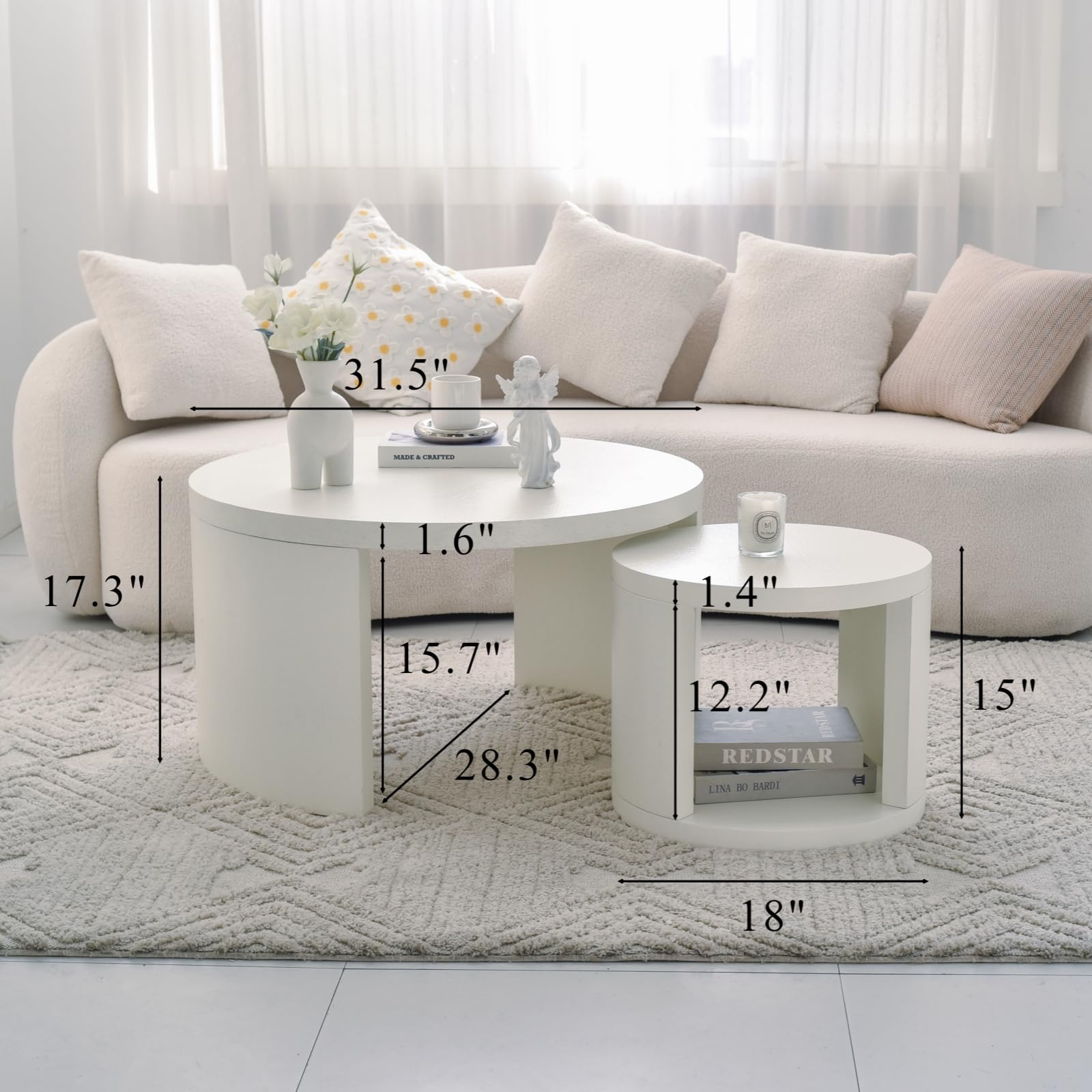

Veihaus Round Nesting Coffee Table Set of 2, Textured White, 31.5" & 18" with Storage Shelf
Pros
- Nesting design saves significant floor space in apartments and small living rooms
- Rounded edges add a real safety margin for households with toddlers or pets
- Lower storage shelf keeps everyday items within reach but off the tabletop
- Neutral textured white finish complements modern, farmhouse, and minimalist decor
- Two-table versatility allows multiple layout options as needs change
Cons
- Only one customer review so far, making long-term durability hard to judge
- Engineered wood at this price point may feel less premium than solid wood alternatives
- Ships in two separate boxes that may arrive on different days, requiring patience during setup
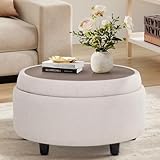
There is something genuinely satisfying about a nesting table set that looks good both together and apart. The Veihaus set gives you a generous 31.5-inch main table for the center of your seating area and a tidy 18-inch companion that slides right underneath when you need the room.
The textured white finish has a subtle wood grain that reads warm rather than sterile, so it plays nicely with linen sofas, woven rugs, and natural light. Rounded edges soften the silhouette and take the worry out of busy living rooms where knees and toddlers meet furniture at the same height.
We especially like the lower shelf on the small table for stashing books, a small plant, or the remote collection that usually crowds the top. It is the kind of piece that earns its keep quietly, day after day. If you want flexible seating-area surfaces without committing to a bulky single coffee table, this one delivers.
Styles it works with: Modern Farmhouse, Scandinavian, Minimalist, Boho
Best placed in: living room center beside the sofa, apartment lounge area, bedroom seating corner
May not suit: very tight rooms where even an 18-inch side table feels intrusive, or homes seeking a dark dramatic statement piece rather than a bright neutral
Buy it if:
- You live in an apartment or small living room and need tables that flex between entertaining and everyday use
- You want a kid- and pet-friendly shape with rounded edges and a stable base
- You like the option to use one table as a center piece and the other as a movable side table
Consider waiting if:
- You need a color other than textured white to match your existing decor
- You prefer solid wood construction over engineered wood at this price tier
Skip it if:
- You need a coffee table under 18 inches in diameter for an extremely compact space
- You want a single large statement table rather than a nested pair
Check the latest price and availability on Anthropic before it sells out.

Pros
- Genuine hidden storage with lift-top plus two slide-open side compartments maximizes organization in a small footprint
- Round shape improves traffic flow and safety in compact living rooms or homes with young children
- Clean mid-century aesthetic with fluted cabinet door and black finish complements existing furniture without competing for attention
- Waterproof surface and solid wood legs built for daily use and easy maintenance
Cons
- No customer reviews yet to confirm real-world durability or assembly difficulty
- 31.5-inch diameter may feel too small as a primary coffee table in larger living rooms
- Black finish shows dust and fingerprints more readily than lighter wood tones
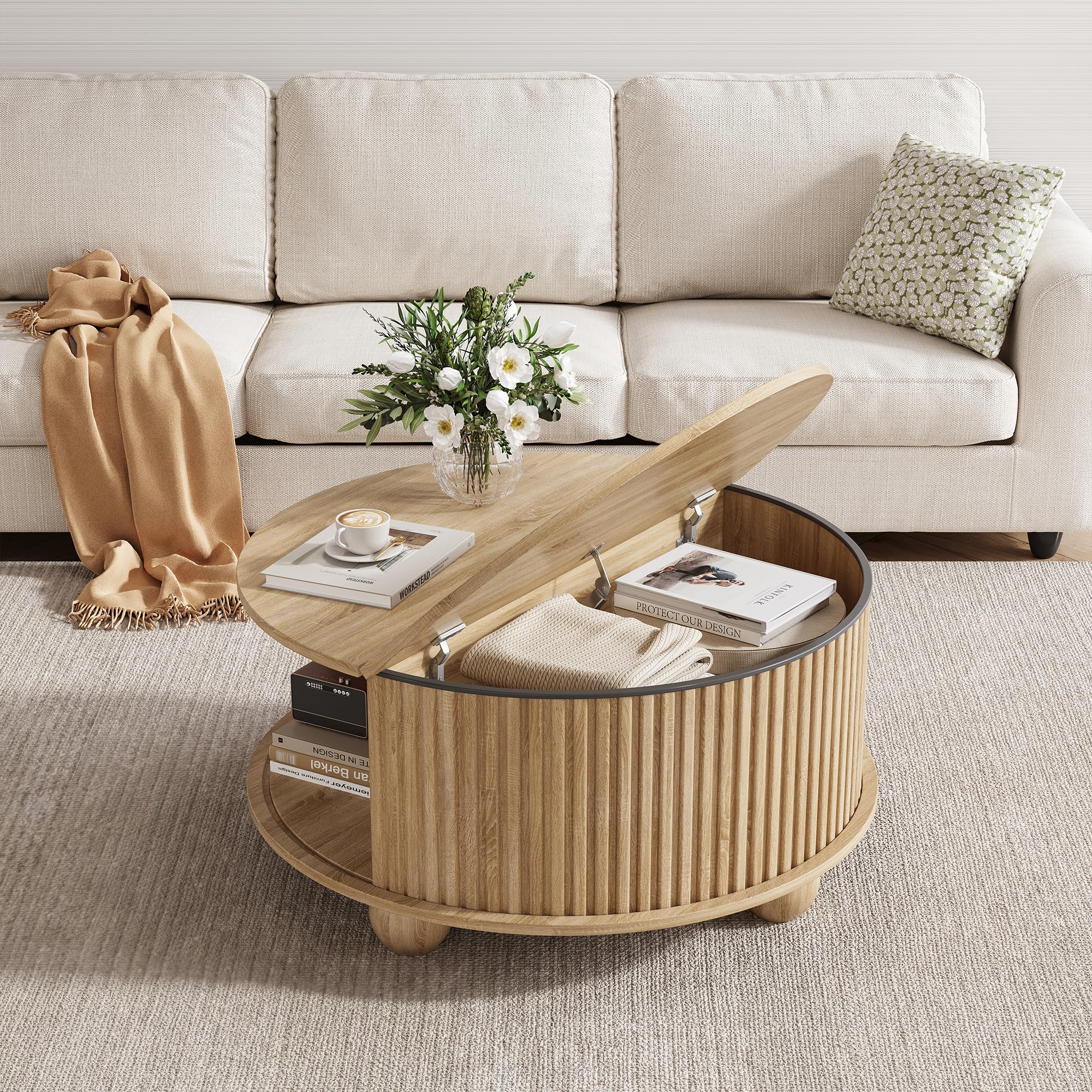
This little table does something most coffee tables don't: it actually solves the clutter problem. The lift-top reveals a surprisingly roomy hidden compartment for throws, remotes, and magazines, while the two sliding side doors give you quick-grab storage for books or decorative baskets. It's the kind of smart design that makes small space living feel less cramped.
The black fluted drum silhouette brings mid-century charm without feeling dated or overly trendy. It's substantial enough to anchor a seating area but compact enough that it won't dominate a small apartment living room. The round shape also means no bruised shins when you're navigating around furniture in the dark.
If you want hidden storage that doesn't look like a storage ottoman and a coffee table that actually fits in a 10x12 room, this one delivers.
Styles it works with: Mid-Century Modern, Scandinavian Minimalist, Contemporary, Transitional
Best placed in: Small living rooms or studio apartments as a primary coffee table, cozy reading nooks with an armchair, multipurpose spaces that need a work surface and storage in one piece
May not suit: Large living rooms where a 31.5-inch table will look undersized in front of a sectional sofa, homes needing a true dining table rather than a casual surface, households preferring wood-tone finishes over black
Buy it if:
- You live in an apartment or small home where every piece of furniture needs to pull double duty as storage
- You're tired of coffee tables that collect clutter on top because there's nowhere to put things away
- You want mid-century style that fits a compact footprint without sacrificing the design details like fluted cabinet doors
Consider waiting if:
- You'd prefer verified customer reviews before committing, since this is a newer product listing
- You're holding out for a walnut or natural wood finish instead of black
Skip it if:
- You need a coffee table larger than 32 inches to fill the space in front of a sectional or large sofa
- You require a truly flat surface without a lift-top for displaying heavy decor or serving food regularly
Check the latest price and availability on Amazon before it sells out.

Pros
- Fluted texture elevates the look beyond basic flat-surface tables
- Hidden storage solves the remote-and-magazine clutter problem
- Adjustable feet handle uneven floors
- Round shape works in small spaces and high-traffic areas
- Assembly is straightforward with included hardware
Cons
- MDF construction is less durable than solid wood for long-term heavy use
- Only 0 reviews yet so real-world performance is unproven
- Semi flip-top only covers part of the storage, not fully concealed
This coffee table solves the biggest frustration with decorative tables: they look good but offer nowhere to stash the remotes, coasters, and magazines that actually live on them. The semi flip-top gives you hidden storage without the bulk of a full lift-top mechanism, and the fluted drum base adds enough visual texture to feel intentional without competing with your sofa or rug.
The natural wood finish is that perfect neutral tone that works whether your style leans modern farmhouse or minimalist Scandinavian. It is substantial enough to anchor a seating area but compact enough for apartments where every inch counts. The rounded shape also means no bruised shins when you are carrying laundry past the couch.
If you want a coffee table that handles daily life without looking like it handles daily life, this one delivers.
Styles it works with: Mid-Century Modern, Modern Farmhouse, Scandinavian, Minimalist
Best placed in: Living room seating area, studio apartment main zone, cozy den or reading nook
May not suit: Very large living rooms where it will look undersized, homes needing full lift-top storage for laptops or dining, ultra-traditional or ornate decor styles
Buy it if:
- You need a coffee table under $150 that does not look cheap
- Your living room has limited space and sharp corners are a safety concern
- You want hidden storage but find full lift-top tables too bulky or mechanical
Consider waiting if:
- You want to see verified customer photos and reviews before committing
Skip it if:
- You need solid wood construction for heavy daily use or plan to keep it 10+ years
- You require full concealed storage for laptops or table dining
Check the latest price and availability on Amazon before it sells out.
Frequently Asked Questions
What coffee table shape is best for a small living room?
It depends on your layout, but a round or oval table usually wins in a small room. The curved edges open up walkways and take less visual space than a square of the same width. A 36-inch round fits most tight rooms while keeping 30 to 36 inches of walking clearance.
Is a round or rectangular coffee table better?
It depends on your sofa and traffic. Rectangular tables suit long sofas and narrow rooms and offer the most surface. Round tables win in tight, high-traffic spaces and homes with small kids because there are no corners to bump. Match the shape to how your seating is arranged.
What shape coffee table goes with a sectional?
It depends on the sectional’s shape, but a square or round table works best with an L or U configuration. Both keep the top within reach of every seat, while a long rectangle strands one end. Center the table in the seating group and confirm 14 to 18 inches of clearance on each side.
Should a coffee table match the shape of the rug?
No, and matching exactly often looks stiff. A round table on a rectangular rug adds welcome contrast, and a rectangle on a rectangle reads orderly. What matters more is that the rug is large enough for the front legs of the surrounding furniture to sit on it.
How much clearance should a coffee table have around it?
It depends on the shape, but leave 14 to 18 inches between the table and each seat, plus 30 inches for any main walkway. Round and square tables need clearance checked on all sides since they sit centered. Tape the footprint on the floor before you buy.
Are oval coffee tables a good choice?
Yes, for many rooms. An oval works like a rectangle with the corners eased off, so it fits a three-seat sofa while staying gentler on walkways and safer around kids. It’s a strong middle ground when a rectangle feels boxy but a round table wastes too much surface.
Does coffee table shape affect how big the room feels?
Yes. Round and oval tables make a room feel more open because the curved edges pull the eye through the space, while sharp-cornered rectangles and squares define stricter lines. In a small or busy room, a curved shape almost always reads roomier than an angular one of the same size.





Write Your Review
No reviews yet. Be the first to share your experience!