

> Editorial Note: I’m Maya Chen, a bedroom and sleep editor covering mattresses, bed frames, and bedding. The picks here are evaluated against CertiPUR-US foam standards, Sleep Foundation evaluation protocols, and owner durability reports from r/Mattress.
The bed frame size question trips people up because the frame isn’t the same size as the mattress it holds. Buy by guessing and you end up with a queen mattress rattling inside a frame with the wrong slat span, or a king base that clears the doorway on paper but not in real life. Getting the size and support right is what keeps the whole bed quiet and stable. Before you shop, think through the full setup, from your best memory foam mattress to your best platform bed frame, your best mattress topper for back pain, your best cooling mattress pad, and the best bed frame for heavy person that has to hold the load.
What Are the Standard Bed Frame Sizes?
Match the frame to the mattress dimensions first. A twin mattress is 38 by 75 inches, a twin XL is 38 by 80, a full is 54 by 75, a queen is 60 by 80, a king is 76 by 80, and a California king is 72 by 84. A quality frame is built to those interior dimensions so the mattress sits snug, not swimming.
The frame’s outer footprint runs larger than the mattress. Expect 2 to 5 inches of extra width and length once you add the rails, and more if the frame has a headboard or built-in nightstands. A 60-inch queen mattress typically needs about 64 to 65 inches of floor width for the frame itself.
Don’t assume a frame is one-size-adjustable. Many metal platform frames like the Upcanso 7-inch queen at 4.5 stars are sold per size, while some universal steel frames adjust from full to king. Confirm the exact size on the listing, because a queen mattress in a full-size frame leaves a gap that lets the mattress shift.
How Much Room Does a Bed Frame Need?
Measure the room and subtract clearance. Leave at least 24 inches of walking space on each side you use to get in and out, and 30 inches where a closet or door swings into that path. A queen frame fits a 10-by-10-foot room comfortably; a king frame wants closer to 12 by 12 to keep the walkways clear.
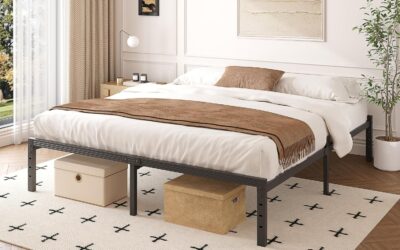
Height matters as much as footprint. Platform frames range from a low-profile 7 inches, like the Upcanso, to an 18-inch tall frame such as the EMODA queen at 4.5 stars that adds under-bed storage. A taller frame is easier to get in and out of and clears more storage, but it can crowd a low window or look bulky under a short ceiling.
Check the access route before the bedroom. A king frame ships in long boxes, and the assembled rails can be hard to maneuver in a tight stairwell. Apartment Therapy’s setup guides recommend measuring doorways and turns first, since the frame’s longest single piece is what has to make the corner.
Does Frame Size Affect the Support You Need?
Yes, and it’s where cheap frames fail. The wider the mattress, the more center support it needs to stop sagging across the span. A twin or full gets by with side rails and a few slats, but a queen and especially a king require a center support leg or bar down the middle, or the mattress dips where two sleepers meet.
Slat spacing is the spec people miss. Foam and hybrid mattresses need slats no more than 3 inches apart, or the mattress bulges through the gaps and voids many warranties. The Lutown-Teen 14-inch queen frame at 4.6 stars uses heavy-duty steel slats close enough to skip a box spring entirely.
Weight capacity scales with size and sleepers. A king holds two adults plus the mattress, so you’ll want a stated capacity that clears the combined load with margin, often 700 pounds or more on a steel frame. The Sleep Foundation flags center support and slat strength as the difference between a frame that stays silent and one that squeaks within months.
Does Bed Frame Size Change Cost and Assembly?
Yes, on both counts. A larger frame uses more material and adds center legs and extra slats, so a king costs more than a queen in the same line. Storage frames and those with headboards climb further, since they add panels, drawers, and hardware that a bare platform skips.
Assembly time tracks with size and features. A basic metal platform frame goes together in 15 to 30 minutes with the included hardware, while a tall storage frame or one with a headboard can take an hour. Larger frames also need two people to hold the rails square while you tighten the bolts.
Budget for the base, not just the frame. A platform frame with close-set slats needs no box spring, which saves money on a queen or king. If you choose a traditional frame designed for a foundation, add that cost and its height into the total before you decide on size.
Helpful Picks
These queen platform frames cleared a 4.5-plus owner rating and skip the box spring, spanning low-profile to tall storage so you can match height to your room. Start with the first for heavy-duty slat support; jump to the second if you want 18 inches of under-bed storage.

Pros
- Exceptional 1500-lb weight capacity for a sub-$60 platform frame
- Generous 14-inch under-bed clearance adds functional storage to any bedroom
- Noise-free construction backed by a large pool of verified buyer reviews
- No box spring needed saves money and simplifies the overall bed setup
Cons
- Steel slats spaced 7.44 inches apart may feel insufficient for very soft or ultra-thin foam mattresses that need closer support
- No integrated headboard attachment points, so pairing with a standalone headboard requires extra planning
- At 14 inches total height, the frame sits lower than some slepers prefer, which may be inconvenient for elderly users or anyone with limited mobility
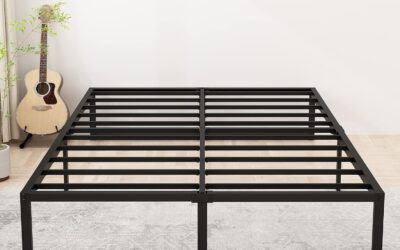
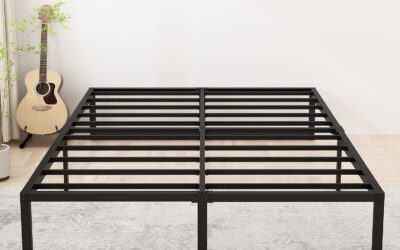
For anyone furnishing a bedroom on a real budget without trading away durability, this Lutown-Teen frame hits a rare sweet spot. The heavy-duty steel construction and reinforced legs deliver a solid, wobble-free foundation that holds up to 1500 lbs, which is well beyond what most competing frames at twice the price can claim.
The 14-inch height is the quiet standout. It creates genuine under-bed storage, the kind that fits large bins and luggage flat, turning unused floor space into some of the most practical storage in the room. The matte black finish is clean enough to blend into the background or anchor a modern look, and it works with warm wood tones, white linen, and nearly every bedroom palette.
Night to night, the noise-free design is what buyers appreciate most. No creaking when you shift positions, no friction from the mattress. If you want a solid, quiet sleep foundation on a budget without buying a box spring, this one delivers.
Styles it works with: Minimalist, Scandinavian, Modern Industrial, Contemporary
Best placed in: Primary bedroom, guest bedroom, studio apartment or college dorm bedroom
May not suit: Traditional or ornate bedroom decor where exposed steel legs feel too utilitarian; very compact rooms where a lower-profile frame would help the space feel more open
Buy it if:
- You want a dependable queen bed frame under $60 that eliminates the need for a box spring entirely
- You need meaningful under-bed storage and want at least 14 inches of clearance to work with
- You are furnishing a guest room, rental unit, or first apartment where value per dollar is the priority
Consider waiting if:
- You prefer a frame with an integrated or attachable headboard for a more finished, complete bedroom look
Skip it if:
- You use a very thin or ultra-soft foam mattress that requires slats spaced closer than 7 inches for adequate support
- You or a household member needs a higher bed height to get in and out comfortably
Check the latest price and availability on Amazon before it sells out.

EMODA Queen Bed Frame 18 Inch Tall Platform No Box Spring Needed Heavy Duty Metal with Under-Bed Storage Easy Assembly Black
Pros
- 18-inch height provides generous under-bed storage at this price point
- No box spring required, lowering the total cost of your bed setup
- Quick 20-minute assembly with all hardware and clear instructions included
- 9 support legs prevent sagging and keep the frame stable under nightly use
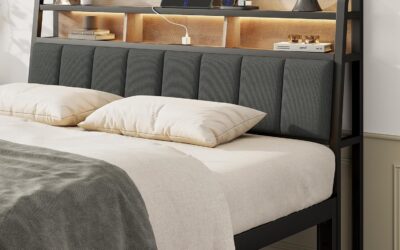
- Pre-drilled headboard mounting holes allow for easy customization
Cons
- No headboard or footboard included, so a finished look requires an additional purchase or DIY effort
- Only available in black, which may not coordinate with lighter wood or white-toned bedroom furniture
- All-metal build with no fabric or padding may feel more industrial than cozy in warmer bedroom styles
At under $60, the EMODA Queen Bed Frame delivers features you would expect to pay significantly more for. The 18-inch ground clearance turns dead space under your bed into a genuine storage zone, and the nine-leg steel construction means you are not sacrificing durability to get there.
In a real bedroom, the frame sits with a clean, minimal profile. The matte black finish is neutral enough to disappear into most setups while still looking intentional, and the open base keeps the room from feeling cramped. Whether you are building a calm, pared-back Scandinavian look or layering in textures for a cozy feel, this frame works as a quiet foundation.
If you want real under-bed storage and a solid, noise-free platform without spending on a box spring, this one delivers.
Styles it works with: Modern Minimalist, Industrial, Scandinavian, Contemporary
Best placed in: Primary bedroom, guest bedroom, small apartment bedroom where under-bed storage can replace a separate dreser or closet organizer
May not suit: Heavily traditional or ornate bedroom decor where an exposed matte black metal frame would feel out of place; rooms where a low-profile frame is needed for visual balance or built-in drawer systems
Buy it if:
- You need to maximize under-bed storage in a smaller bedroom or apartment
- You already own a mattress and want to avoid paying for a box spring
- You want a sturdy, quick-assembly bed frame that is ready to use the same day it arrives
Consider waiting if:
- You are still deciding on mattress type and want to confirm slat spacing compatibility before committing
Skip it if:
- Your room requires a low-profile frame under 14 inches due to design constraints or a specific aesthetic
- Your existing bedroom furniture is warm wood or white and the matte black metal finish would create a jarring contrast
Check the latest price and availability on Amazon before it sells out.

Upcanso 7 Inch Queen Metal Bed Frame - No Box Spring Needed, 3500 lbs Capacity, Low Profile Platform with Easy Assembly
Pros
- Exceptional 3500 lb weight capacity handles couples, pets, and kids jumping on the bed
- Tool free or minimal assembly takes most buyers under 20 minutes according to reviews
- Low height profile is ideal for getting in and out of bed easily and fits under low ceilings
- Strong steel slat system replaces expensive box springs without sacrificing mattress support
- Over 4300 verified reviews with 4.5 star average show consistent quality and satisfaction
Cons
- 7 inch height may feel too low for elderly users or anyone with mobility issues who need higher bed access
- Black metal only design limits color coordination with certain bedroom palettes
- No headboard attachment points, so you will need a freestanding headboard or wall mounted option
This Upcanso bed frame does exactly what a great bed frame should: it disappears into your bedroom while doing all the heavy lifting. The 7 inch low profile creates that clean, hotel style look where your mattress takes center stage instead of bulky box springs. Assembly is genuinely quick, with most people reporting 15 to 25 minutes from box to finished bed, and the included tools actually work.
What really sets this apart is the 3500 lb capacity. You are not just getting adequate support, you are getting commercial grade stability that handles real life use like kids bouncing, pets jumping up, or two adults sitting on the edge getting ready in the morning. The nine leg structure and steel slat system eliminate the squeaks and sags that plague cheaper frames after a few months.
If you want a modern, minimalist bed frame that supports any mattress type without buying a separate box spring, this one delivers.
Styles it works with: Modern Minimalist, Scandinavian, Contemporary, Industrial Loft
Best placed in: Master bedrooms with standard 8 to 9 foot ceilings, guest bedrooms needing simple setup, studio apartments maximizing vertical space, teen or college dorm rooms
May not suit: Bedrooms with thick plush carpeting where the low height creates a sunken look, homes needing under bed storage clearance of more than 5 inches, traditional or farmhouse style bedrooms expecting ornate wooden frames
Buy it if:
- You are setting up a new bedroom and want to skip the $150+ box spring expense
- Your current bed frame squeaks or sags and you need reliable support that stays quiet
- You prefer a low profile, modern look and find it easier to get in and out of lower beds
- You need quick assembly for a guest room, rental property, or upcoming move
Consider waiting if:
- You want a frame with built in under bed storage drawers or higher clearance for storage bins
- You prefer a bed frame in white, wood tone, or upholstered fabric to match existing furniture
Skip it if:
- You have mobility concerns and need a higher bed frame for easier sitting and standing
- You require a frame with built in headboard mounting brackets
Check the latest price and availability on Amazon before it sells out.
Frequently Asked Questions
Is a bed frame the same size as the mattress?
No. The mattress size names the interior, but the frame’s outer footprint runs 2 to 5 inches larger once you add the rails, and more with a headboard. A 60-inch queen mattress usually needs about 64 to 65 inches of floor width for the frame, so measure the frame’s exterior before buying.
Do I need a box spring with a platform bed frame?
Almost never, if the slats are close enough. Platform frames with slats spaced 3 inches or less support foam and hybrid mattresses directly, no box spring required. That saves money and keeps the bed lower. A traditional frame with wide slats or open rails still needs a foundation underneath.
How much space should I leave around a bed frame?
It depends on the room, but leave at least 24 inches of walking space on each side you use and 30 inches where a door or closet opens. A queen frame suits a 10-by-10-foot room, while a king wants closer to 12 by 12 so you’re not squeezing past it daily.
What slat spacing does a foam mattress need?
No more than 3 inches apart. Wider gaps let a foam or hybrid mattress sag and bulge through, which wears it unevenly and voids many warranties. If your frame has wide-set slats, add a bunkie board or plywood on top to create a continuous, supportive surface for the mattress.
Will a king bed frame fit through my door?
It depends on the frame design. King frames ship in long boxes, and the assembled rails can be tough to turn in a narrow stairwell or hallway. Measure your doorways and any corners first, and favor a frame that assembles in the room from smaller parts if access is tight.
Does a bigger bed frame need more support?
Yes. The wider the mattress, the more it sags in the middle without help. A twin or full manages on side rails and slats, but a queen and king need a center support leg or bar to stop the dip where sleepers meet. Look for stated center support on larger sizes.
How much weight can a bed frame hold?
It depends on the material and size, but a solid steel queen or king frame often lists 700 pounds or more. That has to cover two adults plus the mattress with margin. Check the stated weight capacity before buying, especially for a heavier sleeper or a shared king, since an underrated frame bends and squeaks.


Write Your Review
No reviews yet. Be the first to share your experience!