

> Editorial Note: I’m Maya Chen, a bedroom and sleep editor covering mattresses, bed frames, and bedding. The picks here are evaluated against CertiPUR-US foam standards, Sleep Foundation evaluation protocols, and owner durability reports from r/Mattress.
The hard part of assembling a bed frame alone isn’t the wrench work. It’s keeping long rails square across a 60-inch queen footprint. If you’re setting up a new bedroom, start with the frame before the mattress, then use these related guides for the rest of the room: best platform bed for small room, best queen bed frame, best bed frame under 300, best mattress for platform bed, best nightstand for small bedroom, and what size bed frame for a queen mattress.
Can one person assemble a bed frame alone?
Yes, if the frame is a platform, metal foundation, or simple upholstered frame with bolt-on rails. Most solo-friendly frames use 4 side rails, 8 to 12 main bolts, and a slat deck that drops in after the rectangle is square.
Tall canopy beds, storage beds with drawers, and heavy solid-wood frames are different. Those can involve panels over 50 lbs or hardware that needs pressure from both sides at once. Don’t force that solo. Scratched floors happen fast.
A basic rule works: if any single part is longer than 80 inches, taller than 48 inches, or too heavy to lift to waist height without twisting, get help for that step.
Clear the room first. You need at least 24 inches of walking space on 3 sides of the frame, plus enough floor area to lay both long rails flat.
What tools do you need before opening the box?
Start with the tool the frame includes, then add a real ratchet or hex key set if the hardware uses standard Allen bolts. The tiny L-shaped wrench works, but it’s slow and easy to angle wrong after 20 turns. A 4 mm or 5 mm hex bit in a short driver saves time without over-tightening.
Keep a tape measure, painter’s tape, a small bowl for hardware, and one towel or moving blanket nearby. The towel protects floors when you flip a rail or rest a corner. Painter’s tape labels left/right parts if the manual uses tiny stickers that fall off.
Don’t use a drill at full torque on bed hardware. Many bed frames use threaded inserts, and once those strip, the joint won’t pull tight again. Hand-tighten first, then snug the final quarter-turn after the frame is square.
That’s the whole trick. Loose first. Tight later.
For metal frames, a rubber mallet helps seat tabs without denting powder-coated steel. FSC guidance on furniture materials is a useful reminder here: wood joints rely on clean alignment, not brute force.
How should you organize the parts so you don’t lose track?
Lay every piece in the shape of the finished bed before you install a single bolt. Headboard or head rail at the wall. Foot rail at the opposite end. Left rail on the left side as you stand at the foot of the bed. Right rail on the right. It sounds obvious, but this one move prevents most backward bracket problems.
Sort hardware into groups by length. If the frame includes 16 bolts and 8 of them are 5 mm longer, don’t guess. Put the long bolts in one bowl, the short bolts in another, and compare them against the manual’s diagram before the first joint.
Check the slats before the frame is built. Count them. If the manual says 12 slats and you have 11, stop and contact the seller before loading a mattress. The Sleep Foundation often points readers back to mattress support rules for a reason: many foam and hybrid mattresses need slats spaced about 3 inches apart to avoid dipping.
Use the box as a parts tray. Flat cardboard keeps screws from rolling into floor vents and protects the finish while you work. Simple. Effective.
What’s the safest solo assembly order?
Build the outer rectangle first, but don’t fully tighten it. Attach the left side rail to the head rail, then the right side rail to the head rail, then connect the foot rail last. Thread each bolt 3 to 5 turns by hand before using a wrench. If it won’t catch cleanly by hand, it’s cross-threaded or misaligned.
Once the rectangle is standing, measure diagonally from the inside left head corner to the inside right foot corner. Then measure the opposite diagonal. The two measurements should be within about 1/4 inch. If one diagonal is longer, nudge the frame until both match.
Install the center support next. On queen and king frames, this rail carries a lot of the load, especially with foam mattresses. The center legs should touch the floor evenly. If one floats 1/8 inch above the floor, the frame can creak later even if every bolt feels tight.
Slats go in after the center support. Start with the first and last slat, then fill the middle. This keeps spacing even and stops the frame from racking while you lean across it.
How do you handle the headboard without another person?
Use the wall as your second set of hands, but protect it first. Put a folded towel between the headboard and the wall, then slide the headboard into place with the mounting holes facing the room. If the headboard is taller than 48 inches, keep it angled slightly back while you start the first bolts.
Attach one side loosely, then the other side loosely. Don’t tighten the first side all the way or the second bracket may sit 1/2 inch off its holes. If the headboard keeps tipping, stack 2 pillows behind it near the center.
For upholstered headboards, push bolts through with your fingers first instead of stabbing around with a wrench. If the headboard includes wall-mount safety hardware, install it. Apartment Therapy and many furniture safety guides make the same point: tall furniture should be anchored when it can tip forward under load.
How tight should the bolts be when you’re finished?
Tight enough that the washers don’t spin, not so tight that the rail dimples or the insert starts turning inside the wood. With a hand wrench, that usually means firm resistance plus another quarter-turn. Stop there.
Work around the frame in a pattern: head-left, foot-right, head-right, foot-left, then center support. After tightening, repeat the diagonal measurement. If the diagonals moved more than 1/4 inch apart, loosen the corners and square it again.
Check the feet before adding the mattress. All legs should contact the floor. On uneven floors, use furniture shims under the low leg rather than over-tightening hardware to pull the frame down.
Then add weight slowly. Place the mattress on the frame, press down near each corner, then press along the center rail. Listen for clicks or sharp pops. A soft metal tick usually means a loose washer.
No drama. Just one more pass with the wrench.
When should you stop and ask for help?
Stop if a bolt won’t thread by hand after 2 attempts. Forcing it can damage the insert, and the frame may never tighten correctly. Back it out, check whether the rail is upside down, compare the bolt length, and realign the bracket.
Stop if the headboard leans more than 2 inches away from vertical after both brackets are attached. That usually means the brackets are reversed, the rail is installed backward, or the holes don’t match the frame.
Stop if the center support legs don’t reach the floor. A queen or king frame without working center support can bow under a mattress, especially a 10-inch to 14-inch foam or hybrid mattress. CertiPUR-US standards deal with foam content, not frame support, so the frame still has to do its job mechanically.
Stop if the slats are spaced wider than the mattress maker allows. Many foam mattresses call for close slat spacing, often near 3 inches. If your frame leaves 5-inch or 6-inch gaps, add a compatible bunkie board before using it.
Your back matters, too. If a panel requires lifting above shoulder height, call someone for 10 minutes.
Helpful Bed Frame Options for Solo Setups
The most solo-friendly frames keep the part count low, use repeatable bolt locations, and rely on metal slats or simple platform support. Start with the CreatingANewLife frame for a straightforward metal layout; compare the second CreatingANewLife listing if sizing details differ; choose the Sweetcrispy 18-inch platform when under-bed clearance matters most.

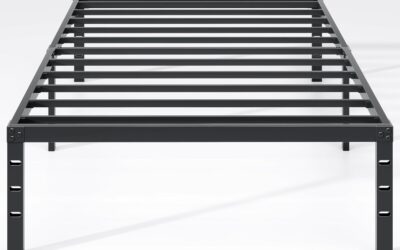
NEW JETO Twin Metal Bed Frame 14 Inch with Under-Bed Storage, Heavy Duty Steel Platform, No Box Spring Needed, Black
Pros
- Affordable entry price for a full metal platform bed frame
- Large under-bed clearance maximizes storage in smaller rooms
- Tool-included assembly reduces setup friction for solo builders
- Minimalist black finish complements a wide range of bedroom styles
Cons
- No customer reviews available to validate long-term durability claims
- Basic aesthetic lacks decorative headboard or footboard, which may feel unfinished in styled bedrooms
- Steel construction with no noise-dampening pads may develop squeaks over time with regular movement
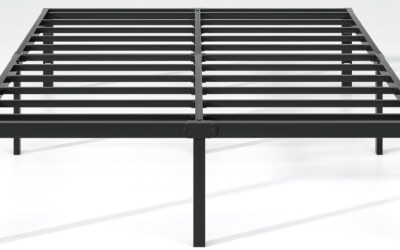
If you have ever wrestled a bulky box spring up a flight of stairs, the JETO Twin Metal Bed Frame will feel like a breath of fresh air. The entire setup arrives in one compact package, all tools are included, and the steel frame clicks together quickly enough that you can have a fully made bed the same evening it arrives.
The 14-inch ground clearance is the real standout feature here. That is enough room to slide in standard under-bed storage bins, flat-pack boxes, or a spare set of luggage, effectively turning dead floor space into a functional storage zone. For small bedrooms, that trade-off alone justifies the purchase.
Visually, the matte black steel frame is clean and understated. It will not clash with wood furniture, upholstered headboards, or colorful bedding, which makes it an easy yes for rooms that are still coming together. If you want reliable, clutter-reducing sleep infrastructure without spending on a full bed set, this one delivers.
Styles it works with: Minimalist, Industrial, Scandinavian, Modern
Best placed in: Primary bedroom as a low-profile foundation, spare guest room, college dormitory or studio apartment
May not suit: Traditionally decorated bedrooms where an ornate frame or headboard is expected, and rooms where children or pets sleep on the floor since the open steel frame has no side panels to prevent rolling underneath
Buy it if:
- You are furnishing a guest room or dorm and need a dependable, low-cost frame fast
- Your bedroom is short on closet space and under-bed storage would meaningfully reduce clutter
- You already own a mattress and just need a sturdy, no-frills foundation to replace an old or broken frame
Consider waiting if:
- You want a matching headboard or footboard since this frame does not include either
Skip it if:
- You need a full or queen size, as this listing is twin only
- You prioritize long-term verified durability and require customer review history before purchasing
Check the latest price and availability on Amazon before it sells out.

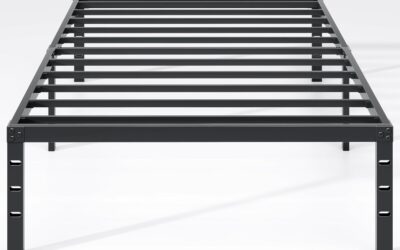
JETO Metal Bed Frame Twin Size 18-Inch Under-Bed Storage | Heavy Duty Steel Slats | No Box Spring Needed | Black
Pros
- Exceptional value for a heavy-duty all-steel construction
- 18-inch ground clearance is higher than most competing frames in this price range
- Box spring not required reduces total setup cost from day one
- Fast, straightforward assembly with all hardware included
Cons
- Twin size only, so it cannot serve a larger bedroom or grow with changing needs
- Black finish is the only color option, limiting flexibility for lighter or warmer decor palettes
- No headboard or footboard included, which may feel too minimal for style-focused bedrooms
At under $40, this metal bed frame punches well above its price tag. With more than 32,000 shopers rating it 4.6 out of 5, it has earned a strong reputation as one of the most dependable budget bed frames on Amazon. The steel construction feels solid, the slats hold your mattress firmly in place, and the whole thing goes together in under an hour without any frustration.
The 18-inch ground clearance is the real standout. That is a meaningful amount of usable space, enough for flat storage bins, luggage, shoe boxes, or bulky seasonal bedding. In a small bedroom, dorm, or studio apartment, that under-bed real estate can genuinely change how organized and open the room feels on a daily basis.
The matte black finish is clean and low-profile, pairing naturally with wood, upholstered, and metal furniture without competing for attention. If you want sturdy, clutter-clearing sleep support without overspending or spending an afternoon on assembly, this one delivers.
Styles it works with: Minimalist, Modern Industrial, Scandinavian, Contemporary
Best placed in: Small bedrooms with limited closet storage, college dorm rooms, dedicated guest rooms where function takes priority over decorative detail
May not suit: Bedrooms where a headboard serves as the main design focal point; spaces with a warm or rustic palette where black metal may feel too cold against wood tones and earthy textiles
Buy it if:
- You are furnishing a guest room or dorm and need a reliable, affordable solution fast
- Your bedroom lacks storage and you want to put the space under your bed to real use
- You are replacing a noisy or unstable frame and want something quiet and solid right away
Consider waiting if:
- You are hoping the brand releases a full, queen, or king size version for a larger room setup
Skip it if:
- You need a frame with headboard brackets or built-in headboard attachment points
- Your existing bedroom decor runs warm or traditional and black metal would feel visually out of place
Check the latest price and availability on Amazon before it sells out.
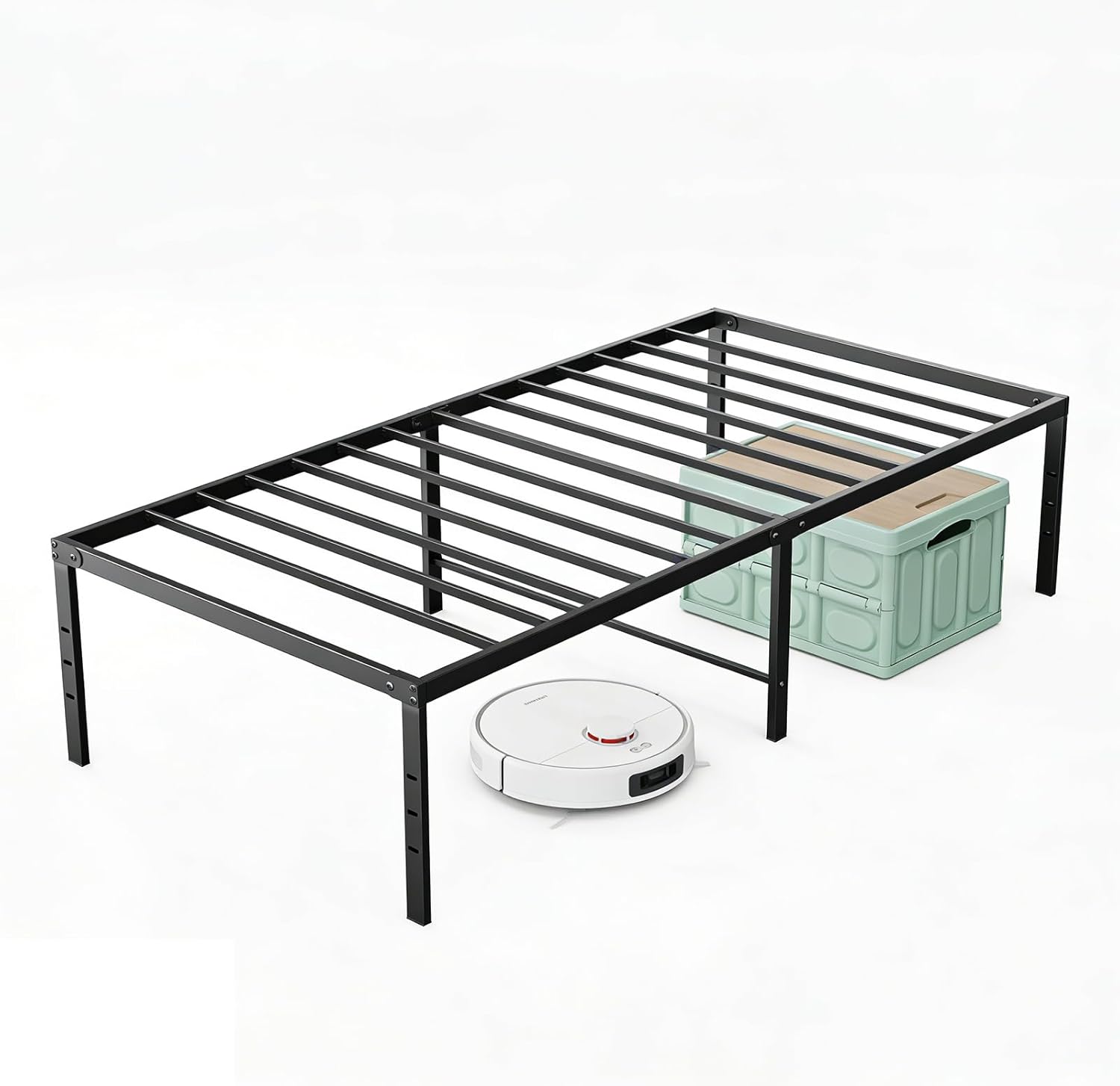
Pros
- Outstanding value for a structurally sound, full-featured twin bed frame
- 18-inch clearance is tall enough for standard storage bins and lugage
- Steel slats distribute mattress weight evenly to prevent sagging over time
- No box spring requirement simplifies setup and reduces overall bedding cost
- High rating across a large volume of verified reviews reflects consistent real-world reliability
Cons
- Available in twin size only, which limits usefulness for buyers who may need to upsize later
- Bare steel aesthetic may feel too cold or stark in traditionally decorated or warm-toned bedrooms
- No headboard or footboard is included, so the finished look depends entirely on what you add separately
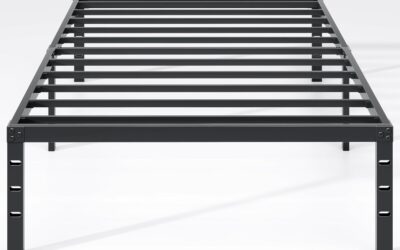
At under $40, the Sweetcrispy Twin Platform Bed Frame genuinely overdelivers. The heavy-duty steel construction feels solid and grounded, and the noise-free slat design means you get a quiet, stable sleep surface without the creaking and flex that plagues cheaper frames within months of use.
What home decorators will appreciate most is the 18-inch clearance beneath the frame. That is real, usable height. Slide in a few flat storage bins and a clutered small bedroom suddenly feels intentional and organized. The clean steel profile keeps the look modern without feeling industrial or cold.
If you want a stable, storage-friendly bed foundation without paying for a box spring or a bulky upholstered base, this one delivers.
Styles it works with: Minimalist, Scandinavian, Modern Industrial, Contemporary
Best placed in: Guest bedroom, studio apartment bedroom, college or first-apartment setup
May not suit: Traditionally decorated rooms with warm wood tones and ornate furniture where bare steel feels out of place, or households where a built-in headboard is essential to the room's finished look
Buy it if:
- You need a dependable twin bed frame for a guest room, child's room, or rental property without overspending
- You want to reclaim underbed storage in a room with limited square footage
- You are furnishing a new space on a tight budget and need something that assembles fast and holds up long term
Consider waiting if:
- You are hoping for a version with a built-in headboard or upholstered side panels, which this frame does not include
Skip it if:
- You need a full, queen, or king size frame since this product is twin only
- Your bedroom leans heavily rustic or traditional and an all-steel frame will clash with your existing decor
Check the latest price and availability on Amazon before it sells out.
Frequently Asked Questions
Should I tighten each bed frame bolt as I go?
No. Start every bolt loosely, square the frame, then tighten at the end. If you tighten the first corner fully, the opposite rail may not line up. Leave each bolt about 70% snug until the outer rectangle, center support, and slats are seated.
Can I assemble a queen bed frame alone?
Yes. A queen mattress is 60×80 inches, but the frame parts are usually lighter than the mattress itself. The awkward part is reach, not weight. Keep 24 inches of clearance around the frame and install the slats from the outside inward.
Is it okay to put the mattress on right away?
Yes, after every support leg touches the floor and the frame passes a quick pressure check. Press each corner and the center rail before adding bedding. If you hear a sharp click, tighten the nearest bracket before the mattress hides it.
What if the holes don’t line up?
Don’t force the bolt. Loosen the nearby joints, lift the rail slightly, and start the bolt by hand. If the holes are still off by more than 1/4 inch, the part may be reversed or the wrong rail may be on that side.
Do bed frames need all the slats installed?
Yes. Use every slat the frame includes unless the manual says otherwise. Missing slats create wider gaps, and wider gaps can let a foam or hybrid mattress dip between supports. That can feel like a mattress problem when it’s really a frame problem.
Can I use a power drill to speed it up?
Yes, but only with low torque and only after each bolt is started by hand. A drill can strip threaded inserts quickly. If you don’t know the torque setting, use the included wrench for the final tightening pass.
How long does solo bed frame assembly take?
Most simple metal platform frames take 35 to 60 minutes alone. Upholstered frames with headboards often take 60 to 90 minutes because bracket alignment is slower. Storage beds can take 2 hours or more and may require a helper for drawer boxes.


Write Your Review
No reviews yet. Be the first to share your experience!