

> Editorial Note: I’m Lauren Ro, and I write furniture buying guides. The picks here are judged on the specs that predict how a piece ages — frame joinery, foam density, and load ratings — checked against BIFMA and FSC certifications plus aggregated owner reports.
A fire pit insert has one job: protect the stone, brick, or block surround while keeping the burn area clean and predictable. Get the diameter wrong by 4 inches and you’ll fight heat damage, poor airflow, or an awkward-looking build. For related planning, see fire pit, smokeless fire pit, how to clean a fire pit, what size fire pit do i need? a sizing guide, and gas vs wood burning fire pit.
How We Evaluated
I assessed these inserts by diameter, steel construction, airflow design, stated fit, and how each one suits common backyard builds. ASTM weatherability guidance matters here because outdoor steel lives through UV exposure, rain, ash chemistry, and freeze-thaw movement. I also looked for practical consequences: a 36-inch inner ring burns differently than a 42-inch inner ring, and a 31-inch inner opening leaves less room for full-size split logs.
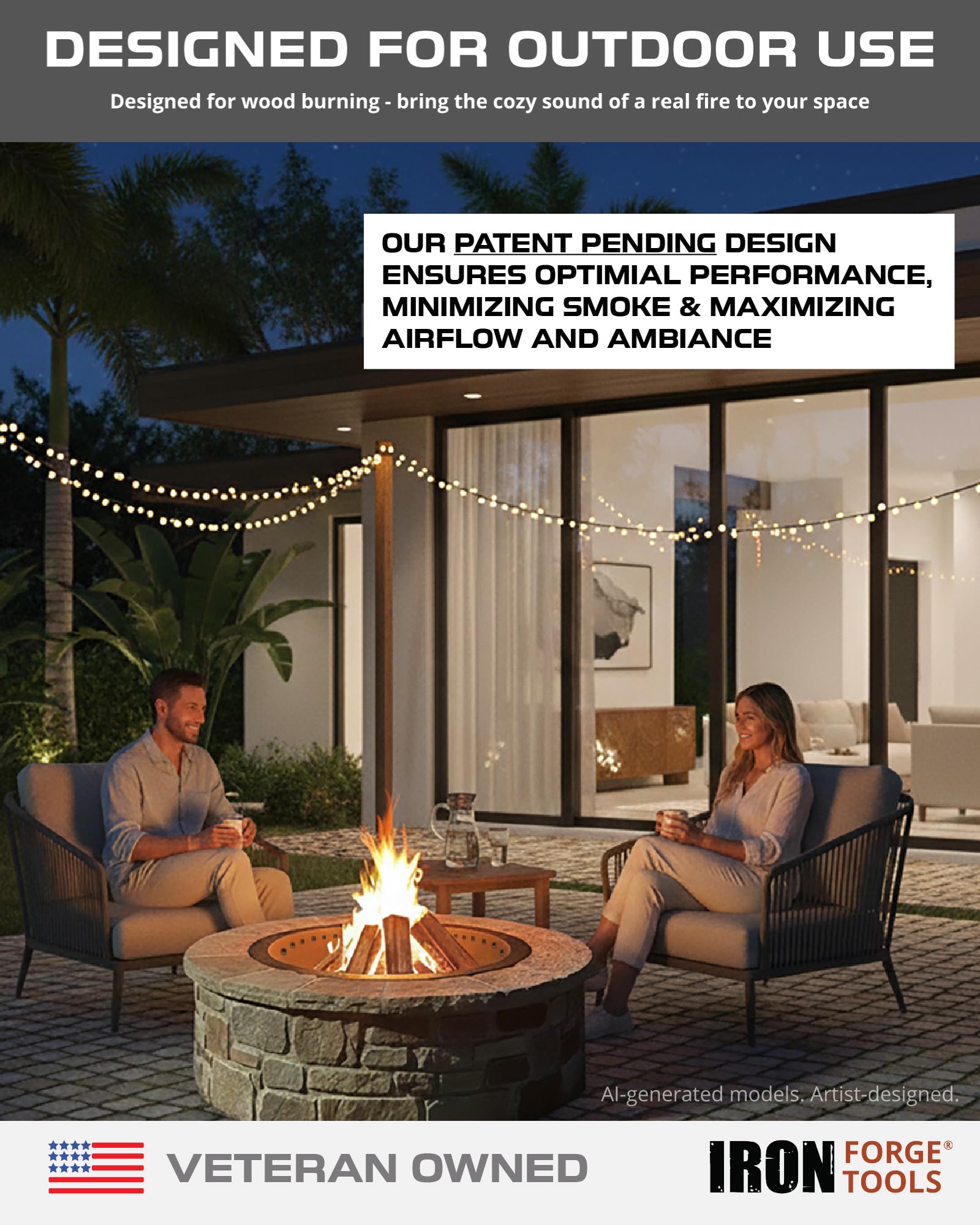


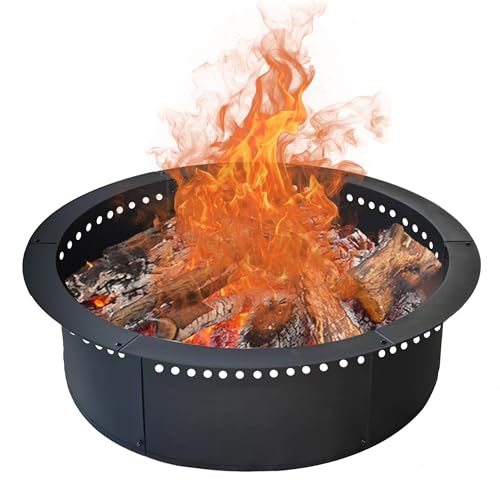
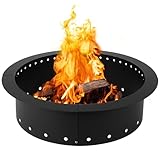
1. Iron Forge Tools Smokeless Fire Pit Ring Outdoor Insert 36 Inch Round Steel — the easiest fit for a standard patio build
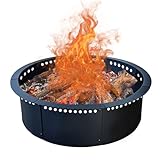
Iron Forge Tools wins for the buyer who wants a straightforward 36-inch round steel insert without oversizing the entire fire area. The smokeless-style airflow design is the key reason: it’s built to encourage cleaner secondary burn behavior than a plain flat liner. Since the listed rating is unavailable, I’d treat this as a spec-first pick rather than a reputation pick. For paver kits, block rings, and compact backyard seating zones, 36 inches is the practical middle. Not tiny. Not a bonfire bowl.
2. Zzuvjoy 36 Inch Fire Pit Ring, Large Outdoor Campfire Pit for Patio Backyard Garden, Smokeless Steel Firepit with Air Ve — similar size, more value-focused
Zzuvjoy’s 36-inch fire pit ring targets the same general footprint as the Iron Forge Tools model, but it reads more value-focused in its positioning. The title calls out a large outdoor campfire pit for patio, backyard, and garden use, which fits a simple DIY block surround. Rating is unavailable, so brand confidence isn’t the selling point here. The appeal is size, smokeless-style steel construction, and a familiar 36-inch format. I’d choose it for a utility build where price matters more than brand presence.
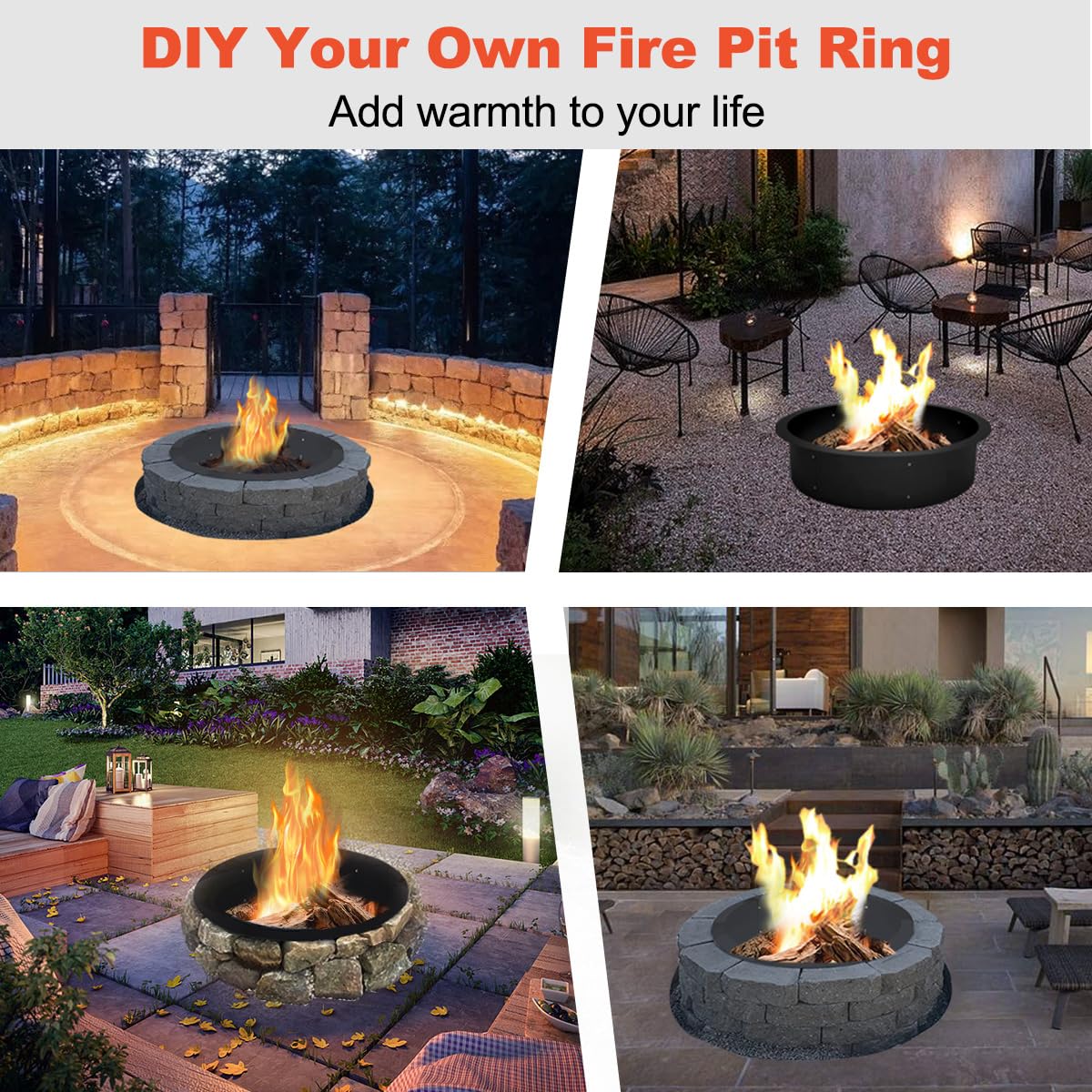
3. SoulMate Outdoor 40-Inch Outer/36-Inch Inner Fire Pit Ring Smokeless,Duty Solid Metal Steel Round Firepit Rim Insert for — better for thick surrounds
This SoulMate insert gives you a 40-inch outer diameter with a 36-inch inner opening, which matters if your stone or block cap needs a cleaner overlap. That 4-inch difference helps the ring sit visually integrated instead of looking dropped into a hole. It’s a smart fit for more finished hardscape work. The rating is unavailable, so the dimensions carry the decision. Compared with a straight 36-inch listing, this one makes more sense when the visible rim is part of the design.
4. Koutemie Outdoor Fire Pit Ring Liner 35-Inch Outer/31-Inch Inner Diameter, Heavy Duty Solid Metal Steel Round Firepit Ri — compact ring for tighter yards
Koutemie’s 35-inch outer and 31-inch inner diameter make it the smallest practical choice here. That’s useful for townhome patios, narrow seating pads, or a 4-chair conversation area where a 42-inch burn zone would dominate the layout. The trade-off is log capacity. You’ll want shorter splits, not oversized campfire wood. Rating is unavailable, so this pick is about fit and space control. For smaller masonry surrounds, the 31-inch opening can look intentional rather than undersized.
5. SoulMate Outdoor 46-Inch Outer/42-Inch Inner Fire Pit Ring Smokeless,Duty Solid Metal Steel Round Firepit Rim Insert for — the big-ring choice for open seating areas
The larger SoulMate option is the capacity pick, with a 46-inch outer diameter and a 42-inch inner opening. That’s a serious footprint for a 6-seat or 8-seat fire area, and it gives full-size logs more room to breathe. It’s not the right choice for a small patio because the heat radius and masonry footprint both grow. Rating is unavailable, so the case rests on dimensions and use case. If you’re building a permanent gathering zone, this one has the scale.
Comparison Table
| Pick | Listed size | Best fit | Rating shown | Main trade-off |
|---|---|---|---|---|
| Iron Forge Tools Smokeless Fire Pit Ring Outdoor Insert | 36 in round | Standard patio fire pit | ? | Less detail on wall thickness |
| Zzuvjoy 36 Inch Fire Pit Ring | 36 in | Value-focused backyard build | ? | Brand confidence is harder to judge |
| SoulMate 40/36 Inch Fire Pit Ring | 40 in outer, 36 in inner | Finished stone surround | ? | Needs accurate opening prep |
| Koutemie 35/31 Inch Fire Pit Ring Liner | 35 in outer, 31 in inner | Compact yards and patios | ? | Smaller log capacity |
| SoulMate 46/42 Inch Fire Pit Ring | 46 in outer, 42 in inner | Large seating areas | ? | Too large for tight layouts |
Buying Guide: How to Choose a Fire Pit Insert
Start with the inner diameter, not the outer diameter. The inner opening controls flame size, wood length, and how much heat reaches guests. A 31-inch inner ring works for smaller patios, while a 36-inch inner ring is the safer default for most backyards. A 42-inch inner ring needs more clearance and a larger seating circle.
Next, match the outer diameter to your stonework. If your retaining-wall blocks create a 40-inch opening, a 36-inch insert may leave awkward gaps. If the ring has a lip or visible rim, measure twice. Simple stuff. Expensive mistake if skipped.
Steel thickness isn’t always stated clearly, so use design clues. “Solid metal steel” and “heavy duty” help, but dimensions and airflow style are more reliable than marketing language alone. ASTM and BIFMA both reinforce the same research habit: material performance depends on construction, exposure, and use conditions, not adjectives.
Comparison: Smokeless-Style Insert vs Standard Ring
A smokeless-style fire pit insert uses air channels or venting to feed oxygen into the burn. That can improve combustion and may reduce visible smoke compared with a plain steel liner, especially with dry hardwood. It won’t make wet wood behave well. Moisture still creates smoke, soot, and weak flame.
A standard ring mainly protects surrounding masonry from direct flame and ash exposure. It’s simpler, often cheaper, and fine for casual backyard fires. The downside is less airflow control. For a permanent patio feature, I’d favor the smokeless-style layout if the price gap is modest.
Size still beats buzzwords. A well-fitted 36-inch insert will outperform a poorly sized “smokeless” ring that leaves gaps or crowds the stone. Apartment Therapy’s outdoor coverage often makes the same practical point: scale and placement shape how furniture and fire features actually work. The insert has to fit the room outside.
Frequently Asked Questions
What size fire pit insert is best for most backyards?
A 36-inch fire pit insert is the best default for many patios. It holds regular split logs, fits common block-ring layouts, and doesn’t overwhelm a 4-seat or 6-seat area. Smaller 31-inch openings suit compact spaces, while 42-inch openings need more clearance.
Do I need an insert for a stone fire pit?
Yes, if you want the stone or block surround to last longer. A steel insert shields masonry from direct flame, ash, and repeated heat cycling. Without one, blocks can discolor, crack, or weaken faster, especially through rain and freeze-thaw seasons.
Are smokeless fire pit inserts actually smokeless?
No insert is completely smokeless. Smokeless-style designs improve airflow and may burn cleaner when you use dry wood. Wet logs, leaves, and poor stacking still create smoke. Think of the design as smoke-reducing, not smoke-erasing.
How much clearance should a fire pit insert have?
Follow the product dimensions first, then leave enough room for the insert to sit flat without binding against stone. The key measurement is the outer diameter. A 40-inch outer ring won’t fit properly in a 39-inch prepared opening.
Is a bigger fire pit insert always better?
No. A 42-inch inner opening gives more flame and log capacity, but it also increases heat spread and seating distance. For smaller patios, a 31-inch or 36-inch insert is easier to manage and usually looks more proportional.
What should I check before buying?
Check inner diameter, outer diameter, steel construction, airflow design, and whether your surround is already built. Also confirm your local open-flame rules. Some neighborhoods restrict wood burning during dry months, and a steel insert doesn’t override fire codes.
Bottom Line
The Iron Forge Tools Smokeless Fire Pit Ring Outdoor Insert 36 Inch Round Steel is the best first pick because 36 inches fits the widest range of backyard builds and the smokeless-style design gives it a practical edge. Choose the SoulMate 46-inch outer/42-inch inner ring if you’re building a larger permanent seating area with room for stronger heat output. The honest caveat: all five show unavailable ratings here, so dimensions and fit should drive the purchase.
Write Your Review
No reviews yet. Be the first to share your experience!