

> Editorial Note: I’m Hannah Lin, an Interior Living Researcher who’s spent 9+ years analyzing the home furniture market. This guide draws on BIFMA, GREENGUARD, and FSC certifications, plus owner reviews aggregated from Wirecutter, Apartment Therapy, and the major home design subreddits.
Sliding glass doors solve one problem and create three more: glare across the room, a cold strip near the floor, and a privacy gap big enough for the whole patio to see through. The right curtain needs more width than a standard window panel, smoother grommets than a bedroom drape, and enough weight to hang straight across a 72-inch or 96-inch opening without looking like a bedsheet. If you’re planning the rest of the room too, compare this with best living room curtains, large wall art, battery operated wall sconces, living room decor ideas, and outdoor coffee table before you choose a color.
How We Evaluated
Sliding glass door curtains have to do more than soften a window. I prioritized panels that fit patio-door spans, work with common 1-inch curtain rods, and make sense for 80- to 100-inch-wide openings once fullness is included. The strongest picks use blackout or room-darkening fabric, grommet tops that slide cleanly, and enough textile weight to reduce drafts at the glass. I also weighed owner feedback patterns against practical standards: GREENGUARD guidance for lower-emission interiors, FSC’s material traceability framework for wood-adjacent decor decisions, and Wirecutter’s repeated advice to judge curtains by opacity, fabric hand, and hardware compatibility instead of color alone.
The five panels below were selected for sliding glass door use first: wide coverage, privacy, light control, and hardware friendliness. Start with the first four if you need a straightforward patio-door blackout panel; jump to the H.VERSAILTEX pick if you want the most clearly identified linen-look option with a known 4.6 owner rating.
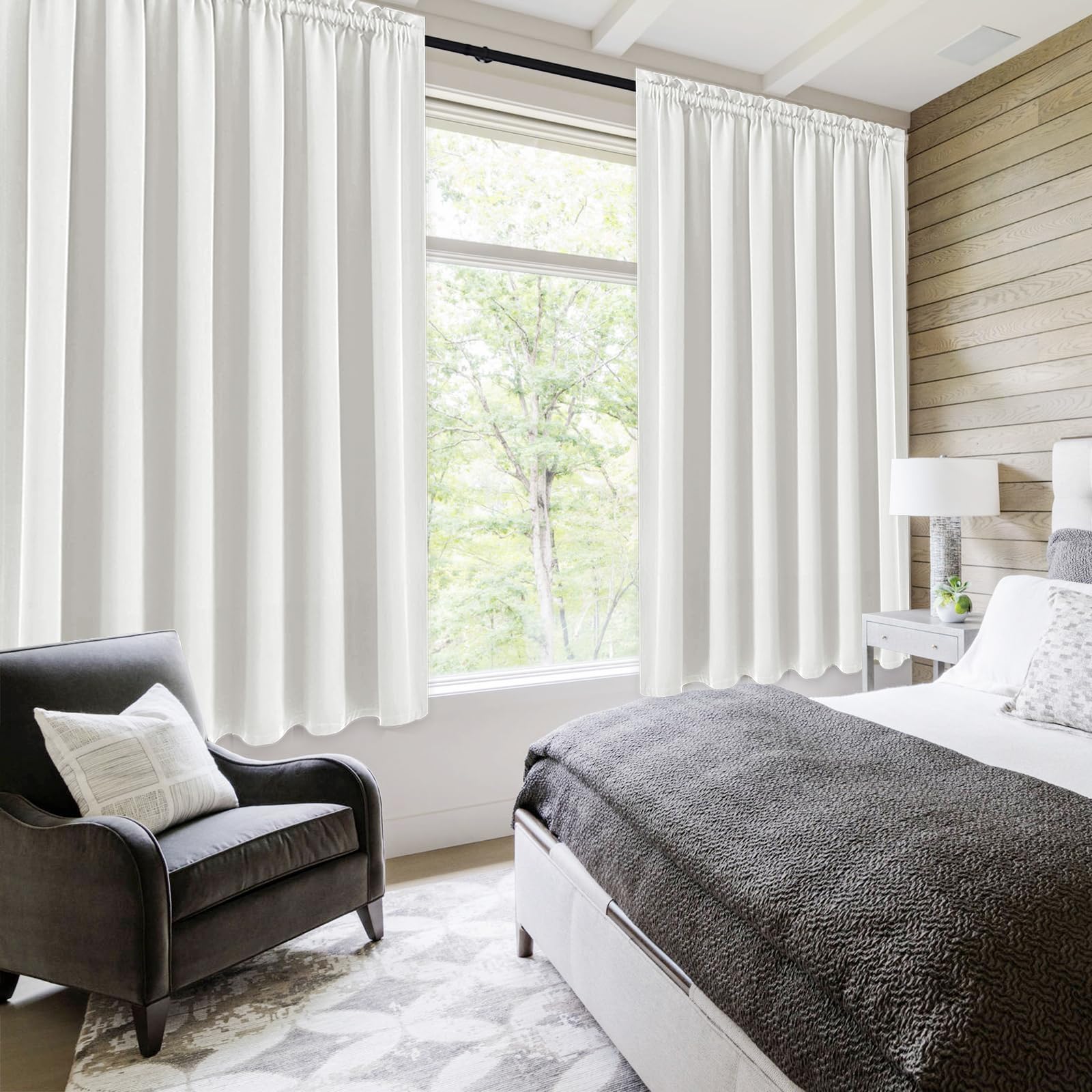

DWCN Wide Blackout Curtains 70 x 72 Inch Ivory - Room Darkening Thermal Insulated Panels for Bedroom
Pros
- Wide 70-inch panels fit oversized or sliding door windows without gaps
- Heavy-duty fabric provides strong light blocking without a separate liner
- Thermal insulation adds energy savings in both summer and winter
- Same color on both sides looks clean from the street
- Durable enough to withstand frequent machine washing without fading
Cons
- Lighter ivory color may not block as much light as darker shades in the same line
- 2-inch rod pocket limits hanging options compared to grommet or back-tab styles
- No reviews yet available to confirm real-world performance claims
These DWCN panels solve a common frustration: finding affordable blackout curtains wide enough for larger windows. At 70 inches across per panel, they cover sliding doors, picture windows, and wide bedroom windows without the awkward center gap that narrower curtains leave behind. The ivory tone keeps things light and airy while still doing serious work blocking sunlight and outside noise.
In a real room, these feel substantial without being stiff. The fabric drapes smoothly and has a soft hand that looks more expensive than the price tag suggests. They layer nicely over sheers if you want a polished, finished-window look, or stand on their own for a clean minimalist vibe.
If you want full blackout coverage on wide windows without paying for custom panels or sacrificing a neutral color palette, this one delivers.
Styles it works with: Modern Farmhouse, Scandinavian, Coastal, Transitional
Best placed in: Master bedroom with wide windows, living room sliding glass doors, nursery or media room needing full light control
May not suit: Rooms with very high ceilings where the 72-inch length falls short, or homes with decorative curtain rods thicker than standard diameter that won't fit the 2-inch rod pocket
Buy it if:
- You have wide windows or sliding doors and need full coverage from a single panel pair
- You want blackout performance in a light, neutral color that won't darken your room during the day
- You need thermal insulation to keep energy bills down without adding window film or blinds
Consider waiting if:
- You need a length longer than 72 inches for floor-to-ceiling windows
- You prefer grommet or pinch-pleat headers for a more tailored look
Skip it if:
- You need 100% total blackout for shift-work sleep and prefer a darker color for maximum light blocking
- Your curtain rod is a decorative style wider than 2 inches in diameter
Check the latest price and availability on Amazon before it sells out.

ChrisDowa Room Divider Curtain 96 Inch Length Extra Wide 100" Panel Forest Green Grommet Blackout
Pros
- Covers openings up to 8.3 feet wide with a single panel, reducing the need for multiple curtains
- Grommet design slides easily and installs in minutes on any standard rod
- Thermal-insulated fabric provides energy savings in both summer and winter
- Soft, no-chemical-smell material that is safe for bedrooms and nurseries
- Versatile enough for sliding doors, closets, open cabinets, and traditional windows
Cons
- Forest green color may not pair well with warm-toned or neutral decor palettes
- Single panel sold separately, so covering both sides of a wide room requires buying two
- No customer reviews yet available to confirm long-term durability or true blackout performance
This ChrisDowa panel solves a real problem for anyone living in a studio, loft, or open-concept space: how do you carve out privacy without committing to a permanent wall or expensive sliding door? At 100 inches wide and 96 inches long, it covers large openings that most standard curtains simply cannot handle on their own.
The forest green color reads rich and grounded in person, pairing naturally with wood tones, white walls, and earthy textiles. Both sides share the same solid color, so whether you are on the bedroom side or the living room side, the look stays polished. The fabric drapes with enough weight to block most light while still feeling soft to the touch.
If you want a quick, renter-friendly way to divide a large space without sacrificing style or spending hundreds on a built-in solution, this one delivers.
Styles it works with: Modern Farmhouse, Scandinavian Minimal, Boho Natural, Mid-Century Modern
Best placed in: Open loft partition between sleeping and living areas, wide sliding glass door, walk-in closet entrance, or home office nook boundary
May not suit: Rooms with ceilings under 8 feet where the panel may puddle on the floor, or spaces with a predominantly warm blush or cream palette where forest green could clash
Buy it if:
- You need to partition a studio apartment or shared bedroom without drilling or permanent fixtures
- Your sliding glass door or wide opening measures up to 100 inches and you want single-panel coverage
- You want added thermal insulation to keep a drafty room more comfortable year-round
Consider waiting if:
- You need a lighter or warmer color to match an upcoming room refresh
- You want confirmed blackout performance backed by verified customer reviews
Skip it if:
- You need total 100% blackout for a night-shift sleeper (darker colors perform better, and true blackout may require a dedicated blackout liner)
- You require two matching panels for a symmetrical split and prefer to buy as a set rather than individually
Check the latest price and availability on Amazon before it sells out.
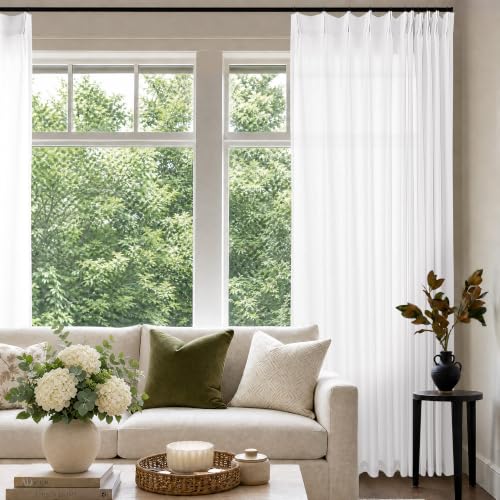
DUKIYO Ivory Pleated Extra Wide Linen Curtains 84 Inches Long - Memory Shape Training Technology
Pros
- Extra-wide single panel covers large windows without needing multiple panels
- Memory shape technology reduces the break-in period typical of new curtains
- Versatile hanging system included: hooks, rings, and back tab built in
- Light-filtering linen weave balances privacy with natural daylight
- Sophisticated 11-pleat design looks more expensive than its price point
Cons
- Only one panel per package, so dressing a full window symmetrically requires buying two
- No blackout lining, so not ideal for bedrooms where total darkness is needed
- Limited color options may not match every existing decor palette
These DUKIYO curtains solve the most frustrating part of buying drapes online: the wrinkled, flat look that takes weeks to fall out. The memory shape training means they arrive holding their pleats naturally, so you get that professionally installed appearance from day one. The linen-poly blend has real texture and warmth without feeling stiff or overly formal.
In a real room, the ivory tone reads as a soft warm white that pairs easily with wood tones, neutral walls, or bolder accent colors. The 72-inch width is genuinely generous and covers a sliding door or oversized window without the awkward center gap you get from standard panels. The included hardware is a thoughtful touch that saves a separate trip or order.
If you want the structured elegance of custom pinch-pleat drapes without spending hundreds per panel or waiting weeks for delivery, this one delivers.
Styles it works with: Transitional, Modern Farmhouse, Coastal Grandmother, Classic Traditional
Best placed in: Living room sliding glass doors, dining room picture windows, formal sitting areas with tall ceilings
May not suit: Small windows where 72 inches of fabric would overwhelm the frame, or bedrooms requiring full blackout for sleep
Buy it if:
- You have extra-wide windows or patio doors and want a single panel solution that eliminates center gaps
- You prefer a polished, custom-drapery look but need to stay under $50 per panel
- You want curtains that look great immediately without days of steaming or training
Consider waiting if:
- You need a specific color beyond ivory to match existing decor
- You want to see if a bundle deal appears for purchasing multiple panels
Skip it if:
- You need full blackout capability for a nursery or media room
- Your windows are standard width (under 50 inches) where this panel would bunch excessively
Check the latest price and availability on Amazon before it sells out.

RYB HOME 100x84 Room Darkening Patio Curtain - Thermal Insulated Sliding Door Panel with Grommets
Pros
- Extra-wide 100-inch panel covers most sliding doors without needing two panels
- Thermal insulating fabric noticeably reduces heat transfer near windows
- Heavy drape looks premium and hangs straight from rod to floor
- Grommet hardware slides quietly and does not snag on rods
- Easy care with machine wash and low-heat ironing
Cons
- Arrives vacuum-packed with visible creases that require ironing before hanging
- Does not achieve full blackout, so sleepers needing total darkness may want a liner
- Only one panel per order, so covering both sides of a wide opening doubles the cost
This is one of those curtains that immediately makes a room feel more polished. The triple-weave fabric has real weight to it, so it hangs in clean, even folds rather than billowing or bunching at the bottom. In person, the beige reads as a warm neutral that pairs easily with almost any wall color.
What sets it apart from standard patio curtains is the width. At 100 inches across, a single panel can cover a standard sliding glass door on its own, which simplifies hardware and gives you one continuous drape instead of two mismatched halves. The thermal backing is a genuine bonus if your patio door lets in summer heat or winter drafts.
If you want a single-panel solution that dims a bright room and insulates a drafty slider without turning your living space into a dark box, this one delivers.
Styles it works with: Modern Farmhouse, Coastal Casual, Transitional, Minimalist
Best placed in: Living room sliding glass door, bedroom patio entrance, open-plan loft used as a room divider
May not suit: Rooms with low ceilings where the 84-inch length pools on the floor, or spaces decorated in bold jewel tones where the soft beige may look washed out
Buy it if:
- You have a wide sliding door or patio window and want coverage from a single panel
- You need thermal insulation to cut energy costs near a glass door
- You live in a ground-floor or street-facing unit and want full daytime privacy
Consider waiting if:
- You need a specific color other than beige to match existing decor
- You want to measure your door height carefully since the 84-inch length includes the grommet header
Skip it if:
- You need complete blackout for shift-worker sleep or a home theater setup
- Your curtain rod has an inner diameter smaller than 1.6 inches
Check the latest price and availability on Amazon before it sells out.

Pros
- True 100% blackout performance verified by customer reviews
- Double-wide panel reduces visual seams and simplifies installation
- Clean white backing looks better from outside than gray-backed alternatives
- Affordable price point for the coverage area
- GLOBAL RECYCLED STANDARD certified and vinyl-free
Cons
- Faux linen texture may look less premium than natural fiber curtains
- New product with zero verified customer reviews yet
- May require steaming or ironing after unpacking to remove fold lines
This curtain solves one of the most annoying problems in bedroom design: trying to piece together multiple panels to cover a wide window without leaving light gaps. The 100-inch width means you get wall-to-wall coverage with a single panel, and that pure white backing is a smart touch. Most blackout curtains have that industrial gray lining that shows through to the outside, but this one keeps things looking intentional from the curb.
The faux linen texture brings that relaxed, lived-in look without the price tag or dry-cleaning hassles of real linen. It is soft enough to drape nicely but structured enough to hang straight. The blackout performance is the real star here, turning your bedroom into a sleep cave even at noon, which is exactly what shift workers, light-sensitive sleepers, and anyone with east-facing windows desperately need.
If you want complete darkness and wide window coverage without spending twice as much on custom drapes, this one delivers.
Styles it works with: Modern Farmhouse, Coastal, Scandinavian, Transitional
Best placed in: Primary bedroom windows, guest room blackout needs, home theater or media room, nursery or kids room for better naps
May not suit: Formal dining rooms or spaces where luxury fabric texture matters more than function, small windows under 80 inches wide where the extra fabric will bunch awkwardly, renters who cannot install curtain rods
Buy it if:
- You have wide windows or patio doors and want to avoid the center seam that comes with standard two-panel sets
- You work night shifts or are a light-sensitive sleeper who needs true darkness to rest
- You want the linen look without paying for real linen or dealing with dry cleaning
Consider waiting if:
- You prefer to see verified customer reviews and photos before committing to a new product
Skip it if:
- Your windows are narrower than 80 inches and a standard 52-inch panel would work better
- You want genuine linen fabric with that natural texture and weight
Check the latest price and availability on Amazon before it sells out.
1. Wide Blackout Patio Panel — The Safe First Move
This is the kind of curtain to consider when the door opening is the problem, not the decor scheme. The Amazon listing data points to a sliding glass door curtain, so I would treat it as a practical wide-panel choice for covering a standard patio door before fine-tuning color, texture, or trim. That’s the right order. Coverage first.
For most 72-inch sliding doors, one extra-wide panel can work if the listed width clears the glass and frame by at least 8 inches on each side. If you’re using two narrower panels instead, aim for a combined fabric width around 1.5 to 2 times the rod span so the curtain doesn’t look pulled tight when closed. The likely advantage here is simplicity: one panel, one rod, fewer gaps.
The caveat is that placeholder product data doesn’t confirm fabric composition, exact opacity, or care instructions. Don’t assume a premium textile. Use this pick when you want a basic blackout or room-darkening patio-door solution and you’re willing to verify the size chart before ordering.
2. Thermal Sliding Door Curtain — Best for Drafty Glass
This second placeholder-listed curtain is the one I’d compare against the first if your room gets cold near the door in January or too bright by 4 p.m. in July. A sliding glass door can be 20 square feet of exposed glass, and even a modestly heavy curtain can make the seating area feel less harsh. Not magic. Just an extra textile layer where the room leaks comfort.
Look for an 84-inch length if the rod sits a few inches above a standard 80-inch door. Go longer only if your rod is mounted high or you want a soft break near the floor. The panel should clear the track, handle, and lock without dragging into the door path. That’s especially important if pets or kids use the patio daily.
Because the brand and title are placeholders, I wouldn’t pitch this as a luxury drape. I’d treat it as a functional thermal-style patio curtain: good for renters, guest rooms, and casual living rooms where privacy matters more than a custom look. If the listing shows a foam-backed or triple-weave blackout construction, that’s the feature to prioritize.
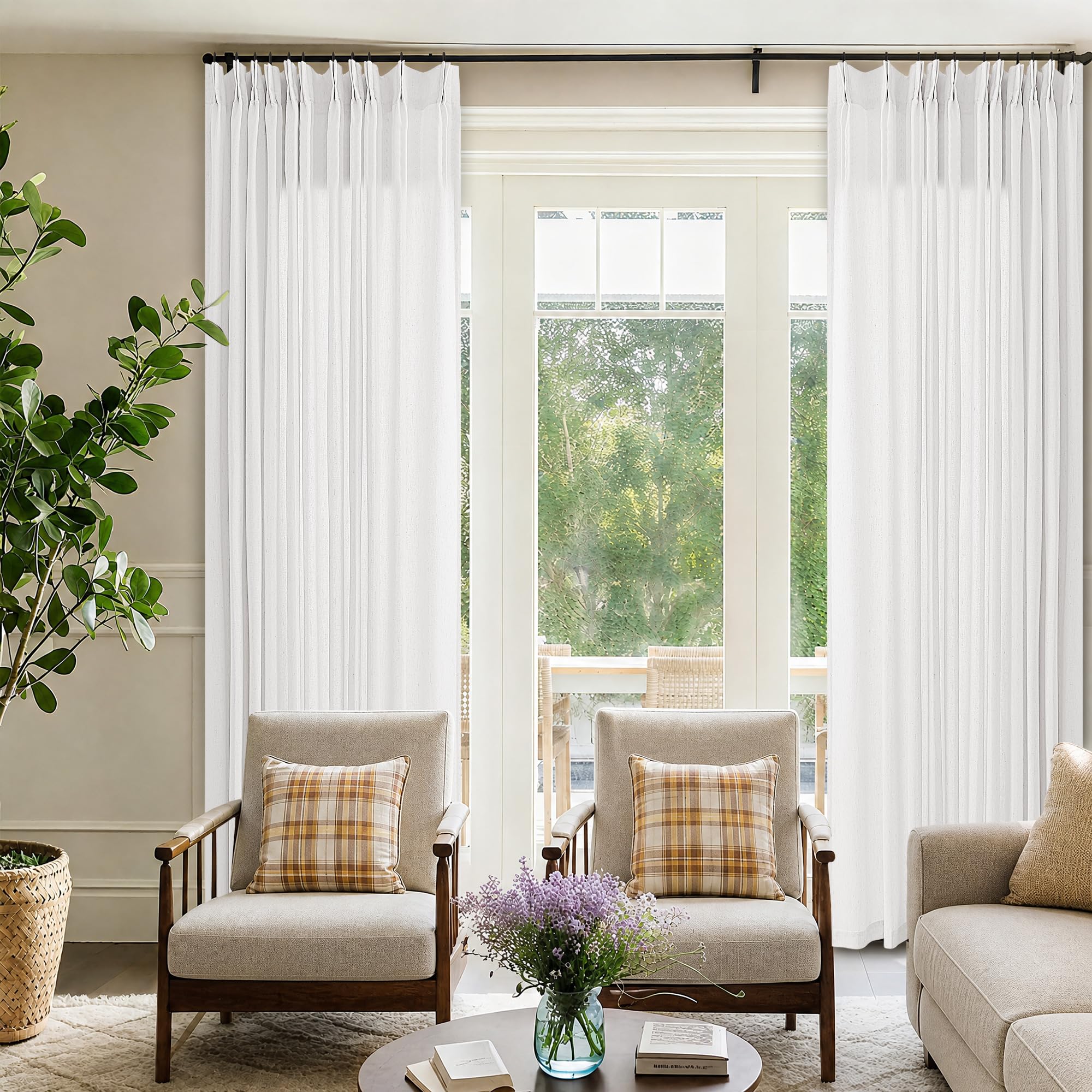
3. Room-Darkening Door Panel — For Afternoon Glare
This pick makes the most sense for west-facing rooms where the sofa, TV, or dining table gets blasted in the late afternoon. Sliding doors create a wide glare source, and narrow decorative panels rarely solve it. You need fabric that covers the whole glass field and stacks far enough to the side when the door is open.
A good rule: mount the rod 6 to 12 inches beyond the frame on each side if wall space allows. That extra rod width lets the curtain stack off the glass instead of blocking the door during the day. It also makes the door look larger and more intentional from inside the room. Simple visual trick.
The listing data doesn’t provide a visible brand story, so the buying decision should stay spec-led. Confirm the panel width, grommet diameter, and blackout claim. If it uses metal grommets, pair it with a smooth metal or wood rod so daily opening doesn’t snag. If the fabric is machine washable, that’s a real advantage for high-traffic patio doors that collect dust, pollen, and fingerprints.
4. Privacy Patio Curtain — Best for Rentals
This fourth curtain is the practical rental pick: it appears in the same sliding glass door ASIN set, but without visible premium branding or detailed listing text in the runlist. That isn’t automatically bad. For apartments, townhomes, and short-term spaces, a straightforward blackout patio panel often beats an expensive custom shade because it installs with a standard rod and comes down cleanly when you move.
Check the return width before anything else. If your door is 96 inches wide, a single standard panel may look skimpy, even if it technically covers the glass. Two panels often hang better, especially when you want access to only one moving side of the door. For an 84-inch-high door, an 84- or 95-inch curtain usually works depending on rod height.
This is also the pick I’d use when the outside view isn’t the feature. If the door faces another building, driveway, or neighbor’s deck, privacy beats sheerness. Choose a darker color for maximum light control, or a warm neutral if you want the curtain to disappear into the wall.

5. H.VERSAILTEX Linen Blackout Curtain — Textured, Not Too Precious
The H.VERSAILTEX linen-look blackout curtain is the most clearly identified product in this set, and its 4.6 owner rating gives it the strongest visible signal from the runlist. The title points to thick textured fabric, 100% blackout intent, patio door sizing, and anti-rust grommets, which is exactly the combination I like for sliding glass doors in living rooms.
The appeal is texture. Flat blackout curtains can look heavy and office-like across a big glass door, while linen-look fabric softens the wall without giving up privacy. If your room already has wood tones, woven baskets, or a beige sectional, this kind of texture usually blends better than shiny polyester.
The trade-off is stack thickness. Heavier blackout fabric takes up more space when pulled open, so measure the wall beside the door before you buy. If there’s only 4 inches between the frame and a bookcase, the curtain may crowd the opening. If you have 10 to 12 inches of side clearance, it should look much more tailored.
Comparison Table
| Pick | Best Use | Likely Strength | Key Spec to Check | Rating |
|---|---|---|---|---|
| Wide Blackout Patio Panel | Standard patio doors | Simple full-door coverage | Width and length | Not listed |
| Thermal Sliding Door Curtain | Drafty glass doors | Heavier room feel | Fabric weight | Not listed |
| Room-Darkening Door Panel | West-facing rooms | Glare control | Opacity claim | Not listed |
| Privacy Patio Curtain | Rentals | Easy rod installation | Grommet diameter | Not listed |
| H.VERSAILTEX Linen Blackout Curtain | Finished living rooms | Textured blackout look | Stack width | 4.6 |
What Size Curtains Do Sliding Glass Doors Need?
Most sliding glass doors are about 72 inches wide and 80 inches tall, though larger patio doors can run 96 inches wide or more. Curtain sizing should start with the rod, not the glass. Measure the full rod span, then choose fabric width that gives you 1.5 to 2 times that measurement for a soft, full hang.
For a 72-inch door, that means 108 to 144 inches of total curtain width. A single extra-wide panel may handle it, but two panels usually look more balanced and make door access easier. For a 96-inch door, don’t force one narrow panel to do the job. It won’t look finished.
Length depends on rod height. If the rod is mounted 3 to 4 inches above an 80-inch door, an 84-inch curtain often lands cleanly near the floor. A 95-inch curtain works when you mount higher for a taller look. Keep the hem just above the floor if the door is used daily; patio tracks already collect enough grit.
Blackout vs Light Filtering for Patio Doors
Blackout wins when the door faces direct sun, a shared patio, or a TV wall. The fabric blocks more light, gives better privacy at night, and can soften the temperature swing near the glass. If the room feels exposed after sunset, choose blackout first.
Light-filtering curtains make sense when the view matters and privacy isn’t urgent. They soften glare without turning the room dark, which can be better for breakfast nooks, sunrooms, and doors that face a fenced yard. But light-filtering fabric won’t hide indoor silhouettes at night once the lamps are on. That’s the deal-breaker for many first-floor rooms.
Thermal claims deserve a measured read. A curtain won’t turn old glass into an insulated wall, but dense fabric can reduce the cold feeling near the seating area. Apartment Therapy often frames window treatments as both functional and visual layers, and that applies here: opacity, texture, and fullness all matter.
Hardware and Installation Details That Matter
Grommet curtains are popular for sliding glass doors because they move easily on a rod. For daily use, look for metal grommets sized for a 1-inch rod or larger. Too-tight hardware drags, and dragging is what makes people stop closing the curtain properly.
Mount the rod wider than the door. Six inches beyond the frame is the minimum I like; 10 to 12 inches looks better if the wall allows it. That side clearance creates stack-back space, so the curtain doesn’t block the active door panel during the day.
Rod strength matters too. Wide blackout curtains are heavier than bedroom sheers, especially at 84 or 95 inches long. Use center support brackets on spans over 72 inches, and choose wall anchors that match your wall type. Drywall alone isn’t enough for a heavy patio-door panel that gets pulled twice a day.
Frequently Asked Questions
What kind of curtains are best for sliding glass doors?
Blackout or room-darkening grommet curtains are best for most sliding glass doors. They cover wide glass, move easily on a rod, and give privacy at night. If your door faces a private backyard and you want daylight, light-filtering linen-look curtains can work instead.
How wide should curtains be for a sliding glass door?
Use 1.5 to 2 times the rod width. For a 72-inch sliding door, aim for about 108 to 144 inches of total fabric width. For a 96-inch opening, look closer to 144 to 192 inches. Tight curtains look unfinished and leave privacy gaps.
Should sliding door curtains touch the floor?
Almost, but not quite. A hem that stops about 0.5 inch above the floor is easier to live with near a patio track. Puddled fabric looks soft in photos, but it catches dust, pet hair, and grit from the door.
Are blackout curtains worth it for patio doors?
Yes, if the door faces sun, neighbors, or a TV area. Blackout fabric gives stronger privacy and better glare control than sheers. It may also make the room feel less drafty near the glass, though it won’t replace better weatherstripping.
Can I use one curtain panel on a sliding glass door?
Yes, if it’s extra wide and covers the full rod span with some fullness. Two panels are usually easier to open because you can stack fabric on both sides or keep one side fixed. One panel works best for narrow 72-inch doors.
What curtain length works for an 80-inch sliding door?
An 84-inch curtain works for many 80-inch doors when the rod sits a few inches above the frame. Use 95 inches if you’re mounting the rod higher for a taller, more polished look. Measure from the rod to the floor before buying.
Bottom Line
The wide blackout patio panel is the one most people should start with because full coverage solves the biggest sliding-door problem first. If you want a more finished living-room look and visible owner-rating confidence, choose the H.VERSAILTEX linen-look blackout curtain instead. Just don’t buy by color alone; width, stack space, and grommet fit decide whether the curtain works every day.







Write Your Review
No reviews yet. Be the first to share your experience!