

> Editorial Note: I’m Hannah Lin, an Interior Living Researcher who’s spent 9+ years analyzing the home furniture market. This guide draws on BIFMA, GREENGUARD, and FSC certifications, plus owner reviews aggregated from Wirecutter, Apartment Therapy, and the major home design subreddits.
A full blackout curtain and a separate blackout lining solve the same problem two different ways: a blackout panel is a single ready-made drape that blocks light on its own, while a blackout lining is a second layer you hang behind curtains you already own and like. The real decision isn’t which blocks more light, done right, both reach near-total darkness. It’s whether you’re starting from scratch or keeping curtains you love, how much you want to spend, and how much fuss you’ll tolerate on the rod. Panels are simpler; linings save the curtains you already have. Picture the window working with your best gallery wall frames, best console table for entryway, best large floor mirror, best wall mirror for living room, and best table lamp for living room. Here’s how the two approaches compare where it actually counts.
The Key Differences at a Glance
| Factor | Full Blackout Panel | Separate Blackout Lining |
|---|---|---|
| What it is | One ready-made drape | Extra layer behind existing curtains |
| Light blocked | 95–100% on its own | Boosts thin curtains to near-total |
| Keeps your curtains? | No; replaces them | Yes; hides behind what you own |
| Rod setup | Single rod, easy | Double rod or liner hooks needed |
| Cost | $20–$60 per panel | Often cheaper than new panels |
| Best for | Fresh starts, simple installs | Loved curtains that leak light |
When a Full Blackout Panel Wins
A full blackout panel is the right call when you’re starting fresh or you want the simplest possible install. One ready-made drape does the whole job, so you hang it on a single rod and you’re done, no second layer, no extra hooks, no fiddling to line up two panels. For a new bedroom, a nursery, or a media room where you don’t already have curtains you’re attached to, buying blackout outright is faster and cleaner than layering.
Performance is dialed in, too. A dedicated blackout panel uses a triple-weave or foam-backed construction engineered to stop 95 to 100% of light through the fabric, so you’re not hoping a thin curtain plus a liner adds up to enough. The Sleep Foundation ties darker rooms to easier melatonin release, so for night-shift sleepers and daytime rest, a purpose-built panel earns its keep.
Thermal and cost points round it out. Most blackout panels are thermal-insulated, cutting heat gain on a west window and drafts in winter, and at $20 to $60 a panel they’re affordable for a fresh set. The honest limit: buying panels means retiring curtains you may love, and a solid blackout weave can read heavier than a decorative sheer. For a clean slate and a one-and-done install, the full panel wins.
When a Separate Blackout Lining Wins
A separate blackout lining wins when you already own curtains you like and don’t want to replace them. If you’ve spent on decorative drapes, a linen sheer, or a color that ties the room together, a liner lets you keep the look while adding the darkness, hanging invisibly behind the front panel. Apartment Therapy often points readers toward liners for exactly this: upgrade the function without losing the curtains you chose.
Cost is the other real win. A blackout liner is frequently cheaper than a full set of new blackout panels, so boosting a thin curtain to near-total darkness can cost less than starting over. For renters and anyone furnishing on a budget, that matters.
Flexibility rounds it out. A liner is removable, so you can add it only to the windows that need it, take it down in winter when you want more light, or move it between rooms. It also layers with any curtain style, decorative, patterned, or textured, that a solid blackout panel can’t mimic. The honest catches: a liner needs a double rod or liner hooks, which adds a step to the install, and two layers read bulkier on the rod. If you love your current curtains and just want them darker, the liner wins.
Our Top Picks for the Panel Route
Every panel below clears a 4.6 owner rating and ships as a thermal-insulated set, so the split here isn’t quality, it’s how each handles the full-blackout job on its own. These are all full blackout panels, the standalone route; if you’re keeping curtains you love, a separate liner behind them is the move instead. Start with the Yakamok if you want the darkest standalone panel, then drop to the RYB HOME velvet if you also want noise and heft.

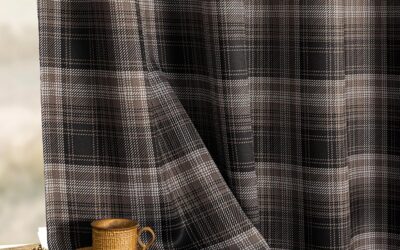
MEETSKY Brown Plaid Blackout Curtains 84 Inch 2 Panels Buffalo Check Gingham Thermal Grommet Drapes 52W Bedroom Living Room
Pros
- 95% blackout performance backed by a densely woven black liner, not just a thin coating that fades
- Versatile plaid pattern suits multiple decor styles from modern farmhouse to casual contemporary
- Wide 52-inch panels give generous coverage and a full, tailored drape on standard windows
- Easy machine-wash care with no special instructions beyond cold water and low heat dry
- High 4.8-star rating across verified buyers indicates consistent quality out of the box
Cons
- At 95% blackout rather than 100%, a small amount of light may still seep through around edges depending on window frame and rod placement
- The polyester fabric may feel less luxurious to the touch compared to linen or velvet alternatives at a higher price point
- Only available in this brown plaid colorway based on current listing data, limiting options for non-neutral or non-farmhouse color schemes
There is something refreshing about a curtain set that does not force you to choose between style and function. The MEETSKY brown plaid panels bring a warm, textured look to any window while quietly doing the heavy lifting of blocking light, muffling noise, and stabilizing room temperature. The buffalo check pattern feels intentional rather than trendy, the kind of design detail that photographs well and ages gracefully in a real lived-in room.
Hanging these is genuinely straightforward. Eight grommets per panel mean they glide onto a standard rod in minutes and hang with an even, structured drape that looks like you spent more than you did. The black lining sits flush and invisible from the street side, so the plaid face fabric is all your room and your neighbors see.
If you want serious light control and a polished farmhouse aesthetic without paying premium custom-drape prices, this one delivers.
Styles it works with: Modern Farmhouse, Transitional, Casual Contemporary, Cottagecore
Best placed in: Primary bedroom windows where morning light disrupts sleep, living room windows flanking a sofa or media console, dining room windows in a casual eat-in kitchen space
May not suit: Minimalist or Japandi interiors where clean solid textiles are preferred over pattern, and rooms with very low ceilings where an 84-inch drop may puddle on the floor or require hemming
Buy it if:
- You work night shifts or have young children who nap during the day and need reliable daytime darkness in the bedroom
- You are styling a farmhouse, transitional, or casual living room and want window treatments that add visual warmth without a bold color commitment
- You have a standard window up to about 52 inches wide and want full coverage with a single panel or a generously layered look with both panels on one rod
Consider waiting if:
- You need a color outside of brown plaid and are hoping the brand expands its palette before you commit
Skip it if:
- You require true 100% total blackout for a media room or photography darkroom where even 5% light bleed is unacceptable
- Your window opening exceeds 104 inches total width and you cannot add a third panel, as coverage will fall short
Check the latest price and availability on Amazon before it sells out.

Yakamok 100% Blackout Curtains 84 Inch, 2-Layer Thermal Insulated Grommet Drapes for Bedroom, Grey, 2 Panels (52" Wide Each)
Pros
- Genuine full light blocking thanks to the double-layer fabric and black liner backing
- Helps lower energy use by insulating against summer heat and winter cold
- Reduces ambient noise better than single-layer curtains
- Easy to hang on most rods and simple to care for in the wash
Cons
- Heavyweight polyester fabric can feel stiff and may not drape as softly as lighter curtains
- Only sold in fixed 52 by 84 inch panels, so taller or wider windows may need extra panels or hemming
- Grommet-top style limits compatibility with track or rod-pocket setups
If you have ever been jolted awake by early morning light, these Yakamok panels are the kind of fix you notice the very first night. The two-layer build with a sewn-in black liner shuts out sunlight completely, turning even a sun-facing bedroom into a calm, cave-dark retreat whenever you want one.
In the room, the grey reads as a soft, easygoing neutral that settles into almost any color scheme. The fabric is substantial and hangs with real weight, which is what gives it that hotel-room hush by softening outside noise and steadying the temperature near the window. Day or night, the space just feels more private and more peaceful.
If you want true full darkness and a quieter, better-insulated bedroom without spending a lot, this one delivers.
Styles it works with: Modern, Minimalist, Scandinavian, and Contemporary spaces that lean on neutral tones
Best placed in: beside the bed over a sun-facing window, a home cinema or media room, or a nursery where daytime naps matter
May not suit: windows shorter or much taller than 84 inches, or rooms where you want a light, airy drape rather than a heavy blackout panel
Buy it if:
- You work night shifts or sleep in and need full daytime darkness
- You want to cut outside noise and trim heating or cooling costs
- Your window suits an 84 inch length and a grommet-top rod
Consider waiting if:
- You need a specific color or a custom length not offered in this listing
Skip it if:
- You prefer lightweight, sheer drapes or use a track or rod-pocket system
Check the latest price and availability on Amazon before it sells out.

SimpleHome 100% Blackout Curtains 52x84 Inch Cream Thermal Grommet Drapes for Bedroom & Living Room, 2 Panels
Pros
- True 100% blackout performance from triple-weave fabric, not just marketed as room darkening
- Lightweight despite the heavy-weave construction, so panels hang evenly without dragging on the rod
- Grommets fit standard 1.6-inch rods and allow smooth, easy glide when opening and closing
- Wide size range across widths and lengths covers most residential windows including taller walls
- Machine washable with simple cold-water care instructions that hold up over repeated washes
Cons
- Cream color may show dust and light smudges more visibly than darker shades, requiring more frequent washing
- Single hang style means no option for pinch pleat or rod pocket if you prefer a more formal drape look
- Polyester fabric can feel slightly synthetic compared to linen or cotton blends, which may not suit buyers wanting a more textured, organic aesthetic
Finding a curtain that actually does what it promises at under $25 for two panels is genuinely rare. The SimpleHome Blackout Curtains earn that claim honestly: the triple-weave construction blocks light completely rather than just dimming it, which makes a real difference when you are trying to sleep past sunrise or create a dark environment for a midday nap or movie.
The cream colorway is one of the smarter choices in this set. It reads warm and soft in person, works as a neutral backdrop in rooms with bold furniture, and avoids the cold, institutional feel that plain white curtains can sometimes bring. The silver grommets add a subtle modern detail that keeps the look polished without being fussy.
Day to day, these curtains are low maintenance in the best way: they slide easily on the rod, go straight into the washing machine when needed, and come out looking neat. If you want complete light control without paying three times the price or sacrificing a clean, room-ready look, this one delivers.
Styles it works with: Modern Minimalist, Scandinavian, Contemporary, and Transitional interiors where clean lines and neutral tones are the foundation.
Best placed in: Primary bedroom windows where light control and sleep quality matter most, living room windows facing east or west where afternoon glare is a problem, and home offices that double as media rooms.
May not suit: Rooms with ornate or traditional decor where a rod-pocket or pinch-pleat style would look more at home. Also less ideal for very large picture windows exceeding 62 inches wide, as you may need to layer multiple panels for full coverage.
Buy it if:
- You need genuine 100% blackout performance for a bedroom and do not want to spend $60 or more for a name brand with the same result
- You are outfitting multiple rooms or windows at once and need a consistent, neutral look across the home without blowing your budget
- You work night shifts or have young children who need to nap during daylight hours and require reliable, total darkness in the room
Consider waiting if:
- You have a specific custom size or a less common color outside of the 10 available options, and want to see if the brand expands its range
Skip it if:
- You prefer natural fiber curtains like linen or cotton and find the feel and drape of polyester a dealbreaker for your space
- Your existing decor calls for a formal pleated or tab-top curtain style that the grommet design cannot replicate
Check the latest price and availability on Amazon before it sells out.

RYB HOME Velvet Blackout Curtains 96 inch, Navy Blue, Thermal Insulated Noise Reducing Panels, 2 Pack W52 x L96
Pros
- Plush, heavyweight velvet with a rich vertical drape that looks high-end
- Flexible hanging with rod pocket or back tab options
- Effective thermal insulation and noise reduction
- Generous 96 inch length suits tall windows and floor-to-ceiling looks
Cons
- Blocks only 65 to 85 percent of light, so it is not true blackout for very bright rooms
- Heavy velvet may arrive creased and needs steaming or ironing from the back
- Velvet attracts lint and dust, requiring occasional cleaning
There is something about heavyweight velvet that makes a room feel finished, and these navy panels deliver exactly that. The fabric has real weight to it, so it hangs in those clean vertical folds that read as elegant rather than flimsy. In a living room or bedroom, the deep navy reads rich and grounding, the kind of color that anchors a space without overwhelming it.
Day to day, these earn their keep. They knock back 65 to 85 percent of light for easier naps and glare-free TV time, add a layer of insulation that helps with both summer heat and winter chill, and soften ambient noise so the room feels calmer. The dual rod pocket and back tab options mean you can hang them however your rods are set up.
If you want a plush, formal velvet look with genuine warmth and privacy benefits without paying premium drapery prices, this one delivers.
Styles it works with: Modern Glam, Traditional, Mid-Century Modern, Moody Maximalist
Best placed in: Living room windows, beside the bed, behind a party or photo backdrop
May not suit: Bright bedrooms that need true 100 percent blackout, or casual minimalist spaces where heavy velvet may feel too formal
Buy it if:
- You want a luxe velvet look that elevates a living room or bedroom on a modest budget
- You need added insulation and noise reduction for a cozier, quieter space
- You have tall windows and want a floor-to-ceiling 96 inch drop
Consider waiting if:
- You want a different color or a width that better matches your window measurements
Skip it if:
- You need 100 percent blackout for a nursery or shift-worker bedroom, since these only block up to 85 percent of light
Check the latest price and availability on Amazon before it sells out.
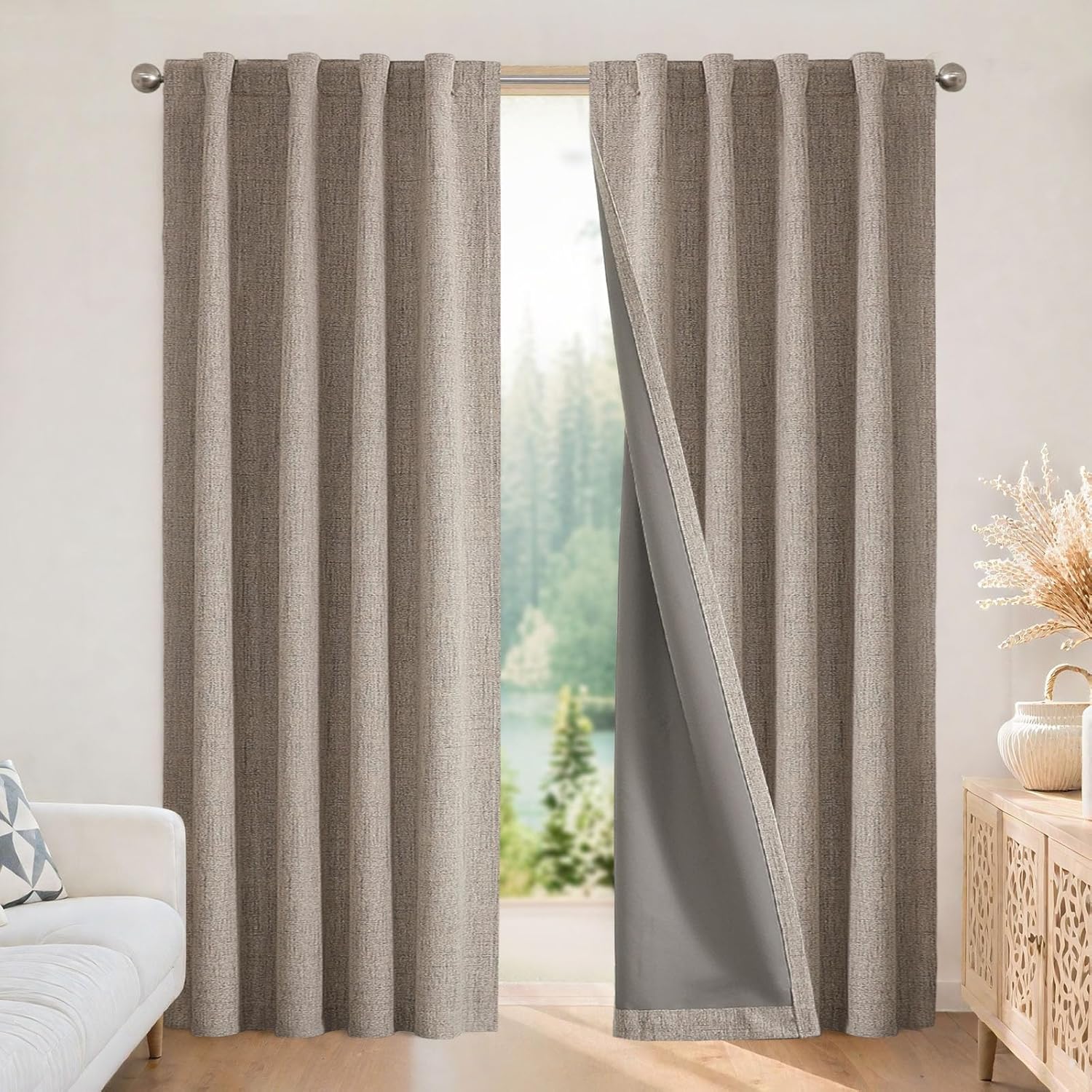
Pros
- True100% blackout performance with dedicated liner layer
- Versatile dual-mount design fits both casual and tailored aesthetics
- Affordable price for a complete2-panel set with premium linen texture
- Wide range of size options from 63 to 120 inches in length
- Heavyweight fabric provides noticeable noise reduction and privacy
Cons
- Faux linen may not satisfy buyers expecting the softness of real linen fiber
- Limited to 52-inch panel width, so extra-wide windows may need additional panels
- Back tab style can be harder to slide open and closed compared to grommet curtains
These Joydeco curtains hit a sweet spot that is surprisingly hard to find: full blackout performance wrapped in a fabric that actually looks good. Most blackout curtains feel plasticky or flat, but the textured faux linen here gives rooms a warm, layered feel that reads much more expensive than the price tag suggests.
In a real room, the heavyweight drape falls nicely without bunching, and the natural linen color works as a neutral backdrop for just about any palette. The dual hanging system is a thoughtful touch. Use the rod pocket for a gathered, casual look or switch to back tabs for clean, tailored folds when you want something more polished.
If you want complete darkness and a designer-adjacent linen look without spending over $25 for two panels, this one delivers.
Styles it works with: Modern Farmhouse, Scandinavian, Coastal Casual, Transitional
Best placed in: Primary bedroom windows, nursery or kids' room, living room sliding door, home office with screen glare issues
May not suit: Ultra-modern or industrial spaces where slek gromet panels look more cohesive, or rooms with very wide windows (over 100 inches) where two panels alone will not provide full coverage
Buy it if:
- You need complete darkness for sleeping, shift work, or a nursery
- You want the look of linen curtains but need blackout performance behind them
- You prefer having two hanging style options so you can restyle without replacing curtains
Consider waiting if:
- You need a very specific color that is currently out of stock in your preferred length
- You want to compare seasonal sale pricing during Prime Day or Black Friday
Skip it if:
- You need sheer or light-filtering curtains that still let natural light through
- You strongly prefer grommet-top panels for easy sliding on a curtain rod
Check the latest price and availability on Amazon before it sells out.
Best 100% Blackout Panel: Yakamok Two-Layer Thermal
The Yakamok is the pick I’d point most people going the full-panel route to first. It’s a 100% blackout panel at 84 inches long, built with two thick layers for heat and full-light blocking, and that double-layer construction is the whole appeal: it stops light on its own without needing a separate liner behind it. It holds a 4.8 owner rating, the highest here, and owners repeatedly use one word: dark. The two layers also buffer heat on a sunny window and dampen a little noise. Solid blackout fabric reads heavier than a sheer, the honest trade for the darkness. For a nursery, a night-shift bedroom, or anyone who wants a standalone panel that blocks it all, it’s the safe call.
Best Plaid Blackout Panel: MEETSKY Buffalo Check
The MEETSKY is the pick when you want blackout that doesn’t look like a plain black slab. It’s a brown-plaid 95% blackout panel at 84 inches in a buffalo-checkered gingham thermal weave, so you get near-total darkness with a farmhouse pattern instead of flat solid fabric. It shares a 4.8 rating, and owners flag the plaid look and the effective darkening as the reasons they chose it over a solid panel. The thermal build still buffers heat and cold. At 95%, it lets a faint edge glow through versus a true 100% weave, the honest trade for the decorative pattern. For a bedroom or living room that wants blackout with character, it’s the one.
Best Cream Blackout Panel: SimpleHome Room-Darkening
The SimpleHome is the pick when you want blackout darkness without a heavy dark color. It’s a 100% blackout, thermal-insulated grommet panel in a soft cream, so the room stays light and airy while the curtains are open but goes genuinely dark when closed. It holds a 4.7 rating, and reviewers who bought it for kids’ rooms call out how well it seals a bright summer evening despite the pale shade. The cream shows dust and needs occasional laundering to stay crisp, the honest trade for the lighter look. For a bedroom that wants true dark but not funereal color, it’s the strongest pick here.
Best Velvet Blackout Panel: RYB HOME 96-Inch Noise-Reducing
The RYB HOME is the pick when you want darkness plus weight and quiet. It’s a luxury velvet blackout panel at a full 96 inches, thermal-insulated and noise-reducing, so the heavy velvet drape blocks light, muffles street sound, and dresses a window richly all at once. It carries a 4.7 rating, and owners near busy roads mention the quieter room as often as the darkness. The 96-inch length suits tall windows and sliding doors. Velvet is bulky on the rod, so a flimsy tension setup may sag under it, the honest trade for the heft. For a city bedroom or a formal room that wants blackout with drama, it’s the pick.
Best Linen-Look Blackout Panel: Joydeco Natural Linen
The Joydeco is the pick when you want blackout that reads like a natural linen curtain. It’s a 100% blackout panel at 84 inches in a nature-linen texture with a rod pocket and back tabs, so it delivers full-light blocking behind a soft, textured face that doesn’t look like a blackout drape. It holds a 4.6 rating, and owners point to the linen look paired with genuine darkness as the draw. The back-tab header hangs in even folds. The linen-look face is a fixed weave, so you can’t swap it seasonally the way you could a removable liner, the honest trade for the built-in style. For a bedroom that wants the linen aesthetic and real blackout in one panel, it’s the one.
The Verdict
Buy a full blackout panel if you’re starting fresh, you don’t have curtains you’re attached to, or you want the simplest single-rod install, and the Yakamok two-layer panel is the one to reach for there, since it blocks light on its own with no second layer. Add a separate blackout lining instead if you already own decorative curtains you love and just want them darker, which keeps your look and usually costs less than a whole new set. Want blackout darkness in a light color? The SimpleHome cream panel does that best. Panels buy simplicity; linings buy keeping the curtains you chose. Match the approach to whether you’re starting over or upgrading.
Frequently Asked Questions
Is a blackout panel or a blackout lining better for total darkness?
Both can reach near-total darkness. A quality blackout panel blocks 95 to 100% of light on its own, and a good liner boosts a thin curtain to the same range. The bigger factor is the edges, since light leaks around the sides and top of either setup unless you add a wraparound rod or side channels. For genuine dark, seal the perimeter with whichever you choose.
Can I add a blackout lining to curtains I already own?
Yes, and it’s the main reason to choose a liner. A separate blackout lining hangs behind your existing curtains on a double rod or with liner hooks, so you keep the decorative front panel you like while adding the darkness. It’s often cheaper than replacing the whole set. Check that your rod or curtain header can accommodate the extra layer first.
Which is cheaper, a blackout panel or a blackout lining?
It depends on your starting point. If you have no curtains yet, a full blackout panel at $20 to $60 is the straightforward buy. If you already own curtains you like, a liner is usually cheaper than a whole new blackout set and preserves what you have. Compare the cost of new panels against a liner for your window size.
Do blackout curtains block 100% of light?
Almost never at the edges. The fabric of a 100% blackout panel or a lined curtain can stop nearly all light, but some still leaks around the sides and top unless you add a wraparound rod, side tracks, or a valance. For a truly blacked-out room, pair either approach with hardware that seals the perimeter of the window.
Will a blackout lining make my curtains look bulky?
It depends on the fabrics. Adding a liner behind a curtain does create two layers, which reads slightly fuller on the rod, though a well-hung liner mostly disappears behind the front panel. A lightweight liner behind a medium curtain stays sleek; a heavy liner behind heavy drapes gets bulky. Choose a thinner liner if a slim profile matters to you.
Do blackout curtains keep a room cooler?
Yes. Most blackout panels and linings are thermal-insulated, and blocking direct sun on a west-facing window measurably cuts afternoon heat gain, whether the barrier is a full panel or a liner behind your curtains. GREENGUARD-certified fabrics add the bonus of lower chemical off-gassing. Either approach helps with both temperature and darkness.
Bottom Line
A full blackout panel is the pick most people should buy when starting fresh, and the Yakamok two-layer panel blocks light on its own with the simplest single-rod install. If you already own curtains you love and just want them darker, add a separate blackout lining behind them instead, which preserves your look and usually costs less than a new set. One honest caveat: fabric alone never seals a window, so the edges decide how dark you truly get with either approach. Match the method to whether you’re replacing curtains or keeping them.




Write Your Review
No reviews yet. Be the first to share your experience!