

Waking with a stiff neck makes every pillow on the bed look suspicious. Before buying another, look at what happens when you lie down: does your head tip toward the mattress, or does the pillow push it up? The useful starting point is support that suits your usual sleeping position, rather than the tallest profile or the most elaborate contour.
These six pillows cover different ways to achieve that fit, from a shaped Tempur-Pedic to adjustable fill from Coop and a responsive latex option from Purple. They’re researched choices based on construction and published product information. A pillow can change comfort and positioning; it isn’t a diagnosis or a guaranteed remedy for neck pain.
Tempur-Pedic TEMPUR-Ergo Neck Pillow: For a Defined Contour
Who should consider it: Back and side sleepers who prefer a shaped surface over a pillow they need to fluff and redistribute.
The appeal: A raised neck edge and a lower head area make the intended sleeping position easy to understand. This is the medium-profile version, so compare its dimensions with your body and mattress before ordering. Profile matters as much as the familiar brand name.

Pros
- Shaped extra-firm foam core.
- Listed dimensions: 20 by 12.5 by 4 inches.
- Removable washable cover.
Cons
- Defined contour and height need to suit the user.
- Do not machine-wash the foam core.
A traditional pillow changes shape as its fill moves. A molded contour gives you a more defined place for your head and neck, which may appeal if you dislike waking with loose filling pushed to the sides. The trade-off is less freedom to reshape the surface around a new position.
Tempur-Pedic describes this model as an ergonomic neck pillow. That description tells you its purpose, but it doesn’t establish whether the medium profile will fit you. A narrow-shouldered sleeper on a plush mattress may need less height than someone whose shoulder stays above a firmer surface. Think of the profile as a fit choice, not a firmness upgrade.
This is also a different experience from resting on a fluffy fiber pillow. If you like folding a corner under your cheek or bunching the filling before settling, a fixed contour may feel restrictive. Choose it because you want its shape, rather than because a sore neck seems to require the firmest possible surface.
Before ordering: Check the seller’s dimensions, the current return conditions, and the care instructions for both the cover and the inner pillow. A removable cover doesn’t make the core machine washable.
Coop Eden Adjustable Pillow: For Fine-Tuning the Height
Who should consider it: Sleepers who aren’t sure how much loft they need, especially those moving between their side and back.
The appeal: Coop’s Eden combines gel-infused memory foam pieces with microfiber fill, and the amount inside can be adjusted. Its gusset gives the pillow a defined edge without forcing your head into a molded depression. The selected offer is a queen-size pillow.

Pros
- Adjustable memory-foam and microfiber fill.
- Listing identifies CertiPUR-US and GREENGUARD Gold certifications.
- Gusseted design with removable cover.
Cons
- Cooling descriptions do not guarantee a particular sleeping temperature.
- Follow the exact model care instructions.
Adjustability is useful because a pillow that feels comfortable for a few seconds in a store can sit differently once your shoulder sinks into your own mattress. With removable fill, you can change the height gradually instead of replacing the whole pillow when the first setup feels wrong.
Start with your normal sleeping position. If your chin is pushed toward your chest when you’re on your back, remove a small amount of fill and redistribute what’s left. If your head drops toward the mattress on your side, try a little more support. Keep removed fill in a clean, closed bag so you can reverse the adjustment.
The compromise is maintenance. Loose fill needs occasional redistribution, and the right amount may take a few adjustments to find. It won’t offer the same fixed outline as the Tempur-Pedic. Conversely, that freedom may be exactly what a combination sleeper wants.
The gel-infused filling is a construction feature, rather than proof that the pillow will remain cold all night. Room temperature, your pillowcase, and the rest of your bedding still matter. For washing and drying, follow Coop’s pillow care instructions for the specific model and keep the filling completely dry before use.
Purple Harmony Pillow: For a Responsive Latex Feel
Who should consider it: Sleepers who want a springier alternative to slow-sinking foam and are comfortable choosing a fixed height.
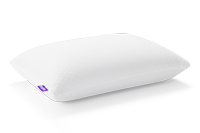
The appeal: The Harmony uses a Talalay latex core with Purple’s flexible grid around it. This selection is the standard-size, medium-loft version. The construction offers a different feel from loose foam pieces, with a continuous core rather than filling you add or remove.
Pros
- Exceptional cooling performance for hot sleepers
- GelFlex Grid technology provides pressure relief without heat retention
- Durable materials maintain shape and support without fluffing
- Machine-washable cover for easy maintenance
- Medium loft works well for side and combination sleepers
Cons
- Premium price point at $194 compared to standard pillows
- Medium firmness may feel too supportive for strict stomach sleepers
- Heavier than traditional pillows due to latex core
The Purple Harmony solves the biggest complaint hot sleepers have about supportive pillows: they trap heat right where your head rests. The honeycomb GelFlex Grid actually pulls warmth away from your skin instead of insulating it, so you wake up on the cool side all night long. Combine that with the aerated Talalay Latex core, and you get neck support that breathes.
What sets this apart from the usual gel or memory foam options is how it cradles without swallowing your head. The Grid flexes under pressure points but bounces back instantly, so you can shift positions without fighting the pillow. The medium loft hits the sweet spot for side sleepers who need their neck aligned but don't want a stiff bolster feeling.
If you want a pillow that keeps you cool and supported without the daily fluffing routine, this one delivers.
Styles it works with: Modern Minimalist, Contemporary, Scandinavian, Clean Transitional
Best placed in: Master bedroom for primary sleepers, guest bedroom for visitors who run hot, side of the bed where you sleep on your side most often
May not suit: Strict stomach sleepers who need a very low loft, shoppers on a tight bedding budget, those who prefer the sink-in feel of traditional memory foam
Buy it if:
- You wake up hot or sweaty on your current pillow
- You sleep on your side and feel neck or shoulder pressure in the morning
- You're tired of fluffing pillows that flatten after a few months
Consider waiting if:
- You want to try the low or tall loft options first to confirm your ideal height
Skip it if:
- You sleep exclusively on your stomach and need a pillow under 5 inches
- You prefer a very soft, squishy pillow over structured support
Check the latest price and availability on Amazon before it sells out.
Latex tends to recover promptly when pressure changes. That can suit someone who rolls between positions and dislikes waiting for a deep impression to fill back in. Whether that movement feels comfortable is personal: a lively surface isn’t automatically better than a quieter, more conforming one.
Purple offers different Harmony heights, so avoid treating every listing as the same pillow. The manufacturer’s Harmony information describes the available configurations. Check the exact loft and size selected in the Amazon offer before you compare it with another pillow’s dimensions or price.
This model’s main compromise is that the height isn’t adjusted by opening the pillow and removing handfuls of filling. If the medium version holds your head too high on your mattress, a different case won’t solve that fit problem. Choosing the appropriate profile comes first.
The grid and latex construction may appeal to people looking for a less enveloping feel, but a temperature claim shouldn’t decide the purchase on its own. A pillow can allow air movement without feeling cool in every bedroom. Also check the materials carefully if you have a latex allergy; this is a latex-core option.
Honeydew Essence Side Pillow: For Space Around the Shoulder
Who should consider it: Side sleepers who find a straight pillow edge crowds their shoulder or leaves the pillow pushed away from their neck.
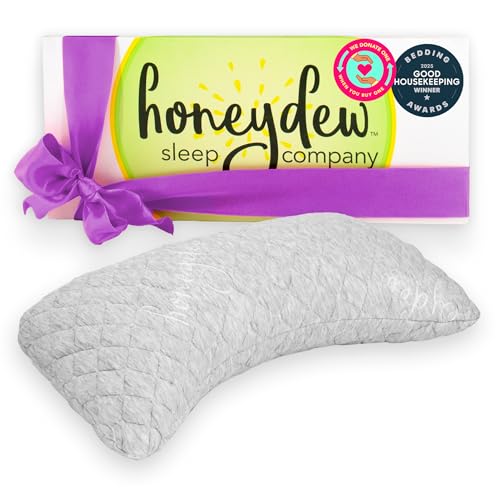
The appeal: The Essence Side Pillow combines a curved outline with adjustable filling. That gives it two fit decisions: how the edge sits around your shoulder, and how high the filling holds your head. The selected offer contains one queen-size pillow.
Pros
- Shoulder cutout and adjustable fill work together to provide personalized neck alignment
- Cooling gel memory foam addresses the common complaint of overheating with traditional memory foam
- Made in USA with high-quality certified materials and rigorous safety standards
- Generous 60-night trial period gives you two full months to test it in real sleep conditions
- Featured by major publications as a top performer in the side sleeper pillow category
Cons
- Premium price point at $129.99 may be too high for budget-conscious shoppers
- No customer reviews yet on Amazon to verify real-world performance claims
- Adjustable fill requires some trial and error to find your perfect configuration
The Honeydew Essence solves the two biggest complaints about side sleeping: neck pain and overheating. That shoulder cutout is not just a gimmick. It actually lets your shoulder sink in while keeping your neck elevated at the right angle, which is exactly what side sleepers need but rarely get from standard rectangular pillows.
The adjustable fill is brilliant because everyone's body is different. You can remove handfuls of the cooling gel foam until you hit that sweet spot where your spine stays straight all night. And unlike traditional memory foam that traps heat, this patented fill actually pulls warmth away from your head.
If you want serious neck support without waking up sweaty and sore, this one delivers.
Styles it works with: Modern Minimalist, Scandinavian, Contemporary, Wellness-focused bedrooms
Best placed in: Master bedroom for side sleepers, guest room for visitors with neck issues, recovery bedroom after surgery or injury
May not suit: Stomach sleepers who need a very flat pillow, back sleepers who prefer traditional shapes, homes where multiple people share pillows and need the same configuration
Buy it if:
- You are a dedicated side sleeper who wakes up with neck or shoulder pain
- You have tried multiple pillows and nothing provides the right support level
- You overheat at night with traditional memory foam pillows
- You value made-in-USA products with certified safe materials
Consider waiting if:
- You want to see verified customer reviews before investing in a premium pillow
- You prefer to test pillows in a physical store before buying online
Skip it if:
- You sleep primarily on your back or stomach and do not need side-sleeper-specific features
- Your budget for a pillow is under $80
Check the latest price and availability on Amazon before it sells out.
A cutout can make room for the shoulder while keeping the head resting on the main pillow surface. It’s a useful design distinction if you spend much of the night on your side. It doesn’t mean every shoulder shape will fit the curve, and it doesn’t remove the need to choose a suitable height.
Settle into your normal side position with the shoulder on the mattress. Then bring the pillow close enough that it supports the space beneath your neck. If you need to tuck an arm under it to gain height, reassess the filling before deciding the curved design has failed.
Compared with the molded Tempur-Pedic, this is a more adjustable approach. Compared with the rectangular Coop Eden, it gives more attention to the shoulder edge. That distinction matters more than the broad neck-support language used across many pillow listings.
The curved shape also affects bedding. Check which pillowcase shape the manufacturer recommends and whether a compatible case is included in the current offer. A very tight rectangular case may interfere with the outline you’ve bought the pillow for. For someone who mostly sleeps on their back, the curve may provide less practical benefit than straightforward height adjustment.
Layla Adjustable Kapok Pillow: For a Loose-Fill Alternative
Who should consider it: Sleepers who want adjustable filling and are interested in a kapok blend rather than another molded foam contour.
The appeal: Layla’s kapok pillow offers removable filling in a conventional bed-pillow shape. The selected listing is a single king-size pillow. Check that distinction carefully: other offers in the same range contain two pillows or a different size.

Pros
- Truly adjustable fill system with direct access, not preset layers
- Superior cooling properties from airy kapok fibers and open-cell memory foam
- Supports proper spinal alignment while maintaining soft, cloud-like comfort
- High-quality construction with premium materials and detailed stitching
- Works for all sleeping positions without compromise
Cons
- Premium price point at $134 may deter budget-conscious buyers
- No customer reviews yet to validate long-term durability and comfort claims
- Overstuffed design requires manual adjustment out of the box for most users
The Layla Kapok Pillow solves the eternal pillow dilemma: finding one that supports your neck without feeling like you are resting on a brick. The secret is in the blend of silky kapok fibers and responsive shredded memory foam that molds to your exact shape while staying breathable. Unlike traditional memory foam pillows that trap heat and feel dense, this one lets air move freely through the natural fibers, so you will wake up cool and comfortable.
What really sets it apart is the true adjustability. You can unzip the cover and remove as much or as little fill as you want, which means side sleepers can keep it plush and high while stomach sleepers can flatten it out. The hexagon-stitched cover adds a spa-like touch that feels luxurious against your skin, even when covered with a pillowcase.
If you want hotel-quality comfort with the flexibility to customize support without overheating, this one delivers.
Styles it works with: Modern Farmhouse, Scandinavian Minimalist, Coastal Relaxed, Contemporary Luxury
Best placed in: Master bedroom for primary sleepers, guest room to accommodate different sleep preferences, reading nook or daybed for adjustable lounging support
May not suit: Households seeking budget bedding options under $50, sleepers who prefer traditional down or feather pillows with zero foam content, anyone needing a firm orthopedic pillow without give
Buy it if:
- You have tried multiple pillows and struggle to find one that stays cool and comfortable all night
- You change sleep positions frequently and need a pillow that adapts rather than forcing one position
- You are willing to invest in premium sleep quality and appreciate natural, eco-friendly materials
- You want the flexibility to adjust loft without buying multiple pillows or inserts
Consider waiting if:
- You prefer to read verified customer reviews before purchasing a new pillow brand
- You are waiting for potential sales or promotions on premium bedding
Skip it if:
- Your budget for a single pillow is under $75
- You are allergic to memory foam or prefer 100% natural fiber fills only
- You need a completely flat, ultra-thin pillow that cannot be achieved even with fill removal
Check the latest price and availability on Amazon before it sells out.
The Layla Sleep Kapok Pillow represents a thoughtful evolution in adjustable pillow design, addressing common complaints about both traditional memory foam and natural fiber options. At its core, this King-size pillow combines responsibly harvested kapok fibers with premium shredded memory foam, creating a hybrid fill that balances support with breathability.
Construction and Materials: Kapok fibers, harvested by hand from seed pods, are exceptionally light and airy with a texture often compared to silk. When blended with CertiPUR-US certified shredded memory foam, the result is a moldable fill that responds to pressure while maintaining loft. The outer cover features signature hexagon stitching with lycra woven into the fabric, allowing stretch while keeping fabric pores open for airflow. The zipper provides full access to the fill, not just preset layers.
Performance Across Sleep Positions: Side sleepers benefit from the pillow's ability to maintain height while contouring to the space between shoulder and head. Back sleepers can mold the center to support the natural curve of the neck. Stomach sleepers have the option to remove significant fill to achieve a flatter profile. The memory foam component prevents the pillow from flattening completely overnight, a common issue with pure kapok or down alternatives.
Temperature Regulation: The standout feature is cooling performance. Kapok's natural structure allows exceptional airflow compared to polyester or solid foam. The open-cell memory foam continues this cooling effect, and the stretch fabric cover ensures warm air escapes rather than being trapped. This three-layer cooling approach addresses the primary complaint about traditional memory foam pillows.
Adjustability in Practice: The pillow ships overstuffed, which serves two purposes: it provides maximum loft for those who need it, and it gives everyone else material to remove. Unlike pillows with preset inserts, you can remove handfuls of fill incrementally until you reach your ideal height and firmness. The zippered cover makes this process straightforward, though it does require initial setup time.
Value Consideration: At $134 for a King size, this positions as a premium option. The combination of natural kapok, quality memory foam, and thoughtful construction justifies the price for buyers prioritizing sleep quality and longevity. However, the lack of customer reviews means durability and long-term performance remain unverified. The washable cover and replaceable fill design suggest good longevity potential.
Practical Notes: The luxurious cover texture is noticeable even under a pillowcase, though some users may choose to sleep directly on it given its washability. The natural kapok and foam blend should appeal to eco-conscious buyers seeking sustainable options without sacrificing modern comfort technology. Standard King pillowcases fit without issue given the 17.7-inch width.
Kapok is a plant fiber used in some pillow fillings, including blends with foam. The word describes a material, rather than a guarantee of a particular firmness or a treatment benefit. For shopping purposes, the more useful feature here is the ability to change the amount of filling and redistribute it across the pillow.
A king pillow can suit a wider bed or someone who likes more surface area when changing positions. Its extra length doesn’t tell you whether the height is right, though. Use the same fit check you would with a standard pillow: look at where your head rests after the filling has settled under your weight.
This is a reasonable alternative to consider if a fixed contour feels too prescriptive. You can shape loose fill more freely, but you also accept the need to move it back into place. Someone who wants an identical outline every evening may prefer a solid core instead.
Check cleaning instructions before deciding that a natural-fiber component makes care simple. Fiber content, cover fabric, and washability are separate questions. Confirm the exact materials and permitted cleaning method on the current label, and compare the selected king-size offer with the pillowcases you already own.
Tuft & Needle Original Foam Pillow: For a Continuous Core
Who should consider it: Sleepers who want a conventional pillow outline with a solid foam interior instead of an adjustable bag of pieces.
The appeal: The Original Foam Pillow uses Tuft & Needle’s Adaptive foam. This selected offer is the king size. Its straightforward shape makes it an alternative to a deeply sculpted cervical pillow, while its continuous core separates it from the loose-fill Coop and Layla options.

Pros
- Advanced cooling technology addresses the main complaint with foam pillows
- Adaptive foam responds better to head and neck movements than stiff memory foam
- Rigorous safety certifications ensure no off-gassing or toxic chemicals
- Manufactured domestically with quality control standards
- Generous trial period and warranty show brand confidence
Cons
- Premium price point at $80 compared to budget foam pillows
- No customer reviews yet to verify long-term durability and comfort claims
- Single firmness option may not suit all sleep positions and preferences
Tuft & Needle solved the biggest problem with foam pillows: the heat trap. Their proprietary adaptive foam is infused with graphite and cooling gel, so you get the contouring support of foam without waking up sweaty at 3am. It feels softer than memory foam but holds its shape through the night, keeping your neck aligned whether you sleep on your back or side.
What sets this apart is the quality you can actually verify. CertiPUR-US and Greenguard Gold certifications mean it passed strict testing for chemicals and emissions. It is made in the USA, not in an overseas factory cutting corners. And the 30-night trial gives you a full month to decide in your own bed, not a showroom.
If you want a foam pillow that stays cool and supportive without off-gassing or mystery materials, this one delivers.
Styles it works with: Modern, Minimalist, Scandinavian, Contemporary
Best placed in: Master bedroom on king or California king beds, guest bedroom for a premium sleep experience, bedroom refresh when upgrading from flat or lumpy pillows
May not suit: Shoppers who prefer very firm or very soft extremes, those committed to down or down-alternative fill, buyers needing multiple pillows on a tight budget
Buy it if:
- You sleep hot and memory foam pillows make you sweat
- You want neck support without the stiff, slow-response feel of traditional memory foam
- Chemical sensitivities or air quality matter to you
- You value USA manufacturing and transparent certifications
Consider waiting if:
- You want to see verified customer reviews before investing $80
- A sale or bundle deal might be coming for Tuft & Needle products
Skip it if:
- You strongly prefer down, feather, or shredded fill you can adjust
- Your budget is firm at $40 or below per pillow
Check the latest price and availability on Amazon before it sells out.
The reason to choose a continuous core is consistency across the sleeping surface. There isn’t loose filling to push into a ridge or move out from beneath your head. That can be attractive if your current pillow needs frequent reshaping, though it also means you can’t remove filling to lower it.
Tuft & Needle’s use of its own foam name deserves attention when comparing materials. Don’t assume that every solid foam pillow behaves exactly like conventional memory foam, or that two pillows with similar silhouettes have the same response. The manufacturer’s specifications list the king at 34 by 16 by 5 inches, with graphite and gel in its open-cell Adaptive foam. Those are unloaded dimensions, rather than a measurement of where your head will rest.
The principal buying question is height. If a fixed pillow is too low for the space between your shoulder and head, its smooth surface won’t compensate. If it pushes your chin forward while you’re on your back, a softer pillowcase won’t remove the extra loft.
This model makes the most sense when you already know you like a continuous foam pillow and want a simple outline. If you’re starting from an uncertain fit, an adjustable model gives you more room to experiment. Tuft & Needle allows washing the cover in cold water and hanging it to dry, while advising against washing the foam itself. Check the current label and warranty conditions for this exact size and seller before ordering.
How We Chose These Pillows
The selections address six distinct shopping needs: a shaped neck edge, removable foam fill, responsive latex, shoulder clearance, a kapok filling option, and a continuous foam core. Product construction and the exact offer take priority over broad promises about pain relief. No universal winner. Different ways to find a workable fit.
We checked product identities against available Amazon offers and used manufacturer information where it clarified materials, height choices, or care. These recommendations aren’t based on our own overnight trials, laboratory measurements, or interviews with the brands’ customers. We haven’t assigned temperature scores, durability estimates, or medical outcomes to the products.
For health context, Mayo Clinic’s sleeping-position guidance emphasizes keeping the neck aligned with the chest and back. The Arthritis Foundation’s pillow guidance also focuses on how a pillow supports a sleeping position. Neither source establishes that one of these particular products will treat your symptoms.
The practical checks are simple: the pillow’s construction, whether you can change its height, the selected size, the way its shape suits your position, and the cleaning requirements. Returns matter too, because an appropriate specification on paper can still feel wrong on your bed.
What to Look for in a Pillow When Your Neck Hurts
Height After Compression
An unoccupied pillow’s height isn’t the height your head will rest at. Fill compresses, and your shoulder sinks into the mattress by a different amount. Consider those two surfaces together when choosing support.
Use your usual pillowcase and settle into your normal position before making a judgment. A quick glance at a pillow on a shelf can’t show the same relationship. If you adjust removable fill, change a small amount at a time so you can tell which direction helped.
Keep the rest of the setup consistent while checking fit. Changing the pillow, mattress topper, and sleep position together makes it harder to identify what feels better or worse. Note which position feels comfortable and whether discomfort appears when you move to another one. A combination sleeper may need a compromise between positions rather than the maximum height for just one.
Your Usual Sleeping Position
Side sleeping generally creates more space between the head and mattress than back sleeping. The useful goal is to fill that space comfortably, without tilting the head sharply upward or letting it drop. Broader shoulders can change the space, but so can the mattress beneath them.
On your back, notice whether the pillow pushes your chin toward your chest. A larger-looking pillow isn’t necessarily more supportive. Stomach sleeping involves turning the neck to breathe; the NHS advice on neck pain recommends avoiding sleeping on your front. If changing position is difficult or painful, ask a clinician for advice suited to you.
Material and Response
A solid core, loose foam pieces, latex, and fiber filling offer different ways to support the head. Fixed foam gives a defined surface. Loose filling can be redistributed or removed where the design allows. Latex has a more elastic response, which some sleepers prefer when changing position.
Choose the sensation you can settle into comfortably. Material names alone don’t establish the right height, and a premium filling can’t correct a poor fit. If you’re unsure between two designs, consider which one gives you a useful adjustment rather than simply the longest list of claims.
Shape and Pillowcase Fit
A contour provides a deliberate neck edge; a shoulder cutout creates space in a different place. Neither shape is compulsory. A rectangular pillow at a suitable height may feel more comfortable than an elaborate design that doesn’t match your position.
Check your case size before buying a king pillow, and check the recommended case for a curved model. The case should accommodate the intended shape without bunching tightly around it.
Care and Returns
Separate the cover instructions from the filling instructions. Some covers can be laundered even though the inner pillow can’t. Drying requirements matter particularly for loose-fill models, where dampness inside may be hard to spot.
Read the return policy for the exact Amazon seller and offer. A brand’s direct-store trial may not apply to another retailer. Confirm the terms before removing packaging or deciding to keep a model that doesn’t feel right.
Check pack count as carefully as size. A king-size pair can look like a better deal than a single queen until you realize you need different heights for two sleepers. Partners don’t have to use matching pillows simply because they share a mattress. Each person’s shoulder width, preferred position, and comfort preference can call for a different choice.
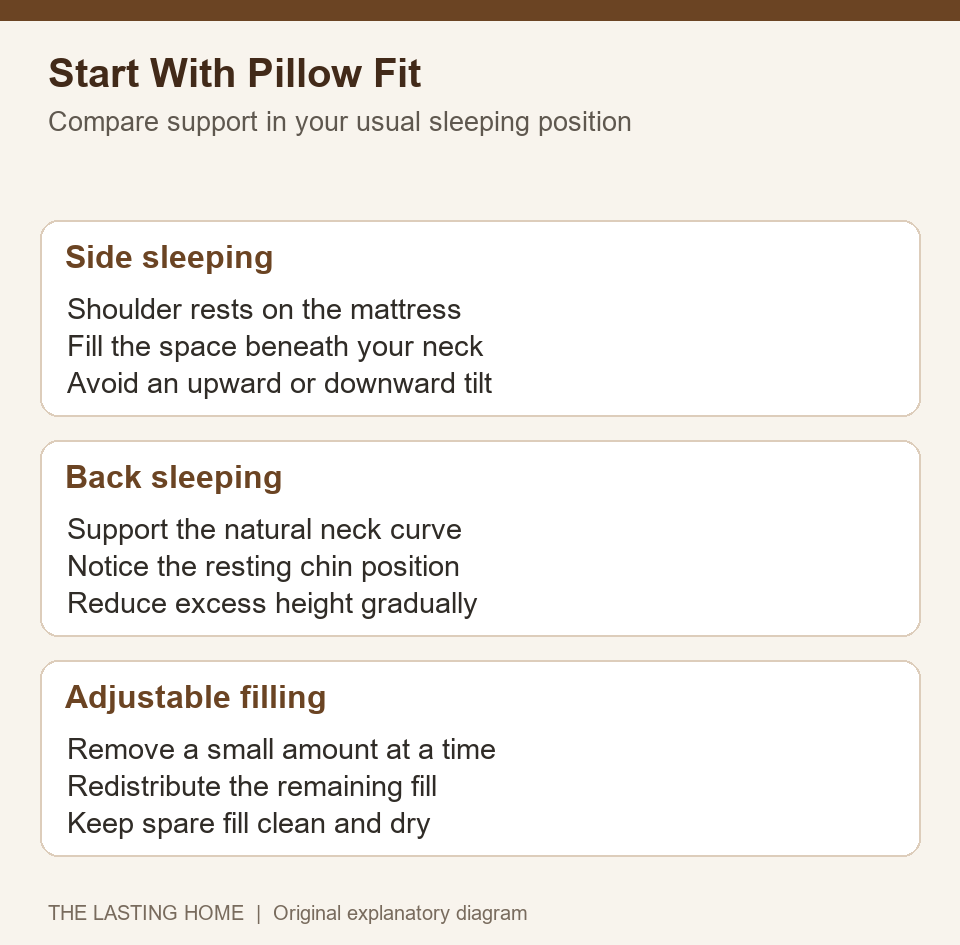
!Three-panel pillow fit guide for side sleeping, back sleeping, and adjusting removable filling.
Original illustration: assess pillow height with your usual mattress and sleeping position.
Can a Pillow Help With Neck Pain?
It may help with comfort when the problem involves how your head is supported during sleep. That doesn’t mean a pillow explains every sore neck. Daily activity, an injury, or another condition may also be involved, and changing bedding can’t identify the cause.
The useful shopping aim is a position you can maintain comfortably. Avoid judging success by whether a product feels unusually firm or forces you into a dramatic stretch. If a new shape increases discomfort, stop using it rather than assuming pain proves it’s correcting something.
Is a Firm or Soft Pillow Better?
Neither is automatically better. Firmness describes resistance, while loft describes height; the two work together once your head rests on the pillow. A tall, soft pillow and a low, firm pillow can hold the head at very different angles.
Choose enough support for your position without a surface that feels uncomfortable. If you can’t judge the height from the listing, removable fill gives you a way to make small changes. A fixed core suits someone who already knows the profile and response they prefer.
What Else Should You Check Before Replacing Your Pillow?
Look at the mattress beneath your shoulders and upper body. A change in how deeply you sink can make a familiar pillow feel different. Check for visible mattress damage or a new topper that has changed the bed’s feel before assuming the pillow has suddenly become unsuitable.
Also notice how you use the bed while awake. Propping your head forward on several pillows to read or watch a screen is a different setup from lying down to sleep. Rearrange that position if it’s uncomfortable, and avoid using a sleep pillow as a substitute for suitable seated support.
For pain that persists, worsens, follows an injury, or comes with symptoms such as arm weakness or numbness, seek medical advice. MedlinePlus describes symptoms that need medical attention. The right next step may be an assessment rather than another pillow purchase.




Write Your Review
No reviews yet. Be the first to share your experience!