

> Editorial Note: I’m Hannah Lin, an Interior Living Researcher who’s spent 9+ years analyzing the home furniture market. This guide draws on BIFMA, GREENGUARD, and FSC certifications, plus owner reviews aggregated from Wirecutter, Apartment Therapy, and the major home design subreddits.
A beach umbrella lives or dies by two numbers: anchor depth and wind rating. Get those wrong and you’re chasing nylon down the sand. This roundup ranks five models on frame material, UPF, and real owner data. For the patio side of your outdoor setup, see how to choose a patio umbrella, what size patio umbrella do i need? a sizing guide, why does my patio umbrella tip over? causes and fixes, outdoor umbrella stands, and how to clean a patio umbrella. Let’s get into what actually holds up.
How We Evaluated
We ranked each umbrella on four measurable traits. Wind resistance came from anchor design and vent construction, cross-referenced against ASTM sun-protection labeling. UPF claims had to hit 50+ to qualify. Frame material mattered: fiberglass ribs flex in gusts where cheap steel bends permanently. Portability covered packed weight and carry-bag inclusion. Owner reviews from Wirecutter and Apartment Therapy filled the durability gaps that spec sheets hide. No paid placements here.


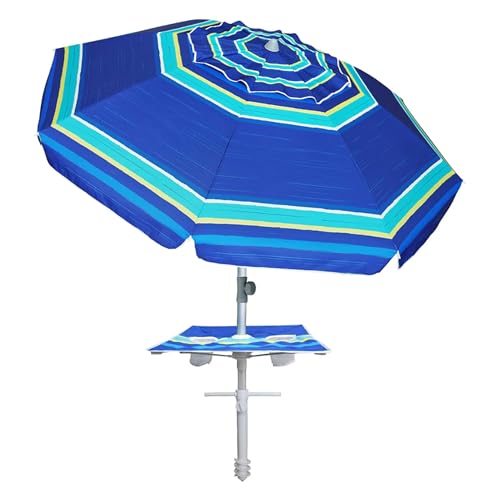
1. AMMSUN 8 Feet Large Beach Umbrella — the widest shade footprint
The 8-foot canopy is the reason this AMMSUN takes the top slot. That extra span covers two loungers plus a cooler, where 6.5-foot models leave someone’s feet in the sun. UPF 50+ blocks 98% of UV, and the integrated sand anchor screws down for genuine wind grip. Owners on home design subreddits call the heavy-duty pole steady in coastal gusts. The trade-off is bulk. At 8 feet, it’s less grab-and-go than smaller picks, so pack it in a wagon. For anyone prioritizing coverage, this one wins.
2. AMMSUN 7ft Heavy Duty — the vent-and-tilt all-rounder
This 7-foot AMMSUN balances shade and portability better than its larger sibling. The wind vent cuts uplift by letting gusts pass through the canopy instead of catching it like a sail. A tilt mechanism tracks the sun through the afternoon, so you’re not repositioning the whole rig every hour. UPF 50+ holds the sun-protection line. The sand anchor digs in without a mallet. It’s the pick for solo beachgoers or couples who want manageable weight and don’t need to shade a crowd.
3. Caribbean Joe CJ-TUVC78NVY 6.5′ — the packable navy compact
At 6.5 feet, this Caribbean Joe is the lightest option and the easiest to carry solo. The tilting head adjusts shade angle as the sun moves, and the navy canopy hides sand and sunscreen smudges better than pale fabrics. It’s built for one or two people, not a family spread. Owners note it needs a proper anchor screwed deep in steady wind, since the lighter frame catches gusts. Consider it the minimalist’s umbrella: fewer features, less to haul, quick setup. Pair it with a folding beach lounge chair for a compact day kit.
4. Tempera Heavy Duty — the aluminum-frame wind fighter
Tempera builds this one around an aluminum frame that resists corrosion better than coated steel, which matters in salt air. The sand anchor and included carry bag round out a travel-ready package. Marketed as a patio-and-beach crossover, it handles both surfaces. The high-wind rating comes from a reinforced pole and vented canopy. Owners flag that assembly rewards patience the first time. If salt-air rust has killed your last umbrella, the aluminum frame here is the direct fix. Solid value for coastal regulars.
5. AMMSUN 7ft with Built-in Table Tray — the setup with a surface
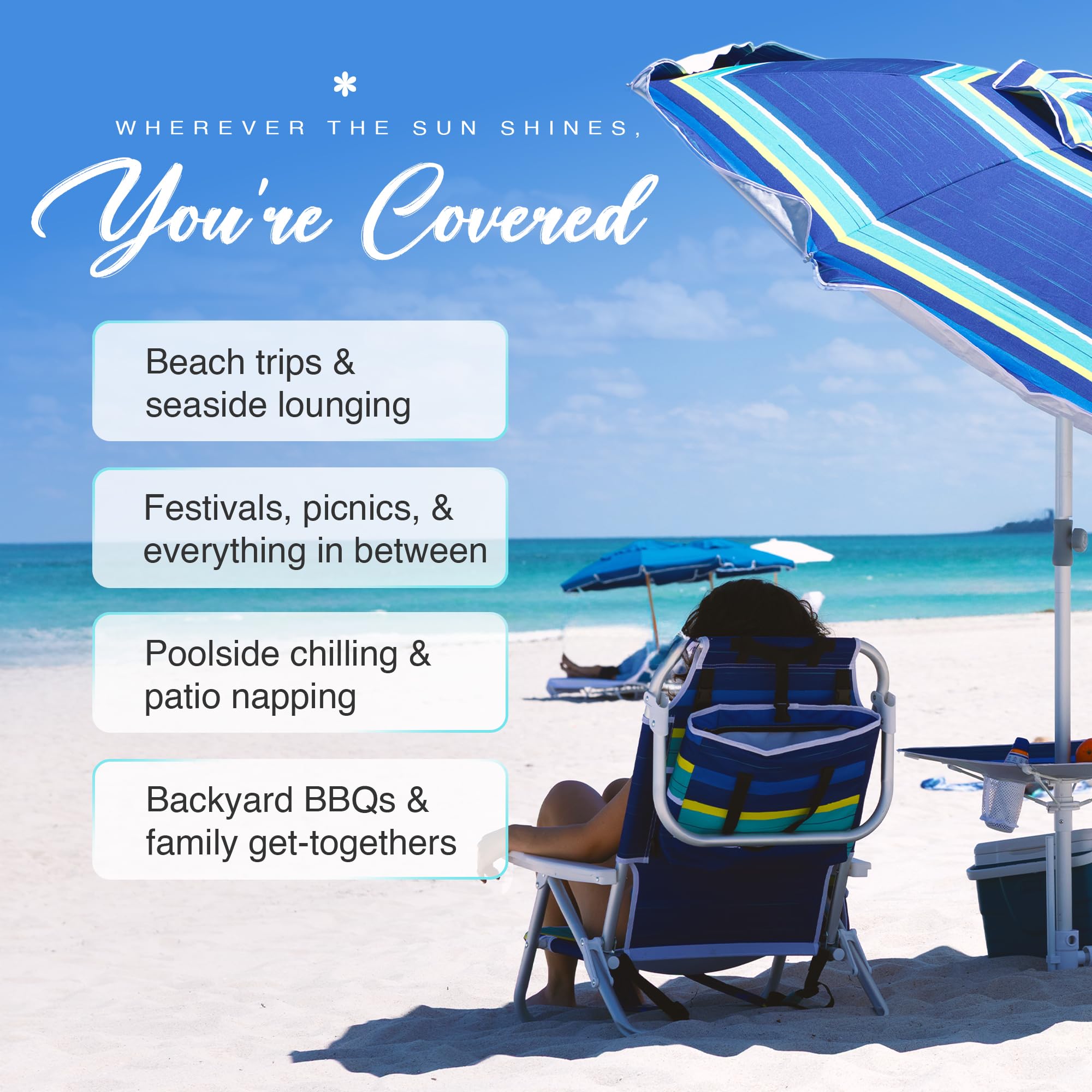
This AMMSUN adds a built-in table tray to the 7-foot windproof platform, giving you a spot for drinks and phones off the sand. The vent and tilt pole carry over from the standard 7-foot model, along with UPF 50+ coverage and a sand anchor. That tray is the whole pitch: convenience for anyone tired of digging cups out of the beach. The trade-off is a slightly bulkier pole. For families juggling snacks and sunscreen, the tray earns its keep. Otherwise, pick #2 saves weight.
Comparison Table
| Model | Canopy | Frame | UPF | Standout |
|---|---|---|---|---|
| AMMSUN 8ft | 8 ft | Heavy-duty | 50+ | Widest shade |
| AMMSUN 7ft Vent/Tilt | 7 ft | Heavy-duty | 50+ | Best all-round |
| Caribbean Joe 6.5′ | 6.5 ft | Lightweight | 50+ | Most packable |
| Tempera Heavy Duty | ~7 ft | Aluminum | 50+ | Rust resistance |
| AMMSUN 7ft Table Tray | 7 ft | Heavy-duty | 50+ | Built-in tray |
What to Check Before You Buy
Anchor first. A screw-in sand anchor beats a plain pole for wind by a wide margin, and every pick here includes one. Vents matter next: a vented canopy releases uplift, cutting the chance of a flip in a 20 mph gust. Frame material ranks third. Fiberglass ribs flex and recover; aluminum poles resist salt corrosion; cheap steel bends and stays bent. Confirm UPF 50+ on the label, which blocks roughly 98% of UV per ASTM guidance. Match canopy diameter to your group. A 6.5-foot canopy shades one or two; 8 feet covers a small family. Same sizing logic applies to a patio umbrella with base.
How These Umbrellas Compare on Wind
Wind is where price gaps show. The 8-foot AMMSUN and the aluminum-frame Tempera lead because more anchor surface and stiffer poles resist uplift. The 7-foot AMMSUN models split the difference, using vents to stay stable without the bulk. The Caribbean Joe 6.5′ trades some stability for portability, so it needs its anchor buried deep on breezy days. Across all five, the physics is identical: catch less wind, anchor deeper, flip less. Apartment Therapy owner reports back this pattern. If your beach runs windy, size up the anchor before the canopy.
Frequently Asked Questions
How deep should a beach umbrella anchor go?
Screw or push the anchor 12 to 16 inches into wet sand for real hold. Dry surface sand won’t grip. Angle the pole slightly into the wind, not away from it, to reduce uplift.
Does UPF 50+ actually block sun?
UPF 50+ fabric blocks about 98% of UV rays per ASTM labeling standards. It reduces exposure but doesn’t replace sunscreen. Reapply and use shade together for the best coverage.
Are vented canopies worth it?
Yes. A vent lets wind pass through instead of catching the canopy like a sail. That single feature may cut flip risk noticeably in gusts above 15 mph. Four of these five include one.
Can I use a beach umbrella on my patio?
The Tempera markets itself as a crossover, and its aluminum frame suits both. Others work on grass or sand but need a stand on hard patio. See outdoor umbrella stands for base options.
How do I clean sand and salt off the fabric?
Rinse with fresh water, let it dry fully open, then store in the carry bag. Salt left on fabric degrades coatings over time. Detailed steps live in how to clean a patio umbrella.
What size fits a family of four?
The 8-foot AMMSUN covers four people with room for a cooler. A 7-foot canopy fits two to three comfortably. Below 7 feet suits one or two.
Bottom Line
The 8-foot AMMSUN wins for its wide canopy, UPF 50+ fabric, and screw-in sand anchor that holds in coastal wind. It’s the pick if shade coverage tops your list. Choose the 7-foot AMMSUN with vent and tilt when you want lighter weight and easier solo carry without giving up wind stability. One caveat: at 8 feet, the top pick is bulky, so bring a wagon.
Write Your Review
No reviews yet. Be the first to share your experience!