

> Editorial Note: I’m Hannah Lin, an Interior Living Researcher who’s spent 9+ years analyzing the home furniture market. This guide draws on BIFMA, GREENGUARD, and FSC certifications, plus owner reviews aggregated from Wirecutter, Apartment Therapy, and the major home design subreddits.
The most common plant-pot mistake isn’t the color or the finish. It’s buying a pot with no drainage hole and then wondering why the roots rot in three weeks. Get drainage, material, and size right and the rest is styling, which pairs naturally with the same eye you’d bring to best gallery wall frames, a best console table for entryway, a best large floor mirror, a best wall mirror for living room, or a best table lamp for living room. Here’s how to choose without guessing.
Does Your Pot Actually Need a Drainage Hole?
Yes, for almost every plant. Roots sitting in standing water suffocate, and that’s the single fastest way to kill an indoor plant. Apartment Therapy’s houseplant guides say the same thing owners repeat across r/houseplants: drainage first, everything else second.
A proper pot has at least one hole roughly 0.5 inch wide at the base, sized so excess water clears within a minute of a full pour. Small 4-inch pots can get by with one hole. Anything over 8 inches wants two or three, spaced evenly, so water doesn’t pool on one side.
If you fall for a beautiful ceramic pot with no hole, use it as a cachepot instead. Drop a plain nursery pot with holes inside it, and lift that inner pot out to drain after watering. That’s the trick designers use to keep a sealed decorative pot in rotation without drowning the plant.
Skip the old “gravel at the bottom” advice. It doesn’t improve drainage. It just raises the waterlogged zone closer to the roots. A real hole beats a gravel layer every time.
Plastic, Ceramic, or Terracotta?
It depends on how often you want to water and how much weight you can move. Each material trades one thing for another, so match the pot to your habits, not the other way around.
Plastic is light, cheap, and holds moisture longest, which suits busy people and thirsty tropicals. A 10-inch plastic planter weighs under a pound empty, so a filled shelf won’t strain a bracket. Look for GREENGUARD-certified or food-grade resin if you’re wary of off-gassing indoors.
Terracotta is porous. It wicks moisture out through the clay walls, so soil dries faster, which fern-killers and succulent lovers both like for opposite reasons. The catch: terracotta cracks in freezing temps and leaves white mineral crust over time. It’s heavy, too.
Glazed ceramic sits in the middle. It’s sealed like plastic for moisture but heavy and often sold with no drainage hole, so check before you buy. Fiberstone and resin-composite pots mimic the ceramic look at a fraction of the weight, and many now carry ASTM weatherability ratings for outdoor use.
What Size Pot Should You Buy?
Go up one size, not three. The rule owners learn the hard way: a new pot should be about 1 to 2 inches wider in diameter than the current root ball for tabletop plants, and 2 to 3 inches for floor plants.
Oversizing feels generous but backfires. Too much soil holds too much water around a small root system, and that soggy excess invites rot and fungus gnats. A 6-inch plant jumping straight to a 12-inch pot is the classic overpotting error.
Height matters as much as width. The pot depth should roughly match the root ball depth plus an inch of headroom for watering. Long-rooted plants like snake plants and dracaenas want a deeper vessel. Shallow-rooted succulents and herbs are happier in a wide, low bowl.
For repotting cadence, most houseplants need a size-up every 12 to 18 months while young, then slow down. If roots circle the drainage hole or push out the top, it’s time. If the plant’s been happy for two years, leave it.
Should You Choose a Self-Watering Pot?
Yes, if you travel or forget to water. A self-watering planter holds a reservoir at the base, and a wick or the soil itself pulls moisture up as roots need it. Most designs stretch watering to every 1 to 2 weeks instead of every few days.
The best versions include a water-level indicator so you’re not guessing, plus a fill spout so you top up without disturbing the plant. That combination is what separates a genuine self-waterer from a pot with a hollow bottom.
They’re not for everyone. Succulents, cacti, and snake plants prefer dry-out cycles and can rot in a constant-moisture reservoir. Self-watering shines for pothos, peace lilies, ferns, and most leafy tropicals that like steady moisture.
One more check: make sure the reservoir has an overflow port or a paired drainage hole. Without it, a heavy rain or over-fill leaves roots standing in water, which defeats the whole point.
Helpful Picks
These three clear a 4.5+ owner rating and all ship with real drainage holes, the one spec that separates a working planter from a root-rot trap. Start with the first if you want set-and-forget watering; the middle set if you’re styling a shelf; the last if you need a full range of sizes.

Pros
- Self-watering system genuinely reduces maintenance for frequent travelers or forgetful waterers
- Water level indicator with measurement markings provides precise hydration monitoring
- Durable thick-wall plastic holds up in direct sun and rain without warping
- Multiple drainage holes and elevated base prevent root rot effectively
- Three sizes in one purchase cover small herbs to large tropical plants
Cons
- Only available in limited colorways, which may not suit bold or eclectic decor schemes
- Plastic construction lacks the weight and texture of ceramic or teracotta planters
- No reviews yet to confirm long-term durability or real-world wick performance
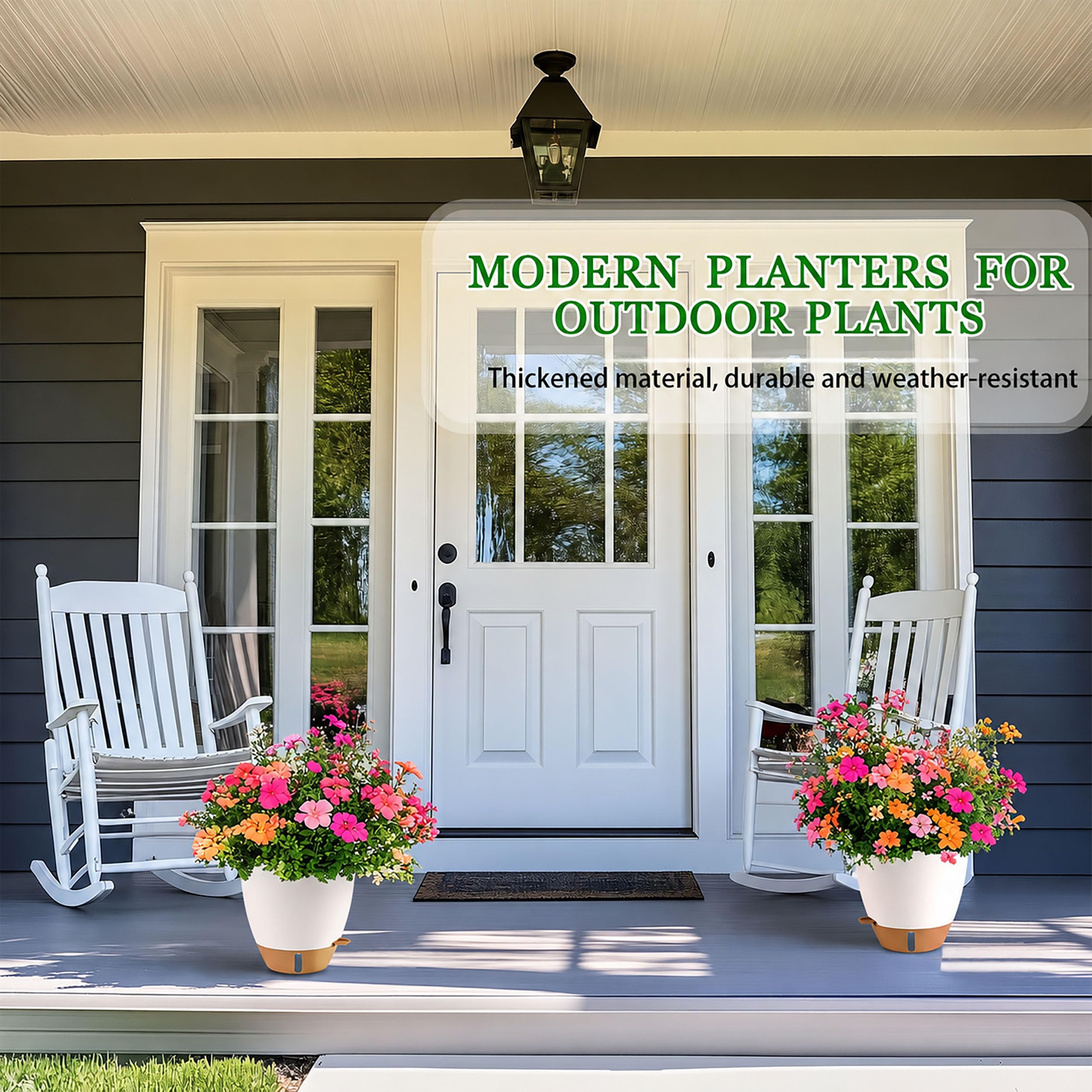
Fielda's self-watering planter set solves the most common frustration plant parents face: inconsistent watering. The cotton wick system quietly pulls moisture from the deep reservoir into the soil, keeping your monstera or peace lily happy for up to 10 days. The transparent window on the side means you never have to lift the pot or stick your finger in the dirt to check moisture levels.
In a real room, these planters look sleek and intentional. The matte white finish and clean lines disappear into your decor rather than competing with it, which is exactly what you want when the plant itself is the focal point. The graduated sizing (8, 10, and 12 inch) lets you create a cohesive grouping on a shelf, windowsill, or floor corner without mismatched pots.
If you want hands-off plant care without sacrificing a modern aesthetic, this set delivers.
Styles it works with: Minimalist, Scandinavian, Modern Farmhouse, Boho-Neutral
Best placed in: Living room floor corner (12 inch), kitchen windowsill (8 inch), home office desk or bookshelf (8 or 10 inch), covered patio or balcony
May not suit: Spaces with bold, colorful decor where a white pot feels too plain; buyers who prefer the natural weight and texture of ceramic or concrete planters for a more artisanal look
Buy it if:
- You travel frequently or have a busy schedule that makes daily watering unrealistic
- You want a matching set of planters in graduated sizes for a cohesive indoor plant display
- You need lightweight, weather-resistant pots that work both inside and on balcony or patio
Consider waiting if:
- You want a color other than white to match a specific room palette
- You prefer to see verified long-term reviews before committing to a newer product
Skip it if:
- You strongly prefer the look and heft of ceramic, teracotta, or concrete planters
- You only need a single small pot and do not want to pay for a multi-size set
Check the latest price and availability on Amazon before it sells out.

Utopia Home White Plastic Plant Pots Set of 5 with Drainage Holes and Saucers - Indoor Planters 7 to 4.8 Inch
Pros
- Five coordinated sizes make shelf and windowsill styling efortless
- Drainage system with removable plugs works for both real and artificial plants
- Durable reinforced plastic resists cracking if knocked over
- Includes matching saucers so you do not need separate drip trays
- Extremely lightweight for easy rearranging and seasonal redecorating
Cons
- Plastic material lacks the premium weight and texture of ceramic or teracotta
- Largest pot at 7 inches is too small for medium to large houseplants
- White finish may show soil and water stains over time if not wiped down
If you have been collecting houseplants one by one and ended up with a mismatched lineup of pots, this set is the reset button your shelves need. Five graduated sizes in the same clean white finish instantly make a bookcase, windowsill, or plant corner look intentional rather than haphazard.
In person, the matte white plastic reads surprisingly close to ceramic from a few feet away, and the lightweight build means you can rearrange on a whim without worrying about cracking a heavy pot or scratching furniture. The removable drainage plugs are a thoughtful touch that let you swap between live plants and faux stems depending on the season or your schedule.
If you want a polished, matching plant display without spending ceramic-level money, this set delivers.
Styles it works with: Scandinavian, Minimalist, Modern Farmhouse, Coastal
Best placed in: Living room open shelving, kitchen windowsill, home office desk grouping, bathroom vanity ledge
May not suit: Spaces that call for heavy statement planters with textured or artisan finishes, or plant collections that include medium to large plants neding pots over 8 inches
Buy it if:
- You want a coordinated set of planters for small houseplants or herb gardens without spending more than $10
- You rearrange your decor often and need lightweight pots that are easy to move
- You keep both real and faux plants and want pots that work for either
Consider waiting if:
- You prefer a specific color and want to see if seasonal color options become available
Skip it if:
- You need pots larger than 7 inches for mature houseplants like monsteras or fiddle leaf figs
- You strongly prefer the heft and artisan look of ceramic or terracotta
Check the latest price and availability on Amazon before it sells out.
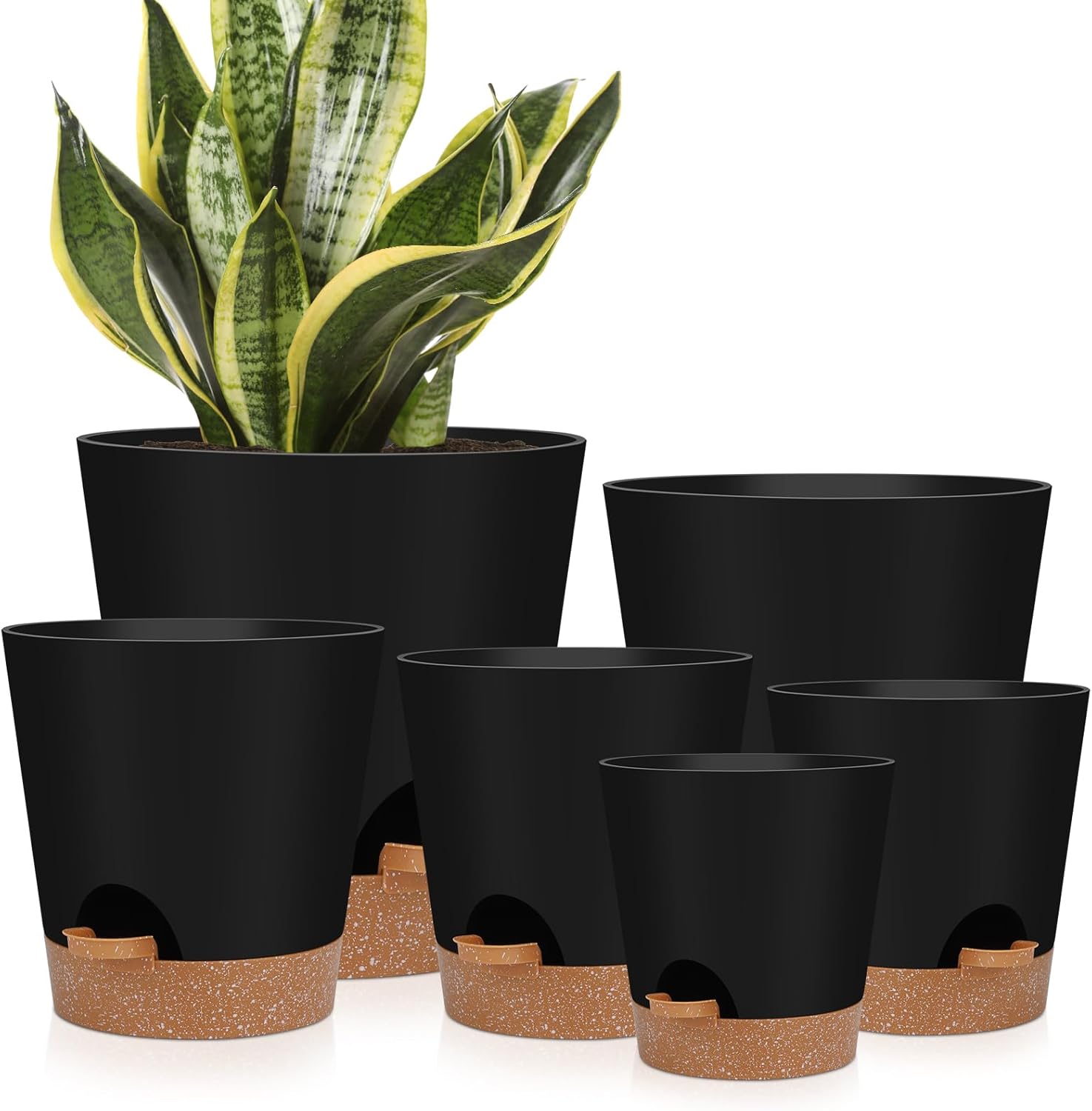
YNNICO Self Watering Planters Set of 6 - Indoor Plant Pots 5 to 8 Inch with Drainage Holes, Black Matte
Pros
- Complete size range from 5 to 8 inches covers most common houseplants
- Self-watering wick included for each pot reduces maintenance
- Matte finish resists fingerprints and looks more expensive than the price suggests
- Thick plastic walls feel solid without adding unnecessary weight
- Deep integrated saucers prevent water damage on surfaces
Cons
- Plastic construction lacks the weight and texture of ceramic or teracotta
- Only available in black, limiting options for lighter color schemes
- Largest size at 8 inches is still too small for floor plants or large tropicals
If you have been slowly accumulating mismatched pots from different stores, this set is the reset button your shelves need. Six graduated sizes in the same clean matte black finish instantly make a plant collection look intentional rather than haphazard. The material feels surprisingly solid for plastic, and the matte texture photographs well in any room.
The self-watering wick is a subtle but thoughtful addition. Thread it through the drainage hole, fill the deep saucer, and your plant draws moisture as needed. It is not a replacement for attentive care, but it buys you a few extra days between waterings, which matters when you have six or more pots to maintain.
If you want a uniform plant display across multiple rooms without spending ceramic-level money or dealing with ceramic-level weight, this set delivers.
Styles it works with: Minimalist, Scandinavian, Modern Industrial, Boho
Best placed in: Living room floating shelves, kitchen windowsill, home office desk cluster, bathroom vanity
May not suit: Spaces that rely on warm earthy tones or natural materials like teracotta and rattan, or rooms where you need large floor-standing planters for statement plants
Buy it if:
- You are starting or expanding a houseplant collection and want matching pots in multiple sizes
- You travel often or forget to water and need a low-effort moisture system
- You want a clean, modern look on shelves or desks without heavy ceramic pots
Consider waiting if:
- You prefer neutral tones like white or teracotta and want to see if more color options become available
Skip it if:
- You need pots larger than 8 inches for floor plants like fidle leaf figs or monsteras
- You strongly prefer the look and heft of ceramic or concrete planters
Check the latest price and availability on Amazon before it sells out.
Frequently Asked Questions
Can I put a plant in a pot without a drainage hole?
No, not directly, at least not long-term. Use it as a cachepot: set a nursery pot with holes inside it and remove the inner pot to drain after each watering. Sealed pots with soil poured straight in are the fastest route to root rot.
Is plastic or ceramic better for houseplants?
It depends on your watering habits. Plastic is light and holds moisture, so it forgives forgetful waterers. Ceramic and terracotta are heavier and dry faster, which suits plants that hate wet feet. Neither is “better” without knowing the plant.

How much bigger should a new pot be than the old one?
It depends on the plant size, but the safe range is 1 to 2 inches wider for tabletop plants and 2 to 3 inches for floor plants. Bigger jumps hold excess water your roots can’t use, and that soggy soil causes rot.
Do self-watering pots work?
Yes, for moisture-loving plants like pothos, peace lilies, and ferns. The reservoir stretches watering to every 1 to 2 weeks. They don’t suit succulents, cacti, or snake plants, which need their soil to dry out fully between drinks.
Does terracotta really dry out soil faster?
Yes. The unglazed clay is porous and wicks moisture through the walls, so soil dries noticeably faster than in plastic or glazed ceramic. That’s great for succulents and overwaterers, and a hassle if you already forget to water.
What size pot does a snake plant need?
It depends on the plant, but snake plants like being a bit snug. Go up just 1 to 2 inches in diameter, and pick a deeper pot for the long rhizomes. They tolerate crowding well, so don’t rush to a huge planter.
Are there safety or material certifications to look for indoors?
Yes, though they’re optional. GREENGUARD-certified resin signals low chemical emissions indoors, and ASTM weatherability ratings indicate a pot rated for outdoor UV and freeze exposure. For most tabletop use, a food-grade or BPA-free plastic label is enough.




Write Your Review
No reviews yet. Be the first to share your experience!