

> Editorial Note: I’m Liam Wright, an outdoor and garden editor. I grew up in my family’s landscaping business and now cover what actually survives a season of UV, rain, and freeze-thaw cycles. The picks here are evaluated against ASTM weatherability standards and manufacturer durability ratings.
You walk out with your morning coffee and the corner’s folded back on itself again. Or worse, the whole rug has crept three feet toward the railing overnight, bunched up against a planter. A rug anchors the setup you built around your best gas fire pit table, your best outdoor sofa, and the best patio umbrella overhead. It’s the piece that ties a best wood burning fire pit corner or the edge of a best raised garden bed into a room instead of a scatter of furniture. So when it won’t stay flat, the whole space reads unfinished. Here’s what’s actually happening, and the four fixes that hold.
Reason 1: The Corners That Curl Up Every Windy Afternoon (Lightweight Flat-Weave Construction)
Most outdoor rugs are woven from polypropylene. It’s cheap, it shrugs off rain, and it resists UV fade, which is why it dominates the category. The trade-off is weight. A flat-woven poly rug in a standard 5×7 foot size weighs only 8 to 12 pounds. A wool indoor rug the same size runs 25 to 30.
Wind doesn’t need much to lift an edge that light. A 20 mph gust catches a corner, folds it back, and it stays folded because there’s no mass to pull it flat again. Thin rugs with no backing are the worst offenders. You’ll see the same corner curl every afternoon once the daily breeze picks up.
This isn’t a defect. It’s physics. A rug that weighs less than a bag of flour per few square feet will always move before a heavier one does. The fix leans on two levers: add weight where the wind grabs first, and pick a rug with enough weave density and footprint to sit under furniture. Brands that publish ASTM G154 UV-weathering results tend to build denser, slightly heavier rugs anyway. That density buys you both fade resistance and a little more grip against a gust.
Weighting the corners with furniture only works if the furniture itself stays put. Lightweight aluminum chairs start sliding around 25 mph, so pair these fixes with anchoring the patio furniture holding the rug down.
Reason 2: The Whole Rug Migrates Toward the Railing (No Friction Between Rug and Deck)
This one’s different from the curling corner. The rug stays flat but slowly walks across the deck. By the weekend it’s a foot off-center and crumpled against the railing.
The culprit is friction, or the lack of it. A smooth rug backing on a smooth composite deck or a sealed concrete patio has almost nothing holding the two surfaces together. Every time you slide a chair, drag a foot, or the wind gives a steady push, the rug shifts a fraction of an inch. Multiply that by a hundred small nudges a day and it travels.
Weight alone won’t solve a friction problem. A heavy rug still slides if the contact surface is slick. What you need is grip between the rug and the ground. An outdoor-rated rug pad (the open-weave PVC kind, not the felt indoor version that rots) adds a high-friction layer that stays put in rain; it’s the style Wirecutter points to for decks and porches. On a hard patio, a friction spray or a few strips of outdoor double-sided tape at the midpoints does the same job for far less money. Match the pad to the surface. Grip on grip is what stops the migration.
Reason 3: The Rug Balloons Up in the Middle Like a Sail (Air Getting Underneath the Edges)
This is the dramatic one. On a gusty day the rug lifts and billows in the center like it’s breathing, and every so often a big gust flips a whole edge over. This is how rugs end up in the pool, over the fence, or draped across the neighbor’s hedge.
The cause is lift. When the perimeter isn’t anchored, wind flows into the gap under an edge and pressure builds beneath the rug. Same principle that gets an airplane off the ground, working against you. The bigger and lighter the rug, the more surface area the wind has to push on, a point Apartment Therapy makes about oversized patio rugs. Classic sail effect.
Weight in the center does nothing here — the lift comes from the edges. You have to anchor the perimeter. Landscape staples or dedicated rug stakes, 6 to 8 inches long, driven at all four corners and at the midpoint of each long side, close the gap the wind needs. On grass or soil this takes about ten minutes and holds through 30 mph gusts. On a hard surface, set furniture legs on the corners so the rug can’t peel up. Kill the gap and you kill the sail.
Reason 4: The 15-Minute Fix That Holds Through a Storm
Any single trick helps. Stacking them is what makes a rug stormproof. Here’s the order I use on a job.
Start with the anchor points that cost nothing: set your heaviest furniture legs on the rug’s corners. A sofa or a loaded planter on two corners removes half the problem instantly. Next, add an outdoor rug pad cut about two inches inside the rug’s border so it doesn’t show. That handles the sliding.
Then close the perimeter. On grass, drive 6-inch landscape staples at the corners and long-side midpoints. On a deck or concrete, run outdoor double-sided tape or hook-and-loop strips along the edges instead, since stakes have nothing to bite into. Finally, if you’re buying new, size up. A rug big enough to pin under a full furniture set barely moves, because the legs do the anchoring for you. Four layers, about 15 minutes, and the wind stops winning.
The Products That Actually Help
The real fix pairs anchoring with a rug that has the weave density and footprint to resist lift in the first place — a bigger, tighter rug gives the wind less to grab and more room for furniture to pin it. All three picks below are UV-fade-resistant polypropylene rated 4.0 or higher by owners, so they hold color through a full season of sun. Go with the Tommy Bahama Abaco (7’10″x10’2″, the 4.4-rated pick) if you’re covering a full patio and want furniture legs doing the anchoring; choose the Shibori Summer (5’2″x7′) for a balcony or small deck where you can stake the whole perimeter; the Cay Palm Fronds matches the large footprint with a different coastal pattern.
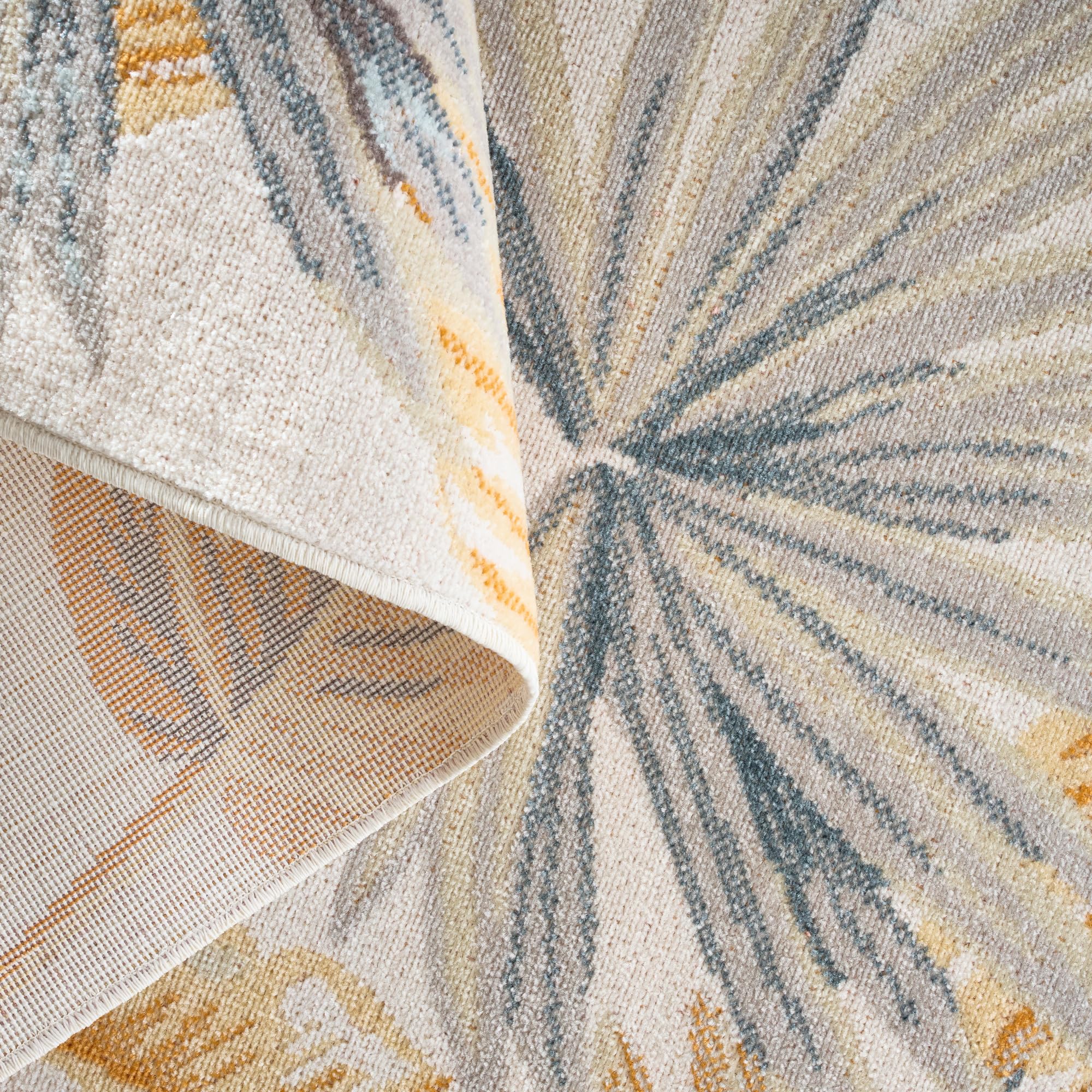

Tommy Bahama Abaco 7'10"x10'2" Tropical Leaf Outdoor Area Rug - UV Fade Resistant Ivory Coastal Design
Pros
- Large coverage area for the price point compared to similar outdoor rugs
- UV protection prevents fading in sun-exposed spaces like covered patios
- Easy cleanup with water hose makes it practical for muddy entryways
- Tommy Bahama quality with coastal design that complements neutral decor
- Lightweight polypropylene is easy to roll up and store or reposition
Cons
- Zero customer reviews make it difficult to verify real-world durability claims
- Ivory color may show dirt faster in high-traffic outdoor areas
- Polypropylene material can feel less plush underfoot compared to wool or cotton rugs
The Tommy Bahama Abaco rug brings that breezy coastal resort feeling home without the typical beachy cliches. The tropical leaf pattern reads sophisticated rather than kitschy, especially in the soft ivory colorway that works with both modern and traditional spaces. At nearly 8x10 feet, it has the presence to anchor a full seating area or define an outdoor dining zone.
What sets this apart is the polypropylene construction that actually delivers on outdoor promises. UV-fade resistance means it won't bleach out after one summer on your patio, and the stain resistance handles wine spills, pet accidents, and muddy paw prints with a quick rinse. It's thin enough to fit under doors but durable enough for entryway abuse.
If you want tropical style that survives real life without constant maintenance or fading, this one delivers.
Styles it works with: Coastal Contemporary, Tropical Modern, Casual Beach House, Transitional with Natural Elements
Best placed in: Covered patio under outdoor furniture, sunroom with sliding glass doors, open-concept living room, mudroom or side entrance
May not suit: Formal dining rooms or traditional spaces that call for richer colors and textures, very small rooms where the 7'10" width overwhelms the space, homes seeking ultra-plush underfoot comfort over durability
Buy it if:
- You need a large rug that transitions between indoor and outdoor spaces seasonally
- Your patio, sunroom, or entryway gets direct sun and you're tired of faded rugs
- You have pets or kids and need something that cleans up with a hose instead of professional treatment
Consider waiting if:
- You want to read customer reviews first since this is a newer listing with zero feedback
- You're hoping for a darker color that hides stains better than ivory
Skip it if:
- You need a rug smaller than 7x10 for a compact space or apartment
- You prefer thick, cushioned rugs over flat-weave durability
Check the latest price and availability on Amazon before it sells out.
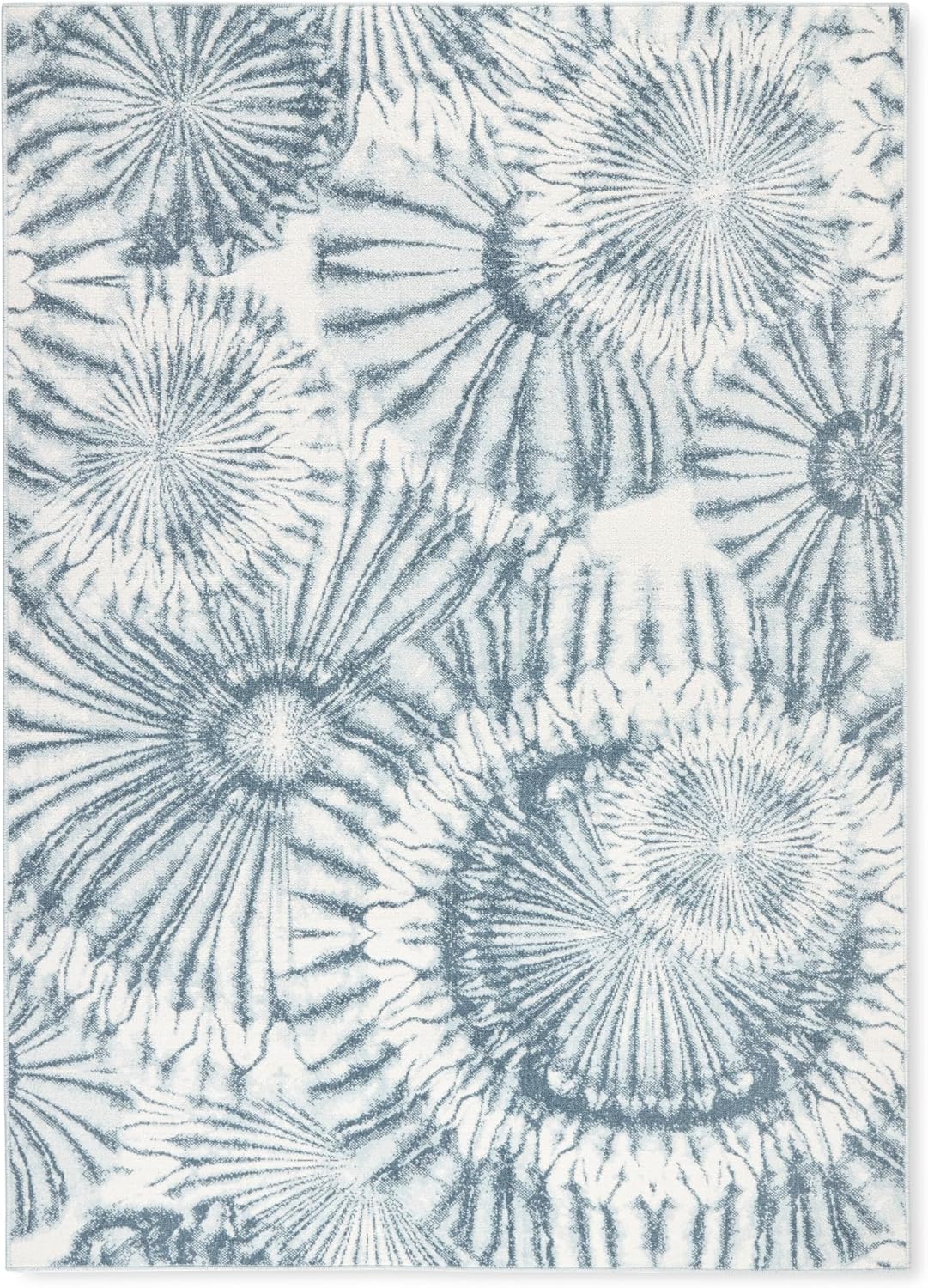
Tommy Bahama Shibori Tie Dye Indoor Outdoor Rug 5'2"x7'2" - UV Fade Resistant Blue Area Rug for Patio & Living Room
Pros
- Dual indoor/outdoor versatility maximizes value and placement options
- UV and stain resistance mean less replacement and maintenance over time
- Easy cleaning with just water makes it practical for homes with kids or pets
- Tommy Bahama brand quality at under $100 for this size
- Modern tie-dye pattern works with both coastal and contemporary decor styles
Cons
- Zero customer reviews yet, so real-world durability and color accuracy are unverified
- Polypropylene can feel less plush underfoot compared to wool or cotton indoor rugs
- Requires a rug pad for indoor use, adding to total cost
This Tommy Bahama rug solves a common decorating problem: finding something stylish enough for your living room but tough enough for your patio. The Shibori tie-dye pattern has that relaxed, collected-over-time look that makes new spaces feel lived-in, and the blue colorway works with everything from white coastal furniture to darker contemporary pieces.
What really stands out is the practicality. Spilled wine? Hose it off. Muddy paw prints? Sweep and done. The UV-fade resistance means you won't see that sad, sun-bleached look after one summer, and the polypropylene holds up in high-traffic areas where natural fiber rugs would show wear in months.
If you want a rug that looks intentional and artistic without constant maintenance or worrying about sun damage, this one delivers.
Styles it works with: Coastal Contemporary, Modern Bohemian, Transitional, Relaxed Eclectic
Best placed in: Covered patios or screened porches, sunrooms with direct light exposure, casual living rooms or family rooms, basement rec rooms
May not suit: Formal dining rooms or traditional decor schemes, homes needing ultra-plush texture for bare feet, spaces where the blue color palette clashes with warm-toned furniture
Buy it if:
- You need a rug that transitions between indoor and outdoor spaces without looking cheap
- You have pets, kids, or high foot traffic and are tired of replacing delicate rugs
- Your patio or sunroom gets direct sun and you've watched other rugs fade within a season
Consider waiting if:
- You want to see verified customer photos and reviews before committing
- You're hoping for a sale since the brand occasionally discounts seasonal patterns
Skip it if:
- You need a larger size for an open-concept great room or need custom dimensions
- You prefer ultra-soft, high-pile rugs for bedrooms or cozy reading nooks
Check the latest price and availability on Amazon before it sells out.

Tommy Bahama Cay Palm Fronds Indoor Outdoor Rug 7'10"x10'2" - UV Fade Resistant Coastal Leaf Design in Ivory
Pros
- UV-fade resistant material maintains color through full sun exposure
- Stain-resistant polypropylene handles outdoor spills and tracked-in dirt easily
- Generous size covers large patios or outdoor dining areas in one piece
- Leaf pattern adds visual interest while hiding minor debris between cleanings
Cons
- Zero customer reviews means real-world durability and color accuracy are unverified
- Polypropylene texture may feel less soft underfoot compared to natural fiber rugs
- Ivory color shows dirt more visibly than darker outdoor rug options
This Tommy Bahama rug solves the outdoor flooring puzzle for anyone building a coastal-inspired patio or deck. The palm frond design feels vacation-ready without being too literal, and the ivory base works as a neutral backdrop for colorful outdoor cushions and planters. At nearly 8x10 feet, it's sized to actually anchor your outdoor furniture instead of just peeking out from underneath.
The polypropylene construction means you can hose it off after a rainy week or a dropped plate of barbecue, then let it air dry flat. No hauling it inside, no special cleaners, no worry about mildew. The UV resistance matters if your patio gets afternoon sun, since cheaper outdoor rugs turn chalky and faded within a season.
If you want that resort patio look without replacing your rug every summer, this one delivers.
Styles it works with: Coastal, Tropical, Modern Farmhouse, Transitional
Best placed in: Covered patios under dining sets, poolside lounge areas, screened porches, sunrooms with tile or concrete floors
May not suit: Fully exposed decks in rainy climates where ivory shows constant dirt, small balconies where the 8x10 size overwhelms the space, homes seeking bold color statements rather than neutral backdrops
Buy it if:
- You have a large covered patio or deck that needs a finished, resort-style foundation
- You want outdoor flooring that cleans with a quick hose-down instead of special maintenance
- You're decorating around coastal or tropical themes and need a neutral base that lets furniture shine
Consider waiting if:
- You prefer seeing verified customer photos and reviews before committing to a large rug purchase
Skip it if:
- Your outdoor space is fully exposed to rain and mud, since ivory will require frequent cleaning
- You need a rug smaller than 7x10 for a compact balcony or entryway
Check the latest price and availability on Amazon before it sells out.
Frequently Asked Questions
Do outdoor rug pads actually work on a windy patio?
Yes, but only the right kind. Use an open-weave PVC pad rated for outdoor use, not a felt indoor pad, which holds water and breaks down within a season. The PVC grip stops sliding, but it won’t stop lift on its own. Pair it with corner anchoring for a gusty spot.
Will rug stakes or landscape staples damage my composite deck?
Yes, on a hard deck. Don’t drive stakes into composite or concrete; staples are for grass and soil only. On a deck, switch to outdoor double-sided tape or hook-and-loop strips, which grip without punching holes. Save the 6-inch staples for lawn-level rugs.
Are heavier rugs always better at staying put?
No. Weight helps against curling corners, but the sail effect comes from air under the edges, and a heavy rug still balloons if the perimeter’s open. A dense 20-pound rug that’s anchored beats a heavier one that isn’t. Anchor first, add weight second.
Can I use double-sided tape on a concrete patio?
Yes. Outdoor-rated double-sided tape holds well on clean, dry, sealed concrete, so scrub the surface first for a good bond. Expect to replace the strips each season as UV and moisture weaken the adhesive. It’s the cheapest reliable fix for a hard patio.
Is it worth anchoring a rug under a covered porch?
It depends on how exposed the porch is. A fully enclosed three-season room needs nothing. An open-sided covered patio still catches crosswinds, so a rug pad plus furniture on the corners is smart insurance. Wind wraps around cover more than people expect.
Bottom Line
Most flyaway rugs trace back to one thing: wind getting under an unanchored edge and lifting the whole rug like a sail. Anchor the perimeter and that’s about 80% of it solved. Furniture legs on the corners, staples on grass or tape on a deck, plus an outdoor rug pad for the sliding. A denser, UV-rated rug sized to sit under your furniture handles the rest. Call a pro only for a high balcony where a loose rug is a genuine hazard. Everything else? A 15-minute job.



Write Your Review
No reviews yet. Be the first to share your experience!