

> Editorial Note: I’m Liam Wright, an outdoor and garden editor. I grew up in my family’s landscaping business and now cover what actually survives a season of UV, rain, and freeze-thaw cycles. The picks here are evaluated against ASTM weatherability standards and manufacturer durability ratings.
Most people clean a patio umbrella the same way they wreck it: dry-scrubbing baked-in dirt, then hitting the fabric with a pressure washer and full-strength bleach. That combination strips the water-repellent finish off solution-dyed acrylic in one afternoon, and no amount of re-spraying fully brings it back. Before you touch yours, it helps to know what the canopy is made of and how the frame comes apart, the same way you’d think through a best gas fire pit table, a best wood burning fire pit, a best outdoor sofa, a best patio umbrella, or a best raised garden bed before the season starts.
Do You Really Need to Take It Down First?
Yes, and here’s why it matters more than the soap you pick. Cleaning a canopy while it’s tensioned on the frame means you’re scrubbing against 8 ribs that flex and hide dirt in the seams. Crank the umbrella closed, then decide: light maintenance can happen with the canopy on, but a deep clean goes better with it off.
Most 9-foot canopies unclip or unscrew at the rib tips in about 10 minutes. Snap a photo first so reassembly isn’t a guessing game.
Lay the fabric flat on a clean patio or a tarp, never on bare grass that transfers green stains. Brush off loose debris with a dry, soft-bristle brush before any water touches it. Wet dirt grinds into the weave; dry dirt lifts off. That single step saves you half the scrubbing.
Check the care tag while it’s down. Solution-dyed acrylic (think Sunbrella-style fabric, roughly 300 GSM) tolerates a diluted bleach solution. Polyester and printed fabrics don’t, and they fade if you try.
If your umbrella is a printed budget canopy, skip bleach entirely and stick to mild soap. Knowing the fabric before you start is the whole game.
What’s the Safest Cleaning Solution That Won’t Strip the Coating?
Mild dish soap and lukewarm water under 100°F. That’s it for weekly upkeep. Mix roughly a tablespoon of soap per gallon, work it in with a soft brush, and let it sit 15 minutes so the surfactants do the lifting instead of your arm.
Rinse thoroughly. Leftover soap film attracts dirt faster than clean fabric, so you’ll be back out there in two weeks if you rush the rinse. Use a garden hose on a gentle shower setting, not a jet. Good Housekeeping’s textile cleaning guidance backs this up: the rinse matters as much as the wash.
Skip the pressure washer. A 1,800 PSI machine will blow out stitching and force water past the factory coating, which is exactly the UV and water resistance ASTM weatherability standards measure for. Once that finish is compromised, the canopy soaks through in light rain and mildews from the inside.
For solution-dyed acrylic that can handle it, a stronger mix is 1 cup of bleach plus 2 tablespoons of soap per gallon of water. Spot-check a hidden corner first. Rinse until the water runs clear.
After everything dries, reproof with a fabric guard rated to restore water repellency. Look for a canopy that carries OEKO-TEX certification if you’re replacing it, since it confirms the dyes and finishes meet defined chemical limits.
How Do You Kill Mildew and Lift Stubborn Stains?
It depends on how deep the mildew has set, but most surface mildew comes off without harsh chemicals. Mildew feeds on dirt and organic film, not the acrylic itself, so a clean canopy rarely grows it back.
For active black or green spotting, mix 1 cup of oxygen bleach (sodium percarbonate) per gallon of warm water. It’s gentler on color than chlorine and safe on more fabric types, a point Consumer Reports makes in its outdoor-fabric care coverage. Apply, wait 20 minutes, agitate with a soft brush, rinse. Repeat once before escalating to chlorine bleach.
Bird droppings and tree sap need a different move. Scrape the crust off dry with a plastic edge, then soften what’s left with a dab of soap and warm water. Don’t pick at it wet.
Grease from a nearby grill lifts with a drop of degreasing dish soap worked in a circle from the outside of the stain inward, so you don’t spread the ring. Set-in stains? Be patient. Two mild passes beat one aggressive one that fades the fabric around the spot.
Keep the canopy out of direct sun while the cleaner sits, because heat bakes some solutions into a faint halo you can’t rinse out.
How Do You Dry and Store It So the Work Lasts?
Fully open, in the shade, until bone dry on both sides. Folding a damp canopy is the fastest way to grow the exact mildew you just removed. Give it a few hours of airflow, then flip it if one side stays damp in the seams.
The frame matters too. Wipe aluminum or steel poles with a damp cloth, and check the crank and tilt mechanism for grit. A drop of dry silicone lubricant on the crank gear keeps it from seizing, which is the failure point on most umbrellas long before the fabric quits.
For winter or a long dry spell, store it closed in a breathable cover, never sealed plastic that traps condensation. A cover rated against UV keeps the folded canopy from sun-fading along the exposed edge.
If you get freeze-thaw cycles, bring the whole umbrella into a shed or garage. Water that seeps into a hollow pole and freezes will split the metal by spring. That’s the difference between a canopy that reads faded and a frame that’s structurally done.
Helpful Picks
If your canopy is past saving, a replacement is cheaper than re-proofing a failing coating every month. These three clear a 4.4-plus owner rating where listed, use 8-rib construction for wind stability, and offer push-button or crank tilt for easier seasonal takedown.
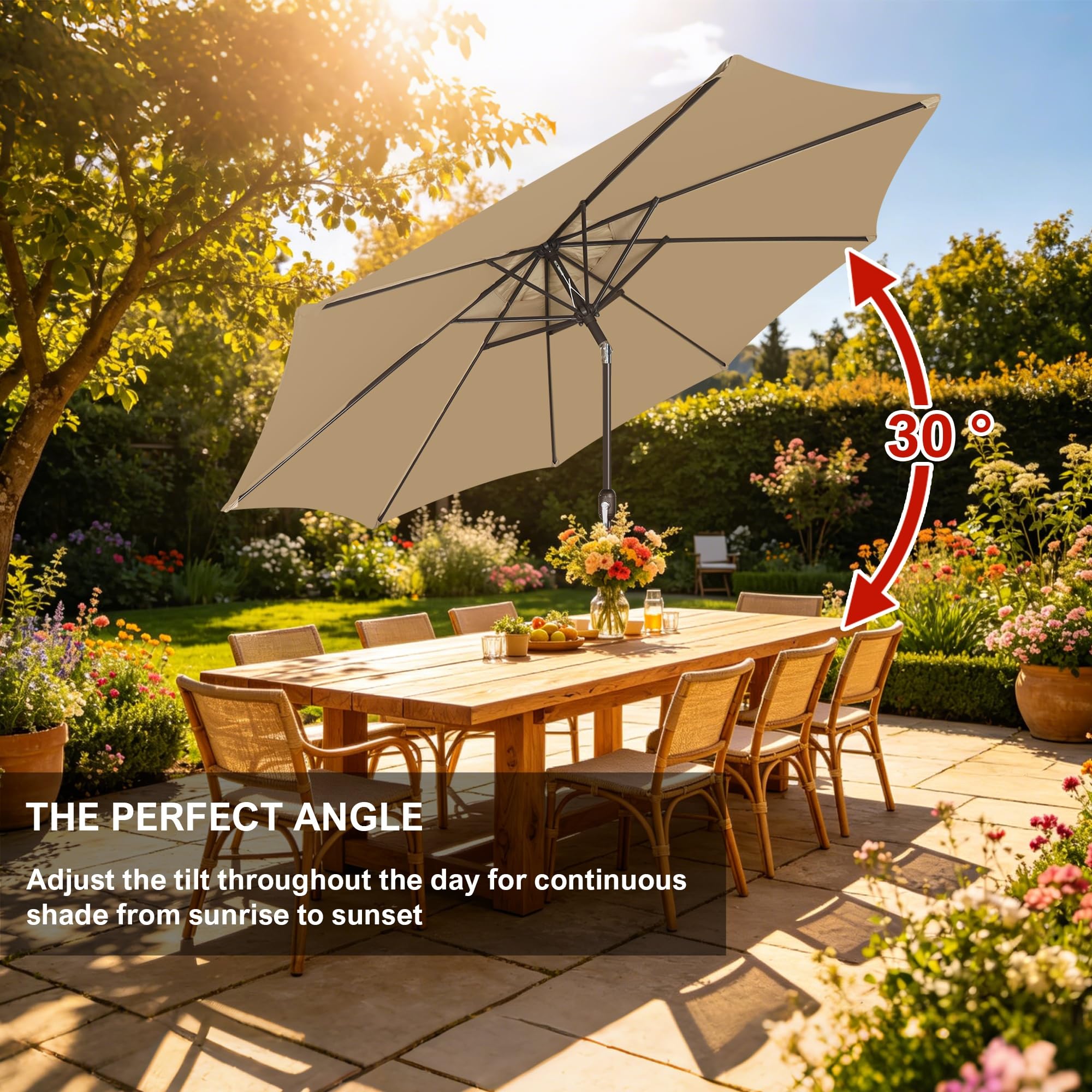
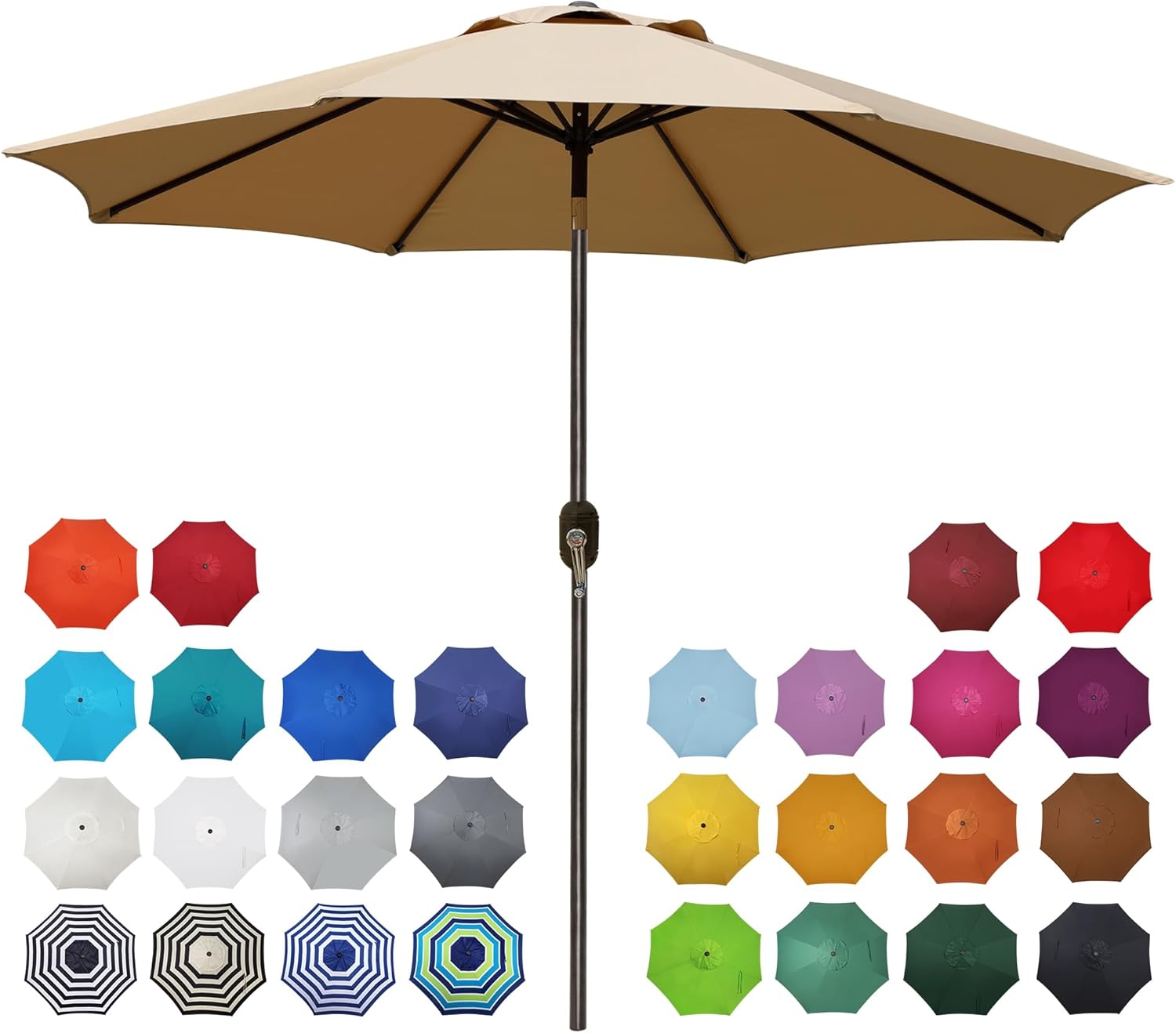
Blissun 9-Foot Patio Umbrella with 8 Sturdy Ribs, Push Button Tilt, Crank Open, UV Protection
Pros
- 8 iron ribs provide noticeably more structural stability than the 6-rib alternatives at this price point
- Push-button tilt and crank open system make single-person operation genuinely easy
- UV-resistant and waterproof polyester fabric holds up through repeated sun and rain exposure
- Wide 9-foot canopy shades a full outdoor dining set without leaving corners exposed
- Consistently high ratings across tens of thousands of reviews signal reliable real-world performance
Cons
- Pole is a combination of aluminum and iron rather than full aluminum, which could be a long-term rust concern in very humid or coastal climates
- No LED lighting option on this model, so evening use requires a separate light source
- Base stand is sold separately, adding to the total setup cost that is not reflected in the listed price
At under $50, the Blissun 9-foot patio umbrella punches well above its price class. The 8-rib iron frame feels noticeably more rigid than the flimsy 6-rib canopies you find at this price, and the powder-coated finish gives it a polished look that does not scream bargain-bin. Whether you have a classic teak dining set or a modern powder-coated metal patio ensemble, the clean silhouette blends in without fighting your existing outdoor aesthetic.
Day-to-day, the crank and tilt system is the detail that earns the most appreciation. Being able to angle the canopy with a single button push means you are not constantly shifting chairs or squinting into afternoon sun. The air vent at the crown keeps the space underneath from turning into a heat trap, which is a small detail that makes a real difference on a hot afternoon.
If you want reliable full-table shade with a sturdy frame and easy one-handed operation without paying $100 or more for a premium brand, this one delivers.
Styles it works with: Coastal Casual, Modern Farmhouse, Mediterranean Outdoor, Contemporary Minimalist
Best placed in: Over a patio dining table, beside a backyard pool deck lounge area, anchored in a garden seating nook with a weighted base
May not suit: Very small balconies under 8 feet wide where a 9-foot canopy would overhang into neighboring space; households in high-wind regions where a heavy-duty fiberglass-rib umbrella would be a safer long-term investment
Buy it if:
- You have a mid-size outdoor dining table and want shade that covers the whole surface without spending over $100
- You want the convenience of single-hand tilt adjustment so you can block the sun at any angle throughout the day
- You are furnishing a rental property, seasonal deck, or commercial patio space where strong value-for-money matters more than premium branding
Consider waiting if:
- You need a specific color that may not be in stock in your preferred size right now
Skip it if:
- You live in a coastal or high-humidity environment and need a fully rust-proof aluminum or fiberglass frame for year-round outdoor installation
- You want built-in LED lighting for evening entertaining, as this model does not include that feature
Check the latest price and availability on Amazon before it sells out.

JEAREY 9FT Patio Umbrella with Push Button Tilt and Crank - UV Protection Waterproof Outdoor Table Umbrella, Dark Blue
Pros
- Solid iron construction with8 ribs feels more stable than budget competitors
- Tilt and crank combo offers full shade control without standing up
- Vented canopy design reduces wind lift and heat buildup underneath
- Easy two-piece assembly with no tools required
- Wide 9ft span comfortably shades a standard4-to-6-person table
Cons
- Base is not included, so you need to buy a compatible stand separately
- Iron frame is heavier than aluminum, making repositioning less convenient
- Color may appear slightly different in person compared to listing photos
This JEAREY umbrella solves the most common outdoor entertaining problem: keeping guests comfortable without blowing past your patio budget. The dark blue canopy looks sharp against wood decks and neutral furniture, and the iron frame gives it a planted, solid feel that cheap aluminum umbrellas simply cannot match.
What stands out in daily use is the vented top. Instead of catching wind like a sail, it lets gusts pass through, which means fewer times chasing your umbrella across the yard. The tilt function tracks shade as the sun moves, so your morning coffee spot stays usable well into the afternoon.
If you want reliable, full-table shade without spending over $100on a cantilever system, this one delivers.
Styles it works with: Coastal, Classic Suburban, Transitional, Modern Farmhouse
Best placed in: Center of a patio dining table, poolside lounge area, deck entertaining zone
May not suit: Very small balconies where 9 feet of canopy would overhang the railing, or windy roftop terraces where a heavier cantilever model with a weighted base would be safer
Buy it if:
- You have a standard patio table with center hole and need affordable, full-coverage shade
- You want a crank-and-tilt combo so the whole family can adjust it easily
- You prefer a sturdier iron frame over lightweight aluminum that flexes in the wind
Consider waiting if:
- You need a specific color that is currently out of stock in this listing
- You want to bundle with a matching base during a seasonal sale
Skip it if:
- You need an offset or cantilever design that shades a sectional without a center pole
- You require a pole diameter other than 1.5 inches for your existing table or base
Check the latest price and availability on Amazon before it sells out.

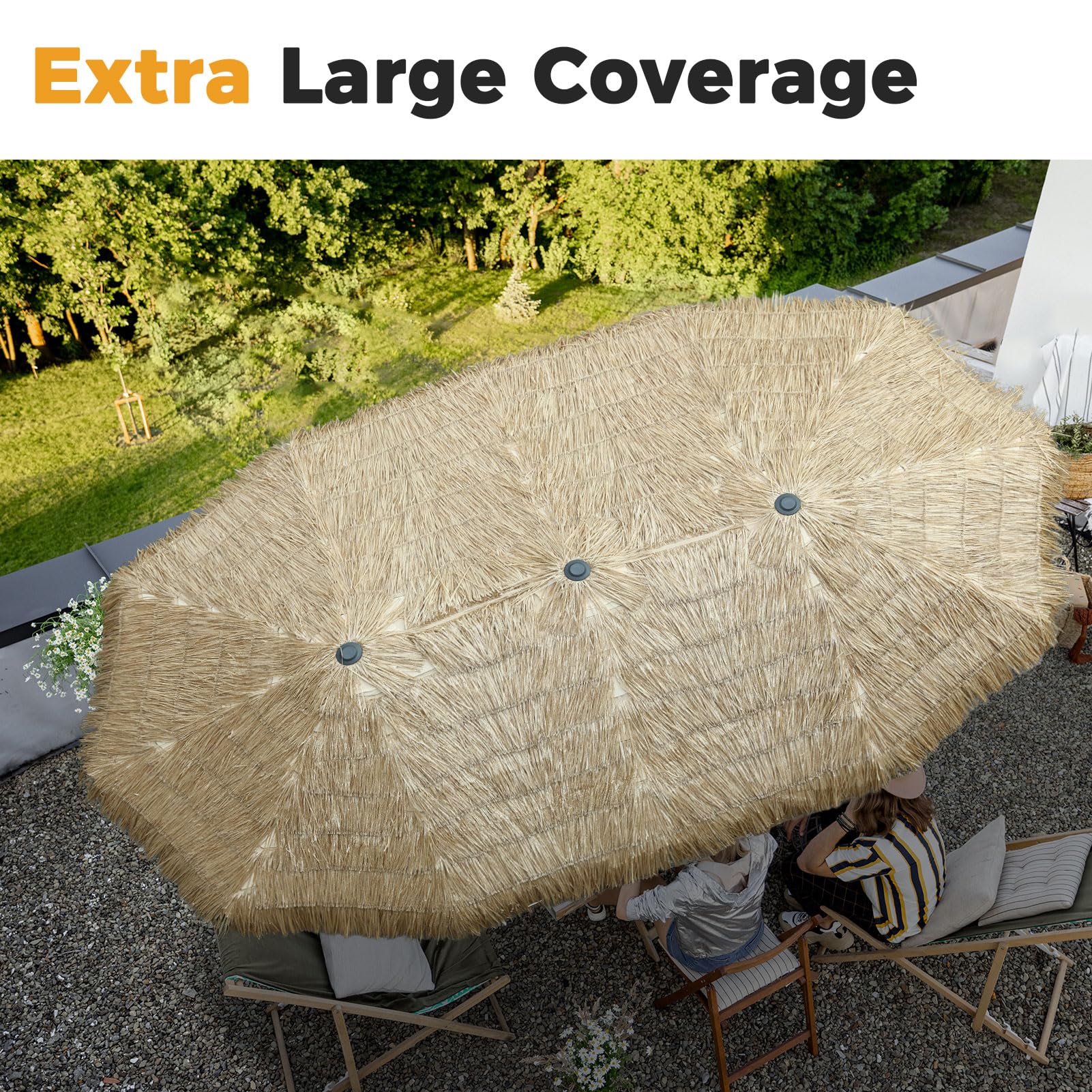
GDY 15FT Rectangular Tiki Patio Umbrella with Base | Double-Sided Faux Thatch, Crank Handle, 12 Ribs
Pros
- Extra-large 15-foot rectangular footprint covers more seating area than a standard round or 9-foot umbrella, ideal for long dining tables or wide pool decks.
- 12 heavy-duty reinforced ribs provide above-average wind resistance compared to entry-level patio umbrellas that use 6 or 8 ribs.
- Faux-thatch canopy delivers a distinctive tiki aesthetic that sets the space apart from generic solid-color patio umbrellas.
- Crank handle mechanism allows one-handed, effortless operation without needing to physically push or lift the canopy.
- Comes with a base included, making the setup straightforward and reducing total cost compared to umbrella-only listings.
Cons
- Zero customer reviews at time of writing means there is no real-world feedback to verify long-term durability or color accuracy in person.
- At $194.99, buyers are paying a premium on brand trust alone since the rating history is completely absent, which adds purchase risk.
- The faux-thatch fabric design requires air-drying before folding and cannot be machine washed, which makes routine maintenance more hands-on than a standard polyester canopy.
There is something about a thatched umbrella that instantly makes a backyard feel intentional rather than accidental. The GDY 15FT Tiki Umbrella brings that laid-back, tropical character to any outdoor space, and at 15 feet wide, it does it with enough coverage to matter. Whether you are shading a long dining table or a pair of loungers beside the pool, this thing pulls the whole scene together visually in a way a plain navy canopy simply cannot.
Beyond looks, the construction is genuinely thoughtful for this price tier. The 12-rib reinforced frame is the kind of upgrade that makes a real difference the first time a summer afternoon storm rolls through, and the crank handle means you are not doing a full wrestling match with the pole every time you want to open or close it. The double-sided design is a quieter feature that earns its keep on wide setups where a single-sided canopy would leave half your guests squinting into the sun.
If you want a show-stopping outdoor shade piece that holds up through a real season without looking like every other patio umbrella on the block, this one delivers.
Styles it works with: Coastal, Tropical, Bohemian, Eclectic Outdoor
Best placed in: Poolside deck or patio surround, large backyard dining area, beachside or lakefront outdoor space
May not suit: Compact patios or small balconies where a 15-foot span would overwhelm the space; minimalist or contemporary outdoor design schemes where clean lines and solid colors are preferred over textured thatch aesthetics
Buy it if:
- You have a large pool deck, backyard, or patio where a standard 9-foot round umbrella simply does not cover enough ground for your group.
- You want a resort or tiki-bar aesthetic without a major landscaping or construction project.
- You need a structurally sturdy shade solution that can handle afternoon wind and sun without folding up or fading quickly.
Consider waiting if:
- You prefer to buy products with verified customer reviews and ratings before committing at this price point, in which case waiting a season for reviews to accumulate makes sense.
Skip it if:
- Your outdoor space is too small to accommodate a 15-foot rectangular footprint safely without crowding furniture or walkways.
- You are looking for a modern, minimalist design with solid color options rather than a textured thatch canopy style.
Check the latest price and availability on Amazon before it sells out.
Frequently Asked Questions
Can you machine wash a patio umbrella canopy?
No. Most manufacturers void the finish warranty if you machine wash, because the agitator stresses seams and the spin cycle cracks the water-repellent coating. Hand cleaning on a flat surface is the only method that preserves the factory treatment. Some small printed canopies list a gentle cycle, so check the tag.
Is bleach safe on patio umbrella fabric?
It depends on the fabric. Solution-dyed acrylic handles a diluted 1-cup-per-gallon chlorine mix; polyester and printed canopies fade and weaken. Oxygen bleach is the safer all-around choice. Always spot-check a hidden corner and rinse until clear.
How often should I clean my patio umbrella?
It depends on your climate and tree cover, but a light soap wash every 4 to 6 weeks in season prevents the dirt buildup mildew feeds on. A full deep clean once or twice a year is plenty for most yards. Coastal salt air pushes that closer to monthly.
Will a pressure washer ruin my umbrella?
Yes, in most cases. Anything above a gentle hose shower forces water past the coating and blows out stitching, undoing the UV and water resistance the fabric was built for. If you own one, use the widest fan tip from 3 feet back, or skip it.
How do I stop mildew from coming back?
Almost never does mildew return on a canopy that’s rinsed clean and dried fully before folding. Mildew eats dirt and film, not the acrylic. Keep it clean, store it dry, and reproof the finish once a year.
Can I clean the umbrella without taking the canopy off?
Yes, for light upkeep. Crank it fully open, brush off debris, and spot-clean with soap and a soft brush. Deep stains and mildew come out better with the canopy off and laid flat, where you can reach the seams.
Should I reproof the fabric after cleaning?
Yes, if water stops beading on the surface. A spray-on fabric guard restores the repellency that cleaning and UV wear strip away over time. One coat on a fully dry canopy, reapplied yearly, keeps a good canopy shedding rain for years.




Write Your Review
No reviews yet. Be the first to share your experience!