

> Editorial Note: I’m Lauren Ro, and I write furniture buying guides. The picks here are judged on the specs that predict how a piece ages — frame joinery, foam density, and load ratings — checked against BIFMA and FSC certifications plus aggregated owner reports.
Most blotchy stain jobs fail at the sanding stage, not the color stage. Pine and birch drink stain unevenly, so skipping prep leaves dark clouds instead of a clean tone. Before you open a can, know what you’re working with: mdf vs solid wood furniture behave nothing alike under stain, seasonal movement is why why does my wood furniture crack, and refinishing often starts as a repair job like how to remove scratches from wood furniture or how to remove water stains from wood furniture. The same grain logic applies whether you’re reviving a wood sofa or a wood frame sofa.
Oil, Water, or Gel: Which Stain to Use
The stain type decides your working time, your cleanup, and how forgiving the job is. Oil-based stain penetrates deep, dries slowly, and gives you a long window to wipe back the excess before it sets. That slow dry is the trade-off: expect longer between coats and mineral spirits for cleanup.

Water-based stain dries fast, cleans up with soap and water, and carries far lower VOCs, which matters if you’re working indoors. GREENGUARD-certified finishes exist precisely for that low-emission use case. The catch is speed. You get minutes, not hours, to move it around, so it punishes hesitation on large surfaces.
Gel stain sits on top of the wood rather than soaking in. That’s what makes it the safe pick for blotch-prone pine and for vertical surfaces where liquid stain runs. It also works over surfaces that won’t take penetrating stain, like previously sealed wood.
Stain or Paint That Piece?
Stain if the grain is worth showing. Solid oak, walnut, and ash all read as more expensive with a clear finish over stain. Paint if the wood is banged up, if it’s a veneer or particleboard you can’t sand deeply, or if you want a color the species won’t give you. There’s no wrong answer, but the two aren’t interchangeable: stain highlights grain, paint hides it.
Prep the Surface First
This is the whole job. Strip any existing finish before you touch stain. Stain won’t penetrate polyurethane, varnish, or paint, so anything sealed has to come off with a chemical stripper or a scraper.
Then sand in stages, always with the grain. Start at 120 grit to cut the old surface, step to 150 to erase the 120 scratches, and finish at 220. Don’t jump straight to fine grit. On rough wood, 220 just polishes the flaws in. Wipe with a tack cloth between passes so loose grit doesn’t drag across the face.
Fill any gouges or nail holes with wood filler before the final sanding pass, then sand the patch flush. Clean the whole piece and your work area last. Airborne dust is the enemy of a smooth first coat, and it settles fast.
Do You Need Wood Conditioner?
On blotch-prone species, yes. Softwoods like pine, alder, birch, and maple absorb stain in uneven patches, and a pre-stain conditioner partially seals the thirsty spots so color lands evenly. Apply it, wait the window printed on the can, then stain while the wood is still slightly receptive.
Skip it on open-grain hardwoods. Oak, walnut, and ash take stain evenly on their own, and conditioner on those species can actually lighten the result more than you want. Check a hidden edge first if you’re unsure which camp your wood falls into.
Rag or Brush?
Both work; they solve different problems. A rag gives you the most control on flat panels and open grain because you’re wiping color in and pulling excess off in one motion. It’s also the cleaner method for gel stain. Brushes reach into carved detail, spindles, and tight corners a folded rag can’t.
The rule that matters more than the tool: wipe off the excess. Stain colors by what stays in the wood after you remove the surplus, not by what you leave sitting on top. Leftover stain that never absorbs stays tacky for days and ruins the topcoat.
Seal It
Stain isn’t a finish. It colors the wood but offers almost no protection, so a sealer is what keeps rings, scratches, and spills from reaching the grain. Polyurethane is the durable, all-purpose choice for furniture that gets daily use. Wipe-on versions build slowly and forgive beginners; brush-on builds faster but shows brush marks if you rush.
Apply thin coats, let each cure fully, and scuff-sand lightly between them with 320 grit. Two to three coats is standard for a tabletop that sees hands and drinks. Apartment Therapy and Wirecutter both land on the same guidance for high-touch surfaces: more thin coats beat fewer thick ones every time.
Can You Stain Without Sanding?
Sometimes. Gel stain and all-in-one stain-and-poly products are built to grip lightly scuffed or even sealed surfaces, so a thorough clean and a quick scuff with 220 can replace full stripping. It won’t match the depth of color you’d get on bare sanded wood, and the finish is only as sound as your cleaning. Grease or old wax under the stain will reject it.
Going Darker or Lighter
To go darker, add coats. A second or third pass deepens the tone, but let each dry first, or you’ll lift the previous coat. To go lighter, wipe the stain back sooner and cut open time, or start with a lighter-toned stain over a conditioned surface. You can’t reliably lighten wood that’s already absorbed a dark stain without sanding back to bare.
Helpful Products
The picks below cover the three jobs most home refinishers hit: a gel stain for blotch-prone pine, a low-mess applicator for small touch-ups, and a fast-drying water-based option for indoor work. Each cleared a 4-star owner rating, and each maps to a different working style rather than a single “best” pick.
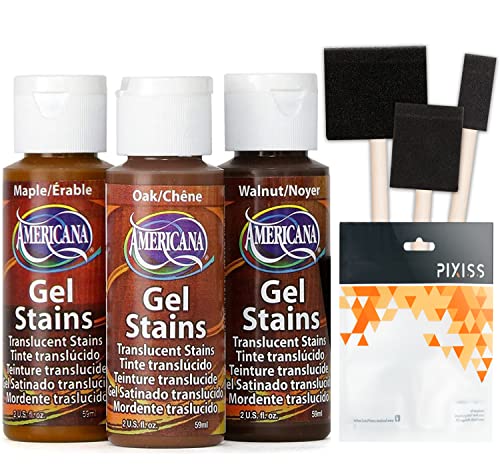
Pros
- No oil-based fumes makes it safe for indoor use without heavy ventilation
- Thick gel consistency prevents drips and runs on furniture legs and vertical surfaces
- Three mixable colors let you customize the exact shade you need
- Includes application brushes in the kit
Cons
- 2oz bottles are small and may only cover 1-2 small furniture pieces
- Limited to three brown wood tones with no gray or white-wash options
- New product with zero customer reviews to verify performance claims
If you love hunting for secondhand furniture but hate the chemical smell of traditional wood stains, this 3-pack solves that problem. The water-based gel formula means you can refinish a thrift store side table in your apartment without opening every window or sending your family outside for the day.
What makes this kit special is the ability to mix shades. Found a dresser that is almost the right tone? Blend a bit of walnut with oak until it matches your bedroom set. The thick gel texture is also forgiving for beginners because it does not run down table legs or create lap marks like liquid stains often do.
If you want to experiment with furniture flipping or breathe new life into worn wood pieces without dealing with oil-based mess and fumes, this one delivers.
Styles it works with: Farmhouse, Rustic, Cottage Core, Traditional
Best placed in: Craft room for DIY projects, garage or basement workshop for furniture refinishing, kitchen for staining cutting boards or utensils
May not suit: Homes needing to stain large surfaces like floors or decks (bottles too small), modern spaces preferring gray or white-washed wood tones (only brown shades available)
Buy it if:
- You are refinishing small furniture pieces like nightstands, picture frames, or wooden boxes
- You want to test multiple wood tones before committing to a larger project
- You need an indoor-safe stain option for apartment or condo living
Consider waiting if:
- You need to see verified customer reviews and photos before purchasing (this is a new listing)
Skip it if:
- You are staining large surfaces like dining tables or floors (you will need many bottles)
- You prefer gray, white-washed, or non-traditional wood tones
Check the latest price and availability on Amazon before it sells out.

Varathane Less Mess Dark Walnut Wood Stain with Built-In Applicator - 4oz Water-Based Stain for Small Projects & Crafts
Pros
- All-in-one design with integrated applicator saves time and cleanup
- Low-odor water-based formula is safer for indoor use
- Sponge tip provides better control than traditional brush application
- Affordable entry point for DIY wood refinishing projects
Cons
- 4oz size too small for full furniture pieces or large surfaces
- New product with no customer reviews to verify performance claims
- Sponge applicator may wear out before stain is fully used
This stain-and-applicator combo solves the biggest headache of small wood projects: dealing with messy brushes and rags. The sponge tip lets you apply stain exactly where you want it, whether you are refreshing a wooden picture frame, staining a small shelf, or touching up furniture dings.
The water-based formula is a game-changer if you are working indoors or in a small space. It does not fill your room with chemical fumes, and when you are done, the whole thing rinses clean under the tap. The dark walnut shade adds that warm, lived-in look to raw wood without going too dark or orange.
If you want an easy way to stain small wood projects without buying a full quart and a set of brushes, this one delivers.
Styles it works with: Farmhouse, Rustic, Modern Industrial, Traditional
Best placed in: Craft room workbench, garage workshop shelf, under kitchen sink for quick furniture touch-ups
May not suit: Large-scale furniture refinishing projects, outdoor wood surfaces that need weather-resistant stain, homes needing multiple coats on big pieces (you will run out fast)
Buy it if:
- You are staining small craft projects, picture frames, or wooden decor items
- You want to avoid the mess and cleanup of traditional stain and brush combos
- You are working indoors and need a low-odor, water-based option
Consider waiting if:
- You want to see verified customer reviews before purchasing this newer product
Skip it if:
- You need to stain full furniture pieces or surfaces larger than a few square feet
- You require an oil-based stain for deeper penetration or outdoor durability
Check the latest price and availability on Amazon before it sells out.

SENVEN Natural Oak Wood Stain 100ml - Fast Drying, Water Based, Non-Toxic for Furniture & Cabinets Indoor/Outdoor
Pros
- Non-toxic and low odor makes it safe for indoor use around family
- Fast drying time speeds up refinishing projects
- Single coat application provides good coverage and color depth
- Works on multiple wood surfaces from furniture to outdoor decking
- Includes applicator brush in the kit
Cons
- Only 100ml (3.5 oz) bottle covers limited surface area for larger projects
- Color results vary by wood type and require test application first
- New product with no customer reviews yet to verify performance claims
This is the kind of wood stain that takes the intimidation out of furniture refinishing. The water-based formula means you are not dealing with harsh chemical smells or worrying about ventilation while you work on that vintage dresser in your bedroom. It dries fast enough that you can apply it in the morning and have your piece back in place by dinner.
What sets this apart is how it enhances rather than hides the wood grain. That semi-transparent finish lets the natural character of the wood show through while adding rich oak tones. The high-concentration formula penetrates deeply, so you get professional-looking results without multiple coats or complicated techniques.
If you want to breathe new life into tired furniture or cabinets without toxic fumes or a weekend-long project, this one delivers.
Styles it works with: Modern Farmhouse, Rustic, Scandinavian, Transitional
Best placed in: Kitchen cabinets, bedroom furniture refinishing projects, living room accent pieces, outdoor deck furniture
May not suit: Large-scale projects requiring significant coverage (100ml is a small bottle), homes where you need to match existing stain colors exactly without testing first, projects requiring very dark or opaque finishes
Buy it if:
- You are refinishing a small to medium furniture piece like a nightstand, chair, or shelf
- You want a family-safe, low-odor stain for indoor cabinet work
- You prefer natural wood grain to show through rather than solid color coverage
Consider waiting if:
- You need to see verified customer reviews before committing to a new brand
- You require a larger quantity for extensive projects like full kitchen cabinets
Skip it if:
- You need to match a specific existing stain color without room for variation
- Your project requires heavy coverage over multiple large surfaces
Check the latest price and availability on Amazon before it sells out.
The GRAS Art Bundles gel stain ships as a 3-pack in Walnut, Oak, and Maple tints and holds a 4.5-star rating, the strongest of the three. Varathane’s Less Mess Dark Walnut pairs the stain with an applicator, which suits spot repairs; its 4.1-star rating tracks the unit-to-unit variation you’d expect from an all-in-one tool. SENVEN’s water-based Natural Oak stain is low-odor and marked indoor and outdoor use, and its 4-star rating is the honest floor of this group, so vet the color on scrap before committing.
The Takeaway
Staining is prep first, color second. Sand through 120, 150, and 220 with the grain, condition blotch-prone softwoods, wipe every coat back, and seal the result. Match the stain type to your patience: gel for control, water-based for speed and low VOCs, oil for a long working window. Get the surface right and the color follows.




Write Your Review
No reviews yet. Be the first to share your experience!