

> Editorial Note: I’m Erin Schwartz, and I cover home decor with a bias toward what actually works in a real room. The guidance here weighs scale, layout, and materials against Apartment Therapy and Wirecutter coverage rather than styling a space that nobody lives in.
Clay wicks moisture and breathes, which is why terracotta beats plastic for herbs, succulents, and anything prone to root rot. It also cracks in a hard freeze if you ignore the porosity rules. I checked five sets against wall thickness, drainage, and freeze-thaw behavior so you don’t lose a pot in January. If you’re planning the wider setup, pair these with a vertical garden planters wall, a raised garden bed, some raised planters for patios and small gardens, a few large outdoor planters, or ground-level outdoor planters to balance drainage across your space.
How We Evaluated
I ranked each set on fired-clay density, drainage-hole placement, saucer fit, and value per pot. Porosity matters. Unglazed terracotta absorbs water, so ASTM C67 freeze-thaw guidance applies. Anything staying outdoors through winter needs thicker walls or indoor storage below freezing.
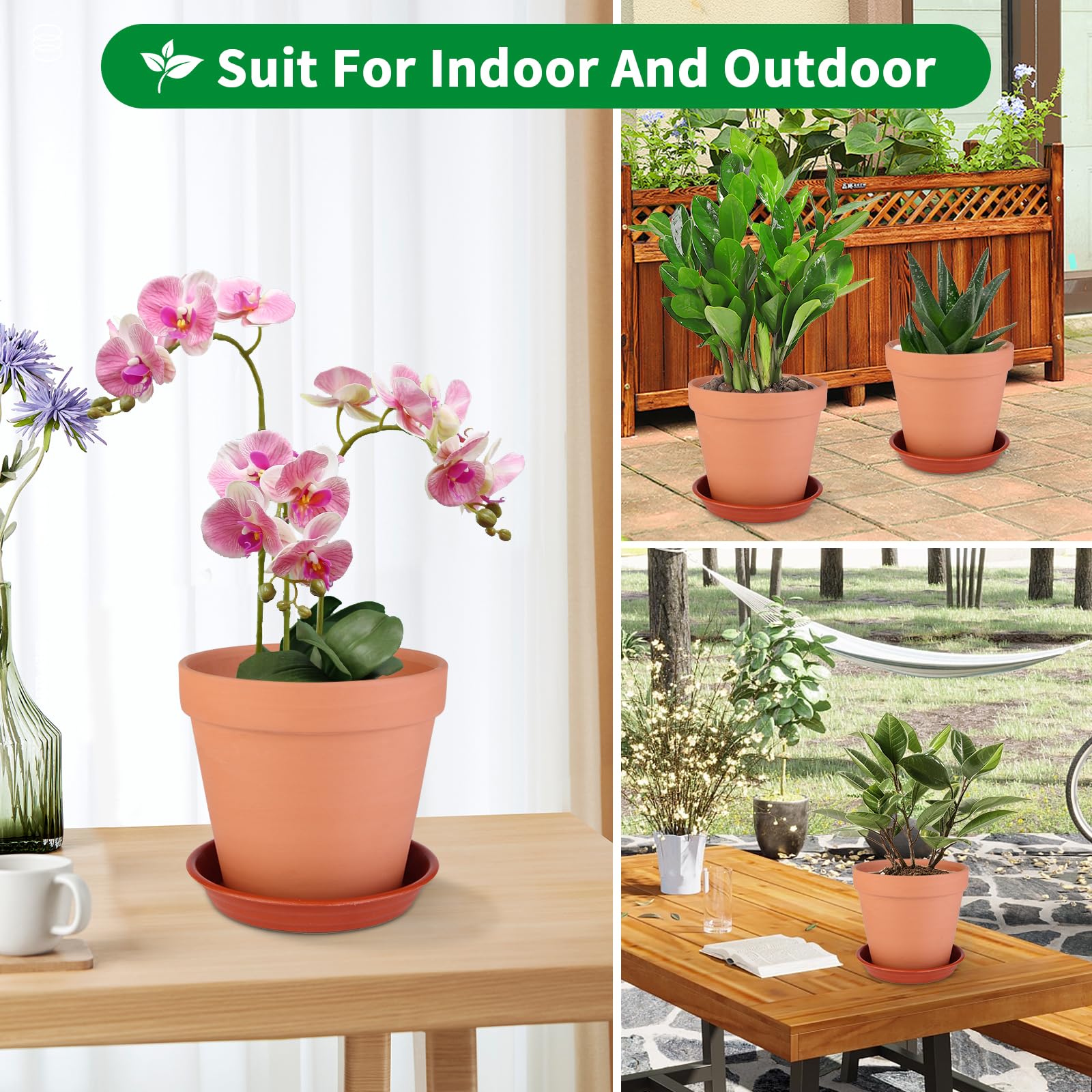


1. Tuqaumu 6 Pack 6 Inch Terracotta Pots — the do-everything starter set
At six inches with matching saucers, this Tuqaumu six-pack handles herbs, small perennials, and starter transplants in one buy. Each pot ships with a pre-drilled drainage hole, so you skip the drill and the cracked-base gamble. The saucers catch runoff on a windowsill or shelf without a separate order. Wall thickness is average for the price, meaning I’d bring these indoors below freezing rather than risk freeze-thaw splitting. For most people building a first herb lineup, six pots at this size covers a full kitchen rotation.
2. Orceler 6 Inch Terracotta Pots — the value-per-pot repeat buyer
Orceler’s six-inch six-pack targets the gardener who kills and replaces plants often and wants low cost per unit. Same medium footprint as the Tuqaumu, same drainage hole and included saucer, so the choice comes down to price and stock on any given week. Clay density reads slightly lighter, which speeds wicking and helps root-rot-prone succulents. That thinner wall is the trade-off. Keep these out of hard freezes. For indoor herbs and desk succulents rotated seasonally, the value math is hard to argue with.
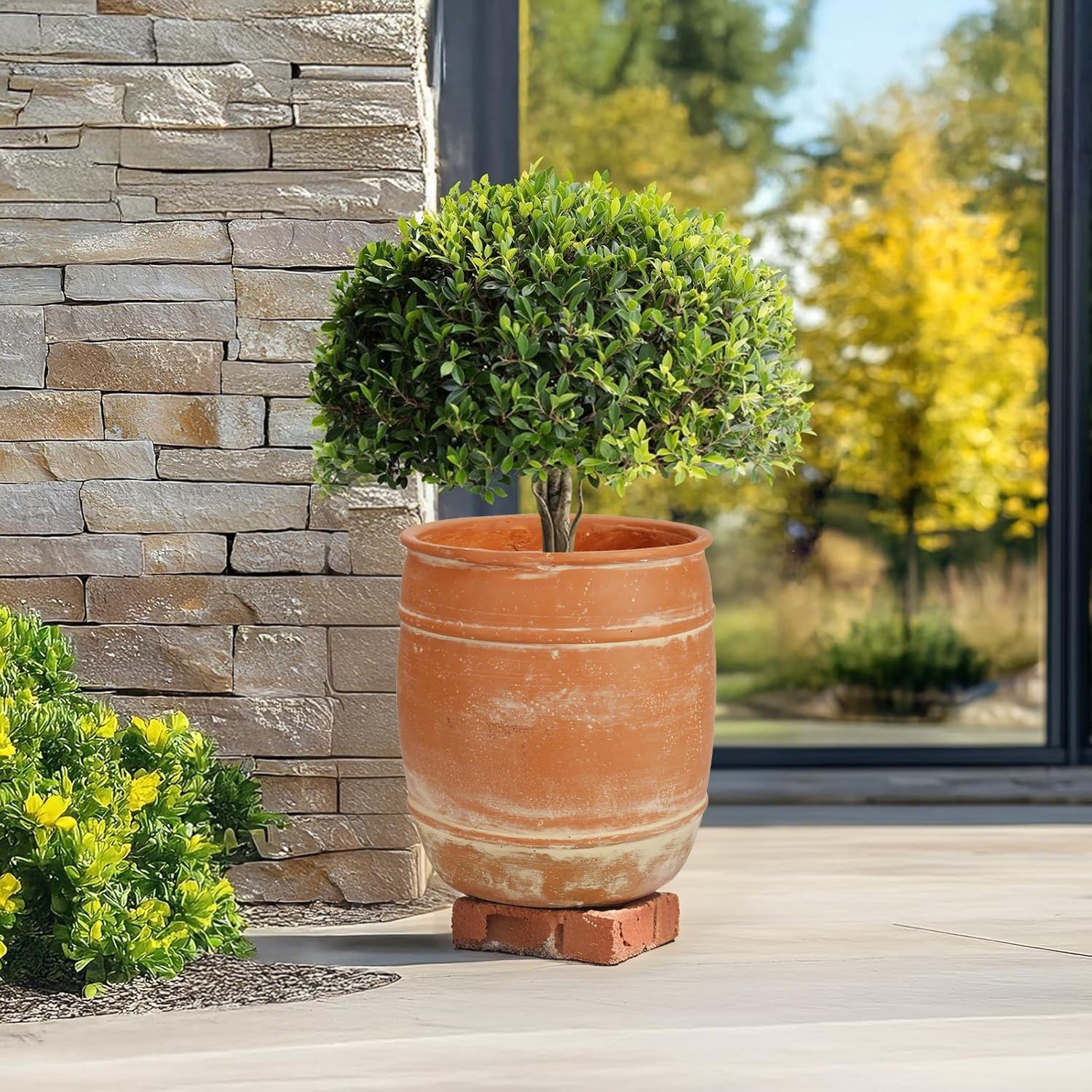
3. Haispring 11″H Aged Terracotta Planter — the statement pot for one big plant
This is the one you buy when you want a floor plant to anchor a corner. Eleven inches tall by 9.5 inches wide gives a fiddle-leaf fig or a monstera real root room, and the distressed aged finish reads farmhouse without a coat of paint. A single drainage hole handles the volume, though I’d add a saucer since one isn’t guaranteed in every listing. Heavier clay here resists tipping in wind on a covered patio. One pot, one focal plant, done.
4. Orceler 4 Inch Terracotta Pots — the seed-starting and succulent workhorse
The four-inch Orceler six-pack with trays is built for propagation and tiny succulents. Small footprint means faster soil dry-down, which cacti and echeveria want. Each pot includes a drainage hole and a matching tray, so overwatering runoff has somewhere to go. At six pots you can run a full seed-starting flat or a succulent shelf without stacking multiple orders. Thin walls again. Treat these as an indoor or seasonal set and store them warm through winter to avoid freeze cracks.

5. Back to the Roots Olla Pot — the water-saver for vacation-prone beds
This one isn’t a planter. It’s a buried irrigation tool. Back to the Roots’ 700mL olla releases water through unglazed clay directly to nearby roots, and the brand rates one fill for roughly a week of coverage. Bury it in a raised bed or large container and it may cut your watering trips during a heat wave. Three per pack covers a decent garden run. It won’t hold a plant, so pair it with the pots above rather than replacing them.
Comparison Table
| Product | Size | Pack | Saucer/Tray | Best For |
|---|---|---|---|---|
| Tuqaumu 6″ | 6 in | 6 | Yes | Herb starter set |
| Orceler 6″ | 6 in | 6 | Yes | Value repeat buyers |
| Haispring 11″ | 11 in H | 1 | Check listing | Floor statement plant |
| Orceler 4″ | 4 in | 6 | Yes | Seed starting, succulents |
| Back to the Roots Olla | 700mL | 3 | N/A | Water conservation |
How to Choose a Terracotta Planter
Match pot size to root ball, not to the plant’s current height. A six-inch pot suits most herbs; floor plants want nine inches or more. Confirm a drainage hole exists. Terracotta already wicks, but standing water still rots roots.
Wall thickness drives winter survival. Thin-walled value sets absorb more water and split under ASTM C67 freeze-thaw stress, so plan to store them indoors below freezing. Thicker aged pots like the Haispring tolerate more abuse on a covered patio.
Saucers protect surfaces from mineral staining. Unglazed clay leaves white efflorescence rings on wood, so use the included tray or a cork pad indoors.
Terracotta vs. Glazed and Plastic
Terracotta breathes, which lowers root-rot risk for succulents and herbs but demands more frequent watering. Plastic holds moisture longer and shrugs off frost, though it traps heat and offers no wicking. Glazed ceramic splits the difference with a sealed exterior that resists staining and freeze damage, at a higher price and weight. For a Mediterranean herb garden, unglazed terracotta wins on airflow. For a fern that wants steady moisture, plastic or glazed makes more sense. Ollas sit apart entirely as a buried watering aid, not a growing container.
Frequently Asked Questions
Do terracotta planters crack in winter?
They can. Unglazed clay absorbs water, and that water expands when it freezes, splitting walls per ASTM C67 freeze-thaw behavior. Empty and store thin-walled pots indoors below freezing, or choose thicker aged clay for covered outdoor use.
Do I need to seal terracotta pots?
Not for plant health. Sealing the interior slows the natural wicking that prevents root rot. Seal only the outside or the base if you want to reduce staining on wood furniture and speed up winter durability.
How often should I water plants in terracotta?
More often than plastic. Porous clay pulls moisture from soil, so herbs and succulents may dry a day or two faster. Check the top inch of soil daily in summer heat.
Are the included saucers waterproof?
Terracotta saucers are unglazed clay, so they seep slowly and can leave rings on wood. Set them on a cork pad or use a plastic liner indoors to protect surfaces.
Does an olla replace regular watering?
Partly. The Back to the Roots olla’s 700mL fill provides about a week of subsurface moisture for nearby roots, which may reduce watering trips. It supplements a planting, it doesn’t hold the plant.
What size pot for a floor plant?
Aim for nine inches wide or more. The Haispring at 11 inches tall by 9.5 wide fits a young fiddle-leaf fig or monstera with room for a season of root growth before repotting.
Bottom Line
The Tuqaumu six-inch six-pack is the pick for most people. Included saucers, drainage holes, and a size that covers a full herb rotation make it the easiest first buy. Choose the Haispring 11-inch if you need a single statement pot for a floor plant on a covered patio. Honest caveat: every thin-walled value set here needs indoor storage below freezing, so factor winter space before you order.




Write Your Review
No reviews yet. Be the first to share your experience!