

> Editorial Note: I’m Liam Wright, an outdoor and garden editor. I grew up in my family’s landscaping business and now cover what actually survives a season of UV, rain, and freeze-thaw cycles. The picks here are evaluated against ASTM weatherability standards and manufacturer durability ratings.
Griddle vs grill is a question about contact heat versus open-flame heat, not which outdoor cooker looks more serious. If you’re comparing the best flat top grill, charcoal vs gas grill, ceramic kamado style grill, how to grill burger on gas grill, and how to grill a steak on a gas grill, start with the food you cook most often. Burgers, pancakes, onions, and breakfast sandwiches want flat contact. Bone-in chicken, smoky steaks, and foods that need airflow want a grate.
The Key Differences at a Glance
| Factor | Griddle | Grill |
|---|---|---|
| Heat style | Direct contact across flat metal | Radiant heat plus airflow through grates |
| Best foods | burgers, eggs, onions, pancakes | steak, chicken, vegetables, skewers |
| Typical surface | 16.7 x 9.5 in insert to 304 sq in tabletop | varies by cart or kettle |
| Flare-ups | Lower, grease moves to trap | Higher, fat drips toward flame |
| Cleanup | scrape, wipe, oil | brush grate, empty grease or ash |
| Flavor | browned crust, less smoke | more smoke and char |
When Griddle Wins
Griddle wins when full-surface browning matters. A burger patty on a flat top browns across almost the entire bottom face, while a grate touches only narrow lines. That is why smash burgers, chopped onions, breakfast food, quesadillas, and buns make more sense on a griddle. You can also move food around without losing pieces through the grate.
The other win is control. A 304 square inch tabletop gas griddle with multiple burners lets you keep one zone hot for searing and another zone lower for holding food around 250°F to 300°F. Apartment Therapy’s outdoor-room advice often centers on making a space easier to use, and griddles fit that idea: one surface, many meals, fast cleanup.
When Grill Wins
Grill wins when airflow, smoke, and dripping fat are part of the flavor. Steaks, chicken thighs, corn, peppers, and skewers benefit from heat moving around the food instead of only underneath it. A grill also handles thicker cuts better because the lid turns the chamber into an oven-like space while the grate still marks the surface.
The cost is flare management. Fat can drip, flames can climb, and sugary sauces can burn fast above 400°F. ASTM weatherability standards and manufacturer durability ratings matter because grates, burners, coatings, and vents all face heat cycling and outdoor moisture. Keep metal clean and dry between cooks. Rust is not a seasoning.
Our Top Picks for Each
The five products below were selected to show the range between compact griddle inserts, tool support, electric flat tops, and a portable gas griddle. Start with Lodge if you want the heavier reversible pan for an existing grill. Jump to Royal Gourmet if you want a standalone 304 square inch flat top for burgers, breakfast, and weeknight cooking.
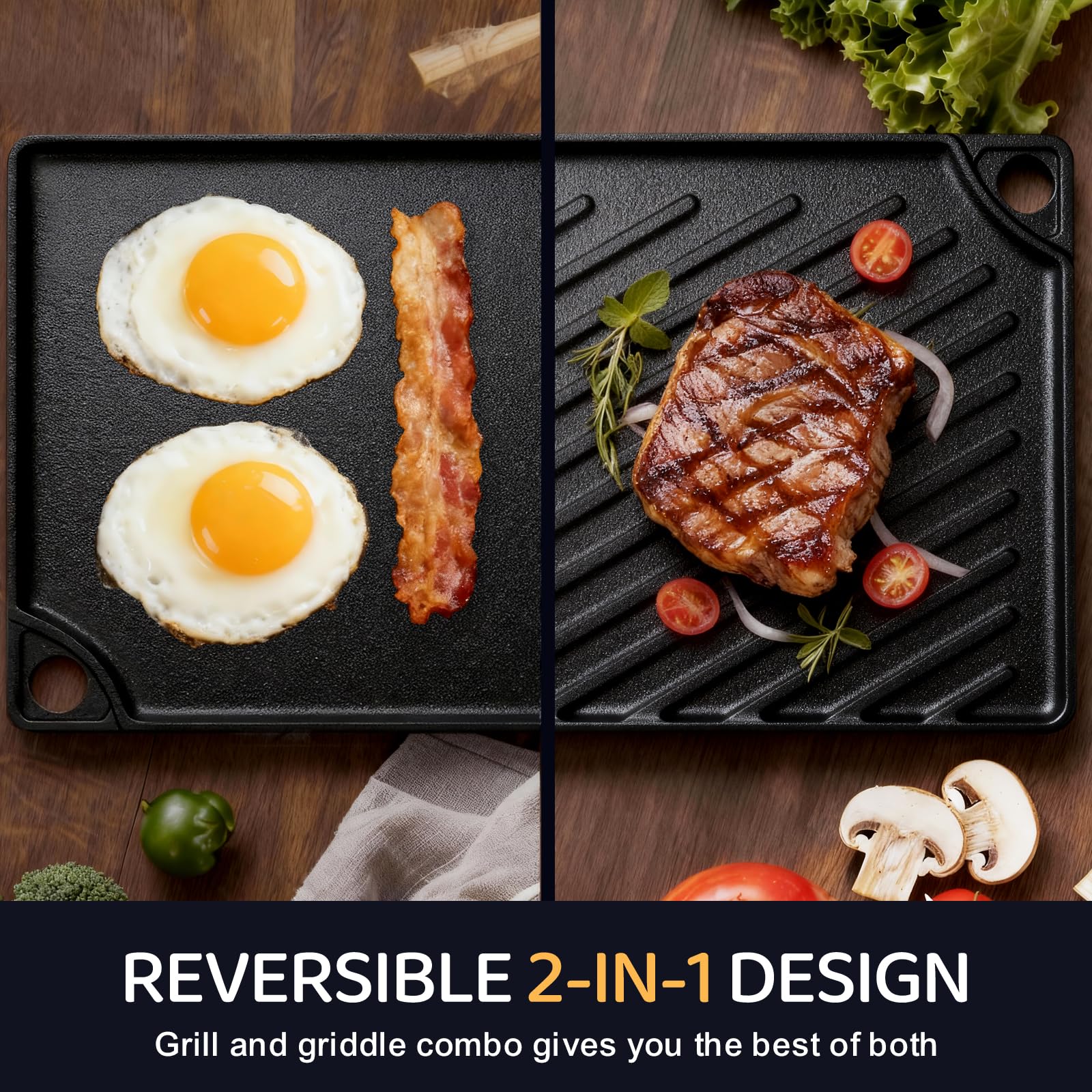


Best Compact Griddle: EWFEN Reversible Grill/Griddle
The EWFEN Reversible Grill/Griddle, 16.7×9.5” Pre-Seasoned Cast Iron Griddle Pan is the simplest way to add griddle behavior to a grill you already own. The flat side handles eggs, onions, tortillas, and smashed patties; the ribbed side gives you marks when you want a grill-like surface without changing equipment.
Its best job is two-person cooking or side work. At 16.7 x 9.5 inches, it is not wide enough for a big burger night. But if your main grill already handles chicken or steak, this insert fills the gap.
Best Tool Set for Flat Tops: EWFEN 35PCS Griddle Accessories Kit
The EWFEN 35PCS Griddle Accessories Kit makes the griddle side easier to use. Wide spatulas help with burgers and pancakes, scrapers handle browned bits, and squeeze bottles keep oil or water close without running back inside. For flat top cooking, tools are part of the method.
The set is less important for classic grilling. Tongs and a brush can handle most grate work. Buy this if you already know the griddle will cook 3 or more foods per session.
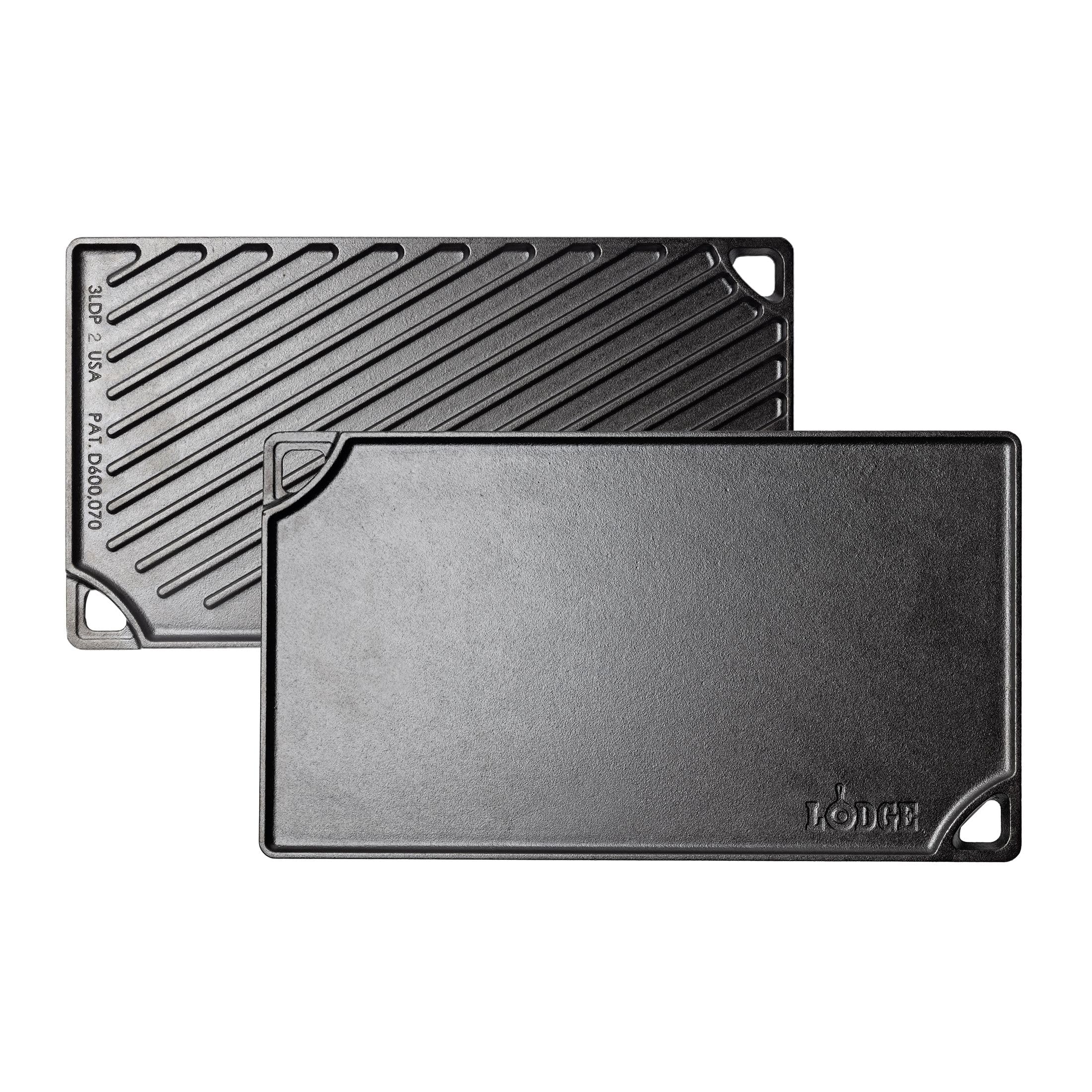
Best Heavy Insert: Lodge Reversible Cast Iron Grill/Griddle Pan
The Lodge Reversible Cast Iron Grill/Griddle Pan 16.75 x 9.5 is the heavier insert for cooks who want steadier heat and a familiar cast-iron routine. It needs 8 to 12 minutes to preheat, then rewards patience with even browning. That makes it strong for steak strips, vegetables, bacon, and buns.
The trade-off is weight and maintenance. Wash gently, dry fully, and oil lightly while warm. If that sounds annoying, a removable electric griddle may fit your habits better.
Best Indoor-Outdoor Helper: Chefman XL Electric Griddle
The Chefman XL Electric Griddle with Removable Temperature Control is the controlled helper for covered patios and kitchens. It gives adjustable heat for pancakes, eggs, burgers, and buns without propane or charcoal. Use it when open flame isn’t allowed or when the main grill is busy.
It does not replace a grill for smoke or covered cooking. It needs a proper outlet, a stable surface, and dry conditions. Keep it away from rain. Obvious, but important.
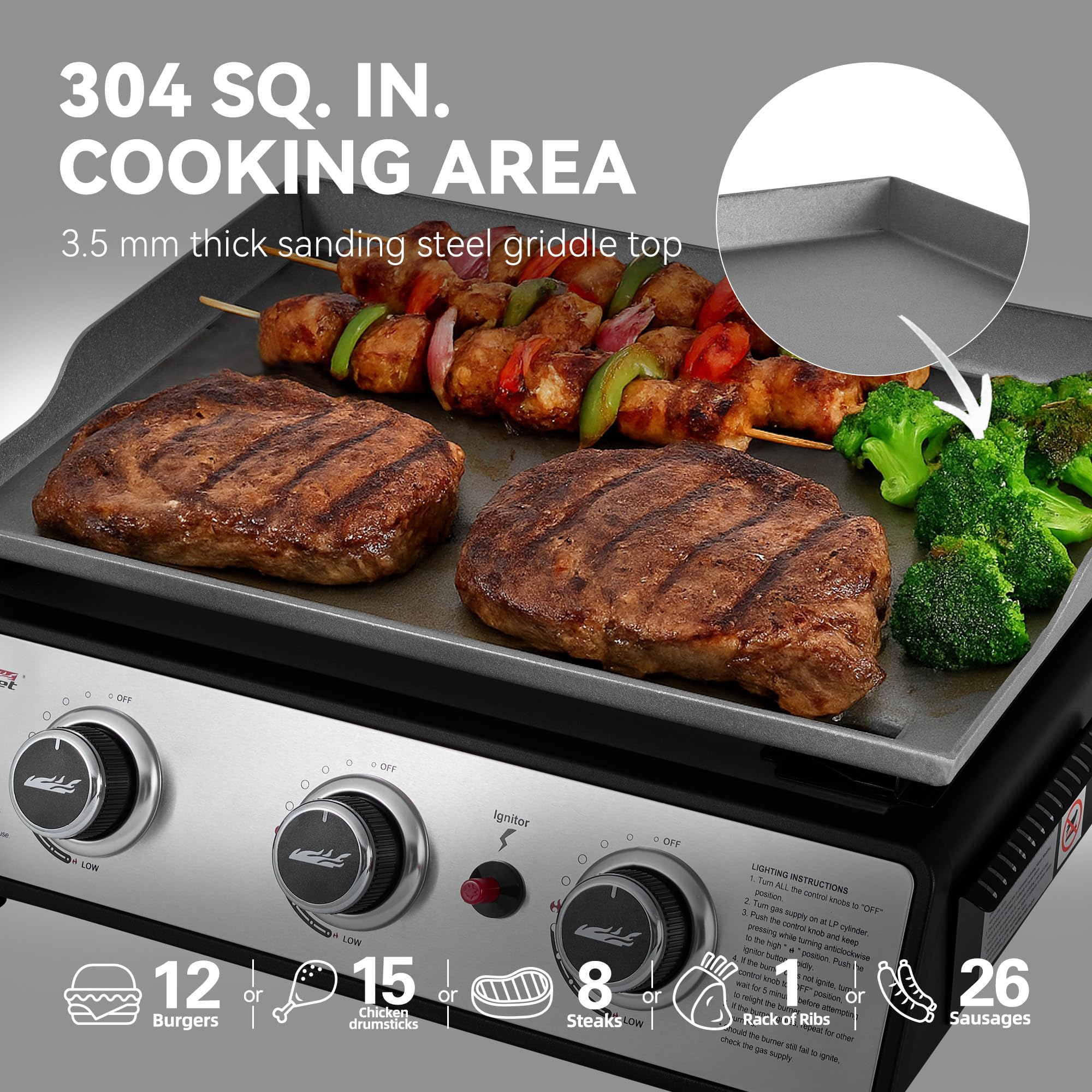
Best Portable Flat Top: Royal Gourmet PD1301S
The Royal Gourmet PD1301S Portable 3-Burner Tabletop Gas Griddle makes the griddle case strongest. It lists 25,500 BTU and 304 square inches of cooking surface, which is enough room for burgers and onions without crowding. Three burners also let you run different heat zones.
This is the pick if weeknight cooking matters more than grill marks. It needs grease management and a stable table, but it can cook breakfast, lunch, and dinner in the same outdoor corner. That’s real range.
The Verdict
For burgers, breakfast, chopped vegetables, and fast weeknight batches, griddle wins because contact heat browns more surface at once. For steaks, chicken, smoke, and foods that need airflow, grill wins because the grate and lid create a broader heat environment. If you cook both styles, a reversible cast-iron griddle is the cheapest bridge between them.
Cleaning and Grease Control
A griddle asks for a scrape while it is still warm, then a thin coat of oil before storage. That takes about 5 minutes if the surface is seasoned, but it gets messy if grease sits overnight. A grill is more forgiving after burgers or chicken because fat can drop below the grate, though the drip tray still needs a real clean every few cooks. Different chore. Not no chore.
The bigger difference is where the fat goes. On a griddle, it travels to a cup or rear slot, so level placement matters; even a 1/4-inch slope can send grease the wrong direction. On a grill, flare-ups are the risk, especially over 500°F. Wirecutter and Apartment Therapy both emphasize heat zones for that reason: you need somewhere cooler to move food when fat hits flame.
Which One Fits a Small Patio?
A compact griddle can work on a 6-foot balcony if the grease cup is reachable and the surface sits level. A grill needs more open air around the flame, especially if the lid vents toward a railing or wall. Leave at least 24 inches around either cooker and keep fabric cushions out of the heat path.
Storage also differs. A griddle top needs to stay dry and oiled, while a grill grate tolerates a little more neglect between cooks. If you cook breakfast outdoors, the griddle earns its footprint. If you mostly cook chicken, corn, and steaks, the grill gives you more range in less surface area.
The Short Answer
Choose a griddle if breakfast, smash burgers, and small vegetables are your weekly meals. Choose a grill if you want char, smoke, and better airflow around thicker cuts. You can’t make one act exactly like the other, and that’s fine.
Frequently Asked Questions
Is a griddle better than a grill for burgers?
Yes, for smash burgers and thin patties. The flat surface creates more crust and fewer flare-ups. Thick pub-style burgers can still work well on a grill.
Does a griddle taste smoky?
No, not like a charcoal or gas grill with dripping fat and airflow. A griddle gives browned flavor from contact heat, not much smoke.
Can you put a griddle pan on a gas grill?
Yes. Use a stable cast-iron griddle, preheat it for 8 to 12 minutes, and keep one cooler zone available in case oil starts smoking hard.
Which is easier to clean?
It depends on the meal. A griddle scrapes clean fast after burgers and onions. A grill grate is easier after dry foods like skewers or corn.
Which one is better for small patios?
A tabletop griddle is often easier because grease stays on the surface and cleanup is contained. Check lease rules, ventilation, and clearance before using any outdoor cooker.
Do I need both a griddle and a grill?
No. Start with the food you cook weekly. Buy a grill for smoke and thicker cuts; buy a griddle for burgers, breakfast, and chopped foods.
Bottom Line
The Royal Gourmet PD1301S is the one most griddle-first cooks should buy because 304 square inches and 3 burners make weeknight batches easier. If you already own a grill and just need contact heat, the Lodge Reversible Cast Iron Grill/Griddle Pan is the smarter bridge. The caveat: grills still win for smoke, airflow, and thicker cuts that need heat around the sides.
Write Your Review
No reviews yet. Be the first to share your experience!