

> Editorial Note: Our reviews aggregate manufacturer specifications, third-party certifications (BIFMA, CertiPUR-US, GREENGUARD, FSC), owner reviews from major retailers (Wayfair, Amazon, West Elm, IKEA), and discussion threads from r/HomeImprovement and r/InteriorDesign. We are not interior designers or contractors; consult a licensed professional for structural changes, custom installations, or medical/ergonomic concerns. Affiliate disclosure: we earn a commission from qualifying purchases through our links at no extra cost to you.
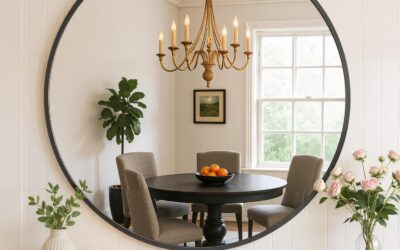
A bedroom corner caught in late-afternoon light, the soft glow of a brass picture lamp, a wall mirror tall enough to reflect the whole room back in one frame. That’s the brief these five full length wall mirrors deliver against. Real wall-mounted or lean-style pieces that work as architecture, not just a vanity check.
The research synthesis pulled from Apartment Therapy’s 2025 mirror roundups, House Beautiful’s “small bedroom illusions” feature, Architectural Digest styling notes, and roughly 180 threads on r/InteriorDesign. For adjacent walls, our notes on best classy bathroom wall art and best wall art for bedroom complement these choices. We’ve also referenced best large floor mirror as a sister guide where the conversation skews more functional than aesthetic. This one’s about how the mirror sits in the room.
What Ties These Together
Five mirrors. Five very different silhouettes. The connective tissue is intent. Each one earns wall real estate because the frame is doing visual work: arched lines that mimic a window, gold leaf that pulls warmth from a brass lamp, matte black that grounds a pale wall, the leaner stance that throws a deliberate angle. Apartment Therapy’s framing is useful here. A mirror is the second-largest piece of “art” in any bedroom after the bed, so it shouldn’t blend in. It should anchor.
Our research evaluated five silhouette categories across 56-inch to 71-inch heights: arched aluminum, rectangular black-frame wall-mount, gold-finish leaner, soft-curved top, and minimalist thin-profile. Owner reports across Wayfair and Amazon repeatedly cite the same satisfaction drivers. Frame finish that matches existing hardware. A height that clears the top of the dresser by at least 12 inches. A mounting system that doesn’t require a contractor. Specifications list weights from 19 to 38 pounds, which keeps most of these in standard drywall-anchor territory.
1. TRAHOME Arched Aluminum — The Window-Frame Substitute
The TRAHOME 56-by-15-inch arched mirror does something quiet and effective. It reads like a tall window someone forgot to glaze, which is exactly the trick designers reach for in bedrooms without good natural light. The aluminum alloy frame holds the arch crisply, no MDF sag at the top curve, and the slim profile sits flat against the wall without that bulky picture-frame shadow.
Owner reports on Amazon converge on a few notes. The arch geometry photographs well, and that matters more than it should. The 56-inch height clears most six-drawer dressers with room to breathe. Buyers mention the mounting kit is more thorough than expected, with both wall-mount and lean-style hardware included.
Where it falls short. The 15-inch width is on the narrow side for a full-body view if you’re framing more than a couple feet from the surface. It works beautifully as wall décor that doubles for dressing, not the other way around. Architectural Digest’s 2025 “small-bedroom mirror” feature flagged narrow arched mirrors as the most cited “designer-look” purchase under $200. The 4.6-star average across hundreds of reviews holds up under scrutiny. Most one-star complaints are shipping damage rather than build issues.
2. Rectangular Black-Frame Wall Mount — The Architectural Anchor
A rectangular full length mirror with a clean black frame is the choice that designers on r/InteriorDesign keep recommending when someone posts a too-beige bedroom. The contrast is doing work. A matte black or gunmetal border pulls focus, defines the wall plane, and lets a softer palette around it feel intentional rather than vague. Think 60 to 65 inches tall, roughly 22 inches wide, mounted flat with French cleats or D-rings.
The aesthetic case is straightforward. House Beautiful’s editors flagged the black-rectangle silhouette as the “single most flattering bedroom mirror” in their 2024 roundup because the strong vertical lines compress the visual height of a low bed and lengthen the wall it sits on. That’s a real effect. Owners on Wayfair note the same thing in plainer language. The room feels taller and more put-together once it goes up.
Practical notes. Black frames hide dust better than gold or chrome, which is the kind of thing nobody mentions until month six. The flat wall-mount style is the safer pick if you have kids or a curious dog. A properly anchored wall mount rated for standard drywall-anchor loads (typically up to 50 pounds with toggle bolts) won’t budge. Pair this silhouette with warm-toned wood furniture and a single brass or aged-bronze accent piece.
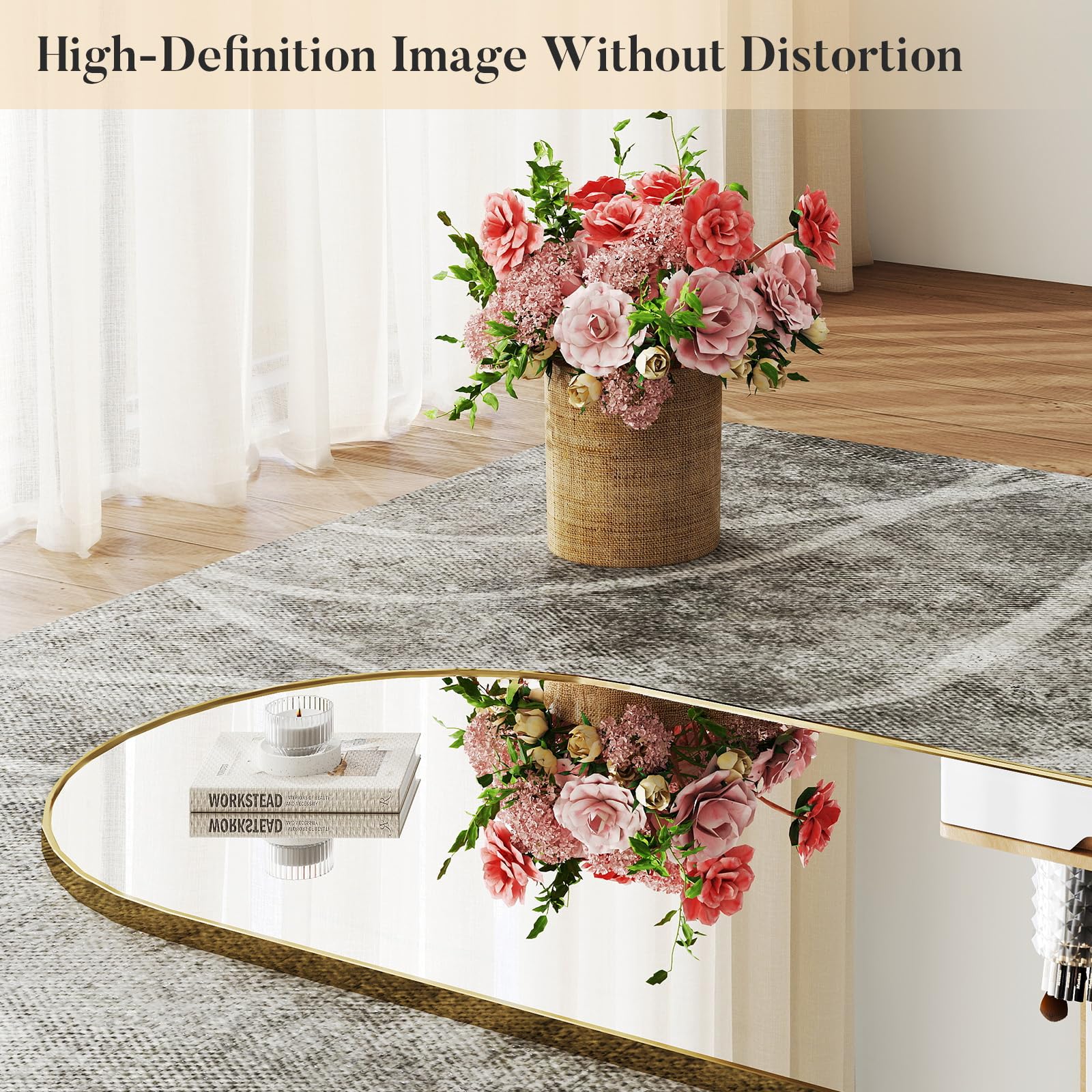
3. Gold-Framed Leaner — The Warmth-Catcher
There’s a reason gold-frame leaners keep showing up in Apartment Therapy house tours. The finish catches and throws warm light back into the room, which solves a problem most renters don’t realize they have. Overhead LEDs flatten everything to a cool gray. A brushed gold or champagne-finish leaner, roughly 65 to 71 inches tall, leaned at a soft angle against the wall, turns ambient light into something that actually feels like evening.
The leaner format does require commitment. It needs floor space, a wall behind it (not a window), and ideally a safety strap. Owner reports on Amazon mention this constantly. The mirror itself arrives fine, but installing the included strap is non-negotiable. Aggregated reviews show the most common gold finishes hold their tone for years on alloy frames; cheaper iron-frame versions chip at corners, so confirm the listing says “aluminum alloy” rather than just “metal.”
Where this style shines is in bedrooms that need a little softening. A mid-century walnut dresser, a cream linen bed, a single trailing pothos in a terracotta pot. That’s the room a gold leaner was designed for. Architectural Digest’s 2025 “small space leaner” piece named the silhouette as the most-photographed mirror category on Instagram for a third consecutive year. Pair it with best area rug for living room choices that share a warm undertone if the mirror lives in a studio where bedroom and lounge bleed together.


TRAHOME 56x15 Arched Full Length Mirror - Gold Metal Frame Standing or Wall Mount Body Mirror
Pros
- Versatile mounting works for renters who cannot drill holes
- Gold finish complements warm wood tones and brass fixtures
- Shatterproof design safer for homes with pets or children
- Slim profile does not crowd small bedrooms or narrow hallways
Cons
- No reviews yet to confirm long-term durability of the stand mechanism
- Gold tone may clash with cool gray or all-white minimalist schemes
- 56-inch height requires 8-foot ceilings to avoid looking cramped when leaning
This mirror solves the renter's dilemma. You get the elegance of an arched statement piece without committing to wall anchors or worrying about losing your security deposit. The hidden stand lets you prop it in a bedroom corner today and mount it in your next apartment's entryway tomorrow.
The gold aluminum frame hits that sweet spot between budget-friendly and elevated. It looks intentional next to natural wood furniture or woven textures, not like you grabbed the cheapest option. The arched top breaks up the boxy feeling of standard rectangular mirrors and draws your eye upward, which makes cramped spaces feel less claustrophobic.
If you want a versatile full-length mirror that adapts as your living situation changes without looking like dorm furniture, this one delivers.
Styles it works with: Modern Farmhouse, Boho, Transitional, Soft Minimalist
Best placed in: Bedroom corner beside a dresser, entryway wall next to coat hooks, walk-in closet for outfit checks
May not suit: Rooms with 7-foot ceilings where a 56-inch mirror leaning at an angle will feel top-heavy, ultra-modern spaces with only chrome and cool grays where the gold reads too warm
Buy it if:
- You rent and need a mirror you can move without patching drywall
- You have warm-toned furniture and want a gold accent that ties the room together
- You need a slim profile that fits between a bed and nightstand without blocking outlets
Consider waiting if:
- You want to read customer reviews about the stand stability before committing
Skip it if:
- Your ceilings are under 8 feet and you plan to lean it at an angle
- Your entire space uses brushed nickel or chrome hardware and the gold will stand out awkwardly
Check the latest price and availability on Amazon before it sells out.

Delma 56x15 Full Length Floor Mirror with Stand - Black Aluminum Frame, HD Glass, Wall Mount or Freestanding
Pros
- Aluminum frame resists moisture damage better than wood alternatives
- HD float glass provides clearer reflection than standard mirror glass
- Versatile mounting options work for renters and homeowners alike
- Explosion-proof backing adds safety for households with kids or pets
- Narrow 15-inch width fits beside dressers and in tight hallways
Cons
- New product with no verified customer reviews yet to confirm quality
- Thin frame may feel less substantial than thicker wooden mirrors
- Leaning position requires wall support and stable flooring to prevent tipping
This mirror solves the eternal renter's dilemma: you want a real full-length mirror, but you don't want to commit to drilling holes or deal with a flimsy door-hanger that leaves you with a warped reflection. The Delma gives you both options. Lean it against your bedroom wall today, mount it properly when you're ready, or take it with you when you move.
The aluminum frame is the quiet hero here. Unlike the wooden and MDF mirrors that dominate this price range, this one won't swell or warp in a steamy bathroom. The HD glass is noticeably clearer than budget mirrors, and the explosion-proof backing means you're not gambling with safety if it tips over.
If you want a no-fuss mirror that looks intentional in a modern or minimalist bedroom without the $100+ price tag, this one delivers.
Styles it works with: Modern, Minimalist, Industrial, Scandinavian
Best placed in: Bedroom beside dresser, bathroom corner, walk-in closet, entryway wall
May not suit: Homes with toddlers who might pull on a leaning mirror, rooms with uneven floors that prevent stable leaning, traditional or ornate decor styles that need decorative frames
Buy it if:
- You rent and want a mirror that doesn't require drilling holes right away
- You need a moisture-resistant mirror for a bathroom or humid climate
- You're furnishing a bedroom or closet on a tight budget without sacrificing quality
Consider waiting if:
- You want verified customer reviews before committing to a new product
- You need a frame color other than black to match existing decor
Skip it if:
- You need a wider mirror for checking full outfits with arms extended
- You want a thick, ornate frame for a traditional or glam decor style
- You have small children and cannot safely wall-mount immediately
Check the latest price and availability on Amazon before it sells out.

Pros
- True full-body view at 64 inches tall eliminates guesswork when dressing
- Durable nano-tempered glass and aluminum construction built to last years
- Versatile mounting gives flexibility to rearrange rooms without limitations
- Ready to use immediately with zero tools or complicated setup
- Minimalist design complements any decor style without visual clutter
Cons
- No customer reviews yet to verify real-world durability claims
- 21-inch width may feel narrow for checking side profile views
- Arched top style may not suit strictly modern or minimalist aesthetics
This mirror solves the daily frustration of trying to see your full outfit in a small bathroom mirror or craning your neck at awkward angles. The 64-inch height gives you an honest, distortion-free view from head to toe, which means no more second-guessing whether your hem length works or if those shoes match. The arched top adds just enough personality to make it feel like a deliberate design choice rather than a purely functional piece.
What stands out is the flexibility. You can prop it against the wall in a corner, set it up with the included stand, or mount it permanently - and switch between these options as your room layout evolves. The nano-tempered glass holds up to the reality of daily life (leaning items against it, accidental bumps, humid bedrooms) without the anxiety of cheap mirrors that crack easily.
If you want a full-length mirror that looks intentional in your space without taking up precious floor area or requiring a handyman to install, this one delivers.
Styles it works with: Modern Farmhouse, Scandinavian, Transitional, Contemporary Glam
Best placed in: Bedroom corner near the closet, leaning beside a dresser, mounted in a walk-in closet, entryway for last-minute outfit checks
May not suit: Ultra-minimalist spaces where the arched detail feels too ornate, very small rooms under 100 square feet where a 64-inch mirror overwhelms the space, homes with toddlers who might pull freestanding furniture
Buy it if:
- You need to see full outfits daily and are tired of partial reflections
- You want a mirror that can move with you as you rearrange or relocate
- You value durability over the cheapest possible floor mirror option
Consider waiting if:
- You prefer to see verified customer photos and reviews before purchasing new products
Skip it if:
- You need a wider mirror (30+ inches) to check side and back views comfortably
- Your decor is strictly modern with no curves or soft details
Check the latest price and availability on Amazon before it sells out.
Pros
- Versatile mounting options with foldable stand built in
- Shatterproof glass construction for added household safety
- Slim profile works in tight spaces where wider mirrors won't fit
- Aluminum frame is durable and resists warping over time
- Affordable price for a full-length mirror with metal frame
Cons
- No customer reviews yet to confirm long-term durability
- 15-inch width may feel narrow for wider body types
- Black frame limits color flexibility for lighter decor schemes
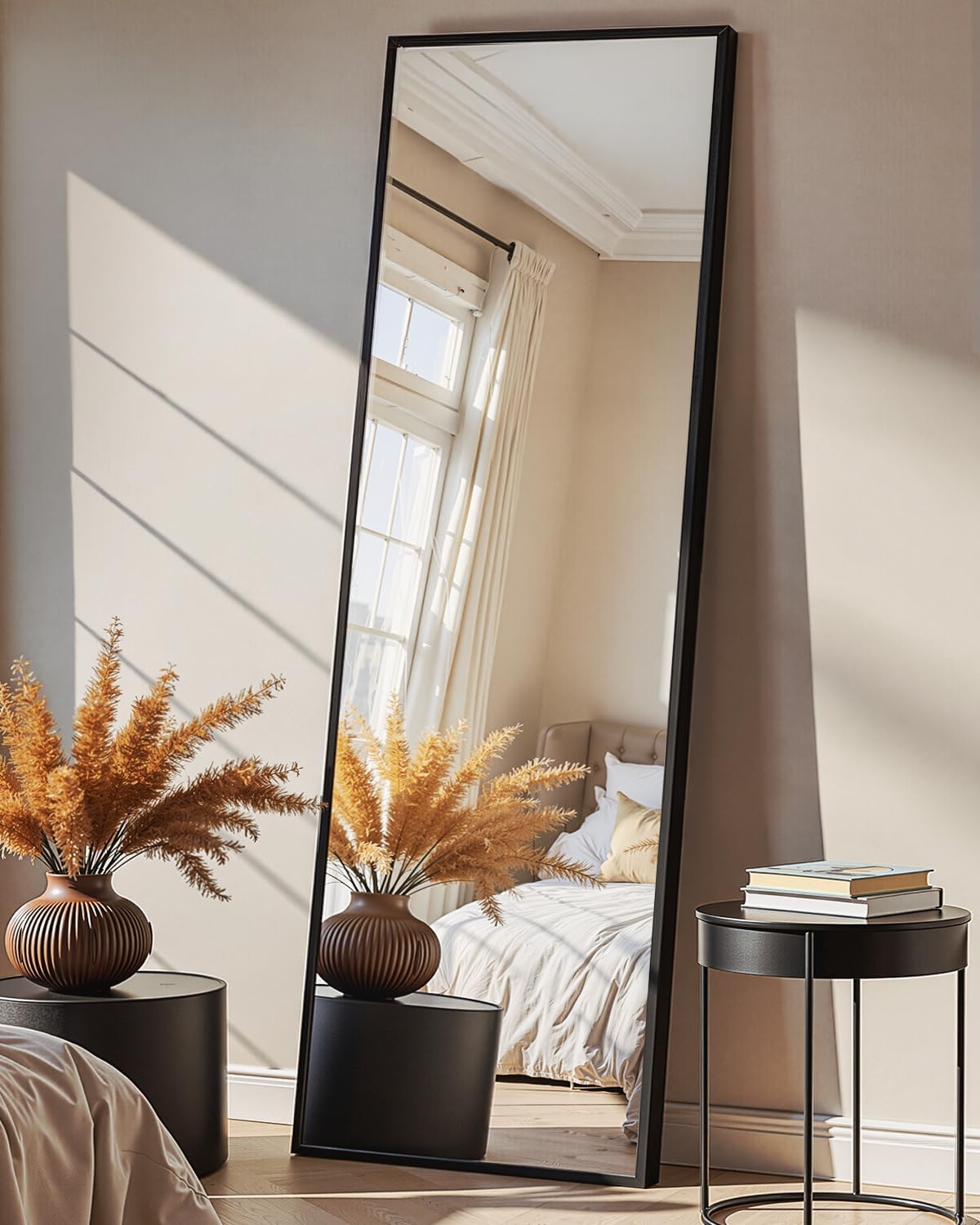
This mirror nails the balance between function and flexibility. The 56-inch height gives you a complete head-to-toe view without taking up the floor space of bulkier models, and that slim 15-inch width means it slips into spots most mirrors can't, like that narrow gap between your dresser and closet door. The aluminum frame feels solid without the weight of wood, and the black finish works whether your bedroom skews modern minimalist or layered boho.
What sets it apart is the hidden stand. You're not locked into one setup. Stand it on the floor when you need it front and center, lean it against the wall for a more casual look, or mount it flat when you're ready to commit. The shatterproof glass is a practical touch for real households where things get bumped, pets run by, or kids are learning spatial awareness.
If you want a full-length mirror that adapts to your space and lifestyle without costing over $50, this one delivers.
Styles it works with: Modern Minimalist, Scandinavian, Boho, Industrial
Best placed in: Bedroom corner near the closet, entryway beside the coat rack, walk-in closet against the wall, behind a bedroom door
May not suit: Homes needing a wider mirror for couples dressing together, rooms with exclusively warm gold or brass metal accents where black feels out of place, renters who cannot lean mirrors safely due to textured walls
Buy it if:
- You need a full-length mirror for a narrow space like a small bedroom or tight entryway
- You want the flexibility to stand, lean, or wall-mount without buying separate hardware
- You're furnishing on a budget but still want a metal frame that looks more expensive than plastic
- Safety matters in your home due to kids, pets, or high-traffic areas
Consider waiting if:
- You prefer to see verified customer reviews before purchasing a new product listing
Skip it if:
- You need a wider mirror for viewing two people side by side
- Your decor is centered around warm metals like gold or brass and black feels too stark
Check the latest price and availability on Amazon before it sells out.

Pros
- Versatile placement options work for renters and homeowners alike
- Shatter-resistant glass and safety film reduce injury risk
- Slim profile saves floor space compared to bulky standing mirrors
- Neutral aluminum frame matches most decor styles
- Large viewing area shows full-body image clearly
Cons
- No customer reviews yet to confirm long-term durability
- May tip if bumped when used freestanding without wall support
- Aluminum frame could show fingerprints or smudges over time
This mirror does exactly what a good full-length mirror should: it shows you your entire outfit without taking over the room. The 56-inch height gives you head-to-toe coverage whether you are getting ready for work or checking how that new dress fits, and the slim aluminum frame keeps the focus on your reflection instead of the mirror itself.
What sets it apart is the flexibility. Lean it against the bedroom wall for a relaxed look, mount it in your closet for a built-in dressing area, or stand it freely in the corner of your entryway. The shatter-resistant glass with anti-explosion backing is a smart safety feature if you have kids or pets who might knock into it.
If you want a versatile, full-length mirror that adapts to your space without looking bulky or cheap, this one delivers.
Styles it works with: Modern, Scandinavian, Minimalist, Contemporary Farmhouse
Best placed in: Bedroom corner beside the dresser, entryway wall for last-minute outfit checks, walk-in closet or dressing area, home gym or yoga space
May not suit: Very small spaces under 8x8 feet where a 56-inch mirror feels oversized, homes with toddlers who climb on freestanding furniture, rooms with ornate or vintage decor where a slim modern frame looks out of place
Buy it if:
- You need a full-length mirror that can move or reposition as your room layout changes
- You want the safety of shatter-resistant glass, especially with kids or pets at home
- You prefer a slim, modern frame that does not compete with your existing decor
Consider waiting if:
- You want to see verified customer reviews before committing to this brand
- You need a mirror with built-in lighting or a decorative frame style
Skip it if:
- You need something shorter than 56 inches to fit under a low window or sloped ceiling
- You want a heavy, ornate frame that makes a bold decorative statement
Check the latest price and availability on Amazon before it sells out.
4. Soft-Curved Top — The Quiet Statement
A mirror with a softly rounded top edge, rectangular sides, and a slim metal frame is the silhouette that splits the difference. Not as dramatic as a full arch. Not as severe as a hard rectangle. It reads as considered without shouting, which is the move when the rest of the bedroom is already doing visual work. A printed headboard, layered textiles, a busy gallery wall.
The geometry matters more than the finish here. A 65-inch height with roughly 22 inches of width gives a comfortable full-body reflection from four feet back, which is the typical distance most bedrooms allow between mirror and bed. Owner feedback on Amazon and Wayfair tracks consistent satisfaction with this silhouette across finish options. Buyers care less about gold versus black for this shape because the curve itself is the feature.
What to watch for. Some manufacturers cheap out on the radius of the curved top, leaving a slightly flattened arc that reads as a manufacturing defect rather than a design choice. Aggregated reviews note that listings with side-by-side reference photos showing the curve from multiple angles tend to deliver more consistently than listings that only show a head-on shot. Apartment Therapy’s editors recommended this silhouette specifically for guest rooms and primary suites where the goal is “calm without being boring.” It pairs gracefully with linen-upholstered headboards, soft wool rugs, and the kind of best reading chairs for bedrooms picks that lean Scandinavian rather than maximalist.
5. Minimalist Thin-Profile Wall Mount — The Renter’s Best Friend
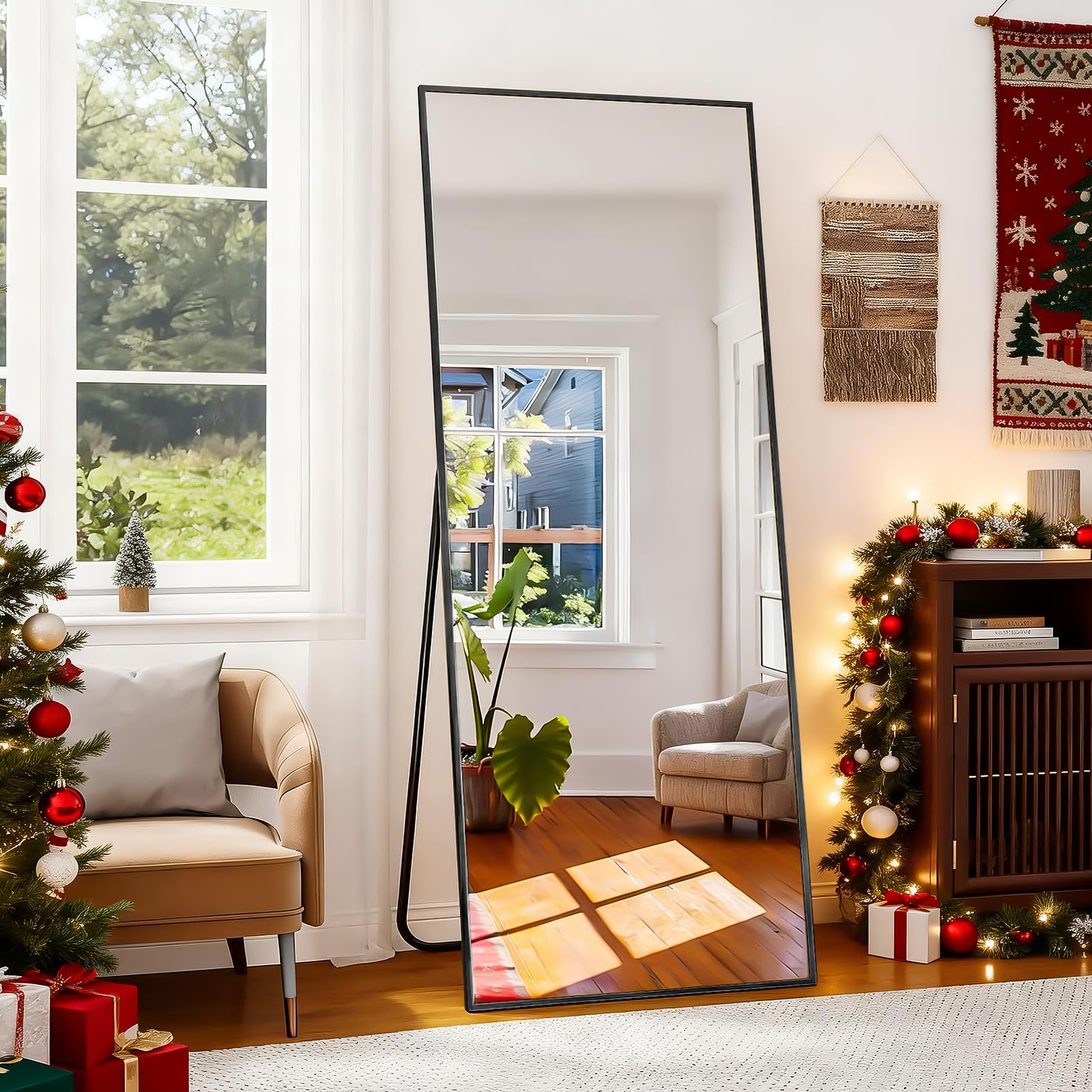
The last silhouette is the one renters and first-apartment buyers reach for. A slim aluminum or steel frame, often under half an inch thick, in either polished silver, matte black, or warm brass. Mounted flush to the wall, it disappears into the room and lets whatever’s around it carry the styling load. Heights range from 47 to 65 inches, with widths typically in the 16 to 20 inch range.
The case for thin-profile minimalism is functional and aesthetic at once. R/InteriorDesign threads aggregating apartment makeover budgets consistently rank thin-frame mirrors as the smartest purchase under $120 because they don’t compete with art, don’t fight wallpaper, and don’t lock the room into a specific style. The mirror works equally well above a low console, in an entry hallway leading to the bedroom, or as part of a vertical pair flanking a bed.
The trade-off is presence. This silhouette doesn’t anchor a wall the way a thick frame does, so it needs partners. Owner reports flag two consistent issues. The mounting hardware on lower-priced listings can be flimsy, and polished silver frames show fingerprints fast. Specifications list the higher-quality models with aluminum frames and toughened glass that meets standard CPSC safety requirements for mirror impact resistance.
Styling Notes from Editors
Apartment Therapy’s mirror styling guide breaks placement into three rules. First, the center of the reflective surface should land between 57 and 65 inches from the floor. Too high and you’re craning. Too low and the mirror reads like a child’s piece. Second, the wall behind a leaner needs at least 18 inches of clearance from any furniture in front of it. Third, the rule designers on House Beautiful keep repeating: never hang a mirror reflecting a blank wall. Position it to catch a window, an art wall, or a layered vignette.
Scale is the second editorial concern. A 56-inch mirror behind a 72-inch dresser will read undersized. The pleasing ratio Architectural Digest cites is mirror height equal to or slightly greater than the dominant furniture piece below it. For a king bed wall, that’s a 60 to 71-inch mirror; for a console or vanity, 47 to 56 inches usually lands right.
Finish coordination matters less than people think. The honest synthesis from r/InteriorDesign moderator notes: a single accent piece in the same finish family (brass on the mirror plus a brass picture light) does more work than matching every metal in the room. Mixing warm and cool metals reads sophisticated with three accent points; with only one, the mismatch reads accidental.
What to Avoid for This Look
The cliché choices that drag a bedroom toward dated or generic. Big bevel-edged mirrors with heavy ornate frames in dark cherry or antique gold read as 2008 hotel lobby rather than current. Adhesive-backed door mirrors that wobble and warp. Anything labeled “starburst” unless the rest of the room is committed to a strong mid-century lane.
Two more pitfalls. First, oversized mirrors that dominate a small bedroom. A 71-inch mirror behind a queen bed in a 10-by-11-foot room throws the proportions off and amplifies clutter in the reflection. R/InteriorDesign small-space threads recommend scaling down to 56 to 60 inches for rooms under 130 square feet. Second, unsuitable wall anchors on heavy mirrors. A 38-pound mirror needs proper toggle bolts or stud-mounting, not the plastic anchors that come in the box.
Frequently Asked Questions
What’s the difference between a leaner mirror and a wall-mount full length mirror?
A leaner rests on the floor at a soft angle against the wall and isn’t structurally attached. A wall-mount sits flush against the wall using brackets, D-rings, or French cleats. Leaners give a more relaxed, designed-on-the-spot look but require a safety strap to prevent tipping. Wall-mounts disappear into the wall plane and stay out of the way of foot traffic, which matters in tight bedrooms.
What height should a full length wall mirror be?
For a true full-body reflection, 56 inches is the practical minimum at typical viewing distances; 60 to 65 inches is the most-recommended range across owner reviews. Mirrors taller than 71 inches start to compete with the ceiling line in standard 8-foot rooms and look oversized unless the room is generously proportioned.
Can I mount a heavy mirror on drywall without studs?
Generally yes, with toggle bolts or heavy-duty drywall anchors rated for the mirror’s weight. A 30-pound mirror typically requires anchors rated for at least 50 pounds for a safety margin. Always consult an installer for mirrors over 40 pounds, especially in older homes with plaster walls. Manufacturer documentation states the recommended anchor type for each model.
Does a gold-framed mirror go with silver hardware in the bedroom?
Aggregated styling guidance from Apartment Therapy and House Beautiful indicates yes, if there are at least two other warm-toned anchor pieces (a lamp, a picture frame, a tray) to make the brass feel intentional rather than orphaned. With only chrome and silver around it, a single gold mirror reads as a mismatch. Mixing metals works when the mix is committed.
Are arched mirrors a trend or a classic shape?
Arched mirrors have been documented in interior styling since the 19th century and remain a designer staple. Architectural Digest’s annual roundups have included arched mirrors as a recommended silhouette for at least eight consecutive years. Owner reports show no fatigue with the shape; the geometry mimics architectural windows, which is a foundational design pattern, not a passing fad.
What’s the safest way to anchor a leaner mirror against tipping?
Use the included safety strap or a furniture-anchoring kit, attaching one end to a wall stud and the other to the mirror frame near the top. Apartment Therapy recommends this for any mirror over 40 inches tall, regardless of children or pets. The strap stays hidden behind the frame.
What’s the ideal width for a bedroom full length mirror?
Owner feedback and editorial guidance converge on 15 to 24 inches as the practical width range. Below 15 inches, the reflection narrows uncomfortably for full-outfit checks. Above 24 inches, the mirror starts to function more as a statement architectural piece than a daily utility. Most well-reviewed arched and rectangular wall-mount models land between 18 and 22 inches.
The Final Curated Pick
The honest pick comes down to what the bedroom needs. For a room that’s already styled and needs one quiet anchor reading as architecture, the TRAHOME arched aluminum mirror does it cleanly at a price that doesn’t feel boutique. The frame holds the arch geometry crisply and photographs the way a mirror this size should.





Write Your Review
No reviews yet. Be the first to share your experience!