

> Editorial Note: I’m Hannah Lin, an Interior Living Researcher who’s spent 9+ years analyzing the home furniture market. This guide draws on BIFMA, GREENGUARD, and FSC certifications, plus owner reviews aggregated from Wirecutter, Apartment Therapy, and the major home design subreddits.
A squeaky couch usually isn’t dying. It’s telling you where wood, metal, springs, or floor contact moved out of alignment; the same diagnosis mindset applies to how to fix sagging couch cushions, best sofa support boards, best couches for apartments, how to clean couch cushions, and best living room rug pads.
Reason 1: The Chirp When You Sit Down (Loose Frame Joint)
The most common couch squeak starts where the seat rail meets the side frame. Wood frames expand and contract with indoor humidity, and screws can loosen after years of people dropping into the same cushion. The sound is usually a short chirp right as weight hits the seat.
Flip the couch forward with a second person if it’s heavy. Look for corner blocks, staples, cracked glue lines, and screws that sit proud of the wood. BIFMA seating durability standards focus on repeated load and stability because joints take the punishment first, not the fabric.
Tighten visible screws by hand, not with a drill on full power. If a screw spins without grabbing, the hole is stripped. A wood toothpick plus wood glue can refill a small hole; a larger failure needs a wider screw or a repair bracket.
Tiny movement. Loud sound.
Reason 2: The Metallic Twang Under One Cushion (Spring Contact)
A metallic squeak usually comes from a spring rubbing against a clip, bracket, or neighboring wire. You’ll hear it under one cushion more than across the whole sofa. If the cushion is removable, take it off and press on the deck with your palm in 6-inch increments.
Sinuous springs run front to back in many sofas. When a clip loosens, the spring still supports weight, but it shifts enough to make noise. A small amount of dry lubricant on the metal contact point can help, but don’t spray oil onto fabric, foam, or webbing. Overspray stains. Fast.
If a spring has pulled out of the frame, stop using that seat until it’s reattached. A popped spring can tear the dust cover and dig into foam. That’s not a comfort issue; it’s a damage multiplier.
Reason 3: The Creak That Follows the Floor (Uneven Legs)
Sometimes the couch isn’t squeaking. The floor is. A sofa with four legs on uneven boards rocks by a few millimeters, and that twist makes the frame complain. This is common on older hardwood, tile transitions, and rugs with thick binding at one edge.
Put a level across the front rail, then across the side rail. You don’t need laboratory precision; you’re looking for obvious tilt over 30 to 84 inches of sofa width. If one leg floats even 1/8 inch, the frame flexes every time someone sits.
Felt pads, adjustable glides, or a proper rug pad can stabilize the base. Avoid stacking random cardboard under a leg. It compresses, shifts, and looks exactly as temporary as it is.
Reason 4: The Pop Near the Back (Loose Back Rail)
A pop near the back often means the back rail or reclining hardware is moving under load. Stationary couches can do this too, especially if people sit on the back edge or lean hard into one corner.
Pull the couch 12 inches from the wall and press along the back. If the noise appears only when the back moves, check the brackets that tie the back to the arms. Apartment Therapy’s furniture repair guidance often starts with access: remove the dust cover carefully, document what you see, and avoid tearing upholstery you can’t re-staple cleanly.
Loose hardware is fixable. Cracked structural wood is different. If you see a split longer than 3 inches near a load-bearing rail, the repair needs reinforcement, not just a tighter screw.
Reason 5: The Squeak That Came After Sagging (Weak Cushion Deck)
A sagging seat can make a quiet couch noisy because weight drops lower into the frame. The cushion bottoms out, the deck flexes, and wood or metal parts touch in places they shouldn’t. You may feel this as a dip before you hear it.
Measure the seat depression. If the center sits more than 1 inch lower than the edges with nobody on it, support may be part of the squeak. A support board can spread weight across a wider area and reduce frame flex, though it won’t repair a cracked rail.
This is where the fix depends on the feel. Soft cushion only? Replace or refill foam. Firm cushion with a noisy base? Stabilize the deck and frame.
Useful Repair Products
The products below target three different causes: cushion-deck sag, frame-to-wall movement, and rug or floor slip. Start with the support board if the seat dips; use the stabilizer when the couch shifts against a wall; use grip tape only when floor movement is part of the noise.

Pros
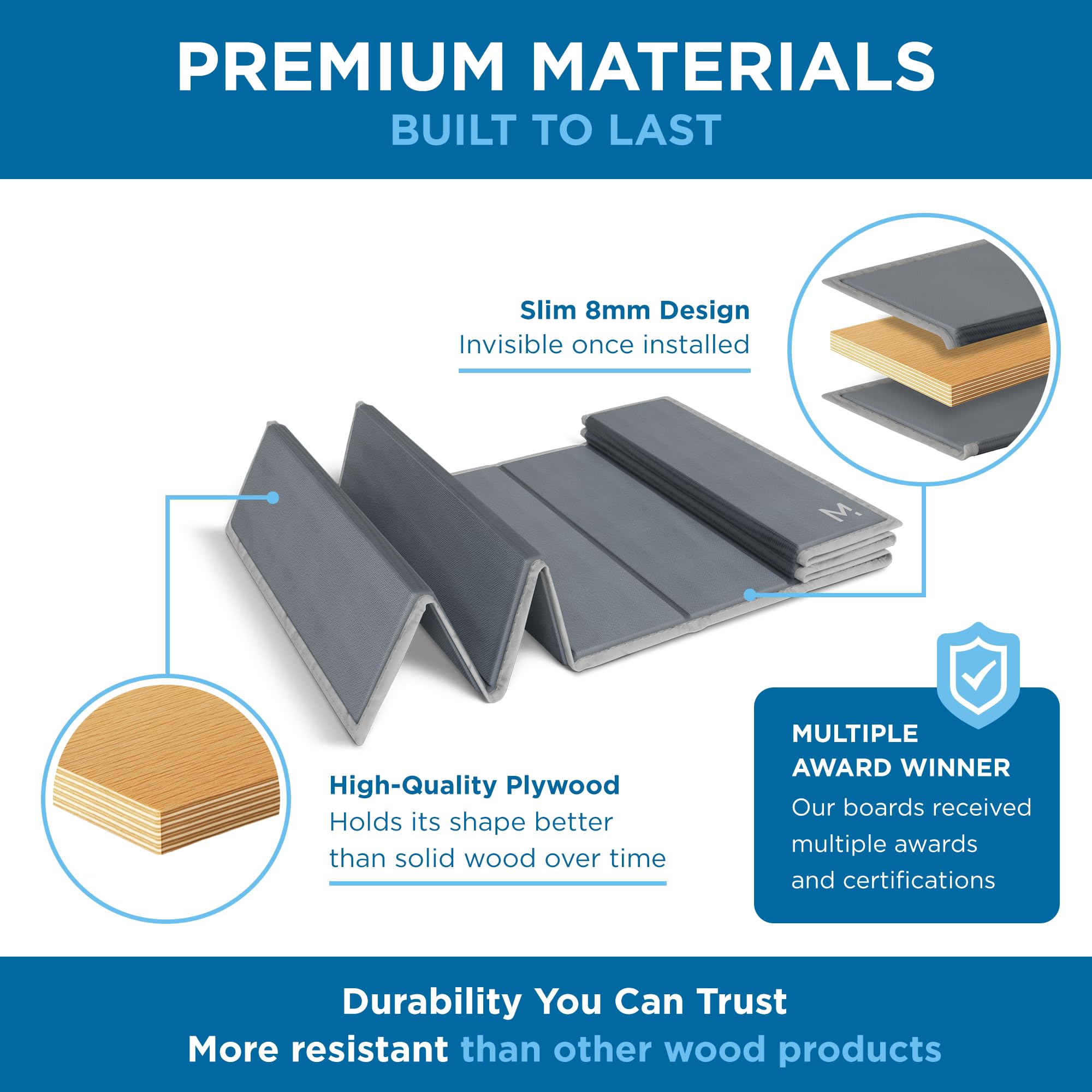
- Thicker 8mm engineered wood resists warping and compression better than budget alternatives
- No tools or hardware required, just unfold and place under cushions
- Anti-skid finish prevents shifting during use
- Folds compactly when not in use or for moving between furniture pieces
- Durable 600D Oxford fabric cover with reinforced seams
Cons
- Only works with sofas that have removable seat cushions, not suitable for fixed-cushion designs
- Requires accurate measuring of sofa frame dimensions before ordering to ensure proper fit
- New product with no verified customer reviews yet to confirm long-term durability
This is the kind of fix that makes you wonder why you waited so long. Instead of shopping for a new couch or paying for professional repairs, you pull off your cushions, unfold this rigid panel across the seat frame, and put everything back. The sagging is gone, the seat feels solid again, and you just saved yourself hundreds of dollars and the hassle of furniture shopping.
The 8mm poplar wood construction is noticeably sturdier than the thin cardboard or foam inserts that compress after a few months. The anti-slip coating keeps it locked in place, so you are not constantly readjusting it every time someone sits down. It folds flat when you need to move it or store it, but once it is unfolded under your cushions, it lies completely level without creating lumps or uneven spots.
If you want to restore firm seating on a worn sofa without replacing the whole piece or dealing with complicated repairs, this one delivers.
Styles it works with: Modern, Transitional, Farmhouse, Contemporary
Best placed in: Living room sofa, family room sectional, basement or den loveseat
May not suit: Sofas with non-removable cushions, small apartment loveseats under 60 inches wide, homes where you prefer to replace furniture rather than repair it
Buy it if:
- Your sofa cushions sag in the middle and you sink down when you sit, but the frame and fabric are still in good shape
- You want to extend the life of your current couch for a few more years before upgrading
- You need a tool-free fix that takes under 10 minutes to install and actually works
Consider waiting if:
- You are unsure of your exact sofa frame dimensions and want to measure carefully first
- You are hoping for verified customer reviews before committing
Skip it if:
- Your sofa has built-in cushions that cannot be removed
- Your seat frame is narrower than 24 inches or shorter than 72 inches and you need a different size
Check the latest price and availability on Amazon before it sells out.

Krisler Adjustable Bed Frame Anti-Shake Tool, 4PCs Headboard Stoppers for Beds, Cabinets & Sofas, 30-68mm (Black)
Pros
- Quick tool-free install that takes only a few minutes
- Adjustable length adapts to different wall gaps
- EVA pads reduce noise and protect walls
- Versatile across beds, cabinets, and sofas
- Affordable set of four
Cons
- The double-sided tape adhesion can weaken over time or on textured walls
- Maximum 68mm reach will not fill larger gaps between furniture and wall
- Plastic threaded build feels light-duty and may not stop heavy frames fully
If your headboard taps the wall every time you shift in bed, you already know how annoying that little knock becomes at midnight. This Krisler set tackles that exact problem with four small threaded stoppers you simply twist out until they brace the furniture firmly against the wall.
What makes it easy to recommend is how invisible it stays. The black EVA pads tuck behind the headboard or cabinet where no one sees them, so your room keeps its look while the wobble disappears. You stick the taped base on, twist the pad out to the wall, and you are done in a couple of minutes with no drill in sight.
If you want a quieter, steadier headboard without drilling holes or buying new furniture, this one delivers.
Styles it works with: Modern Farmhouse, Scandinavian, Minimalist, Traditional
Best placed in: behind the headboard beside the bed, behind a freestanding cabinet, or behind a sofa set against the wall
May not suit: homes where the gap between furniture and wall is wider than 68mm, or pieces too heavy for plastic stoppers to fully steady
Buy it if:
- Your headboard knocks or shakes against the wall and keeps you up
- You want a no-tool, no-drill fix you can install in minutes
- You have several pieces of furniture that rock and want a set of four
Consider waiting if:
- You prefer a color other than black to blend with light walls
Skip it if:
- The gap behind your furniture is wider than 68mm
- You need a heavy-duty bracket for a very large or solid wood frame
Check the latest price and availability on Amazon before it sells out.

X-Protector Rug Tape for Carpet 8-Piece Set | Anti-Slip Corner Grippers for Area Rugs on Carpet
Pros
- Carpet-to-carpet grip works where standard rubber pads completely fail
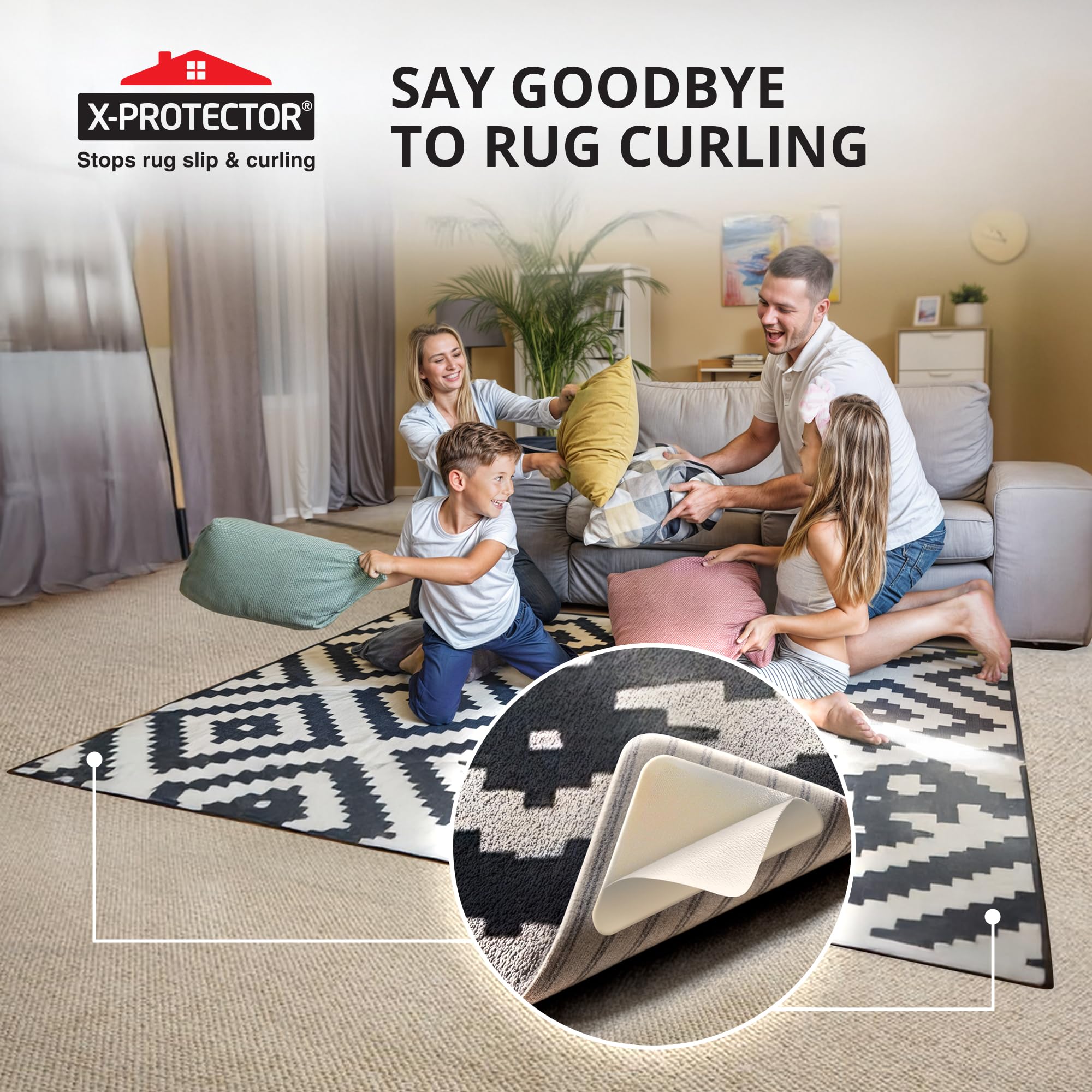
- Very thin design stays invisible under rugs without raising edges
- Covers both anti-slip and anti-curling needs in a single affordable set
- Suitable for indoor and outdoor use, adding real versatility
- Strong satisfaction guarantee lowers the risk of a bad purchase
Cons
- Designed for low-pile carpet surfaces only, so it may not grip well on high-pile or shag carpet
- Only 8 pieces per set, which may not be enough coverage for very large area rugs without buying multiple packs
Most rug grippers are built for hard floors, which leaves anyone with wall-to-wall carpet in a frustrating blind spot. X-Protector actually designed these specifically for carpet-on-carpet layering, which is what makes this set stand out in a crowded category. The adhesive is engineered to bond two textile surfaces together, not just create friction against tile or hardwood.
In practice, the pads are thin enough that you genuinely forget they are there. There is no ridge under the rug, no visible lump at the corners, and no awkward repositioning every time someone walks through the room. The white color also stays out of sight even with lighter rug materials. For anyone who has fought with a runner that keeps folding in the entryway or an accent rug that migrates across the living room carpet, the difference is immediate.
If you want flat, secure rugs layered over carpet without ripping up your existing flooring or buying an entirely new pad, this one delivers.
Styles it works with: Modern Farmhouse, Transitional, Bohemian, Scandinavian
Best placed in: Living room seating areas layered over carpet, bedroom beside the bed where a smaller accent rug sits on top of carpet, carpeted hallways where runners tend to shift underfoot
May not suit: Rooms with high-pile or shag wall-to-wall carpet where the adhesive cannot grip the surface effectively; very large statement rugs that need full-perimeter coverage rather than corner-only anchoring
Buy it if:
- You are layering an area rug on top of existing wall-to-wall carpet and standard rubber pads keep sliding
- Your rug corners curl up and become a tripping hazard no matter how many times you press them flat
- You want a low-cost, low-effort fix that does not require removing furniture or replacing your flooring
Consider waiting if:
- You are still deciding on the final rug size or placement and do not want to commit the adhesive to a fixed position yet
Skip it if:
- Your floors are hardwood, tile, or vinyl since this product is built for carpet surfaces only
- You have deep-pile or shag carpet where the adhesive backing cannot make proper contact with the fibers
Check the latest price and availability on Amazon before it sells out.
Frequently Asked Questions
Is a squeaky couch dangerous?
Almost never. A squeak usually means friction, loose hardware, or shifting support. Stop using that seat if you see a cracked rail, a spring poking through fabric, or a leg pulling away from the frame.
Can WD-40 fix a squeaky couch?
Sometimes, but it’s usually the wrong first move. It can stain upholstery and attract dust. Use a dry lubricant on metal contact points only, and keep it away from foam, fabric, and wood glue joints.
Why does my couch squeak more in winter?
Dry indoor air shrinks wood slightly. Below about 30% relative humidity, joints can open enough to rub. A room humidifier set around 35% to 45% can reduce seasonal noise.
Should I remove the black fabric under the couch?
Yes, if you need access and can reattach it. Pull staples carefully, take photos, and replace the dust cover with upholstery staples when you’re done.
When should I call a furniture repair person?
Call when the frame is cracked, the reclining mechanism is bent, or the couch still twists after the legs are level. A $150 repair visit makes sense for a solid frame; it doesn’t for a failing bargain sofa.
Bottom Line
Most couch squeaks trace back to loose joints, spring contact, or a frame twisting on an uneven floor. The Meliusly support board is the first fix I’d try when squeaking arrives with sagging, while the Kirsler stabilizer makes more sense for wall-side movement. If the frame rail is split or the seat feels soft and springy, don’t keep adding pads. Get eyes inside the base before the damage spreads.



Write Your Review
No reviews yet. Be the first to share your experience!