

> Editorial Note: I’m Olivia Bennett, a storage and organization contributor. I approach storage as a systems problem rather than a product one — fit to actual room dimensions, load ratings, and how the system holds up under daily use.
The number one mistake with a deep closet is treating the back wall like usable storage. Anything past the front 18 inches becomes a dead zone you can’t see or reach, and that’s where the off-season coats and forgotten shoes go to die. A deep closet works only when you zone it by how often you grab something and pull the daily stuff forward. Build the system out with best closet organizer for small closet, best closet system, best closet shelving, best closet rod, and best wire shelving.
The Ground Rules Before You Start
Empty the whole closet first. Every coat, every shoe, every box of who-knows-what. You can’t zone a space you can’t see, and a deep closet hides more than any other storage in the house. Pull it all onto the bed and sort by category before a single thing goes back.
Measure the depth with a tape. Most reach-in closets run 24 inches deep, but some run 30 or even 36 inches, and that extra depth is what creates the dead zone. Record the depth, the width, and the vertical height between shelves, because those three numbers decide which organizers fit and how tall your stacks can go.
Zone by frequency before you place anything. Daily items go in the front 18 inches where you can grab them without reaching, weekly items in the middle, and seasonal or rarely-used items in the back. A closet stays organized when the front zone matches what you actually wear at 7 a.m., not what looked tidy the day you finished.
Step 1: Pull Everything Forward Into the Reachable Zone
The front 18 inches of any shelf or rod is the only storage you use daily, so claim it for the things you grab most. Hang the everyday jackets and work shirts on the rod’s front section, and slide the off-season or dressy items to the back where they’re out of the way but still visible. A closet where the daily clothes sit at arm’s length stays neat, because you never have to dig.
For shelves, the same rule applies. The front 12 to 18 inches holds the shoes and folded items you wear weekly, and the back holds the storage boxes and seasonal bins. A shelf that’s 24 inches deep with only front access wastes the back half unless you put low-frequency items there, so reserve the depth for things you touch twice a year.
Use pull-out bins or a sliding shelf for the mid-depth if you can. A bin that slides forward on tracks turns the dead zone into reachable storage, because you pull the whole bin out instead of reaching past the front items. Wirecutter’s closet-organizer reviews consistently favor sliding or pull-out components for deep closets exactly for this reason.
Step 2: Add a Second Rod or Shelf to Use the Height
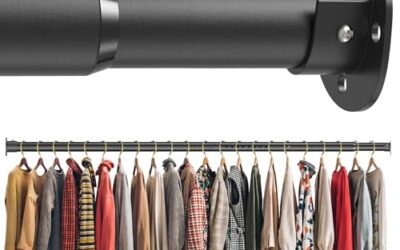
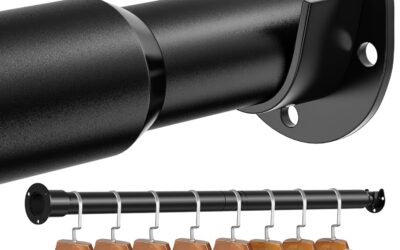
Most closets waste the vertical space above the single rod. A standard closet rod sits about 66 inches off the floor, which leaves 18 to 24 inches of empty air above it and a tall gap below the top shelf. Adding a second hanging rod at about 42 inches doubles the hanging capacity for shirts and shorter items, and it uses the depth you already have.
For the upper space, install an adjustable shelf above the main rod at about 78 inches. That shelf holds the bins and boxes that used to vanish into the back of the lower shelf, and it puts them at a height you can see and reach with a small step stool. A second tier up high is where the depth becomes an asset instead of a liability.
Use the depth vertically too. A 24-inch-deep closet can hold two rows of shallow bins front-to-back on the top shelf, with the low-frequency bins in the back and the medium-use ones in the front. Label the front of every bin so you know what’s behind it without pulling, because in a deep closet, the back row is invisible without a label.
Step 3: Use the Floor for Heavy or Bulky Storage
The closet floor is the most underused zone, and in a deep closet it’s also the most stable. Store the heavy items, like shoe boxes, a vacuum, or a laundry basket, on the floor where the weight is supported and the depth gives you room. A floor free of clutter is a floor that’s easy to vacuum, which keeps the dust and mustiness down.
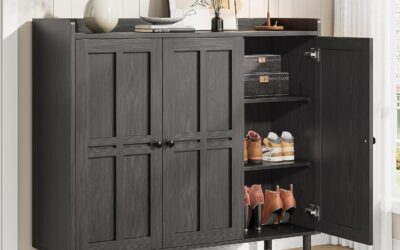
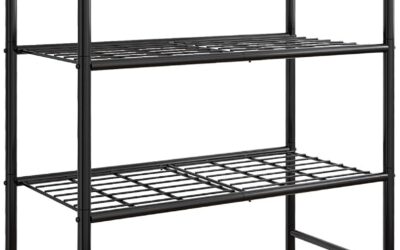
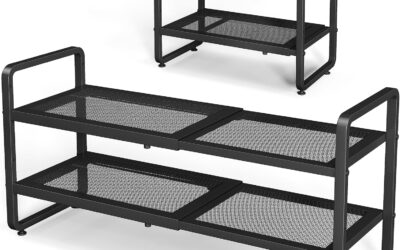
Add a shoe rack or cubbies along the floor’s front edge. A rack that’s 12 inches deep holds a row of everyday shoes in the reachable zone, and the depth behind it stores the off-season boots and shoe boxes. Keeping shoes off the floor on a rack also lets air move underneath, which is the single biggest mustiness fix in a closet.
For the deep back floor, use a rolling bin or a low drawer that pulls out. A rolling bin turns the dead back corner into reachable storage for bulky items like blankets or off-season coats, because you pull the whole bin forward instead of reaching into the dark. NEAT Method’s approach to deep closets leans on rolling components for exactly this reason.
Step 4: Label and Maintain the Zones
Labels are what keep a deep closet honest after week three. Label the front of every bin, box, and shelf zone with what’s inside, because in a deep closet you can’t see the back without pulling everything forward. A strip of painter’s tape and a marker does it, and it’s the difference between a system that lasts and one that collapses in a month.
Book a 10-minute tidy once a month. Refold what’s drifted, return strays to their zone, and recheck the labels. Real Simple’s organizing editors point to monthly resets for exactly this reason: small maintenance prevents the deep-clean spiral. When clean laundry comes in, it goes to the back of its slot so you pull from the front and rotate evenly, same logic as a grocery shelf. A deep closet that’s zoned and labeled takes 10 minutes to reset, versus an hour to excavate.
Do a deeper cull twice a year when you swap seasonal clothes. That’s the moment to pull the back bins, evaluate what you actually wore, and donate what sat untouched. A deep closet holds more than a shallow one, which is exactly why it fills with things you don’t wear, so the seasonal cull is what keeps the depth from becoming a graveyard.
The Right Organizers Make It Easier
These three picks were chosen for owner ratings above 4.5 and for the adjustable, modular designs that turn a deep closet’s depth into usable storage instead of a dead zone. Start with whichever step your closet fails hardest right now.
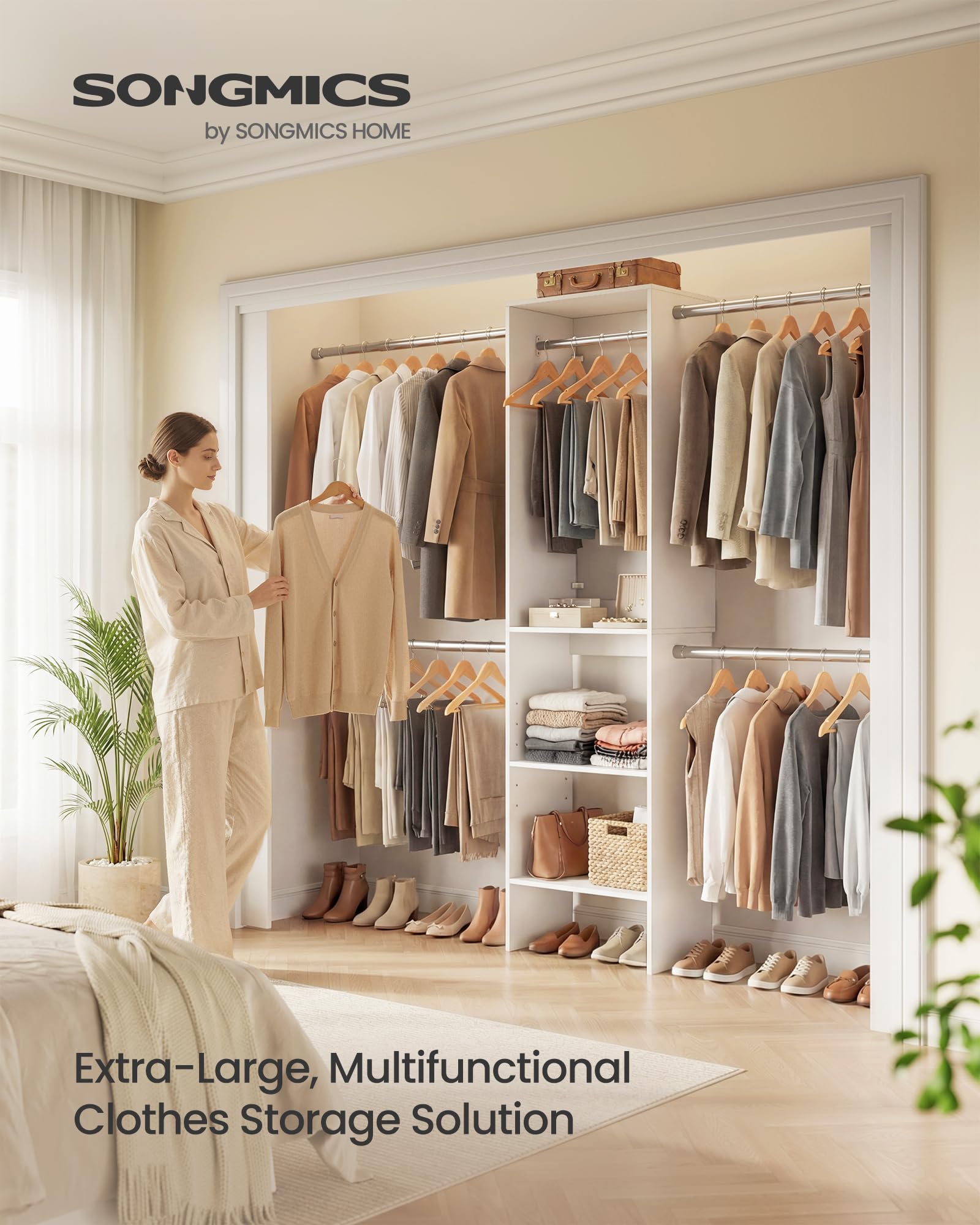
Start with the Songmics CUSTOS closet system if you want an adjustable, open-frame organizer that lets you add rods and shelves at the heights that match your depth. Choose the ClosetMaid SuiteSymphony wood organizer if you want a solid-wood tower with open shelving that pulls items forward into the reachable zone. Pick the Aheaplus closet drawers system if you want modular drawers that turn the deep back floor into pull-out storage.

Pros
- Highly adaptable width and rod placement work in most standard closets
- Multiple hanging zones maximize vertical space for different garment types
- Smooth particleboard surface wipes clean easily and resists everyday wear
- Can be installed as full system or just the center tower for smaller spaces
- Modern minimalist design pairs well with other CUSTOS collection pieces
Cons
- New product with zero verified customer reviews yet so real-world durability is unproven
- Particleboard construction may not support very heavy winter coats on every rod
- Assembly and precise measurements required for best fit and stability
This is the kind of closet system that makes you actually want to put laundry away. The SONGMICS setup gives you the control to build zones for work clothes, weekend wear, and seasonal items without fighting a fixed layout that never quite fits. The telescoping rods mean you are not stuck with awkward gaps or rods that are too short, and the adjustable shelves let you stack bulky sweaters up high or create a proper shoe gallery down low.
The white finish and open frame design keep everything visible, which is a game changer if you have ever lost a favorite shirt in a dark corner. It feels more like a boutique display than a generic wire rack, and because nothing is permanently mounted, you can rearrange it when your wardrobe changes or take it to your next place.
If you want a closet that adapts to your actual clothes and space without hiring a custom installer, this one delivers.
Styles it works with: Modern Minimalist, Scandinavian, Contemporary, Transitional
Best placed in: Primary bedroom walk-in closet, spare bedroom converted to dressing room, studio apartment closet nook
May not suit: Closets narrower than 4 feet or wider than 9.6 feet, spaces with very low ceilings where vertical hanging zones cannot be utilized, homes needing closed storage to hide clutter from view
Buy it if:
- Your current closet has one fixed rod and you are drowning in piles of folded clothes
- You are renting and need a non-permanent solution that maximizes every inch
- You want separate zones for work blazers, casual tees, and long dresses without everything touching
Consider waiting if:
- You prefer a wood tone or darker finish and want to see if other colors become available
Skip it if:
- Your closet is under 4 feet or over 9.6 feet wide
- You need fully enclosed cabinets with doors to keep dust off hanging clothes
Check the latest price and availability on Amazon before it sells out.

ClosetMaid SuiteSymphony 25-Inch Wood Closet Organizer Starter Kit – Pure White Tower with Adjustable Shelves & 3 Hang Rods
Pros
- Complete starter kit with tower, 5 shelves, and 3 rods included
- Adjustable shelves adapt to shoes, folded clothes, or storage bins
- Expandable rods fit various closet widths without custom cutting
- High 4.7 star rating indicates strong customer satisfaction
- All mounting and assembly hardware included in box
Cons
- Assembly required with multiple components to install
- Must be carefully squared during installation to ensure drawers and doors fit properly if added later
- Add-on components like drawers and doors sold separately increase total cost
This ClosetMaid system is the kind of upgrade that makes you wonder why you lived with a messy closet for so long. The 25-inch tower anchors your space with five shelves perfect for folded sweaters, shoes, or baskets, while three expandable rods give you hanging space that actually fits your closet dimensions. The pure white finish looks clean and intentional, not like builder-grade wire shelving.
What makes this kit smart is the flexibility. Rods extend from 30 to 48 inches, so whether you have a narrow reach-in or a wider walk-in, you are covered. The adjustable shelves mean you can store tall boots one season and stacked bins the next. And because it is part of the SuiteSymphony collection, you can add drawers, doors, or shoe shelves later without starting over.
If you want a closet that feels custom without the custom price tag, this starter kit delivers.
Styles it works with: Modern Farmhouse, Scandinavian, Minimalist, Transitional
Best placed in: Master bedroom closet, guest room reach-in closet, home office storage wall, mudroom organization area
May not suit: Closets narrower than 5 feet, renters who cannot mount to walls, homes needing a fully enclosed wardrobe system out of the box
Buy it if:
- You have a 5-10 foot wide closet that needs better organization now
- You want a system you can expand with drawers or doors as budget allows
- You prefer the look of wood shelving over wire racks
Consider waiting if:
- You need matching drawer or door units right away and want to buy everything together during a sale
Skip it if:
- Your closet is under 5 feet wide and cannot accommodate the expandable rods
- You need a freestanding wardrobe that does not require wall mounting
Check the latest price and availability on Amazon before it sells out.

Aheaplus 21.3" White Wood Closet Organizer System with 4 Drawers & 3 Shelves - 80"H Modular Storage Tower
Pros
- Solid wood drawer construction is more durable and easier to clean than fabric drawer units
- 80-inch height maximizes vertical storage without requiring multiple separate units
- Thoughtful baseboard cutout allows flush wall mounting for a built-in look
- Modular design works with other Aheaplus closet components for future expansion
- Includes all hardware, anti-tip kits, and labeled parts for easier assembly
Cons
- At 21.3 inches deep, it may not fit in shallow reach-in closets under 24 inches
- Assembly required for an 80-inch tall unit can take 2-3 hours for one person
- Only available in white, limiting options for darker or wood-toned bedroom schemes
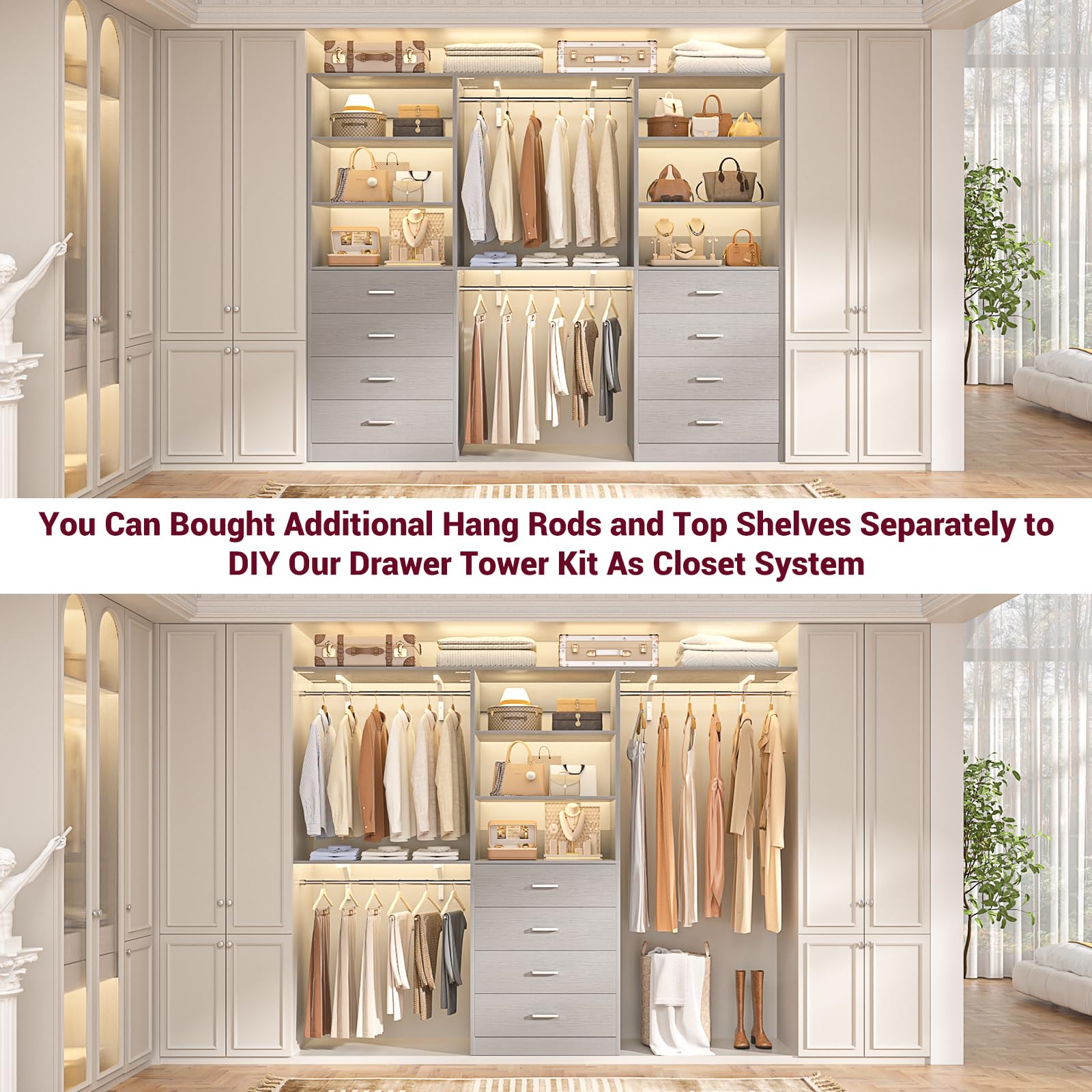
This closet tower solves the eternal bedroom struggle: where to put folded clothes that don't hang well, plus those everyday items you need to grab quickly. The four wooden drawers give you proper hidden storage for undergarments, accessories, and anything you'd rather keep out of sight, while the three open shelves are perfect for displaying handbags, stacking folded sweaters, or keeping your daily outfit picks within reach.
What sets this apart from cheaper fabric drawer units is the durability. Wooden drawers with metal glides won't sag, tear, or collect dust the way fabric does. They wipe clean in seconds and will still glide smoothly years from now. The 80-inch height means you're using vertical space efficiently, getting the storage capacity of multiple smaller units in one streamlined tower.
If you want solid wood drawer storage that fits flush against your bedroom wall without the price tag of custom built-ins, this one delivers.
Styles it works with: Modern Farmhouse, Scandinavian, Minimalist, Contemporary Transitional
Best placed in: Walk-in closet corner, bedroom wall opposite the bed, alongside existing closet systems, master bedroom dressing area
May not suit: Small reach-in closets under 24 inches deep, rooms with ceilings lower than 85 inches, homes needing drawer units in colors other than white, renters who move frequently due to assembly time
Buy it if:
- You need durable drawer storage in a walk-in closet or bedroom and fabric units haven't held up
- You're organizing a bedroom with limited floor space but good vertical clearance
- You want a white closet system that can expand with add-on rods or shelves later
Consider waiting if:
- You're hoping for a wood-tone or darker finish to match existing bedroom furniture
- You want to see if a similar unit goes on sale during Prime Day or Black Friday
Skip it if:
- Your closet depth is less than 24 inches or ceiling height is under 85 inches
- You need a fully assembled solution and can't dedicate 2-3 hours to assembly
Check the latest price and availability on Amazon before it sells out.
Frequently Asked Questions
How do you organize a closet that’s too deep?
Zone it by frequency and pull the daily items into the front 18 inches where you can reach them. Reserve the back for seasonal or rarely-used storage in labeled bins, and add a second rod or shelf to use the vertical height. A rolling bin in the back turns the dead zone into pull-out storage.
What’s the reachable zone in a deep closet?
The front 18 inches of any shelf or rod. Anything past that becomes a dead zone you can’t see or reach without pulling the front items out, so reserve the depth for low-frequency storage in labeled bins. A pull-out or sliding component extends the reachable zone into the depth.
Should I add a second rod to a deep closet?
Yes, if you hang shirts or shorter items. A second rod at about 42 inches doubles the hanging capacity and uses the vertical space that a single rod wastes. Keep the main rod for longer items like coats and dresses, and use the lower rod for shirts and folded pants.
How do I use the floor of a deep closet?
Store heavy or bulky items like shoe boxes, a vacuum, or a laundry basket on the floor where the weight is supported. Add a shoe rack or cubbies along the front edge for everyday shoes, and a rolling bin in the deep back for bulky items. Keeping the floor clear enough to vacuum also cuts the mustiness.
How do I keep a deep closet from getting musty?
Keep the air moving by leaving the door cracked or using louvered doors, store only fully dry items, and lift shoes off the floor on a rack so air moves underneath. A moisture absorber like charcoal or calcium chloride pulls water from the air. A deep closet traps damp faster than a shallow one, so airflow matters more here.
Bottom Line
A deep closet works only when you zone it by frequency, pull the daily items into the front 18 inches, and use the back for labeled, low-frequency storage. Add a second rod and an upper shelf to claim the vertical height, and a rolling bin in the back floor to turn the dead zone into pull-out storage. If your deep closet still swallows things, the fix isn’t more bins, it’s a seasonal cull, because the depth holds more than you wear and the only way to stay organized is to own less.


Write Your Review
No reviews yet. Be the first to share your experience!