

> Editorial Note: I’m Hannah Lin, an Interior Living Researcher who’s spent 9+ years analyzing the home furniture market. This guide draws on BIFMA, GREENGUARD, and FSC certifications, plus owner reviews aggregated from Wirecutter, Apartment Therapy, and the major home design subreddits.
The 50-inch TV vs 55-inch TV decision is really a room-size decision, not a bragging-rights decision. One size feels balanced at 6-7.5 ft; the other starts to earn its space around 6.5-8.5 ft. Use best corner tv stand, best small tv stand, standard tv sizes, how to measure a tv, and tv dimensions first, then compare sibling measurements like 75 tv dimensions 70 inch tv dimensions 60 inch tv dimensions 100 inch tv dimensions if you’re still deciding. Bigger can be better. Not always.
The Key Differences at a Glance
| Factor | 50-inch TV | 55-inch TV |
|---|---|---|
| Typical width | 44 in | 48.5 in |
| Common viewing distance | 6-7.5 ft | 6.5-8.5 ft |
| Stand width target | Width + 6 in | Width + 6 in |
| Typical foot span | 36-48 in | 42-58 in |
| Room fit | Apartments, bedrooms | Main living rooms |
Wirecutter’s TV buying guidance treats viewing distance and room use as the practical starting points. Apartment Therapy’s furniture advice adds the visual rule: the console should clear the screen by several inches so the TV doesn’t overpower the cabinet.
When the 50-inch TV Wins
The 50-inch TV wins when the sofa sits closer than the larger size wants. At 6-7.5 ft, it keeps subtitles readable without forcing your eyes to scan the whole screen during sports or gaming. It also works better on narrow media furniture because the cabinet width is about 44 in, leaving more room for speakers, lamps, and cable boxes.
Small apartments benefit most. A screen that leaves 24 to 30 inches of walkway around the TV corner feels planned; a larger screen that crowds the route to the hallway feels temporary. The 50-inch TV also weighs less, so older stands have a better chance of clearing the capacity rating. Check the foot span before trusting that, because wide-set legs can still create trouble.
Choose the 50-inch TV if the TV shares a room with bookshelves, a desk, or an active walkway. Calm scale. Cleaner room.
When the 55-inch TV Wins
The 55-inch TV wins when the TV is the room’s anchor and the sofa sits near 6.5-8.5 ft. The extra width makes movies feel more immersive and helps sports scores and game menus read from a longer seat. In a 10- to 12-foot viewing setup, the smaller screen can look like it belongs in a bedroom, while the larger panel fills the wall with purpose.
The trade-off is furniture. The 55-inch TV needs a wider stand, more wall clearance, and a stronger mount. BIFMA-style stability logic applies here: capacity, tip resistance, and load distribution matter more as the screen gets heavier. If you have a corner layout, a centered pedestal or wall mount can be cleaner than trying to balance two feet across a compact console.
Choose the 55-inch TV for a main living room, sectional seating, or movie-first setup. It earns the space.
Stand Fit, Height, and Corner Placement
For either size, stand width should beat the TV width by at least 6 inches. A 50-inch TV around 44 in wants a surface roughly 50 to 55 inches wide, while a 55-inch TV around 48.5 in wants more breathing room. Depth matters too: many TV feet need 10 to 15 inches front to back, even when the panel looks thin.
Height is the second fit check. The screen center should land near 40 to 44 inches from the floor for a standard sofa, echoing Sleep Foundation screen-ergonomics guidance around eye-level placement. If the cabinet is already 30 inches tall, the larger screen may push the center too high. Mounting lets you correct that, but only if the VESA pattern and stud spacing line up.
Our Top Corner-Stand Picks for These Sizes
These five products were chosen for corner media setups where width, cable control, and storage matter. Start with Panana if enclosed storage is the priority. Jump to MUTUN, DWVO, or YITAHOME if built-in power matters more than plain shelving.


Best Enclosed Storage: Panana Panana Corner TV Stand – 47 Inch Media Console with 4 Doors and Shelves, Living Room Storage Entertainment Center for TV
The Panana cabinet is the practical storage pick, with a 47-inch console body and four doors that hide remotes, game controllers, and streaming boxes. At about $127, it fits shoppers who want the TV corner to look calmer without spending like a custom built-in.
Its size makes the most sense for smaller screens or TVs with a centered pedestal. For wide-foot TVs, confirm the leg span before buying. The advantage is organization: closed storage keeps the corner from becoming a cable shelf.
Best Farmhouse Corner Footprint: 4 EVER WINNER 4 EVER WINNER Corner TV Stand for 55 Inch TV, 45″ Corner TV Console with Storage, Farmhouse Corner TV Cabinet with Cable
The 4 EVER WINNER stand is built around a 45-inch corner-console footprint and a farmhouse face that works with warm wood, woven baskets, and traditional living rooms. Around $131, it’s the style-forward option for a 55-inch-class setup.
The honest limit is width. It can look undersized under larger panels, especially if the TV has feet near the edges. Use it when the screen size and furniture scale match, not as a shortcut for a panel that needs a wider console.

Best Built-In Power: MUTUN MUTUN Corner TV Stand with Power Outlet, Corner Entertainment Center for 32 43 50 55 60 Inch TV, Industrial Media Consol
The MUTUN stand earns its spot with the built-in power outlet, which matters in a corner because wall plugs rarely land where the furniture needs them. At about $133, it targets compact rooms with a TV, soundbar, and streaming device competing for the same outlet.
That cable advantage is real. Fewer cords across the floor means fewer visual lines and less trip risk. Confirm TV fit first, then let the power feature decide between otherwise similar cabinets.
Best Compact Power Cabinet: DWVO DWVO Farmhouse Corner TV Stand for Living Room, TV Stand for 50 Inch TV, Entertainment Center with Storage and Power Out
The DWVO cabinet is the compact power option, sized for a 50-inch-class TV with storage and a power outlet. Its roughly $136 price keeps it in the same value band as the other corner stands while solving the outlet problem.
Pick it for apartments, bedrooms, or secondary living rooms where a huge console would crowd the walkway. It won’t visually anchor a very large screen, but it keeps a smaller setup organized.
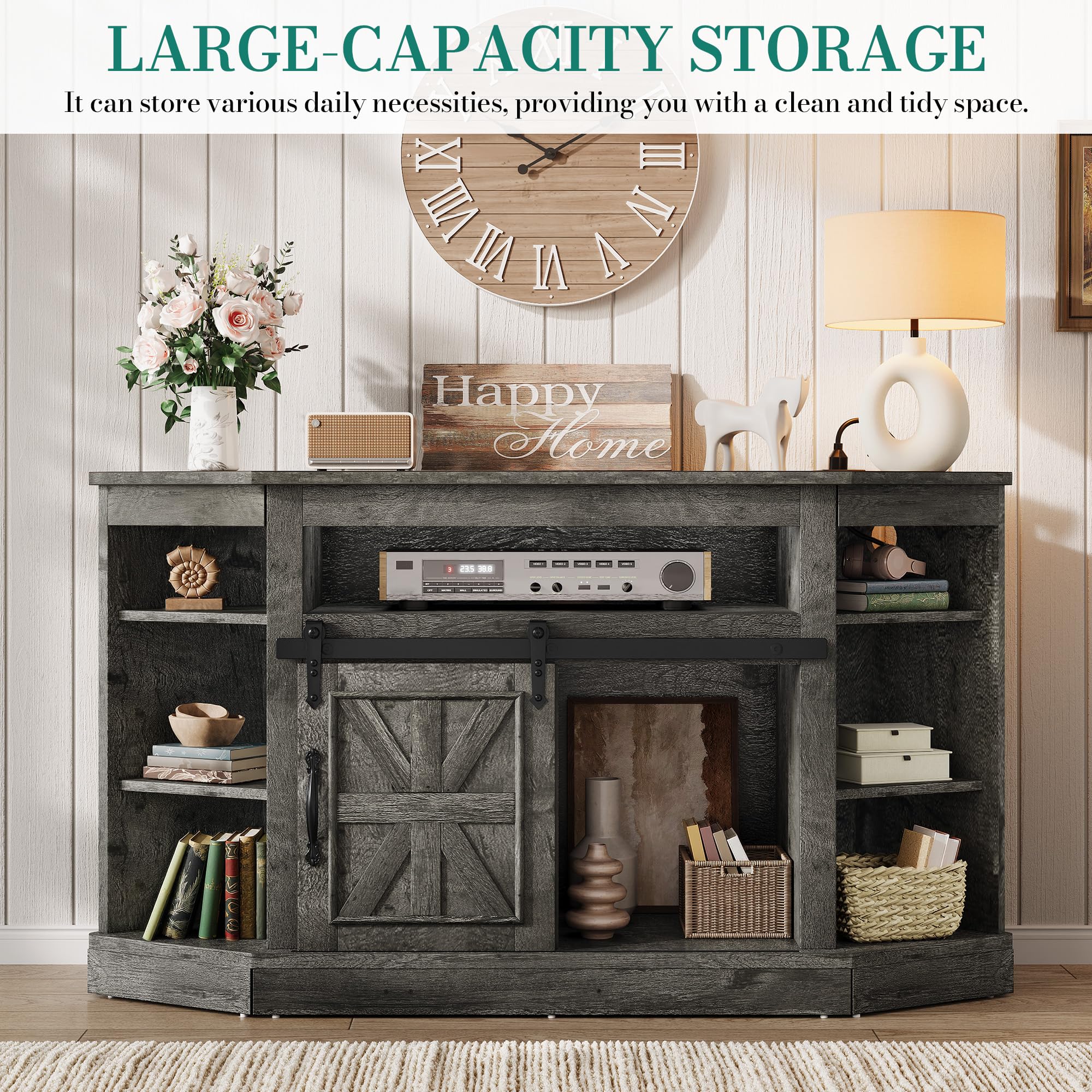
Best Warm Farmhouse Look: YITAHOME YITAHOME Corner TV Stand for 50 Inch TV, Farmhouse Entertainment Center with Storage & Power Outlet, TV Console Cabinet
The YITAHOME option leans hardest into the farmhouse cabinet look and adds a power outlet for daily convenience. At about $140, it’s the most expensive pick here, but the storage-and-power combination makes sense in a main room.
Use it when the furniture has to look finished from more than one angle. Corner stands can feel like afterthoughts; this one reads more like a cabinet. Just verify the listed TV-size rating against your screen’s width and foot span.
The Verdict
For close seating and smaller rooms, the 50-inch TV is the better fit because it preserves walkway clearance and doesn’t overwhelm a compact stand. For a main living room at the longer viewing distance, the 55-inch screen wins because the extra width feels intentional from the sofa. If you’re buying a corner stand first, size the furniture before the screen. A beautiful panel still looks wrong when the cabinet is too narrow.
Frequently Asked Questions
Is a 55-inch TV too big for a small room?
Yes, if the sofa sits closer than 6.5-8.5 ft or the wall can’t clear the TV width plus 6 inches. It may fit physically and still feel oversized.
Is a 50-inch TV big enough for a living room?
Yes, for apartments, bedrooms, and seating around 6-7.5 ft. In a deeper room, it can look small unless the stand and wall are scaled down too.
What stand width should I buy?
Buy a stand at least 6 inches wider than the TV cabinet. Also check foot span, because two wide-set legs can require more usable surface than the screen width suggests.
Does viewing distance matter more than screen size?
Yes. Viewing distance decides comfort, while screen size decides impact. Match the size to the seat first, then choose furniture that makes the setup look intentional.
Should I wall mount instead of using a stand?
Yes, if the TV feet are wider than your furniture or the corner stand is too shallow. Match the VESA pattern, hit studs, and keep the screen center near 40 to 44 inches high.
Which size is better for gaming?
The smaller size is easier at close range; the larger size is better from a sofa. For fast games, don’t sit so close that your eyes have to chase the corners of the screen.
Bottom Line
The 50-inch TV is the safer buy for apartments, close seating, and compact corner stands because it keeps the room balanced. The 55-inch TV is the better buy for a main living room with enough viewing distance and a stand that clears the width. If the furniture is already fixed, measure it before choosing the screen. The stand decides more than the spec sheet admits.

Write Your Review
No reviews yet. Be the first to share your experience!