

> Editorial Note: I’m Erin Schwartz, and I cover home decor with a bias toward what actually works in a real room. The guidance here weighs scale, layout, and materials against Apartment Therapy and Wirecutter coverage rather than styling a space that nobody lives in.
A 4 cube storage unit lives or dies on two numbers: shelf depth and per-cube load rating. Get those wrong and your bins won’t seat flush or the panels bow within a month. I pulled dimensions, materials, and assembly notes across five units and ranked them by fit, not marketing. For adjacent projects, see my guides on cube storage bins, cube storage organizer, storage cubes, white cube shelf, and cube storage for small spaces. Here’s what actually holds up.
How We Evaluated
I compared engineered-wood thickness, cube interior dimensions against standard fabric bins (roughly 11 x 11 in), footprint, and freestanding stability. I also checked assembly hardware, finish durability, and whether the design supports vertical or horizontal placement. Ratings and materials reflect current listings, not premium substitutions.
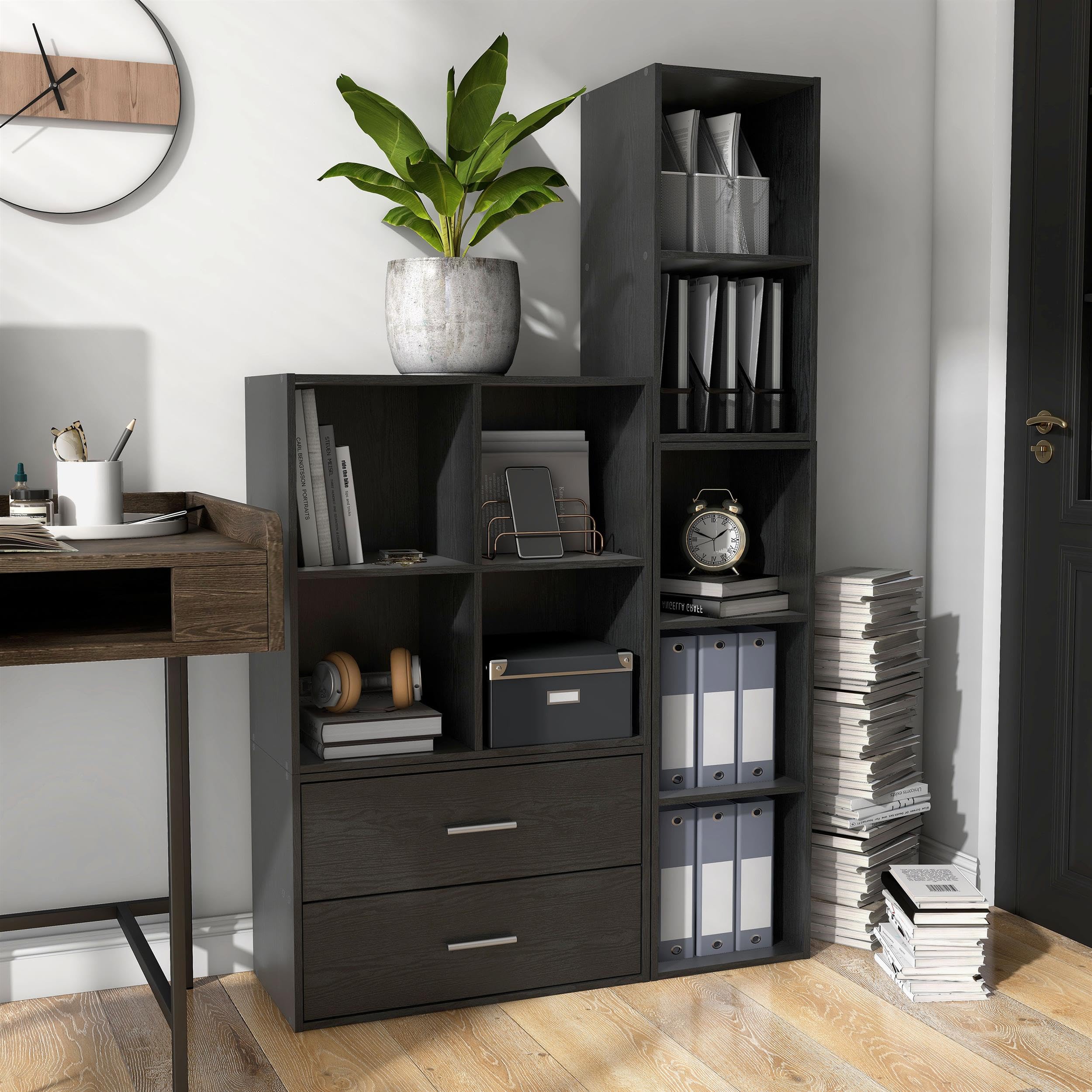
1. Homes: Inside + Out Apexa 4-Cube Organizer — the stackable pick that grows with you
This one wins. The Apexa uses a stackable wood-look construction that lets you run it as a 2×2 grid or split into stacked pairs, which matters in rentals where wall space shifts. Cube interiors clear standard fabric bins, so cubby storage seats flush without wedging. The panel thickness reads sturdier than most budget particleboard, and the design supports both vertical and horizontal orientation. Assembly runs cam-lock hardware, so no glue drying overnight. For a first cube system, this is the one I’d buy.
2. Signature Design by Ashley Glosmount — compact freestanding for tight corners
At 24″W x 12″D, the Glosmount is built for spots where a full 4×4 grid won’t fit. That 12-inch depth clears most decor bins while keeping the footprint shallow against a hallway wall. The Cherry/Light Brown finish leans warmer than the usual flat white, so it reads more like furniture than utility shelving. Signature Design by Ashley builds these compact and freestanding, meaning no wall anchoring required for the base unit. Load per cube is modest, so keep books to paperbacks. Good in a bedroom nook.

3. Furinno Cubicle Open-Back Organizer — the airflow-and-cable pick
The open-back panel is the differentiator here. Cables, power strips, and router gear pass straight through, so this Furinno works as a media console or a plant shelf where drainage and light matter. The white finish keeps it visually light in small rooms. Furinno’s assembly is famously fast, often under 20 minutes with the included hardware. The trade-off: an open back means less rigidity, so anchor it if you’re loading heavy. Best as a decorative divider or entryway drop-zone, not a book-heavy workhorse.
4. Homes: Inside + Out Apexa (second config) — the horizontal-run variant
Same Apexa engineering, positioned for a horizontal footprint under a window or as a bench-height console. Running four cubes wide gives you a low profile around 15 inches tall, which doubles as a display surface for lamps or framed prints. The stackable design still applies, so you can add a second unit later without a mismatched finish. Cube openings match standard bins here too. If you already own one Apexa and want a matching low run, this is the clean way to expand the system.
5. Furinno PASIR 4-Tier Bookshelf — the narrow-footprint alternative
Not a true cube grid. The PASIR is a 4-tier open bookcase at roughly 9 x 12 x 42 inches, built for the reader who wants vertical shelving in a 9-inch-deep footprint. That shallow depth fits behind doors and in awkward gaps where a cube unit can’t. Open shelves mean no bins, but easy grab-and-go for paperbacks and decor. Furinno keeps assembly simple with pre-drilled panels. Choose this when floor space is scarce and you don’t need enclosed cubbies.
Comparison Table
| Unit | Config | Depth | Best For |
|---|---|---|---|
| Apexa 4-Cube (Pick 1) | Stackable 2×2 | Standard | First system, flexibility |
| Ashley Glosmount | 4-cube compact | 12″ | Tight corners |
| Furinno Cubicle | Open-back 4-cube | Standard | Cables, plants |
| Apexa (Pick 4) | Horizontal run | Standard | Low console |
| Furinno PASIR | 4-tier open | 12″ | Narrow gaps |
Buying Guide: Matching Cubes to Your Room
Start with depth. A 12-inch cube clears most fabric bins, but shallow 9-inch units like the PASIR won’t hold standard bins at all. Measure your bins first, then the wall. Second, check load rating. Engineered wood under 15mm bows under heavy books, so reserve those cubes for linens and toys. BIFMA references shelving load durability, and reputable furniture brands publish per-shelf limits. Third, decide freestanding versus anchored. Any unit over 30 inches tall should tip-anchor per ASTM F2057 furniture-stability guidance, especially in homes with kids or pets. Match finish to your existing furniture last.
Cube Storage vs Open Bookcase
Cubes win on concealment. Bins hide clutter and give a clean grid, which Apartment Therapy repeatedly cites as the fastest way to calm a busy room. Open bookcases like the PASIR win on access and airflow. You grab a book in one motion, and there’s no bin to lift. The honest trade-off is dust. Open shelves collect it; enclosed cubes with bins don’t. For a living room feature wall, cubes with mixed bins and display cubbies read more intentional. For a reading corner in a 9-inch gap, the open 4-tier is the smarter fit.
Frequently Asked Questions
Will standard fabric bins fit these cubes?
Standard bins run about 11 x 11 inches. The Apexa and Furinno Cubicle clear them with room. The shallow PASIR bookcase at 9 inches deep won’t seat standard bins, so plan on open shelving there instead.
Do I need to anchor a 4 cube unit to the wall?
Any unit over 30 inches or loaded top-heavy should tip-anchor. ASTM F2057 covers clothing-storage stability, and the same logic applies to loaded cubes in homes with kids or pets. Most include an anchor strap.
How much weight can each cube hold?
It varies by panel thickness. Budget engineered wood safely holds 20 to 25 lbs per cube for bins and decor. Keep hardback book stacks to the lower cubes, and don’t stand or sit on any cube top.
Can these be used horizontally as a bench or console?
The Apexa supports horizontal placement by design, making a low console around 15 inches tall. It’s a display surface, not seating. Don’t sit on cube tops, since panels aren’t rated for body weight.
How long does assembly take?
Furinno units often assemble in under 20 minutes with pre-drilled panels. The Apexa’s cam-lock hardware takes a bit longer but needs no glue. Budget 30 to 45 minutes with a screwdriver for either.
Are the finishes durable against scratches?
Laminate finishes resist everyday marks well but can chip at edges under impact. Signature Design by Ashley’s Cherry/Light Brown hides minor wear better than flat white. Use felt pads under decor to avoid drag scratches.
Bottom Line
The Homes: Inside + Out Apexa 4-Cube is my top pick. Its stackable design, standard-bin fit, and dual-orientation flexibility make it the system that adapts as your space changes. Choose the Signature Design by Ashley Glosmount instead when your spot demands a shallow 12-inch, 24-inch-wide freestanding footprint. One honest caveat: none of these budget engineered-wood units are meant for heavy hardback loads, so keep those on the lower cubes and anchor anything tall.



Write Your Review
No reviews yet. Be the first to share your experience!