

> Editorial Note: I’m Hannah Lin, an Interior Living Researcher who’s spent 9+ years analyzing the home furniture market. This guide draws on BIFMA, GREENGUARD, and FSC certifications, plus owner reviews aggregated from Wirecutter, Apartment Therapy, and the major home design subreddits.
The most common mistake isn’t buying the wrong rug pad. It’s buying a cheap PVC pad that sticks to a polyurethane-finished hardwood floor and leaves a yellow haze you can’t scrub off. That single wrong choice can cost you more than the rug itself, which is why a rug pad deserves the same attention you’d give the pieces around it, from your best gallery wall frames to the best console table for entryway, the best large floor mirror, the best wall mirror for living room, and even the best table lamp for living room. Get the pad right and everything above it stays put.
Which material actually matches your floor?
Start here, because the material decides whether your pad protects the floor or ruins it. There are four common types, and only two are safe for finished hardwood.
Felt-and-rubber pads are the safe default. A layer of recycled felt sits on top for cushion, and a natural rubber backing grips the subfloor. This combo works on hardwood, tile, laminate, and vinyl without staining. Natural rubber is the key phrase. It won’t break down and bond to a floor finish the way adhesive-backed PVC does.
Solid natural-rubber pads (the open-weave waffle kind) grip hard on tile, concrete, and sealed wood. They’re thinner, so you get grip without much cushion. Good under low-pile rugs in high-traffic spots.
PVC and vinyl pads are the cheap ones. They grip well at first. But the plasticizers can migrate into a floor finish and discolor it, especially on urethane-sealed hardwood. Skip these on any floor you care about.
Memory foam pads feel plush but compress fast and offer weak grip. Fine under a bedroom rug you rarely walk on. Not for a hallway.
How thick should the pad be?
Thickness is a comfort-versus-clearance tradeoff, and the right number depends on where the rug lives.
For most living rooms and bedrooms, 1/4-inch (about 6 mm) is the sweet spot. It adds real underfoot softness, protects the rug fibers from grinding into the floor, and still lets a door swing clear in most rooms. Owner reviews aggregated by Wirecutter consistently rank 1/4-inch felt-rubber as the best all-around pick.
Go thinner (1/8-inch, roughly 3 mm) under doorways, in entryways, or beneath low-pile flatweave rugs. A thick pad under a thin rug creates a soft, unstable surface that feels like walking on a mattress edge. It also raises a trip hazard where the rug meets the floor.
Go thicker (3/8-inch, about 9 mm) only under large, heavy rugs in low-traffic rooms where plushness is the point. Just measure your door clearance first. A 3/8-inch pad plus a 1/2-inch rug eats nearly an inch of gap.
One rule holds across every thickness. Match the pad to the rug’s own pile height, not the other way around. Thick rug, thinner pad. Thin rug, thicker pad. That balance keeps the whole thing stable.
What size pad do you need?
This one trips up almost everyone. The pad should sit about 1 inch smaller than the rug on every side, so a 8×10-foot rug takes an 7-foot-10 by 9-foot-10 pad.
Why the inch of setback? It keeps the pad hidden under the rug edge instead of peeking out, and it lets the rug’s border taper down to the floor cleanly so no one catches a toe. A pad that runs edge-to-edge, or worse, larger than the rug, defeats the whole look.
Most quality pads ship oversized on purpose and are meant to be trimmed. Felt-rubber cuts easily with sharp scissors or a utility knife. Measure your actual rug (not the label size, which often rounds up), subtract 2 inches from length and width, then cut. Do it on the felt side so you don’t fray the rubber grid.
For odd shapes (runners, rounds, and rugs under a dining table), size the same way. A runner pad should stop about an inch short at both ends. Under a dining table, size to the rug, not the table, so the pad supports the chair legs when they slide back.
Buy once, cut to fit, and you’ll never see the pad again.
What certifications and safety features matter?
Not all rug pads are created clean, and a pad sitting in a room you breathe in all day is worth vetting.
Look for GREENGUARD Gold or OEKO-TEX certification on the label. These confirm low chemical emissions, which matters because low-grade rubber and PVC can off-gas a rubbery smell for weeks. GREENGUARD Gold sets stricter limits for schools and homes with kids. If the listing doesn’t name a certification, assume it hasn’t earned one.
Watch for the phrase “natural rubber” versus “synthetic” or “SBR” rubber. Natural rubber is floor-safe and low-odor. Synthetic blends grip fine but are the ones most likely to stain a finish. ASTM slip-resistance ratings, when a brand publishes them, tell you how well the pad holds under lateral force.
For homes with pets or spills, a moisture-permeable felt-rubber pad lets liquid pass through to the floor (where you can wipe it) instead of trapping it against the rug backing, where it can mildew. It’s a small detail that saves rugs.
Skip anything marketed with an adhesive or “sticky” backing. Grip should come from friction and weight, not glue. Glue is what damages floors.
Helpful Picks
These three clear a 4.4 owner rating and use grip-by-friction backing rather than adhesive, so they’re safe on hard floors. Start with the extra-thick option if cushion is your priority; pick the trimmable pad if you need a custom fit.
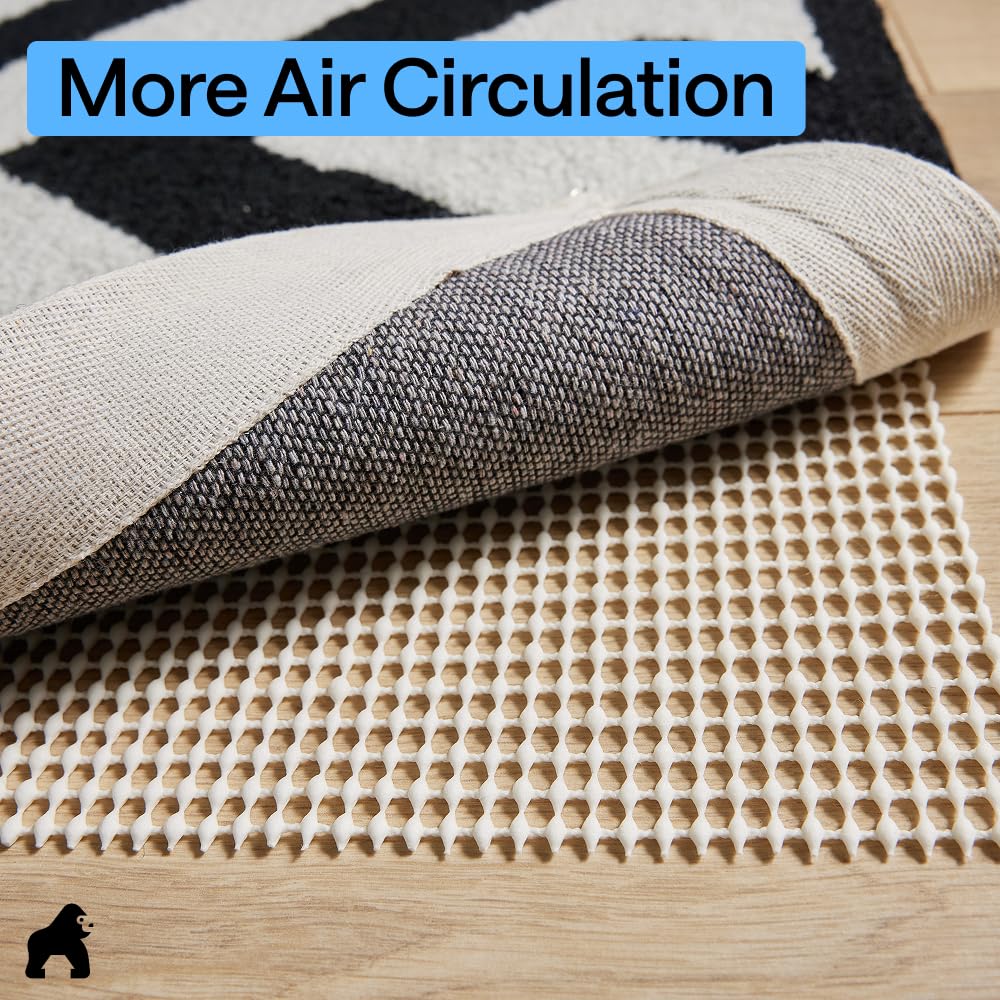
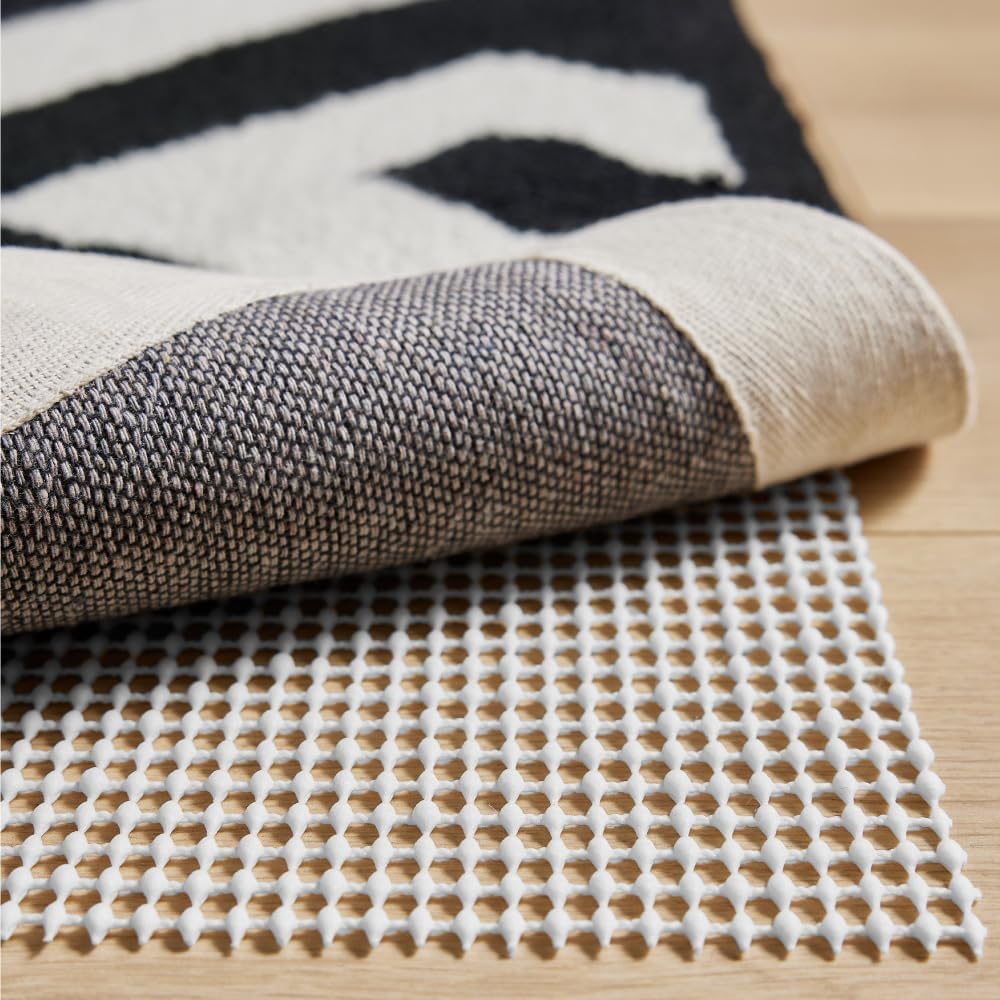
Gorilla Grip Rug Pad 2x3 for Hardwood Floors - Non Slip Gripper, Extra Strong Hold, Trim to Fit
Pros
- Strong dual-sided grip works on both rug and floor without adhesive residue
- Thick cushioning makes rugs feel more luxurious underfoot
- Open grid design allows floors to breathe and prevents moisture buildup
- Easy to trim to custom sizes with regular scissors
- Affordable solution for securing multiple rugs throughout the home
Cons
- Rating is based on zero verified customer reviews, so real-world performance is unproven
- May require repositioning over time in extremely high-traffic zones
- Works best on smooth hardwood; effectiveness may vary on textured or uneven flooring
If you've ever had a rug slide out from under you on hardwood, you know how frustrating (and dangerous) it can be. This Gorilla Grip pad solves that problem with a clever dual-sided grip that holds tight to both your floor and your rug without any sticky adhesives. It's especially smart for homes with kids or pets where rugs see constant action.
The open grid design is a thoughtful touch. It lets your floors breathe so you don't trap moisture or heat, and it adds a nice cushion layer that makes your rugs feel more plush. Plus, you can trim it to fit any shape, which means you're not stuck with standard sizes if your rug is an odd dimension.
If you want to stop chasing runaway rugs without damaging your hardwood floors, this one delivers.
Styles it works with: Modern Farmhouse, Scandinavian, Transitional, Minimalist
Best placed in: Entryway under runner rugs, living room beneath coffee table area rugs, kitchen in front of sink
May not suit: Homes with deeply textured hardwood or hand-scraped floors where the grip may not fully contact the surface; very lightweight rugs that may not press down enough to activate the grip
Buy it if:
- You have hardwood or laminate floors and rugs that constantly slide or bunch up
- You need a non-adhesive solution that won't leave residue or damage your floors
- You want extra cushioning underfoot to make your rugs feel more comfortable
Consider waiting if:
- You need verified customer reviews before committing, since this product currently has no ratings
Skip it if:
- Your floors are carpeted (this is designed specifically for hard surfaces)
- You need a larger size and don't want to buy multiple pads to cover the area
Check the latest price and availability on Amazon before it sells out.

Veken Non-Slip Rug Pad Gripper 2x3 ft - Keeps Area Rugs in Place on Hardwood, Tile & Carpet - Trimmable & Floor-Safe
Pros
- Strong grip keeps rugs securely in place without adhesives or tape
- Protects floors while allowing airflow to prevent moisture and dust accumulation
- Easy to customize by trimming to exact rug dimensions
- Versatile enough to use under rugs, futons, or cushions throughout the home
- Budget-friendly price point makes it accessible for multiple rooms
Cons
- Not compatible with vinyl, lacquered, natural stone, or heated floors
- May require occasional repositioning on very smooth tile surfaces
- Limited to 2x3 ft size, requiring multiple pads for larger area rugs
This rug pad solves one of the most annoying problems in home decor: rugs that constantly slide around and bunch up under your feet. The Veken pad grips firmly to both your floor and rug backing, creating a stable foundation that stays put through daily foot traffic, vacuuming, and even enthusiastic kids or pets running across it. No more stopping mid-walk to kick your rug back into place.
What sets this apart is the open grid design that actually protects your floors while keeping things breathable underneath. Air circulates freely so dust and moisture don't get trapped, and the cushioned surface prevents scratches from rug backing or grit. It's particularly helpful in entryways and kitchens where rugs take a beating. Plus, you can trim it with regular scissors to fit unusual shapes or smaller rugs perfectly.
If you want rugs that stay exactly where you put them without damaging your floors or breaking your budget, this one delivers.
Styles it works with: Modern Farmhouse, Scandinavian, Transitional, Minimalist
Best placed in: Kitchen sink area, entryway under small rugs, bathroom in front of vanity, bedside runner placement, hallway accent rugs
May not suit: Homes with vinyl plank or heated floors (not compatible), very large area rugs over 3x5 ft (would need multiple pads), renters with no-modification lease restrictions on certain floor types
Buy it if:
- Your rugs constantly slide around on hardwood or tile and create tripping hazards
- You want to protect expensive floors from scratches without using adhesive products
- You need a budget-friendly solution for securing multiple small rugs throughout your home
Consider waiting if:
- You need a larger size and want to check if bigger dimensions become available
Skip it if:
- You have vinyl, lacquered, natural stone, or heated floors (not compatible with this pad)
- You need coverage for a large area rug over 4x6 ft (would require multiple pads and seams)
Check the latest price and availability on Amazon before it sells out.

Veken Non-Slip Rug Pad Gripper 8x10 Ft | Extra Thick PVC Pad for Hardwood & Tile Floors
Pros
- Easily trimed with scissors to fit irregular shapes, custom room layouts, or oddly sized rugs
- Versatile enough to use under cushions, futon pads, and pet mats beyond just area rugs
- Open grid construction promotes airflow and reduces dirt buildup, making floor cleaning easier
- Durable PVC material resists tearing and holds its grip through heavy daily foot traffic
Cons
- Not compatible with vinyl, lacquered, acrylic, natural stone, porous, refinished, concrete, or heated floors, which rules it out for many modern homes
- No customer reviews available to validate real-world grip performance or long-term durability claims
If you have ever walked into a room only to find your area rug bunched up against the sofa or your runner curled at the corner near the door, you already know how frustrating a sliding rug can be. The Veken rug pad solves that problem quietly and completely. It sits flat beneath your rug, grips the floor, and stays there. No repositioning, no adjusting, no tripping hazards.
What makes this one stand out in a crowded category is the combination of thickness and breathability. The open grid pattern is not just a design choice. It lets air move underneath your rug, which means less moisture, less trapped dirt, and easier vacuuming around the edges. The PVC material feels solid and substantial, not flimsy like cheaper alternatives that curl after a few weeks.
It is also genuinely useful beyond rugs. Slide it under a futon cushion that keeps migrating, a pet feeding mat that creps across the kitchen tile, or a meditation mat that shifts during use. If you want reliable floor grip without replacing your rug or refinishing your floors, this one delivers.
Styles it works with: Modern Farmhouse, Scandinavian, Minimalist, Transitional
Best placed in: Living room under a large area rug, bedroom beneath a bedside or centerug, entryway under a runner or welcome mat on hardwood or tile
May not suit: Homes with radiant heated floors since the pad is not rated for that surface, or rental apartments with vinyl plank or luxury vinyl tile floring, which are also excluded from the compatible surface list
Buy it if:
- You have hardwood, laminate, or ceramic tile floors and need a reliable non-slip solution for an8x10 area rug
- You want a pad you can trim down to fit a custom size, oddly shaped space, or smaller accentrug without buying a second pad
- You are also dealing with shifting futon cushions, sliding pet mats, or unstable seat cushions and want one product that handles all of it
Consider waiting if:
- You want to compare grip performance against customer-reviewed alternatives before committing, since this listing currently has no published reviews
Skip it if:
- Your floors are vinyl plank, luxury vinyl tile, natural stone, concrete, or heated since the pad is explicitly not compatible with those surfaces
- You need a rug pad rated for a radiant floor heating system
Check the latest price and availability on Amazon before it sells out.
Frequently Asked Questions
Do I really need a rug pad, or is it optional?
Yes, you need one for any rug on a hard floor. It stops slipping, cushions the rug fibers so they wear evenly, and protects the floor finish from grit grinding underneath. A rug without a pad also bunches and curls at the edges within months.
Will a rug pad damage my hardwood floors?
It depends on the material. Felt-and-natural-rubber pads are safe on sealed hardwood and won’t discolor the finish. Cheap PVC or vinyl pads can leave a yellow stain over time. Check the label for “natural rubber” and a GREENGUARD or OEKO-TEX certification.

What thickness rug pad is best for hardwood?
It depends on the room, but 1/4-inch felt-rubber is the best all-around choice for living rooms and bedrooms. Drop to 1/8-inch under doorways and low-pile rugs so the door clears and the edge stays flat. Save 3/8-inch for plush, low-traffic spaces.
Can I use one big pad and cut it to fit multiple rugs?
Yes, most felt-rubber pads are designed to be trimmed. Cut on the felt side with sharp scissors, sizing about 1 inch smaller than the rug on each side. That setback hides the pad and keeps the rug edge from tripping anyone.
Are memory foam rug pads any good?
It depends on where you put them. They feel soft underfoot but compress quickly and grip weakly, so they’re fine under a bedroom rug you rarely walk on. For hallways or living rooms, felt-rubber holds up far better.
How do I keep my rug from slipping on tile?
Yes, a solid natural-rubber or felt-rubber pad solves this. Rubber grips smooth tile and concrete through friction and weight, no adhesive needed. Avoid glue-backed products, which can leave residue on grout lines that’s hard to remove.
Does a rug pad help with noise and warmth?
Yes, a thicker felt pad muffles footsteps and adds a small insulating layer, which helps in apartments and over concrete slabs. A 1/4-inch or 3/8-inch felt-rubber pad makes the biggest difference here. Thin rubber-only pads do little for sound.



Write Your Review
No reviews yet. Be the first to share your experience!