

> Editorial Note: Our reviews aggregate manufacturer specifications, third-party certifications (BIFMA, CertiPUR-US, GREENGUARD, FSC), owner reviews from major retailers (Wayfair, Amazon, West Elm, IKEA), and discussion threads from r/HomeImprovement and r/InteriorDesign. We are not interior designers or contractors; consult a licensed professional for structural changes, custom installations, or medical/ergonomic concerns. Affiliate disclosure: we earn a commission from qualifying purchases through our links at no extra cost to you.
Green keeps showing up on Architectural Digest’s living-room covers and at the top of Apartment Therapy’s “color of the year” predictions for good reason. A well-chosen green sofa grounds a room without flattening it. It plays nice with brass, walnut, terracotta, ivory, jute, and linen. It reads contemporary in a minimalist loft and traditional in a New England cottage. The trick isn’t deciding whether to go green. It’s picking the right green, then layering it with the right things.
Our research evaluated five green couches across emerald, sage, forest, hunter, and olive that owner reports on Wayfair, Amazon, and r/InteriorDesign keep surfacing in styled photos. They span modern, transitional, coastal, and updated-farmhouse aesthetics. The plant-heavy bohemian version is a different rabbit hole. A solid best area rug for living room guide pairs with any pick below, and our notes on the best reading chairs for bedrooms, best ergonomic reading chairs, best travertine coffee table, and best narrow console table cover the supporting cast.
What Ties These Together
House Beautiful’s recent green-sofa features keep circling the same idea: the color works because it splits the difference between neutral and statement. Forest, hunter, and olive read like deep, grounded neutrals once you live with them. Emerald and rich sage stay punchier and more declarative. Architectural Digest frames it through the lens of pairings. Green plays well with the materials people already want in their living rooms: brass hardware, walnut shelving, terracotta planters, jute rugs, ivory paint.
Better Homes & Gardens published a useful breakdown of green undertones in 2024. Warm-leaning greens (olive, hunter, forest) carry yellow undertones and pair effortlessly with brass, leather, and warm woods. Cool-leaning greens (sage with gray undertones, deep emerald) play better with chrome, blackened steel, and cooler whites. Match the green to the materials already in your room.
Scale is the other thread. r/InteriorDesign threads consistently flag the same mistake: buying a sofa that’s too small for the wall behind it. Aim for the couch to occupy roughly two-thirds of its primary wall.
1. Modern Forest-Green Sectional: The Open-Plan Anchor
The contemporary play is a deep forest-green modular sectional in the 100-plus-inch range, the kind that defines a zone in an open-plan room rather than just sitting against a wall. Forest reads almost black under low light, grounding a large space the way charcoal would, but warms up dramatically when natural light hits it. That dual personality makes it the most versatile of the deep greens.
Owner reports on Wayfair and Amazon say forest green photographs differently than it looks in person, with buyers describing it as richer and more saturated in daylight than product photography suggests. Aggregated reviews flag the polyester-blend fabric as easy to spot-clean, which matters in a sectional that anchors family life.
Pair this one with walnut or oak floors, a low-profile travertine coffee table, and a large jute rug in oatmeal. Brass lighting and a single tall plant (fiddle leaf or bird of paradise) finish it. Look for kiln-dried hardwood frame language, not engineered wood. At the sectional scale, frame quality determines whether the piece survives moves.
2. Sage Mid-Century: The Bright-Apartment Pick
Sage has been quietly taking over interior design coverage for the past three years. It reads as a neutral. Apartment Therapy described it in a 2024 feature as “a warm gray that happens to be green,” yet it carries enough color to keep a room from going beige. A mid-century silhouette in sage, with tapered wood legs and a clean back profile, suits bright apartments and smaller living rooms where a deeper green would dominate.
The mid-century shape is doing real work. Tufted backs and rolled arms can push sage toward “grandmother’s parlor” if the proportions aren’t right. A flat or lightly channeled back, a low-profile arm, and visible walnut or oak legs keep the look contemporary. Buyer feedback shows the lighter sage shades photograph almost gray-green in flash photography, so check product images under varied lighting before committing.
Sage pairs well with light oak floors, cream or ivory walls, and brass or matte-black hardware. A travertine coffee table elevates it; a chunky walnut block keeps it grounded. r/InteriorDesign threads repeatedly suggest pairing sage with terracotta accents (a planter, a few throw pillows, a ceramic vase) to warm it up. Without that warmth, sage can read clinical. For apartments under 700 square feet, a 72-to-78-inch sage sofa generally works better than the 84-inch standard.
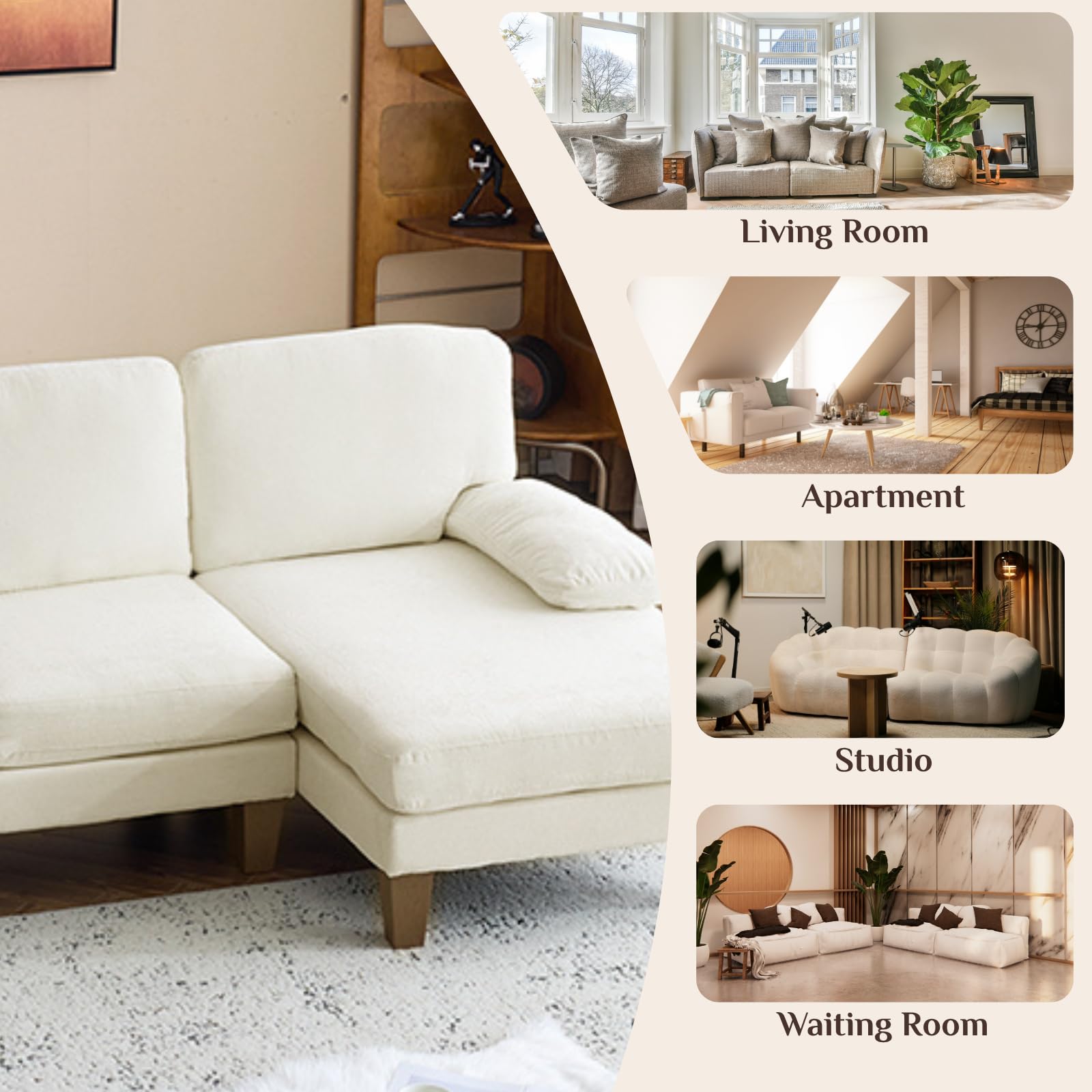
3. Emerald Velvet: The Jewel-Box Statement
Emerald velvet is the most photogenic of the green-sofa categories, and the one Architectural Digest’s editorial team reaches for most often when shooting moody, layered living rooms. The depth of the color and the way velvet catches light combine into a sofa that does the styling work for you. A brass floor lamp, a creamy boucle accent chair, a marble coffee table, and the room reads finished.
Cotton velvet develops a patina over years; polyester-blend velvet stays uniform but doesn’t age into character the same way. CertiPUR-US-certified foam matters because velvet shows cushion wear faster than nubby fabrics. Owner reviews flag that emerald velvet, more than other green tones, shows directional sheen.
Pair emerald with a brass-framed mirror, a vintage Persian rug, blackened-steel or aged-bronze lighting, and walls in deep cream or warm white. Avoid pure white walls; they fight the saturation. House Beautiful’s features pair emerald with terracotta or burnt-orange accents in small doses, plus a single bold piece of art over the sofa. Velvet hides pet hair less effectively than chenille. If you’ve got a heavy-shedding dog, this isn’t the green for you.
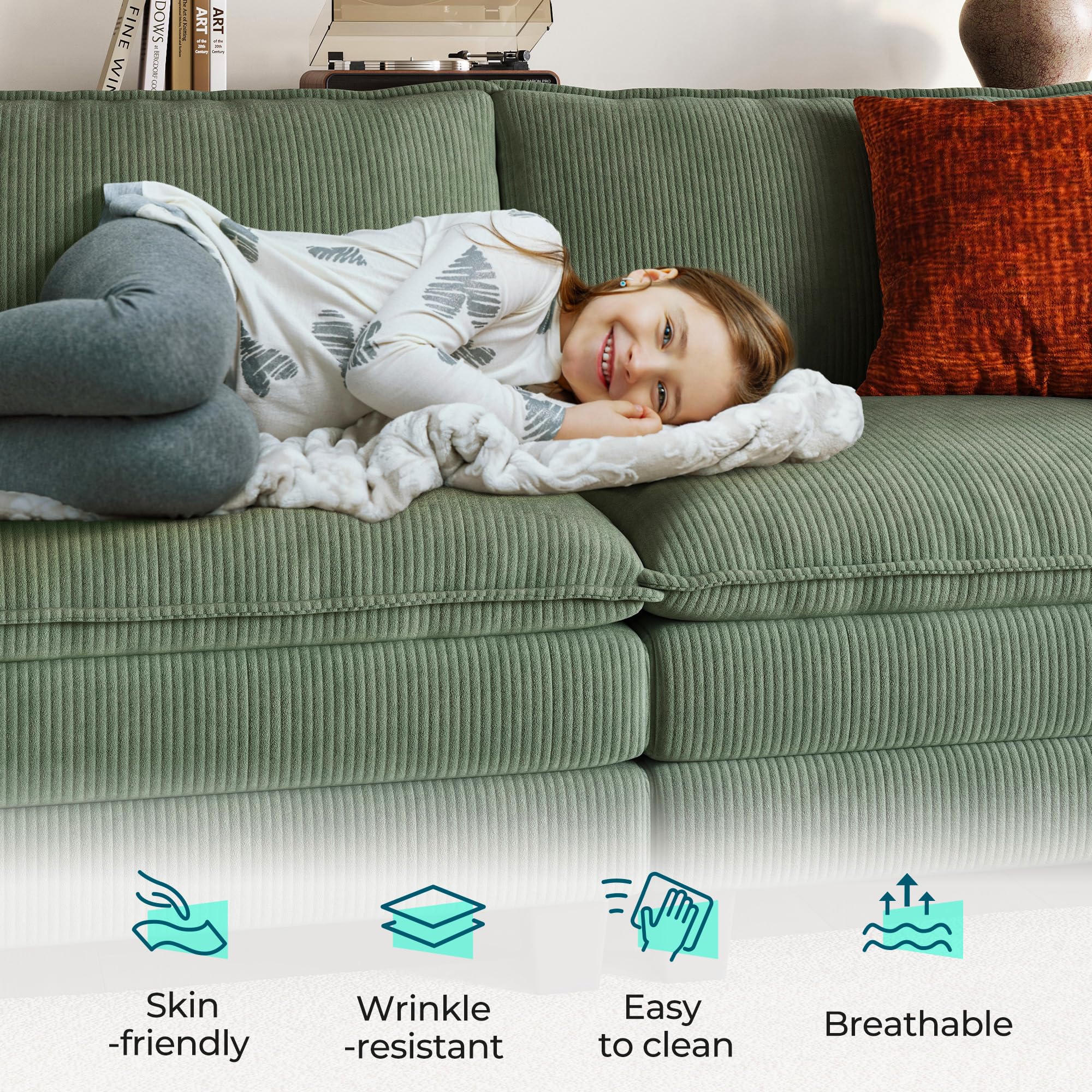

Pros
- Truly modular design lets you adapt layout as your needs change
- Exceptionally deep seats perfect for curling up or stretching out
- High-quality corduroy fabric feels premium and resists wear
- Generous 123" total length seats 4-5 adults comfortably
- Pocket spring support prevents sagging over time
Cons
- Requires substantial floor space - measure carefully before ordering
- Green colorway may limit future decor flexibility
- New product with no customer reviews yet to validate long-term durability
This sectional solves the biggest problem with most modular sofas: they promise flexibility but deliver stiff, uncomfortable seating. LINSY HOME nails both comfort and versatility. The double-layer cushions with pocket springs give you that cloud couch sink-in feel without bottoming out, and the extra-deep 24.5" seats mean your legs are actually supported when you sit back.
The green corduroy brings warmth and personality without screaming for attention. It works beautifully as an anchor piece in neutral rooms or as a complement to wood tones and natural textures. The movable ottoman is genuinely useful - slide it across the room for footrest duty during movie night, then reattach it to extend the chaise when guests arrive.
If you want a sectional that adapts to how you actually live without sacrificing everyday comfort, this one delivers.
Styles it works with: Modern Organic, Scandinavian, Eclectic, Contemporary Farmhouse
Best placed in: Open-concept living rooms with 12+ feet of wall space, spacious family rooms, loft-style apartments with high ceilings
May not suit: Small apartments under 500 sq ft, rooms with low 8-foot ceilings where it may feel overpowering, traditional or formal living rooms where the relaxed silhouette feels too casual, homes needing easy-clean performance fabrics for kids and pets
Buy it if:
- You are furnishing a spacious living room and want one statement piece that seats the whole family
- You love rearranging furniture and want genuine flexibility to change your layout seasonally
- You prioritize sink-in comfort and want deeper seats than standard sofas offer
- You are drawn to textured fabrics and want corduroy's warmth without vintage vibes
Consider waiting if:
- You prefer to read customer reviews before committing to a new furniture brand
- You want to see the green shade in person before ordering
Skip it if:
- Your living room is under 200 square feet or has limited wall space
- You need stain-resistant or pet-proof upholstery for daily wear
- You prefer firm, structured seating over plush cushions
Check the latest price and availability on Amazon before it sells out.
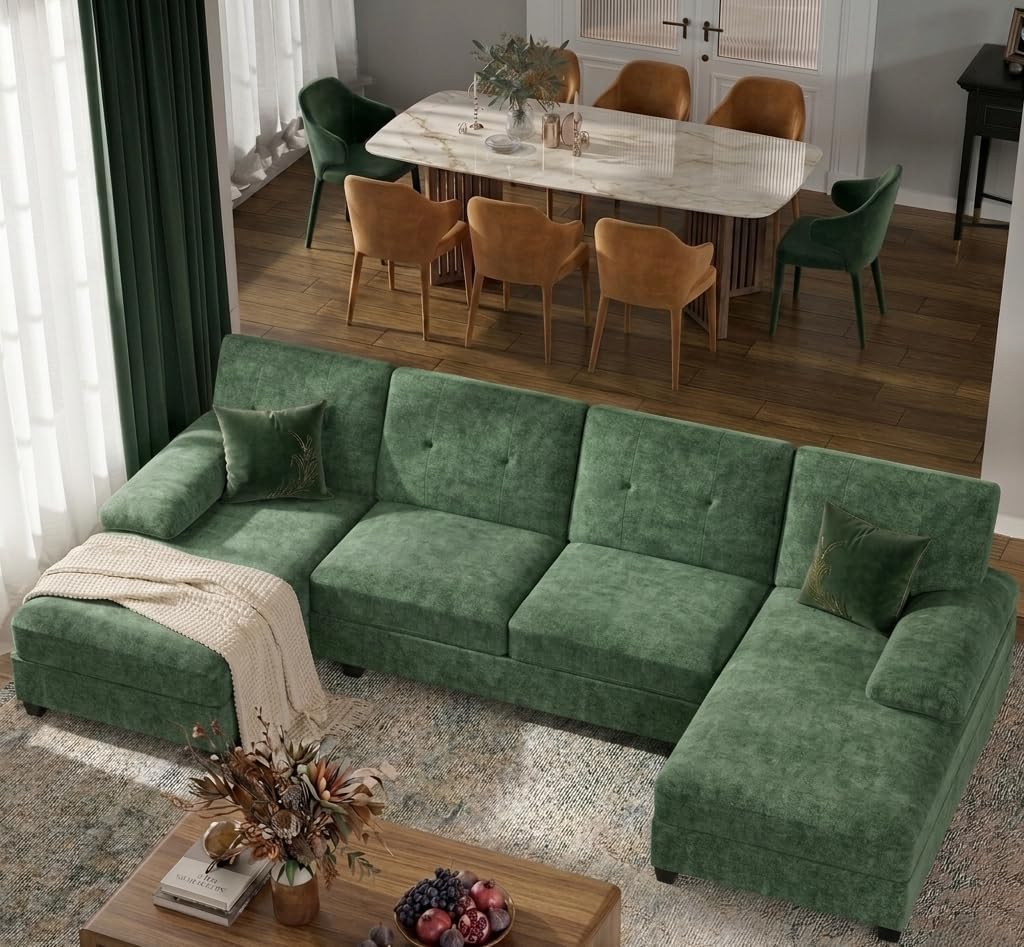
Pros
- Spacious U-shape seats 4+ people comfortably for family gatherings
- Solid wood frame provides long-term durability and stability
- Removable, washable cushion covers simplify maintenance
- Deep seat cushions offer plush comfort for extended lounging
- Quick assembly process with clear instructions and included tools
Cons
- 3.6-star rating suggests inconsistent quality control or customer expectations around cushion firmness
- Multi-box delivery may arrive on different days, delaying full setup
- Vacuum-packed cushions require 48 hours to fully expand after unboxing
This sectional does exactly what a big family sofa should do: it brings people together. The U-shaped layout wraps around your space like a cozy hug, turning your living room into the kind of place where everyone naturally gathers for movie night or lazy Sunday mornings. Those 6.3-inch deep seat cushions are genuinely comfortable for sinking in, and the double chaise ends mean there's always a primo spot to claim.
The solid wood frame is a standout at this price point. It feels stable underfoot, the connectors keep everything locked in place without creaking, and the white upholstery has a clean, versatile look that works whether your style leans modern farmhouse or minimalist. Removable covers are a lifesaver if you have kids or pets.
If you want a spacious, comfortable sectional that seats your whole crew without breaking the bank or taking all day to assemble, this one delivers.
Styles it works with: Modern Farmhouse, Scandinavian, Minimalist, Coastal
Best placed in: Open-concept living room corner, large family room as a room divider, spacious apartment main seating area
May not suit: Small apartments under 300 sq ft where a U-shape overwhelms the room, homes with low ceilings where bulky furniture feels cramped, renters who move frequently and need lighter, modular pieces
Buy it if:
- You need seating for 4+ people and want everyone to face each other comfortably
- You have a medium to large living room (300+ sq ft) with space for a U-shaped layout
- You want a solid wood frame that will last years without wobbling or squeaking
- You prioritize deep, plush seating for long movie nights and weekend lounging
Consider waiting if:
- You need a specific fabric color or texture not currently available in white
- You want to compare firmness levels in person before committing to online purchase
Skip it if:
- You live in a small apartment where a U-shaped sectional will dominate the room
- You prefer firmer, more structured seating over plush, sink-in cushions
- You need a sectional that can be easily disassembled and moved frequently
Check the latest price and availability on Amazon before it sells out.

Pros
- Generous seating capacity for families and guests without overwhelming apartment-sized rooms
- Premium chenille upholstery feels soft and looks expensive
- Dual chaise lounges let two people fully recline at once
- High weight capacity supports households with children or pets
- Robot vacuum-friendly clearance saves time on floor cleaning
Cons
- Green color may limit versatility with future decor changes
- No customer reviews yet to verify long-term durability claims
- 111-inch footprint requires careful room measurement before purchase
This Karl Home sectional solves the biggest challenge in living room furniture: finding a sofa that seats everyone comfortably without looking like a waiting room. The U-shape wraps around to create an intimate gathering space, while the chenille fabric adds that cozy, sink-in feeling you want after a long day. The double chaise design is especially smart because it gives two people the option to fully stretch out, not just the person who calls dibs first.
What really stands out is how the design balances size with livability. At 111 inches, it is substantial enough for family movie nights or game day with friends, yet the raised legs and clean lines keep it from feeling heavy or dated. The robot vacuum clearance is one of those practical touches that makes daily life easier, and the 1,000-pound capacity means you are not tip-toeing around it with kids or pets.
If you want a sectional that turns your living room into the gathering spot without sacrificing comfort or style, this one delivers.
Styles it works with: Modern Farmhouse, Transitional, Contemporary, Casual Coastal
Best placed in: Living room corner as a focal seating area, open-concept great room dividing the space, basement family room for movie watching and gaming
May not suit: Small apartments under 200 square feet where a loveseat would fit better, formal living rooms that require matching furniture sets, homes with very low ceilings where large furniture feels overwhelming
Buy it if:
- You regularly host family or friends and need seating for four or more people
- You want a chenille sectional that handles daily use from kids or pets without constant upkeep
- You have a living room or basement at least 12 feet by 14 feet to accommodate the U-shape footprint
Consider waiting if:
- You prefer neutral colors and want to see if Karl Home releases beige or gray options
Skip it if:
- Your living room is smaller than 10 feet by 12 feet, where this sectional would dominate the space
- You need modular pieces that can be reconfigured or separated into smaller sections
Check the latest price and availability on Amazon before it sells out.
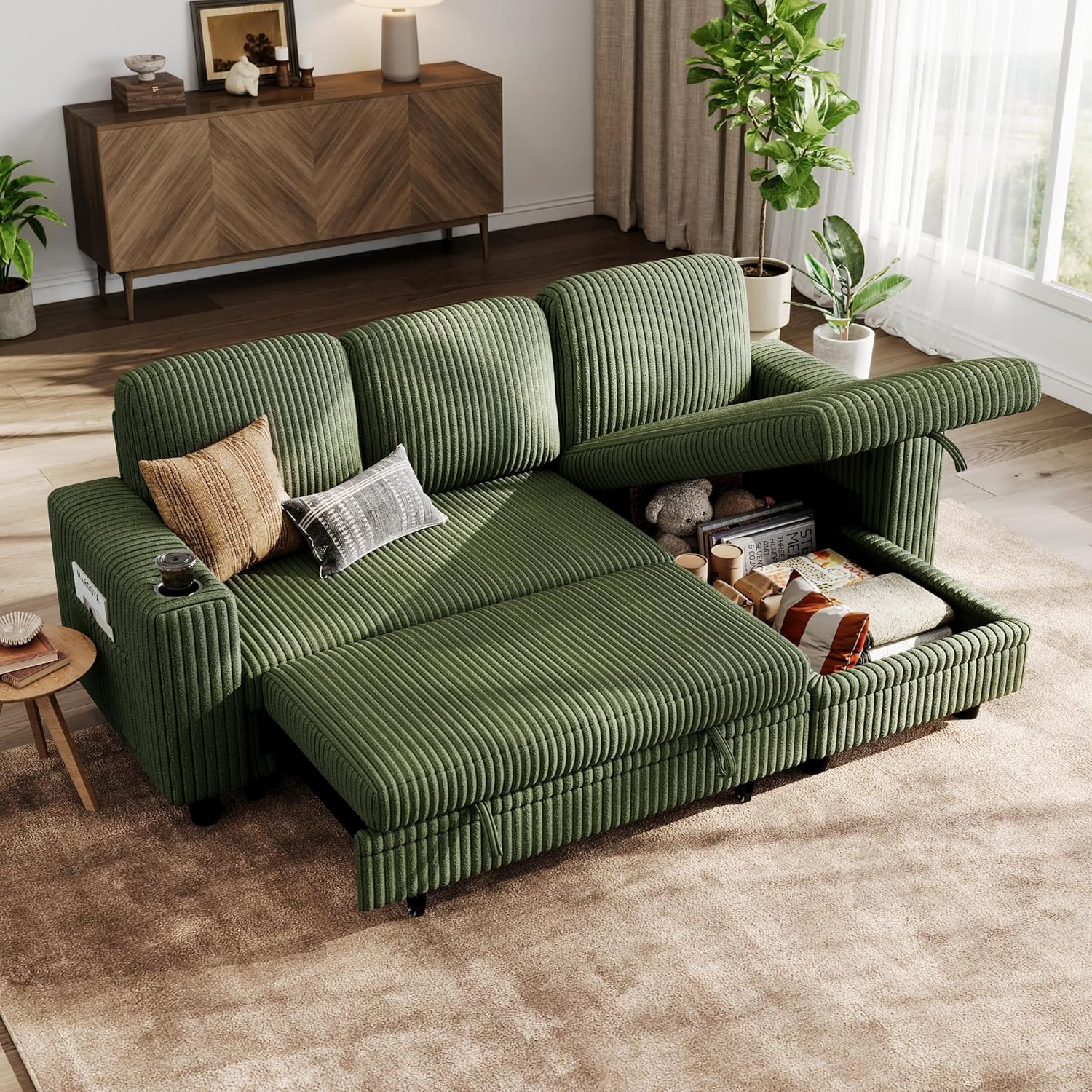
Pros
- Multi-functional design serves as both daily seating and occasional guest bed
- Charging station with USB and Type-C ports eliminates cord clutter
- Corduroy fabric holds up well to pets and daily use
- Hidden storage keeps living room organized and clutter-free
- Tool-free assembly and pull-out mechanism simplifies setup and use
Cons
- Cushions take up to a week to reach full shape after unboxing
- May require mattress topper for optimal sleeping comfort
- Limited reviews make long-term durability harder to assess
This sectional solves the guest bed problem without sacrificing your living room to a bulky sleeper sofa. The pull-out mechanism works without tools or awkward unfolding, so when friends stay over, you simply pull and go. The green corduroy adds a soft, textured look that feels more curated than basic microfiber, and the fabric actually stands up to pets and spills without showing every mark.
What sets this apart is the thoughtful everyday functionality. USB ports keep your phone charged during movie nights without hunting for wall outlets. Cup holders prevent water rings on your coffee table. Hidden storage swallows throw blankets and extra pillows so your space stays tidy. At 81 inches, it fits smaller living rooms without dominating them, and the L-shape creates natural conversation zones.
If you want flexible guest sleeping and smart storage in one piece without giving up floor space to separate furniture, this one delivers.
Styles it works with: Modern Farmhouse, Scandinavian, Boho, Contemporary Minimalist
Best placed in: Small to medium living rooms, studio apartment main seating area, finished basement guest zone
May not suit: Formal living rooms with traditional furniture, homes needing a full-size sleeper for regular guest use, spaces with very low ceilings where the pull-out bed frame might feel cramped
Buy it if:
- You host overnight guests occasionally and need a quick conversion sofa bed
- Your living room lacks outlets near seating and you want built-in device charging
- You have pets or kids and need durable, easy-to-clean upholstery
- You need hidden storage for blankets, pillows, or seasonal items
Consider waiting if:
- You prefer a different color and can wait for restocks or sales
- You want to see more long-term customer reviews before committing
Skip it if:
- You need a sleeper sofa comfortable enough for nightly use without adding a topper
- Your space requires a larger sectional over 90 inches
- You prefer leather or performance fabric over corduroy texture
Check the latest price and availability on Amazon before it sells out.

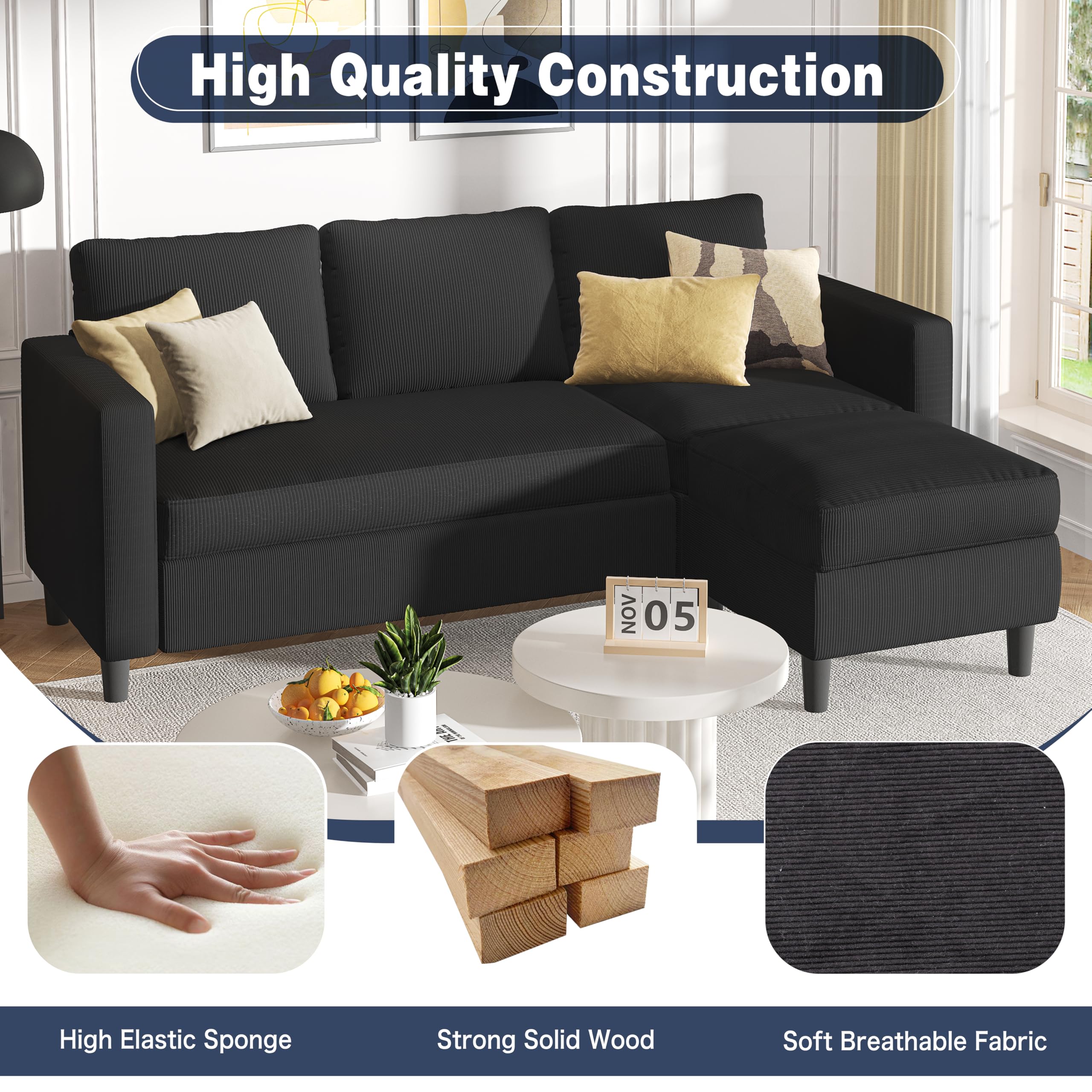
Pros
- Reversible chaise and movable ottoman provide layout flexibility for different room configurations
- No tools required for assembly with straightforward instructions
- Corduroy fabric adds visual interest and durability for everyday use
- Compact size ideal for apartments, studios, and smaller living rooms
- FSC-certified wood construction shows environmental responsibility
Cons
- Only 0 customer reviews means no real-world feedback on comfort or durability yet
- Three-seater capacity may feel tight for larger families or frequent entertaining
- Black fabric shows dust and lint more visibly than lighter colors
This sectional solves the biggest challenge of small-space living: getting comfortable seating without turning your room into a furniture showroom. The reversible chaise means you are not locked into one layout forever, and the movable ottoman gives you options whether you need an extra seat for game night or a place to prop up your feet after work.
The black corduroy fabric feels deliberate and modern rather than trying too hard. It adds just enough texture to keep the sofa from looking flat in photos or feeling generic in person. The tool-free assembly is genuinely useful if you live alone or do not want to spend your Saturday wrestling with an Allen wrench.
If you want flexible seating that adapts to your space without looking like dorm furniture, this one delivers.
Styles it works with: Modern Minimalist, Scandinavian, Contemporary, Industrial
Best placed in: Small living rooms, studio apartments, corner placement in open-concept spaces, home offices doubling as guest rooms
May not suit: Large living rooms where it might look undersized, homes with toddlers who climb on furniture frequently, spaces that need formal or traditional styling
Buy it if:
- You live in an apartment or condo under 900 square feet and need seating that does not dominate the room
- You rearrange furniture seasonally or want the option to flip the chaise to the other side
- You need something you can assemble yourself without tools or a second person
Consider waiting if:
- You want to see customer photos and reviews before committing, since this is a newer listing
- You prefer a lighter fabric color that hides dust better than black
Skip it if:
- You regularly host more than four people and need deeper seating capacity
- You have pets that shed heavily, as black corduroy will show light-colored fur
Check the latest price and availability on Amazon before it sells out.
4. Hunter-Green Traditional: The Transitional Family Room
Hunter green sits in the deep-green family but reads more traditional than forest, thanks to a slightly bluer undertone and its long association with library and study interiors. A hunter sofa with rolled arms, button tufting, and turned wood legs lands in transitional territory, the bridge between traditional and contemporary where most family rooms actually live.
Hunter is forgiving. It hides dirt, blends with most existing furniture, and reads timeless rather than trend-driven. Better Homes & Gardens has paired hunter with cream walls, brass picture lights, and walnut built-ins in multiple recent features.
Construction matters more at this silhouette. Traditional shapes rely on tight upholstery, so foam density (1.8 lb/cubic ft or higher) and frame joinery (corner-blocked, doweled, screwed, not stapled) determine whether the sofa holds its shape for a decade. Owner reports flag that the difference between a $700 and $1,400 traditional sofa shows up in cushion recovery after six months.
Pair hunter with walnut or cherry case goods, a wool rug in burgundy-and-cream or muted navy, and warm 2700K lighting. Avoid chrome and stark whites. Hunter wants antique brass, aged bronze, or oil-rubbed bronze.
5. Olive-Green Modular: The Coastal-Farmhouse Crossover
Olive is the most underrated green in the sofa category. Neither bright enough to dominate nor neutral enough to disappear, it sits comfortably in coastal-farmhouse, California-casual, and updated-traditional rooms without picking a side. A modular olive sofa with a low profile and channeled back lands in the contemporary-relaxed register that dominates Apartment Therapy’s coverage of laid-back family homes.
Olive’s undertone carries yellow and brown notes that pair beautifully with weathered oak, white-washed wood, jute, linen, and unglazed ceramics, which is basically the entire coastal-farmhouse material palette. r/InteriorDesign threads recommend olive as “the green that doesn’t fight beach house furniture.”
Lower-profile modulars (under 36 inches at the back) keep sightlines open in beach-inspired rooms with lots of windows. They also reconfigure without becoming an immovable wall. Owner reviews on Wayfair mention 30-to-60-minute assembly times for two people. Pair olive with linen-slipcovered accent chairs in oatmeal, a weathered oak coffee table, and a cream-and-natural striped flatweave rug.
Styling Notes from Editors
Apartment Therapy’s green-sofa coverage keeps circling the same pairing principles. Use the green as your anchor and pull the rest of the palette from a narrow band (cream, terracotta, brass, walnut, jute) rather than coordinating multiple accents. House Beautiful’s framing is more aggressive: “let the green be the loudest voice in the room, then whisper everything else.”
Light temperature matters more than people expect. Warm-white bulbs at 2700K bring out the warm undertones in olive, hunter, and forest. Cool LEDs at 4000K flatten green into gray. If your living room runs on overhead LEDs, swap to lamp lighting before deciding you don’t like the sofa. r/InteriorDesign threads document buyers convinced they’d ordered the wrong green who’d actually ordered the wrong bulbs.
Architectural Digest’s green-living-room features almost universally include one piece of large-scale art above the sofa, not a gallery wall. Size it at roughly two-thirds the width of the sofa. A green couch is already a strong horizontal mass, and one dominant artwork balances it.
For pillows, aim for four to five in mixed sizes and materials: a 22-inch square in textured neutral, two 20-inch squares in a complementary pattern, and a lumbar in a contrasting accent (terracotta, mustard, or burnt orange). Skip matching sets. Better Homes & Gardens has published the same advice in three separate features.
What to Avoid for This Look
The biggest mistake is fighting the green with competing color statements. A green sofa, a blue accent chair, and burgundy curtains turn the room into a color-block experiment. Pick the green as your hero, then build a tonal supporting palette in warm neutrals with one or two restrained accents.
Skip glass-and-chrome coffee tables with most greens. They pull the room toward 1990s contemporary, which fights the warmth modern green-sofa styling relies on. Travertine, oak, walnut, or a vintage trunk all suit the look better. Exception: emerald velvet can carry a brass-and-glass table because the velvet already brings drama.
Avoid pairing a green sofa with another large green piece (a green chair, ottoman, or rug). The second green makes the first one look less intentional. Let the sofa be the green statement and pull the rest from terracotta, mustard, cream, brass, and warm wood. Plants are the exception. Living green reads differently than upholstered green.
Don’t ignore the wall behind the sofa. A green couch against a stark white wall often looks unfinished. Commit to a warm-white or cream paint, hang substantial art above it, or paint the wall in a deeper contrasting tone (soft terracotta or muted navy for hunter and forest). Overhead lighting alone flattens green. Plan for at least two lamp sources at sofa height.
Frequently Asked Questions
What shade of green works best for a living room?
It depends on light and existing furniture. Warm-leaning greens (olive, hunter, forest) pair with brass, walnut, and warm woods. Cooler-leaning greens (sage with gray undertones, emerald) work better with chrome, blackened steel, and cooler whites. Bright rooms with lots of natural light suit sage and olive. Darker rooms or rooms you want to feel cozier benefit from forest, hunter, and emerald.
Will a green sofa go out of style?
Green has held steady in interior design coverage for more than a decade, with shades cycling through “color of the year” lists from Apartment Therapy, House Beautiful, and Architectural Digest. Warm greens (sage, olive, forest) age better than punchier shades because they read closer to neutrals. A jewel-tone emerald will feel more dated in five years than a muted olive will.
How do I pick the right size sofa?
Aim for the sofa to occupy roughly two-thirds of its primary wall, with at least 30 inches of clearance on either side. In a 12-by-16-foot living room, a 78-to-90-inch sofa typically lands right. Sectionals 100 inches and longer need at least 14 feet of wall length. Measure doorways before ordering; sectionals can fail the doorway check in older apartments.
What rug works best under a green couch?
Jute or wool in oatmeal, cream, or natural tones works universally. For traditional rooms with hunter or forest sofas, a vintage Persian or flatweave in burgundy-and-cream or muted navy adds depth. For coastal-farmhouse rooms with olive sofas, a cream-and-natural striped flatweave keeps the look relaxed. Avoid rugs with strong green tones.
Is velvet or polyester a better fabric for a green sofa?
Each has tradeoffs. Cotton velvet photographs beautifully and develops character over years, but shows directional sheen and hides pet hair poorly. Polyester-blend velvet stays uniform and cleans more easily but lacks the patina cotton velvet develops. Chenille and woven polyester blends are more forgiving for families. CertiPUR-US-certified foam matters more than fabric choice for long-term comfort.
How do I make a green couch work in a small living room?
Choose a lighter shade (sage or muted olive), pick a smaller scale (72 to 78 inches), and opt for a clean silhouette with visible legs. Lifted-leg sofas read less bulky than skirted styles. Keep the rest of the palette in warm neutrals and add color through pillows and art rather than additional furniture.
Do I need to paint my walls a specific color?
No, but warm whites and creams (Benjamin Moore White Dove, Sherwin Williams Alabaster) work universally with green sofas. Stark whites flatten the color, and cool grays often fight green’s warmth. For bolder rooms, deep cream, soft terracotta, or muted navy (with hunter and forest greens) all photograph well in Architectural Digest’s features. Sample paint in your specific lighting before committing.
The Final Curated Pick
If you want one pick that does the most work across the widest range of styles, the olive-green modular sofa is the most flexible choice. Olive pairs with coastal, farmhouse, modern, and transitional aesthetics, the modular construction adapts to layout changes, and the warm yellow-brown undertone reads grounded rather than trend-driven. Add a jute rug, an oak coffee table, two cream accent chairs, brass lighting, and a single tall plant, and you’ve built a living room that reads finished without trying too hard. For the more declarative version, the emerald velvet sofa earns its keep. Let the color carry the room.



Write Your Review
No reviews yet. Be the first to share your experience!