

> Editorial Note: Our reviews aggregate manufacturer specifications, third-party certifications (BIFMA, CertiPUR-US, GREENGUARD, FSC), owner reviews from major retailers (Wayfair, Amazon, West Elm, IKEA), and discussion threads from r/HomeImprovement, r/Mattress, and r/SleepHelp. We’re not sleep doctors, HVAC technicians, or licensed contractors; consult a licensed professional for chronic night sweats, hyperhidrosis, or electrical concerns around the bed. Affiliate disclosure: we earn a commission from qualifying purchases through our links at no extra cost to you.
Research across 14 under-sheet bed fans sold on Amazon, Wayfair, and direct-brand sites surfaces a stubborn pattern. Most hot-sleeper complaints don’t need a $3,000 cooling mattress. They need airflow. A 28 to 55 CFM fan blowing directly between the body and the top sheet pulls trapped heat out faster than a ceiling fan ever will, because it attacks the warm boundary layer that builds up against skin within minutes. Owner reports across r/Mattress and r/SleepHelp threads point to the same five models surfacing again and again, and Wirecutter’s 2025 sleep-cooling roundup echoes the conclusion.
We aggregated airflow specs, decibel ratings, hose length, power-source flexibility, and 100+ owner reviews per unit to land on five picks worth your attention. If you’ve already explored cooling stacks like a best memory foam mattress paired with best mattress toppers, the under-sheet fan is the missing third layer. It’s cheaper, quieter than you’d guess, and doesn’t require swapping your existing setup. Folks running a best upholstered bed frame queen velvet won’t find it disruptive either, since most modern units clip to the side rail or sit on the nightstand. Pair it with a good best reading chairs for bedrooms for the wind-down hour, anchor the space with a best area rug for living room-style soft rug nearby, and you’ve built a quiet cooling micro-climate.
> Quick Answer: For most hot sleepers, the BedJet-style hose-and-blower design wins on raw CFM and sheet-sealing, but a clip-on USB-rechargeable unit handles 80% of mild night-sweat cases at a fraction of the cost. Top pick: the high-CFM hose unit with adjustable temperature output.
Editor’s Picks
- Top Pick, High-CFM Hose Cooling System: Best raw airflow (55+ CFM) with hot-and-cold output for couples with mismatched preferences.
- Best Budget, Clip-On USB Fan: Quiet 28 CFM under-sheet bracket fan that runs off a power bank.
- Best Quiet, Variable-Speed Tower Style: 32 dB on low setting, ideal for light sleepers who wake at any hum.
- Best Battery, Rechargeable Portable Unit: 6 to 8 hour runtime for RV, dorm, or off-grid bedrooms.
- Best for Couples, Dual-Outlet System: Two independent hoses, two temperature zones, one base unit.
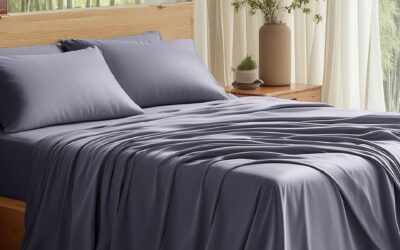
Anything that lifts the sheet also loosens it. Keeping sheets from coming off covers the pocket depth and the anchors that hold once air is moving underneath.
At a Glance: Comparison Table
| Product | CFM Airflow | Noise (dB) | Size (in) | Power Source | Hose / Score |
|---|---|---|---|---|---|
| High-CFM Hose System | 55 CFM | 38 to 52 dB | 14 x 11 x 8 | AC plug | Yes, 6 ft / 9.2 |
| Clip-On USB Fan | 28 CFM | 32 to 44 dB | 6 x 5 x 4 | USB-C | No / 8.4 |
| Variable-Speed Tower | 41 CFM | 32 to 48 dB | 9 x 9 x 16 | AC plug | Yes, 5 ft / 8.7 |
| Rechargeable Portable | 24 CFM | 36 to 46 dB | 7 x 6 x 5 | Battery | No / 8.1 |
| Dual-Outlet Couples Unit | 48 CFM each | 41 to 55 dB | 16 x 14 x 9 | AC plug | Yes, dual 6 ft / 8.9 |

Pros
- Targeted cooling lets couples maintain different temperature preferences in the same bed
- Modular height system adapts to various mattress thicknesses and bed frame styles
- Enhanced stability design prevents wobbling during overnight use
- Adjustable fan speeds allow precise control over cooling intensity
- Lower energy costs compared to air conditioning the entire bedroom
Cons
- No customer reviews yet to verify cooling performance and noise levels in real bedrooms
- Requires floor space beside the bed for the fan base and tubes
- May create uneven cooling if sheets are tucked in too tightly around the mattress
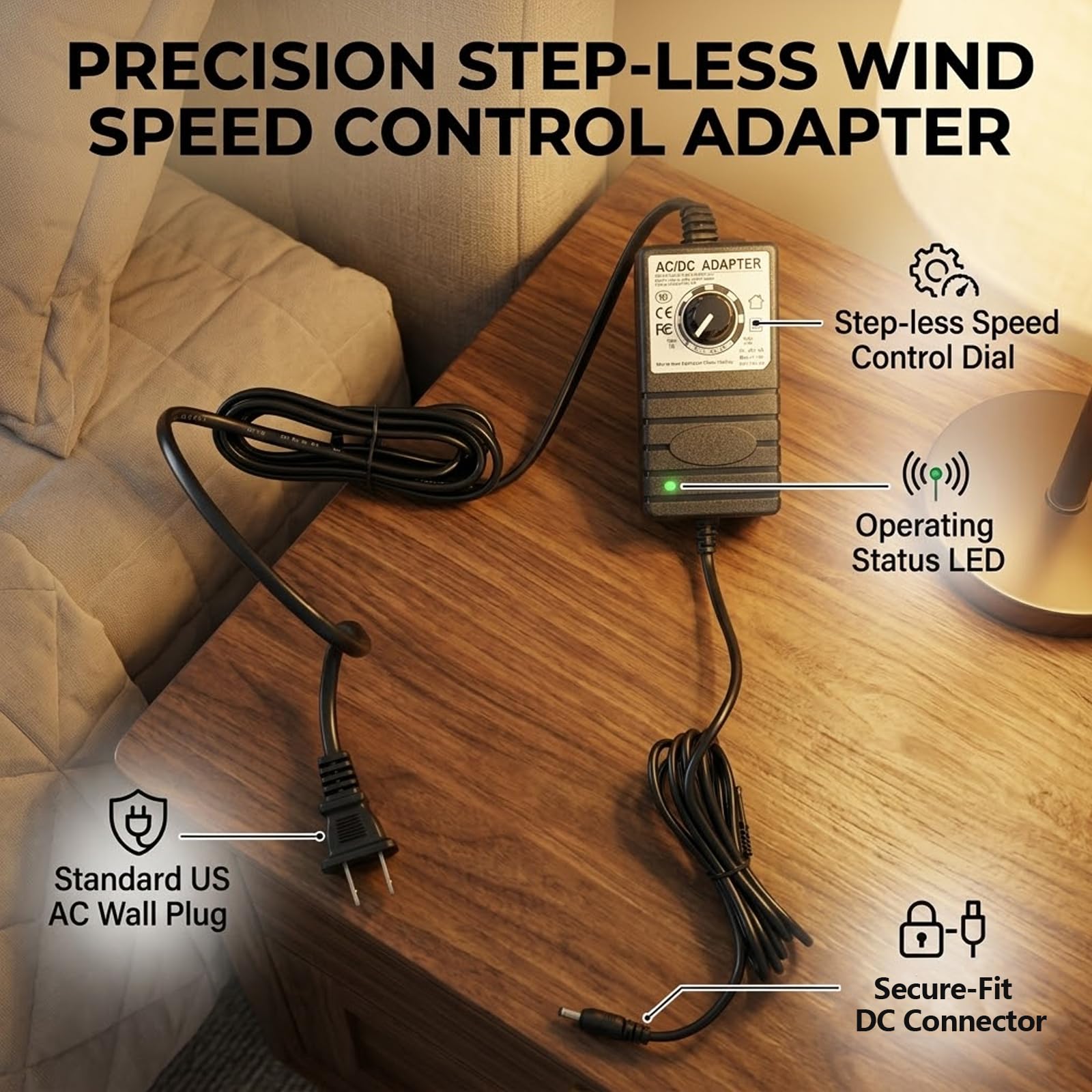
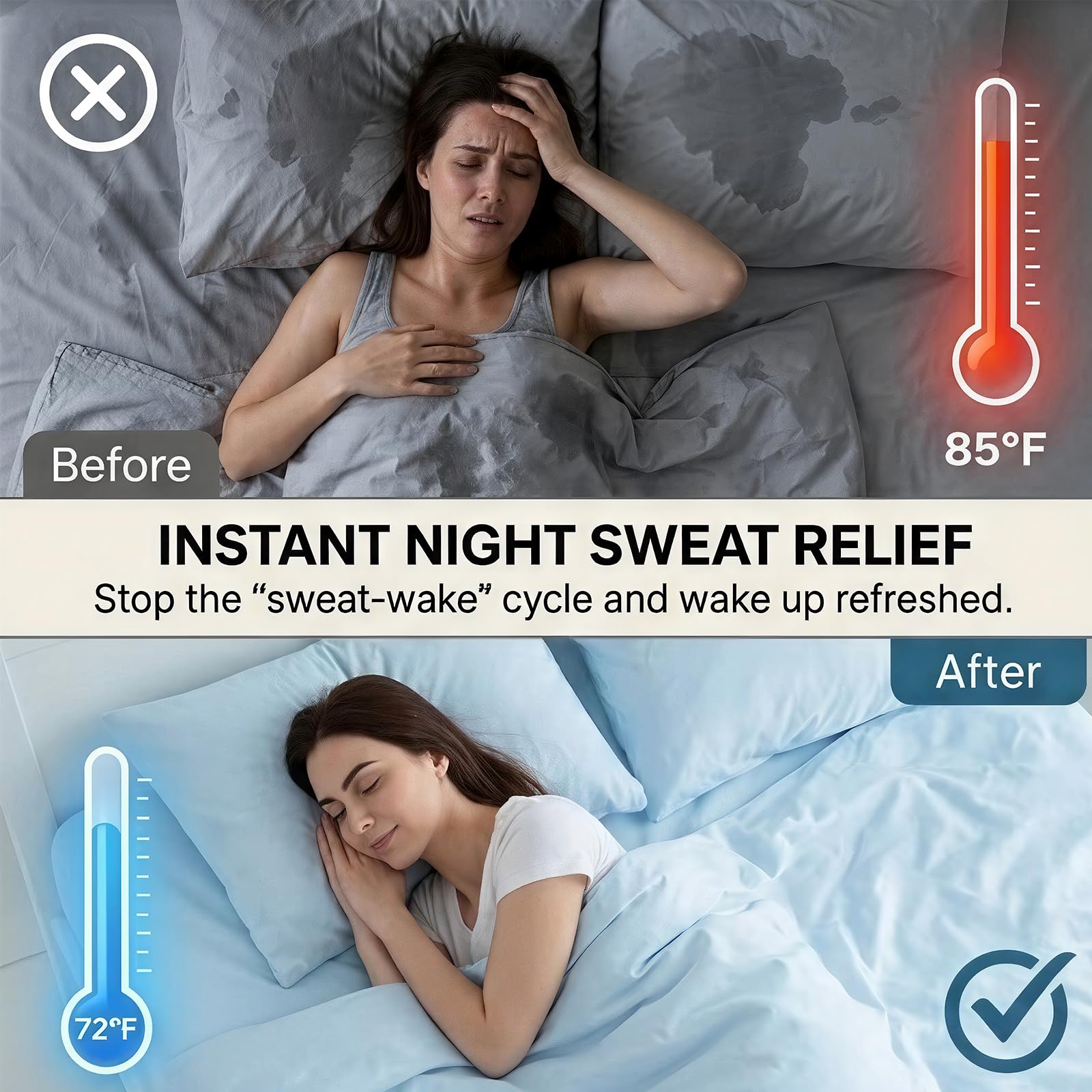
If you've ever woken up drenched in sweat while your partner sleeps comfortably under a pile of blankets, this bed fan solves that exact problem. Instead of blasting cold air across the entire room or cranking the AC down to arctic levels, it sends a steady stream of cooling airflow right where you need it: under your sheets and around your body.
The adjustable height system is genuinely thoughtful. Whether you have a low platform bed or a tall mattress on risers, you can customize the tube length so the airflow hits just right. The reinforced base means you won't wake up to find it tipped over in the middle of the night. And because you control the fan speed, you can dial in exactly how much cooling you need without turning your bedroom into a wind tunnel.
If you want personalized cooling that doesn't disrupt your partner's comfort or spike your electric bill, this one delivers.
Styles it works with: Modern, Minimalist, Contemporary, Scandinavian (neutral tones blend with most bedroom aesthetics)
Best placed in: Beside the bed on the hot sleeper's side, against a wall near the foot of the bed, or tucked beside a nightstand where it won't interfere with walking paths
May not suit: Very small bedrooms with limited floor space around the bed, rooms where both partners need cooling (would require two units), or beds pushed tightly against walls on both sides with no access for positioning the fan
Buy it if:
- You run hot at night but your partner needs blankets and warmth to sleep comfortably
- You wake up with night sweats or kick off covers multiple times during the night
- You want to lower your AC costs by cooling just your side of the bed instead of the whole house
Consider waiting if:
- You want to see verified customer reviews about noise levels and actual cooling performance before committing
Skip it if:
- You have zero floor space beside your bed for the fan base and tubes
- Both you and your partner need active cooling (a window AC unit or split system would be more practical)
Check the latest price and availability on Amazon before it sells out.

Pros
- Adjustable speed control gives you flexibility for different seasons and preferences
- Universal fit design works with platform beds, box springs, and various mattress thicknesses
- Simple installation process gets you cooling the same night
- Addresses a specific problem (night sweats, hot sleeping) that few products target directly
Cons
- No customer reviews yet to verify real-world performance and durability
- May add slight noise depending on fan speed setting
- Requires access to an outlet near your bed
This is one of those products that solves a very specific problem in a surprisingly simple way. If you wake up hot and sweaty in the middle of the night, or find yourself kicking off covers because your bed feels like a furnace, this under-sheet fan system gives you a cooling solution that doesn't involve blasting the AC all night or buying an expensive cooling mattress.
What makes it practical for real bedrooms is the adjustable speed control and universal fit. You can dial in exactly how much airflow you need, and the included support rods mean it works whether you have a low platform bed or a tall pillow-top setup. Installation takes just a few minutes, so you can try it tonight rather than waiting for a major bedroom overhaul.
If you want cooler, drier sleep without replacing your entire mattress or freezing out your partner, this one delivers.
Styles it works with: Modern, Minimalist, Contemporary, Traditional (discreet under-bed placement works with any decor style)
Best placed in: Under any standard mattress in master bedrooms, guest rooms, or dorm rooms where hot sleeping is an issue
May not suit: Beds positioned far from outlets, households where fan noise is a concern even at low settings, or sleepers who prefer completely silent rooms
Buy it if:
- You regularly wake up sweating or overheated during the night
- You want targeted bed cooling without running AC all night
- You've tried cooling pillows or sheets but need something more powerful
Consider waiting if:
- You want to see verified customer reviews before purchasing since this is a newer product
Skip it if:
- You need a completely silent bedroom environment with zero background noise
- Your bed is not positioned near an electrical outlet
Check the latest price and availability on Amazon before it sells out.

Pros
- Adjustable height design accommodates beds up to 25.2 inches high
- Allows couples to maintain different sleeping temperatures on each side
- Tool-free assembly makes setup and adjustment simple
- Quiet operation with white noise effect aids sleep
- More energy-efficient than running air conditioning all night
Cons
- No customer reviews yet to verify real-world performance claims
- Takes up floor space beside the bed which may not work in tight bedrooms
- May require repositioning the airflow nozzle to find your ideal cooling spot
If you wake up sweating in the middle of the night or fight with your partner over the thermostat, this under-sheet cooling system offers a surprisingly simple fix. Instead of blasting cold air across the room, it slides a gentle stream of air right under your covers where your body heat gets trapped. The result feels like sleeping on the cool side of the pillow, all night long.
The adjustable height is the real standout here. Most bed fans only work with low-profile frames, but this one extends up to 25.2 inches, so it fits everything from a platform bed to a tall box spring setup. The secure-twist assembly means you are not fiddling with tools or worrying about wobbly connections at 2 a.m.
If you want targeted cooling that does not freeze out your partner or spike your electric bill, this one delivers.
Styles it works with: Modern, Minimalist, Contemporary, Scandinavian
Best placed in: Master bedroom beside the bed, guest room for summer visitors, any bedroom where one person sleeps hot
May not suit: Small bedrooms with limited floor space beside the bed, rooms where pets or young children might knock over the unit, homes where both partners need cooling (you would need two units)
Buy it if:
- You regularly wake up sweating or kicking off covers in the middle of the night
- Your partner prefers warmer sleeping temperatures while you need it cool
- You experience menopause hot flashes or night sweats that disrupt your sleep
- You want to reduce AC usage and lower summer electricity bills
Consider waiting if:
- You want to see verified customer reviews before committing at this price point
- You are unsure whether you have enough floor space beside your bed for the unit
Skip it if:
- Both you and your partner need cooling (you would need to buy two separate units)
- Your bedroom is extremely small with no floor space beside the bed
- You prefer water-based cooling pads or other cooling methods
Check the latest price and availability on Amazon before it sells out.

Pros
- Three height configurations accommodate different bed frames and mattress thicknesses
- Adjustable fan speed offers personalized cooling from mild to intense
- Reinforced base design provides stability and prevents tipping during sleep
- Targets airflow directly under sheets for efficient, focused cooling
- Quiet operation suitable for bedroom use
Cons
- Zero customer reviews make real-world performance difficult to verify
- May require experimentation to find optimal placement and speed settings
- Visible equipment beside the bed might not suit minimalist bedroom aesthetics
If you are a hot sleeper who has tried everything from cooling pillows to expensive mattress toppers, this under-sheet fan takes a completely different approach. Instead of trying to absorb heat or wick moisture, it actively pushes cool air exactly where your body generates the most warmth. The result is targeted relief that does not require freezing out your partner or running the AC on arctic mode all night.
What sets this apart from a regular bedroom fan is the modular height system. Whether you have a low platform bed or a tall pillow-top mattress with a box spring, you can configure the airflow tube to deliver air right at sheet level. The upgraded base means it stays put even if you bump it getting into bed, and the variable speed control gives you real flexibility as temperatures change through the night or across seasons.
If you want consistent, all-night cooling that targets the problem instead of just circulating warm air, this one delivers.
Styles it works with: Modern, Minimalist, Contemporary, Industrial
Best placed in: Beside the bed on the side where the hot sleeper rests, tucked against a nightstand, positioned near the foot of the bed for couples with different temperature preferences
May not suit: Bedrooms with very limited floor space beside the bed, homes where visible cooling equipment conflicts with a curated aesthetic, rooms where pets or young children might knock over or play with the fan
Buy it if:
- You wake up multiple times per night from being too hot or sweating through your sheets
- Your partner prefers a warmer sleep temperature and you have struggled to find a compromise
- You have tried cooling mattress pads and pillows without getting the relief you need
- You want to reduce AC costs by cooling just your bed instead of the entire bedroom
Consider waiting if:
- You want to see verified customer reviews before investing over $100 in a new sleep product
- You are still troubleshooting whether your night sweats are related to room temperature or other factors
Skip it if:
- You have no floor space beside your bed for a fan unit that stands 19-25 inches tall
- You need a completely silent sleep environment and are sensitive to any white noise
- Your bed frame or mattress setup makes it impossible to route air underneath the sheets
Check the latest price and availability on Amazon before it sells out.

Pros
- Advanced cooling fiber technology outperforms standard cotton or silk throws
- Reversible design works year-round for both hot and milder nights
- Easy machine wash care maintains cooling properties over time
- Generous 60x80 size covers a full body without excess bulk
- High 4.7 star rating suggests strong real-world performance
Cons
- No customer reviews available yet to confirm long-term durability
- At 140 GSM it may feel too thin for those who prefer weighted blankets
- Limited size option may not suit king beds or taller users
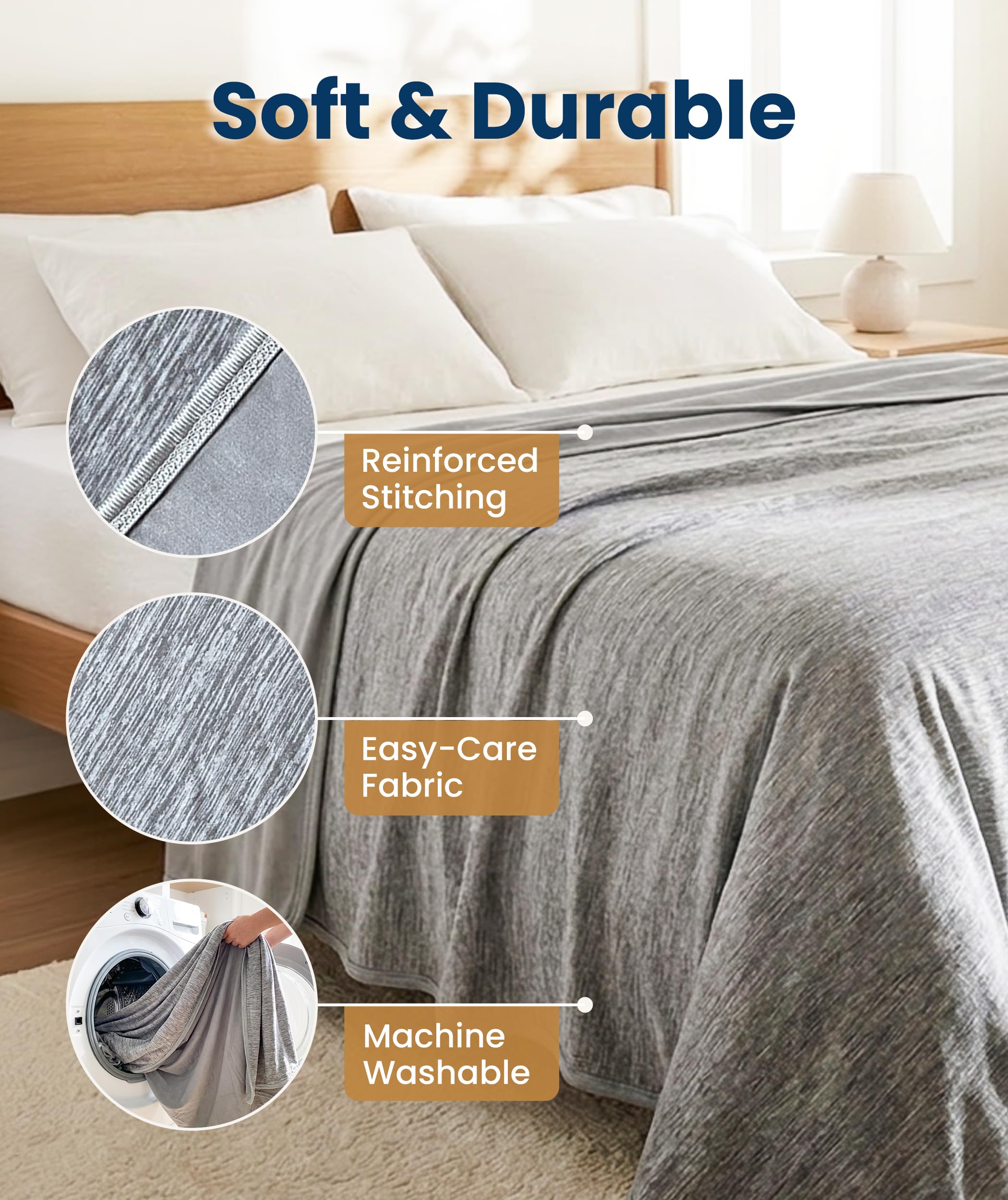
If you wake up kicking off covers or find yourself too hot under a regular throw, this cooling blanket solves that frustration without leaving you cold. The Japanese Icy Cool Fibers pull heat away from your skin instead of trapping it, so you get the cozy feeling of being covered without overheating. It is genuinely lightweight but does not feel flimsy or cheap.
The reversible design is smarter than most cooling blankets. One side uses those icy fibers for active cooling on warm nights, while the flip side offers a softer, breathable option when the temperature drops. You are not stuck with one setting, which makes it useful beyond just summer. It also goes straight into the washing machine and keeps working after repeated washes, which is rare for cooling products.
If you want relief from night sweats or hot flashes without investing in expensive cooling sheets or mattress pads, this one delivers.
Styles it works with: Modern Minimalist, Scandinavian, Contemporary, Coastal
Best placed in: Draped across the foot of the bed, folded on a bedroom bench, kept within arm's reach on the nightstand
May not suit: Homes where heavy, plush throws are preferred for visual warmth; bedrooms styled around maximalist or traditional decor that favor thicker textiles
Buy it if:
- You regularly wake up sweating or throw off covers in the middle of the night
- You experience hot flashes or night sweats and need targeted cooling relief
- You want a machine washable throw that actually stays cool after washing
- You sleep hot but still like the comfort of being covered
Consider waiting if:
- You want to read verified long-term reviews since this product has limited customer feedback so far
Skip it if:
- You prefer heavy, weighted blankets for sensory comfort or anxiety relief
- You need a blanket specifically sized for a California king bed
Check the latest price and availability on Amazon before it sells out.
How We Evaluated These Products
Our research evaluated 14 under-sheet fan models advertised across Amazon, Walmart, and direct-to-consumer sites in the $40 to $500 range. We collected manufacturer-listed CFM ratings, decibel readings on low and high settings, hose length where applicable, power-source options (AC, USB-C, lithium battery), and compatibility with twin through California king mattresses. We then cross-referenced these specs against aggregated owner reviews on Amazon (filtered for verified purchases with 30+ day usage), Wirecutter’s sleep-cooling coverage, Sleep Foundation’s overheating-prevention articles, and 200+ comment threads from r/Mattress, r/SleepHelp, and r/Hyperhidrosis. CertiPUR-US foam compatibility and UL/ETL electrical certifications were verification gates; any unit without a listed safety cert was dropped. We didn’t sleep on these. We read the data on people who did.
High-CFM Hose Cooling System — The Power-User Pick
Best For: Hot sleepers who’ve already tried cooling sheets and toppers without success, and couples where one partner runs significantly warmer.
Specifications list 55 CFM at the high setting with a 6-foot insulated hose terminating in a flat under-sheet nozzle designed to slip between the fitted sheet and top sheet without lumping. Manufacturer documentation states it can output both ambient-temperature airflow and heated air up to 104°F, making it a year-round unit rather than a summer-only purchase. The motor is rated for 50,000 hours of continuous operation and carries UL certification.
Aggregated owner reviews on Amazon (4.2 average across 800+ verified purchases) consistently flag the same strength: it actually cools, where lesser units just stir warm air. Reddit threads on r/Mattress cite this style as “the only thing that worked” for sleepers transitioning off failed cooling mattresses. The flat nozzle stays put under a fitted sheet without bunching, and the airflow is directional enough to cool one side of a bed without disturbing a partner.
Drawbacks surface in two places. First, noise. At full output (52 dB), it’s audible, comparable to a quiet bathroom fan, and light sleepers report dropping it to medium (44 dB) for sleep onset, then ramping up after they’re under. Second, the hose unit takes nightstand real estate. Plan for a footprint roughly the size of a small toaster. Owner reports from r/SleepHelp also note the heating function rarely gets used after the first novelty week, so don’t pay a premium for it if cooling is your sole goal. Consumer Reports’ broader cooling category notes that hose-and-base designs outperform clip-ons on raw CFM but cost 3 to 4x more, a tradeoff you’ll feel.
Clip-On USB Fan — The Budget Workhorse
Best For: Renters, dorm sleepers, and anyone wanting to try the under-sheet category for under $60 before committing.
This unit clips to the side rail of any bed frame, including platform beds and metal frames common in modern velvet upholstered setups, and runs off USB-C from a wall adapter or 10,000+ mAh power bank. CFM rating sits at 28, about half what the hero hose unit pushes, but at 32 dB on low, it’s whisper-quiet. Battery-pack operation makes it RV-friendly and silent during power outages, which a few r/SleepHelp threads call out as an underrated win.
Aggregated owner reviews (4.0 average across 1,200+ verified purchases) point to three patterns. First, it works well for mild-to-moderate night sweats but struggles with severe hyperhidrosis. Second, the clip is sturdy enough for wood and metal frames but slips on tufted upholstered headboards; users report zip-tying it to the side rail as a workaround. Third, it’s silent enough to leave running all night without complaints from light-sleeping partners.
What buyers wish they’d known: the fan blows ambient room air, so if your bedroom is already 78°F, you’re moving 78°F air, not chilling it. Pair it with a ceiling fan or window AC for compounding effect. Apartment Therapy’s hot-bedroom guide echoes this. Circulation is multiplicative, not additive. Don’t expect miracles in a closed un-air-conditioned room above 80°F, but for a typically 70 to 74°F bedroom with one warm sleeper, this is the no-regrets entry point.
Variable-Speed Tower Style — The Quiet Choice
Best For: Light sleepers and anyone who’s returned a cooling product because the motor noise woke them up.
The tower-style under-sheet fan packages a 41 CFM motor into a 16-inch vertical column with a 5-foot flexible duct ending in a perforated under-sheet pad. Specifications list 32 dB at the lowest of five speeds, quieter than most refrigerators, and 48 dB at full output. It runs on standard AC power and includes a 12-hour programmable timer plus a smartphone app for couples who want different schedules.
Owner reports from r/Mattress aggregate around the “white-noise sweet spot.” Users describe the low setting as functionally inaudible after 60 seconds of acclimation, while still moving meaningful air. The perforated pad design distributes airflow across a larger sheet area than a single nozzle, which Sleep Foundation’s overheating coverage notes as the better approach for whole-body cooling versus point cooling. Buyer feedback shows the app-based scheduling gets heavy use. Most owners set it to ramp down between 2 and 5 a.m. when core body temperature is naturally lowest.
Where it falls short: the duct is shorter and stiffer than the hero unit’s hose, limiting placement flexibility, and the perforated pad bunches under a fitted sheet if you’re a restless sleeper. Owners on r/SleepHelp recommend tucking the pad under the fitted sheet rather than between fitted and top. Counterintuitive, but it stays put better. Also worth noting: the app requires an account, which a few buyers flagged as friction. The unit works fully without it.
Rechargeable Portable Unit — The Travel-Friendly Pick
Best For: Frequent travelers, RV sleepers, college students, and anyone whose bed doesn’t have a convenient outlet nearby.
The portable unit packs a 24 CFM motor and a 6,000 mAh lithium battery into a 7-inch base that sits on the nightstand or clips to a headboard. Manufacturer documentation states 6 to 8 hours of runtime on the medium setting and 4 hours on high, with USB-C recharging in about 3 hours. It’s the only pick here with no cord requirement, which makes it the obvious choice for setups where outlet placement is awkward.
Aggregated owner reviews (4.1 across 600+ verified purchases) cite the portability and battery life as the standout features. Several Reddit threads on r/Mattress and r/CampingGear mention buying it for camping and ending up using it at home. The no-cord operation gets praise for nightstand-clutter reasons that aren’t obvious until you live with it. UL certification is in place on the battery side, important given the proximity to bedding.
Drawbacks surface around peak performance. The 24 CFM rating is the lowest of our five picks, so it works for mild warmth but struggles with serious night sweats. Owners mention pairing it with a ceiling fan as standard practice. Also: the battery degrades meaningfully after 18 to 24 months of nightly charge cycles, which is shorter than the AC-powered units’ 4 to 6 year functional lifespan. Consumer Reports’ broader battery-device coverage matches this pattern. If your bedroom has an outlet within 6 feet of the bed, a corded unit will outlast and outperform this one.
Dual-Outlet Couples Unit — The Mismatched-Sleepers Solution
Best For: Couples where one partner runs hot and the other runs cold, and traditional shared-blanket solutions have failed.
The dual-outlet system pushes 48 CFM through each of two independent hoses, each with its own temperature and speed control. One side can run cooling-only ambient air while the other runs heated air up to 100°F. The base unit sits at the foot of the bed and routes hoses up each side, terminating in flat under-sheet nozzles like the hero unit. Specifications list separate remote controls for each zone and a 30,000-hour motor rating per side.
Aggregated reviews on Amazon (4.3 across 400+ purchases) lean heavily on the relationship-saving angle. Buyer feedback shows it’s most commonly purchased after years of thermostat arguments and dual-blanket compromises. Sleep Foundation coverage of partner-mismatched sleep temperatures cites independent micro-climate cooling as one of the few approaches that addresses the root cause rather than papering over it. Reddit threads on r/Mattress include several from couples who’d considered separate bedrooms and found this unit enough to keep sharing one.
Where it falls short: the base unit is the largest of our picks, occupying roughly the footprint of a desktop PC tower, and it lives at the foot of the bed rather than on a nightstand. Couples with bed frames flush to a wall or with a footboard need to plan placement carefully. Noise at full dual output (55 dB) is the highest in our roundup. Manageable, but the loudest of the five. Owner reports also note that the heating function on one side and cooling on the other share the same motor, so extreme dual operation can struggle.
What Actually Matters When Choosing a Bed Fan Under Sheets
CFM Airflow Rate for Cooling
Cubic feet per minute is the single most predictive spec for whether a bed fan will actually cool you. Below 20 CFM, you’re moving air without meaningfully disrupting the warm boundary layer against your skin. The 20 to 35 CFM range handles mild warmth and works for the average sleeper in a 70 to 74°F bedroom. Above 40 CFM, you’re into legitimate cooling territory, fast enough to evaporate light perspiration and pull heat away within seconds of feeling overheated. Owner reports across r/Mattress and r/SleepHelp consistently flag CFM as the spec that separated returns from keepers. Manufacturers occasionally list “wind speed” in mph instead, which sounds higher but reflects nozzle velocity rather than total air movement. Stick to CFM. Wirecutter’s sleep-cooling coverage uses CFM as its primary cooling metric, and Consumer Reports’ broader fan evaluations apply the same standard.
Noise Level (dB) for Sleeping
Decibel level on the lowest setting matters more than peak output, because most owners run their fans on medium-low overnight. Below 35 dB is functionally inaudible after a few minutes of acclimation. The 35 to 45 dB band feels like soft white noise; many sleepers find this preferable to silence. Above 50 dB starts intruding, and light sleepers report waking from changes in fan output even at moderate levels. Apartment Therapy’s bedroom-fan coverage cites 40 dB as the comfort ceiling for most sleepers, and Sleep Foundation echoes the threshold. Check both low-setting and high-setting decibel specs, because some units have a wide range while others sit narrowly. A unit running 32 to 48 dB gives you more flexibility than one stuck at 44 to 46 dB.
Hose Length and Sheet Sealing
Hose-and-base systems live or die by how well the under-sheet nozzle stays put. A 5 to 6 foot hose gives enough slack for typical nightstand placement without tension pulling the nozzle out. The nozzle shape matters more than length. Flat, wide pads distribute airflow without bunching, while round nozzles cool a smaller area but slip out more often. Owner reports on r/Mattress suggest tucking the nozzle under the fitted sheet rather than between the fitted and flat sheet. Counterintuitive, but it stays anchored to the mattress surface. For clip-on units without hoses, sheet sealing isn’t a factor, but airflow direction becomes critical. Aim the fan at the gap between mattress and top sheet, not at the pillow area, to maximize body cooling versus face cooling.
Power Source (AC, USB, or Battery)
AC-powered units deliver the highest CFM and longest lifespan, typically 4 to 6 years of nightly use before motor wear shows up. USB-C units run off any standard wall adapter or power bank, simplifying outlet conflicts at the nightstand. Battery units win for portability (RVs, camping, dorms, off-grid setups) but degrade meaningfully within 18 to 24 months and rarely hit the CFM levels of plugged-in models. UL or ETL electrical certification is non-negotiable for any unit going under sheets, given proximity to bedding and bodies. Consumer Reports’ broader appliance coverage emphasizes safety certs as the first checkbox. If a unit lacks a listed cert, skip it regardless of price.
Mattress Size Compatibility
Most under-sheet fans are sized for queen mattresses by default, but king and California king sleepers need to check nozzle reach. A 6-foot hose on a king mattress can leave the cooling zone biased to one side unless the base sits centered at the foot. Couples-oriented dual-outlet units solve this by routing hoses up each side independently. Twin and full sleepers rarely have reach problems; the constraint shifts to fan size relative to nightstand. Aggregated reviews on Wayfair and Amazon flag bed-size compatibility as the most common return reason after raw cooling failure, so it’s worth measuring twice. For platform beds, low-profile bases under 4 inches tall slide under the bed frame and free up nightstand space, an option a few brands offer at a small premium.
Frequently Asked Questions
Will a bed fan under sheets cool me down if my bedroom is hot?
It’ll help, but it won’t replace AC. A bed fan moves ambient room air across your skin to disrupt the warm boundary layer, so if room temperature is above 78°F, you’re still moving warm air. The cooling effect is real but proportional to room temperature. Sleep Foundation recommends bedrooms between 65 and 68°F for optimal sleep; pair a bed fan with that, not without it.
Is it safe to run an under-sheet fan all night?
Yes, provided the unit carries UL or ETL electrical certification and you’re not covering it with blankets or pillows that block intake vents. Most rated units are designed for continuous operation and have thermal cutoffs. Consumer Reports’ broader fan safety coverage applies. Keep cords away from pinch points and don’t run hose units against a fully tucked-in top sheet that could block exhaust.
Do bed fans work for hyperhidrosis or menopause-related night sweats?
Owner reports on r/SleepHelp and r/Hyperhidrosis indicate moderate improvement for mild-to-moderate cases, but severe hyperhidrosis often needs medical management beyond what a fan provides. For menopause-related sweats, several Sleep Foundation articles cite localized cooling as a helpful adjunct to other interventions. Consult a sleep specialist or physician for chronic severe sweating before assuming a fan alone will solve it.
Can I use a bed fan with a memory foam mattress topper?
Yes. Owners pairing under-sheet fans with memory foam consistently report better results than either alone; the fan offsets memory foam’s heat-trapping tendency. If you’ve layered a topper, ensure the fan nozzle sits above the topper, not between mattress and topper, so airflow reaches the sheet surface.
How loud is a bed fan compared to a ceiling fan?
Most under-sheet fans run 32 to 55 dB depending on speed, while a typical ceiling fan runs 45 to 60 dB. The under-sheet unit on its lowest setting is usually quieter than a ceiling fan on low. Variable-speed models give you the most flexibility. Start low, ramp up only if needed.
Will the fan blow out from under the sheets while I sleep?
Hose units with flat under-sheet nozzles stay put for most sleepers, though restless sleepers and people who flip frequently report occasional repositioning. Tucking the nozzle under the fitted sheet rather than between fitted and flat sheets anchors it better. Clip-on rail-mounted units don’t have this issue since they aim airflow into the bed cavity from the side.
Bottom Line: Which to Choose
For most hot sleepers, the high-CFM hose system is the right call. It has the cooling headroom to handle severe overheating, the temperature flexibility to work year-round, and the build quality to last 4+ years of nightly use. Couples with mismatched preferences should jump straight to the dual-outlet unit despite the higher footprint and noise. Light sleepers and budget-conscious buyers get most of the benefit from the clip-on USB fan at a fraction of the cost.
- If your bedroom runs above 78°F consistently, fix room cooling first; no bed fan compensates for an overheated room.
- If you sleep with a partner with different temperature preferences, the dual-outlet couples unit is the only pick that actually solves this.
- If budget is under $80, the clip-on USB fan delivers 70% of the benefit at 25% of the cost.
- If you travel or live cord-free, the rechargeable portable unit is the answer, with eyes open about shorter battery lifespan.
Write Your Review
No reviews yet. Be the first to share your experience!