

> Editorial Note: I’m Liam Wright, an outdoor and garden editor. I grew up in my family’s landscaping business and now cover what actually survives a season of UV, rain, and freeze-thaw cycles. The picks here are evaluated against ASTM weatherability standards and manufacturer durability ratings.
Most patio dining sets get bought for the summer-party fantasy and then crowd the deck the other 50 weekends of the year. Size the set around your real seating count, your climate, and the usable rectangle you actually have, then coordinate the rest of your space with your best patio furniture, best outdoor furniture for small patio, patio furniture, outdoor furniture ideas 2026, and outdoor lighting ideas. Here’s how to choose a dining set that still fits and still functions after two seasons outside.
How Many Seats Do You Actually Need?
Buy for the dinner you host most weeks, not the holiday you host once a year. A 3-piece bistro set seats two and suits a balcony or a coffee corner. A 4-seat square set covers a couple with occasional guests. A 6-seat or 7-piece set earns its footprint only if you eat outside as a group on a regular basis.
Match the piece count to your household plus a small buffer, not the maximum you can imagine. A family of four usually lives better with a 6-seat table that handles two guests than a 4-seat set that forces a folding chair every time someone drops by. Round tables seat one extra person in a pinch because there’s no corner to work around.
Think about flexibility before you commit. Separate chairs pull toward a fire pit or turn to face the yard, while a fixed bench locks people into one arrangement. Wirecutter’s outdoor coverage makes the same point across categories: buy for the Tuesday-night version of your patio, then confirm the set still leaves room to walk.
Which Frame Material Handles Your Weather?
It depends on your climate, but aluminum is the safest all-around frame for an uncovered patio. It doesn’t rust the way untreated steel does, it’s light enough to slide across a deck, and it shrugs off rain without the annual sealing wood demands. A powder-coated aluminum table is the low-maintenance default for most buyers.
Steel is strong, and the powder coating is the whole story. Once that coating chips, moisture reaches the metal and rust creeps from the wound. Steel works under a covered porch or in a dry climate, but coastal salt air and freeze-thaw winters age it fast. Acacia and other hardwoods bring warmth and can last close to a decade, though only if you’ll oil or seal them once or twice a year.
Woven seating adds a variable. PE rattan and all-weather wicker are synthetic resins woven over a metal frame, so the weave sets the look while the metal underneath sets the lifespan. FSC certification confirms responsible wood sourcing but doesn’t cancel the upkeep. Simple order: aluminum for low effort, sealed hardwood for warmth and long life, powder-coated steel only when budget wins.
How Big a Table Fits Your Space?
Start with the patio’s usable rectangle, not the total square footage. A 10 by 12 foot deck sounds roomy until stairs, a railing, a door swing, and the grill zone shrink the real dining area. Mark the table footprint with painter’s tape or a cardboard cutout before anything ships.
Clearance is where most sets fail. Leave 36 inches from every table edge to the nearest wall or railing so chairs can slide back and people can pass behind them. A 48 inch round table with four chairs wants roughly a 9 by 9 foot clear zone once you count that pullback. A rectangular 6-seat table needs about 6 to 8 feet of length plus the same 36 inch buffer on the long sides.
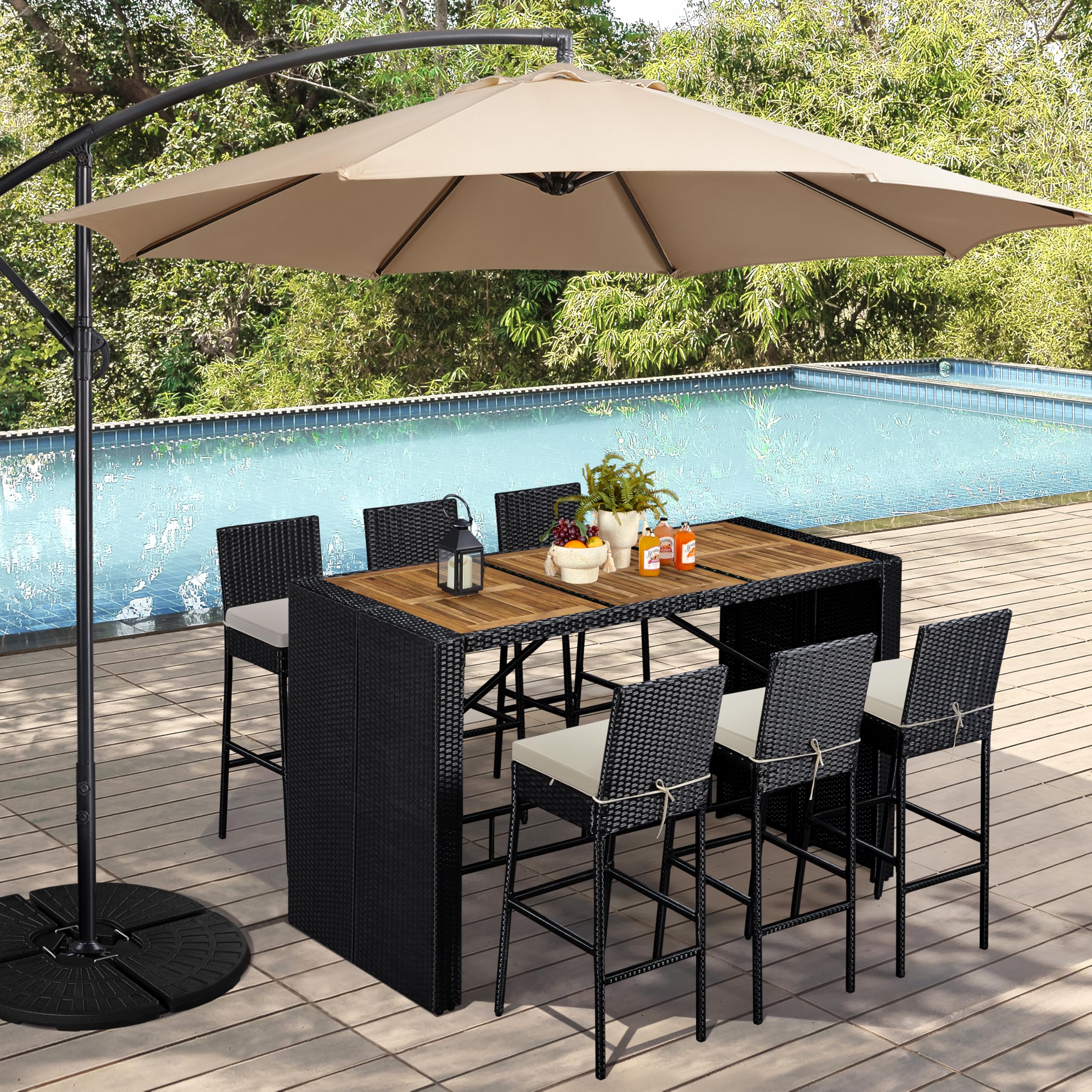
Shape matters as much as size. Round tables ease traffic in tight corners and seat an extra guest without a hard corner in the way. Rectangular tables fit narrow decks and galley-style patios better. Bar-height sets read as compact and social, but they need taller clearance and don’t suit young kids. Dimensions first, seat count second, every time.
What Cushion and Fabric Specs Matter Outside?
Cushions decide comfort and cause the most complaints, so read the specs before the color. For dining chairs, a 2 to 3 inch seat cushion is enough since you’re upright, and a firmer fill holds its shape far longer than a soft one that flattens by the second summer. Removable covers with zippers are non-negotiable, because you’ll want to wash them.
Fabric is where the money quietly goes. Solution-dyed acrylic, the kind branded as Sunbrella fabric, holds color against UV for years while printed polyester fades to a chalky version of itself. Look for quick-dry foam or fiber fill and seams that shed water rather than trap it. Apartment Therapy repeatedly steers owners toward long-term reviews here, because showroom softness tells you almost nothing about season three.
Color is a real trade-off outdoors. Dark cushions hide stains but soak up heat in full sun, so a seat can feel hot on bare legs. Light cushions stay cooler but show pollen, sunscreen, and mildew marks. Whatever you pick, the boring plan wins: removable covers, a firm fill, and a dry place to stash them during long rain stretches.
Where Will You Store the Cushions and Cover?
Storage is the spec nobody reads on the listing and everybody regrets later. Your dining set will sit through pollen, sun, bird droppings, wind-blown grit, and wet leaves whether you plan for it or not. The honest question isn’t whether you’ll protect it. It’s whether the routine is realistic for the space you have.
Frames handle weather better than cushions do. Aluminum needs the least attention: wipe it down, snug the hardware, keep the fabric dry. Powder-coated steel needs a fast touch-up the moment the coating chips. Wood wants cleaning plus oil or sealant once or twice a year, and woven seating needs a soft brush and mild soap because dirt collects in the weave. Skip the pressure washer on woven pieces, since it forces water into joints and loosens strands.
Plan the off-season before you buy. A deck box, a garage shelf, or a covered corner keeps cushions dry through storms and winter. A tight fitting cover over the table and chairs is the cheapest life extension you can buy. If you won’t cover a set or store its cushions, don’t buy one that needs either to survive.
Helpful Products
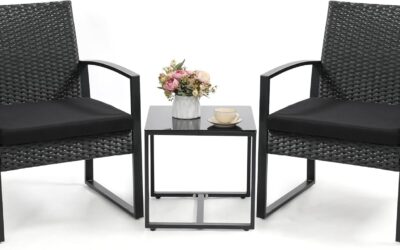
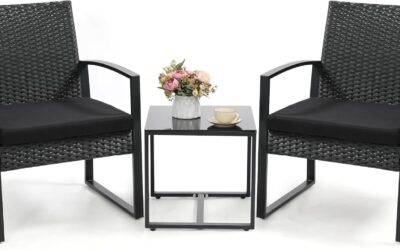
The three sets below fit different versions of the same checklist: a weather-aware frame, dining-height comfort, and a footprint you can still walk around with 36 inch clearance. Start with the acacia wood 7-piece for a full group table, choose the aluminum-and-wicker 7-piece when low upkeep matters most, and pick the 3-piece bar set for a balcony or a two-seat corner.

[acms_list asin=”B0DXWKGCX6,B0G14DKV5Y,B0C8CKYFJN”]
Frequently Asked Questions
What size patio dining table do I need for six people?
For six, plan on a rectangular table about 6 to 8 feet long or a round table near 60 inches across. Add 36 inches of clearance on every side so chairs slide back without hitting a wall or railing. A round shape seats a sixth person more easily because there’s no corner in the way.
Is aluminum or steel better for a patio dining set?
It depends on your climate, but aluminum wins for most uncovered patios. It doesn’t rust once a coating chips the way steel does, and it’s light enough to rearrange. Steel is fine under a covered porch or in a dry region, though it needs better coating and faster touch-ups in wet or coastal air.
How much clearance do I need around a patio dining set?
At least 36 inches from every table edge to the nearest wall, railing, or planter. That gap lets chairs pull back and lets people walk behind seated guests. A 48 inch round table with four chairs wants roughly a 9 by 9 foot clear zone once you count chair pullback.
Do patio dining chair cushions need to be waterproof?
No. Water-resistant is more common and usually more practical, since fully sealed covers can trap moisture if water sneaks through a seam. Look for solution-dyed acrylic like Sunbrella fabric, quick-dry fill, removable zippered covers, and a dry spot to store them during long storms.
Can a patio dining set stay outside all winter?
It depends on the frame and your climate. Aluminum and quality synthetics can stay out under a cover in many regions, but cushions should always come indoors. Freeze-thaw cycles are hardest on sets with trapped water, exposed steel, or cracked wood, so drain and cover before the first hard freeze.
Is a round or rectangular patio table better for a small deck?
It depends on the deck’s shape. Round tables ease traffic in tight square corners and seat an extra guest without a hard edge, while rectangular tables fit narrow or galley-style decks better. Measure the usable rectangle first, then pick the shape that leaves you a 36 inch walkway.
Are bar-height patio dining sets worth it?
It depends on who uses the space. Bar-height sets feel social, read as compact, and suit standing-and-chatting patios well. They’re a poor fit for young kids and anyone who wants a relaxed sit-down meal, and they need taller overhead clearance, so match the height to how you’ll actually gather.

Write Your Review
No reviews yet. Be the first to share your experience!