

> Editorial Note: I’m Liam Wright, an outdoor and garden editor. I grew up in my family’s landscaping business and now cover what actually survives a season of UV, rain, and freeze-thaw cycles. The picks here are evaluated against ASTM weatherability standards and manufacturer durability ratings.
Most grills get bought on burner count and a low sticker price, then disappoint the first time someone tries to sear a steak and roast vegetables at once. Fuel type, cooking area, and build quality decide whether a grill lasts a decade or rusts out in two summers. Sort those out before you shop, then plan the rest of your outdoor kitchen alongside your best patio furniture, patio dining set, best outdoor furniture for small patio, outdoor furniture ideas 2026, and outdoor lighting ideas. Here’s how to choose a grill you’ll still be happy with in year five.
Gas, Charcoal, or Pellet: Which Fuel Fits You?
Pick the fuel around how you cook, not the price tag. Gas grills light with a knob, heat up in about 10 minutes, and give you precise temperature control, which is why they suit busy weeknights and anyone who values convenience. The trade-off is a milder flavor than fire-and-smoke purists want. Propane runs off a portable 20-pound tank; natural gas connects to a home line for endless fuel but needs professional plumbing and a fixed spot.
Charcoal grills deliver the high heat and smoky flavor that gas can’t match, and they cost less up front. The price is time and effort: 20 to 30 minutes to light the coals, more cleanup, and a real learning curve on temperature. Pellet grills split the difference, burning compressed wood pellets for genuine smoke with digital temperature control, though they need electricity and cost more.
Match the fuel to your patience. Wirecutter’s grilling coverage leans toward gas for everyday cooks who grill on a schedule and charcoal or pellet for people who treat grilling as the event itself. Be honest about how you’ll actually use it before the flavor debate pulls you toward more work than you want.
How Much Cooking Area Do You Need?
Cooking area is measured in square inches, and it’s the spec that decides whether you can feed your crowd. A compact grill around 300 square inches handles a couple or a small family. A 400-to-500 square inch grill, roughly three to four burners, covers most households and the occasional cookout. Regular hosts of big groups want 500-plus square inches so burgers for a dozen fit in one round.
Think in burgers, not abstract numbers. Roughly 100 square inches cooks four to five burgers at once, so a 450-square-inch grill handles about twenty patties, enough for a real gathering. Don’t overbuy, though; a huge grill wastes fuel heating empty grates on a typical Tuesday.
Look for a two-zone setup, not just total space. Independent burners let you run one side hot for searing and the other low for finishing, which is how you cook a thick steak without burning the outside. A side burner adds a spot for sauces or sides, and a warming rack above the grates holds cooked food while the rest finishes. Usable configuration beats raw square inches.
What Materials and Build Quality Last?
The grates and the firebox decide how many seasons you get, so look past the shiny lid. Stainless steel grates heat evenly, resist rust, and clean easily, while porcelain-coated cast iron holds heat beautifully for sear marks but chips if you scrape it hard. Bare cast iron sears best of all and adds flavor over time, but it demands seasoning and careful drying or it rusts. A cast iron griddle plate turns any gas grill into a flat-top for eggs, smash burgers, and vegetables that would fall through the grates.
The firebox and lid material matter more than the frame. Thick stainless steel or heavy-gauge coated steel holds heat and resists warping; thin aluminum or lightweight steel warps and rusts within a couple of seasons. Lift the lid before buying if you can; a heavy, solid lid signals better heat retention than a tinny one that rattles.
Check the parts that fail first. Burners are the most common replacement, so stainless or brass burners beat cheap aluminized steel that corrodes. Igniters, grease trays, and heat tents wear out too, so a brand with available replacement parts saves a grill from the landfill. A cover rated for your grill’s exact size, the 64-inch and 40-inch fits below are examples, is the single cheapest thing that extends a grill’s life, since UV and rain do more damage than cooking ever will.
What Features Actually Matter?
Focus on the features that change how food comes out, not the gadget count. A built-in lid thermometer is essential for anything beyond high-heat searing, and a more accurate dial or digital readout helps with low-and-slow cooking. Even heat distribution, driven by good heat tents or flavorizer bars over the burners, prevents the hot-and-cold spots that ruin a full grate of food.
Some extras earn their space and some don’t. A side burner is genuinely useful for sauces and sides; a rotisserie kit matters if you actually roast whole chickens; a warming rack pays off at every cookout. Skip the features you’ll never touch: built-in speakers, ornamental shelving, and burner counts higher than your cooking area can support are marketing, not cooking.
Portability is its own question. A full cart grill anchors a patio, while a compact tabletop or portable model suits a balcony, tailgate, or camping trip. Match the format to where you’ll cook most. Apartment Therapy makes the practical point that the best grill is the one that fits your space and gets used, not the biggest one that barely fits the deck.
How Do You Maintain a Grill So It Lasts?
Maintenance is what separates a five-year grill from a two-year one, and it starts with a cover. A weatherproof cover sized to your grill keeps rain out of the firebox and UV off the finish, which prevents the rust and fading that kill most grills faster than cooking does. Slip it on once the grill has cooled after each use.
Clean in two rhythms. After each cook, burn off the grates on high for a few minutes, then scrape them so residue doesn’t build into a crust. A few times a season, do a deeper clean: empty the grease tray, clear the burner ports of debris so the flame stays even, and wipe down the interior so grease doesn’t ignite. A clogged burner port is the usual reason a gas grill heats unevenly.
Check the gas system at the start of each season. Brush soapy water on the hose and connections and watch for bubbles that signal a leak, and inspect burners and igniters for corrosion. Season cast iron grates and griddles with a thin coat of oil after cleaning to keep rust off. The honest rule: a cover plus a five-minute post-cook cleanup does more for a grill’s lifespan than any premium feature on the box.
Helpful Products
These three picks are the gear that protects and extends a grill rather than the grill itself: two weatherproof covers sized for common grills and a cast iron griddle plate that turns a gas grill into a flat-top. Match the cover to your grill’s width first, the 64-inch for large four-burner units and the 40-inch for standard 36-to-40-inch grills, then add the griddle if you want to cook eggs, smash burgers, and vegetables.
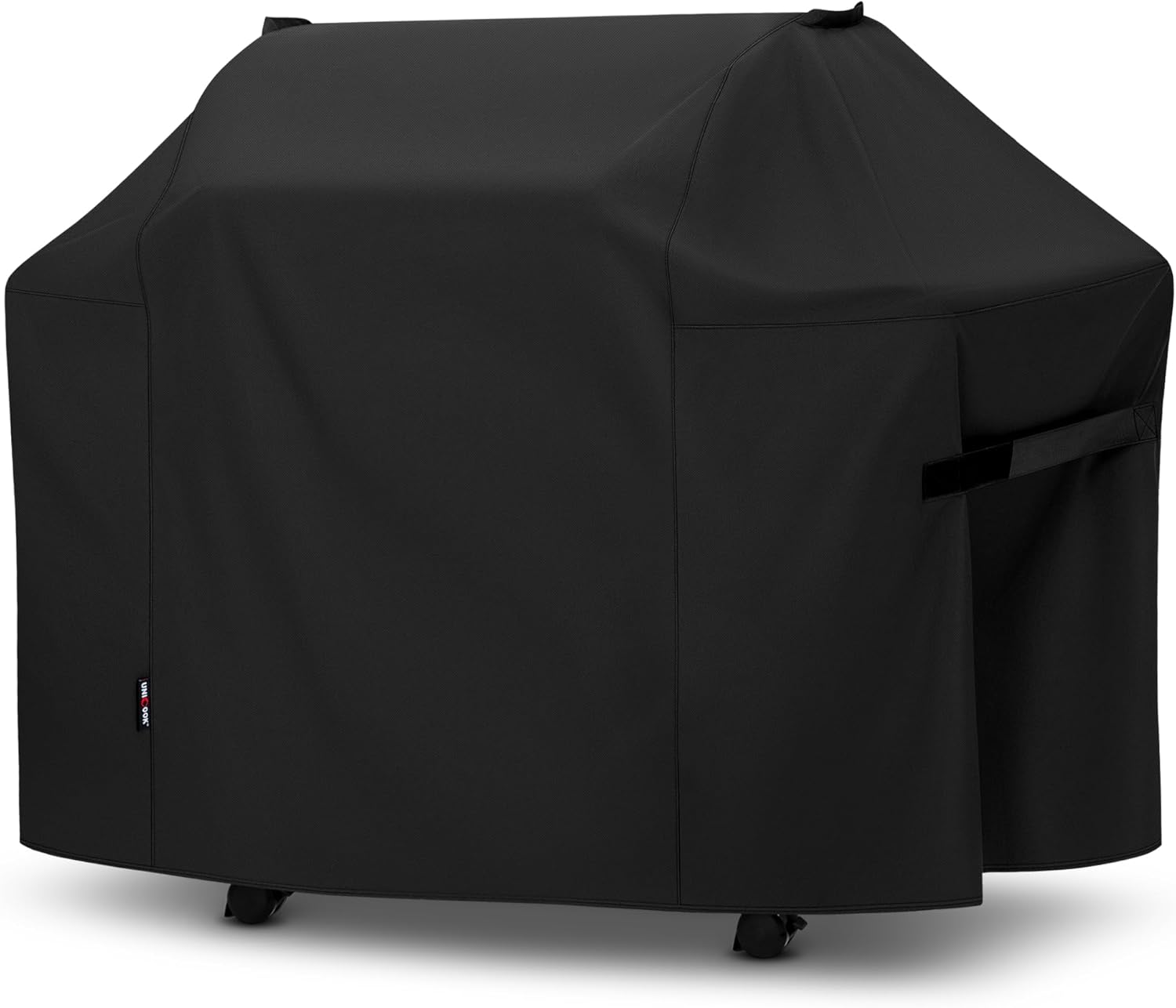
Unicook Heavy Duty Grill Cover for Weber Summit 400 Series |64 Inch Waterproof UV-Resistant BBQ Protector (Replaces Weber 7108)
Pros
- Waterproof vinyl undercoating provides a genuine moisture barrier, not just a water-resistant top layer
- Solution-dyed fabric resists UV fading and cold cracking for multi-season durability
- Adjustable straps and top handles make fitment fast and secure, even in windy backyards
- Broad compatibility covers Weber Summit 400, Genesis II 400, and several competing brands in one SKU
Cons
- No customer reviews yet to validate long-term durability claims beyond manufacturer specifications
- At 64 inches wide, it won't accommodate larger5-6 burner Summit or Summit Plus configurations without measuring carefully first
- Air vents are present on this model but their effectiveness in preventing mold buildup in humid climates is unverified without real-world feedback
If you've invested in a Weber Summit grill, you already know it's not something you want sitting exposed to the elements between cookouts. The Unicook Summit 400 cover is one of the few aftermarket options enginered to match that grill's specific footprint at 64 inches wide by 26.8 inches deep by 47 inches tall, so it actually fits the way a cover should rather than billowing loosely or pulling tight at the corners.
What sets this cover apart from budget alternatives is the construction approach. The outer fabric is solution-dyed rather than surface-printed, which means the color runs through the fiber and resists UV breakdown from the inside out. The vinyl undercoating adds a true waterproof layer, not just a splash-resistant finish. Add the sewn-in top handles and adjustable hem straps and you have a cover you can pull on in under ten seconds before a storm rolls in.
If you want reliable all-season grill protection without paying OEM prices for a Weber-branded cover, this one delivers.
Styles it works with: Outdoor Modern, Industrial Patio, Classic Suburban Backyard, Farmhouse Exterior
Best placed in: Freestanding patio or deck grill station, covered outdoor kitchen area, open backyard grilling zone with seasonal wind or rain exposure
May not suit: Very compact balconies or patios where a64-inch covered grill would dominate the space, or households with grills that have side tables or attached accessories that extend the total width beyond 63 inches
Buy it if:
- You own a Weber Summit E470, S470, E450, S450, E430, or S420 and want a snug, purpose-fit cover at fraction of the Weber 7108 retail price
- Your grill lives outdoors year-round and faces sun, rain, or snow, and you need both UV protection and genuine waterproofing in one cover
- You've gone through cheaper covers that faded, cracked, or blew off in the wind and want something with straps and handles that actually stay put
Consider waiting if:
- You'd prefer to see verified customer reviews accumulate before committing, since this listing currently has no user feedback to cross-reference against manufacturer claims
Skip it if:
- Your grill is a larger Summit Plus or 6-burner configuration that exceds 63 inches in width, as this cover will not provide a proper fit
- You specifically need a cover with a side-table pocket or built-in storage pouch, as this model does not include those features
Check the latest price and availability on Amazon before it sells out.

QuliMetal 25x16 Cast Iron Griddle for Gas Grill - Nonstick Nanoceramic Flat Top Insert for Outdoor Cooking
Pros
- Universal 25x16 sizing fits the vast majority of gas and charcoal grills without modification
- Nanoceramic coating distributes heat evenly and eliminates hot spots for consistent results across the entire surface
- Grease trough is noticeably wider than standard models, reducing flare-ups and keeping the cooking zone clean
- Nonstick performance is rated 30% better than basic cast iron griddles, making delicate foods like eggs and fish far easier to manage
- 4.5-star rating across over 1,600 verified reviews signals consistent real-world satisfaction
Cons
- At 25x16 inches and cast iron construction, this griddle is heavy and not ideal for solo campers or hikers who need lightweight gear
- The nanoceramic coating, while durable, can degrade faster than traditional seasoned cast iron if metal utensils are used regularly
- No lid or cover is included, which matters for outdoor storage between uses
The QuliMetal cast iron griddle solves the single biggest frustration of outdoor cooking: running food in batches while half your guests wait. With a 25x16-inch flat cooking surface, you can run burgers, eggs, and sausages side by side in a single go. The nanoceramic coating is the real standout here - it heats evenly from edge to edge, so the burger sitting at the corner cooks just as well as the one in the center.
What sets this apart from a basic cast iron slab is how little effort cleanup takes. The nonstick surface genuinely releases food without resistance, and the built-in grease trough channels drippings away from the burner so you are not fighting flare-ups mid-cook. A quick wipe after cooking and it is ready to store.
If you want the output of a full flat-top griddle without the bulk or the scrubbing ritual of bare cast iron, this one delivers.
Styles it works with: Outdoor kitchens, rustic patio setups, modern backyard entertaining spaces, and utilitarian camping rigs
Best placed in: On a gas grill grate as a direct insert, over a two-burner outdoor camp stove, or on a portable propane burner for tailgate setups
May not suit: Small single-burner camping stoves where the 25x16 size overhangs the heat source, or indoor kitchen stovetops where ventilation and space may be limited
Buy it if:
- You regularly cook for groups of 4 or more at backyard BBQs or tailgates and are tired of cooking in multiple batches
- You already own a Weber Genesis, Charbroil, or Nexgrill and want to add flat-top griddle capability without buying a separate appliance
- You want an easy-clean nonstick surface for delicate foods like eggs and fish on a grill that normally chars everything
Consider waiting if:
- You want to confirm exact fit dimensions against your specific grill model before purchasing
Skip it if:
- You need a lightweight griddle for backpacking or solo camping where every ounce matters
- You cook exclusively on an electric or induction stovetop where cast iron flat tops perform differently and this size is impractical
Check the latest price and availability on Amazon before it sells out.

YQSZWJ 40 Inch Grill Cover Waterproof 420D Oxford BBQ Cover for 36-40in Gas Grills with Storage Bag
Pros
- Solid waterprofing at a sub-$20 price point
- Secure fit with both drawstring and hook-and-loop straps on both sides
- Includes a compact storage bag for off-season or travel use
- 420D Oxford fabric resists tearing better than thinner polyester covers
- Compatible with multiple major grill brands in the 36-40 inch range
Cons
- Brand is relatively unknown with limited long-term durability data
- Sizing is fixed at 40x24x35.5 inches, so wider or taller grills will not be fully covered
- No color options available; only comes in black
This grill cover solves a simple but annoying problem: keeping your outdoor grill protected without spending a fortune or wrestling with a flimsy tarp. The 420D Oxford fabric feels noticeably thicker than bargain covers, and the waterproof coating actually beads water rather than letting it sep through at the seams.
What sets it apart at this price is the dual-fastening system. The bottom drawstring cinches tight while the side hook-and-loop straps add extra hold. It stays put on breezy evenings when thinner covers would be halfway across the patio. The included storage bag is a nice touch for keeping things tidy in the garage or bringing it along to rental property.
If you want reliable weather protection for a standard 40-inch grill without paying premium-brand prices, this one delivers.
Styles it works with: Modern Patio, Classic Backyard, Minimalist Outdoor Kitchen, Rustic Deck Setup
Best placed in: Backatio next to a standard freestanding grill, covered deck grilling station, portable setup at a campsite or tailgate
May not suit: Built-in or island-style grills wider than 40 inches, tall smoker-grill combos that exceed 35.5 inches in height, or extra-deep kamado-style cookers
Buy it if:
- You own a standard 36-40 inch freestanding gas grill and need affordable all-weather protection
- You live in a windy area and have had cheaper covers blow off repeatedly
- You want a portable cover you can toss in a bag for vacation grilling or tailgating
Consider waiting if:
- You want a cover in a color other than black to match your patio furniture
- You are unsure of your grill dimensions and need to measure first
Skip it if:
- Your grill exceds 40 inches in length, 24 inches in depth, or 35.5 inches in height
- You need a cover for a built-in grill island or an irregularly shaped smoker
Check the latest price and availability on Amazon before it sells out.
Frequently Asked Questions
Is a gas or charcoal grill better?
It depends on how you cook. Gas lights fast, offers precise temperature control, and suits busy weeknights, with a milder flavor. Charcoal delivers higher heat and smoky flavor for less money up front, but needs 20 to 30 minutes to light and more cleanup. Match the fuel to your patience and schedule.
How much grill cooking area do I need?
It depends on your crowd. Around 300 square inches suits a couple, 400 to 500 covers most families, and 500-plus handles regular big gatherings. Roughly 100 square inches cooks four to five burgers, so a 450-square-inch grill handles about twenty patties at once. Avoid oversizing, which wastes fuel.
How many BTUs should a gas grill have?
It depends on the cooking area, so don’t chase BTUs alone. A rough guide is 80 to 100 BTU per square inch of primary grate. High BTU with poor heat distribution still cooks unevenly, so even heat from good heat tents and a solid lid matters more than a big BTU number on the box.
What are the best grill grates?
It depends on your priorities. Stainless steel grates resist rust and clean easily; porcelain-coated cast iron holds heat for strong sear marks but chips if scraped hard; bare cast iron sears best but needs seasoning and careful drying. A cast iron griddle plate adds flat-top cooking for eggs and smash burgers.
Do I really need a grill cover?
Yes. A weatherproof cover sized to your grill keeps rain out of the firebox and UV off the finish, which prevents the rust and fading that end most grills early. It’s the cheapest thing you can buy for a grill and does more for its lifespan than any premium feature.
How long should a grill last?
It depends on build and care, but a well-made grill that’s covered and cleaned lasts eight to ten years or more. Thin fireboxes and cheap burners cut that to two or three. Buying a brand with available replacement burners, igniters, and grates keeps a good grill running well past its warranty.
Where should I place a grill for safety?
At least 10 feet from the house, railings, and anything flammable, and never under a covered porch or low eave where heat and grease smoke collect. Set it on a stable, level surface, keep a clear path around it, and check gas connections for leaks at the start of each season.
Bottom Line
For most households, a three-to-four-burner gas grill around 450 square inches with stainless burners and a two-zone setup is the one to buy, since it heats fast and feeds a crowd without wasting fuel. If flavor is the whole point, go charcoal or pellet and accept the extra time. Whatever you choose, buy a properly sized cover with it, because weather ends more grills than cooking ever does.





Write Your Review
No reviews yet. Be the first to share your experience!