

> Editorial Note: I’m Olivia Bennett, a storage and organization contributor. I approach storage as a systems problem rather than a product one — fit to actual room dimensions, load ratings, and how the system holds up under daily use.
Most people store patio furniture only after the first hard rain has already soaked the cushions. That’s the mistake. Patio storage works when you control moisture, airflow, contact points, and cover fit before the season turns. If you’re also planning a tighter outdoor zone, start with best patio furniture for small spaces, outdoor furniture ideas 2026, best outdoor storage boxes, how to arrange patio furniture, and best patio chairs under 100.
The Ground Rules Before You Start
Treat patio storage like a room layout, not a last-minute pile in the garage. Every chair, table, cushion, and cover needs a dry path for air, a stable footprint, and at least 2 inches of breathing room where fabric meets hard surfaces. ASTM weatherability guidance focuses on UV, moisture, and temperature cycling because those are the forces that break down coatings, seams, and plastics outdoors.
Don’t wrap furniture so tightly that trapped humidity has nowhere to go. Don’t stack chairs higher than the manufacturer’s limit, and use 3 to 4 chairs as a practical ceiling when no limit is printed. Simple rules. Better results.
Step 1: Dry Everything Before It Goes Under Cover
Start with moisture because it causes the most storage damage. Cushions should dry for 24 to 48 hours in direct airflow before you bag, box, or stack them. If the foam still feels cool when you press your palm into the middle seam, it’s not dry enough.
Wipe hard frames with a mild soap solution, then dry the joints, screw heads, sling fabric edges, and underside rails. Those small contact points hold water longer than the seat surface. Classic mildew trap.
Wood furniture needs extra patience. Teak, acacia, and eucalyptus can feel dry on top while the end grain is still holding moisture. Give wood pieces a full day under cover but open to air before moving them inside. Apartment Therapy’s outdoor furniture care guidance makes the same practical point: clean before storage, because dirt and organic debris hold moisture against the finish.
Metal furniture has a different failure point. Look at welds, feet, and bolt holes. If you see rust starting, clean it before storage and lift the legs off concrete with rubber feet, wood strips, or a shelf. Elevating metal legs by even 1 inch keeps them away from standing water and winter condensation.
Step 2: Measure the Furniture Before You Buy Covers
A patio cover should fit the furniture you own, not the product photo in your head. Measure width, depth, and height at the widest points, then add 2 to 4 inches of allowance so the cover can slide on without pulling tight across corners. A cover that’s too small fails at the seams first.
For dining tables, measure the table and chairs together if you plan to cover the full set. Pull chairs in, leave a 1-inch gap between chair backs and the tabletop where possible, then measure the outer rectangle. That gives you the real storage footprint.
For lounge chairs and deep seats, measure from the front leg to the back cushion line, not just the seat depth. Deep patio chairs often need 32 to 38 inches of cover depth even when the cushion itself is closer to 24 inches. That’s where many covers miss.
Material matters too. Look for coated polyester, Oxford fabric, or 420D-and-up fabric weights for seasonal outdoor use. Wirecutter’s patio furniture coverage tends to emphasize fit, water resistance, and tie-down security for the same reason: a loose cover becomes a sail, while a tight cover tears where the frame has sharp edges.
Step 3: Create Airflow Instead of Sealing Everything Shut
A waterproof cover is useful. A sealed plastic cocoon is not. Leave a 2-inch airflow gap at the bottom edge of covered furniture so damp air can escape. If the cover has vents, face at least one vent away from the prevailing wind so rain doesn’t blow straight through it.
Use straps, buckles, or drawcords to stop ballooning. The goal is snug, not airtight. If you can slide two fingers between the cover and the frame, that’s usually enough movement for air without letting the cover whip against the furniture.
Cushions need even more airflow. Store them upright like books, with 1 to 2 inches between cushions, rather than flat in a compressed stack. Flat stacks trap moisture between layers and can leave permanent compression lines by spring.
Indoor storage should stay in the 30 to 50% humidity range. That’s the same comfort band many furniture standards and building guidelines use to reduce swelling, shrinking, and mildew risk. If your basement sits above 60% humidity, add a dehumidifier before you move fabric cushions down there.
Step 4: Stack Only What the Frame Can Handle
Stacking saves floor space, but it also concentrates weight in places the furniture wasn’t built to carry all winter. Resin and metal dining chairs usually stack better than deep lounge chairs. Wicker-look pieces with curved arms and open-weave backs usually don’t.
Use the printed stack limit when the manufacturer gives one. If it doesn’t, stop at 3 to 4 lightweight chairs and 2 deep lounge chairs. Anything higher becomes unstable and can bend legs or stress the lower frame. Not worth it.
Put the heaviest, widest piece on the bottom and align legs vertically so weight transfers through the strongest points. Don’t stack chairs on cushions. Don’t let metal feet rest directly on painted tabletops. Add a folded moving blanket, 1/4-inch foam pad, or cardboard sheet between hard surfaces.
BIFMA furniture standards focus heavily on load, stability, and durability because furniture fails when force hits the wrong point repeatedly. Outdoor chairs aren’t office chairs, but the principle carries over: stable contact beats creative balancing every time.
Step 5: Pick the Storage Zone by Material, Not Convenience
The best storage spot depends on what the furniture is made from. Aluminum, powder-coated steel, resin, and HDPE can usually stay outdoors under a properly vented cover. Natural wicker, untreated wood, and cushion foam should come inside if temperatures swing hard or snow sits for weeks.
Garage storage works when furniture sits at least 3 inches away from exterior walls. Those walls run colder and collect condensation first. Leave a walkway of 24 inches if you need access to bikes, tools, or trash bins during winter. Otherwise you’ll drag metal legs across concrete every time you need something.
Sheds are fine for frames but tricky for cushions. If the shed isn’t insulated, treat it like outdoor storage with a roof. Use breathable cushion bags or a lidded deck box with vents, not black trash bags. Trash bags trap moisture and turn one damp seam into a mildew problem.
For apartment balconies, reduce the storage footprint before you cover. Nest chairs, fold side tables, and keep covered stacks below railing height when your building rules allow it. Wind load rises fast above the railing line, especially on upper floors. Strap the cover to the furniture, not to the balcony rail.
The Right Products Make It Easier
The three products below fit different storage problems: deep-seat chair coverage, full table coverage, and single-chair protection when you don’t need a large set. Choose by measured width, depth, and height first, then look at fabric weight, tie-downs, and venting. Start with the VAILGE set for paired lounge chairs, the BALEINE cover for table-and-chair storage, and the ENGOVA cover when one exposed seat needs its own weather barrier.


Vailge Heavy Duty Waterproof Patio Chair Covers 37x40x30" - Triple Layer Protection with Windproof Straps
Pros
- Triple waterproof protection with taped seams prevents leaks during heavy rain
- Windproof double-lock system with adjustable straps keeps cover anchored in storms
- Heavy-duty 600D Oxford fabric resists tears and UV damage better than standard covers
- Built-in ventilation reduces condensation and prevents mold growth
- Padded handles make fitting and removal easy even for one person
Cons
- Requires measuring your chair carefully as fit varies by furniture shape
- May be overkill if you only need seasonal coverage or live in mild climates
- No customer reviews yet to verify long-term durability claims
This cover solves the two biggest frustrations with outdoor furniture protection: water pooling on top and covers blowing off in wind. The triple waterproof system with taped seams means you can stop worrying about rain seeping through stitching and rotting your cushions. The dual-lock windproof system with both click straps and adjustable toggles keeps it anchored even during unexpected storms.
What sets this apart is the thoughtful design details. Built-in air vents prevent that musty smell and mold buildup that cheaper covers create. Padded handles mean you are not wrestling with stiff fabric when the weather turns. The heavy 600D Oxford fabric feels substantial in your hands, not like those flimsy covers that tear after one season.
If you want year-round furniture protection that actually works without constant adjusting and replacing, this one delivers.
Styles it works with: Modern Farmhouse, Coastal, Traditional, Contemporary Outdoor Spaces
Best placed in: Covered patios with occasional rain exposure, poolside seating areas, deck furniture that stays outside year-round, balcony chairs in windy locations
May not suit: Oversized club chairs or recliners (measure first), furniture stored in fully enclosed sheds or garages where heavy-duty protection is unnecessary, chairs with unusual shapes or extra-wide arms that exceed 35" width
Buy it if:
- Your outdoor chairs stay outside year-round and face rain, snow, or strong winds
- You are tired of replacing cheaper covers that rip or blow away after one season
- You have invested in quality patio furniture and want to protect that investment
- You live in an area with unpredictable weather or frequent storms
Consider waiting if:
- You need to see real customer reviews before committing to this price point
- You are unsure about your chair dimensions and want to measure twice before ordering
Skip it if:
- Your chairs are stored indoors during off-season and only need light summer protection
- Your furniture dimensions exceed 35"W x 38"D x 31"H
- You live in a mild climate where basic water-resistant coverage is sufficient
Check the latest price and availability on Amazon before it sells out.

BALEINE Heavy Duty Patio Furniture Cover 108"x82" Waterproof 420D Oxford Outdoor Table Sofa Chair Cover
Pros
- Heavy-duty 420D Oxford fabric with PU coating delivers genuine waterproof performance across all seasons
- Integrated ventilation vents actively prevent condensation and mold buildup under the cover
- Dual adjustable buckle straps plus four additional securing straps provide exceptional wind resistance
- Generous 108x82x28 inch dimensions accommodate large outdoor dining or lounge sets without awkward bunching
- BALEINE backs the product with a satisfaction guarantee, adding purchase confidence for first-time buyers
Cons
- No verified customer reviews yet, so long-term durability and real-world fit claims cannot be confirmed by buyers
- The black colorway may absorb heat in direct sun, potentially making the cover hot to the touch when removing it on warm days
- At 28 inches in height, very tall chairs or stacked seat cushions left in place may not fit cleanly under the cover
When you invest in outdoor furniture, you want to protect it without draping something flimsy over it that shreds by spring. The BALEINE cover stands out because it uses 420D Oxford fabric, which is a noticeably thicker weave than the thin polyester found on budget covers at a similar price. That extra density translates to a cover that holds its shape, resists tearing at the seams, and actually blocks water instead of just slowing it down.
What makes this practical for everyday use is the detail work. The airflow vents on the sides are a small feature that makes a real difference. Without them, a sealed cover traps humidity beneath it, which leads to mildew on cushions and rust on metal frames. The adjustable buckle straps also keep things tidy. On a breezy afternoon you are not chasing a billowing cover across the yard. It stays put, it looks neat, and it does the job quietly in the background.
Visually, the clean black finish looks intentional on a patio rather than like an afterthought. It reads as a deliberate design choice rather than a drop cloth. If you want to keep a large outdoor dining or lounge set protected year-round without dragging furniture into storage every October, this one delivers.
Styles it works with: Modern Outdoor, Industrial, Minimalist, and Contemporary patio setups where clean lines and neutral tones are already part of the aesthetic
Best placed in: Open backyard patios with a full dining set, covered deck areas with sectional sofas, or ground-level outdoor lounge spaces with rectangular tables
May not suit: Small balconies or compact urban terraces where a 108-inch cover would overwhelm the footprint; also less ideal for homes with decorative patio furniture in white or light finishes where a black cover creates a stark visual contrast during the off-season
Buy it if:
- You have a large rectangular outdoor dining table or sectional sofa that measures close to 108x82 inches and needs protection through rain, snow, and UV exposure
- You have had cheaper covers rip, fade, or blow off in the wind and want something built with heavier fabric and actual securing straps
- You leave cushions or soft furnishings outside and need the ventilation vents to actively prevent mold and moisture buildup underneath
Consider waiting if:
- You prefer to see verified buyer reviews before committing, since this listing currently has no published customer feedback to validate real-world performance
Skip it if:
- Your furniture set is smaller than about 100 inches long, as the excess material will bunch and pool water rather than drain cleanly
- You need a cover in a color other than black, such as beige or grey, to blend with a lighter-toned patio aesthetic
Check the latest price and availability on Amazon before it sells out.

ENGOVA 420D Waterproof Patio Chair Cover - Heavy Duty UV Resistant Single Seat Cover with Buckle Straps & Drawstring
Pros
- Premium 420D Oxford fabric is significantly more durable than standard covers
- Four-point buckle strap system provides superior wind resistance
- Fully waterproof with heat-sealed seams, not just water-resistant
- UV protection prevents fading and extends furniture lifespan
- Minimalist design without vents reduces dust and debris entry points
Cons
- No customer reviews yet to confirm long-term durability claims
- Sized for single chairs only, not loveseats or wider seating
- Solid design without vents may trap condensation in humid climates
This cover solves the biggest frustration with outdoor furniture protection: covers that blow off or let water seep through. The four buckle straps that click around the chair legs create a grip that actually holds through windstorms, while the adjustable drawstring at the bottom cinches everything tight. The 420D fabric feels substantial in your hands, not flimsy like the thin polyester covers that rip after one season.
What makes this work for real homes is the minimalist design. No awkward vents or handles that collect leaves and let rain drive in. Just a smooth, tailored black cover that looks deliberate on your patio, not like you threw a tarp over your furniture. The waterproof PU coating is heat-sealed at every seam, so you can leave chairs covered all winter without worrying about mold or water stains underneath.
If you want serious weather protection without fighting with your furniture covers every time the wind picks up, this one delivers.
Styles it works with: Modern, Minimalist, Contemporary, Industrial
Best placed in: Covered patios, pool decks, garden seating areas, balcony chairs, outdoor dining spaces
May not suit: Oversized club chairs or loveseats (this is sized for single-seat chairs only), homes in extremely humid climates where ventless designs may trap moisture
Buy it if:
- You live in an area with frequent wind, rain, or snow and need covers that actually stay put
- You want to protect mid-range to high-end patio chairs from UV damage and weather wear
- You're tired of replacing cheap covers every season that rip or leak
Consider waiting if:
- You need to see long-term customer reviews first, as this product currently has no ratings
Skip it if:
- You need to cover a loveseat, bench, or chair wider than a single seat
- You live in a very humid climate and prefer covers with ventilation to prevent condensation buildup
Check the latest price and availability on Amazon before it sells out.
VAILGE Patio Chair Covers — For Paired Deep Seats
VAILGE makes the most sense when you have two lounge or deep-seat chairs that stay outdoors through the off-season. The 2-pack format matters because matching covers keep the pair protected evenly, and the 4.7 owner rating suggests buyers are responding to the same basic strengths: coverage, heavier fabric feel, and water control. Measure both chairs before ordering, especially if the arms flare wider than the seat.
Use these when each chair needs its own cover instead of one oversized tarp. Individual covers reduce wind lift and make it easier to keep a 2-inch bottom gap for airflow. If your chairs have thick back cushions, remove the cushions first and store them upright indoors for 24 to 48 hours after cleaning.
BALEINE Patio Table Cover — For Full Dining Sets
BALEINE is the better fit when the table is the anchor piece and you want one cover over the main dining footprint. Its waterproof Oxford-style construction is aimed at broader surface coverage, so it’s useful for rectangular or oval table zones where chair backs sit under the same cover. The 4.5 owner rating is solid for a category where poor sizing usually drags reviews down fast.
Measure the table with chairs pushed in, then add 2 to 4 inches of allowance. If the cover hangs all the way to the ground, tighten the straps but lift one edge slightly with a spacer or chair foot position so air can move. A dry table still needs ventilation.
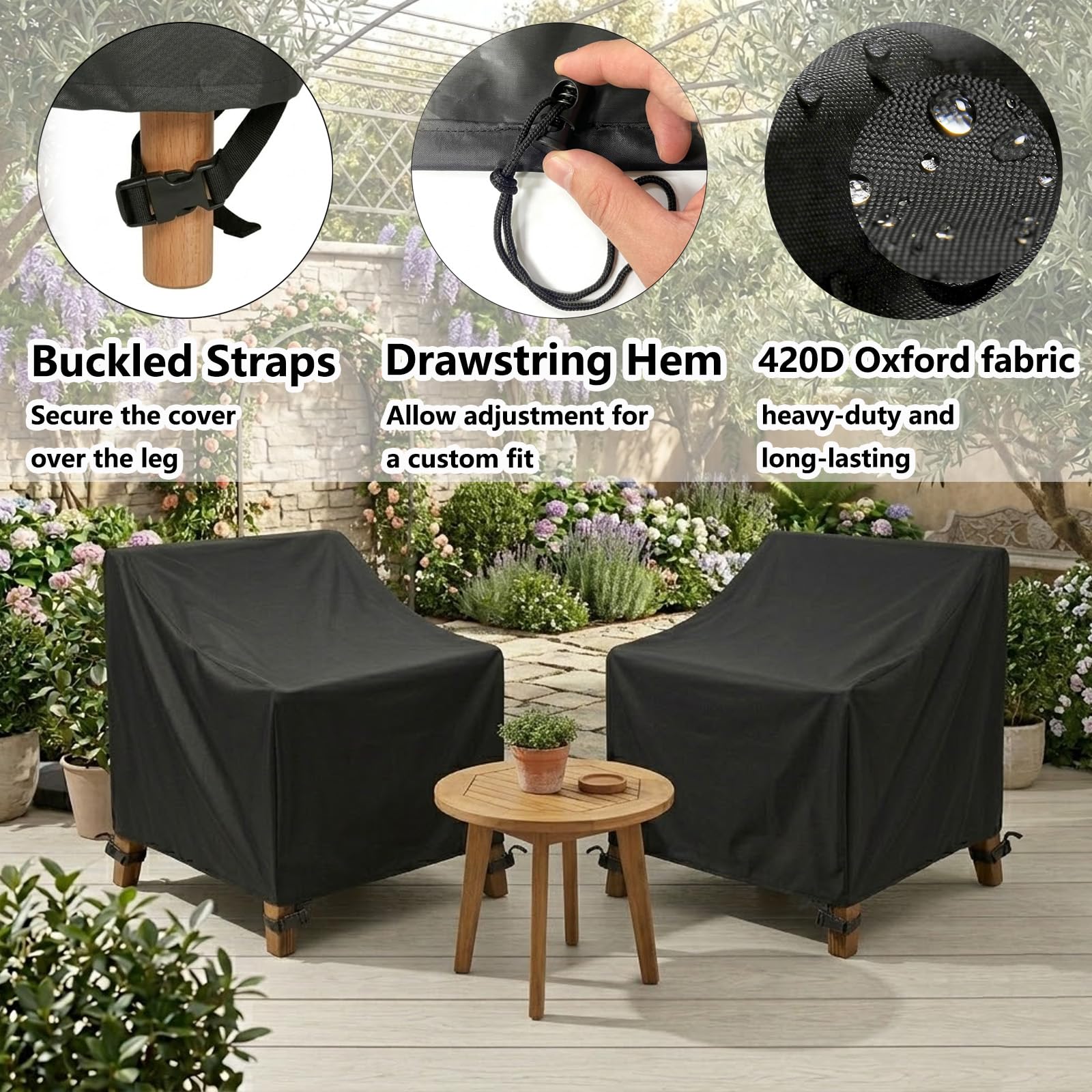
ENGOVA Patio Chair Cover — For One Exposed Seat
ENGOVA is the practical single-seat option when one chair sits outside a covered zone or you only need to protect a balcony chair. The 420D fabric spec gives you a useful baseline for seasonal resistance, and UV resistance matters if the chair gets afternoon sun even in cooler months. Use it for a single lounge chair, reading chair, or extra patio seat that doesn’t justify a larger multi-piece cover.
The key is cover discipline. Choose a size that clears the widest arm points without stretching across them, then secure the bottom so wind can’t work underneath. If the chair has metal legs, raise them off wet concrete by 1 inch before covering. Small move. Big payoff.
Frequently Asked Questions
Can patio furniture stay outside all winter?
Yes, if the frame material can handle it and the cover is vented. Aluminum, resin, HDPE, and many powder-coated steel frames can stay outside under a fitted cover with a 2-inch airflow gap. Natural wicker, untreated wood, and cushions should move indoors because moisture and freeze-thaw cycles are harder on those materials.
Should I cover patio furniture or bring it inside?
It depends — frames can often stay covered outdoors, but cushions should come inside whenever you have room. Cushions hold moisture in seams and foam, so dry them for 24 to 48 hours and store them upright in a dry zone. If indoor humidity is above 60%, fix the room humidity before storing fabric there.
How high can I stack patio chairs?
Use the manufacturer’s printed stack limit first. If there isn’t one, keep it to 3 or 4 lightweight dining chairs or 2 deep lounge chairs. Higher stacks can bend legs, stress woven backs, and tip when the floor isn’t perfectly level.
Is it okay to store cushions in plastic bags?
Almost never. Plastic bags trap moisture, especially when cushions aren’t fully dry. Use breathable storage bags, a vented deck box, or open shelving with 1 to 2 inches between cushions. The goal is dust protection plus airflow, not a sealed package.
How do I stop patio covers from blowing off?
Use straps, buckles, drawcords, or weighted clips, then leave a small bottom gap for airflow. A cover should be snug enough that it doesn’t balloon but loose enough that it doesn’t pull across corners. Face vents away from the strongest wind direction when you can.



Write Your Review
No reviews yet. Be the first to share your experience!