

> Editorial Note: I’m Liam Wright, an outdoor and garden editor. I grew up in my family’s landscaping business and now cover what actually survives a season of UV, rain, and freeze-thaw cycles. The picks here are evaluated against ASTM weatherability standards and manufacturer durability ratings.
Most patio umbrellas fail before they look wrong because the canopy is small, the base is too light, or the pole is placed where the sun never actually sits. Start with the shade footprint, then match the frame to your layout, whether you’re comparing best patio furniture, outdoor furniture ideas, best outdoor furniture for small patio, patio umbrella ideas, or best outdoor lighting. The mistake? Buying by diameter alone.
What Size Patio Umbrella Do You Actually Need?
A patio umbrella should cover the furniture, not just the table hole. For a small bistro set with two chairs, a 7.5-ft canopy usually works because it shades a 30- to 36-inch table without swallowing the patio. For a 4-person dining table, move to a 9-ft canopy. For a 6-person table or a conversation set, a 10-ft canopy is the safer starting point.
The simple rule: choose a canopy at least 2 feet wider than the surface you’re shading. A 48-inch table needs roughly 8 feet of shade. A 72-inch table needs 10 or 11 feet.
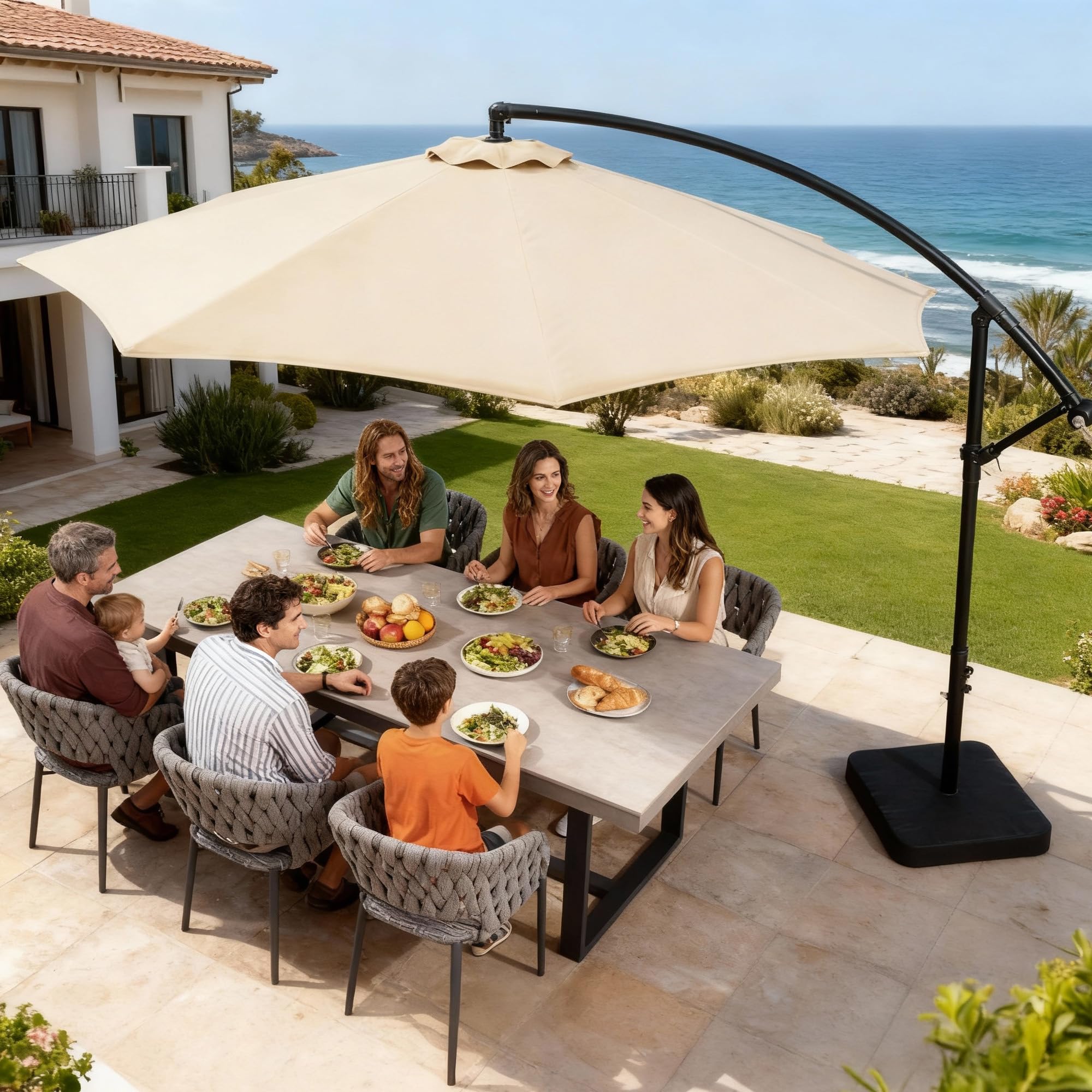
Offset umbrellas follow a different logic. Since the pole sits beside the seating area instead of through the center, a 10-ft cantilever often feels more useful than a 9-ft market umbrella. It reaches over sofas, chaise lounges, and sectional corners without forcing the base into the walking path. Cleaner layout. Better shade.
Don’t forget height. Most people need at least 7 feet of head clearance under the canopy edge. If the umbrella hangs low over a dining table, tall guests will notice fast.
Should You Choose a Market Umbrella or a Cantilever Umbrella?
Choose a market umbrella when the table has a center hole, the layout is symmetrical, and you want the simplest frame. These umbrellas have a straight pole, a smaller footprint, and fewer moving parts. They’re better for narrow patios where every inch matters.
Choose a cantilever umbrella when the furniture doesn’t sit around a center pole. Sectionals, lounge chairs, hot tubs, and outdoor sofas usually need offset shade because the best seating position isn’t in the middle of a dining table. A cantilever arm lets the canopy float over the area while the base stays off to the side.
That convenience has a trade-off. Cantilever umbrellas need heavier bases because the canopy creates more torque in wind. A 10-ft offset umbrella can act like a sail if the base isn’t weighted properly. That’s where many cheap setups fail.
For apartment balconies, market umbrellas usually win. For larger patios and lounge zones, cantilever designs make more sense. One pole in the wrong place can ruin the whole layout.
How Heavy Should a Patio Umbrella Base Be?
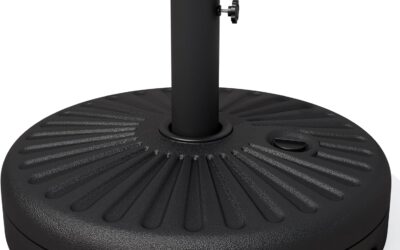
Base weight depends on canopy size, umbrella style, and wind exposure. A small 7.5-ft market umbrella may work with a 30-lb base if it sits through a table and the patio is sheltered. A 9-ft market umbrella usually needs 40 to 50 lb. A 10-ft market umbrella often needs 50 lb or more, especially if it isn’t supported by a table.
Cantilever umbrellas need much more weight. Many 10-ft offset models require a cross base filled with sand or water, often reaching 120 to 220 lb once loaded. That sounds excessive until a gust hits the canopy from the side. Then it makes sense.
A base that’s too light doesn’t just wobble. It stresses the pole, loosens the crank housing, and can bend the ribs when the umbrella tips. Bad math, expensive consequence.
For windy yards, look beyond the base number. Check for a vented canopy, locking tilt positions, and an outdoor-rated frame. ASTM weatherability references matter because UV, moisture, and repeated flexing break weak outdoor materials fast.
Which Canopy Fabric Holds Up Best Outside?
Solution-dyed acrylic is the premium outdoor fabric because the color runs through the fiber instead of sitting only on the surface. That helps it resist fading from UV exposure. Polyester is more common in affordable umbrellas and can work well when it’s thick, coated, and stored during rough weather. Olefin sits between the two for many shoppers: lighter than acrylic, usually more fade-resistant than bargain polyester, and often easier on the budget.
Yarn-dyed polyester is worth a closer look because it improves color retention compared with basic printed fabric. It won’t turn a budget umbrella into a commercial-grade shade system, but it can buy more time before fading becomes obvious.
Wirecutter and Apartment Therapy both emphasize practical durability cues in outdoor coverage: fabric weight, venting, frame stability, and whether replacement parts are available. Those details matter more than a color name like beige, navy, or terracotta.
Look for a canopy with a top vent. It lets hot air escape and reduces lift during gusts. Without one, the umbrella traps pressure like a parachute. Not ideal.
What Frame Material Should You Look For?
Aluminum is the easiest choice for most patios because it resists rust, stays relatively light, and doesn’t need much care. Powder-coated aluminum is better than bare metal because the coating adds a barrier against moisture and scratches. For coastal homes, aluminum usually beats steel because salt air punishes unprotected steel fast.
Steel can be strong, but it needs a good finish. If the coating chips, rust starts at the exposed spot and spreads. Steel frames can make sense on budget umbrellas when the base is stable and the umbrella isn’t left open in storms.
Wood frames look warmer and more traditional, especially with teak or eucalyptus furniture. They also need more care. Expect seasonal oiling or sealing if the umbrella lives outside full-time.
Rib count helps, but it isn’t the whole story. An 8-rib canopy can be stable if the ribs are thick and the hub is solid. Thin ribs with sloppy joints won’t hold shape for long. Check the crank, tilt hinge, and locking points first. That’s where daily wear shows up.
How Much Tilt and Rotation Do You Need?
Tilt matters because the sun moves sideways, not just overhead. A basic push-button tilt works for small dining umbrellas. You set it once in the afternoon and leave it there. Crank tilt is easier for taller umbrellas because you don’t have to reach high to angle the canopy.
Infinite tilt gives more control, especially on a west-facing patio where late sun cuts under the canopy edge. If dinner glare is the problem, tilt matters more than another foot of diameter.
Rotation matters most on cantilever umbrellas. A 360° rotation system lets you shade a dining table at noon, then swing the canopy over lounge chairs later without dragging the base. That feature is useful when the base is loaded with 150 lb of sand or water. You’re not moving it casually.
Don’t overbuy movement you won’t use. A small table near a wall doesn’t need full rotation. A large open patio with multiple seating zones probably does. Simple.
How Do You Match an Umbrella to Wind, Sun, and Storage?
Start with wind, not color. If your patio gets regular gusts, choose a vented canopy, a heavier base, and a frame with clear locking positions. Close the umbrella when you’re not outside. Even a well-built patio umbrella isn’t meant to stay open through storms.
For strong sun, prioritize canopy coverage and fabric quality. A 10-ft canopy with poor fabric can still fade quickly. A 9-ft canopy with better material and a useful tilt may shade better in real use because it follows the sun angle.
Storage is the part people skip. Measure where the closed umbrella will go in winter. A 10-ft cantilever can be awkward even when folded, and a weighted base may need to stay outside year-round. If you have a garage, shed, or covered porch, you’ll extend the life of the canopy by keeping it dry during long off-season stretches.
Use a cover if the umbrella stays outside. It helps with pollen, bird mess, UV exposure, and daily moisture. Small habit, longer life.
Frequently Asked Questions
Is a 9-ft patio umbrella big enough for a dining table?
Yes, for most 4-person dining tables. A 9-ft canopy usually covers a 42- to 54-inch table with enough overhang to shade chairs. If the table seats six or stretches past 60 inches, move to a 10-ft or 11-ft canopy.
Do I need a 10-ft umbrella for a small patio?
No, not always. A 7.5-ft canopy often fits a balcony or compact bistro set better because it leaves room for doors, railings, and walking clearance. A 10-ft umbrella makes sense only if the seating area is wide enough to use the shade.

Is a cantilever umbrella better than a regular patio umbrella?
It depends. Cantilever umbrellas are better for lounge seating, sectionals, and layouts without a center table hole. Regular market umbrellas are better for dining tables, narrow patios, and shoppers who want fewer moving parts.
Can a patio umbrella stay open all the time?
No. Close it when you’re not using it, especially overnight or before rain and wind. The canopy may look calm in light air, but gusts can bend ribs, strain the tilt mechanism, or tip an underweighted base.
What base weight do I need for a 10-ft patio umbrella?
It depends on the umbrella style. A 10-ft market umbrella usually needs at least 50 lb when used through a table, and more if freestanding. A 10-ft cantilever often needs a fillable base that reaches 120 lb or more once loaded.
Are LED patio umbrellas worth it?
Yes, if you use the patio after sunset and don’t already have good outdoor lighting. LED strips under the ribs create soft task light for dining, but they don’t replace wall sconces, path lights, or brighter grill-zone lighting.
What color patio umbrella fades the least?
It depends on the fabric more than the color. Solution-dyed acrylic and quality yarn-dyed fabrics resist fading better than thin printed polyester. Dark colors show fading faster, while beige, taupe, and light gray tend to age more quietly.
Helpful Products
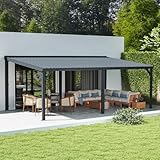
The three umbrellas below fit the most common full-size patio scenarios: a 10-ft rotating cantilever with a base, a larger 10 x 13-ft LED cantilever for wide lounge zones, and a simpler 10-ft offset option for budget shade. Start with the first if stability and rotation matter most; look at the second for evening seating; use the third when price and basic coverage are the priority. Readers comparing this against other formats usually read why is my patio umbrella tipping over? next. If you’re weighing options here, our guide to how to set up a patio umbrella for a small space covers the trade-offs in more detail. If you’re weighing options here, our guide to how to choose a patio dining set covers the trade-offs in more detail.
[acms_list asin=”B0H3T61SL8,B0CQLXCZ8Y,B08636VN3Y”]
Write Your Review
No reviews yet. Be the first to share your experience!