

> Editorial Note: I’m Olivia Bennett, a storage and organization contributor. I approach storage as a systems problem rather than a product one — fit to actual room dimensions, load ratings, and how the system holds up under daily use.
Most people store outdoor cushions too late: after the first damp week, after mildew has already started, or after the cushions have been shoved into a garage corner with no airflow. Start before the fabric feels wet, and the whole system gets easier. If you’re sorting out a patio setup, pair this with best outdoor storage bench, patio furniture ideas 2026, small patio furniture, outdoor furniture for small patio, and best deck box for cushions.
The Ground Rules Before You Start
Outdoor cushion storage is mostly about three controls: moisture, compression, and access. Keep cushions dry before they go away, give them at least 1 inch of breathing room inside any bag or bin, and store them where you can reach the set you use most without unloading the whole stack. ASTM weatherability guidance focuses on UV, water exposure, and material breakdown; the same logic applies here. Reduce exposure first. Then organize.
A good storage system also needs a real capacity check. A standard deep-seat back cushion can run about 24 x 22 x 6 inches, while a chaise cushion may stretch past 72 inches long. Measure the bulky pieces before buying storage, not after.
Step 1: Dry the Cushions Before They Disappear
Never store cushions because rain is coming in 10 minutes. Store them because they’re already dry. That distinction matters because most mildew starts inside the foam, not on the outer fabric where you can see it.
Set each cushion upright for at least 4 to 6 hours after a humid afternoon or light rain. If the cushion has a zipper, open it slightly so trapped air can escape. Don’t pull the insert out unless the care label says it’s removable; many outdoor covers shrink or distort when handled roughly.
Use touch as the first check. Press the thickest corner for 5 seconds. If it feels cool or leaves dampness on your palm, it isn’t ready. Classic storage mistake.
Apartment Therapy often recommends treating outdoor rooms like indoor rooms with worse weather. That’s the right frame here. You wouldn’t seal damp bedding in a plastic bag, and cushions aren’t different just because they live on a patio.
Step 2: Brush Off Grit Before It Becomes Abrasion
Dirt looks harmless until it gets trapped between two cushions for three months. Under weight, sand and grit work like fine sandpaper against fabric coatings. That can shorten the life of water-resistant finishes faster than normal rain exposure.
Brush every face with a soft bristle brush before storage. Spend extra time along seams, welts, zipper tracks, and button tufts because those spots hold grit. If a cushion has dried mud, scrape the high spots first, then wipe with a barely damp cloth.
Keep the moisture rule in place. If you wipe a cushion, give it another 2 hours of air time before packing it. The fabric should feel room-temperature, not cool.
Skip harsh cleaners unless the manufacturer allows them. Many solution-dyed acrylic and polyester covers handle mild soap, but chlorine bleach can weaken stitching. Wirecutter’s outdoor furniture coverage makes the same broad point: material care matters more than aggressive scrubbing.
Step 3: Group by Use, Not by Shape
Stacking by shape looks tidy on day one. It fails the first time you need only the dining chair cushions and have to dig through a chaise lounge pile to find them.
Group cushions by how you’ll retrieve them: dining set, sofa set, lounge chairs, spare pillows. Keep each group under about 35 pounds if you’re using a soft storage bag with handles. That’s light enough for most adults to lift without dragging the bag across concrete.
Label the group in plain language. “Patio sofa backs” beats “large cushions.” If you have multiple outdoor zones, add the location too: “deck chairs,” “screen porch pillows,” or “fire pit bench.” Simple. Useful.
This is where storage becomes a system instead of a pile. The goal isn’t a perfect stack; it’s a setup you can reverse in 3 minutes when the weather clears.
Step 4: Choose a Storage Spot With Air and Clearance
The best storage spot is dry, shaded, and slightly boring. A garage shelf, mudroom corner, covered porch cabinet, or shed platform can work if the cushions aren’t sitting directly on a damp slab.
Keep soft bags at least 3 inches off concrete floors when possible. Concrete can wick moisture, especially in basements and garages with seasonal humidity swings. A scrap wood platform, wire shelf, or plastic riser is enough. The fix doesn’t need to be fancy.
Leave 2 inches of clearance around the bag or bin if it’s stored against a wall. That small air gap helps prevent condensation and keeps the back side from becoming the forgotten damp side.
Avoid attic storage if summer temperatures climb above 100°F. Heat can make foam brittle and may damage adhesive layers in boxed cushions. Avoid sealed crawl spaces too. Too humid, too hidden.
Step 5: Pack Without Crushing the Foam
Compression is the quiet damage. One weekend under a heavy tote won’t ruin a cushion, but four months under 80 pounds can leave dents that don’t fully rebound.
Pack seat cushions flat when you can, with the largest pieces at the bottom. Back cushions can stand vertically if the bag supports them and the stack doesn’t lean. Don’t force a 6-inch cushion into a 4-inch gap just because the zipper closes.
Use this rule: if you have to kneel on the bag to zip it, it’s overpacked. Remove one cushion or split the set into two bags. Better yet, keep throw pillows separate so they don’t create pressure points against larger seat cushions.
For winter storage, add a moisture absorber nearby, not loose inside the cushion stack. A small desiccant tub on the same shelf can help in humid garages, but direct contact with fabric isn’t ideal. Check it every 30 days during wet months.
The Right Products Make It Easier
The three storage bags below were chosen for cushion-scale capacity, zippered access, handles, and owner ratings above 4.0. Use the first option if you want to split a full patio set into two lighter loads; use the 68-inch bags for chaise cushions, long bench pads, or oversized sofa pieces.
Soft storage bags aren’t waterproof vaults, so don’t treat them like permanent outdoor boxes. They work best under cover, on a shelf, or inside a shed where splash protection and dust control matter more than standing-water resistance.


TMWEFUSC 2-Pack Extra Large Waterproof Patio Cushion Storage Bags with Zipper & Handles,68x30x20 in
Pros
- Two bags per order offers strong value for multi-set patio owners
- Genuinely large interior fits bulky items most storage bags cannot handle
- 210D Oxford fabric with double-stitched seams holds up to repeated seasonal use
- Lightweight and foldable for compact off-season storage
- Easy to clean with just a damp cloth or quick rinse
Cons
- Not rigid or structured, so bags can sag or shift when stacked
- Waterprofing works best under a covered area; prolonged direct rain exposure may eventually sep through seams
- Zipper durability is unproven over multiple seasons of heavy use
- Brand is relatively unknown with limited long-term reliability data
If you have ever wrestled an armful of patio cushions into a trash bag at the end of summer, you already know why a purpose-built storage bag matters. The TMWEFUSC bags are refreshingly straightforward: big enough to swallow an entire sectional's worth of cushions, waterproof enough to keep them dry through a damp winter in the garage, and sold as a two-pack so you are not making a second purchase a week later.
What sets these apart from flimsy alternatives is the combination of silver-coated lining and double-stitched seams. They feel like they belong in a moving company's toolkit, not a dollar store clearance bin. The paded handles are a small but welcome detail when you are hauling 30 pounds of foam across the yard.
If you want full-season cushion protection without spending $80 on a plastic deck box, this two-pack delivers.
Styles it works with: Any outdoor living setup, from coastal casual patios to modern roftop terraces, farmhouse porches, or suburban deck entertaining areas
Best placed in: Garage shelving area, covered back porch, basement storage corner, or garden shed
May not suit: Homes without any covered storage space (bags are not designed for permanent outdoor exposure to heavy rain), or anyone neding a rigid container that stacks neatly on shelves
Buy it if:
- You own a full patio furniture set and need to store all the cushions at end of season
- You want a Christmas tree bag that also earns its keep the rest of the year
- You prefer a soft, foldable solution over a bulky deck box that takes up permanent floor space
Consider waiting if:
- You only have a small bistro set and one bag would be more than enough (single packs may offer better per-unit value)
Skip it if:
- You need a hard-sided container that can sit outdoors uncovered in heavy rain all winter
- You want a locking storage solution to deter theft on an apartment balcony
Check the latest price and availability on Amazon before it sells out.

Bicherub Extra Large Waterproof Outdoor Cushion Storage Bag with Handles, 68x30x20 Inch, UV Protected Oxford Fabric
Pros
- Extra-large capacity fits most standard patio furniture cushion sets
- Heavy-duty Oxford fabric outperforms thinner nylon alternatives
- Sturdy dual-side handles support the weight of a full load
- Easy to clean with just a damp cloth and air drying
- Folds compact for off-season storage
Cons
- Zipper durability is a common concern in customer feedback for bags at this price point
- Black color absorbs heat and may get very hot in direct sunlight
- Single-pack only, so multi-set households need to buy more than one
If you have ever pulled your patio cushions out of the garage only to find them musty, discolored, or chewed on by critters, you already know why a dedicated storage bag matters. The Bicherub bag solves this with thick Oxford fabric that actually repels water rather than just resisting it for a season before breaking down.
What sets it apart at this price is the inner coating and double-stitched seams. Most bags under $30 rely on a single layer of thin polyester that degrades after one winter. This one adds meaningful protection without pushing the price into premium territory. The reinforced handles are a small detail that makes a big difference when you are hauling cushions to and from storage.
If you want reliable cushion protection through harsh weather without spending $50 or more on a rigid storage deck box, this one delivers.
Styles it works with: Any outdoor living setup including Contemporary Patio, Coastal Deck, Farmhouse Porch, and Transitional Backyard spaces
Best placed in: Garage shelf, garden shed corner, under a covered patio bench, or inside a basement storage area during off-season months
May not suit: Oversized sectional cushion sets that exceed 68 inches in combined volume, or households looking for a hard-shell container that doubles as seating
Buy it if:
- You store patio cushions seasonally and need waterproof protection in a garage or shed
- You want a lightweight bag you can carry by hand rather than a heavy deck box
- Your current storage method leaves cushions exposed to moisture, dust, or pests
Consider waiting if:
- You need a multi-pack deal and want to watch for bundle discounts
Skip it if:
- You need rigid, stackable storage that can support weight on top
- Your cushion set is oversized or from an L-shaped sectional that exceeds 68 inches of packed volume
Check the latest price and availability on Amazon before it sells out.

Uthem 177 Gallon Outdoor Cushion Storage Bag 68 Inch Waterproof Oxford Fabric with Zipper and Handles
Pros
- Extra-large capacity stores multiple cushions or even a small Christmas tree
- UV-protected waterproof Oxford fabric handles outdoor exposure well
- Folds flat when empty so it takes up minimal storage space
- Easy to clean with a damp cloth or water rinse
- Affordable price point for the size and material quality
Cons
- Only available in black, which absorbs heat and may get very hot in direct sun
- No rigid structure means it may sag or lose shape when partially filled
- Oxford fabric breathability claims are hard to verify without long-term use reviews
If you have ever scrambled to drag patio cushions inside before a storm, this bag solves that problem for under $30. The 177-galon capacity is genuinely large enough to hold a full set of outdoor chair cushions or even a bench pad, and the waterproof Oxford fabric means you can leave it on the patio or deck without stressing about rain damage.
What sets it apart from cheaper tarps or garbage bags is the thoughtful construction: double-stitched seams, a full-length zipper for easy access, and nylon handles that actually let you move a heavy, loaded bag without tearing. It is not glamorous, but it does exactly what it promises.
If you want reliable cushion protection without spending more than the cushions themselves cost, this one delivers.
Styles it works with: Modern Patio, Transitional Outdoor, Coastal Deck, Farmhouse Porch
Best placed in: Back patio corner, garage shelf area, covered porch beside seating, garden shed floor
May not suit: Small balconies or apartments with limited outdoor storage space, or homeowners who prefer hard-shell deck boxes for a more polished look
Buy it if:
- You need to store 4 or more patio chair cushions during winter or rainy season
- You want a lightweight, portable alternative to a heavy deck storage box
- You are looking for an affordable way to extend the life of your outdoor cushions
Consider waiting if:
- You want a multi-pack option or different color choices that may become available later
Skip it if:
- You need a rigid, furniture-grade storage solution that doubles as outdoor seating
- Your cushions exceed 68 inches in length or you need weatherproof storage for heavier items like grill covers
Check the latest price and availability on Amazon before it sells out.
TMWEFUSC 2 Pack Patio Furniture Storage Bag
The TMWEFUSC two-pack makes the most sense when one giant bag would become too heavy. Splitting cushions by zone keeps each load easier to lift, especially if you’re carrying them from a deck to a garage or shed. The zipper-and-handle setup also fits the T16 rule above: access matters as much as capacity.
Use one bag for seat cushions and the second for back pillows, or divide by furniture group. That’s cleaner than mixing dining chairs, sofa cushions, and loose pillows in one overstuffed bundle. The 4.2 owner rating is also the highest of the three, which helps when the listing category is full of lookalike bags.
Bicherub 68-Inch Patio Cushion Storage Bag
The Bicherub bag is the straightforward pick for long cushions. Its listed 68-inch length works for many bench pads, chaise cushions, and oversized outdoor sofa pieces that won’t fit into smaller cube-style storage. Measure first, though: a true 72-inch chaise cushion needs a different plan.
The value here is shape. A long rectangular bag lets cushions lie flatter, which reduces foam creasing during off-season storage. Keep the packed weight under about 35 pounds if you’re carrying it by the handles, and store it on a shelf or riser instead of directly on concrete.
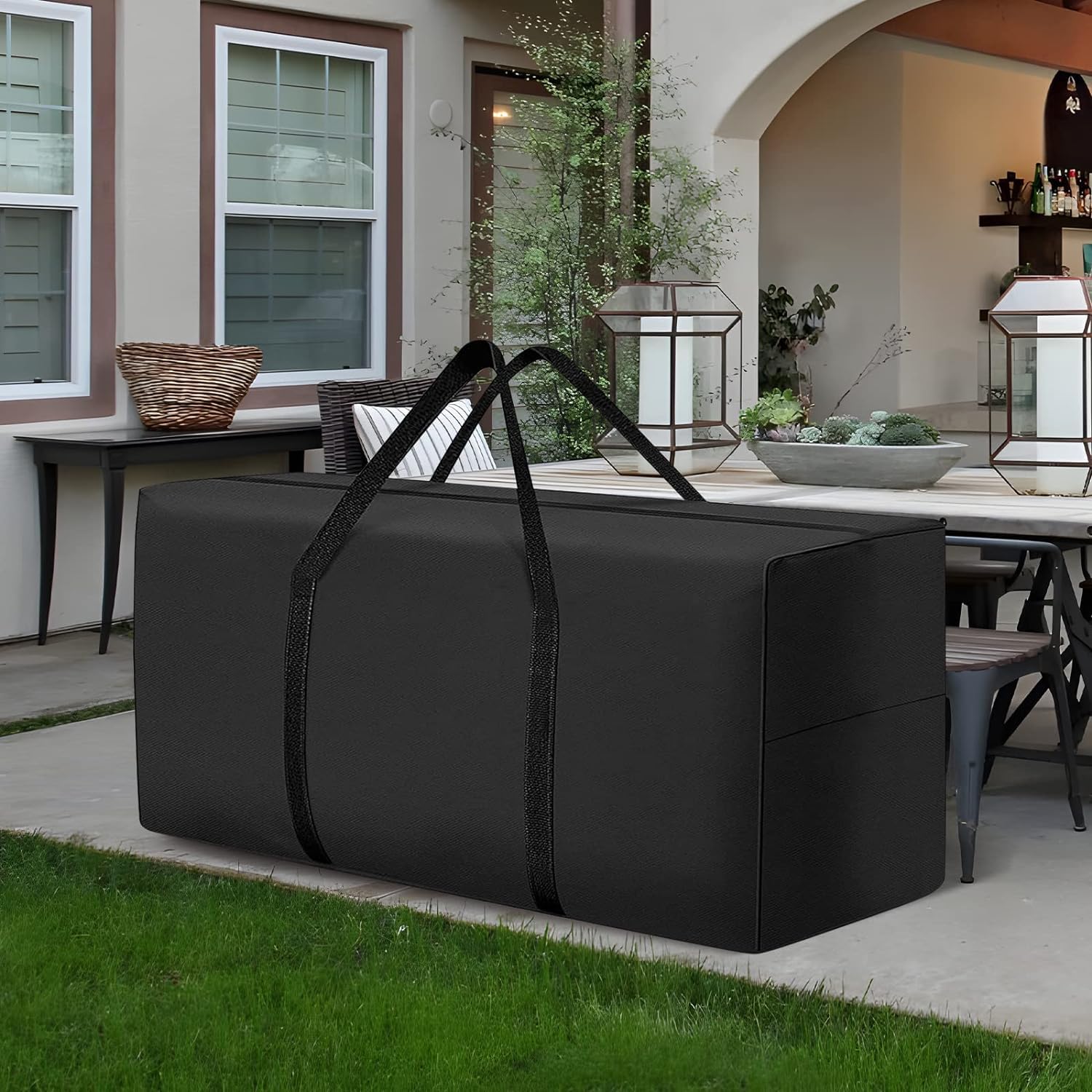
Uthem 177 Gallon Outdoor Cushion Storage Bag
The Uthem 177-gallon bag is the capacity pick for people with more cushions than shelf space. It suits full patio sets, deep-seat collections, or families who’d rather make one storage zone than scatter cushions across the garage.
That size has a trade-off: it’s easier to overpack. Use the 1-inch breathing-room rule and don’t compress the stack just to use every gallon. If the zipper strains, split pillows into a smaller bag or store them on top of the main cushion stack. The 4.1 rating puts it in the same practical range as the Bicherub, so choose by volume and layout, not brand name.
Frequently Asked Questions
Can outdoor cushions stay outside all winter?
Almost never. Even water-resistant cushions can absorb moisture through seams, zipper gaps, and worn fabric coatings. Freeze-thaw cycles make that worse because trapped water expands, then contracts, then leaves the foam weaker over time.
If you live in a mild, dry climate, cushions may survive under a covered patio for short stretches. But for a real winter, move them indoors, into a shed, or into a covered storage box with airflow. Dry first, then store.
Should outdoor cushions be stored in plastic bags?
No, not in thin sealed trash bags. They trap moisture, tear easily, and give mildew exactly what it wants: darkness, warmth, and no airflow.
Use a purpose-built storage bag with a zipper and enough room for the cushions to sit without being crushed. If you need extra dust control, choose a heavier outdoor storage bag and keep it under cover rather than wrapping cushions in disposable plastic.
How dry do cushions need to be before storage?
Completely dry to the touch, including the thickest corners. Press the cushion for 5 seconds and check whether the fabric feels cool, damp, or heavy. If it does, wait.
For thick foam cushions, plan on 4 to 6 hours of upright drying after light moisture and a full day after a soaking rain. Sun helps, but airflow matters more. Lean them vertically so both faces can breathe.
Is a deck box better than a storage bag?
It depends on where the cushions live. A deck box is better for frequent access on a patio because it holds shape, opens fast, and keeps cushions off the ground. A storage bag is better for seasonal moves because it’s lighter, cheaper, and easier to carry into a garage or shed.
For best results, combine them: deck box during active season, storage bags for winter or long gaps. Different jobs.
How do you prevent mildew on stored outdoor cushions?
Start with dry cushions, clean seams, and airflow. Mildew prevention isn’t about one product; it’s about removing the damp, dirty conditions that let spores grow.
Keep stored cushions off concrete by at least 3 inches, leave a 2-inch wall gap, and check the storage area monthly during humid weather. If the space smells musty, the cushions shouldn’t be sealed there for months.






Write Your Review
No reviews yet. Be the first to share your experience!