

> Editorial Note: I’m Hannah Lin, an Interior Living Researcher who’s spent 9+ years analyzing the home furniture market. This guide draws on BIFMA, GREENGUARD, and FSC certifications, plus owner reviews aggregated from Wirecutter, Apartment Therapy, and the major home design subreddits.
The most common mistake with brass light fixtures is reaching for metal polish before checking whether the brass is even bare metal. Most modern fixtures wear a clear lacquer coating, and polish smears that coating instead of cleaning it, which is how a five-minute wipe-down turns into a cloudy mess. Get the material right first, and the rest is easy. The same care logic applies to the metal accents you’ve already styled around your space, whether that’s best gallery wall frames, a best console table for entryway, a best large floor mirror, a best wall mirror for living room, or a warm-glowing best table lamp for living room.
First, Is Your Brass Lacquered or Raw?
This one question decides everything else. Lacquered brass has a thin clear coat baked over the metal to lock in that bright factory shine. Raw or unlacquered brass is exposed metal that darkens over time as it reacts with air and moisture.
Here’s the fast check. Find a hidden spot on the fixture and rub it with a soft cloth dabbed in a little ketchup or lemon juice. If the spot brightens within 60 seconds, the brass is raw. If nothing changes, it’s lacquered. That is the whole check.
Why it matters: lacquered brass only needs gentle surface cleaning, since the coating is doing the protecting. Raw brass actually tarnishes and can be polished back to a glow. Using an acidic polish on lacquer is where people go wrong, because it can leave streaks or eat through the coating in patches. Brass itself is a copper-zinc alloy, roughly 67% copper and 33% zinc, and it’s the copper that reacts and darkens on raw pieces. Apartment Therapy makes the same distinction in its brass-care write-ups, and it’s the single most useful thing to know before you touch the fixture.
How to Clean Lacquered Brass the Gentle Way
Start by cutting the power at the breaker if you’re wiping a hardwired sconce or pendant. Safety first, always.
Mix a few drops of mild dish soap into warm water. Dampen a microfiber cloth, wring it nearly dry, and wipe the fixture in the direction of any brushed grain. Follow immediately with a second dry microfiber cloth to buff off moisture before it spots. No polish needed.
For grease near a kitchen fixture or dust baked onto a bulb housing, a soft-bristle toothbrush gets into the seams and around socket collars without scratching. Keep water away from the electrical parts and sockets entirely. If a glass globe or milk-glass shade comes off, wash it separately in warm soapy water and dry it fully before reassembly.
Skip anything abrasive here. Baking soda, steel wool, and gritty scrubbing pads all leave micro-scratches that dull lacquer permanently, and once the coating is scratched, air reaches the metal underneath and tarnish creeps in. A twice-yearly wipe-down keeps most lacquered fixtures looking new for years, which is why Wirecutter’s cleaning guidance leans hard toward the least aggressive method that works. Gentle and regular beats harsh and occasional every time.
How to Clean Raw Brass When It’s Actually Tarnished
Raw brass is where the satisfying transformation happens, since the dark tarnish lifts and the warm gold underneath comes right back.
The kitchen-cabinet method works well. Cut a lemon in half, sprinkle about 1 tablespoon of salt across the cut face, and rub the fixture in small circles. The citric acid dissolves the oxide layer while the salt gives light grit. For flatter surfaces, make a paste of equal parts salt, flour, and white vinegar, spread a thin layer, and let it sit for 15 minutes before rinsing.
Rinse thoroughly with clean water afterward, because leftover acid keeps reacting and can leave the surface patchy. Then dry completely with a soft towel. Any trapped moisture in a seam will re-tarnish within days.
A dedicated brass polish is worth it for detailed or antique pieces, applied with a cotton cloth and buffed off before it hazes. Whatever you use, the ASTM B36 family of specs covers common brass alloys, so you know you’re working with a soft, reactive metal that responds fast and doesn’t need force. If the fixture looks even after one pass, stop. Over-polishing thins the surface over time.
What to Avoid and How to Keep It Clean Longer
A few habits protect your work. Never soak an electrical fixture, never use bleach or ammonia on brass, and never mix cleaning acids with anything containing chlorine.
Fingerprints are the quiet enemy, since skin oils are mildly acidic and leave etched marks on raw brass over weeks. Wear cotton gloves during a deep clean and handle finished pieces by the edges. For raw brass you want to keep bright, a thin wipe of mineral oil or a hard carnauba wax adds a protective barrier that slows re-tarnishing for months.
Humidity speeds everything up. A bathroom sconce tarnishes faster than a living-room pendant, so those fixtures earn a quick monthly wipe. Keep a microfiber cloth in the cleaning drawer and give high-touch fixtures a 60-second pass whenever you dust. Small and frequent. That’s the trick that keeps brass out of the deep-clean pile entirely.
Helpful Picks
If you’re swapping a corroded fixture rather than reviving it, these three brass-finish picks all clear a 4.0-plus owner rating and lean on lacquered or brushed surfaces that stay bright with minimal upkeep. Start with the first for a statement ceiling piece, or the third if you need a humidity-friendly wall option.
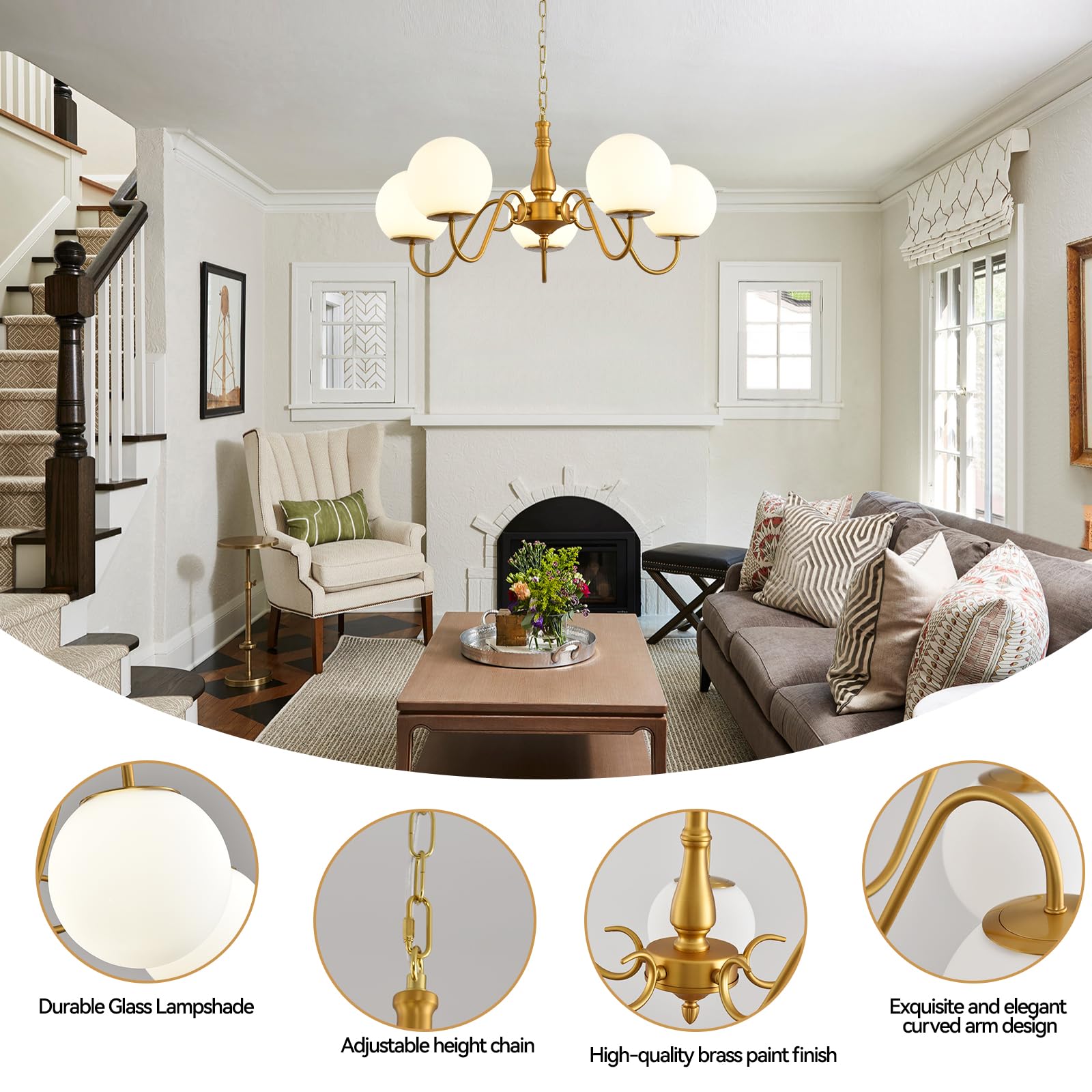

Gnoslite 5-Light Gold Sputnik Chandelier with Milk Glass Globes - Mid Century Modern Brushed Brass Pendant
Pros
- Versatile arm positioning (90 and 180 degrees) creates multiple distinct looks from one fixture
- Compatible with sloped ceilings and adjustable drop height via chain
- Dimmable G9 ceramic sockets allow bulb swapping for different ambiance
- UL safety certified with a 3-year manufacturer warranty
- Includes installation video and detailed guide for straightforward hardwired setup
Cons
- Bulbs and dimmer switch are not included, adding to the total cost
- No verified customer reviews yet, so long-term durability is unproven
- At nearly $200, it is a significant investment for an unreviewed brand
This Gnoslite sputnik chandelier strikes a balance that is surprisingly hard to find: it looks like a designer mid-century piece without the four-figure price tag. The brushed gold finish paired with frosted milk glass globes gives it that warm, collected look you see in curated interiors, not the harsh glare of exposed-bulb fixtures.
What sets it apart is the adjustable arm design. You can angle each arm at 90 or 180 degrees, which means you are not locked into one shape. Hang it compact over a kitchen island or spread it wide as a living room centerpiece. The adjustable chain and sloped-ceiling compatibility make it practical for real homes, not just flat-ceiling showrooms.
If you want a mid-century modern chandelier that adapts to your space without requiring a professional designer to choose the right configuration, this one delivers.
Styles it works with: Mid-Century Modern, Modern Farmhouse, Art Deco, Transitional
Best placed in: Dining room centered over the table, kitchen island as a focal pendant, living room with8ft+ ceilings, entryway or staircase landing
May not suit: Rooms with ceilings below 8feet where the drop length could feel imposing, or ultra-minimalist spaces where five globes may read as too ornate
Buy it if:
- You want a gold mid-century chandelier under $200 that looks more expensive than it is
- You need a fixture that works on a sloped or vaulted ceiling without adapters
- You like the idea of adjusting the arm angles to refresh its look over time
Consider waiting if:
- You prefer to see verified customer reviews and real-home photos before committing to a $200 fixture
- You need bulbs and a dimmer included in the box to avoid extra purchases
Skip it if:
- You need a flush or semi-flush mount for low ceilings under 8 feet
- You want a plug-in pendant since this requires hardwired installation
Check the latest price and availability on Amazon before it sells out.
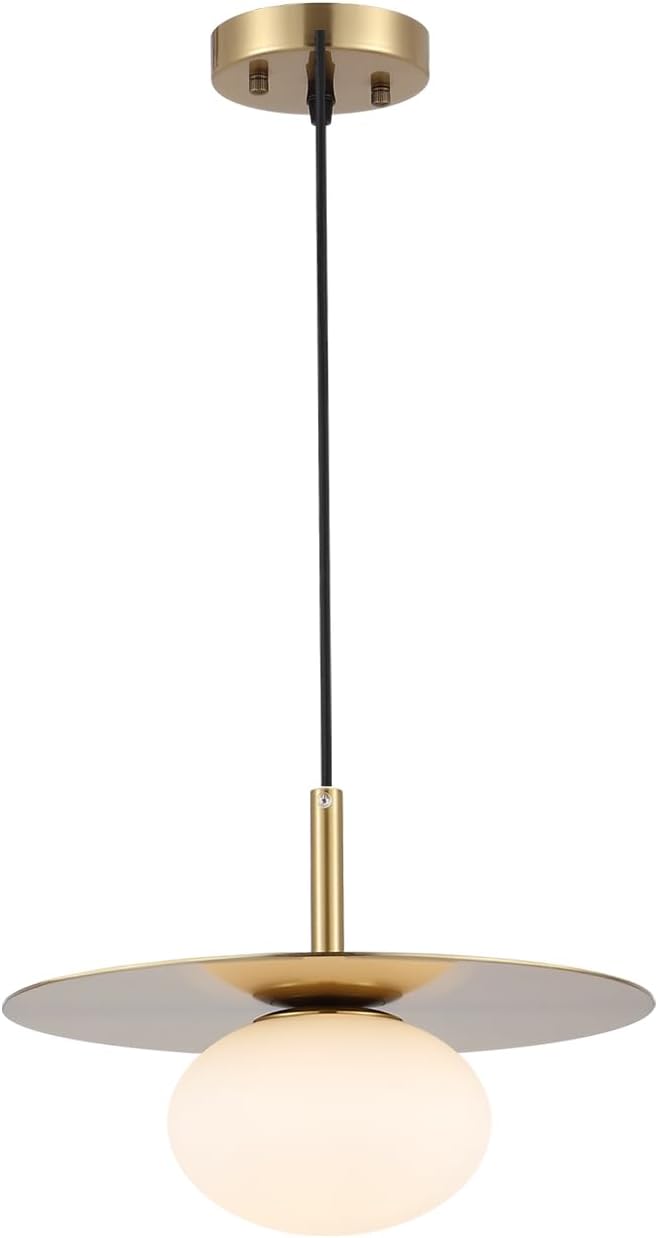
BYOLIIMA Modern Globe Pendant Light - Milky White Glass Brass Gold11.81" Dome Ceiling Fixture for Kitchen Island
Pros
- Versatile brass-and-white aesthetic fits multiple decor styles from farmhouse to industrial
- Fully adjustable hanging height from 8.9 to 75 inches covers nearly any ceiling type
- Simple installation with pre-wired assembly and clear instructions
- Dimmable capability lets you shift from task lighting to ambient mood lighting
- Solid build quality with metal dome and hand-blown glass shade
Cons
- G9 bulbs are less common and not included, requiring an extra purchase
- Only25 reviews so far, limiting long-term reliability data
- Single-bulb design may not provide enough light for larger rooms without additional fixtures
This BYOLIIMA pendant strikes a balance that is surprisingly hard to find at this price point: it looks more expensive than it is. The milky white glass diffuses light evenly without harsh spots, while the brushed brass dome gives it a polished, intentional look that works whether your kitchen leans modern farmhouse or mid-century minimal.
In a real room, it reads as a quiet statement piece rather than a loud design choice. The 11.81-inch dome is wide enough to anchor a space visually but compact enough that it does not crowd a standard 8-foot ceiling. It hangs cleanly over a kitchen island, breakfast nook, or bedside without feeling bulky.
If you want that warm, designer-curated pendant look without spending $200 or wrestling with complicatediring, this one delivers.
Styles it works with: Mid-Century Modern, Modern Farmhouse, Scandinavian, Industrial
Best placed in: Over a kitchen island, above a dining table, in a bedroom as a bedside pendant, or along a hallway or entryway
May not suit: Very large open-plan rooms where a single small globe will not provide adequate light coverage, or ultra-traditional interiors where brass tones clash with existing oil-rubbed bronze hardware
Buy it if:
- You need a stylish pendant under $100 that looks like it costs twice the price
- You have a kitchen island, dining nook, or hallway that needs a single warm focal light
- You want adjustable height for a sloped or extra-high ceiling without buying specialty hardware
Consider waiting if:
- You prefer a multi-light pendant or chandelier for broader room coverage
- You want to see more long-term reviews before committing
Skip it if:
- You need a flush-mount or semi-flush option with less than 9 inches of clearance
- You want bulbs included in the box and do not want to source G9 bulbs separately
Check the latest price and availability on Amazon before it sells out.

BLINKO Nautical Brass Bulkhead Wall Light - IP65 Waterproof Vintage Sconce for Indoor & Outdoor Use
Pros
- Genuine brass construction with 11-step casting process delivers durability and patina over time
- IP65 waterproof rating makes it suitable for exposed outdoor and high-humidity locations
- Versatile vintage-industrial aesthetic fits both residential and commercial spaces
- Compatible with standard E27 bulbs giving flexibility in lighting choices
- Strong corosion and salinity resistance ideal for coastal properties
Cons
- Lampshade only purchase means you need a separate E27 lampholder and bulb, adding hidden cost
- Single cable inlet design leaves wires exposed unless you drill an extra hole yourself
- Limited review count of 20 makes long-term reliability harder to confirm
- At $168for just the shade, total installed cost approaches premium fixture territory
There is something undeniably appealing about a well-made brass bulkhead light. The BLINKO delivers that heavy, purposeful feel you get from fixtures designed for actual maritime use, but styled for a home setting. The 11-step casting process is not just marketing speak here; you can see the quality in the finish and the weight of the piece.
In a real room, this light adds warmth and texture that flat, painted fixtures simply cannot replicate. Brass develops a natural patina over time, so your wall actually gets more interesting as the years pass. It works beautifully flanking a front door, mounted beside a bathroom mirror, or lighting up a covered patio where cheaper fixtures would corrode within a season.
If you want a fixture with genuine maritime heritage and long-term durability without settling for a flimsy coastal-themed imitation, this one delivers.
Styles it works with: Coastal, Industrial, Mid-Century Modern, Nautical Farmhouse
Best placed in: Covered porch or patio wall, bathroom flanking a vanity mirror, entryway beside the front door, hallway accent lighting
May not suit: Minimalist all-white interiors where the brass would feel too heavy visually, or very small powder rooms where the cage-style shade might feel bulky at close range
Buy it if:
- You live near the coast or in a humid climate and need a fixture that genuinely resists salt and moisture
- You want a statement wall light with heirloom-quality brass that develops character over time
- You are outfitting a bar, restaurant, or cafe with authentic industrial-nautical decor
Consider waiting if:
- You need a complete ready-to-install fixture with bulb holder included and want to avoid sourcing extra parts
Skip it if:
- You are not comfortable drilling an extra cable hole to hide exposed wiring during installation
- You need a budget-friendly option under $100 for a quick room refresh
Check the latest price and availability on Amazon before it sells out.
Frequently Asked Questions
Can I use vinegar on all brass fixtures?
No. Vinegar’s acid works beautifully on raw brass but can streak or damage lacquered coatings. Do the ketchup-or-lemon spot check first, and only use acidic cleaners on brass that brightens when spot-checked. On lacquered pieces, stick to mild dish soap and warm water.
Does toothpaste really clean brass?
It depends. A plain white paste, not gel and not whitening, has a mild abrasive that can lift light tarnish on raw brass. It’s fine in a pinch, but the salt-and-lemon method is gentler and more predictable. Avoid toothpaste on lacquered brass, since the grit scratches the coating.

Will Brasso or metal polish hurt my fixture?
It depends on the finish. Dedicated brass polish is excellent on raw and antique brass, cutting tarnish fast when buffed off promptly. On lacquered fixtures it does nothing useful and can cloud the clear coat, so confirm the brass is bare before you reach for it.
How often should I clean brass light fixtures?
It depends on the room. Living-room and bedroom fixtures do fine with a wipe every six months. Kitchen and bathroom pieces face grease and humidity, so a quick monthly pass keeps tarnish from setting in. High-touch switches and pulls benefit from a 60-second wipe during regular dusting.
Can I clean a brass fixture without taking it down?
Yes, and you usually should for hardwired pieces. Cut the power at the breaker, wipe the fixture in place with a barely-damp cloth, and keep all moisture away from sockets and wiring. Remove only glass shades or globes, which are safe to wash separately in the sink.
Why did my brass turn dark again so quickly?
Almost always leftover moisture or skin oil. Acid residue and trapped water keep reacting after you finish, and fingerprints etch raw brass within weeks. Rinse fully, dry completely, and seal raw brass with a thin wipe of mineral oil or carnauba wax to slow re-tarnishing for months.
Is tarnished brass a sign the fixture is failing?
No. Tarnish is a surface reaction on the copper in the alloy, not structural damage, and it polishes right off raw brass with no harm to the fixture. A darkened finish is purely cosmetic. The wiring and socket are unaffected, so a tarnished fixture is safe to keep using while you decide whether to restore or replace it.









Write Your Review
No reviews yet. Be the first to share your experience!