

> Editorial Note: I’m Hannah Lin, an Interior Living Researcher who’s spent 9+ years analyzing the home furniture market. This guide draws on BIFMA, GREENGUARD, and FSC certifications, plus owner reviews aggregated from Wirecutter, Apartment Therapy, and the major home design subreddits.
The most common mistake isn’t the dust. It’s spraying glass cleaner straight onto a warm fixture, which bakes streaks into the shade and can seep into the electrical housing. A flush mount light collects a surprising amount of grime because it sits tight against the ceiling where warm air and dust settle, so a quick wipe every couple of months keeps it bright. If you’re already refreshing a room, this pairs well with updating your best gallery wall frames, swapping in a best console table for entryway, leaning a best large floor mirror in a dim corner, hanging a best wall mirror for living room, or adding a best table lamp for living room for layered light.
Do You Really Need to Cut the Power First?
Yes, and it’s the one step people skip. Flip the wall switch off, then turn off the breaker for that circuit. A wall switch alone can leave the fixture live if the wiring was reversed during install, which happens more often in older homes than you’d think. Give the bulbs 10 to 15 minutes to cool before you touch anything, since a 60-watt incandescent shade can hit temperatures that’ll blister a fingertip.
Grab a stable step stool, not a chair. Most flush mounts sit 8 to 9 feet up, and you want both hands free for the glass. Have a soft towel or a folded blanket ready on the floor or a table below. Glass shades slip.
Once the power’s out and the fixture’s cool, check how the shade attaches. Some twist off a quarter turn. Others are held by two or three small thumbscrews around the base, usually finger-tight. A third style clips over a central finial you unscrew by hand. Knowing which type you have before you start saves you from yanking on glass that isn’t meant to pull straight down. If a screw won’t budge, a rubber jar-gripper gives you grip without scratching the finish.
How Do You Clean the Glass Shade Without Streaks?
It depends on the buildup, but warm water beats chemicals for almost every shade. Fill a sink or basin with warm water and a few drops of dish soap. Submerge the glass, let it sit 5 minutes to loosen the film, then wipe with a microfiber cloth. Skip paper towels, which shed lint and leave fibers on clear hammered glass.
For baked-on grease near a kitchen or entryway, add a tablespoon of white vinegar to the water. Vinegar cuts the oily haze that dish soap alone leaves behind. Rinse under clean running water so no soap residue dries into a cloudy skin.
Here’s the part most people rush. Drying. Pat the glass with a dry microfiber towel, then let it air-dry fully before reinstalling, because trapped moisture on the inside of a shade shows as foggy spots once the light heats up. Ten minutes on a towel usually does it.
Dead bugs are the other culprit. They gather inside enclosed shades and cast shadows. A quick shake over the trash, then the soap bath, clears them. Apartment Therapy’s cleaning guides note that enclosed fixtures need attention roughly twice as often as open ones for exactly this reason. If your shade has a metal frame like an oil-rubbed bronze finish, dry the metal separately and don’t soak it, since standing water can dull the coating over time.
What About LED Panels You Can’t Open?
It depends on the design, but most flat LED flush mounts aren’t meant to come apart. A 12-inch edge-lit panel or a 24W round fixture is sealed, so you clean the outer diffuser in place rather than removing glass. Power off at the breaker first, same as always.
Dampen a microfiber cloth with plain water, wring it nearly dry, and wipe the face in slow circles. The keyword is nearly dry. Dripping water near an LED driver or the ceiling junction box is the fastest way to short a fixture, and GREENGUARD-certified panels are sealed for air quality, not waterproofing. For fingerprints or a stubborn film, a 50/50 mix of water and white vinegar on the cloth works without leaving residue.
Never spray anything directly onto the panel. Aerosol propellants and heavy cleaners can cloud the acrylic diffuser permanently, and that haze doesn’t buff out. Owner reviews on Wirecutter’s lighting roundups flag clouded diffusers as the top complaint on cheaper sealed panels, usually traced back to harsh sprays.
For the dust that clings to the trim ring, a dry duster or a soft paintbrush gets into the seam where the panel meets the ceiling. Do that first, before the damp wipe, so you’re not smearing dry dust into mud. Give the surface a minute to dry, then restore power.
How Often Should You Clean a Flush Mount Light?
It depends on the room, but every two to three months is the baseline for a living room or bedroom. Kitchens, entryways, and bathrooms run dirtier from cooking grease, foot traffic, and humidity, so bump those to monthly. A quick dry dusting between deep cleans stretches the interval and keeps output high.
There’s a real payoff beyond looks. A dusty shade can cut usable brightness by a noticeable margin because the film scatters and absorbs light before it reaches the room. Clean glass simply looks brighter at the same wattage. That matters most with warm 2700K to 3000K bulbs, where a grimy shade shifts the color and makes a space feel dingier than it is.
Build it into a routine you already do. Wipe the fixture when you rotate the mattress or change the HVAC filter, both of which land near the two-to-three-month mark. Set a phone reminder if you forget. The whole job takes 15 to 20 minutes per fixture once you’ve done it once.
Helpful Picks
If you’re replacing a fixture that’s yellowed or hard to clean rather than maintaining one, these three earned their spots on owner ratings and easy-access shade design. Two are sealed LED panels for low-maintenance rooms; one is a classic glass-shade style for anyone who wants a removable, washable shade.
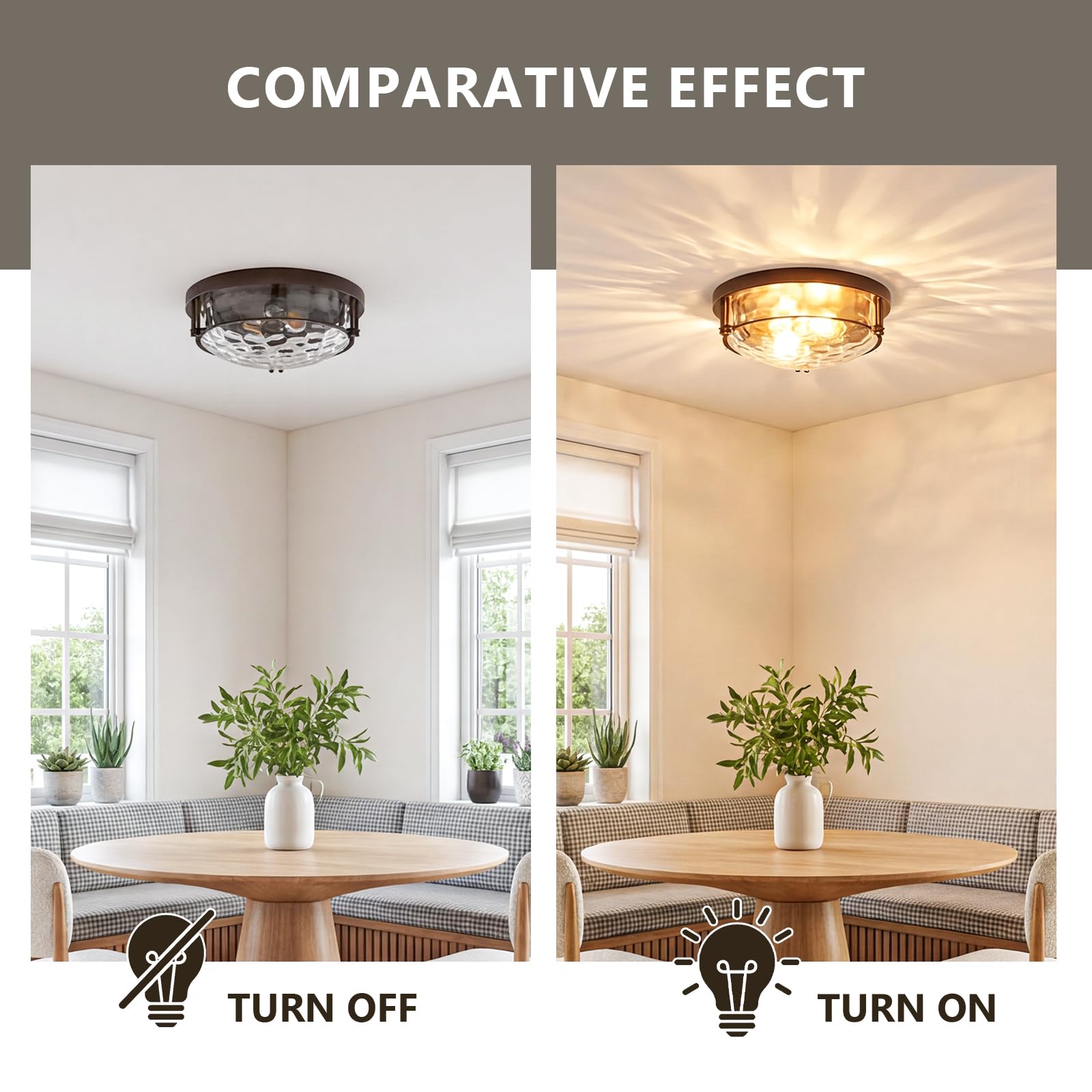
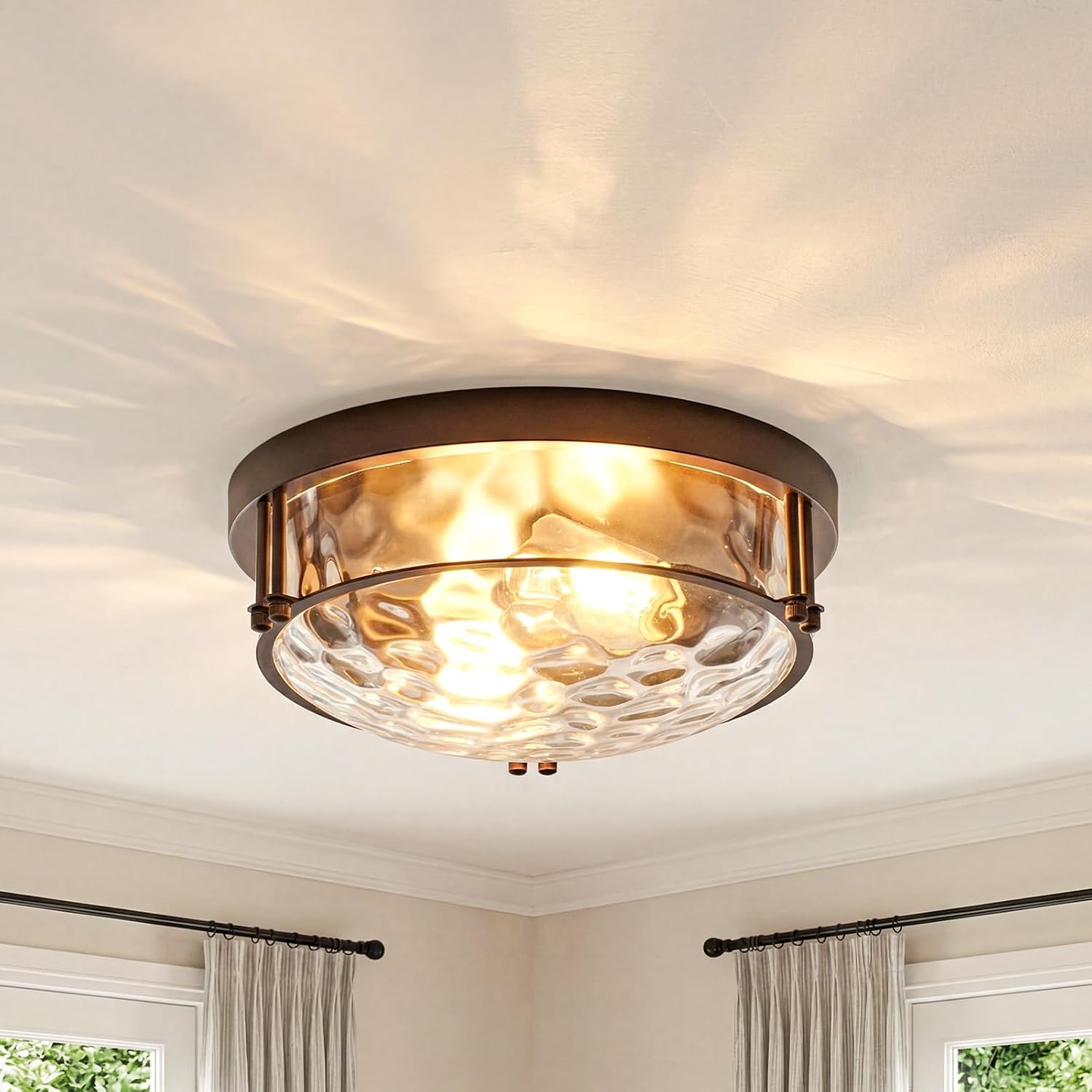
FYNVEX 12-Inch Flush Mount Ceiling Light, Oil Rubbed Bronze,2-Light Hammered Glass Shade, E26 Socket
Pros
- Hammered glass creates a soft, diffused glow instead of harsh direct light
- Compact4.72-inch height works well on low ceilings without looking bulky
- Dual E26 sockets give flexibility in bulb type and color temperature
- Oil rubbed bronze finish resists fingerprints and hides wear over time
- Straightforward installation with included mounting accessories
Cons
- Only 3 reviews so far, making long-term durability hard to confirm
- Bulbs not included, so you need to purchase separately
- 12-inch diameter may look undersized in rooms larger than 120 square feet
This FYNVEX flush mount does something a lot of budget ceiling lights fail at: it actually looks intentional. The hammered glass catches light in a way that gives the fixture texture and visual interest, while the oil rubbed bronze frame grounds it with a classic, almost vintage feel. It does not look like a builder-grade afterthought.
In a real room, this light fills the space with a soft, warm glow rather than blasting harsh overhead light. It sits close to the ceiling at under 5 inches tall, so it works in hallways and bedrooms where clearance matters. The dual-bulb setup means you get fuller coverage than a single-bulb dome light without stepping up to a much larger fixture.
If you want a ceiling light that adds character to a small room without eating into your headroom or your budget, this one delivers.
Styles it works with: Transitional, Modern Farmhouse, Industrial, Traditional
Best placed in: Hallway or corridor ceiling, bedroom center mount, small kitchen or breakfast nook
May not suit: Large open-concept living rooms where a12-inch fixture will look undersized, or ultra-modern minimalist spaces that call for slek matte or chrome finishes
Buy it if:
- You need a flush mount for low ceiling that still looks stylish and intentional
- You want warm, diffused light in a hallway, bedroom, or small kitchen
- You prefer oil rubbed bronze over brushed nickel or chrome finishes
Consider waiting if:
- You want to see more customer reviews before committing to a newer product
Skip it if:
- You need to light a room larger than 120 square feet as the primary fixture
- You want a fixture with bulbs included and ready to install out of the box
Check the latest price and availability on Amazon before it sells out.

hykolity 12" LED Flush Mount Ceiling Light - Selectable 3000K/4000K/5000K, Ultra-Slim Black Panel for Kitchen & Bedroom
Pros
- Selectable CCT lets you pick the right warmth before you mount it
- Extremely low profile fits tight ceiling spaces where bulkier fixtures won't work
- Damp-location rating expands placement options beyond dry rooms
- Simple hardwired install with included bracket and screws
- Strong 4.6-star rating across 2,600+ verified buyers
Cons
- Not dimmable; works only with standard on/off switches
- Brightness is fixed at 2160 lumens with no way to reduce output after installation
- Color temperature must be set before mounting, requiring removal to change later
This hykolity panel solves a common frustration: ugly, bulky ceiling lights that make a room feel dated. At under one inch thick, it sits nearly flat against the ceiling and gives any space a clean, modern look. The black frame is a nice touch that pairs well with matte hardware, dark shelving, or industrial-leaning decor.
What really sets it apart at this price is the selectable color temperature. You can flip the built-in switch to 3000K for a cozy bedroom glow, 4000K for a balanced kitchen tone, or 5000K for bright task lighting in a laundry room or garage. The edge-lit design spreads light evenly without harsh spots or buzing.
If you want a slek, modern ceiling light that covers multiple rooms without spending more than $20 per fixture, this one delivers.
Styles it works with: Modern Minimalist, Industrial, Scandinavian, Contemporary
Best placed in: Bedroom ceiling, kitchen overhead, hallway or closet, bathroom (damp-rated)
May not suit: Rooms where you need dimmable ambiance (dining rooms, nurseries), high ceilings over 9 feet where the12-inch diameter may look undersized, or traditional/ornate decor schemes where a decorative fixture is expected
Buy it if:
- You need affordable, modern flush-mount lighting for multiple rooms
- Your ceilings are low and you want a fixture that barely protrudes
- You want to pick between warm, neutral, or daylight without buying separate bulbs
Consider waiting if:
- You specifically need a white frame to match existing trim or fixtures
- You want to pair it with a smart dimmer setup for variable brightness
Skip it if:
- You need dimmable lighting for a dining area or media room
- You prefer decorative or statement ceiling fixtures over a flat panel look
Check the latest price and availability on Amazon before it sells out.

Hykolity 13" Flush Mount LED Ceiling Light -5CCT Adjustable Dimmable 1300LM Brushed Nickel Fixture
Pros
- Five color temperature presets offer rare flexibility at this price point
- 1300 lumens provides bright, even light across standard-sized room
- Low-profile housing fits in tight spaces like closets and stairwells
- Works with common TRIAC dimmers for adjustable brightness
- ETL listed for use in kitchens, bathrooms, and enclosed spaces
Cons
- Dimer switch not included, adding extra cost if you want brightness control
- White plastic diffuser may yellow over time compared to glass alternatives
- No smart home or remote control capability for color temperature changes
This Hykolity flush mount is one of those quietly practical upgrades that makes a real difference once it is installed. The five selectable color temperatures mean you can set a warm2700K glow in the bedroom and a crisp 5000K daylight in the laundry room using the exact same fixture, which simplifies ordering when you are updating several rooms at once.
In person, the brushed nickel frame and clean white diffuser look more polished than the price suggests. It sits tight to the ceiling, so it never feels intrusive in a low-clearance hallway or a compact bathroom. The light spreads evenly without harsh spots or shadows, which is something you notice immediately compared to older dome fixtures.
If you want a modern, bright ceiling light that adapts to different spaces without the hassle of smart bulbs or multiple fixture styles, this one delivers.
Styles it works with: Contemporary, Minimalist, Transitional, Modern Farmhouse
Best placed in: Kitchen ceiling, hallway or stairwell, bathroom, bedroom, closet or pantry
May not suit: Rooms with very high ceilings where a pendant or chandelier would provide better visual presence, or spaces decorated in ornate traditional styles where a simple disc fixture may look too plain
Buy it if:
- You are updating multiple rooms and want a single fixture style that works everywhere
- You need a low-profile light that will not interfere with closet doors or low ceilings
- You want to choose your color temperature after installation rather than committing to one bulb type
Consider waiting if:
- You specifically need a larger diameter fixture for rooms over 150 square feet
- You want smart home integration with voice or app control
Skip it if:
- You need a decorative statement piece that draws the eye upward
- You require a fixture with an integrated dimmer rather than purchasing one separately
Check the latest price and availability on Amazon before it sells out.
The FYNVEX 12-inch 2-light fixture in oil rubbed bronze holds a near-perfect 5-star rating, and its clear hammered glass shade twists off for a proper soap bath. The hykolity 12-inch selectable CCT panel (24W, switchable 3000K/4000K/5000K) sits at 4.6 stars and wipes clean in place since it’s a sealed edge-lit design, ideal for a hallway you don’t want to fuss over. The larger hykolity 13-inch flush mount steps up to five color temperatures from 2700K to 5000K in a brushed nickel trim, a good fit for a bigger bedroom or a room where you want to dial the light warmer at night.
Frequently Asked Questions
Can I use Windex or glass cleaner on the shade?
Yes, but only on removable glass and never on a warm or sealed fixture. Spray the cloth, not the shade, and keep any cleaner away from the metal housing and wiring. For sealed LED panels, plain water or a vinegar-water mix is safer since ammonia can cloud acrylic.
Do I have to take the whole fixture down to clean it?
No. Most flush mounts let you remove just the glass shade, and sealed LED panels clean in place with a damp cloth. You only detach the full fixture if you’re replacing it or the mounting plate itself is filthy, which is rare.

Why does my flush mount light have dead bugs inside it?
Almost always because enclosed shades trap insects drawn to the warmth and light, and there’s no easy exit. A quarter-turn or thumbscrew shade pops off, a shake over the trash clears the debris, and a soap bath finishes it. Enclosed fixtures need this roughly twice as often as open ones.
Is it safe to clean the light while it’s still on the ceiling?
Yes for the wipe-down, as long as you cut power at the breaker first, not just the wall switch. For a deep clean of a glass shade, removing it over a sink is easier and gets both sides. Never clean a fixture that’s still powered or warm.
Will cleaning actually make the room brighter?
Yes, noticeably. A dusty shade scatters and absorbs light before it reaches the room, so clean glass looks brighter at the same wattage. The effect is strongest with warm 2700K to 3000K bulbs, where grime shifts the color warmer and dingier.
How do I clean a flush mount without a step stool the right height?
It depends on ceiling height, but never stand on a chair or a stack of books. Use a proper step stool or a small ladder rated for your weight, and keep both hands free for the glass. If the fixture’s above 10 feet, a telescoping duster handles routine dusting from the floor between deep cleans.
Can water damage my LED flush mount light?
Yes, which is why the cloth should be wrung nearly dry. Dripping water near the LED driver or the ceiling junction box can short the fixture, since GREENGUARD-certified panels are sealed for air quality rather than waterproofing. A barely damp microfiber cloth is all a sealed diffuser needs.






Write Your Review
No reviews yet. Be the first to share your experience!