

> Editorial Note: I’m Olivia Bennett, a storage and organization contributor. I approach storage as a systems problem rather than a product one — fit to actual room dimensions, load ratings, and how the system holds up under daily use.
Most parents organize baby clothes by category first, then wonder why the drawers are a mess again by week two. The real mistake is sorting by type instead of by size. A newborn outgrows three sizes in the first four months, so a system built around “onesies here, sleepers there” collapses the moment a growth spurt hits. Size-first organization solves that. Before you buy a single bin, it helps to think about the whole nursery as a scaled-down version of the same principles behind a best closet organizer system, a best closet rod, best floating shelves for living room, a best hanging closet organizer, and even a best shoe rack. Same logic, smaller garments. Here’s how to build a system that survives real daily use.
The Ground Rules Before You Start
Three non-negotiables. First, keep at least 18 inches of clearance below any hanging rod so a folded stack or a bin fits underneath. Second, cap drawer weight at what a slide can carry: most nursery dresser drawers are rated for 15 to 25 lbs, and baby clothes are light, so the limit is volume, not weight. Third, reserve the lowest, easiest-reach zone for the current size only. Everything else gets labeled and stored higher or deeper. Measure the space before you shop. A tape measure saves more money than any organizer.
Step 1: Sort Everything by Size, Not by Type
Empty every drawer and bag onto the bed. Sort into piles by size: newborn, 0-3M, 3-6M, 6-9M, 9-12M, and up. Ignore garment type for now. This is the anchor move, and everything else follows from it. Once the piles exist, you’ll see the truth most parents miss: you probably have twice as much in one size as you’ll ever use, and gaps in others.
Set aside anything stained, ripped, or clearly too small to ever fit again. Donate or store those separately. For the sizes your baby hasn’t reached yet, box them by size and label the box on the end that faces out, not the top. You’ll be stacking these, and top labels vanish under the next box.
Give each active size its own zone. A standard nursery dresser drawer runs about 15 inches deep, which holds one size comfortably if you fold vertically. That vertical fold is the single biggest space saver here. Stand each item on its edge so you see every piece at a glance instead of digging through a stack. No more excavating.
Step 2: Divide the Closet Rod by Size
Hanging is where most systems break down, because everything gets pushed together and you lose track of what fits. Fix that with closet dividers that mark each size on the rod. Space them so each size gets its share: for a standard 48-inch nursery rod, that’s roughly 8 inches per size across five or six sizes.
Hang only the current and next size within easy reach, ideally between 40 and 48 inches off the floor where you can grab a hanger one-handed while holding a baby. Push future sizes to the far end. Dresses, jackets, and anything that wrinkles in a drawer belongs on the rod. Everything else folds.
Use slim, non-slip hangers sized for baby garments. Adult hangers leave shoulder bumps and eat twice the rod space. A child-scaled hanger is about 10 inches wide versus 17 for an adult one, so you nearly double your capacity on the same rod. Keep hangers all facing the same direction. It reads as calm instead of chaotic, and it makes the size dividers do their job.
Step 3: Contain Small Items in Drawer Compartments
Socks, mittens, bibs, and hats are the chaos agents of any nursery. They migrate, they hide, they pair off and lose their partners. The fix is compartmentalized drawer organizers that give every small category a fixed home. A 4×3-inch cell holds a rolled pair of socks perfectly; a 6×6-inch cell handles folded bibs or hats.
Map the compartments to how often you reach for each item. Socks and bibs get front-row cells since you grab them daily. Mittens and dressy accessories go to the back. Fold or roll, don’t pile: a rolled pair of socks stays paired, while a loose pile guarantees you’ll find one sock at 3 a.m.
Keep the organizer’s height under your drawer’s interior clearance, usually 4 to 5 inches, so the drawer closes flush. Foldable fabric organizers work well here since they flex to odd drawer widths and collapse flat when you reconfigure for the next size. One drawer, fully compartmentalized, ends most of the daily hunting.
Step 4: Set Up a Grab-and-Go Zone
The last piece is a station for the two things you reach for constantly: today’s outfit and tomorrow’s. A small open rack or a low shelf near the changing table keeps the current rotation visible and reachable without opening a single drawer. Position it within arm’s reach of the changing surface, roughly 24 to 36 inches to the side.
Load it light. Five to seven complete outfits in the current size, plus a spare sleeper, covers a typical laundry cycle. Anything more and it stops being a quick-grab zone and becomes another pile. A two-tier rack lets you split it: hanging outfits on top, a folded backup stack or a bin of burp cloths below.
This is also the zone that flexes as your baby grows. When a size is outgrown, you swap the rack contents in about five minutes instead of reorganizing the whole room. That’s the payoff of a size-first system. The daily station changes; the structure behind it stays put.
The Right Products Make It Easier
Three tools do the heavy lifting across the four steps, and all three clear a 4.5-plus owner rating. Pick by the step that’s giving you the most trouble: dividers for a messy rod, compartment organizers for a chaotic sock drawer, or a rack if you need a visible grab-and-go zone. Start with whichever step above felt most like your nursery.
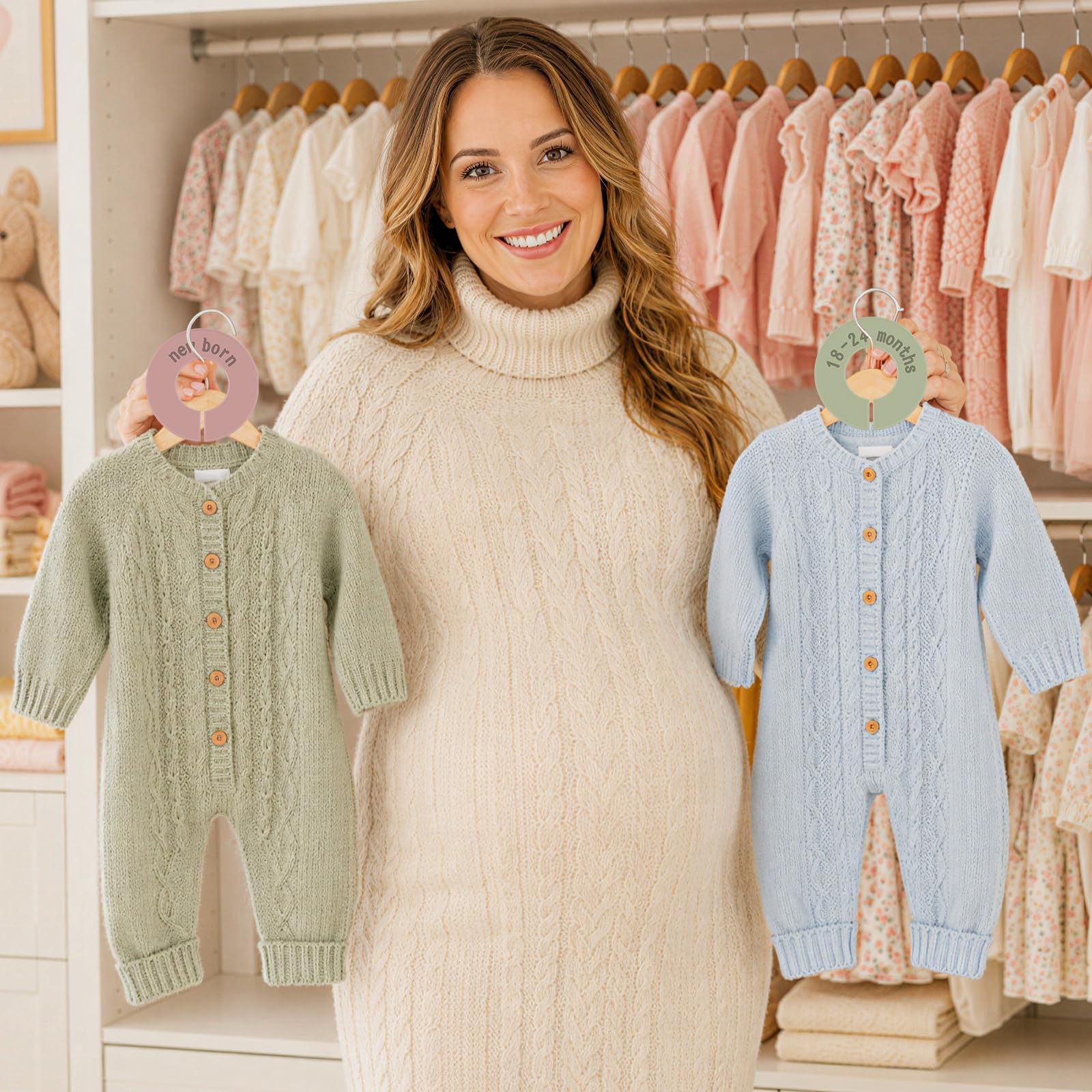

Nuesaurd 8-Pack Double-Sided Baby Closet Dividers - Newborn to Toddler Size Organizers for Standard Rods
Pros
- Complete size range eliminates guesswork during hectic mornings
- Double-sided printing is genuinely useful in tight or shared closets
- No-tool installation takes seconds and works on standard rods
- Durable enough to reuse for a second child or pass along
Cons
- Only 1 verified review, so long-term durability is unconfirmed
- Design options appear limited to a single style or color scheme
- May not fit non-standard or extra-thick closet rods
Nursery closets get chaotic fast. Between shower gifts, hand-me-downs, and impulse buys in three different sizes, finding a matching outfit at6 a.m. can feel impossible. This Nuesaurd divider set brings order to that chaos with clearly printed size labels on both sides, so you (or a half-awake partner) can grab the right section without pulling everything off the rod.
The set is lightweight, slides right onto a standard closet rod, and the material is smooth enough that it will not catch on knit fabrics or delicate slepers. It is a simple product that solves a real daily frustration, and it grows with your child through eight distinct size stages.
If you want a tidy nursery closet without fussing with bins, labels, or complicated systems, this one delivers.
Styles it works with: Modern Nursery, Scandinavian, Minimalist, Neutral Boho
Best placed in: Baby nursery closet, shared sibling wardrobe, hallway linen closet used for baby storage
May not suit: Open-concept wardrobes where dividers are fully visible as decor, or closets with unusually thick wooden dowel rods that may not fit through the hole
Buy it if:
- You are setting up a nursery and want clothes organized before baby arrives
- You receive hand-me-downs in multiple sizes and need a quick sorting system
- You want a low-effort gift for a baby shower registry
Consider waiting if:
- You prefer a specific nursery theme and want dividers with coordinating artwork or colors
Skip it if:
- Your nursery uses an open shelf or drawer system with no hanging rod
- You only keep one size of clothing accessible at a time and store the rest elsewhere
Check the latest price and availability on Amazon before it sells out.

Criusia 10-Pack Foldable Drawer Organizer Set - 3 Sizes for Clothes, Baby Items & Accessories (Beige)
Pros
- 10-piece set covers multiple drawer sizes without neding separate purchases
- PP board is more durable and moisture-resistant than cardboard alternatives
- Lightweight and foldable for easy storage when not needed
- Odorless materials safe for baby clothing and sensitive items
- Tight stitching resists fraying even with frequent use
Cons
- Only available in beige, limiting options for bold or colorful interiors
- At 4.5 inches tall, may not fit deeper drawers efficiently without stacking
- Non-woven fabric is harder to wipe clean than solid plastic organizers
If your dreser drawers have become a jumbled mess of socks, baby onesies, and random accessories, this 10-piece set from Criusia is a practical reset button. The three different sizes mean you can dedicate large bins to folded shirts, medium ones to underwear, and small ones to socks or hair ties, all within the same drawer.
What sets these apart from flimsy cardboard alternatives is the PP board inner layer. It gives each bin just enough structure to stay upright without making the whole set heavy or bulky. The non-woven fabric feels soft enough that you won't worry about snagging delicate knits or baby clothes.
If you want a full drawer makeover for under $20 without dealing with rigid plastic bins that never quite fit, this one delivers.
Styles it works with: Scandinavian, Minimalist, Modern Nursery, Japandi
Best placed in: Bedroom dreser drawers, nursery changing table organizer, closet shelf dividers
May not suit: Very shallow drawers under 4.5 inches deep, or buyers who prefer hard-sided containers that can be wiped down with disinfectant
Buy it if:
- You have a nursery to set up and need affordable, odor-free organizers for tiny baby clothes
- Your sock and underwear drawer is a daily frustration and you want instant order
- You rent your home and need organizers that fold flat when you move
Consider waiting if:
- You need a specific color to match existing closet decor beyond neutral beige
Skip it if:
- You need waterproof or fully washable bins for mudroom or bathroom use
- Your drawers are shallower than 5 inches, as the 4.5-inch height may stick up above the drawer edge
Check the latest price and availability on Amazon before it sells out.

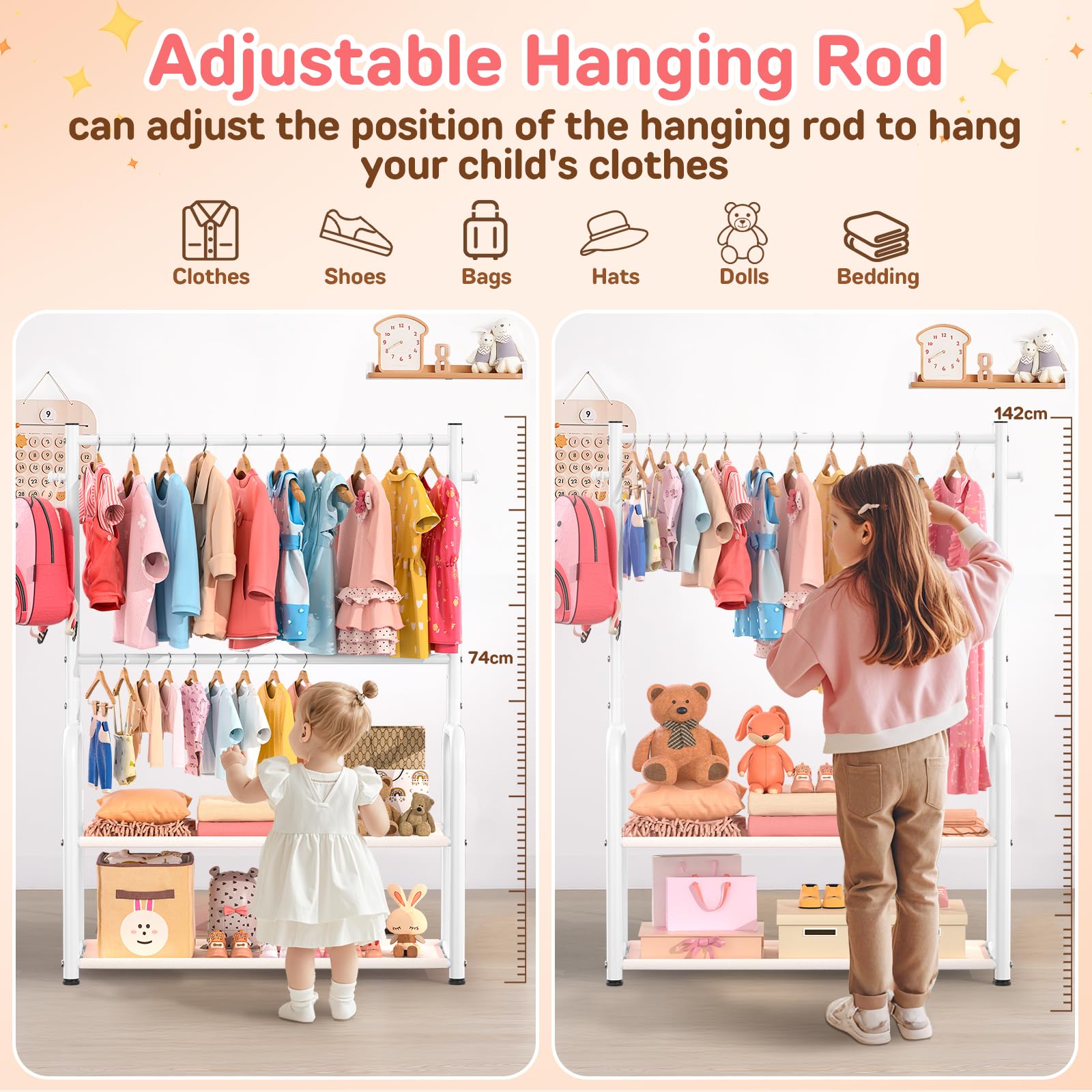
ZHKINGGS Kids Clothing Rack with 2-Layer Storage Shelf, Adjustable Hanging Rods, Dress Up Rack for Toddlers - White
Pros
- Two removable, height-adjustable rods accommodate everything from onesies to princess dresses
- Sturdy 2-layer shelf plus bottom basket provides ample non-hanging storage
- Slim profile works in tight spaces like closet alcoves or behind doors
- Simple assembly process praised by reviewers as genuinely easy
- Neutral white color coordinates with any existing decor
Cons
- At nearly56 inches tall, it may tip if overloaded one side without wall anchoring
- Limited to lighter-weight garments; heavy winter coats in bulk could stress the rods
- Only available in white, which shows scuffs and marker stains in a kids room
This ZHKINGGS rack solves a real parenting pain point: getting little ones to manage their own wardrobe. The two adjustable rods mean a2-year-old can reach the lower bar for everyday shirts, while the upper rod handles longer dresses or next-season items. It is the kind of setup that makes morning routines smoother without requiring a full closet system.
In a real room, it looks clean and intentional rather than like temporary furniture. The white frame practically disappears against light walls, and the open design keeps everything visible so kids actually use it. The bottom shelf pulls double duty for shoes, bins of accessories, or a small toy basket.
If you want a kid-friendly wardrobe station that adapts as they grow without spending on a custom closet, this one delivers.
Styles it works with: Scandinavian, Montessori-inspired, Modern Minimalist, Neutral Nursery
Best placed in: Kids bedroom wall, playroom dress-up corner, nursery beside the changing table, small walk-in closet
May not suit: Very small rooms where the 56-inch height feels imposing, or homes where a bold color statement is preferred over neutral white
Buy it if:
- You want to encourage your toddler or preschooler to dress independently with everything at their height
- You need a compact, all-in-one solution for a small bedroom that lacks closet space
- You are setting up a dress-up station for costumes and play clothes
Consider waiting if:
- You need a color other than white to match a specific room palette
- You want a heavier-duty option for an older child with bulky outerwear
Skip it if:
- You need industrial-strength storage for a shared room with multiple kids' full wardrobes
- You prefer enclosed storage to keep clothes dust-free
Check the latest price and availability on Amazon before it sells out.
Nuesaurd 8PCS Baby Closet Dividers (Nuesaurd)
These are the fix for Step 2. This 8-piece set of double-sided dividers labels each size directly on the rod, so you never lose track of where 3-6M ends and 6-9M begins. With a perfect 5.0 owner rating, they’re the highest-scored pick here, and owners consistently mention the clear age-and-size printing on both faces. They slip onto a standard nursery rod without tools and space out to about 8 inches per size on a 48-inch rod. If your closet is where the system falls apart, start here. Dividers are cheap, and they make every other closet decision faster.
Criusia Drawer Organizer, 10 Pack (Criusia)
This 10-pack answers Step 3 directly. These foldable fabric organizers turn a single chaotic drawer into fixed homes for socks, underwear, bibs, and mittens, and at a 4.7 rating they’re the most flexible option on the list. The foldable design flexes to odd drawer widths and collapses flat when you reconfigure for the next size, which matters since nursery drawers change contents every few months. Keep them under 5 inches tall so the drawer still closes flush. Ten cells is usually enough to compartmentalize two drawers, so one pack covers most of the small-item chaos.
ZHKINGGS Kids Clothing Rack (ZHKINGGS)
This rack builds the Step 4 grab-and-go zone. It pairs two adjustable hanging rods with a 2-layer storage shelf, so you get visible hanging outfits on top and a folded backup stack or bin below. At a 4.6 rating, owners like that the rods adjust as the child grows, extending the rack’s life well past the newborn stage. Set it within 24 to 36 inches of the changing table and load it with five to seven current outfits. It keeps the daily rotation off the floor and out of the drawers, which is the whole point of a grab-and-go station.
Frequently Asked Questions
What if my nursery has no closet at all?
It depends on your wall space, but a freestanding rack solves it. A two-tier clothing rack with adjustable rods replaces a closet in about 3 square feet of floor. Put it against a wall near the changing table, use the top rod for the current size and the lower shelf for folded backups. Add drawer organizers in the dresser for small items and you’ve rebuilt the full system without a single closet rod.
What if my dresser drawers are too shallow for organizers?
Almost never a dealbreaker. Most drawer organizers run 4 to 5 inches tall, and even a shallow 4-inch nursery drawer usually fits foldable fabric cells. If yours is shallower, measure the interior clearance first, then choose collapsible organizers that flex down. Worst case, skip the drawer and move small items to a divided bin on an open shelf instead.
What if I’m short on floor space in a small nursery?
It depends on your vertical room, but go up instead of out. Wall-mounted shelves and a rod that hangs from an existing closet free the floor entirely. A grab-and-go rack with a footprint under 3 square feet handles the daily rotation, and everything off-season stacks in labeled bins on a high shelf. Reserve the lowest 18 inches of clearance for the current size only.
What if I share the closet with the baby’s clothes and mine?
Yes, that works with a divided rod. Split the rod by height: baby garments hang at 40 to 48 inches where they’re easy to reach, your longer items take the rest. Size dividers keep the baby section legible, and a stack of drawer organizers in a shared dresser separates small items. The key is giving the baby’s clothes one continuous zone rather than scattering them.
What if my baby outgrows a size faster than I can reorganize?
It depends on your setup, but a size-first system makes it a five-minute swap. Because each size already lives in its own labeled zone, you pull the outgrown size, box it, and slide the next size down into the easy-reach spot. The dividers move; the structure stays. That’s the advantage of organizing by size instead of by garment type from the start.
Bottom Line
Sort by size first, and every other decision gets easier. Closet dividers keep the rod legible, compartment organizers tame the sock drawer, and a small grab-and-go rack near the changing table covers the daily rotation. If your closet is the weak point, start with the dividers since they’re cheap and fast. Keep the lowest, easiest-reach zone for the current size only, box the rest by size, and label boxes on the end that faces out. Build the structure once, then swap contents as your baby grows.
Write Your Review
No reviews yet. Be the first to share your experience!