

> Editorial Note: I’m Olivia Bennett, a storage and organization contributor. I approach storage as a systems problem rather than a product one, fit to actual room dimensions, load ratings, and how the system holds up under daily use.
The single biggest mistake people make is storing the blender fully assembled, jar locked onto the base, shoved to the back of a deep cabinet. That traps residual moisture against the motor housing, hogs 16 to 18 inches of vertical clearance, and turns a 30-second grab into a two-handed excavation every morning. A blender isn’t one object to store. It’s a system of parts with different weights, heights, and drying needs, and each part wants a slightly different home. The same logic that makes a best closet organizer system work, that decides where a best closet rod sits, or how a best floating shelves for living room setup carries weight, applies just as cleanly to a countertop appliance. Once you think in zones instead of a single shelf, the whole thing gets easier. If you’ve ever fought a best hanging closet organizer that sagged or a best shoe rack that tipped, you already know: the fix is measurement, not more stuff.
The Ground Rules Before You Start
Three non-negotiables. First, the jar and base always dry separately and store separately, no exceptions, because a sealed jar breeds odor within 48 hours. Second, leave at least 2 inches of clearance above the tallest stored part so you can lift it out without angling. Third, the base goes on the lowest stable surface you can reach, because a Ninja base runs 8 to 9 pounds and you don’t want it overhead. Measure your tallest jar first. A 40-oz glass jar stands roughly 9 inches; plan the shelf gap around that number, not a guess.
Step 1: Measure the Footprint and Pick the Zone
Start with a tape measure, not a cabinet. Measure your assembled blender’s width, depth, and height, then measure each detachable part on its own. A full-size Ninja or Hamilton Beach base typically occupies a 7 to 8 inch square footprint and stands 15 to 17 inches assembled, which is why it rarely fits under a standard 18-inch upper cabinet with the jar on. Write those three numbers down.
Now match them to a zone. The base belongs in a lower cabinet or a deep drawer within arm’s reach of an outlet, ideally on a shelf rated for at least 15 pounds so it never flexes under the motor’s weight. The jar and lid can live higher, since they’re light. If you blend daily, keep the base on the counter and store only the jar and accessories, since trying to hide a daily-use appliance costs you more time than the counter space is worth. Weekend blender? Everything goes below. The zone decision drives every step after this one.
Step 2: Separate and Dry Every Part Completely
Never store a wet part. This is where mold and cloudy odor start, and it’s entirely preventable. After washing, stand the jar upside down on a drying rack with the lid removed and the gasket popped out of its groove. A silicone gasket holds a surprising film of water in that channel, and a trapped bead can sour a sealed jar overnight.
Give parts a full 30 to 45 minutes of air-dry before anything goes in a cabinet. Wipe the base with a damp cloth, then dry it, because water sitting near the motor vents is the fastest way to shorten an appliance’s life. ASTM moisture-resistance standards exist for a reason: even food-grade plastics degrade faster under repeated damp storage. Store the blade assembly separately in a small bin, edge-down and pointed away from where your hand reaches. A loose blade in a drawer is the most common blender-storage injury, and a $4 bin fixes it. Dry, disassembled, contained. That’s the whole rule for this step.
Step 3: Stack Vertically and Contain the Small Parts
Deep cabinets waste 40% of their height if you only use the floor of the shelf. Go vertical. Set the base at the back on its own footprint, then nest the jar beside it rather than on top, since stacking a glass jar on a base you’ll lift daily just adds a step. Use the airspace above with a single wire shelf riser, which adds a usable 6 to 8 inch tier for lids, tampers, and spare gaskets.
Corral every small part in one labeled bin. Lids, the blade assembly, measuring cups, the tamper, and any single-serve cups belong together so nothing rolls to the back of a 24-inch deep cabinet where it disappears for a month. Apartment Therapy’s storage editors make the same point about appliance zones: keep the “family” of parts in one container so retrieval is a single motion. Weigh the loaded bin. If it clears 5 pounds, split it, because an overloaded bin on a high shelf is how things fall. Keep the heaviest bin lowest, always.
Step 4: Set Up for Grab-and-Go Retrieval
Storage that you have to dig through won’t survive a busy week. The check is simple: can you get the blender out and running in under 15 seconds with one hand free? If not, the zone is too deep or too high. Pull the base forward so its front edge sits within 3 inches of the cabinet opening, so you’re lifting straight out instead of reaching over other items.
Keep the cord managed but accessible. Coil it with a reusable strap and tuck it against the base, not wrapped around the housing where it stresses the strain relief over time. Leave the jar’s landing spot on the counter clear, and an 8 by 8 inch open zone is enough to set the base down and lock the jar in place without shuffling anything. If you’re storing seasonally, add a printed 3 by 5 card inside the bin listing every part, so you can confirm nothing’s missing before it goes back up. A system you can reset in seconds is a system you’ll actually keep using.
The Right Products Make It Easier
The picks below were chosen on three storage-relevant criteria: a detachable jar that dries and nests cleanly, a base footprint under 9 inches square, and an owner rating above 4.1 across thousands of reviews. Start with the first pick if you blend daily and want the smallest stored footprint. Jump to the third if you’re on a tight budget and mostly storing the unit between weekend uses.

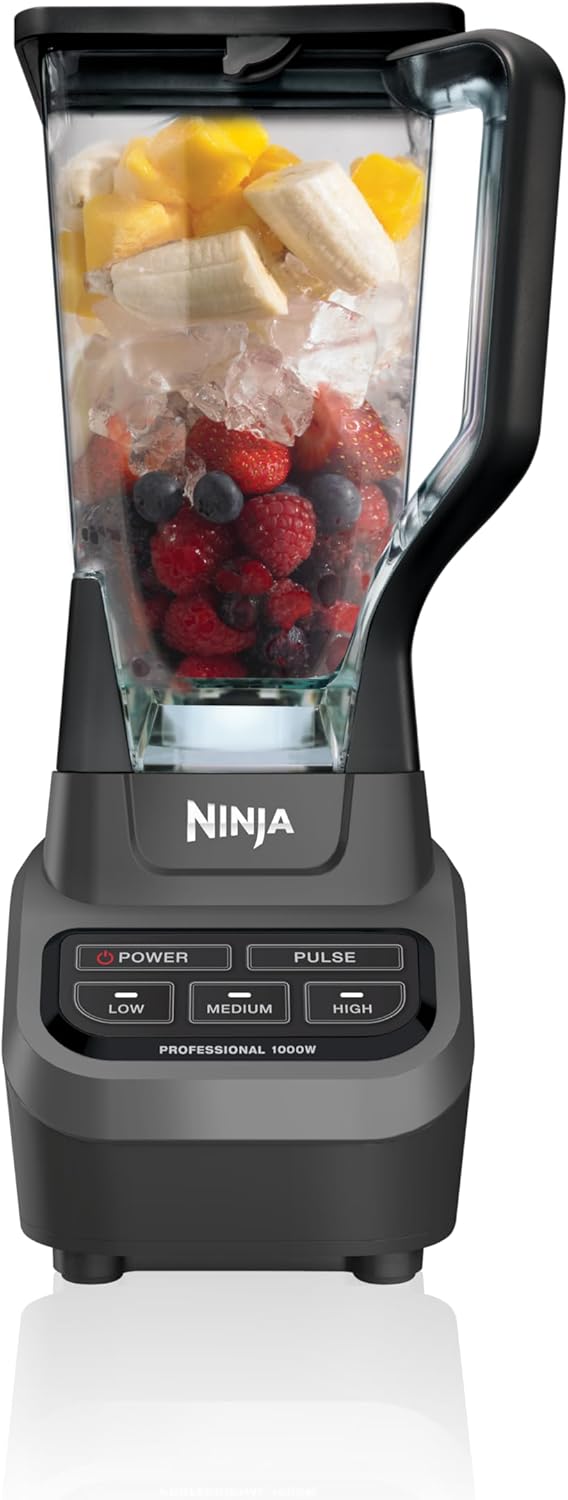
Pros
- Powerful 1000W motor handles ice and frozen ingredients without stalling
- Large 72-oz pitcher is great for batch blending for families or parties
- Dishwasher-safe pitcher makes daily cleanup painless
- Versatile enough for smoothies, sauces, dips, and grinding
- 4.6-star rating across nearly 60,000 reviews signals consistent reliability
Cons
- No single-serve cups included, so not ideal if you only blend for one
- Can be loud at full power, typical of high-wattage blenders
- Plastic pitcher may show wear over time compared to glass alternatives
The Ninja BL610 is the kind of kitchen workhorse that earns its permanent spot on your countertop. With 1000 watts driving its Total Crushing blades, it handles everything from rock-hard ice to fibrous grens without hesitation. It does not look flashy, but its black and grey design blends quietly into most kitchen aesthetics without drawing attention away from your decor.
What stands out is the consistency. Whether you are making a single smoothie or blending a full pitcher of margaritas for guests, the results come out smooth every time. The dishwasher-safe pitcher means you are not hand-scrubbing blades after every use, which makes a real difference when you use it daily.
If you want powerful, reliable blending for your whole family without spending $200 or more on a premium brand, this one delivers.
Styles it works with: Modern Minimalist, Contemporary, Transitional, Industrial Kitchen
Best placed in: Kitchen countertop near an outlet, pantry shelf for storage between uses, kitchen island prep station
May not suit: Very small kitchens with limited counter space, open-concept layouts where blender noise carries easily into living areas
Buy it if:
- You make smoothies, frozen drinks, or sauces multiple times a week and need something that handles ice without struggling
- You have a family or regularly entertain and need large-batch blending capacity
- You want a reliable full-size blender under $100 that thousands of buyers trust
Consider waiting if:
- You want a model with single-serve cups for grab-and-go convenience
- You prefer a glass pitcher and want to compare newer Ninja models
Skip it if:
- You only blend single servings and would rather have a compact personal blender
- You need a blender with smart presets, app connectivity, or variable speed dial
Check the latest price and availability on Amazon before it sells out.

Hamilton Beach Power Elite Wave Action Blender 700W 40 Oz Glass Jar 12 Functions Ice Crushing Smoothie Maker
Pros
- Affordable price for a full-featured 700W blender with glass jar
- Wave Action system prevents chunks and unblended pockets
- Easy disassembly with removable blades for thorough cleaning
- Versatile 12-function control handles everything from pureeing to grinding
- Sturdy glass jar resists staining and odor absorption
Cons
- Must include at least 1 cup of liquid per blend, limiting thick recipes
- 3-cup max fill for certain tasks restricts batch sizes
- Motor can overheat during extended heavy-duty blending sessions
The Hamilton Beach Power Elite is the kind of blender that quietly earns its spot on your counter. It does not demand attention with flashy design or premium pricing, but it delivers smooth, consistent results every single morning. The Wave Action system is the real differentiator here, pulling ingredients down into the blades instead of leaving frozen chunks spinning uselessly at the top.
In a real kitchen, this blender looks clean and unobtrusive in black, tucking neatly beside a coffee maker or toaster without visual clutter. The glass jar feels substantial and does not hold onto yesterday's smoothie smells. Five clearly labeled buttons mean no one in your household needs a tutorial to use it.
If you want dependable blending performance for daily smoothies and meal prep without spending triple digits on a blender you will barely use to its full potential, this one delivers.
Styles it works with: Modern Minimalist, Contemporary, Transitional, Industrial
Best placed in: Kitchen countertop near an outlet, pantry shelf for storage, breakfast bar station
May not suit: Very small galey kitchens with limited counter space, households that need commercial-grade blending for large batch meal prep
Buy it if:
- You make daily smoothies or protein shakes and want something reliable under $40
- You need a blender that handles ice crushing without struggling or stalling
- You prefer glass jars over plastic for durability and easy cleaning
Consider waiting if:
- You want a quieter blending option (Hamilton Beach makes a Quiet Blender model with sound reduction)
- You need a travel jar for blending and taking smoothies on the go
Skip it if:
- You regularly blend thicknut butters or very low-liquid recipes that fall below the 1-cup minimum
- You need a large-capacity blender over 40 oz for family batches
Check the latest price and availability on Amazon before it sells out.

BLACK+DECKER Crush Master 10-Speed Blender with Stainless Steel Blades - 6-Cup Jar, BL2010BP
Pros
- Ten speeds plus pulse provide good versatility for different recipes
- Dishwasher-safe pitcher, lid, and blade simplify daily cleanup
- PerfectPour spout reduces mess when transfering to glasses
- Very affordable for a name-brand countertop blender
- Compact and lightweight enough for small kitchen spaces
Cons
- Plastic jar may scratch or cloud over time with regular use
- 6-cup capacity is small for batch cooking or family-sized recipes
- Motor may struggle with hard frozen ingredients or ice-heavy blends
The BLACK+DECKER Crush Master is the kind of blender that quietly earns its spot on your counter. It does not try to be a professional-grade machine. Instead, it focuses on doing everyday tasks well: morning protein shakes, frozen margaritas on the weekend, and quick sauces that pull dinner together.
What stands out is how easy it is to live with. The lightweight jar means you are not wrestling with heavy glass pitchers, the pour spout actually works without dripping, and every piece goes in the dishwasher. For a kitchen where counter space is precious, its compact size is a real advantage.
If you want reliable daily blending without a big investment or a bulky appliance taking over your counter, this one delivers.
Styles it works with: Modern Minimalist, Small Space Living, Budget-Friendly Kitchen, College or First Apartment
Best placed in: Kitchen countertop near an outlet, small pantry shelf when not in use, breakfast bar station
May not suit: Kitchens where you frequently blend large batches for a family of four or more, or cooks who need heavy-duty ice crushing for thick acai bowls daily
Buy it if:
- You make single or double-serve smoothies and drinks most mornings
- You want a simple, no-fuss blender that cleans up easily
- You have limited counter space and need something compact and light
Consider waiting if:
- You prefer a glass jar for long-term durability and stain resistance
- You want to compare it against newer models during a seasonal sale
Skip it if:
- You need a large-capacity blender for soups, meal prep, or feeding a big household
- You regularly crush hard frozen fruit or large ice loads and need a more powerful motor
Check the latest price and availability on Amazon before it sells out.
Smallest Stored Footprint for Daily Use — Ninja Professional Blender
This is the one to reach for if you blend most mornings and want Step 1’s footprint rule to work in your favor. The 1000W base is compact enough to leave on the counter while the jar and lid store separately, which sidesteps the assembled-height problem entirely. Its 4.6 rating is the highest in this group, and owners consistently note the jar’s clean nesting shape. The pitcher rinses fast and stands upside-down on a rack without tipping, so it clears the 30-to-45-minute dry window from Step 2 easily. If your zone is a lower cabinet with limited height, this base disassembles to the shortest profile of the three.
Best Sealed Jar for Odor-Free Storage — Hamilton Beach Power Elite Wave Action
Pick this one if you’re the type who stores the jar in a cabinet between uses and worries about smell. The 40-oz glass jar resists the odor retention that plagues plastic pitchers, which matters directly for Step 2’s dry-and-separate rule — glass won’t hold a stale film the way scratched plastic does. At a 4.3 rating with 12 functions, it’s the balanced middle pick. The jar stands about 9 inches, so plan your shelf gap at 11 inches minimum. Its wider base makes it slightly less compact than the Ninja, but the glass is the trade-off that keeps stored contents fresh.

Budget Pick for Occasional Blending — BLACK+DECKER Crush Master
Go with this if the blender lives in the cabinet most of the week and only comes out on weekends. At a 4.2 rating with 10 speeds and stainless steel blades, it’s the value option, and its lighter base is the easiest of the three to lift down from a mid-height shelf. The model BL2010BP separates cleanly for the bin-and-riser system in Step 3. It’s not the most powerful here, but for someone storing more than blending, the low weight and simple disassembly make the retrieval check in Step 4 effortless. Contain the blade in its own bin and this one practically stores itself.
Frequently Asked Questions
What if my kitchen has no lower cabinet space at all?
It depends on how often you blend. Daily users should keep the base on the counter in an 8 by 8 inch corner and store only the jar and small parts on an upper shelf or in a nearby drawer. If you blend weekly, a rolling cart or a pantry shelf rated for 15-plus pounds works — put the base at waist height so you’re never lifting 8 pounds overhead.
What if my cabinet is too shallow for the assembled blender?
Almost always, the fix is disassembly, not a bigger cabinet. A base alone needs only a 7 to 8 inch depth, and the jar stores flat or beside it. Most “it won’t fit” problems come from trying to store the unit assembled at its full 15-to-17-inch height. Take the jar off and the footprint shrinks dramatically.
What if my only open shelf is above the counter and high up?
No, don’t put the base up there. An 8-to-9-pound motor housing overhead is a drop risk every time you reach for it. Keep the heavy base low and reserve high shelves for the light parts: lids, the empty jar, and the small-parts bin, which together weigh under 4 pounds. Weight goes low, lightweight goes high.
What if my drawer is deep but not tall enough to stand the jar?
Then lay the jar on its side and nest the base beside it. A deep drawer is ideal for the Step 3 bin system, so set a divider so the base can’t slide into the blade bin. Keep the loaded drawer under about 5 pounds per section so the slides don’t strain, and store the blade edge-down in its own container.
What if my space is humid, like a kitchen with poor ventilation?
Then double down on Step 2’s drying rule and add airflow. In a humid room, give parts a full 45 minutes to dry and leave the cabinet door cracked or add a small vent. Never seal a damp jar in a closed cabinet, since humidity plus a trapped gasket is where odor and cloudiness start. A silica gel pack in the small-parts bin helps keep blades from spotting.
Bottom Line
Store a blender as a system, not a single object: base low and dry, jar and lid separate, small parts contained in one labeled bin. Measure your tallest part first and build 2 inches of clearance above it. If you blend daily, leave the base on the counter and store only the jar, since hiding a daily-use appliance costs more time than it saves. Keep weight low, keep the blade in its own container, and pass the 15-second retrieval check. Get those right and the setup stays organized on its own.
Write Your Review
No reviews yet. Be the first to share your experience!