

> Editorial Note: I’m Hannah Lin, an Interior Living Researcher who’s spent 9+ years analyzing the home furniture market. This guide draws on BIFMA, GREENGUARD, and FSC certifications, plus owner reviews aggregated from Wirecutter, Apartment Therapy, and the major home design subreddits.
Most people reach for steel wool the second they see white crust inside a kettle, and that’s the fastest way to scratch the interior and shorten its life. The buildup isn’t dirt. It’s limescale, and it dissolves on its own with a cheap pantry acid, no scrubbing required. If you’re styling a kitchen or entryway around pieces like best gallery wall frames, best console table for entryway, best large floor mirror, best wall mirror for living room, and best table lamp for living room, a chalky kettle undoes the whole look. Here’s how to fix it in about 30 minutes.
What’s That White Buildup Inside Your Kettle?
That flaky white or grayish coating is limescale, a mineral deposit left behind when hard water evaporates. Every time you boil, the water leaves and the calcium and magnesium stay. Over weeks, those minerals harden into a crust on the base and spout.
It’s not harmful, and it won’t ruin your tea. But it does slow heating, because scale acts as insulation between the element and the water. A heavily scaled electric kettle can take noticeably longer to reach a boil, which wastes energy over time.
Hard water is the culprit. If your area runs above roughly 7 grains per gallon, you’ll see scale form faster, sometimes within two weeks of daily use. Soft-water households can go a month or more before anything shows.
The mistake to avoid: scrubbing. Steel wool and abrasive pads scratch stainless steel and strip the coating on the inside of electric models, which then lets scale grip even harder next time. Acids do the work chemically instead. Wirecutter and Apartment Therapy both point to plain white vinegar as the go-to for exactly this reason. Reach for chemistry, not muscle.
How Do You Descale a Kettle With Vinegar?
Mix 1 cup of white vinegar with 3 cups of water, or enough of that ratio to cover the scaled areas. For a 1.7L electric kettle, that fills it about halfway, which is plenty.
Bring the mixture to a boil, then switch the kettle off and let it sit for 20 to 30 minutes. The acid loosens the mineral bond while it soaks. You’ll often see flakes drift free on their own. That’s the scale letting go.
Pour the solution out, then wipe the interior with a soft cloth or non-scratch sponge. Stubborn spots near the base usually rub off with light pressure now. If any cloudiness remains, repeat the soak once more rather than scrubbing hard.
Rinse thoroughly, three or four fills of fresh water, then boil one full batch of plain water and dump it. This clears any vinegar taste before your next cup. Lemon juice or a 50/50 citric-acid-and-water solution works the same way if you’d rather skip the vinegar smell. One teaspoon of citric acid powder per cup of water dissolves scale just as well.
Never use bleach or oven cleaner inside a kettle. They’re too harsh for food-contact surfaces and can leave residue that’s hard to fully rinse out.
How Should You Clean the Outside and Handle?
The exterior needs a different touch than the inside. For stainless steel bodies, a damp microfiber cloth with a drop of dish soap handles daily fingerprints and water spots. Wipe with the grain, not in circles, so you don’t leave swirl marks on a brushed finish.
For a mirror-polished kettle that shows every smudge, a little white vinegar on the cloth cuts through grease and restores shine. Buff dry right after with a clean cloth. Water left to air-dry is what creates those spots in the first place.
Wooden or bakelite handles get wiped, never soaked. Submerging a wood-accent handle, like the folding style on some stovetop kettles, can swell or crack it over time. A barely-damp cloth is all it needs.
Don’t forget the spout and whistle. Mineral buildup collects there too, and it can muffle a whistling kettle’s pitch. A cotton swab dipped in vinegar clears the opening. For the base of an electric kettle, keep the electrical connector completely dry and never immerse the powered unit in water.
How Often Should You Clean a Tea Kettle?
It depends on your water. Descale monthly if you’re on hard water, every two to three months if your water is soft. Daily rinsing and drying stretches the interval either way.
Wipe the exterior once or twice a week to stay ahead of spots and grease film, which is faster than tackling a month of buildup at once. A 30-second dry after each use is the single habit that prevents most water stains.
One simple sign: if boiling feels slower than it used to, or you spot flakes in your cup, it’s descale time regardless of the calendar. Trust the kettle over the schedule.
A wide-mouth design makes all of this easier, since you can reach inside to wipe. Kettles with a narrow neck trap scale where your hand can’t go, so the vinegar soak becomes your only real option. That’s worth keeping in mind if you’re shopping for a replacement.
Helpful Picks
If you’d rather start fresh with a kettle built for easy upkeep, these three prioritize wide mouths, rinse-friendly interiors, and finishes that hide water spots. All three clear a 4.3+ owner rating.


Pros
- No plastic contact with water ensures cleaner taste
- 1500W heats water noticeably faster than stovetop alternatives
- Borosilicate glass body looks premium at a budget-friendly price
- Wide mouth and dual-angle lid make daily cleaning simple
- Auto shut-off and boil-dry safety features work reliably
Cons
- Stainless steel base may show mineral spots in hard-water areas
- Mechanical shut-off can allow minor condensation drips from the drain port
- Glass body is heavier and more fragile than plastic or stainless steel alternatives
This Cosori kettle is one of those small upgrades that quietly elevates your kitchen. The borosilicate glass body looks clean and modern on any countertop, and the soft blue LED glow while boiling adds a surprisingly satisfying visual touch. It feels more like a design piece than a basic appliance.
In daily use, it is refreshingly simple. The wide mouth means you can actually reach inside to wipe it down, and the dual-angle lid keeps splashing to a minimum when you are in a rush. The 1500W element gets water to a boil fast enough that you stop thinking about it, which is exactly what a good kettle should do.
If you want a health-conscious, good-looking kettle that heats water quickly without clutering your counter with plastic, this one delivers.
Styles it works with: Minimalist, Scandinavian, Modern Industrial, Contemporary
Best placed in: Kitchen countertop near the stove, coffee station or bar cart, breakfast nook side table
May not suit: Very traditional or rustic farmhouse kitchens where glass appliances look out of place, or households with young children who might pull the cord or knock over the glass carafe
Buy it if:
- You want to eliminate plastic from your hot water routine for health or taste reasons
- You need a fast, reliable kettle for daily tea, coffee, or instant meals
- You prefer a slek glass look over bulky stainless steel or plastic kettles
Consider waiting if:
- You need a temperature-control kettle for precise brewing (this model is boil-only)
- You want a color option other than black to match your kitchen
Skip it if:
- You need a double-walled or insulated kettle that keeps water hot for extended periods
- You have very hard water and do not want to descale regularly
Check the latest price and availability on Amazon before it sells out.
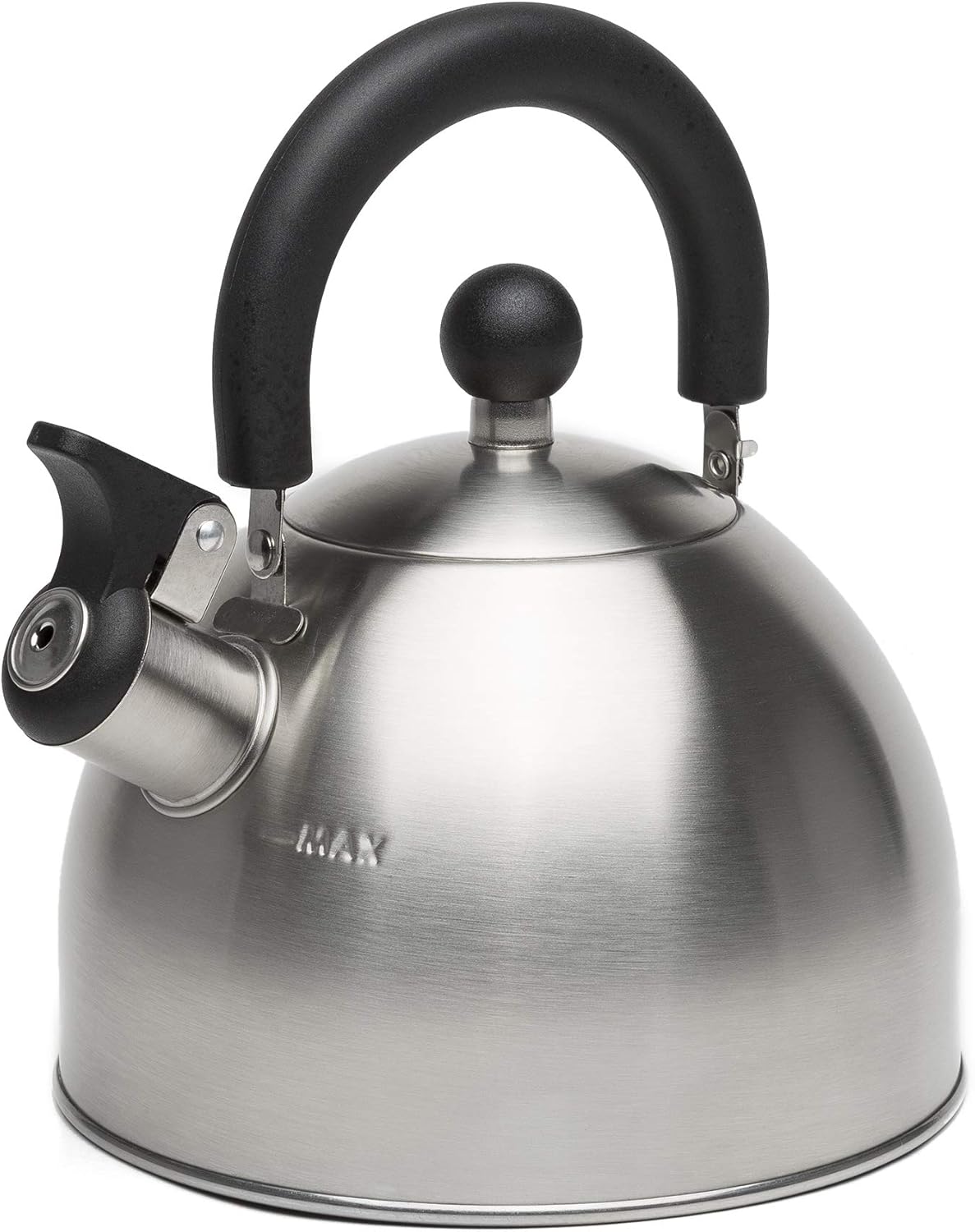
Primula Stewart Whistling Stovetop Tea Kettle - 1.5 Quart Stainless Steel with Cool Touch Handle, Brushed Silver
Pros
- Extremely affordable for a stainless steel kettle that performs reliably
- Cool-touch handle stays safe even after extended boiling
- Compact 1.5-quart size is practical for 1-3 people without taking up counter space
- Loud, clear whistle you can hear from another room
- Simple flip-up spout for controlled, drip-free pouring
Cons
- 1.5-quart capacity may be too small for larger households or gatherings
- Brushed finish can show water spots and fingerprints over time
- No temperature control or gauge for precise brewing needs
The Primula Stewart is one of those kitchen staples that quietly earns its keep every single day. It heats water fast, whistles loud enough to hear from the next room, and pours cleanly with one hand thanks to the flip-up spout. There is nothing fussy about it, and that is exactly the point.
On the counter, it looks clean and classic. The brushed silver body and black handle have a timeless feel that works whether your kitchen leans modern, traditional, or somewhere in between. It is small enough to leave on the stove without clutering your cooktop, yet holds enough water for a few cups of tea or a French press.
If you want a reliable everyday kettle without spending more than a nice lunch, this one delivers.
Styles it works with: Modern Farmhouse, Minimalist, Scandinavian, Classic Traditional
Best placed in: Kitchen stovetop, open shelving beside mugs, small apartment countertop
May not suit: Kitchens with an all-black or copper-themed aesthetic, households that regularly need to boil water for 4+ people at once
Buy it if:
- You drink tea or pour-over coffee daily and want a simple, affordable stovetop solution
- You have a small kitchen and need a kettle that stores flat in a cabinet
- You prefer the ritual of stovetop boiling over electric kettles
Consider waiting if:
- You want a larger capacity (2+ quarts) for entertaining or family use
Skip it if:
- You need precise temperature control for specialty teas like green or white varieties
- You want a statement piece in a bold color or premium copper finish
Check the latest price and availability on Amazon before it sells out.

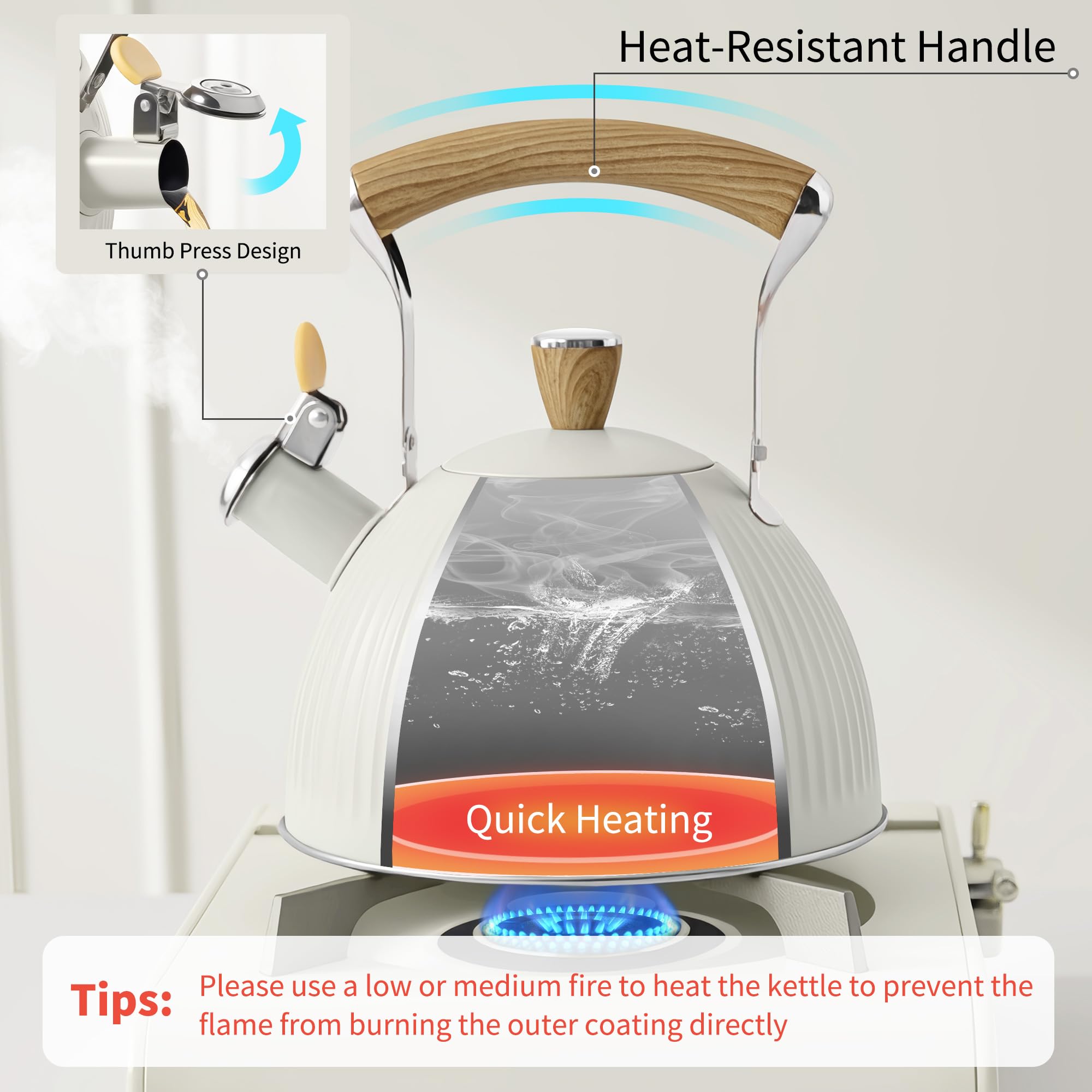
LONFFERY 2.5 Quart Whistling Tea Kettle - Stainless Steel Stovetop Ketle with Wood Pattern Handle, Creamy White
Pros
- Affordable price point for a stainless steel kettle with premium styling
- Universal stovetop compatibility including induction
- Food-grade 18/8 stainless steel resists rust and heats quickly
- Thoughtful extras like the silicone pad and dust-proof spout cover
Cons
- No verified customer reviews yet to confirm long-term durability
- Creamy white exterior coating may discolor if exposed to high flames
- Limited to one color option with no size variations available
This LONFFERY ketle caught our eye because it looks far more expensive than it actually is. The creamy white body with the wood-pattern handle gives it a warm, Scandinavian-inspired feel that blends right into a bright, modern kitchen. It is the kind of piece that sits on your stove and quietly elevates the whole room.
Beyond aesthetics, it is genuinely practical. The whistle is loud enough to hear from another room, the handle folds flat for compact storage, and the wide mouth means you are not wrestling with it at the sink. The included silicone trivet is a nice bonus for setting it on your breakfast table or countertop.
If you want a ketle that doubles as a kitchen accent piece without spending over $20, this one delivers.
Styles it works with: Scandinavian, Modern Farmhouse, Coastal, Minimalist
Best placed in: Kitchen stovetop as a display piece, breakfast nook table, open shelving in a cottage-style kitchen
May not suit: All-black or industrial-themed kitchens where the creamy white may clash; households that exclusively use high heat, as the exterior coating requires low to medium flame settings
Buy it if:
- You want a stovetop kettle that looks decorative enough to leave out on display
- You need induction compatibility at a budget-friendly price
- You prefer a loud whistle reminder because you tend to multitask while boiling water
Consider waiting if:
- You want to see verified long-term durability reviews before committing
- You prefer a different color option to match your kitchen palette
Skip it if:
- You cook exclusively on high heat and cannot adjust to low or medium settings
- You need a larger capacity kettle for commercial or office use
Check the latest price and availability on Amazon before it sells out.
Frequently Asked Questions
Can I use vinegar to clean any tea kettle?
Yes, for stainless steel and most electric kettles. White vinegar is safe on food-contact surfaces and dissolves limescale without scratching. Avoid it only on aluminum interiors, where prolonged acid contact can dull the metal. For those, use a shorter citric-acid soak instead and rinse quickly.
Is limescale in my kettle dangerous to drink?
No. Limescale is calcium and magnesium, the same minerals in hard tap water, and your body handles them fine. It’s a performance and taste issue, not a health one. It slows heating and can leave a faint chalky sediment, so it’s worth removing for a better cup.
Will vinegar leave a taste in my tea afterward?
No, as long as you rinse and boil-and-dump one plain batch after descaling. Three or four rinses plus a single throwaway boil clears any lingering smell or flavor. If you’re sensitive to it, citric acid or lemon juice leaves even less residual scent.
How do I stop limescale from coming back so fast?
It depends on your water hardness. Empty the kettle after each use rather than letting water sit, and dry the interior when you can. Using filtered water cuts mineral content and slows buildup dramatically. On very hard water, a monthly vinegar soak keeps it in check.
Can I put a tea kettle in the dishwasher?
No, not the powered base of an electric kettle or any model with wood or bakelite trim. The heat and detergent damage electrical parts and swell wood handles. Stovetop stainless bodies without special finishes may tolerate it, but hand-washing protects the finish and lasts longer.
Why does my kettle whistle weaker than it used to?
It depends, but scale in the spout is the usual cause. Mineral buildup narrows the whistle opening and changes the pitch. A cotton swab with vinegar clears it in seconds. If cleaning doesn’t restore the sound, the whistle cap itself may be worn or loose.
How long does a vinegar descale actually take?
It depends on buildup, but plan on about 30 minutes start to finish. The boil takes a few minutes, the soak runs 20 to 30, and rinsing adds five. Heavy scale might need a second soak. Light monthly maintenance rarely takes more than 15 minutes total.




Write Your Review
No reviews yet. Be the first to share your experience!