

> Editorial Note: I’m Hannah Lin, an Interior Living Researcher who’s spent 9+ years analyzing the home furniture market. This guide draws on BIFMA, GREENGUARD, and FSC certifications, plus owner reviews aggregated from Wirecutter, Apartment Therapy, and the major home design subreddits.
You lift the lid and there it is: a black, welded-on ring at the bottom of the pot that no sponge seems to touch. Maybe the rice caught before it was even done, or the sauce turned bitter in the middle while the edges looked fine. It feels like the pot is the problem, but usually it’s a mix of heat, base thickness, and timing you can actually control. A tidy, functional kitchen is part of a well-run home, same as the best gallery wall frames over the console or the best console table for entryway by the door, the best large floor mirror in the hall, the best wall mirror for living room, and the best table lamp for living room. Here’s why your pots keep burning and exactly how to fix it.
Reason 1: The Scorched Ring That Shows Up in Minutes (Heat Set Too High)
That dark ring that forms fast, right at the center of the base? That’s the tell. Most home cooks run the burner higher than the food needs because high heat feels faster. It isn’t. Sugars and starches scorch somewhere around 350°F, and a burner cranked to max pushes the pan base well past that in under two minutes, long before your food has a chance to cook through.
Sauces, milk-based dishes, rice, and anything with sugar are the usual casualties. The proteins and sugars hit the hot metal, bond to it, and darken while the top of the food still looks raw. You stir, you scrape, and the burnt layer just spreads.
The fix is boring but reliable. Drop to medium, roughly 300°F at the pan, and give the dish an extra few minutes. For simmering sauces, medium-low holds a gentle bubble without scorching the bottom. Stir every 60 to 90 seconds so nothing sits still against the hottest part of the base. If your recipe says “bring to a boil, then reduce,” actually reduce it. Don’t walk away during that first hard boil. That’s when 80% of scorching happens.
Reason 2: The Burn That Always Lands in the Same Spot (Thin, Uneven Base)
If the burn shows up in the identical place every time, the pan is the problem, not you. Cheap single-ply pots often have a base under 1/8 inch thick. Thin bases create hot spots directly over the burner flame or coil, so heat pools in one zone instead of spreading across the whole surface. Food over that spot cooks three times faster than the rest.
Aluminum-clad and tri-ply pans solve this by sandwiching a conductive core between steel layers. Wirecutter’s cookware coverage repeatedly points to this multi-layer construction as the single biggest factor in even heating. A tri-ply or five-ply base spreads heat side to side, so no one patch scorches while the rest lags.
You can work around a thin pot without replacing it. Use a burner one size smaller than the pan so the flame doesn’t lick up the sides, keep the heat lower, and preheat for a full 90 seconds before adding food so the base equalizes first. But honestly? If a pot burns in the same spot no matter what you do, it’s worth upgrading. A quality stainless pot with an 18/10 grade base, the kind ASTM standards define for corrosion and stability, will outlast three flimsy ones.
Reason 3: Food That Grabs the Pan the Second It Hits (No Fat or Liquid Barrier)
Here’s a sneaky one. The pan is fine and the heat is reasonable, but the food still fuses to the metal. This happens when you add food to a dry, screaming-hot surface with no oil or liquid buffer between them. Proteins especially want to bond directly to hot steel.
Stainless steel needs a thin fat layer to release food cleanly. Add a tablespoon or two of oil, let it shimmer, then add your ingredients. For starches like rice or oatmeal, the ratio matters more than the heat. Too little water and the grain at the bottom dries out and burns before the top is tender. Most rice wants about a 2:1 water-to-grain ratio and a tight lid to trap steam.
Timing plays in too. Food that’s crowded into the pan drops the temperature, releases moisture, and steams instead of sears, so cooks compensate by cranking the heat. Now you’re back to Reason 1. Work in batches, keep a splash of liquid moving, and the food lifts instead of welding itself down.
Reason 4: How to Clean a Burnt Pot Fast
Once it’s burnt, don’t attack it dry with a metal pad and full force. You’ll scratch the finish and still leave carbon behind. Loosen it first, then scrub. That order does most of the work for you.
Start with the boil-and-lift method. Cover the burnt layer with about 1/2 inch of water, add two tablespoons of baking soda, and bring it to a simmer for 10 to 15 minutes. The heat and mild alkalinity break the bond between the carbon and the metal. For stubborn scorch, add a splash of white vinegar off the heat and let it fizz for a few minutes. Then pour it out and go in with a scrubber while the pan is still warm.
That’s when the right pad earns its place. A stainless scrubber or steel wool clears the softened residue in a fraction of the strokes a soft sponge needs. Warm pan, loosened carbon, firm scrubber. Done in minutes.
The Products That Actually Help
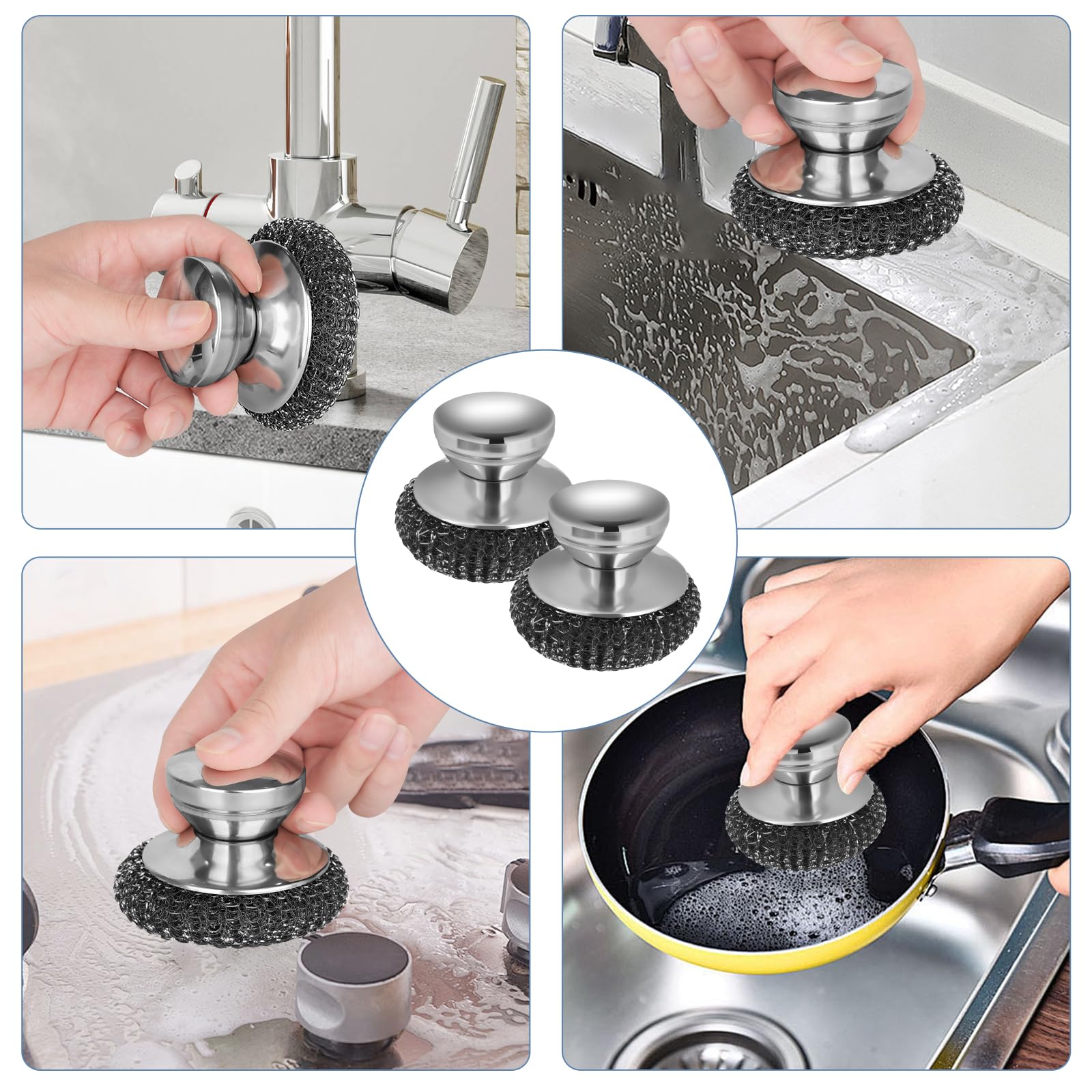
Prevention fixes the burning, but a good scrubber fixes the aftermath, and the wrong one either scratches your cookware or gives up on baked-on carbon. All three picks below clear a 4.3 owner rating and are built for scorched, welded-on messes rather than everyday rinsing. Reach for the Onewly steel wool set on cast iron and heavy scorch, the Wangjinpeng 3-layer wire cloths when you want a non-scratch option that rinses clean, and the Scotch-Brite stainless scrubbers for the toughest baked-on rings on stainless pots.

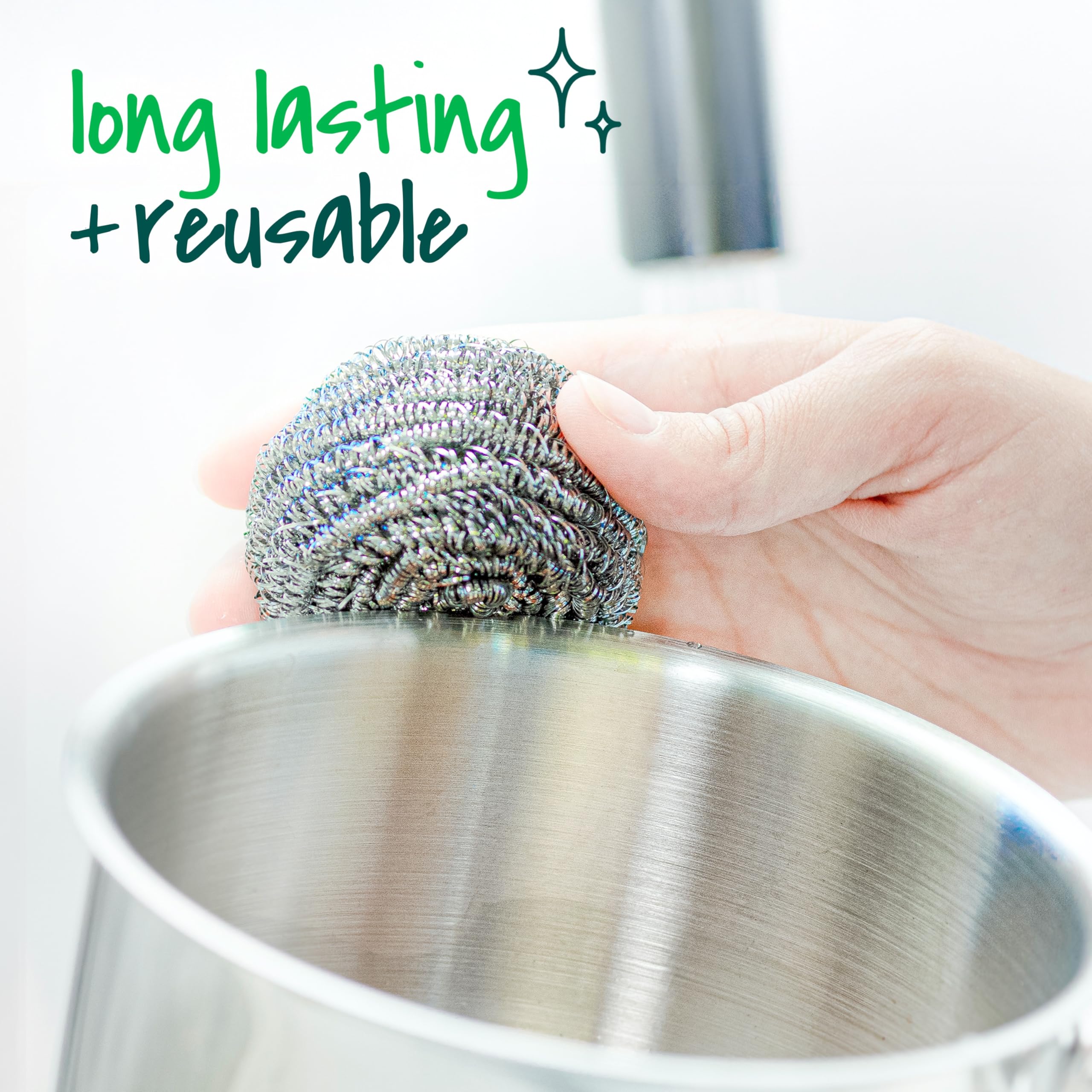
Wangjinpeng 12-Pack 3-Layer Non-Scratch Wire Dishcloths, Reusable Quick-Dry Metal Mesh Cleaning Rags 7.87 in
Pros
- Extremely affordable per cloth at roughly $0.42 each
- Non-scratch design safe for stainless steel, glass, and ceramic surfaces
- Quick-drying open mesh resists odor buildup between uses
- Flexible triple-layer construction conforms to curved pots and pans
- Generous 12-pack allows frequent rotation and replacement
Cons
- No verified customer reviews yet to confirm long-term durability claims
- May require a test spot on non-stick or delicate coated cookware
- Smaller 7.87-inch size may feel inadequate for large baking sheets or oversized pots
If your kitchen drawer is overflowing with worn-out sponges that smell after two days, these wire dishcloths offer a refreshing reset. The triple-layer mesh feels surprisingly flexible in hand while still providing enough texture to lift dried-on pasta sauce or baked-on grease from your favorite stainless steel pan.
What stands out is the quick-dry factor. Hang one on your faucet after dinner cleanup and it is noticeably drier than a traditional sponge within the hour, which means far less of that musty kitchen smell the next morning. The 12-pack also means you can toss a few in the camping bin, keep extras under the bathroom sink, or share with a roomate without running out.
If you want a reusable scrubbing cloth that dries fast and stays odor-free without spending more than a cup of coffee, this pack delivers.
Styles it works with: Modern Minimalist kitchens, Industrial loft spaces, Scandinavian-inspired utility areas, Farmhouse sink setups
Best placed in: Kitchen sink station hung on a hook, utility drawer near the stove top, RV or camper kitchenette
May not suit: Households that prefer color-coded cleaning systems (these come only in silver/grey), or kitchens where all cookware is delicate non-stick requiring ultra-soft cloths only
Buy it if:
- You are tired of replacing smelly sponges every week and want a reusable option
- You cook daily and need a scrubber that handles grease on stainless steel or ceramic without scratching
- You want a bulk supply for under $6 so you always have a fresh cloth ready
Consider waiting if:
- You want to see verified long-term durability reviews before committing (the listing currently has zero ratings)
Skip it if:
- All your cookware is non-stick or has delicate coatings that require microfiber-only contact
- You prefer larger cloths for wiping down big surfaces like countertops or baking sheets in one pass
Check the latest price and availability on Amazon before it sells out.
The Onewly 4-piece steel wool scrubber set, rated 4.4, has a stainless handle that keeps your fingers off the abrasive and gives you real grip on cast iron and thick carbon. The Wangjinpeng 12-pack of 3-layer non-scratch wire dishcloths, rated 4.3, is the reusable, quick-dry pick for people who don’t want to gouge a polished finish, and they handle both wet and dry messes. The Scotch-Brite stainless steel scrubbers round out the set as the specialist for cleaning tough, baked-on scorch that a nylon pad can’t budge, and Apartment Therapy has long favored stainless scrubbers for exactly this kind of stuck-on job.
Frequently Asked Questions
Does a burnt pot mean it’s ruined?
No. A scorch ring is surface carbon, not structural damage. The boil-and-baking-soda method lifts almost all of it, and even discoloration on stainless is cosmetic. Only deep pitting or a warped base that rocks on the burner signals a pot worth retiring.
Is it safe to use steel wool on my pots?
It depends on the finish. Steel wool and stainless scrubbers are fine on bare stainless steel and cast iron. Never use them on nonstick coatings, anodized aluminum, or enamel, because the abrasive strips the surface. For those, use the non-scratch wire cloths or a soft pad.
Why does my food burn even on low heat?
Almost always the base. A thin, single-ply pot creates hot spots directly over the burner, so food scorches in one zone even when the dial reads low. A tri-ply or clad base spreads heat evenly. Match the burner size to the pan and preheat for 90 seconds first.
Can baking soda damage the pot while I clean it?
No. Baking soda is a mild alkaline abrasive, gentle enough for stainless, cast iron, and most enamel. It lifts carbon without etching metal. Skip it only on raw aluminum, where prolonged contact can darken the surface.
How do I stop rice from burning at the bottom?
Yes, this is fixable with two changes. Use about a 2:1 water-to-rice ratio, and drop the heat to low with a tight lid once it reaches a boil. The trapped steam cooks the grain from the top down, so the bottom layer doesn’t dry out and scorch against the pan.
Bottom Line
Most burnt pots trace back to one thing: heat set higher than the food needs. Turn the dial down, stir on a schedule, and add a fat or liquid buffer, and roughly 80% of scorching stops. When it’s already burnt, boil water with baking soda first, then finish with a stainless scrubber while the pan is warm. If a pot burns in the identical spot no matter what you do, that’s a thin-base issue. Replace it. And if the base is warped or pitted, call it done.




Write Your Review
No reviews yet. Be the first to share your experience!