

> Editorial Note: I’m Olivia Bennett, a storage and organization contributor. I approach storage as a systems problem rather than a product one — fit to actual room dimensions, load ratings, and how the system holds up under daily use.
The single biggest mistake isn’t buying too many containers. It’s keeping lids and bases together as loose pairs, which turns every cabinet into an avalanche the moment you reach past the front row. Solve the lid chaos first and the rest of the system almost builds itself. If you’ve already sorted your closet with a best closet organizer system, added a best closet rod, mounted best floating shelves for living room, hung a best hanging closet organizer, or tucked a best shoe rack by the door, you know the pattern: containment beats capacity. The same rule that tames shoes and hangers tames Tupperware. Below is the four-step method I use, with the measurements that make it stick.
The Ground Rules Before You Start
Three non-negotiables. First, separate lids from bases and store them in different zones. Second, leave at least 2 inches of vertical clearance above your tallest nested stack so you can lift it out without tipping the shelf. Third, standardize on one lid system before you keep anything. Mixed brands mean mixed lid profiles, and no organizer solves a drawer full of orphans. Measure your deepest cabinet shelf first: most run 22 to 24 inches deep, which is one nested stack plus a lid file up front.
Step 1: Purge Down to Matched Sets Only
Pull everything out. Every base, every lid, onto the counter at once. This is the only way to see the true scale of the problem, and it’s usually worse than you think. The rule is simple: if a base has no lid, or a lid has no base, it leaves. No exceptions for the good ones you’re sure will turn up.
Group survivors by shape, then by size within shape. Round nests with round. Square with square. Rectangles get their own lane because they waste the least shelf space per cup of capacity. Apartment Therapy’s kitchen audits repeatedly find that households keep roughly twice the containers they use in a given month, so expect to cut deep here.
Aim to end with 8 to 12 working bases per person. That’s enough for a full week of leftovers plus one meal-prep day, with a couple in the wash. Anything past that number sits in the back collecting dust and stealing the clearance you measured in the ground rules. Bag the rejects and donate them the same day, before the second-guessing starts.
Step 2: Store Bases Nested, Lids Filed Upright
Nest bases like Russian dolls, largest on the bottom. A single nested column of 6 to 8 same-shape bases occupies about a 7-inch square footprint and stacks roughly 9 inches tall. That’s the whole point: bases are the space-cheap half of the pair, so let them share one column instead of sprawling.
Lids are the space-expensive half because they don’t nest. File them upright, like records, in a shallow bin 4 to 5 inches wide. A slotted lid organizer or even a repurposed magazine file works. Sort lids by size front to back so the one you need is a single motion away, never a dig.
Keep the two zones adjacent but distinct: bases on the shelf, the lid file directly beside or in front. The visual separation is what kills the avalanche for good. When a lid and base only meet at the moment you use them, nothing collapses in storage. This one move fixes about 80 percent of the daily frustration.
Step 3: Assign Zones by Frequency, Not by Size
Map your cabinet like a store maps aisles. Eye-level and the first 12 inches of any shelf are prime real estate, so they go to daily-use containers: your lunch-size bases and the lids that fit them. Reserve the low, deep, and high spots for the once-a-month gear.
Batch-cooking and freezer containers belong on a top shelf or the deepest back zone, since you touch them weekly at most. Specialty pieces, the cake keeper or the giant salad bowl, go highest of all. Keep at least 18 inches of shelf height where you park anything you have to reach up for, so a nested stack clears the shelf above without scraping.
Small single-serve jars are the exception. They’re easy to lose in a deep cabinet, so give them a shallow drawer or a front-of-shelf tray no deeper than 6 inches. OEKO-TEX and food-contact safety marks matter most on the pieces you use daily, so put your certified, best-condition containers in the prime zone and demote the scratched ones.
Step 4: Label the System So It Survives Other People
A system nobody else understands reverts to chaos within a week. Label the front edge of each zone: “daily,” “freezer,” “lids.” Painter’s tape and a marker are fine. The goal isn’t looks, it’s that a distracted teenager can reshelve a clean container in the right column without thinking.
For pantry dry-goods containers, label the contents and the fill date on the front face, not the lid, so you read it without lifting anything. A 1 by 3-inch label reads clearly from about 3 feet away. Wirecutter’s organizing guides note that visible, front-facing labels are the difference between a system that lasts a year and one that lasts a weekend.
Do a 5-minute reset every Sunday. Return strays to their column, re-nest anything that drifted, refile loose lids. That’s the maintenance cost of the whole system. Skip it for a month and you’ll be back on the counter doing Step 1 again.
The Right Products Make It Easier
I only kept picks that hit a 4.4-plus owner rating and use one consistent lid profile, because a matched system is the entire strategy. Start with the first pick if your problem is a cabinet full of orphaned lids. Jump to the second for grab-and-go single servings, and the third if you carry lunch and want something that survives a backpack.


Pros
- Generous 24-piece set covers a full pantry refresh without needing additional purchases
- Airtight seal backed by a 4.6-star rating keeps dry goods noticeably fresher
- Chalkboard labels and marker included out of the box, a detail many competing sets skip
- Stackable footprint makes them practical in small pantries, cabinets, or open shelving
Cons
- Plastic construction may show scratches over time compared to glass or stainless alternatives
- Lids are hand-wash recommended, which adds friction for households that run everything through the dishwasher
- Tall 2.8L containers may not fit on lower pantry shelves without rearranging existing items
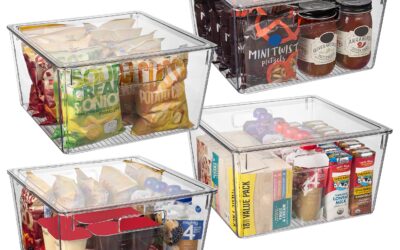
If your pantry currently looks like a mix of half-open bags, mismatched containers, and mystery boxes, the KICHLY 24-pack is the kind of single purchase that genuinely transforms the space. All 24 containers share the same design language, so the moment they are lined up on a shelf, the pantry goes from chaotic to calm. That visual consistency is exactly what home organizers chase, and you get it here without spending a fortune.
The four-size system is what makes this set feel thoughtfully designed rather than arbitrarily bundled. The tall 2.8L containers handle bulk items like cereal and pasta, the medium 1.6L works perfectly for rice or oats, and the small 0.8L is ideal for nuts, seeds, or baking add-ins. Every size has a real job to do. The included chalkboard labels are a small touch that pays off daily, especially in households where more than one person is cooking or packing lunches.
From a decor standpoint, clear containers on open shelving add an intentional, curated look that opaque or mismatched storage simply cannot match. They pair naturally with wood shelving, wire pantry organizers, and neutral kitchen palettes. If you want a pantry that looks organized and stays organized without buying a dozen separate products, this one delivers.
Styles it works with: Modern Farmhouse, Scandinavian Minimalist, Contemporary, and Clean Transitional kitchens where clear, uniform storage supports an uncluttered aesthetic.
Best placed in: Pantry shelves or cabinets for everyday dry goods, open kitchen shelving as a display-worthy storage solution, and countertop canisters for frequently used ingredients like flour, sugar, and coffee.
May not suit: Kitchens with very low cabinet shelves where the tall 2.8L containers may not fit upright; also less ideal for households preferring glass storage due to concerns about long-term plastic scratching or odor retention.
Buy it if:
- You are doing a full pantry overhaul and want one matching set that covers every container size in a single order
- You have open shelving or a visible pantry where consistent, clear storage makes a real visual difference
- You want airtight protection for dry goods like cereal, flour, and pasta without paying premium prices per container
Consider waiting if:
- You only need one or two specific sizes and do not have the pantry space to use all 24 containers
Skip it if:
- You specifically need dishwasher-safe lids, as hand-washing all 24 lids regularly may become a burden
- You prefer glass or stainless steel containers for long-term durability or aesthetic reasons
Check the latest price and availability on Amazon before it sells out.

HomArtist 6oz Glass Jars with Bamboo Lids 6-Pack | Airtight Meal Prep Containers for Overnight Oats & Yogurt
Pros
- Dual-seal bamboo lid with silicone ring creates a genuinely leak-proof closure that holds up during commutes and bag tossing
- Food-grade glass construction is free of BPA and lead, a meaningful upgrade over plastic meal prep containers
- Wide mouth opening makes these jars far easier to use daily than narrow-neck alternatives
- Versatile enough for food storage, pantry organization, and even light home decor or craft storage
Cons
- At 6oz, the capacity is small and may not satisfy larger appetites without packing two jars
- Bamboo lids require hand-washing to maintain longevity, which adds a small extra step compared to fully dishwasher-safe lids
- Glass construction adds weight compared to plastic alternatives, which matters if you carry multiple jars in a bag daily
There is something genuinely satisfying about opening your fridge to a neat row of glass jars with warm bamboo lids. The HomArtist 6oz jars manage to make meal prep feel less like a Sunday chore and more like a lifestyle choice you are proud of. The combination of clear glass and natural bamboo gives them a kitchen-editorial quality that plastic containers simply cannot match.
Beyond looks, these jars are built for real daily use. The silicone-ringed bamboo lid creates a seal tight enough to toss in a gym bag without a second thought. The wide mouth means you are not wrestling with a spoon at 7am, and the measurement markings inside the glass keep portion control honest without requiring extra tools. At 6oz, each jar is sized perfectly for one serving of overnight oats, yogurt, or chia pudding.
If you want organized, fresh, and fridge-ready meals that also look great on your kitchen counter without the bulk of larger containers, this one delivers.
Styles it works with: Modern Farmhouse, Scandinavian, Minimalist, Japandi
Best placed in: Open kitchen shelving, refrigerator door or middle shelf, pantry countertop display, home office desk for small supply storage
May not suit: Kitchens with a bold maximalist or industrial style where bamboo accents feel out of place, or households where all food storage is expected to go fully through the dishwasher since bamboo lids need hand-washing
Buy it if:
- You meal prep breakfast items like overnight oats, yogurt parfaits, or chia pudding multiple times a week and want containers that stay leak-free in a packed bag
- You prefer glass over plastic for food storage and want something that looks attractive enough to serve directly from the jar
- You are building a more organized, aesthetically cohesive kitchen and want storage that doubles as a counter or shelf display
Consider waiting if:
- You need larger portion sizes and are hoping a bigger version in the same style becomes available
Skip it if:
- You need fully dishwasher-safe lids from top to bottom since the bamboo lids require hand-washing
- You carry multiple jars daily and need lightweight containers since glass adds noticeable weight to a bag
Check the latest price and availability on Amazon before it sells out.

BLACK + BLUM Stainless Steel Lunch Bowl Set | Leakproof Microwavable Meal Prep Containers | 22oz Small Set of 3
Pros
- Premium 18/8 stainless steel construction feels solid without being heavy
- Truly leakproof lid with silicone ring and vacuum-seal lock, confirmed by users
- Fully dishwasher safe, oven safe (lid excluded), and microwave safe for maximum versatility
- Stackable rectangular form factor stores efficiently in bags and kitchen cabinets
Cons
- At $67.95 for a small 3-pack, the per-unit cost is high compared to plastic or glass alternatives
- Lid is not oven-safe, requiring a separate dish if you want to bake or broil
- Single-walled steel means food can cool faster than double-walled or insulated containers
The BLACK + BLUM Lunch Bowl Set stands out in a crowded meal prep market because it refuses to cut corners. The 18/8 stainless steel feels genuinely premium in hand, with smooth rounded edges that make cleaning effortless and a profile that looks intentional sitting on your kitchen counter or packed neatly in a tote bag.
What earns it a place in everyday routines is the vacuum-sealed lid system. Unlike flimsy snap-lock lids that loosen over time, this silicone-ring design creates a true airtight seal. You can toss it in your bag without a second thought, and your food arrives exactly as you packed it.
If you want leak-free, plastic-free meal prep that transitions seamlessly from your freezer to your office microwave without compromising on build quality, this one delivers.
Styles it works with: Minimalist, Scandinavian, Modern Industrial, Clean Contemporary
Best placed in: Kitchen open shelving as part of a styled prep station, office desk drawer for daily lunch storage, pantry cabinet for stacked weekly meal prep
May not suit: Kitchens with very limited cabinet depth due to the rectangular footprint of the set, or households looking for colorful or decorative storage that doubles as table decor
Buy it if:
- You meal prep weekly and want containers that handle freezer, microwave, and oven without juggling multiple dish types
- You are actively reducing single-use plastic in your kitchen and want a durable long-term replacement
- You commute or travel regularly and need a leakproof container you can trust in a bag without a zip-lock backup
Consider waiting if:
- You need a larger capacity than 22oz per container and would benefit more from the medium or mixed set sizes
Skip it if:
- Your budget is under $30 and you need a functional container rather than a premium one
- You primarily need containers for hot soups or liquids where insulation matters, as single-wall steel will not retain heat long
Check the latest price and availability on Amazon before it sells out.
KICHLY 24-Pack Airtight Storage Set (KICHLY Plastic Container Set)
This is the direct fix for Step 1’s orphan problem. At 4.6 stars, it’s the highest-rated pick here, and the reason is the shared lid geometry: the 24-pack ships as matched base-and-lid pairs across graduated sizes, so nesting bases and filing lids works exactly as described above. BPA-free and airtight, it’s built for the pantry-and-leftover zone that eats the most shelf space. Buy this if you’re rebuilding from scratch and want the whole system to standardize on one lid family. The graduated sizing means a single nested column covers snacks through full dinners without mixing shapes.
HomArtist 6oz Glass Jars, 6-Pack (HomArtist Bamboo-Lid Jars)
These solve the single-serve exception from Step 3. At 4.5 stars and just 6 ounces each, the glass jars are sized for overnight oats, dressings, and spice portions that vanish in a deep cabinet. The bamboo lids and measurement marks make them the front-of-shelf tray pick, not the deep-storage pick. Glass also sidesteps the staining and odor that plastic picks up from tomato-based leftovers. Keep these in the shallow 6-inch zone where you can see all six at once.

BLACK+BLUM Stainless Steel Lunch Bowl (BLACK+BLUM Meal Prep Bowl)
This is the take-it-with-you pick. At 4.4 stars, the stainless bowl is microwavable and built for commutes, picnics, and camping, so it lives in the daily-use prime zone by the door rather than the deep freezer shelf. Stainless won’t warp or stain the way thin plastic does after a year of reheating. It costs more per unit than the plastic set, so treat it as your one carry container rather than a full-cabinet solution. Pair it with the KICHLY set for home storage and you’ve covered both ends.
Frequently Asked Questions
What if my cabinet is too shallow to nest full stacks?
It depends on the depth, but under 12 inches you should switch from front-to-back nesting to a pull-out drawer or a tiered shelf riser. Shallow cabinets waste the back half unless you can slide the whole stack forward. A 10-inch riser doubles usable height and keeps the back row reachable.
What if my kitchen has zero cabinet space for containers?
Yes, this is common in small kitchens, and the answer is a single upright drawer plus a wall zone. File bases and lids vertically in one drawer, and move overflow to a shelf or over-the-door rack. Vertical filing fits about 40 percent more in the same footprint than flat stacking.
What if my drawers are too deep and containers just slump over?
No problem, deep drawers are actually ideal once you add dividers. Adjustable drawer dividers set at 4 to 5-inch intervals hold lids upright like files and stop the slump. Set the spacing to your most common lid width and the whole drawer stays sorted.
What if I share the kitchen and nobody follows the system?
Almost always a labeling gap, not a willpower gap. Front-facing labels on each zone let a roommate reshelve correctly without asking. Keep the categories to three or fewer, since a system with ten zones is the one people quietly abandon.
What if my containers are a mix of brands and none of them match?
It depends on how deep the mismatch runs, but the honest fix is to standardize on one system and retire the rest. Mixed brands mean mixed lid profiles, and no organizer rescues a drawer of orphans. Keep your best matched set, donate the strays, and rebuild from one lid family.
Bottom Line
Most container chaos traces to one thing: lids and bases stored as loose pairs. Separate them, nest the bases in one column, file the lids upright, and assign zones by how often you reach for each piece. The KICHLY 24-pack is the pick most people should start with, since a single matched lid family is what makes the whole system hold. If you mostly need grab-and-go portions, add the HomArtist glass jars instead. Run the 5-minute Sunday reset and it stays organized.
Write Your Review
No reviews yet. Be the first to share your experience!