

> Editorial Note: I’m Olivia Bennett, a storage and organization contributor. I approach storage as a systems problem rather than a product one — fit to actual room dimensions, load ratings, and how the system holds up under daily use.
The single biggest mistake people make with fresh herbs is treating them all the same. Basil rots in the fridge while parsley wilts on the counter, and the same plastic clamshell gets blamed for both. Herb storage isn’t one rule, it’s a system that sorts by plant type, moisture level, and how fast you’ll actually use the bunch. If you’ve ever thrown out slimy cilantro three days after buying it, the problem is placement, not the herb. The same organizing logic that makes a best closet organizer system work applies here: match the item to the right zone. Whether you’re planning a best closet rod layout, adding a best floating shelves for living room setup, sorting seasonal gear into a best hanging closet organizer, or lining up boots on a best shoe rack, you already know that things last longer when they have a defined home. Herbs are no different.
The Ground Rules Before You Start
Two non-negotiables. First, never store herbs wet. Surface water speeds rot, so pat every bunch bone-dry before it goes anywhere. Second, split your herbs into two camps: tender (basil, cilantro, parsley, mint, dill) and hardy (rosemary, thyme, sage, oregano). Tender herbs behave like cut flowers and want their stems in water. Hardy herbs want to stay dry and cold. Give each camp at least 2 inches of vertical clearance so leaves aren’t crushed against a shelf. Get those two things right and you’ve solved 80% of the spoilage problem.
Dried herbs play by opposite rules: no water, no fridge, just a cool drawer and an airtight seal. Storing spices and dried herbs long term covers the shelf-life numbers worth knowing, since dried basil and oregano fade in 1 to 2 years while whole spices hold for 3 to 4.
Step 1: Sort, Trim, and Dry Every Bunch First
Start at the sink, but keep it dry. Pull each bunch apart, discard any leaves that are already yellow or slimy, and trim about half an inch off the stem ends with a clean knife or scissors. That fresh cut lets tender herbs drink water again, the same way you’d re-cut flower stems.
Only wash herbs if they’re visibly gritty. If you do, spin them in a salad spinner and then lay them on a towel for 10 minutes until the leaves feel completely dry. Water clinging to leaf surfaces is the number-one cause of that slimy black film. Wirecutter’s kitchen research team makes the same point in their produce-storage coverage: dry storage beats damp storage every time.
Sort as you go. Tender bunches go in one pile, hardy sprigs in another. This 5-minute triage sets up every step that follows, and skipping it is why most “fresh” herbs die by day three.
Step 2: Water-Store Tender Herbs Like a Bouquet
Tender herbs live longest standing upright in about 1 inch of cool water. Grab a jar or glass tall enough that the leaves clear the rim by 2 to 3 inches, add water to cover just the stem tips, and set the bunch in like a small bouquet. Change the water every 2 to 3 days, or the moment it turns cloudy.
Parsley, cilantro, dill, and mint all thrive in the fridge this way, ideally in the door or a warmer zone around 38°F. Basil is the exception. It bruises and blackens below 40°F, so keep basil in water on the counter, out of direct sun. That’s the whole reason a mixed herb drawer fails: one basil bunch in a cold fridge takes the loss.
Loosely tent a plastic bag over the leaves if your fridge runs dry. Don’t seal it tight. Trapped condensation is just wet storage in disguise, and you already know how that ends.
Step 3: Wrap Hardy Herbs Dry and Cold
Rosemary, thyme, sage, and oregano want the opposite treatment. No water. These woody-stemmed herbs hold moisture in their leaves and rot fast if you stand them in a glass. Instead, roll them loosely in a barely-damp paper towel, then slide the bundle into a partially open zip bag or a vented container.
Store that bundle in the crisper drawer, where humidity sits higher and airflow is gentle. Give the roll about 4 inches of length so sprigs lie flat without folding. Hardy herbs treated this way routinely hold 2 to 3 weeks, versus 4 to 5 days loose in a clamshell.
Check the towel every few days. If it’s dried out completely, re-dampen it slightly. If it’s soggy, swap it. The target is a barely-there humidity, not a wet wrap. Apartment Therapy’s food editors flag the same balance point: too dry and the leaves crisp, too wet and they mold.
Step 4: Match Container Volume to How Fast You Cook
Right storage still fails if the container’s wrong for your habits. Size the vessel to your weekly use, not the bunch you happened to buy. A single-person household burning through one small bunch a week doesn’t need a 40-ounce keeper hogging a full shelf.
Look for food-safe, BPA-free plastic. Reputable herb keepers use materials that meet ASTM food-contact standards, which matters when leaves sit against the walls for two weeks. Aim for a container with a footprint under 5 by 5 inches so it fits a standard fridge shelf without blocking the row behind it.
The best keepers combine both storage modes: a water reservoir at the base for tender herbs and a raised platform or vented lid for hardy ones. That’s the design worth paying for. It replaces three mismatched jars with one system, and a system is always easier to keep up than a pile of workarounds.
The Right Products Make It Easier
The three keepers below all clear a 4.1 owner rating and are built around the water-reservoir principle from Step 2. If you mostly buy tender herbs and want a set-it-and-forget-it jar, start with the Cole & Mason. Tight on shelf space or storing single small bunches? Jump to the HVECT pods.


Pros
- Extends herb life noticeably compared to storing in bags or original packaging
- Flip and Slide lid provides quick single-hand access without disturbing other herbs
- Water level window makes it simple to keep herbs properly hydrated
- Removable dividers add flexibility for storing different herb types or small vegetables
- Sturdy acrylic construction looks clean and is easy to hand wash
Cons
- Capacity is limited and may not hold large bunches of herbs like full basil plants
- Dividers create small compartments that work best for trimed herbs rather than long stems
- Requires periodic water refills to maintain freshness, adding a minor upkep step
If you cook with fresh herbs regularly, you know the frustration of pulling a sad, wilted bunch of cilantro from the fridge three days after buying it. The Cole & Mason Herb Keeper solves that problem with a thoughtful design that actually works. The water reservoir at the base keeps stems hydrated, while the air vents in the lid maintain the right balance of airflow and moisture.
What sets this apart fromossing herbs in a glass of water is the organization factor. The removable dividers let you keep parsley, cilantro, and dill separated and easy to identify through the clear acrylic walls. It looks tidy on a fridge shelf and keeps your crisper drawer free for produce.
If you want fresh herbs that last through the week without the waste or fridge clutter, this one delivers.
Styles it works with: Modern Minimalist, Scandinavian, Contemporary, Clean Farmhouse
Best placed in: Refrigerator door shelf, main fridge shelf, kitchen countertop for daily-use herbs
May not suit: Households that only occasionally use fresh herbs or kitchens with very compact refrigerators where shelf space is at a premium
Buy it if:
- You buy fresh herbs weekly and regularly throw away unused portions that wilted too fast
- You want an organized fridge where herbs are visible and easy to grab while cooking
- You grow small amounts of herbs and need a storage solution between harvest and use
Consider waiting if:
- You mostly cook with dried spices and only buy fresh herbs a few times a year
Skip it if:
- You need storage for large herb bunches or full plants with long stems that will not fit the compartments
- You prefer a zero-maintenance solution and do not want to monitor or refill water levels
Check the latest price and availability on Amazon before it sells out.

OXO Good Grips Produce Saver Herb Keeper - Fresh Storage Container for Refrigerator with Ventilated Basket
Pros
- Dramatically extends herb freshness compared to plastic bags or loose storage
- Hinged lid allows one-handed access during meal prep
- Slim footprint fits neatly on fridge doors where bulkier containers cannot
- Doubles as storage for asparagus, celery, and spring onions
- Trusted OXO build quality with BPA-free materials
Cons
- Only accommodates a moderate bunch of herbs, so bulk buyers may need two
- Taller design may not fit on every refrigerator shelf without adjusting shelf height
- Does not include a measurement guide for water beyond the single fill line
Fresh herbs can transform a meal, but keeping them alive in the fridge has always been a losing battle. The OXO Herb Keeper solves this with a simple water reservoir and ventilated basket that actually work. You fill to the line, drop in your parsley or cilantro, and it stays perky for well over a week instead of turning into sad green mush in a plastic bag.
What sets this apart from generic herb containers is the thoughtful design: the hinged lid flips open easily when your hands are full, the basket lifts out and hooks on the rim so you can grab what you need without dripping everywhere, and the narrow shape tucks into a fridge door like it was made for it. It looks clean and intentional next to other OXO containers.
If you want fresh herbs on demand without the waste of throwing away wilted bunches every week, this one delivers.
Styles it works with: Modern Minimalist, Scandinavian, Clean Contemporary, Organized Farmhouse
Best placed in: Refrigerator door shelf, upper fridge shelf beside produce drawers, kitchen counter for temporary herb prep staging
May not suit: Compact mini-fridges with limited vertical clearance, households that rarely cook with fresh herbs and would not use it frequently enough to justify the shelf space
Buy it if:
- You buy fresh herbs weekly and regularly throw away half-wilted bunches
- You want a tidy, modular fridge organization system that looks intentional
- You cook frequently and need quick one-handed access to herbs during prep
Consider waiting if:
- You want to bundle it with other OXO Produce Savers for a coordinated set and are watching for a multi-pack deal
Skip it if:
- You only use dried herbs or grow them fresh on a windowsill and rarely refrigerate them
- Your fridge shelves have less than 8 inches of vertical clearance and cannot be adjusted
Check the latest price and availability on Amazon before it sells out.

HVECT Herb Saver Pod 3-Pack for Refrigerator - Keeps Cilantro, Parsley & Mint Fresh Up to 3 Weeks
Pros
- Keeps herbs noticeably fresher compared to storing loose in the fridge
- Clear design makes it easy to monitor water level and herb condition
- Durable hard shell prevents crushing in a crowded refrigerator
- Fits standard fridge door compartments without taking up shelf space
- Simple fill-and-store design requires no special setup
Cons
- Requires water changes every 3 to 5 days or herbs will degrade
- Only stems should be submerged, so overfilling can cause wilting rather than prevent it
- May be too tall for compact mini-fridges or shorter door shelves
If you cook with fresh herbs regularly, you know the frustration of buying a bunch of cilantro on Monday only to find it slimy by Wednesday. The HVECT Herb Saver Pod solves that problem with a dead-simple approach: stand your herbs upright in a bit of water, seal them in a protective shell, and let the fridge do the rest. It is the kind of practical kitchen upgrade that quietly improves your week.
The clear lid is a small but meaningful detail. You can glance at your herbs without pulling anything out, and the ventilated design keeps air circulating so leaves stay crisp rather than sweating inside a sealed bag. The hard outer shell also means your delicate basil or dill won't get flattened behind the milk carton.
If you want fresh herbs available any night of the week without the waste or repeated grocery runs, this one delivers.
Styles it works with: Modern Kitchen, Minimalist, Scandinavian, Clean-Line Contemporary
Best placed in: Refrigerator door shelf, main fridge shelf beside condiments, meal-prep station area
May not suit: Compact mini-fridges with short door bins, or households that rarely cook with fresh herbs and would not use them often enough to justify the fridge space
Buy it if:
- You regularly throw away wilted herbs before using the whole bunch
- You meal prep and want fresh garnishes available throughout the week
- You need a simple, fridge-friendly storage solution that fits in the door
Consider waiting if:
- You want a single-unit option rather than committing to a 3-pack
Skip it if:
- You only use dried herbs and rarely buy fresh bunches
- Your refrigerator has unusually short door compartments under 7 inches tall
Check the latest price and availability on Amazon before it sells out.
Cole & Mason Fresh Herb Keeper (Cole & Mason)
This acrylic container is the closest thing to the water-bouquet method in a sealed package, which is why it’s the best fit for the tender-herb problem from Step 2. A base reservoir holds about an inch of water, and the tall clear body gives cilantro, parsley, and mint the 2 to 3 inches of leaf clearance they need. The 4.4 rating reflects owners who report parsley staying crisp past two weeks. The trade-off is footprint: it’s the largest of the three, so measure your shelf first if space is tight.
OXO Good Grips Produce Saver Herb Keeper (OXO)
OXO’s version, also rated 4.4, adds a raised colander platform above the water line. That detail solves the Step 3 problem too. Hardy sprigs sit on the platform, out of the water, while tender stems reach down through it. It’s the most versatile pick for a mixed household that buys both basil and rosemary in the same trip. Owners praise the sturdy latch and dishwasher-safe build. The lid clearance runs a touch short for very tall bunches, so trim long stems before loading.
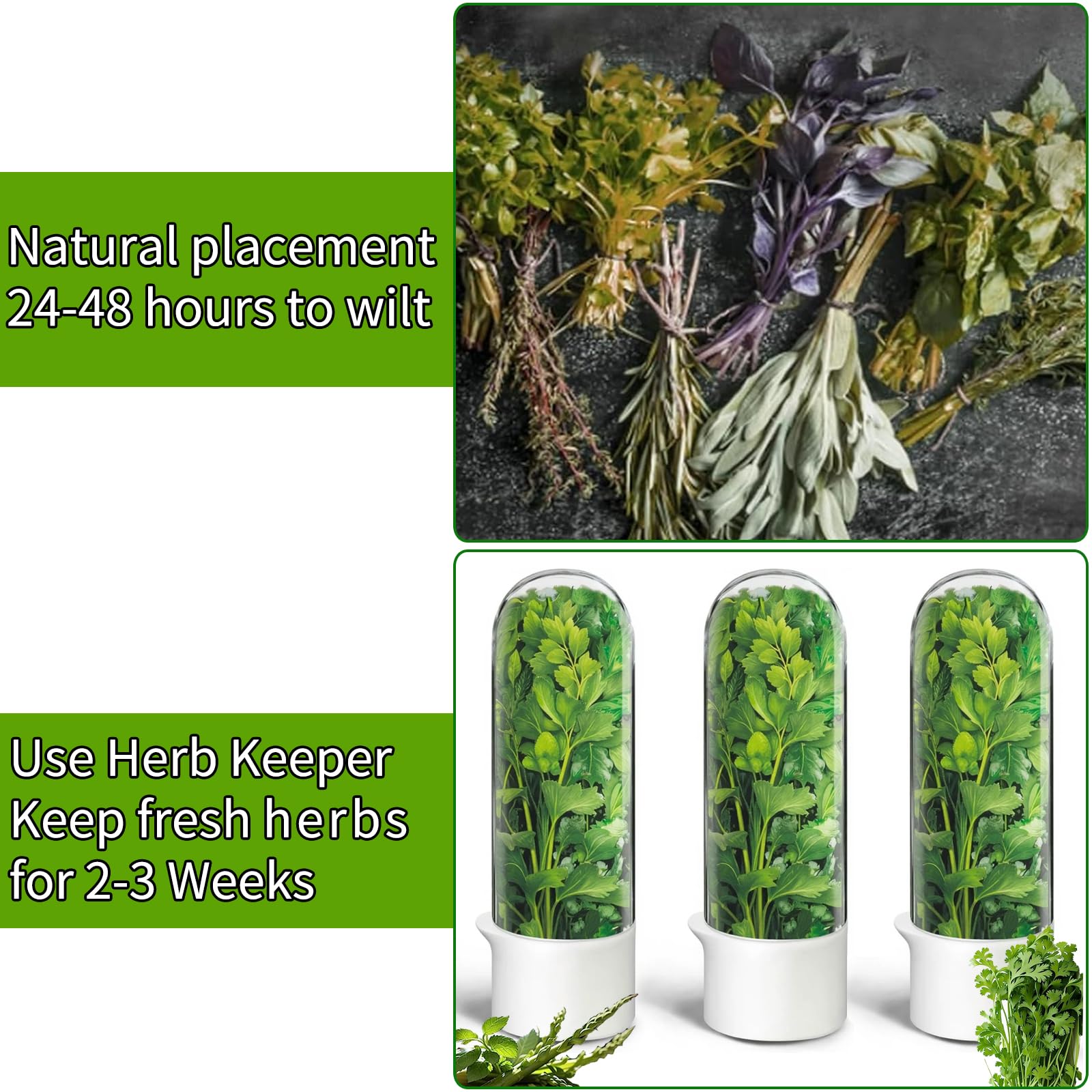
HVECT Herb Saver Pods (HVECT)
The HVECT pods take a different tack, giving each herb its own small chamber. At a 4.1 rating, it’s the space-saver of the group. If you store single small bunches of cilantro or parsley and cook for one or two, these pods fit a crowded door shelf where the larger keepers won’t. The compartment design keeps flavors from mingling. Just know the smaller reservoirs mean checking and refilling water a bit more often than the taller Cole & Mason.
Frequently Asked Questions
What if my fridge is too cold and keeps freezing my herbs?
It depends on the zone. Most fridges run coldest at the back of the bottom shelf, near 34°F, which is why tender herbs freeze there. Move water-stored jars to the door or a middle shelf around 38°F, and keep basil out of the fridge entirely since it bruises below 40°F.
What if my kitchen counter gets direct afternoon sun?
No, that won’t work for most herbs. Direct sun cooks basil and speeds wilting on any counter-stored bunch. Set the jar at least 3 feet from a south-facing window, or shift it to an interior counter. If sun is unavoidable, tent the leaves loosely with a bag to cut the heat.
What if my fridge shelf is too short for a tall herb keeper?
Almost always solvable by trimming. Cut the stems down so the total bunch height clears your shelf gap, usually 6 to 8 inches on a standard fridge. If that still won’t fit, the compartment-style pods sit lower than upright jars and slot into a door bin where tall keepers can’t.
What if my herbs came pre-washed in a plastic clamshell?
Yes, re-store them anyway. Clamshells trap condensation and speed spoilage within days. Pat the leaves dry, then move tender herbs to a water jar and roll hardy ones in a barely-damp towel. That 5-minute swap easily doubles their life.
What if my apartment kitchen has almost no fridge space?
It depends on which herbs you buy. Tender herbs on a sunny-free counter free up cold storage entirely. For the fridge, a single compact pod system under 5 by 5 inches fits a door shelf and consolidates loose bunches into one footprint, the same square-inch logic that makes small-space organizing work anywhere.
Bottom Line
Sort first, dry always, then split your herbs into two camps: tender in water, hardy in a barely-damp wrap. That single habit fixes most spoilage without any gadget at all. If you want the process handled for you, the OXO keeper is the most versatile pick because its raised platform stores both types at once. Buy the container sized to how fast you actually cook, not the bunch you grabbed. Match the herb to the right zone and a $4 bunch lasts two weeks instead of three days.







Write Your Review
No reviews yet. Be the first to share your experience!