

> Editorial Note: I’m Sofia Reyes, a bathroom and wellness editor focused on small-bath organization and materials that hold up to real humidity. The evaluations here reference OEKO-TEX certifications, ASTM moisture-resistance standards, and aggregated owner reviews.
The most common mistake isn’t reaching for vinegar. It’s leaving a delicate finish soaking overnight when 30 minutes would’ve done the job without stripping the coating. White vinegar dissolves the calcium and magnesium scale clogging your nozzles, but the metal or plastic underneath sets the rules for how long you can let it sit. For more bathroom-adjacent projects around the house, our team also covers best gallery wall frames, best console table for entryway, best large floor mirror, best wall mirror for living room, and best table lamp for living room. This guide sticks to the showerhead — the exact soak times, the finishes that fight back, and the method that clears clogged holes on the first pass.
Does Vinegar Actually Clean a Showerhead, or Is It a Myth?
Yes. And it’s not a soft “yes.” Distilled white vinegar sits at about 5% acetic acid, and that acid reacts with the calcium carbonate and magnesium deposits that hard water leaves behind. Those minerals are what block your spray holes and turn a strong stream into a weak, splitting dribble. The acid breaks the scale down into water-soluble compounds you can rinse away.
Here’s the catch. Vinegar works on mineral scale, not on mold or biofilm. If your showerhead has slimy pink or black buildup, that’s bacteria and it needs a different approach. For the white, crusty, chalk-like deposits ringing each nozzle, vinegar is the right tool.
Hard water is the reason this keeps happening. Water above 7 grains per gallon of hardness leaves visible scale within weeks, and most US homes fall between 3 and 12 grains. The harder your water, the faster the nozzles clog. That’s why a showerhead you cleaned three months ago already sprays sideways again.
One quality note. Cheap “cleaning vinegar” runs 6% acidity, which is stronger and fine for stubborn scale, but skip it on plated finishes. Standard 5% white vinegar handles almost every case and costs a couple of dollars a gallon.
How Long Should You Soak a Showerhead in Vinegar?
It depends on the buildup and the finish, but here’s the working range. For light scale you notice every few months, 30 to 60 minutes clears it. For heavy, years-deep crust that’s been ignored, go up to a few hours. Rarely do you need a full overnight soak, and on many finishes you shouldn’t risk it.
The safest method skips detaching anything. Fill a sturdy plastic or silicone bag with enough white vinegar to submerge the face of the showerhead, then secure it around the neck with a rubber band or a zip tie. Roughly 2 cups covers a standard fixed head. Let it hang and soak. Simple.
Watch the clock by finish. Chrome and stainless steel tolerate a 2-hour soak without complaint. Plated brass, nickel, oil-rubbed bronze, and any matte or colored coating should cap out around 30 minutes, because prolonged acid contact can dull or lift the plating. Plastic heads are the most forgiving and can soak longer.
If the scale’s severe, warming the vinegar helps. Heat a cup to just warm, not boiling, and the reaction speeds up noticeably. After soaking, run hot water through the head for 30 seconds to flush loosened debris, then scrub any holes that are still blocked.
Which Finishes Can Handle Vinegar and Which Ones Can’t?
This is where people wreck a nice fixture. Not every finish is acid-safe, and vinegar doesn’t care how much you paid.
Safe for longer soaks: solid chrome, stainless steel, and plastic or ABS heads. These shrug off diluted acetic acid. A 2-hour soak won’t touch them, and you can repeat it monthly without damage. Chrome is the workhorse here, which is why it’s the most common bathroom finish.
Handle with care, short soaks only: nickel, brushed nickel, oil-rubbed bronze, matte black, gold, and any powder-coated or colored finish. Cap these at 30 minutes and rinse thoroughly. Acid can etch the topcoat, leave cloudy patches, or strip color over time. Wipe them dry after, since standing moisture on coated metal accelerates wear the same way ASTM moisture-resistance evaluations flag for exposed hardware.
Skip vinegar entirely: unlacquered brass and certain specialty living finishes meant to patina. Acid will react unpredictably and can leave permanent marks.
Not sure what you’ve got? Do a spot check. Dab vinegar on a hidden underside spot, wait 5 minutes, wipe, and look for dulling. If the finish holds, you’re clear. If it clouds, switch to a plain warm-water soak with a soft brush instead. When you’re dealing with fabric shower components nearby — a liner or curtain — look for OEKO-TEX certified materials, which are evaluated for skin-safe, chemical-limited construction and hold up better to repeat humidity cycles.
What’s the Step-by-Step Method That Actually Works?
Start with the bag method, because it beats unscrewing anything. Detaching a head means wrenches, plumber’s tape, and the risk of cracking a fitting. The bag skips all of it.
Step one. Fill a bag with white vinegar, enough to cover the nozzle face. Step two. Slip it over the showerhead and cinch it at the neck with a rubber band or zip tie so the face stays submerged. Step three. Wait — 30 minutes for coated finishes, up to 2 hours for chrome or plastic. Step four. Remove the bag, then run the shower on hot for 30 to 60 seconds to blast out loosened scale.
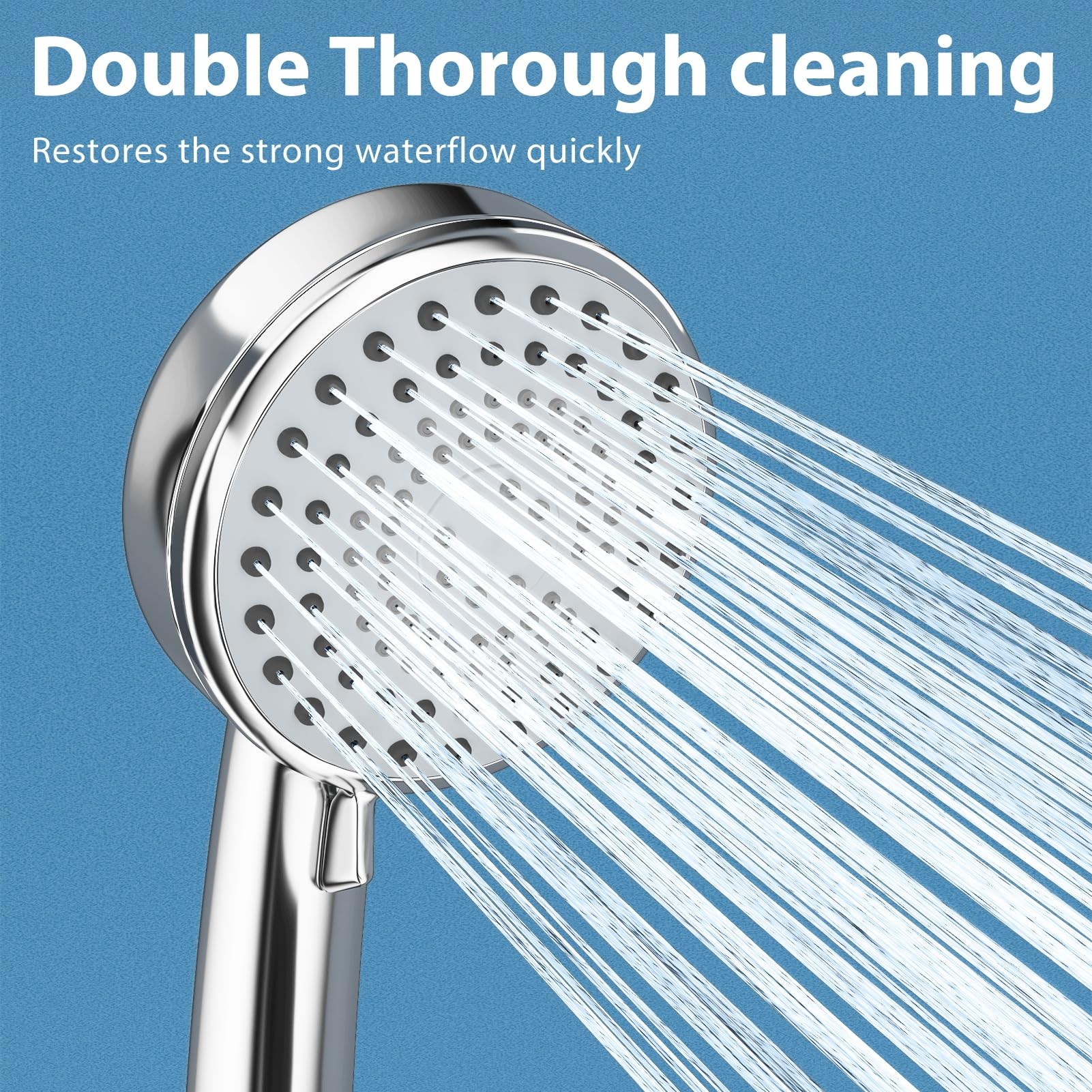
Now the part most people skip. Individual nozzles often stay clogged even after a good soak, and that’s what keeps the spray weak. Take a cleaning pick or a stiff nylon brush and work each hole. On rubber-tipped heads, you can rub the nozzles with your thumb and the softened deposits pop right off. On metal nozzles, a fine pick clears them fast.
Finish by wiping the face dry and buffing the finish. For a deep clean once or twice a year, detach the head and soak the whole thing in a bowl, then scrub the internal screen where sediment collects. A tiny amount of effort. Big difference in pressure.
Helpful Picks
These three earn a spot for the two jobs vinegar can’t finish alone: dissolving the heaviest rust-and-lime crust, and physically clearing clogged nozzle holes. Start with the CLR remover for severe buildup, then reach for a pick set to finish the small holes.


Pros
- Highly effective on hard water stains that other cleaners cannot touch
- Versatile use across bathroom, kitchen, and laundry appliances
- Ready-to-use spray format requires no mixing or dilution
- Plant-based formula with no dyes for a cleaner ingredient profile
- Exceptional value at under $6 for a 22 oz bottle
Cons
- Strong chemical smell requires good ventilation during use
- Not safe for use on natural stone, marble, or unsealed grout
- May require a second application on very heavy long-term buildup
If your bathroom fixtures have that chalky white crust or your showerhead has slowed to a trickle, CLR is the one product that actually fixes it. It cuts through calcium and lime deposits that sit stubbornly through regular cleaning, and it does it fast enough that you can see results while you wait.
What makes it a staple in the cleaning cabinet is its range. One bottle handles the showerhead, the faucet, the toilet bowl ring, the dishwasher interior, and the washing machine drum. That kind of utility at under $6 is hard to argue with, and with 3,500-plus reviews averaging 4.5 stars, the results speak for themselves.
If you want gleaming fixtures and scale-free appliances without spending an afternoon scrubbing, this one delivers.
Styles it works with: Any home style benefits from clean fixtures; particularly useful in Modern, Minimalist, Farmhouse, and Transitional interiors where hardware finishes like chrome and stainless steel are visible design elements.
Best used in: Master bathroom and guest bath faucets and showerheads, kitchen sink and dishwasher, laundry room washing machine drum, humidifiers and small appliances.
May not suit: Homes with natural stone tile or marble countertops where the formula cannot be used safely; households that prefer fragrance-based cleaners may want the scented variant instead.
Buy it if:
- You have hard water and notice white or orange buildup on faucets, showerheads, or toilet bowls
- Your showerhead flow has weakened due to mineral deposits blocking the nozzles
- You want a single product that handles bathroom, kitchen, and appliance cleaning in one pass
Consider waiting if:
- You prefer a fragrance-free and dye-free version, which CLR sells separately as CLR Free & Clear
Skip it if:
- Your home has marble, travertine, or other natural stone surfaces where acid-based cleaners cause permanent damage
- You only need a light everyday surface cleaner with no hard water or rust staining to address
Check the latest price and availability on Amazon before it sells out.

Lumkew 20-Piece Shower Head Cleaner Tool Kit - Multiple Size Picks & Nylon Brushes for Unclogging Nozzles
Pros
- Multiple sizes eliminate compatibility concerns with different shower heads
- Stainless steel picks resist bending and deformation over repeated use
- Nylon brush bristles are flexible enough to clear deposits without scratching
- Each tool is individually packaged with a protective cap for hygiene
- Affordable price for a full20-piece maintenance kit
Cons
- No customer reviews yet to confirm long-term durability claims
- Limited to unclogging tasks only, does not address limescale prevention
- Orange color may not appeal to buyers who prefer neutral bathroom accessories
If your shower has started spraying in odd directions or losing pressure, the culprit is almost always mineral buildup in those tiny nozzle holes. This Lumkew kit gives you 10 stainless steel picks in graduated sizes plus10 nylon brushes, so you have the right tool for every hole diameter without forcing or scratching.
The individually capped design is a thoughtful touch. Each brush stays clean in its own protective sleeve, and the compact box fits in a bathroom drawer or under the sink. It is the kind of low-cost maintenance kit that quietly keeps your shower performing like new.
If you want restored water pressure without replacing your entire shower head, this kit delivers.
Styles it works with: Any bathroom style since these are maintenance tools stored out of sight
Best placed in: Bathroom vanity drawer, under-sink cady, or utility closet near cleaning supplies
May not suit: Buyers looking for a decorative bathroom accessory or those who prefer a single all-in-one cleaning solution rather than individual picks
Buy it if:
- Your shower head sprays unevenly or has visibly clogged nozzle holes
- You live in a hard water area and need a weekly maintenance routine
- You also want to clean3D printer nozzles, spray bottle tips, or other small openings
Consider waiting if:
- You want to see verified customer reviews before purchasing a newer listing
Skip it if:
- Your shower head has a rubber self-cleaning nozzle design that only needs a finger wipe
- You need a chemical descaling solution rather than a mechanical unclogging tool
Check the latest price and availability on Amazon before it sells out.

Lumkew Multi-Size Shower Head Cleaner Tool Kit with Brushes, Unclog Picks & Storage Boxes for Bathroom
Pros
- Includes both picks and brushes for a complete two-step cleaning process
- Multiple diameters (0.015 to 0.098 inch) accommodate most standard shower heads
- Individual storage boxes keep sets separated and organized
- Generous quantity of10 picks and 20 brushes for long-term use
- Portable keychain design makes picks easy to store and access
Cons
- No customer reviews yet to confirm long-term durability of bristles
- Picks may be too thin for heavily calcified buildup requiring chemical treatment first
- Limited to shower heads only, not versatile for other household cleaning tasks
There is nothing worse than stepping into the shower and getting an uneven, weak trickle instead of a refreshing stream. This Lumkew cleaning kit tackles that frustration at the source with a thoughtful two-step system: thin picks dislodge mineral deposits from each nozzle hole, then spiral nylon brushes sweep out the loosened grime. It is the kind of small maintenance tool that makes your daily routine feel noticeably better.
The color-coded organization is a nice touch for multi-bathroom homes. Each set gets its own compact box, so you can stash one under each sink without mixing them up. The keychain-style picks are easy to grab when you notice a clogged nozzle mid-shower.
If you want consistently strong water pressure without replacing your shower head or using harsh chemical cleaners, this kit delivers.
Styles it works with: Any bathroom style since the tool is stored out of sight. Works well in minimalist bathrooms where a clean, functional shower head matters most.
Best placed in: Under the bathroom sink, inside a vanity drawer, or hung on a small hook inside a linen closet
May not suit: Households with only rainfall shower heads with very large or irregularly shaped nozzles that exceed the 0.098-inch brush diameter
Buy it if:
- Your shower head has noticeably uneven or weak water flow from mineral buildup
- You have multiple bathrooms and want a dedicated cleaning set for each
- You prefer mechanical cleaning over chemical descaling solutions
Consider waiting if:
- You want to see verified customer reviews before purchasing a newer listing
- You are unsure whether your specific shower head nozzle size falls within the supported range
Skip it if:
- Your shower head has heavy limescite buildup that likely requires soaking in vinegar first
- You need a single all-purpose bathroom cleaning tool rather than a specialized nozzle kit
Check the latest price and availability on Amazon before it sells out.
The CLR Lime & Rust Remover (rated 4.5) is the heavy hitter when vinegar alone won’t budge years of scale plus rust staining — a 22-ounce spray that dissolves calcium and lime fast, though you’ll want to confirm your finish is acid-safe first. The Lumkew multi-size cleaning tool (rated 4.3) covers the second half of the job with picks sized for small nozzle holes, which is exactly where clogs hide. The second Lumkew set adds storage boxes to keep the picks organized between cleanings, useful if you clean on a schedule rather than waiting for the pressure to drop.
Frequently Asked Questions
Can I leave vinegar on a showerhead overnight?
It depends on the finish. Chrome, stainless, and plastic can handle a long soak without harm. But coated finishes like matte black, nickel, or bronze can dull or lose color after prolonged acid contact, so cap those at 30 minutes. When in doubt, shorter is safer.
Does white vinegar work better than cleaning vinegar?
No, but the difference is small. Standard white vinegar at 5% acidity clears almost all scale. Cleaning vinegar at 6% is slightly stronger for stubborn crust, yet it’s harsher on plated finishes. For most showerheads, plain 5% white vinegar is the smarter pick.
Will vinegar remove mold from my showerhead?
Almost never fully. Vinegar targets mineral scale, not mold or biofilm. If you see pink or black slime, that’s bacterial and needs a dedicated cleaner or a diluted bleach solution. Vinegar can help on light surface mildew, but it won’t reliably kill established growth.
How often should I clean my showerhead with vinegar?
It depends on your water hardness. Homes with hard water above 7 grains per gallon may need a monthly soak. Softer-water homes can stretch to every three or four months. If your spray splits or weakens, that’s your cue regardless of the calendar.
Do I need to remove the showerhead to clean it?
No. The bag method lets you soak the head in place with about 2 cups of vinegar cinched around the neck. Detaching it is only worth doing once or twice a year for a deep clean of the internal screen where sediment collects.
Can vinegar damage the rubber nozzles?
No. Diluted white vinegar is gentle on the soft rubber or silicone tips found on most modern heads. In fact those nozzles clean easiest — after soaking, you rub them with a thumb and the softened deposits flake right off. No pick needed.
What if the vinegar soak didn’t fix the low pressure?
It depends on where the clog is. If nozzles are still blocked, clear each hole with a pick or brush. If pressure’s still weak after that, sediment may be trapped in the internal screen or the pipe, which means detaching the head and flushing the filter behind it.






Write Your Review
No reviews yet. Be the first to share your experience!