

> Editorial Note: I’m Olivia Bennett, a storage and organization contributor. I approach storage as a systems problem rather than a product one — fit to actual room dimensions, load ratings, and how the system holds up under daily use.
The mistake almost everyone makes is treating a chest freezer like a bottomless pit: open the lid, drop the groceries in, close it. Six months later the oldest food is buried under 30 pounds of frozen chaos, freezer-burned and forgotten. A chest freezer isn’t a hole in the floor. It’s a vertical filing system that happens to be cold, and once you organize it like one, you stop losing food and stop paying to freeze things you’ll never eat. The same layering logic that makes a best closet organizer system work, or the way a best closet rod separates what you reach for daily from what you don’t, applies here. It’s the reasoning behind best floating shelves for living room, a best hanging closet organizer, and even a best shoe rack: divide the space into zones, keep the frequent stuff reachable, and give every item a home. Here’s how to do it in four steps.
The Ground Rules Before You Start
Two non-negotiables before you touch a single bag. First, keep your freezer at 0°F (-18°C) or colder — that’s the ASTM-referenced threshold where ice crystals stay small and food quality holds. Second, leave at least 1 inch of air gap between bins and the freezer walls so cold air can circulate; packing bins wall-to-wall creates warm pockets. Measure your interior depth before buying anything. Most chest freezers run 26 to 34 inches deep, which is deeper than your arm is long.
Step 1: Empty It and Map Your Zones
Start with an empty freezer and a plan, not a pile. Pull everything out onto a towel, toss anything freezer-burned or past a year old, and give the interior a quick wipe while it’s clear. This is the only time you’ll see the true dimensions, so use it.
Now map zones by depth. A chest freezer has two working layers: the deep floor (things you touch monthly, like a bulk meat haul or a Thanksgiving turkey) and the top layer where the removable hanging basket usually sits (weeknight items you grab daily). Assign categories to each zone before anything goes back in. Proteins on one side, vegetables and fruit on another, prepared meals and bread up top.
Sketch it on paper if you have to. A typical 7-cubic-foot chest freezer gives you roughly a 22-by-30-inch floor, enough for three or four bin columns side by side. Apartment Therapy’s organizing guides make the same point about any deep storage: the container plan comes before the containers. Decide the map first. Everything else follows.
Step 2: Contain Everything in Vertical Bins
Loose bags are the enemy of a chest freezer. They slump, slide, and swallow small items. The fix is vertical bins that turn one deep cavity into several liftable columns, so you can pull out an entire category to reach the bottom instead of excavating by hand.
Choose bins sized to your floor. If your interior floor is 30 inches wide, three 9- to 10-inch-wide bins fit with breathing room. Look for handles — you’ll be lifting these out repeatedly, and a bin without a grip is a bin you’ll never move. Foldable or stackable designs matter too, because a chest freezer’s usable height is often only 24 to 32 inches.
Group by category, not by meal. All ground beef in one bin, all frozen vegetables in another, all bread and dough up top. Label the short end of each bin that faces up, not the long side you can’t see from above. A grease pencil or freezer tape works; it survives the cold where sticky labels peel. Wirecutter’s storage reviewers consistently favor handled, semi-rigid bins over flimsy fabric ones for exactly this reason: they hold shape at 0°F.
Step 3: Load by Rotation, Newest at the Bottom
Here’s the counterintuitive part. In a chest freezer you load newest food at the bottom of each bin and oldest on top, the reverse of a pantry. Why? Because you reach down into the bin from above, so the top is the easy-access layer. Put what needs eating first where your hand lands first.
Freeze items flat before they go in. A quart bag of soup frozen flat is about 1 inch thick and stacks like a book; frozen upright it’s a lumpy brick that wastes space. Flat-frozen bags standing on edge in a bin let you flip through them like files, reading each label in seconds. That single habit can add 20 to 30 percent more usable capacity to the same freezer.
Date everything with month and year. A frozen item at 0°F is safe indefinitely, but quality drops after 3 to 12 months depending on the food — ground meat around 3 months, whole cuts up to a year. Rotation only works if you can read the date without unpacking the bin.
Step 4: Keep a Lid Inventory and a Buffer Zone
The last step is what keeps the system alive past week two. Tape a simple inventory list to the underside of the lid or the wall beside the freezer, and update it with a marker every time something goes in or out. Columns for item, date, and a tally you cross off. This one sheet ends the “dig to check what we have” ritual for good.
Leave one bin as a floating buffer for overflow and odd-shaped items — the bag of ice, the half-used tub, the thing that fits no category. Cap total load at about 75 percent of the freezer’s rated cubic footage so air still moves; a stuffed freezer runs warmer and works harder. Do a 5-minute reset once a month: pull the top layer, check the inventory against reality, move anything aging up to eye level. That’s the whole maintenance routine.
The Right Products Make It Easier
The system lives or dies on the bins, so I only look at handled, stackable containers that hold their shape in sub-zero temperatures and fit a standard 26- to 34-inch chest floor. All three below clear that bar. Start with the first pick if you want deep bins built specifically for chest-freezer depth; jump to the second for smaller fridge-and-freezer cubes; choose the third if you need extra-large clear bins you can read through.


Pros
- Straight-sided walls make full use of freezer depth with no wasted angular space
- Foldable handles allow both compact stacking and easy one-handed retrieval
- Anti-rust metal construction is built to last in cold, humid freezer conditions
- Open frame lets you identify contents at a glance without lifting every bin
- Highly rated by nearly 800 buyers, with consistent praise for sturdiness and fit
Cons
- Dimensions are fixed at 15.1 x 8 x 6.5 inches, so buyers with non-standard freezer sizes need to measure carefully before purchasing
- Sold in black only at this size tier, which may not suit buyers who prefer white or light-colored storage
- Only suitable for larger freezers without built-in compartments, not compact or apartment-sized units
If your chest freezer has turned into a mystery pile of foil-wrapped packages and forgotten ice cream, these bins are exactly the reset you need. The straight-sided metal construction is what sets them apart from cheaper plastic alternatives. Where angled bins waste the corners of your freezer, these sit flush and use every inch of available space, so you actually get four usable sections instead of four awkward troughs.
The foldable handle system is genuinely clever. Fold them inward and the bins stack cleanly. Flip them up and you can lift an entire category of food out in one move, whether that is all your chicken, all your fish, or everything destined for next week's meal prep. The open wire frame means cold air keeps moving around your food, and you can see what is inside without shuffling anything around.
If you want a chest freezer that actually works for you instead of against you, without spending a lot or committing to a major appliance upgrade, this one delivers.
Styles it works with: Functional Modern, Minimalist, Farmhouse Kitchen, Utility-Forward Organized Home
Best placed in: Garage or basement chest freezer, kitchen utility area, laundry room deep freezer, standalone meal-prep station
May not suit: Compact or dorm-style freezers with built-in wire shelving, or freezers under 5 cu.ft where these bins would be too large to sit side by side
Buy it if:
- You own a 5 to 7 cu.ft chest freezer and regularly lose track of what is buried at the bottom
- You meal prep in bulk and need a clear system to separate proteins, vegetables, and ready-made portions
- You want a durable, rust-resistant solution that will hold up through years of daily freezer use without warping or corroding
Consider waiting if:
- You are still deciding on freezer size and want to confirm exact internal dimensions before committing to this bin size
Skip it if:
- Your freezer has built-in dividers or is smaller than 5 cu.ft, as these bins are sized for open-cavity deep freezers only
- You need white or light-colored bins to match an existing kitchen or pantry storage system at this size
Check the latest price and availability on Amazon before it sells out.

Heyuzb 8-Pack Clear Stackable Freezer Organizer Bins with Handles |4 Sizes for Fridge, Pantry, Under Sink, Kitchen Cabinet
Pros
- Four-size variety pack offers genuine flexibility for different storage needs in a single purchase
- Extra-thick 5mm edges and increased material weight make these noticeably sturdier than typical budget organizer bins
- XL bins sized at 13.5 x 7.5 x 5.5 inches are deep enough to handle chest freezer organization where standard bins fall short
- Side handles on larger bins are a practical detail that makes daily use and repositioning much easier
- Fully transparent design works in any kitchen or pantry aesthetic without clashing with existing decor
Cons
- Not dishwasher safe, which adds minor inconvenience for buyers who prefer low-effort cleaning routines
- No lids included on any of the 8 bins, which limits their usefulness for storing loose or small items that could spill
- The size assortment is fixed, so buyers who need a specific quantity of one size will need to purchase additional sets
If your freezer or pantry has turned into a black hole where things go in and never come back out, the Heyuzb 8-Pack is the kind of straightforward fix that actually works. The set covers four bin sizes in a single purchase, which means you are not stacking identical containers and wasting space. The XL bins are genuinely large, deep enough for a chest freezer, and the built-in handles make grabing a fully loaded bin feel effortless rather than frustrating.
What sets these apart from cheaper alternatives is the build quality. The 5mm edge thickness and increased material weight are noticeable when you pick these up. They feel like something that will last through years of freezer use rather than cracking after one hard winter. The clarity of the PETG plastic is also better than most in this price range, making it easy to read labels or spot items at a glance without pulling everything out.
They also cross over into pantry, under-sink, and cabinet use surprisingly well, giving them a versatility that justifies the price across more than one room. If you want a deep-freeze-ready organizer set that also cleans up your pantry shelves without buying two separate products, this one delivers.
Styles it works with: Modern Minimalist, Scandinavian, Contemporary, Modern Farmhouse
Best placed in: Chest freezer or upright freezer shelves, pantry cabinet shelves, under-sink cabinet in the kitchen or bathroom
May not suit: Very small refrigerators or compact dorm-style fridges where the XL bins may be too wide fit properly; households looking for a fully matching aesthetic set with lids included for open-shelf display storage
Buy it if:
- You have a chest freezer or deep upright freezer and need large, sturdy bins that can handle the depth and cold without cracking
- You want one purchase that solves organization in multiple spots, including the fridge, pantry, and under the kitchen sink
- You are frustrated by flimsy organizer bins that crack, bow, or lose their shape after a few months of use
Consider waiting if:
- You need bins with lids for storing loose small items or need a color other than clear to match a specific pantry aesthetic
Skip it if:
- You have a compact or mini refrigerator where the XL bin dimensions (13.5 x 7.5 inches) will not fit your shelves
- You rely on dishwasher cleaning for all kitchen storage items and hand-washing is not a realistic option for your routine
Check the latest price and availability on Amazon before it sells out.

Sorbus Clear Storage Bins 4 Pack Extra Large 13.75x9.75x8.75 BPA-Free Stackable Organizer with Handles
Pros
- Generous dimensions hold bulky items most standard bins cannot fit
- Crystal-clear plastic eliminates the need for labeling
- Handles are cut into the bin walls so they never break off
- No assembly required and bins nest inside each other for compact shipping
- Rounded corners protect shelf surfaces and prevent snagging
Cons
- No lids included, so contents are exposed to dust in open areas
- At $59.99 for four bins the per-unit cost is higher than comparable options from budget brands
- Zero customer reviews at launch makes long-term durability unproven
These Sorbus bins solve the biggest frustration with home organization: you buy storage containers, shove things inside, and then forget what is in each one. The crystal-clear walls eliminate that problem entirely. You can scan a full pantry shelf or closet in seconds without pulling a single bin out.
The extra-deep profile is what sets this pack apart from the dozens of similar clear bins on Amazon. At nearly 9 inches tall, they swallow up tall cereal boxes, large bags of flour, or stacks of folded towels that would spill over shorter containers. The cut-out handles feel sturdy and stay comfortable even when a bin is loaded to its22 lb limit.
If you want deep, romy bins that let you see everything without labels or lids getting in the way, this set delivers.
Styles it works with: Minimalist, Modern Farmhouse, Scandinavian, Contemporary
Best placed in: Deep pantry shelves, linen closets, laundry room wire shelving, garage utilityracks
May not suit: Shallow cabinets under 10 inches deep, open decorative shelving in living areas where a more polished look is preferred, or households that need lids to keep pets or toddlers out of contents
Buy it if:
- Your pantry or closet shelves are deep and you need bins tall enough for bulky items
- You hate labeling and want instant visibility into every container
- You value BPA-free, food-safe materials for storing dry goods or snacks
Consider waiting if:
- You want to see real customer durability feedback since this product is very new with limited reviews
Skip it if:
- You need lids to keep dust, pets, or children out of stored items
- Your shelves are shallower than 14 inches, as these bins will stick out
Check the latest price and availability on Amazon before it sells out.
MSERCUOR Deep Chest Freezer Organizer Bins, 4-Pack (MSERCUOR)
This is the pick that solves Step 2 for a chest freezer specifically. The bins are cut tall and deep to match the 24- to 32-inch cavity, and the foldable build means you can collapse spares when you don’t need all four. Handles on the short ends make lifting a full column out one-handed genuinely doable, which is the make-or-break feature for reaching the floor. At a 4.7 owner rating, buyers repeatedly note they keep their rigidity at 0°F instead of sagging like fabric totes. Get this set if your freezer floor is the standard 22 to 30 inches wide and you want columns you can pull like drawers.
HEYUZB Stackable Freezer Organizer Bins, 8-Pack (HEYUZB)
The Heyuzb set answers Step 1’s zoning problem when your categories are small. Eight smaller stackable bins with side handles let you split proteins, veg, dairy, and prepared meals into distinct cubes instead of two oversized ones. They stack cleanly, so they suit the top hanging-basket layer and upright freezers as well as a chest. Also rated 4.7, the appeal is granularity: more, smaller containers mean tighter rotation and less digging. Reach for these if you freeze in small portions or want to divide the daily-access top layer into four or more labeled zones.
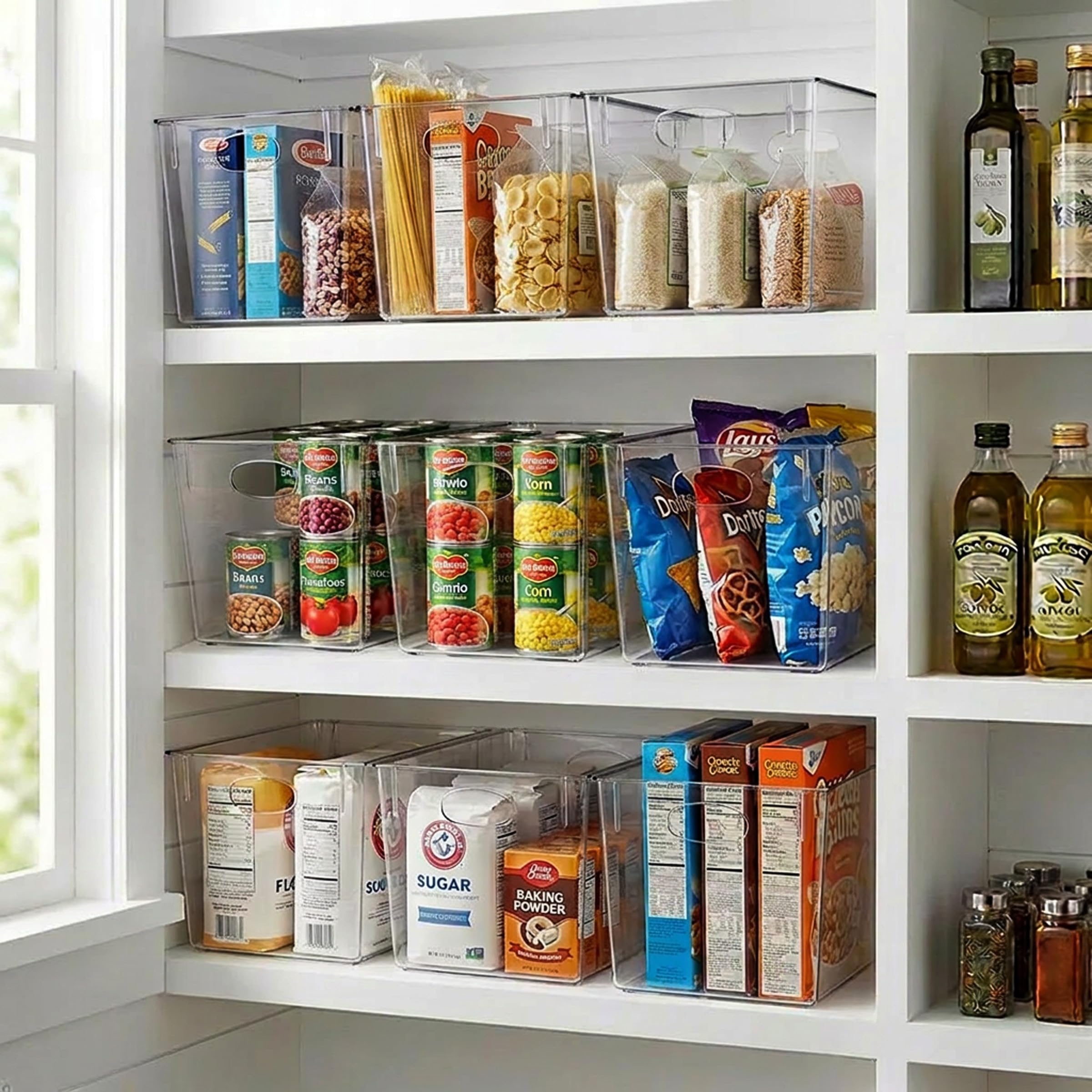
Sorbus Extra-Large Clear Storage Bins, 4-Pack (Sorbus)
The Sorbus bins handle the buffer-zone job from Step 4 and anything oversized. They’re BPA-free and fully clear, so you read the contents from above without lifting the lid label — useful for the overflow bin where items don’t share a category. Extra-large capacity swallows a bulk warehouse haul or a spatchcocked turkey that no standard cube will hold. They’re a general storage bin rather than a freezer-specific one, so confirm your interior depth before buying. Pick these when you need a see-through catch-all or a single large column for bulk proteins.
Frequently Asked Questions
What if my chest freezer is tiny — like 5 cubic feet or less?
It depends on the floor width, but small freezers actually benefit most from bins. A 5-cubic-foot model usually gives you an 18- to 20-inch floor, enough for two narrow 8-inch bins side by side. Skip the third column and use the top hanging basket as your daily-access zone. Smaller space means stricter rotation, so the lid inventory matters even more here.
What if my freezer is a huge 15-cubic-foot chest and my arm can’t reach the bottom?
Almost every large chest freezer has this problem, and bins with handles are the answer. At 34 inches deep, no one’s arm reaches the floor comfortably. Load the deep floor with liftable columns you pull out entirely, and reserve that bottom zone for monthly-access bulk you’re not digging through weekly. The hanging basket stays for daily grabs.
What if my freezer has no removable hanging basket?
No problem — build your own top layer. Stack a row of shallow bins across the top of your deep bins to create the daily-access zone the factory basket would have provided. Just keep total height under the lid’s closing clearance, usually leaving 1 to 2 inches of gap so the seal isn’t strained.
What if my bins keep sliding around when I open the lid?
Yes, this happens with lightweight bins in a wide freezer. Pack them snug enough that they brace each other, but keep that 1-inch wall gap for airflow. Filling each bin to roughly 80 percent adds enough weight to stop the slide. Fabric bins slide worst; semi-rigid handled bins hold position better.
What if my kitchen is too cramped to empty the freezer for the initial reset?
It depends on your counter space, but you can work in halves. Move one side’s contents into a cooler with ice packs, organize that half, then swap. A full chest freezer holds cold for a couple of hours with the lid down, so even a two-stage reset in a small kitchen won’t risk thawing if you work quickly.
Bottom Line
Organize a chest freezer like a vertical filing cabinet, not a pit: zone by depth, contain everything in handled bins, load newest at the bottom so the oldest food sits where your hand lands first, and keep a lid inventory you actually update. Start with deep, handled bins sized to your floor width — that single change fixes 80 percent of the chaos. If your portions run small, more compact bins beat a few large ones. Hold total load near 75 percent so the cold keeps moving.






Write Your Review
No reviews yet. Be the first to share your experience!