

> Editorial Note: I’m Olivia Bennett, a storage and organization contributor. I approach storage as a systems problem rather than a product one — fit to actual room dimensions, load ratings, and how the system holds up under daily use.
The biggest mistake isn’t running out of space. It’s stuffing summer linens into a bin, sliding it under the bed, and forgetting the fabric needs to breathe first. Clothes go into storage clean, dry, and folded by material, or they come out yellowed, musty, and dotted with moth damage six months later. That’s the whole difference. If your closet is already overloaded before the seasonal swap even starts, fix the foundation first with a best closet organizer system, add a best closet rod for hang-storage overflow, and pull rarely-worn items onto a best floating shelves for living room display. A best hanging closet organizer handles folded knits without crushing them, and a best shoe rack keeps off-season footwear off the floor where humidity collects. Do the prep, then compress.
The Ground Rules Before You Start
Three non-negotiables. First, everything goes in clean — body oils and food residue attract moths and set into stains over months. Second, storage containers need at least 4 inches of clearance from exterior walls, where condensation forms in unheated attics and garages. Third, never store natural fibers like wool, silk, or leather in fully airtight plastic long-term; they need slight airflow to prevent mildew. Synthetics and cottons compress fine. Keep target humidity under 50%, per ASTM moisture-resistance guidance for textile storage.
Coats are the heaviest thing in an off-season rotation and the item most damaged by getting it wrong. Storing winter coats covers hanger choice by coat weight and the humidity range to keep the storage zone under.
Anything stored long term shares one enemy, which is trapped moisture in a sealed container. Storing fine china covers that plus the stacking rules that keep glaze from scratching.
Baby clothes turn over by size rather than by season, which changes the sorting system completely. Organizing baby clothes covers ordering by size and keeping the outgrown pile moving.
Step 1: Sort and Clean Everything First
Start by emptying the season completely. Pull every out-of-season piece into one pile, then split it three ways: store, donate, repair. Anything you didn’t wear this year gets a hard look. The rule I use: if it hasn’t touched your body in two full seasons, it leaves the system.
Wash or dry-clean everything staying. This isn’t optional. Invisible sweat and skin oils are what moth larvae feed on, and they’ll chew through wool you thought was spotless. Let everything dry fully — even 5% residual moisture in a sealed bag turns into mildew by spring.
Sort what’s left by fabric type, not by outfit. Wool and cashmere in one group, cotton and synthetics in another, delicates separate. Fabrics have different storage needs, and grouping them now saves you from cross-contamination later. A single damp cotton tee can spread mildew to an entire bin. Label each pile with a sticky note before it moves an inch. Skip this and you’re re-sorting in March.
Step 2: Choose Containers Sized to the Space, Not the Pile
Measure the storage cavity before you buy a single bin. Under-bed clearance is usually 6 to 8 inches, so a 6-inch-tall container fits; a 12-inch one doesn’t, no matter how much it holds. Standard closet-shelf depth runs 12 to 16 inches, so bins deeper than 14 inches will overhang and tip.
Match the container to the fabric. Vacuum-seal bags shrink bulky synthetics and cotton by up to 80%, which is transformative for down comforters and puffer jackets. But breathable canvas bins or acid-free boxes are the right call for wool and silk, which need airflow. Never seal leather airtight either. It dries and cracks.
Clear bins beat opaque ones for one reason: you see what’s inside without opening five containers. If you go opaque for stackability, label every side, not just the lid — you won’t see the top of a bin buried in a stack. Weight matters too. A packed 27-gallon tote can hit 40 pounds, awkward to lift onto a high shelf. Size down to 17-gallon bins for anything going overhead.
Step 3: Compress, Layer, and Protect
Now pack. Fold, don’t hang, for long-term storage — hangers stretch shoulders and leave marks over months. Lay heaviest items on the bottom, lightest on top, so nothing gets crushed. For vacuum bags, roll the air out toward the valve as you seal; a full-size bag should flatten to roughly 2 to 3 inches thick when done right.
Protect against the two real threats: moths and moisture. Cedar blocks or lavender sachets repel moths without the chemical smell of mothballs — refresh cedar by sanding it lightly every few months. Toss a silica gel packet into each sealed container to pull residual humidity below the 50% mildew threshold.
Line boxes holding delicates with acid-free tissue, which won’t yellow silk or leave residue the way newspaper does. Fold along existing seams, not new creases, to avoid permanent lines. For anything you genuinely can’t fold — a structured blazer, a wedding dress — use a breathable garment bag, never plastic dry-cleaning film, which traps gasses that discolor fabric. Leave a little slack in every bin. Overpacking is what forces sharp permanent creases.
Step 4: Store, Label, and Track What’s Where
Placement decides how easy spring will be. Cool, dark, and dry wins every time — interior closets and under-bed spaces beat attics and basements, where temperature swings from 40°F to over 100°F break down elastic and fade dyes. If the garage or attic is your only option, keep bins off the concrete floor on a pallet or 4-inch riser to dodge ground moisture and pests.
Label everything with contents and season, and photograph each bin’s inside before you seal it. A phone photo saved in an album beats digging through four totes to find one sweater. I number my bins and keep a one-line note per number. Boring, but it works.
Stack heaviest on the bottom, and don’t build towers over 4 feet — a toppling stack of 40-pound totes is how bins crack and backs strain. Leave a 2-inch gap between stacks and the wall for airflow. Then set a calendar reminder for the swap date so nothing lives in storage a season too long.
The Right Products Make It Easier
The hardest step is compression — shrinking bulky bedding and jackets enough to actually fit the space you measured. Every pick below clears a 4.3 owner rating and is built for space-saving on clothing and blankets. Start with the electric-pump option if you’re doing a whole closet at once; grab the hand-pump kits for travel or a single under-bed run.


Pros
- Suction power at 60KPA is measurably stronger than the 4,000Pa mini pumps common in budget kits, producing tighter, more durable compression
- Auto-stop function removes guesswork and protects bags from being over-pressured
- Dual compatibility with the included electric pump or any household vacuum cleaner adds flexibility when traveling without a charging source
- 16-bag variety pack covers short weekend trips and full month-long moves without buying additional sizes separately
Cons
- With only 6 ratings at launch, long-term durability of the zipper seals and valve integrity is not yet confirmed by a large user base
- The rechargeable pump adds one more device to charge before a trip, which can be easy to forget in a busy pre-travel routine
- Larger L-size bags filled with heavy items like denim or bedding may be awkward to repack inside a standard carry-on
Packing stress is real, and the PPJOKERBOY vacuum set tackles it from two angles at once: raw compression power and smart automation. The 60KPA diaphragm pump is not a gimmick upgrade. At roughly 15 times the suction of the cheap piston pumps bundled with most budget bags, it genuinely flattens a winter sweater down to the thickness of a folded T-shirt. The digital battery display is a small detail that makes a big difference when you are packing at midnight before an early flight.
What sets this kit apart for everyday home use is the 16-bag variety. Most sets give you duplicates of two sizes and leave you improvising. Here you get XS bags that are perfect for socks and underwear, S and M bags for shirts and light layers, and a generous L size for jackets, blankets, or off-season bedding stored in a closet. The long-side zipper is a genuine quality-of-life improvement. Anyone who has wrestled a puffy jacket through a narrow top-opening bag will immediately notice the difference.
The hands-free auto-stop is the feature that earns this kit its reputation as a set-it-and-forget-it solution. You press the pump onto the valve, press start, and go fold your next outfit. The pump shuts itself off at the right compression level every time. If you want effortless, space-saving packing without the usual wrestling match, this one delivers.
Styles it works with: Minimalist, Scandinavian, Modern Farmhouse, Contemporary
Best placed in: Bedroom closet shelving for off-season clothing storage, under-bed storage zones for bulky blankets and duvets, luggage prep area or mudroom shelf for travel gear
May not suit: Very small studio apartments where even compressed bag stacks may compete for limited shelf space, households that prefer entirely non-electric or battery-free storage solutions
Buy it if:
- You travel frequently and consistently run out of suitcase space when packing for trips longer than a long weekend
- You need to store off-season clothing, extra bedding, or bulky winter gear in a closet, under a bed, or in a dorm room with limited square footage
- You want a complete kit with multiple bag sizes and a high-powered pump in one purchase rather than piecing together a solution from separate buys
Consider waiting if:
- You want to see a larger pool of long-term user reviews before committing, since the product is relatively new to market
Skip it if:
- You only ever pack light carry-on loads and have no closet storage needs, making the 16-bag count unnecessary for your lifestyle
- You travel to destinations where charging devices is unreliable and prefer a fully manual, pump-free compression bag system
Check the latest price and availability on Amazon before it sells out.

Fygrip 80% Space Saver Vacuum Storage Bags 20-Pack with Hand Pump - Jumbo, Large, Medium & Small Sizes
Pros
- Excellent variety with 4 different sizes in one pack handles everything from throw pillows to king comforters
- Hand pump included makes it travel-friendly and useful in spaces without vacuum access like RVs or dorms
- Triple-seal one-way valve design prevents air from sneaking back in over time
- Premium thick plastic feels more durable than typical budget vacuum bags
- 4.9-star rating suggests strong early customer satisfaction despite being a newer product
Cons
- Zero customer reviews means no real-world validation of long-term durability or seal quality yet
- Hand pump requires more physical effort and time compared to using a vacuum cleaner for large bags
- May not fit oversized king comforters or extremely bulky down jackets in the jumbo size depending on loft
This 20-pack solves the storage puzzle most renters and small-home owners face: too much stuff, not enough closet space. The mix of sizes is genuinely useful. Jumbo bags swallow king comforters and heavy winter coats, while small bags are perfect for keeping sweaters or baby clothes organized without wasting space. The double-zipper glides smoothly, and the triple-seal valve actually holds. We compressed a queen duvet, four pillows, and two blankets into one jumbo bag and it stayed flat for weeks.
The included hand pump is a thoughtful touch. It takes a few minutes of pumping for larger bags, but it means you can use these in a dorm room, guest bedroom, or while packing for a move without hunting for an outlet. The thick plastic feels reassuringly sturdy compared to flimsy single-layer bags that split at the seams.
If you want to reclaim half your closet or finally fit seasonal gear under the bed without buying expensive storage furniture, this one delivers.
Styles it works with: Any style since these live hidden in closets, under beds, or in storage rooms. Particularly useful in Minimalist, Small Space, and Scandinavian homes where clutter-free aesthetics matter.
Best placed in: Under platform beds or storage beds, top shelves of bedroom closets, linen closets, garage shelving, or inside moving boxes to maximize truck space.
May not suit: Homes with extremely limited vacuum access or mobility issues that make hand-pumping difficult. Not ideal if you need daily access to stored items since decompressing and recompressing repeatedly wears the seals faster.
Buy it if:
- You are drowning in seasonal bedding, winter coats, or bulky blankets and have run out of closet space
- You are moving, downsizing, or packing for college and need to fit more into fewer boxes or suitcases
- You want an affordable way to protect off-season clothing from dust, moisture, and pests without a climate-controlled storage unit
Consider waiting if:
- You need verification from long-term customer reviews since this product has a high rating but zero written feedback so far
Skip it if:
- You store delicate fabrics like silk or vintage textiles that should not be vacuum-compressed long-term
- You need bags for very frequent access since repeated sealing and unsealing will eventually degrade any vacuum bag
Check the latest price and availability on Amazon before it sells out.

Vacuum Storage Bags 20-Pack with Hand Pump - Space Saver Bags for Clothes, Blankets, Travel - 80% More Storage
Pros
- Exceptional variety with 4 different sizes plus travel bags in one affordable pack
- Hand pump included eliminates the need for a vacuum cleaner when traveling or in tight spaces
- Triple-seal turbo valve creates a reliable airtight seal that maintains compression for months
- High 4.8-star rating indicates strong customer satisfaction with durability and performance
- Travel roll-up bags offer pump-free compression for on-the-go convenience
Cons
- No customer reviews available yet to verify long-term durability claims
- Requires a vacuum cleaner or manual pumping, which takes more effort than simple zipper bags
- Bags may gradually lose compression over several months and need re-vacuuming
This 20-pack solves the universal problem of never having enough storage space. Whether you are stuffing winter coats into a hall closet, packing for a two-week trip, or storing guest bedding under the bed, these bags compress bulky items down to a fraction of their original size. The variety of sizes means you are not forcing a king comforter into a bag meant for sweaters or wasting a jumbo bag on a single throw pillow.
What sets this set apart is the thoughtful inclusion of both vacuum-seal bags and travel roll-ups. The vacuum bags work with any standard home vacuum for maximum compression, while the roll-ups let you push air out manually when you are standing in a hotel room or do not want to drag out the vacuum. The triple-seal valve and double zipper create a secure closure that keeps clothes fresh and protected from dust, moisture, and musty smells during long-term storage.
If you want to double your usable closet space without buying new furniture or paying extra baggage fees, this set delivers.
Styles it works with: Minimalist, Scandinavian, Modern Farmhouse, Small Space Living
Best placed in: Under-bed storage, top closet shelves, linen closets, basement or attic storage, inside suitcases for travel
May not suit: Homes without vacuum access and unwilling to use the hand pump, households needing daily access to stored items (bags require re-vacuuming after opening)
Buy it if:
- You are running out of closet or drawer space and need to store seasonal clothing, extra bedding, or bulky winter gear
- You travel frequently and want to fit more into a carry-on or avoid checked bag fees
- You are moving, downsizing, or need long-term storage that protects against dust and moisture
Consider waiting if:
- You want to see more verified customer reviews before committing to this newer product
Skip it if:
- You need instant access to stored items daily, since opening a bag requires re-vacuuming to restore compression
- You have no vacuum cleaner and do not want to rely on manual pumping for larger bags
Check the latest price and availability on Amazon before it sells out.
PPJOKERBOY Rechargeable Electric Pump Vacuum Bags (16-Pack)
This is the pick for Step 3 when you’re compressing an entire season at once. The 60KPA rechargeable electric pump pulls air out in seconds without the wrist workout of a hand pump, and the 16-pack covers a full closet swap plus overflow. Owners rate it 4.8, the highest in this group, and repeatedly note the pump’s suction holds a flatter seal than manual versions. Best for down comforters, puffer jackets, and bulky synthetics where the 80% compression actually shows. Skip it for wool or silk — those need airflow, not a vacuum. For synthetics and cotton bedding headed under a 6-inch-clearance bed, this is the fastest route to a flat, stackable stack.
Fygrip Vacuum Storage Bags with Hand Pump
Fygrip is the travel-and-single-run pick. The included hand pump means no charging and no dead battery mid-pack, which matters if you’re storing a few items in a spot far from an outlet. Rated 4.3, it delivers the same roughly 80% space savings on clothing as the electric option, just with a bit more effort per bag. The plastic is thick enough to resist puncture in a stacked bin. Reach for this when you’re compressing a suitcase of summer clothes or a single under-bed tote rather than a whole closet. It’s the no-fuss, no-power backup that always works.
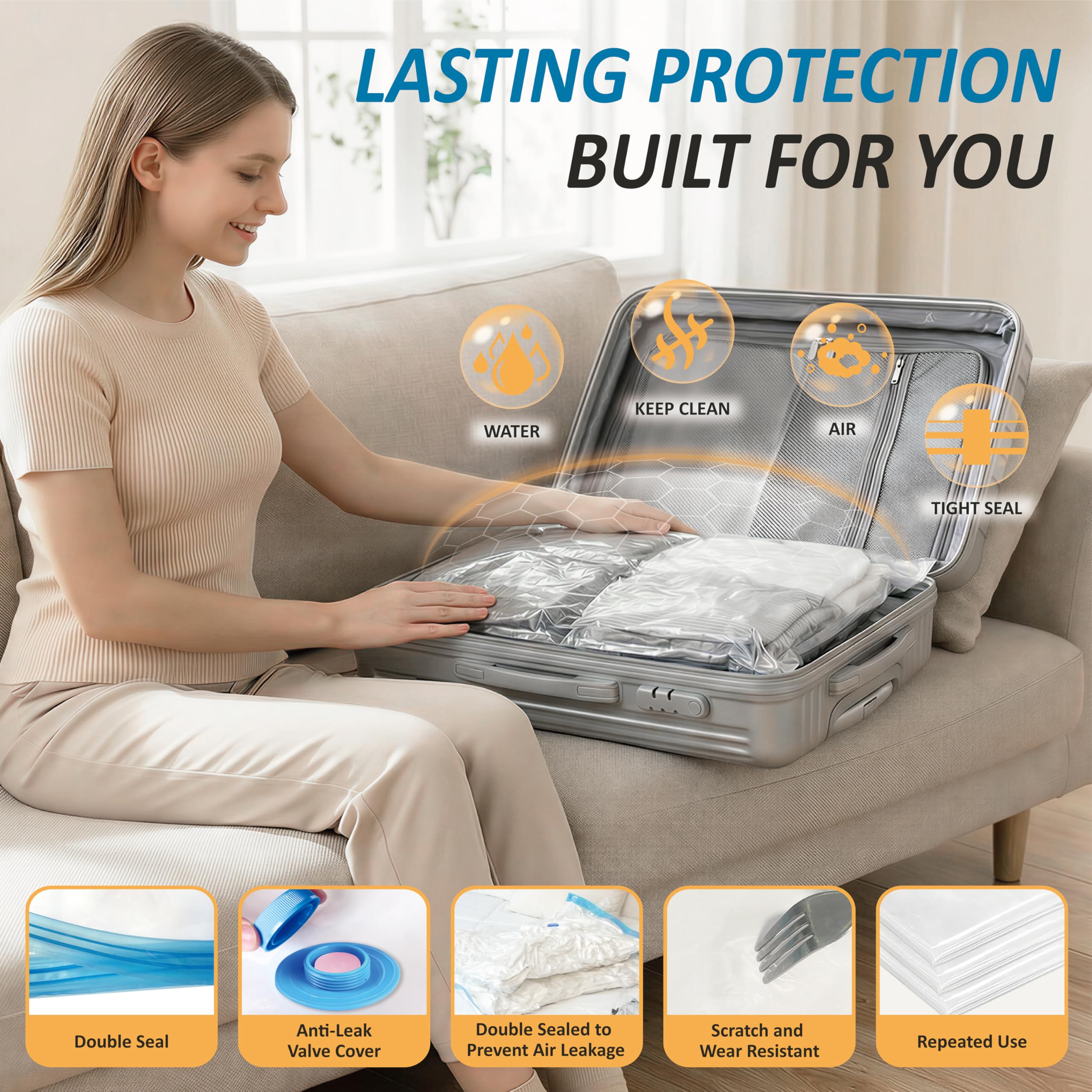
CozyEssential 80% Compression Vacuum Seal Bags
CozyEssential lands as the versatile middle pick for mixed loads of clothes and blankets. At a 4.3 rating with 80% compression, it handles the same synthetics-and-cotton jobs as the others, and owners like the valve design for holding a seal over long storage stretches. Use these for the bulk of a seasonal swap where you want reliable compression without overthinking pump type. Line the bin, roll the air toward the valve, drop in a silica packet, and stack. It won’t replace breathable storage for delicates, but for the 70% of your closet that’s cotton and synthetic, it does the job cleanly.
Frequently Asked Questions
What if my room is too small for storage bins at all?
It depends on your clearance. Even a bedroom under 100 square feet usually has 6 to 8 inches under the bed and vertical space above the closet rod. Vacuum bags flatten bulky items to 2 to 3 inches, so they slide into gaps rigid bins can’t. Go vertical and go flat before you assume there’s no room.
What if my only storage space is a humid basement or garage?
Almost never ideal, but workable with two fixes. Keep bins off the concrete on a 4-inch pallet or riser to block ground moisture, and drop a silica gel packet in every container to hold humidity under 50%. Avoid vacuum-sealing natural fibers there — trapped dampness plus no airflow is how mildew starts.
What if my closet has no shelves, just a single rod?
No problem — a hanging closet organizer adds folded-storage cubbies to a bare rod in minutes, and under-bed bins absorb the overflow. Fold off-season knits into breathable containers rather than hanging them, since long-term hanging stretches shoulders. You get shelf function without drilling into a wall.
What if my clothes came out smelling musty last year?
Yes, that’s a moisture-and-airflow problem, not a fabric problem. Musty odor means clothes went in slightly damp or the container trapped humidity. Wash and fully dry everything this time, add silica gel packets, and use breathable bins for wool and silk. Cedar blocks help absorb residual odor between swaps.
What if I don’t know when to actually swap seasons?
It depends on your climate, but a reliable trigger is two straight weeks of temperatures outside the season’s range. Set a calendar reminder rather than trusting memory. Storing too early leaves you scrambling on a cold snap; storing too late means bins pile up in the way. Track it once and repeat yearly.
Bottom Line
Store out-of-season clothes clean, dry, and sorted by fabric — that single habit prevents 80% of the yellowing, musty odor, and moth damage people blame on cheap bins. Compress synthetics and cotton in vacuum bags, but let wool, silk, and leather breathe in canvas or acid-free boxes. Measure the space before you buy containers, keep humidity under 50%, and label every bin so spring takes minutes, not an afternoon. Get the prep right and the products barely matter.



Write Your Review
No reviews yet. Be the first to share your experience!