

> Editorial Note: I’m Hannah Lin, an Interior Living Researcher who’s spent 9+ years analyzing the home furniture market. This guide draws on BIFMA, GREENGUARD, and FSC certifications, plus owner reviews aggregated from Wirecutter, Apartment Therapy, and the major home design subreddits.
You sit down to relax, and within twenty minutes the seat cushion has crept forward two inches and left a gap behind your lower back. You push it back. An hour later, it’s gone walking again. If your cushions slide every time someone sits, stands, or shifts their weight, you’re dealing with one of three fixable problems, not a broken couch. Before you shop for a replacement best fabric sofa or a bigger best sectional sofa, understand why cushions migrate in the first place — the same friction principle that keeps an best area rug for living room flat with a good best area rug pad is exactly what’s missing under your seat. Fixing this costs less than rearranging the room around your best tv stand for 65 inch tv.
Reason 1: The Cushions That Creep Toward Your Shins (Slick Upholstery Fabric)
This is the most common complaint, and it’s almost always about friction. Smooth upholstery fabrics like leather, faux leather, velvet, and tightly woven polyester microfiber have a low coefficient of friction where the cushion meets the deck (the flat platform underneath your cushions). When you sit, your body weight pushes the cushion forward, and there’s nothing gripping it back.
You’ll notice it most on newer sofas. Fresh fabric hasn’t broken in yet, so the surface stays slick. Apartment Therapy’s furniture guides flag this as a top reason budget and mid-range couches feel cheap even when the frame is solid.
Not the frame. It’s the fabric-on-fabric contact.
The tell here is direction. Slick-fabric cushions slide forward and out, toward the front edge of the seat, because that’s the path your weight pushes them. They rarely twist or drop into the back gap. If you sit, stand, and watch the cushion inch toward your shins every single time, friction is your culprit.
The fix is simple: add grip. A thin non-slip layer between the cushion and the deck raises the friction enough to hold the cushion in place without changing how the seat feels. You don’t need to reupholster anything, and you don’t need to buy a new couch.
Reason 2: The Gap That Keeps Opening Behind Your Back (Loose, Reversible Cushions)
If the problem is a widening gap between the seat and back cushions, the issue usually isn’t friction — it’s that your cushions were designed to be loose. Reversible cushions (the kind you can flip to even out wear) have no fixed bottom, no zipper anchor, and no attachment to the frame. That flexibility is great for extending cushion life, but it’s terrible for staying put.
Here’s what happens. Every time you sit, the seat cushion compresses and shifts back, then springs forward as you stand. The back cushion, with nothing holding its base, slumps into the space the seat cushion left. Over a day of normal use, that adds up to a visible gap and a lumpy-looking couch.
Wirecutter’s sofa reviewers note that attached or semi-attached cushions almost never develop this gap, while fully loose cushions on sectionals are the worst offenders. Sectionals compound it because each section moves independently.
The direction tells you again. Back cushions falling into the gap and seat cushions drifting sideways means loose design, not slick fabric. You can’t glue a reversible cushion down without ruining the reversibility. What you can do is add a grippy underlay that holds each cushion to the deck so they stop migrating into each other.
Reason 3: The Whole Seat Shifts When You Stand (Worn Foam and a Sagging Deck)
When the entire seat cushion slides as a unit, and re-fluffing does nothing, the foam and the deck underneath have usually worn out together. Cushion foam is rated by density (measured in pounds per cubic foot) and IFD, or indentation force deflection. As foam breaks down, it loses volume and stops filling the frame cavity, so the cushion sits loose in a space it used to fit snugly.
At the same time, the deck fabric or webbing under the cushions stretches and sags. Now you’ve got a shrinking cushion sitting on a dished-out surface. Physics does the rest: the cushion slides toward the lowest point, usually the center or front.
BIFMA durability standards evaluate seating for exactly this kind of long-term deflection, which is why commercial-grade sofas hold their shape years longer than residential budget models. Most couches start showing foam fatigue around the 5-year mark with daily use.
The tell is age plus feel. If the couch is several years old, the cushions feel thinner than they used to, and you can feel the frame edge through the seat, you’re looking at worn foam. A grip pad still helps here by anchoring the loose cushion, but if the foam is fully collapsed, replacement inserts are the longer-term answer.
How to Fix It Fast
Before you buy anything, try the free stuff. Take the cushions off, and check whether the covers zip open — if they do, you can often re-stuff loose foam or add a layer of quilt batting to tighten the fit. Rotate and flip reversible cushions weekly so they wear evenly and slump less.
For a same-day fix with what’s already in the house: a strip of hook-and-loop (Velcro) tape, one side stapled to the deck and the other stuck to the cushion base, holds surprisingly well on fabric couches. A cheap rubberized shelf liner cut to size works as a stopgap underlay too.
None of these are permanent. Velcro pulls loose, batting compresses, and shelf liner curls at the edges within a few weeks. They’ll buy you time, not solve the problem.
The reliable fix is a purpose-built non-slip pad sized for sofa cushions. It sits invisibly between the cushion and the deck, grips both surfaces, and doesn’t need stapling, gluing, or sewing. That’s the category worth spending $15 to $30 on.
The Products That Actually Help
A grip layer between the cushion and the deck is the real solve, not another round of re-fluffing. All three below clear solid owner-review scores and target different setups: individual memory-foam pads that add grip and comfort at once, a flat non-slip underlay sized for loose seat cushions, and a heavier gripper for sectionals and wider seats. Start with the pads if you also want a firmer sit, the underlay if you just need cushions to stay put, and the gripper if you’re anchoring a big sectional.


Pros
- Extra thick 1.4-inch memory foam provides noticeably more cushioning than standard chair pads
- Rubber slip-resistant backing is effective on wood, tile, and most hard surfaces without needing ties
- Machine-washable microfiber cover makes cleaning straightforward after spills or daily grime
- Dual safety certifications (CertiPUR-US and OEKO-TEX 100) are rare at this price point and add real buyer confidence
- Versatile enough for indoor dining chairs, office seating, and outdoor portable use
Cons
- 16x16 size fits most standard chairs but may be too small for wider dining chairs or oversized seats
- Navy color is a single-hue option, so buyers needing a precise color match to existing decor may find the selection limiting
- Memory foam may retain heat during warmer months, which can be uncomfortable for extended sitting in non-air-conditioned rooms
There is a specific kind of frustration that comes from a beautiful dining chair that is just not comfortable to sit in for more than twenty minutes. The Gorilla GRIP chair cushion solves that problem directly. The 1.4-inch memory foam is thick enough to actually feel different under you, and the material responds to your body shape rather than just sitting flat beneath you like a standard fiberfill pad would.
What earns this set a place in a real home is the practical detail work. The rubber-backed no-slip base means you are not sliding the cushion back into position every time you stand up, and the microfiber cover wipes clean or goes straight into the washing machine when something spills. For a dining room, a home office, or a reading nook, that combination of comfort and low maintenance is genuinely useful day to day.
The navy colorway is clean and versatile, reading as a natural accent against wood tones, white painted furniture, or rattan. It does not look like a medical cushion, which matters when you are also thinking about how your space looks. If you want meaningful seat comfort without sacrificing the look of your chairs or spending time adjusting cushion ties, this one delivers.
Styles it works with: Coastal, Scandinavian, Modern Farmhouse, Transitional
Best placed in: Dining room chairs at a kitchen or dining table, home office task chairs without built-in cushioning, a rocking chair in a bedroom or nursery
May not suit: Chairs wider than 16 inches where the cushion will look undersized, or highly formal dining rooms with upholstered seat cushions where adding a pad would disrupt the tailored look
Buy it if:
- You have hard wood or metal dining chairs that are uncomfortable after 20 minutes and want a washable, no-fuss upgrade
- You work from home and need additional seat support during long desk sessions on a chair without built-in cushioning
- You want safety-certified foam that is free from harmful substances and safe to use in a household with children or pets
Consider waiting if:
- You need a color that closely matches a specific fabric or paint in your room and are not sure navy is the right fit
Skip it if:
- Your chairs have seats wider than 16 inches, as the cushion will not cover the full surface and will look out of place
- You prefer a tied cushion that anchors to chair spindles, since this design relies entirely on the rubber backing to stay put
Check the latest price and availability on Amazon before it sells out.
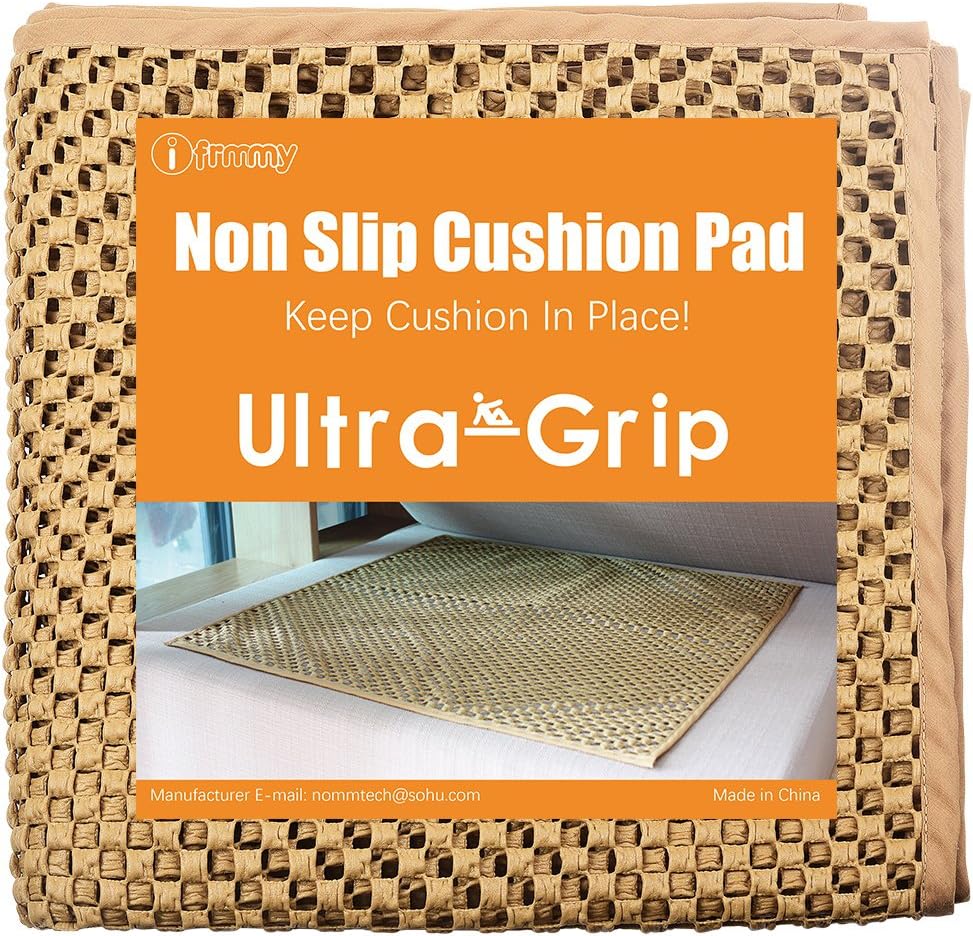
i frmmy Non Slip Couch Cushion Grips - 24x24 Inch PVC Foam Pads Keep Sofa Cushions in Place (3 Pack)
Pros
- Strong grip keeps cushions firmly in place during daily use
- No adhesive means no sticky residue on furniture or cushions
- Durable construction with quality edge stitching
- 24x24 inch size fits most standard couch cushions
- Easy to reposition or remove for cleaning
Cons
- May be too large for smaller accent chairs or loveseat cushions
- Limited to 24x24 inch size with no size variety in this pack
- New product with zero customer reviews to verify long-term performance
If you've ever sat down on your couch only to have the cushion slide forward, you know how frustrating it is. These grip pads solve that problem immediately. The thick PVC foam creates friction between your cushion and the furniture base without any sticky adhesives that could damage your upholstery.
What sets these apart is the reinforced stitching around the edges. Cheaper grip pads tend to curl up at the corners after a few weeks, but the quality construction here keeps them flat and effective. They're completely hidden once your cushions are in place, so your furniture looks exactly the same but performs much better.
If you want cushions that stay put through daily sitting, pets jumping up, and kids bouncing around without adhesive residue or complicated installation, this one delivers.
Styles it works with: All interior design styles since the pads remain hidden under cushions
Best placed in: Living room sofas, sectionals, den furniture, family room seating with removable cushions
May not suit: Accent chairs or loveseats with cushions smaller than 24x24 inches, built-in cushions that cannot be lifted, outdoor furniture exposed to rain or moisture
Buy it if:
- Your couch cushions constantly slide forward or off the frame
- You have leather or faux leather furniture where cushions slip easily
- You want a damage-free solution without adhesives or velcro
- You need to cover a 3-cushion sofa or sectional (3-pack included)
Consider waiting if:
- You want to see verified customer reviews before purchasing this newer product
Skip it if:
- Your cushions are smaller than 24x24 inches and these would hang over the edges
- You have built-in cushions that cannot be removed from the frame
Check the latest price and availability on Amazon before it sells out.

GORILLA GRIP Non-Slip Couch & Mattress Gripper Pad, Dual-Sided, Trimmable 22x70 In, Prevents Sliding
Pros
- Dual-sided grip tackles slippage from both the mattress and base simultaneously
- Breathable open-weave design helps prevent moisture and heat buildup under the mattress
- Trimmable to custom sizes, making it versatile for odd-dimension mattresses and cushions
- Multi-use across beds, couches, chairs, and toppers so one pad serves several problem spots in the home
Cons
- At 22x70 inches the pad is narrower than a full mattress width, so it may not anchor the entire sleeping surface on wider bed sizes
- No color or pattern options means it is purely functional and not suited for visible decorative use
- Effectiveness on very smooth platform bases may vary depending on the surface material
There is something quietly satisfying about a product that solves a daily annoyance without asking anything complicated of you. The Gorilla Grip Non-Slip Pad is exactly that. You lift the mattress, lay it down, and the problem of your bed drifting toward the wall or your couch cushions bunching up every evening is simply gone. No tools, no adhesives, no frustration.
What makes it stand out in a crowded category is the dual-sided grip combined with the breathable open-weave construction. Most gripper pads work on one surface only and can trap heat and moisture underneath. This one holds from both sides and lets air circulate, which matters if you care about mattress hygiene and longevity as much as the sliding issue itself.
It is also genuinely adaptable. The ability to trim it with scissors means it works in guest rooms with vintage frames, kids rooms with platform beds, or living rooms with oversized sectional cushions. If you want a stable, sleep-ready bed or a couch that stays put without adding any visible hardware or decor disruption, this one delivers.
Styles it works with: Minimalist, Scandinavian, Modern Farmhouse, Contemporary
Best placed in: Under a mattress on a platform bed or box spring, beneath sofa seat cushions, under chair cushions in a reading nook
May not suit: Beds wider than a standard size where full-width coverage is needed, or households looking for a visible decorative layer rather than a purely functional hidden solution
Buy it if:
- Your mattress slides off the box spring or platform bed overnight and disrupts your sleep
- Your sofa cushions shift and bunch every time someone sits down, making the couch look untidy
- You want a no-fuss, tool-free fix that works on multiple surfaces around the home
Consider waiting if:
- You need a full-width gripper that spans the entire surface of a king or California king mattress
Skip it if:
- Your bed uses a slatted frame with wide gaps where a flat pad would offer no stable surface to grip
- You are looking for a mattress pad that also provides cushioning, insulation, or waterproofing alongside grip
Check the latest price and availability on Amazon before it sells out.
Frequently Asked Questions
Do couch cushion grippers actually work?
Yes. A non-slip pad raises the friction between the cushion and the deck, which is the exact force that’s missing when cushions slide. Owner reviews on grip pads consistently report cushions staying put for months, and the physics is straightforward: more grip, less migration. They work best on slick fabrics like leather and microfiber, where the sliding problem is worst.
Will a non-slip pad damage my sofa fabric?
Almost never. Quality grip pads use open-weave PVC or memory foam that grips through friction, not adhesive, so there’s nothing to peel off or stain the fabric. Avoid anything with a sticky backing or heat-activated glue. If you have delicate velvet or a vintage piece, set the pad against the deck rather than directly on the cushion cover.

Can I stop cushions from sliding without buying anything?
It depends on your couch. If the covers unzip, re-stuffing the foam or adding batting can tighten the fit for free. Velcro tape and rubber shelf liner work as short-term fixes. But if the fabric is slick or the cushions are fully loose by design, a proper grip pad is the only thing that lasts more than a few weeks.
Do I need to replace my couch if the cushions keep sliding?
No, in almost every case. Sliding is a friction and fit problem, not a structural one. A $15 to $30 grip pad solves it on couches that are otherwise sound. The only time replacement makes sense is when the foam is fully collapsed and you can feel the frame through the seat.
Are memory foam cushion pads better than rubber underlay?
It depends on what you want. Memory-foam pads add grip and a firmer, more supportive sit, so they’re ideal if your cushions have also thinned out. A flat rubber or PVC underlay is thinner, cheaper, and better when you only need anti-slip without changing the feel of the seat.
Bottom Line
Four times out of five, sliding cushions come down to one thing: not enough friction between the cushion and the deck, usually because the fabric is slick or the cushions are loose by design. The fix most people need is a non-slip grip pad. Cheap, invisible, done in five minutes. Try the free tricks first if your covers unzip. Call a pro only when the foam has fully collapsed and you feel the frame through the seat. That’s a rebuild, not a grip problem.


Write Your Review
No reviews yet. Be the first to share your experience!