

> Editorial Note: I’m Olivia Bennett, a storage and organization contributor. I approach storage as a systems problem rather than a product one — fit to actual room dimensions, load ratings, and how the system holds up under daily use.
The mistake almost everyone makes is hiding the box before measuring the airflow. You tuck it into a cabinet, feel clever for a week, then the whole corner starts to smell because the enclosure has no ventilation path. That’s the trap. In a small apartment you’re not just hiding a box. You’re managing odor, clearance, and daily scooping access in the same square foot. If you want the full system approach, start with small bedroom storage ideas, then work through closet organizers for apartments, entryway storage benches, under-bed storage containers, and vertical shelving for small spaces to free up the floor real estate you’ll need first.
The Ground Rules Before You Start
Three non-negotiables before you place anything. First, leave a minimum 2-inch air gap between the litter surface and any enclosed top; trapped ammonia is the #1 reason hidden boxes fail. Second, your cat needs an entrance opening of at least 8 inches wide, and smaller enclosures make larger cats refuse to squeeze. Third, measure the box footprint plus a 4-inch scooping buffer on every side before you commit to a cabinet. Skip any of these and you’ll be relocating the box within a month.
Step 1: Measure the Box and the Corner Before Buying Anything
Grab a tape measure before you grab your wallet. A standard covered litter box runs about 19 inches wide by 15 inches deep by 15 inches tall, but jumbo boxes push past 24 inches wide. Measure your actual box, then add 4 inches of clearance on the left and right so you can lift the lid and scoop without banging the cabinet walls.
Next, measure the corner or wall gap where the enclosure will live. Apartments lose usable floor to baseboards, radiators, and door swings, so a nook that looks like 30 inches often measures 27. Write down width, depth, and the ceiling-to-floor height if you’re stacking a shelf on top.
Airflow is the spec people forget. A sealed enclosure with a single 8-inch door concentrates ammonia fast, so look for either a rear vent cutout or a carbon-filter panel rated for odor capture. OEKO-TEX certification on any fabric liner tells you the textile won’t off-gas its own smell on top of the litter. Get these three numbers locked before anything else: footprint, clearance, airflow.
Step 2: Match the Enclosure Type to Your Layout
Your layout dictates the enclosure, not the other way around. A galley-style apartment with one long wall wants a low-profile bench-height cabinet, roughly 20 inches tall, that doubles as a plant stand or entryway seat. A corner unit only makes sense if the corner is genuinely dead space; otherwise you’re eating a spot better used for shelving.
Entry direction matters more than most people expect. A reversible-entrance cabinet lets you flip the opening left or right, which is the difference between a door that clears your walkway and one that dumps litter into the traffic path. Aim for a 24-inch clearance in front of the entrance so your cat has a landing zone and you have room to open the service door.
Material affects both odor and lifespan. Engineered wood with a laminate finish wipes clean and resists moisture warping better than raw MDF, which swells if litter dust absorbs humidity. If the unit sits near a window or radiator, check that the finish is sealed. ASTM formaldehyde-emission ratings on composite panels are worth confirming, since a low-emission board keeps the enclosed air breathable. Furniture-grade construction from sources like Apartment Therapy’s small-space guides consistently outlasts flat-pack particleboard by years.
Step 3: Build the Odor and Access System Around It
Hiding the box is half the job. The other half is a maintenance routine the enclosure actually supports. Position the unit within 6 feet of an air-moving source such as a cracked window, an air purifier, or an HVAC return, so ammonia doesn’t pool. A carbon-filter panel handles the rest, but only if you swap the filter every 30 to 60 days. A spent filter is just a wall.
Access is where hidden boxes quietly break down. If you have to drag the whole box out through an 8-inch cat door to scoop, you won’t do it daily, and skipped scooping is the real odor source. Choose an enclosure with a full front or top service door that swings open at least 90 degrees. That gives you a clear reach to the box floor.
Add a litter mat inside the entrance to catch tracked granules; a 15-by-24-inch mat covers most exit paths. Keep a small covered bin beside the unit for scooped waste so you’re not walking litter across the apartment twice a day. That’s the whole system: airflow in, filter maintained, one-motion scooping access. Get those three working together and the box disappears for good.
The Right Products Make It Easier
All three cabinets below clear a 4.3 owner rating and include a real service door plus either a carbon filter or a ventilation cutout, the two features that separate a working enclosure from a smell trap. Start with the first if odor control is your top worry, or jump to the third if you want a piece that reads as furniture, not a litter hideaway.


Pros
- Actually looks like home decor instead of obvious pet furniture
- Spacious enough for large breeds and multi-cat homes
- Low entry height accommodates cats with mobility issues
- Glossy finish inside and out makes cleaning faster
- Won American Good Design Award for aesthetics
Cons
- Zero customer reviews yet, so real-world performance is unproven
- Activated carbon filter will need periodic replacement, adding ongoing cost
- Assembly required with seams that could trap debris if not cleaned regularly
This litter box solves the biggest problem cat owners face when decorating: how do you hide an ugly plastic bin without making it obvious you're hiding something? The Lifewit enclosure looks like an actual potted plant you'd buy at a home goods store, with 18 faux leaves and pebble details that blend into living rooms, bedrooms, or entryways. It's tall enough (27.6 inches) that even large cats have room to move, and the low entry means your senior cat won't struggle getting in.
The activated carbon filter at the top tackles odors before they escape, and the pour-and-clean basin means you skip the messy liner routine. The glossy finish wipes down easily, and the included scoop hooks right onto the planter so it's always within reach. It even won a design award, which tells you the aesthetics were taken seriously.
If you want a litter box that looks like furniture without the typical "I'm hiding a litter box" awkwardness, this one delivers.
Styles it works with: Modern Farmhouse, Scandinavian, Minimalist, Contemporary
Best placed in: Living room corner beside existing plants, bathroom nook, bedroom closet area, laundry room alcove
May not suit: Homes with very young children who might knock over the tall planter, small apartments where 27.6 inches of height feels oversized, ultra-traditional decor that doesn't mix faux plants with antiques
Buy it if:
- You're tired of litter boxes that scream "cat owner" and want something that looks like actual decor
- You have a large cat or multiple cats and need more interior space than standard covered boxes
- Your cat is older, has joint issues, or you want a low-entry design that's easier to access
Consider waiting if:
- You want to see customer photos and reviews before committing since this has zero reviews so far
- You need a specific color beyond black and want to wait for more options
Skip it if:
- You need something compact under 20 inches tall for tight spaces
- You prefer fully enclosed boxes with doors rather than open-top designs with filters
Check the latest price and availability on Amazon before it sells out.

DWANTON Cat Litter Box Enclosure - Hidden Furniture Cabinet with Reversible Door, 23.6" Side Table for Living Room & Bedroom
Pros
- Works as actual furniture, not just a litter box cover
- Reversible side entrance adapts to any room layout
- 7.8 x 9.4 inch entry fits most adult cats comfortably
- Neutral color scheme matches multiple decor styles
- Under $60 for furniture-quality construction
Cons
- Particleboard construction may not hold up to heavy daily wear
- No reviews yet to confirm long-term durability
- Interior height may be tight for extra-large litter boxes with high sides
This is one of those rare pet products that actually looks like real furniture. The greige wood grain and matte black frame could easily pass for a budget-friendly piece from Target or West Elm, which means you can finally move the litter box out of the basement or bathroom and into your main living spaces without cringing.
The reversible door is the smartest feature here. Most enclosed litter boxes lock you into one configuration, but this one lets you swap the entry panel to either side during assembly. That means you can tuck it into a corner, slide it beside the sofa, or place it next to your bed without the cat having to squeeze behind furniture to get in.
If you want a litter box solution that actually improves your space instead of just hiding the mess, this one delivers.
Styles it works with: Modern Farmhouse, Scandinavian Minimalist, Contemporary, Transitional
Best placed in: Living room corner beside the sofa, bedroom next to the bed as a nightstand, entryway against a wall with other console furniture
May not suit: Homes with very large cats over 15 pounds (entry may feel tight), traditional or ornate decor styles, spaces where you need a taller side table for task lighting
Buy it if:
- You live in a studio or one-bedroom and need furniture that earns its square footage
- Your cat is skittish and avoids the litter box when it is in high-traffic areas
- You are tired of dedicating a whole closet or bathroom corner to litter box duty
Consider waiting if:
- You want to see customer photos and durability reviews before committing
Skip it if:
- You have multiple cats sharing one box (interior space is too small)
- You need something taller than 21.7 inches to use as a proper side table with a table lamp
Check the latest price and availability on Amazon before it sells out.

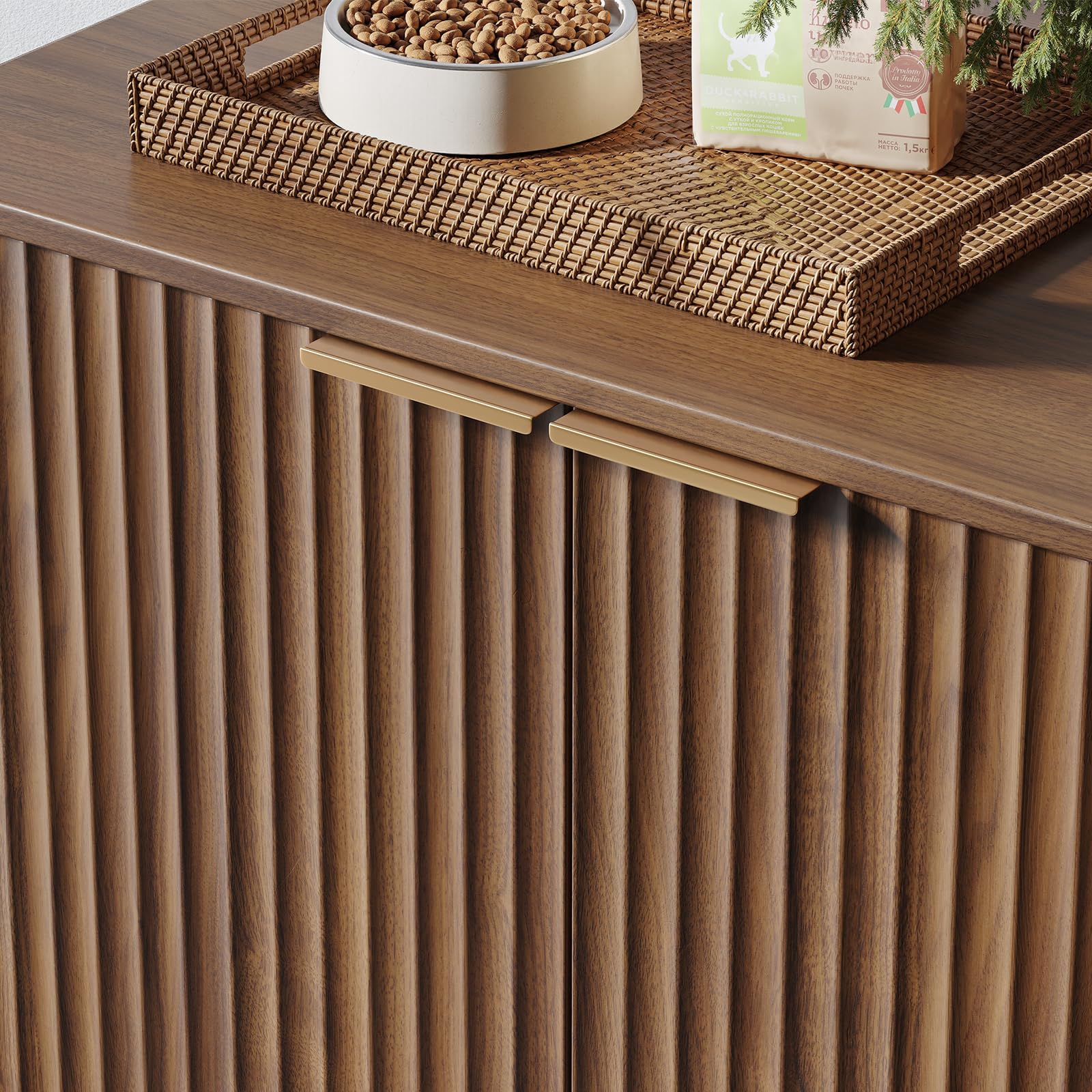
Evermagin 31.5" Cat Litter Box Enclosure - Walnut Fluted Wood Furniture with Reversible Door
Pros
- Fits large litter boxes up to 28.3" long
- Reversible door adapts to any room layout
- Stylish fluted design blends into home decor
- Reduces litter tracking and keeps dogs away
- Multi-use as side table or console
Cons
- No customer reviews yet to verify quality claims
- Assembly required with unclear complexity level
- May not fit in tight spaces due to 31.5" width
This is the litter box solution for anyone tired of plastic bins sitting out in plain sight. The Evermagin enclosure turns a necessary eyesore into a piece of furniture that actually looks intentional in your living room or bedroom. The walnut finish and vertical fluted grooves give it a designer look without the designer price tag.
What sets this apart is how it thinks through real household problems. The reversible door means you can tuck it into a corner or against any wall without blocking your cat's entrance. The enclosed design keeps curious dogs out while giving your cat the privacy they prefer. Plus, that top surface is sturdy enough to hold a lamp, books, or a plant, so it earns its space instead of just taking it up.
If you want to hide your litter box without sacrificing your cat's comfort or your home's style, this one delivers.
Styles it works with: Modern Farmhouse, Scandinavian Minimalist, Rustic Contemporary, Transitional
Best placed in: Living room corner beside a sofa, bedroom against a wall, laundry room or mudroom, basement rec room
May not suit: Very small apartments where 31.5" width takes up too much floor space, homes needing multiple litter box stations, renters who need lightweight furniture for frequent moves
Buy it if:
- You have a dog that raids the litter box and need a secure enclosure
- Your litter box is in a visible area and you want it hidden but accessible
- You prefer furniture that serves two purposes instead of single-use pet items
Consider waiting if:
- You want to see verified customer photos and reviews before committing
- You need a specific finish color not yet available
Skip it if:
- You need something narrower than 31 inches to fit your space
- You use top-entry litter boxes that require overhead clearance
Check the latest price and availability on Amazon before it sells out.
The Lifewit Hidden Litter Box Enclosure builds Step 3’s odor system in for you: it pairs a carbon-filter panel with enclosed odor control, so the ammonia problem from the Ground Rules is handled at the source. At a 4.5 rating it’s the highest-scored of the three, and its corner-friendly footprint suits the galley and dead-corner layouts from Step 1. The catch is it runs on the compact side, so measure a jumbo box carefully against it before buying.
The Dwanton Cat Litter Box Furniture solves the entry-direction issue from Step 2 directly, since its reversible entrance flips to the left or right side, letting you keep the opening off your walkway in a tight apartment. Rated 4.4 by owners, it’s the pick when your corner forces the door to one specific side. Its cabinet-style body wipes clean and offers a full service door, so the daily-scooping access from Step 3 stays a one-motion job rather than a wrestling match.
The Evermagin 31.5″ Walnut Enclosure is the one that looks like a piece of furniture first and a litter box second. At 31.5 inches wide with a mid-century walnut finish, it doubles as a console or plant stand, ideal for the low-profile bench layout in Step 2. It holds a 4.3 rating and swallows a jumbo box with clearance to spare, though its larger footprint means it needs a genuine open wall, not a squeezed corner.
Frequently Asked Questions
What if my apartment is a studio with no separate room for the box?
Put it in the least-trafficked corner and treat the enclosure as furniture. A 20-inch-tall bench cabinet under a window works as a plant stand while hiding the box. Keep it within 6 feet of the window for airflow, and prioritize a carbon-filter model since a studio has nowhere for odor to escape.
What if my cat is large and won’t fit a standard enclosure?
Measure your cat nose-to-tail and add 6 inches for the box length. Large cats need an entrance opening of at least 10 inches and a box footprint pushing 24 inches wide. The Evermagin’s 31.5-inch cabinet is the safest bet here; skip compact corner units, which top out around 19 inches inside.
What if the enclosure starts to smell after a few weeks?
It’s almost always a spent filter or blocked airflow. Swap the carbon filter every 30 to 60 days, and confirm nothing is pressed against the rear vent cutout. If there’s no vent, drill a 2-inch hole in the back panel. Daily scooping matters more than any filter. No enclosure fixes a box scooped twice a week.
What if I don’t have wall space for a full cabinet?
Go vertical or go under. A corner triangular unit uses dead space no other furniture wants, and some designs fit a footprint as tight as 22 by 22 inches. Alternatively, a bench-height enclosure tucks beside a sofa arm where a side table would sit. Measure the door swing first.
What if I rent and can’t drill or modify anything?
Every cabinet here is freestanding, so no wall mounting is required. Choose a model with a factory carbon filter or existing vent cutout so you never need to drill for airflow. A litter mat and a lidded waste bin handle the rest, and all of it moves with you on your next lease.
Bottom Line
Measure first, footprint plus a 4-inch scooping buffer and a 2-inch air gap, before you buy any cabinet. The Lifewit’s built-in carbon filter makes it the easiest odor system for most small apartments, while the Evermagin is the pick if you want a 31.5-inch piece that passes as real furniture. No enclosure survives skipped scooping, so build your daily routine before you build the hideaway.





Write Your Review
No reviews yet. Be the first to share your experience!