

> Editorial Note: I’m Liam Wright, an outdoor and garden editor. I grew up in my family’s landscaping business and now cover what actually survives a season of UV, rain, and freeze-thaw cycles. The picks here are evaluated against ASTM weatherability standards and manufacturer durability ratings.
The entrance hole decides everything. A 1.5-inch opening invites bluebirds and locks starlings out; go to 1.25 inches and you’re building for wrens and chickadees instead. Get the diameter wrong and the wrong tenant moves in, or a predator reaches the nest. Material decides the rest. Cedar breathes and shrugs off rot; recycled plastic wins in wet climates but runs hotter in direct sun. Below are five houses that hold up, sorted by who they’re actually for. If you’re building out the yard, pair one with a best bird bath, a best bird feeder pole, a best hummingbird feeder, a best garden fountain, or a set of best solar garden lights.
How We Evaluated
Material came first. Cedar and recycled plastic both resist rot and UV, so anything pine or thin-walled was cut. Entrance-hole diameter had to match a real species range, following NestWatch guidelines: 1.25 inches for wrens and chickadees, 1.5 inches for bluebirds. We looked for a predator guard or thickened faceplate, ventilation gaps near the roofline, and drainage holes in the floor. Cleaning access mattered too, since old nests carry mites between broods. Mounting hardware had to be included or obvious. Every pick clears a 4.3 owner rating, and four of the five sit at 4.6 or higher.


Pros
- Properly sized 1.5-inch entrance excludes larger invasive species
- Rough cedar surface gives birds secure footing when entering and exiting
- Reusable design saves money across multiple nesting seasons
- No painting or staining needed, safe for birds straight out of the box
- Compact 5.75" x 5.5" x 10.63" footprint fits small yards and tight spaces
Cons
- Assembly required, not ready to hang immediately
- No reviews yet to verify real-world durability and bird acceptance rates
- Cedar may weather to gray over time without optional sealant application
These cedar birdhouses nail the details that matter most to backyard birders. The 1.5-inch entrance hole is precisely sized to welcome bluebirds, wrens, tree swallows, and chickadees while physically blocking European starlings from taking over. The copper predator guard around the entrance adds a layer of protection that gives vulnerable fledglings a better chance against woodpeckers and other threats.
What sets this apart from cheaper birdhouses is the thoughtful interior design. Grooves carved inside act like a tiny ladder, helping young birds climb up and out when they are ready to fledge. The front door swings open completely, making end-of-season cleaning fast and thorough so you can reuse these houses year after year. Untreated cedar means no chemicals leaching into the nest, and the rough texture gives adult birds secure footing as they come and go with food.
If you want to attract native cavity-nesting birds to your yard without constant maintenance or predator problems, this two-pack delivers.
Styles it works with: Farmhouse, Cottage Garden, Rustic, Natural/Organic
Best placed in: Backyard fence posts, garden shed exterior, patio pergola beams, near flower beds or berry bushes, along wooded property edges
May not suit: Urban balconies with no nearby trees or shrubs (birds need cover), homes with aggressive outdoor cats, properties where HOA restrictions prohibit exterior structures
Buy it if:
- You want to attract bluebirds or other native cavity-nesters to your yard
- You have young children or grandchildren who would enjoy a simple family building project
- You are ready to commit to annual cleaning and basic birdhouse maintenance
- You need two houses to create a small bluebird trail or have multiple mounting locations
Consider waiting if:
- You prefer pre-assembled birdhouses ready to hang immediately
- You want to see verified customer reviews before purchasing
Skip it if:
- You need a birdhouse for larger species like woodpeckers or flickers (entrance hole too small)
- You live in an area with no bluebirds, wrens, or swallows and want to attract different species
Check the latest price and availability on Amazon before it sells out.

SISTERBIRD Cedar Bluebird House for Outside - 1.5 Inch Entrance Hole with Copper Predator Guard, DIY Birdhouse Kit
Pros
- Properly sized 1-1/2 inch entrance hole targets desirable species and excludes larger predator birds
- Untreated, unpainted cedar is naturally weather-resistant and safe for birds
- Copper predator guard adds a layer of protection around the entrance
- Front-opening door simplifies end-of-season cleaning for reuse
- Rough-textured wood gives birds better grip when entering and exiting
Cons
- No customer reviews yet, so real-world durability and bird activity results are unverified
- Requires DIY assembly with a screwdriver, not ready to hang out of the box
- Unpainted cedar will weather and gray over time unless the buyer paints or seals it
If you have been wanting to bring more birdlife into your backyard, this SISTERBIRD cedar house hits the sweet spot between function and charm. The 1-1/2 inch entrance hole is sized specifically to welcome bluebirds, wrens, tree swallows, and chickadees, while keeping bulkier birds like starlings out.
The untreated cedar gives it a natural, rustic look that blends into a garden, fence line, or porch post without feeling like plastic decor. Because it is unpainted, you can leave it as-is for a woodsy feel or personalize it with a coat of paint to match your outdoor color scheme.
Assembly is straightforward with just a screwdriver, making it an easy weekend project to do with kids. If you want a functional, good-looking birdhouse without dealing with pre-built plastic options, this one delivers.
Styles it works with: Rustic Farmhouse, Cottage Garden, Natural/Organic, Traditional Outdoor
Best placed in: backyard garden posts, near tree lines or fence edges, porch or patio hanging spots
May not suit: homes without a yard or outdoor space, or buyers wanting a pre-finished, ready-to-hang product
Buy it if:
- You want to attract bluebirds, wrens, or swallows to your backyard
- You enjoy DIY projects and don't mind basic screwdriver assembly
- You want a natural cedar look you can paint or customize yourself
Consider waiting if:
- You want verified reviews on bird activity before committing
- You need a pre-painted or finished birdhouse ready to hang immediately
Skip it if:
- You do not have outdoor space suited for mounting a birdhouse
- You want a maintenance-free house with no seasonal cleaning
Check the latest price and availability on Amazon before it sells out.

Kingsyard Recycled Plastic Bird House with Clear View Panel & Predator Guard for Bluebird Wren Swallow Finch
Pros
- Clear view panel lets you observe nesting activity up close without opening the house and disturbing the birds
- Recycled plastic material resists denting, cracking, and UV fading better than traditional wooden houses
- Predator guard extension around the 1.5-inch entrance hole adds a meaningful layer of protection for eggs and hatchlings
- High 4.7-star rating across nearly 500 reviews signals consistent satisfaction from real buyers
- Supports multiple species including bluebirds, wrens, swallows, and finches with the appropriately sized entrance hole
Cons
- At $43.99 it sits at the higher end for a single-unit birdhouse, especially compared to simpler wooden alternatives in the Kingsyard lineup
- The green and brown color scheme suits natural garden settings but may feel out of place in more formal or contemporary outdoor spaces
- Mounting hardware and specific installation instructions are not clearly detailed in the product listing
This birdhouse punches well above its price point for anyone serious about backyard birding. The recycled plastic build means you are not re-staining or replacing it every few seasons, and the natural green and brown finish blends into garden beds and fence lines without looking like a craft store prop.
The clear view panel is the detail that really sets it apart. Instead of guessing whether anything has moved in, you can walk up and check without cracking the roof and sending the occupants flying. For families with curious kids or anyone who genuinely enjoys watching the nesting process unfold, that feature alone justifies the price over a basic wooden box.
The predator guard is a quiet but important addition. A lot of birdhouses skip it entirely and leave the entrance hole as an easy target for squirrels or starlings to widen. Kingsyard building it in from the start shows they thought about what birds actually need, not just what looks good on a product photo. If you want a birdhouse that actively protects nesting birds without requiring constant monitoring, this one delivers.
Styles it works with: Cottage Garden, Naturalist, Farmhouse Outdoor, Rustic Backyard
Best placed in: Mounted on a backyard fence post or garden stake, attached to a tree at eye level for easy viewing, or positioned on a deck railing post away from heavy foot traffic
May not suit: Sleek modern or minimalist outdoor spaces where natural wood tones and clean lines dominate; very small patios or balconies where attracting nesting birds may not be practical
Buy it if:
- You want to attract bluebirds, wrens, or swallows to your yard and need a durable house that will last multiple seasons without maintenance
- You have kids or grandkids who enjoy watching wildlife and want a safe way to observe a nest without disturbing the birds
- You are looking for a thoughtful, ready-to-gift option for a bird enthusiast or nature-loving family member
Consider waiting if:
- You are hoping for a color option beyond green and brown to match a specific outdoor aesthetic
Skip it if:
- You only need a basic decorative birdhouse with no expectation of actual bird occupancy, since simpler and cheaper options will do the job
- You are looking for a house designed specifically for cavity-nesting species with larger entrance requirements, such as screech owls or woodpeckers
Check the latest price and availability on Amazon before it sells out.

Pros
- Viewing window lets you observe nesting activity up close
- Cedar build is naturally weather and rot resistant
- Clean-out doors simplify post-season maintenance
- Predator guard adds a layer of protection for young birds
- Two mounting options for placement flexibility
Cons
- No published customer reviews yet, so real-world durability is unverified
- Water-based stain may need reapplication sooner than oil-based finishes in harsh climates
- Design is functional and rustic rather than decorative, so it wont suit buyers wanting a statement piece
If you have ever wanted a front row seat to a bluebird family without disturbing them, this cedar house is built for exactly that. The crack resistant viewing window turns a simple backyard birdhouse into a small window on nature, letting you check in on the nest whenever curiosity strikes.
The cedar construction gives it a natural, weathered look that settles into a yard or garden without feeling out of place, while the clean out doors mean you are not fighting the house every fall to get it ready for next season. It is a practical piece first, and a charming one second.
If you want an up close view of nesting bluebirds without disrupting them, this one delivers.
Styles it works with: Farmhouse, Rustic, Cottage Garden, Traditional Outdoor
Best placed in: Backyard garden posts, along a fence line, near a wooded property edge
May not suit: Small balconies or patios with no open sightline for bluebirds, or yards with heavy predator traffic despite the guard
Buy it if:
- You want to observe nesting bluebirds up close through a protected window
- You prefer a birdhouse that is easy to clean out between seasons
- You need mounting flexibility for a pole or flush wall install
Consider waiting if:
- You want to see verified customer reviews first since none are currently listed
Skip it if:
- You are shopping for a decorative accent piece rather than a functional nesting box
Check the latest price and availability on Amazon before it sells out.

Pros
- Natural cedar wood construction with authentic rustic appearance
- Pre-assembled and ready to hang immediately
- Waterproof coating extends outdoor durability
- Multiple compartments accommodate several small songbirds
Cons
- No customer reviews yet to verify real-world performance
- Small 3-inch compartments may limit bird species that can use it
- Price point is higher than basic single-compartment birdhouses
This birdhouse brings that cozy cottage look to your outdoor space without any of the fuss. The natural cedar construction ages beautifully over time, developing a weathered patina that blends into garden settings. Unlike flimsy painted models, this one feels substantial and looks like it belongs in your yard from day one.
What sets it apart is the multi-compartment design that creates visual interest even when birds aren't actively nesting. The house-shaped silhouette and multiple entrance holes make it a focal point in flower beds or hanging from porch eaves. The waterproof coating means you can hang it and forget it through seasons of rain and sun.
If you want a decorative birdhouse that adds garden character without looking like a craft store project, this one delivers.
Styles it works with: Modern Farmhouse, Rustic Cottage, Country Garden, Naturalistic Landscaping
Best placed in: Hanging from covered porch beams, mounted on garden fence posts, suspended from tree branches near flower beds, displayed on patio pergolas
May not suit: Contemporary minimalist gardens with clean lines, small apartment balconies with limited overhead hanging space, areas with aggressive larger bird populations that might monopolize the compartments
Buy it if:
- You want a decorative birdhouse that doubles as garden art even when birds aren't nesting
- You're looking for a ready-made gift for someone who loves backyard bird watching
- You prefer natural wood aesthetics over painted or plastic alternatives
Consider waiting if:
- You want to see verified customer reviews and photos before committing at this price point
Skip it if:
- You need a functional birdhouse for larger species like bluebirds or woodpeckers
- You're on a tight budget and a basic single-compartment model would serve your needs
Check the latest price and availability on Amazon before it sells out.
1. SISTERBIRD Cedar 2-Pack — Best Value for Two Spots
Two houses, one box. The SISTERBIRD 2-pack is the pick most people should start with, and at a 4.8 rating it’s the highest-scored house here. Each is western red cedar with a copper predator plate ringing the entrance, which stops squirrels and larger birds from chewing the hole wider. That copper guard is the detail that separates a house that lasts from one that gets raided in the first season.
The 1.5-inch openings suit bluebirds, finches, swallows, and wrens, so you can place one in an open field and another near a hedge to cover different species. Cedar’s natural oils mean no paint, no sealant, and no rot for years of freeze-thaw. Ventilation slots sit under the roof overhang, and the floor drains. If you want coverage across a yard without buying twice, this is the honest value play.
2. SISTERBIRD Single Cedar House — When One Spot Is All You Need
Same cedar, same copper guard, half the count. This is the single version of the 2-pack build, rated 4.7, and it exists for the yard that has exactly one good mounting spot. If you’ve only got one fence post catching morning sun, there’s no reason to pay for a second house you’ll leave in the garage.
Construction is identical: western red cedar walls, a copper ring around the 1.5-inch entrance, roofline ventilation, and a drained floor. It fits small songbirds the same way the 2-pack does. The only real difference is quantity and per-unit cost. Buy the pair if you’re covering ground; buy this one if you’re outfitting a single balcony, a small patio, or a courtyard where a second house would just crowd the space. Same durability, right-sized purchase.
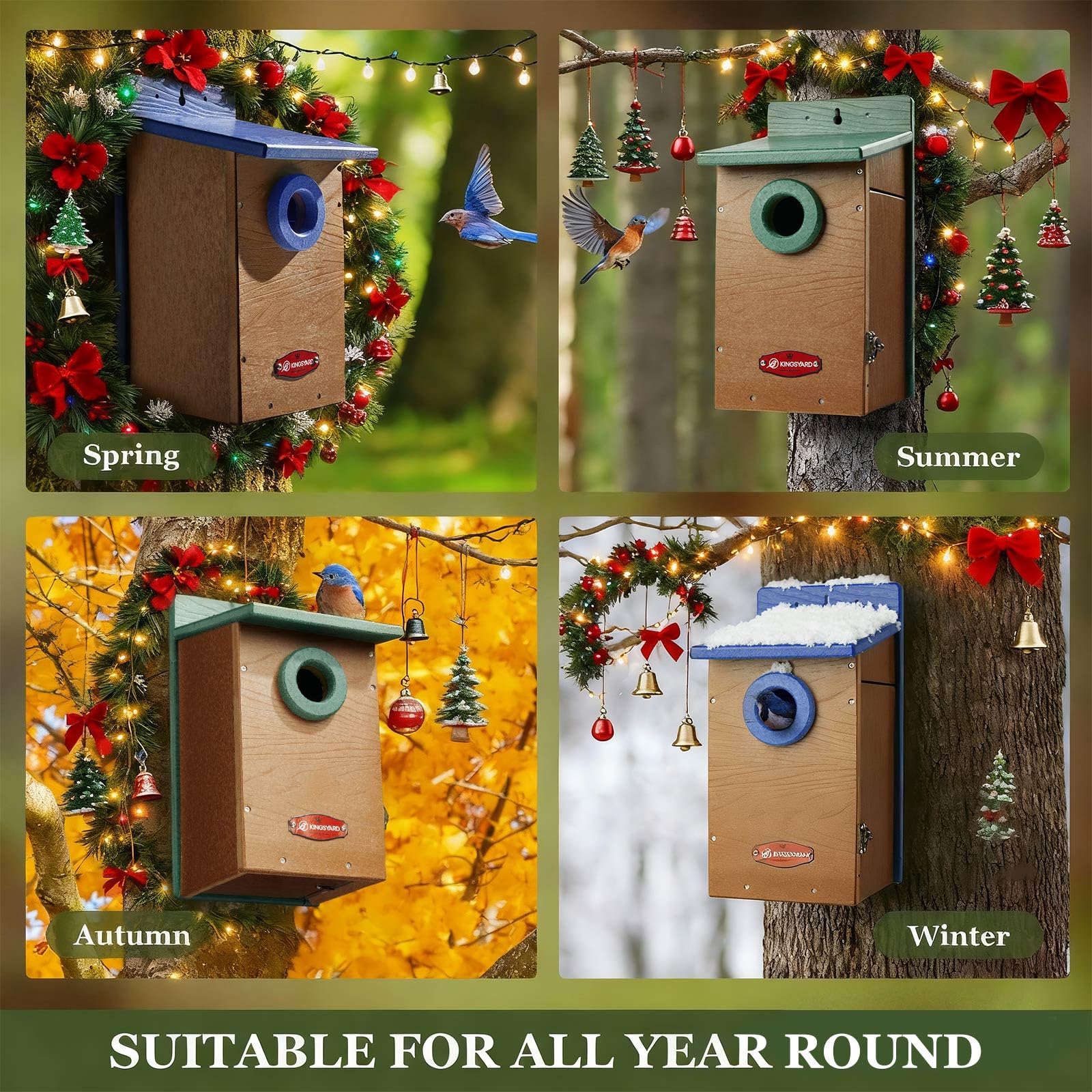
3. Kingsyard Recycled Plastic — The One That Looks Good Wet
Cedar hates standing water over years; recycled plastic doesn’t care. The Kingsyard house is molded from recycled plastic with a clear view panel on the side and a built-in predator guard, and it’s rated 4.7. For coastal yards, rainy regions, or anywhere humidity sits high, this is the pick that won’t warp or swell through a wet season.
The clear panel lets you check on eggs without prying the house open, which reduces stress on nesting parents. The 1.5-inch entrance targets bluebirds and wrens. Plastic does run warmer than cedar in full afternoon sun, so mount it where it catches morning light and afternoon shade. Cleanout is quick, and the surface wipes down between broods without soaking up moisture. If your climate punishes wood, this is the durable answer.
4. Nature’s Way Cedar Bluebird House — Built to Bluebird Spec
If bluebirds are the goal, stop guessing. The Nature’s Way house is cut to bluebird dimensions, with a side-opening panel for nest monitoring, and it carries a 4.6 rating. The interior floor size and 1.5-inch entrance follow the specs the North American Bluebird Society recommends, so it reads as home to a scouting pair rather than a generic box.
The side door is the standout. Flip it open to check nest progress or clean between broods without disturbing the structure or reaching through the entrance. Cedar handles the weather, ventilation gaps sit high, and the floor drains. It’s less of an all-purpose house than the SISTERBIRD picks and more of a specialist. If you’ve spotted bluebirds working your area and want to give them exactly what they’ll nest in, this is the one to mount.

5. YYYUAN 10-Hole House — The Decorative Statement Piece
Ten holes, ten openings, one big presence on the wall. The YYYUAN is a multi-hole colony-style house rated 4.3, and it’s honest to say it leans more decor than serious single-nest habitat. Most cavity nesters are territorial and won’t share a structure, so don’t expect ten families. Purple martins colonize; bluebirds and wrens won’t.
What it does deliver is a striking garden feature at a low price. Mount it on a shed wall or a garden fence and it reads as folk-art charm, and smaller birds may claim a hole or two for shelter. Think of it as a statement piece that occasionally hosts a tenant, not a purpose-built nesting box. If you want visual impact on a budget and treat any actual nesting as a bonus, it earns its spot.
Comparison Table
| Pick | Material | Entrance | Best For | Rating |
|---|---|---|---|---|
| SISTERBIRD 2-Pack | Western red cedar | 1.5 in | Covering two yard spots | 4.8 |
| SISTERBIRD Single | Western red cedar | 1.5 in | One mounting location | 4.7 |
| Kingsyard | Recycled plastic | 1.5 in | Wet, humid climates | 4.7 |
| Nature’s Way | Cedar | 1.5 in | Bluebirds specifically | 4.6 |
| YYYUAN 10-Hole | Wood | Multiple | Garden decor statement | 4.3 |
How to Choose a Bird House
Start with the entrance diameter, because it’s the one spec you can’t fix later. A 1.25-inch hole fits wrens and chickadees and shuts out most larger birds. Move to 1.5 inches and you open the door to bluebirds, swallows, and finches while still blocking starlings, which need 1.6 inches to squeeze through. The Cornell Lab of Ornithology publishes hole sizes by species, and matching that number is what actually attracts a nester.
Material comes next. Cedar breathes, resists rot through its natural oils, and stays cooler in sun, which is why it’s the classic choice. Recycled plastic wins in consistently wet climates where wood would swell and warp over the years. Either way, look for ventilation gaps near the roof and drainage holes in the floor. A house that traps heat or water kills a brood fast.
Skip any house with a perch under the entrance. Perches don’t help native nesters and they hand predators and invasive house sparrows a foothold. Finally, plan the mount. Most songbird houses belong 5 to 10 feet up on a post or pole, and a baffle below stops climbing raccoons cold.
Placement and Attracting Nesters
Height and direction matter more than most people expect. Mount bluebird and wren houses 5 to 6 feet off the ground, with the entrance facing away from prevailing wind and driving rain. In hot regions, an entrance that faces north or east keeps the box cooler through the afternoon. Audubon Society guidance favors open ground near a hedge or tree line, giving parents a clear flight path and a nearby perch.
Space houses at least 25 feet apart, since most cavity nesters defend a territory and won’t tolerate a neighbor too close. Clean between broods. Once fledglings leave, open the box, clear the old nest, and let it air out, because used nests harbor mites and parasites. A quick fall cleanout sets you up for spring. That’s the whole maintenance routine.
Give the site a few weeks before you expect tenants. Birds scout for days, checking sightlines and safety before they commit, so an empty box in April isn’t a failed box. Keep cats indoors during nesting season and add a metal baffle if your pole is climbable. NestWatch tracks occupancy across thousands of yards, and the pattern is clear: houses that go unused most often sit too low, too exposed, or too close to feeders where activity spooks nesting pairs.
Frequently Asked Questions
What entrance-hole size attracts bluebirds?
A 1.5-inch round hole. It’s large enough for a bluebird to enter yet small enough to keep starlings out, since they need roughly 1.6 inches. Chickadees and wrens use a smaller 1.25-inch hole, so match the diameter to the species you’re after.
Is cedar or recycled plastic better?
It depends on your climate. Cedar breathes, stays cooler in sun, and resists rot naturally, which makes it the default for most yards. Recycled plastic wins where humidity and rain are relentless, since it won’t warp or swell. Both are durable; the wet-climate edge goes to plastic.
Should a bird house have a perch?
No. A perch under the entrance offers nesting birds nothing and gives predators and invasive house sparrows an easy grip. Every pick here skips the perch on purpose, and that’s the correct design.
How high should I mount a bird house?
For bluebirds and wrens, 5 to 6 feet works well; other songbirds tolerate up to 10 feet. Add a baffle below the pole to block climbing raccoons and snakes. Face the entrance away from prevailing wind for a drier nest.
How often should I clean it out?
Once per brood. After fledglings leave, open the box, remove the old nest, and let it air out. Old nests hold mites and parasites that can weaken the next clutch. A single fall cleanout usually covers the off-season.
Will ten birds nest in a 10-hole house?
Almost never. Most cavity nesters are territorial and won’t share one structure, so a multi-hole house works mainly as garden decor with the occasional single tenant. For real nesting, single-entrance houses spaced apart outperform it every time.
Bottom Line
The SISTERBIRD cedar 2-pack is the one most people should buy — highest rating here, a copper predator guard, and two houses to cover different corners of the yard. If you’ve got just one good spot, the single SISTERBIRD is the same build without the extra box. Bluebird watchers should reach for the Nature’s Way side-open house, and wet-climate yards do better with the Kingsyard plastic. Just know the 10-hole YYYUAN is decor first and habitat second.


Write Your Review
No reviews yet. Be the first to share your experience!